
This Remote California Alpine Lake Turns A Desolation Wilderness Hike Into A Dreamlike Escape
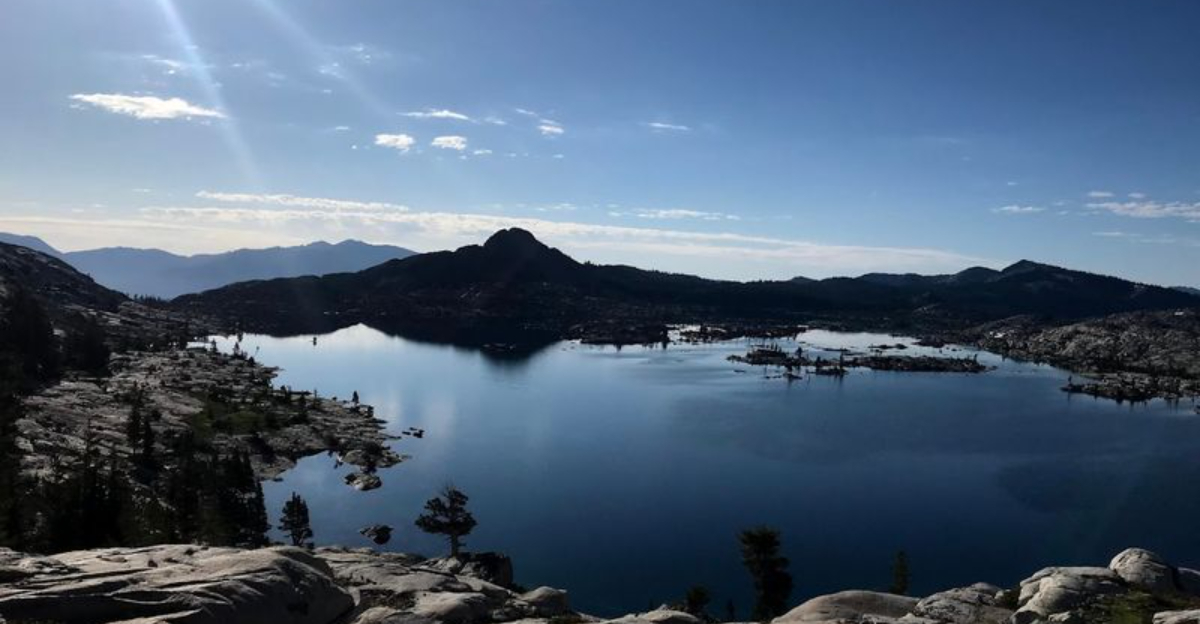
The word desolation usually conjures images of barren landscapes and unforgiving terrain. But deep within California’s rugged Sierra Nevada, it means something entirely different.
Here, miles of granite wilderness lead to a shimmering alpine lake so beautiful it feels almost unreal.
The journey isn’t effortless. Trails wind through rocky terrain, past forests and mountain vistas, rewarding hikers with a destination that seems pulled from a dream. Crystal-clear water reflects endless skies. Tiny islands dot the surface.
Massive granite formations rise from the shoreline like natural sculptures. In a region celebrated for its wilderness, this remote lake stands out as one of the most breathtaking sights of all.
It’s the kind of place that makes you slow down, stay awhile, and wonder why some of California’s most spectacular landscapes remain hidden in plain sight.
Earning Every Step To Lake Aloha
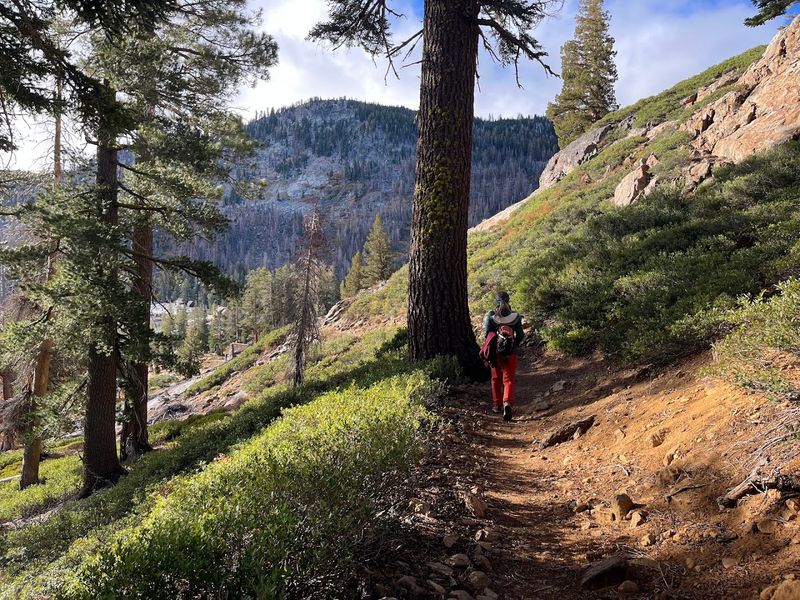
Forget the elevator, there is no shortcut to Lake Aloha and honestly, that is part of the magic. The most popular route starts at the Echo Lakes Trailhead, where the trail winds through pine forests, past sparkling sub-alpine lakes, and over sun-baked granite slabs that shimmer in the Sierra Nevada light.
The round trip clocks in at roughly 10 to 15 miles depending on your exact route, with about 2,000 feet of elevation gain along the way.
The trail is rated moderate to difficult, so it rewards hikers who come prepared rather than those who underestimate it.
Good trail shoes with ankle support are your best friends out here, since large stretches of the path cross bare granite where footing demands attention. Trekking poles are a smart addition, especially on the descent when your knees start sending you passive-aggressive messages.
One seriously clever option available during warmer months is the water taxi across Echo Lakes, which trims a couple miles off the hike and adds a fun, scenic boat ride to your adventure.
Either way, the trail keeps revealing new views around every bend, building anticipation like a great movie trailer. By the time Lake Aloha appears on the horizon, you will feel like you genuinely earned it.
Where Exactly Is This Place And How Do You Get There
Finding Lake Aloha requires a little planning, but the directions are straightforward once you know where to look.
The Desolation Wilderness sits within Eldorado National Forest in California, and the primary trailhead address most hikers use is 138 Emerald Bay Rd, South Lake Tahoe, CA 96150.
From South Lake Tahoe, the Echo Lakes Trailhead is just a short drive up into the mountains, making it one of the more accessible entry points to this otherwise remote wilderness.
The Glen Alpine Trailhead offers another approach, starting near Fallen Leaf Lake and winding through a more forested, flower-lined landscape before opening up into the dramatic granite basin surrounding Lake Aloha.
Both routes are stunning, and choosing between them is honestly a great problem to have. The Pacific Crest Trail also passes through the area, meaning long-distance thru-hikers frequently make Lake Aloha a celebrated waypoint on their epic journeys.
Parking at the Echo Lakes area can fill up fast, especially on summer weekends, so an early morning start is highly recommended.
Arriving before 8 a.m. dramatically improves your chances of snagging a spot and getting a head start on the trail before the afternoon crowds appear. The wilderness does not wait, but it will absolutely reward those who show up ready.
The Permit System
Here is the thing about Desolation Wilderness: it is wildly popular, and the people who manage it know it. A wilderness permit is required year-round for both day hikes and overnight stays, which means you cannot just casually wander in on a whim.
Between Memorial Day and September 30th, a strict quota system limits how many people can enter each day, and reservations can be made up to six months in advance.
That six-month window is not just a suggestion. Permits for peak summer weekends tend to disappear fast, so getting your reservation locked in early is genuinely important.
The good news is that the permit process is manageable and well worth navigating. Day hikers and overnight backpackers both need separate permit types, so double-check which category applies to your trip before booking.
Self-registration is available for some off-peak periods, but do not count on it for a summer Saturday. Treat the permit process like scoring tickets to a sold-out concert.
You would not skip buying tickets and just show up hoping for the best. The permit system exists to protect the fragile alpine ecosystem, and honestly, knowing the crowd is managed makes the experience feel that much more special when you finally get there.
Camping At Lake Aloha
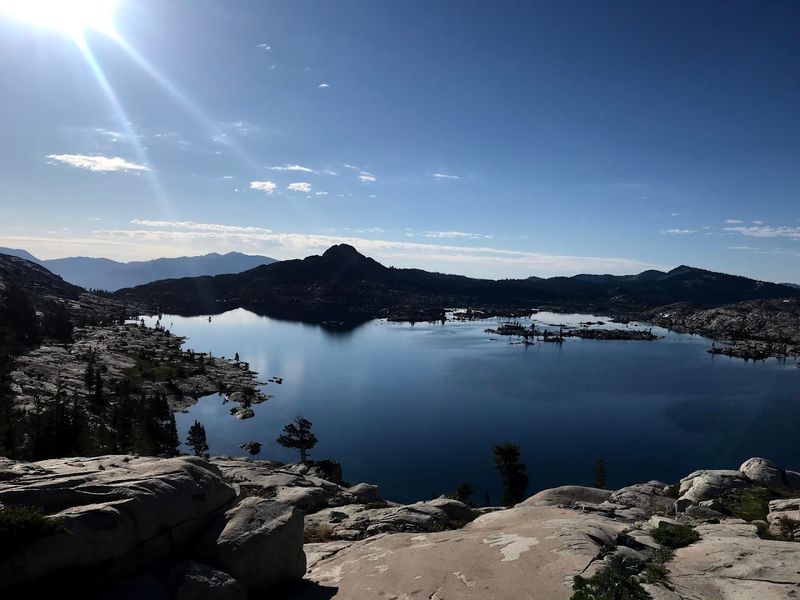
Spending a night at Lake Aloha is the kind of experience that permanently upgrades your camping standards.
Dispersed camping is allowed near the lake, meaning you get to choose your own granite perch above the water and wake up to a view that most people only see on screensavers.
Campfires are strictly prohibited throughout the area, so a lightweight camp stove is essential for cooking your trailside meals.
Bear canisters are required for all overnight backpackers, which is a non-negotiable rule in Desolation Wilderness.
Black bears are active in the area, and proper food storage protects both the wildlife and your breakfast. Campsites must be set up at least 100 feet from any lake, stream, or trail to minimize impact on the fragile ecosystem surrounding the lake.
Once the sun drops behind the granite ridgeline, the real show begins. With minimal light pollution and an elevation that puts you closer to the sky than most people ever get, the stars above Lake Aloha are absolutely jaw-dropping.
The Milky Way stretches across the darkness in a way that feels almost theatrical. Pack a warm sleeping bag because temperatures drop significantly at night, and that chill in the air makes the stargazing feel even more alive and electric.
Granite, Glass Water, And Pure Sierra Magic
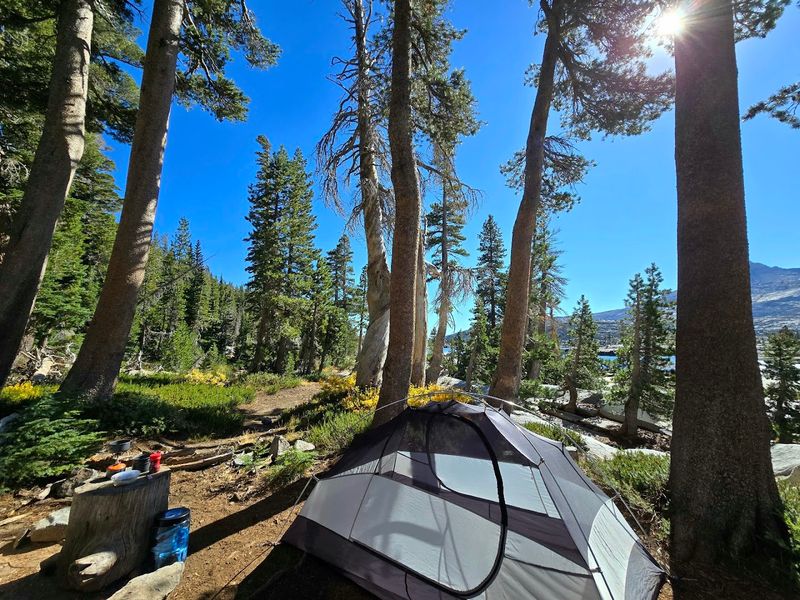
No photograph fully captures what Lake Aloha actually looks like in person, but that will not stop anyone from trying.
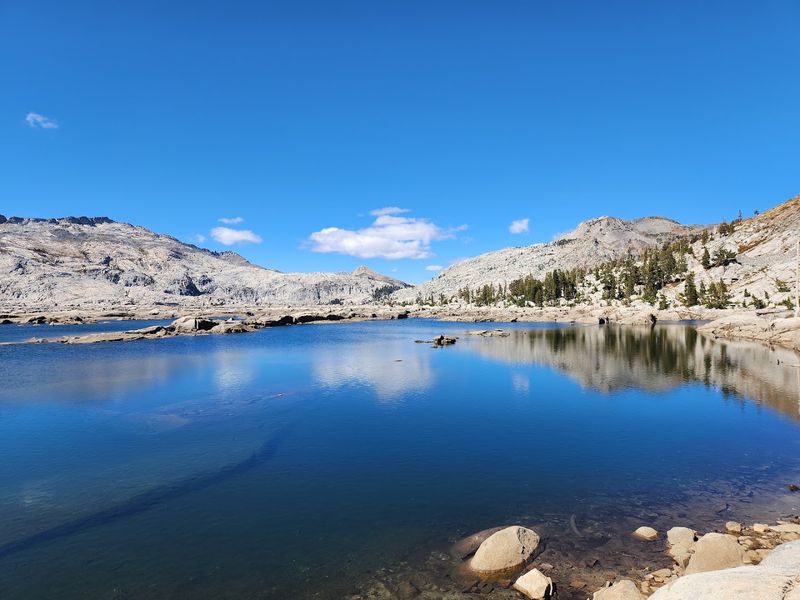
The lake is famously shallow and wide, dotted with dozens of small granite islands that rise from the water like ancient sculptures left behind by retreating glaciers. The clarity of the water is almost disorienting, letting you see every rock and pebble on the lakebed from the shoreline.
The surrounding landscape is what geologists would call a glacially scoured basin, which is a fancy way of saying that ancient ice carved everything into smooth, dramatic shapes.
Massive granite peaks frame the horizon in every direction, creating a natural amphitheater that feels both vast and intimate at the same time.
During peak summer, patches of wildflowers push up through cracks in the rock, adding unexpected bursts of color to the otherwise grey and blue palette.
Sunrise at Lake Aloha is a whole separate category of beautiful. The pink and orange light hitting the granite peaks while the lake sits completely still below is the kind of moment that makes you put your phone down and just breathe.
Some landscapes ask to be photographed. Lake Aloha asks to be felt, and that distinction makes all the difference when you are standing right in the middle of it.
A Summer Ritual Worth Every Cold Splash
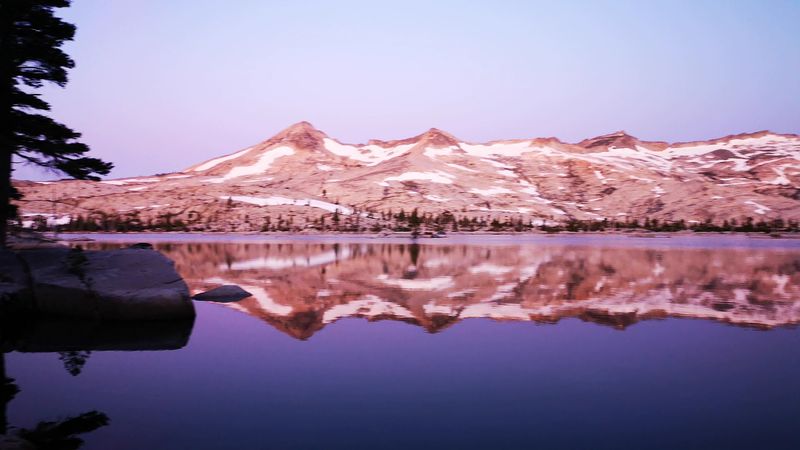
Swimming in Lake Aloha during summer is one of those experiences that lands squarely in the category of things you will talk about for years.
The water is cold, refreshingly so, and swimming between the scattered granite islands feels like exploring a miniature archipelago that belongs to you alone.
The shallowness of the lake means sunlight penetrates all the way to the rocky bottom, giving the water an almost tropical clarity despite the alpine setting.
The best swimming spots tend to be near the larger granite slabs that jut out of the water, offering natural diving platforms and sunny lounging areas between dips.
Most hikers who make the journey in summer cannot resist at least dipping their feet in, and once those feet are in, the rest of the body tends to follow pretty quickly. The cold water after miles of hiking feels like a full system reset.
There are no lifeguards, no roped-off zones, and no crowds telling you where to swim. The lake operates entirely on a self-guided, figure-it-out-yourself basis, which is exactly the kind of freedom that makes wild swimming so deeply satisfying.
Just be mindful of your energy levels and the water temperature, and always swim with a buddy. A mountain lake this gorgeous deserves to be enjoyed safely and completely.
The Living Side Of Desolation Wilderness
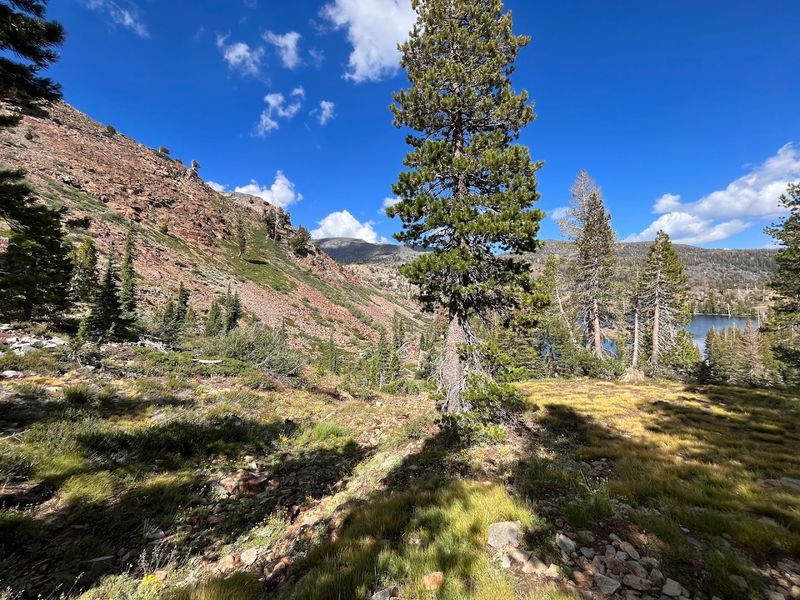
Desolation Wilderness earned its dramatic name from the stark, rocky landscape, but calling it truly desolate would be a serious misreading of the place. Life thrives here in ways that feel almost defiant against the harsh alpine conditions.
Yellow mule-ears, purple lupine, and delicate paintbrush flowers push through granite cracks during summer, turning the rocky terrain into something resembling a very rugged garden.
Marmots are the resident comedians of the Lake Aloha area, frequently spotted sunning themselves on boulders and chirping loudly at anyone who passes too close to their territory.
Pikas, those tiny round-eared relatives of rabbits, dart between rocks with a speed that seems physically impossible for something so small and round.
Birds of prey occasionally ride thermals above the granite peaks, scanning the terrain below with the kind of focus that makes you feel briefly watched.
Black bears do inhabit the Desolation Wilderness, which is exactly why bear canisters are required for overnight trips.
Sightings are possible but not guaranteed, and the bears generally prefer to avoid human contact as much as hikers prefer to avoid surprising them.
The wildlife here exists on its own terms, in its own ecosystem, and observing it respectfully from a distance is one of the quiet joys of spending real time in a place this genuinely wild.
When The Wilderness Becomes A Snowy Dreamscape
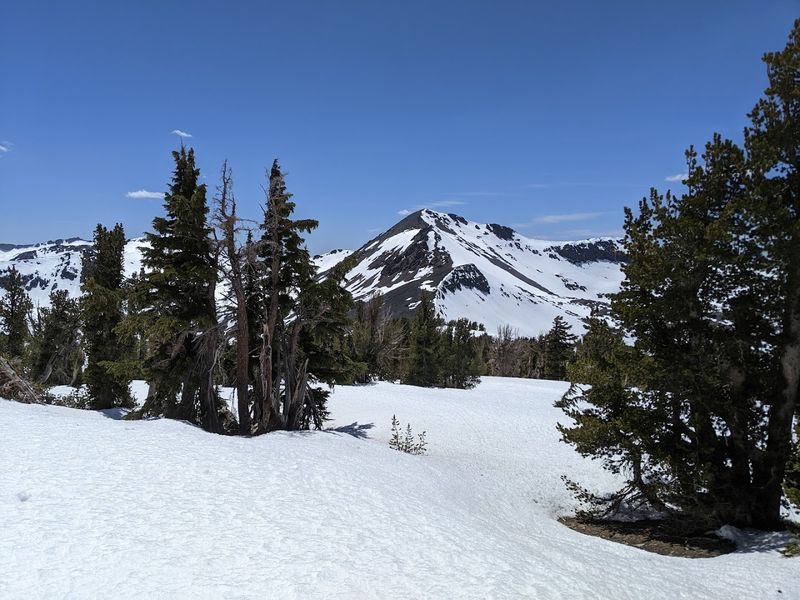
Most people think of Lake Aloha as a summer destination, but visiting in winter completely transforms the experience into something almost otherworldly.
Snow blankets the granite slabs and drapes over the pine trees in thick white layers, muffling sound and creating a stillness that feels like the wilderness is holding its breath.
The lake partially freezes, and the normally busy trails become quiet, serene corridors through a white landscape.
Snowshoeing is the primary way to access the area in winter, and the trail from Echo Lakes becomes a completely different kind of adventure under several feet of snow.
Navigation requires more preparation and awareness, since trail markers can disappear under snowpack.
But for those who come equipped with the right gear and a solid sense of direction, the winter version of Desolation Wilderness offers a solitude that summer simply cannot match.
Permits are still required year-round, even in winter, so planning ahead remains essential regardless of the season.
The reward for making that cold-weather effort is a landscape so serene and visually striking that it genuinely feels like you have the entire Sierra Nevada to yourself.
Winter at Lake Aloha is not for the underprepared, but for those who embrace it fully, it might just become the version of the place they love most. Are you bold enough to find out?