
This Remote Colorado Canyon Hides An Unexpected Oasis Of Cottonwood Trees
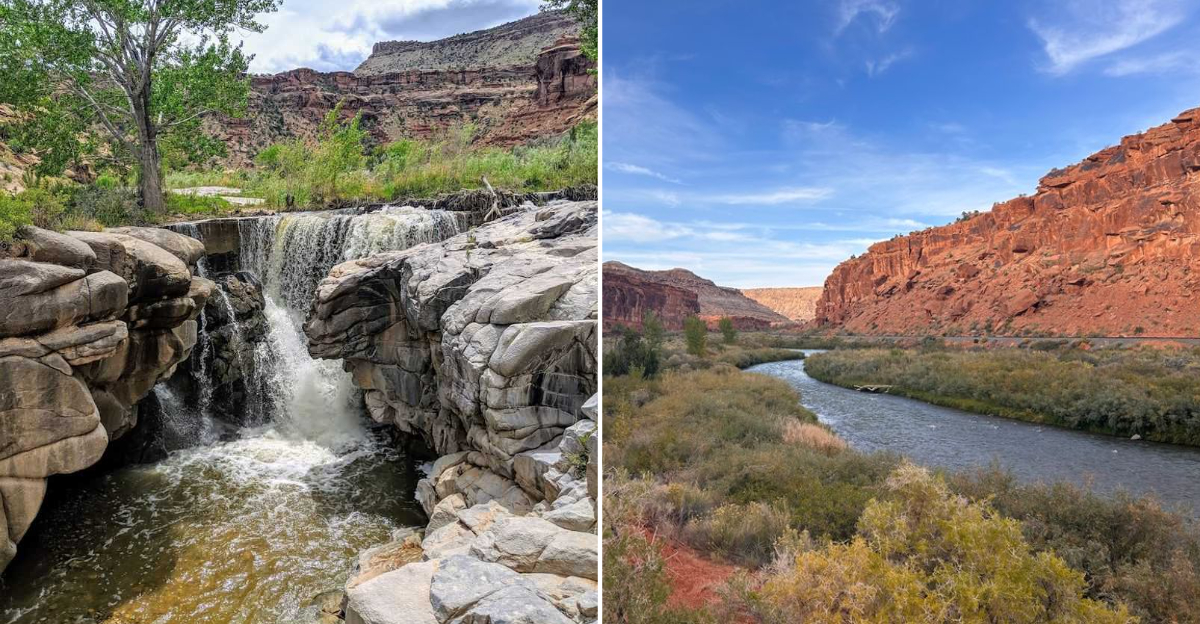
Somewhere between a bumpy dirt road and a canyon that absolutely knows how to make an entrance, this Colorado hiking escape delivers the kind of payoff that makes every dusty mile feel worth it.
The approach may test your patience a little, but then the landscape opens into sandstone walls, quiet desert drama, ancient petroglyphs, seasonal waterfalls, and a ribbon of cottonwood trees that feels almost too lush to belong there.
It is the sort of place where you keep stopping every few minutes because the scenery refuses to quit showing off. One turn brings glowing rock, another brings shade, another makes you reach for your camera before your brain has fully caught up.
The trail feels wild, surprising, and wonderfully removed from the usual weekend crowds. Colorado’s Western Slope is packed with places that reward curious travelers, but this canyon has a special way of making you feel like you discovered something extraordinary.
The Road Less Paved: Getting To The Bridgeport Trailhead
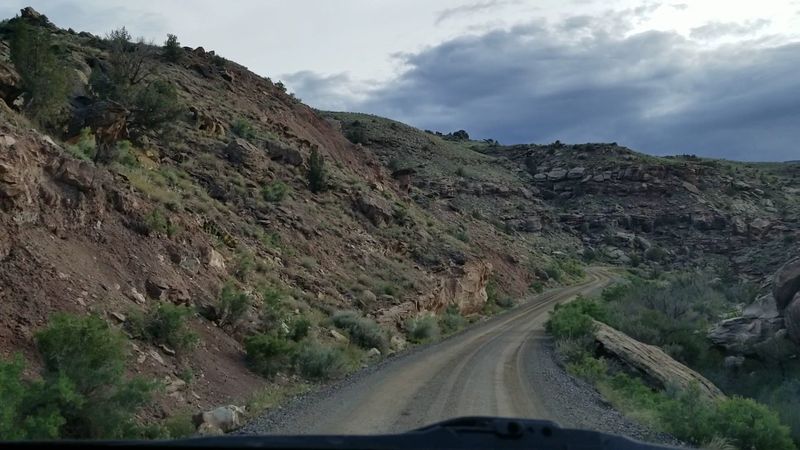
Getting to the Bridgeport Trailhead is half the adventure, and not in the way travel brochures usually mean that phrase. The access road off US 50 West runs about eight miles of unpaved terrain, and while it is manageable for standard vehicles in dry conditions, the washboarding near the start can rattle your fillings loose if you push your speed.
Slow down, enjoy the scenery, and arrive in one piece.
Once past the rougher stretch, the road smooths out considerably. You will find two parking areas at the trailhead: an upper lot and a lower lot.
The upper lot is the more popular starting point for canyon hikes. There are pit toilets on site, which, out here, feels like a genuine luxury.
Horse trailer parking is available with roughly five to six designated spots, making this one of the few Western Slope trailheads genuinely equipped for equestrian visitors. Cell service exists at the upper parking lot, so send your check-in texts before heading down into the canyon.
The address to plug in is Bridgeport Road, Whitewater, Colorado 81527, and your GPS will get you most of the way there.
Pro Tip: Avoid the road after heavy rain. Dry conditions make it accessible for most cars; wet conditions make it a whole different story.
First Steps Into The Canyon: The Trail Begins At The Train Tracks
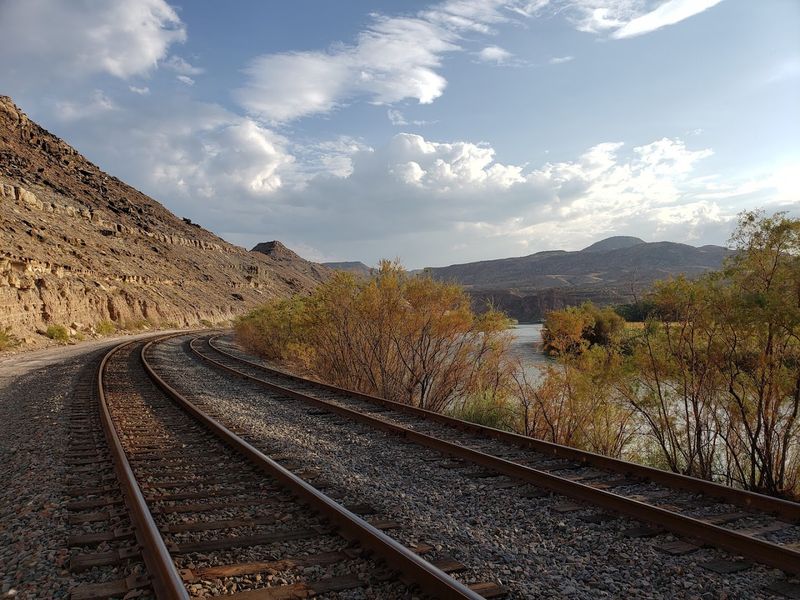
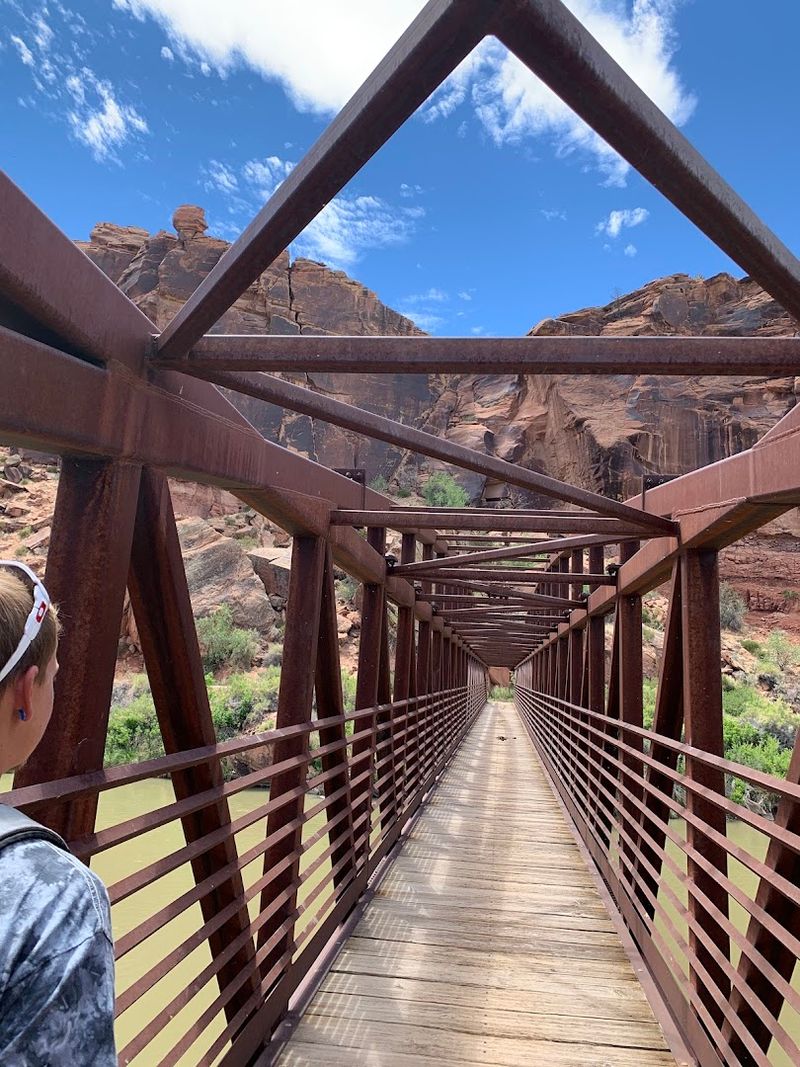
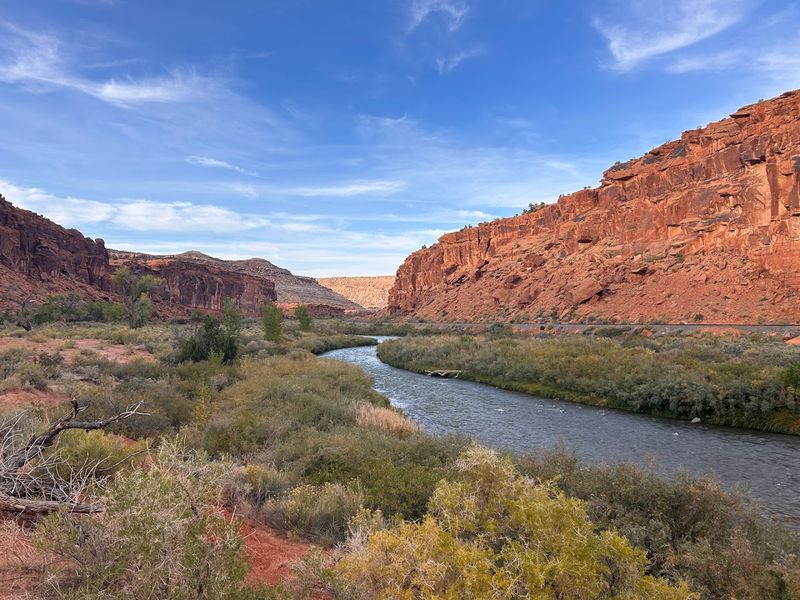
The trail begins at the railroad tracks, which is not something you hear often and never quite stops being interesting. From the lower parking area, you follow the old railroad bed, a mostly flat, hard-packed dirt path that runs parallel to the Gunnison River for roughly a mile before reaching a footbridge crossing.
It is a wide, unhurried opening stretch that eases you into the landscape without drama.
That footbridge deserves a moment of preparation if you are arriving with horses. Visitors have described it as long, creaky, enclosed, and echoing with every step, a combination that is manageable for humans but attention-grabbing for animals.
For everyone else, it is simply a scenic crossing over moving water with canyon walls beginning to close in around you.
An alternative ridge trail offers views from above before dropping back down to the canyon floor. Visitors who have taken it report genuinely rewarding sightlines worth the extra effort on a first visit.
Either way, within two miles of the trailhead you are deep enough into the wilderness area that the outside world feels genuinely optional.
Best For: Hikers of all experience levels who want a flat, manageable opening stretch before committing to deeper canyon exploration.
Cottonwood Trees In The Desert: The Oasis That Stops Hikers Cold
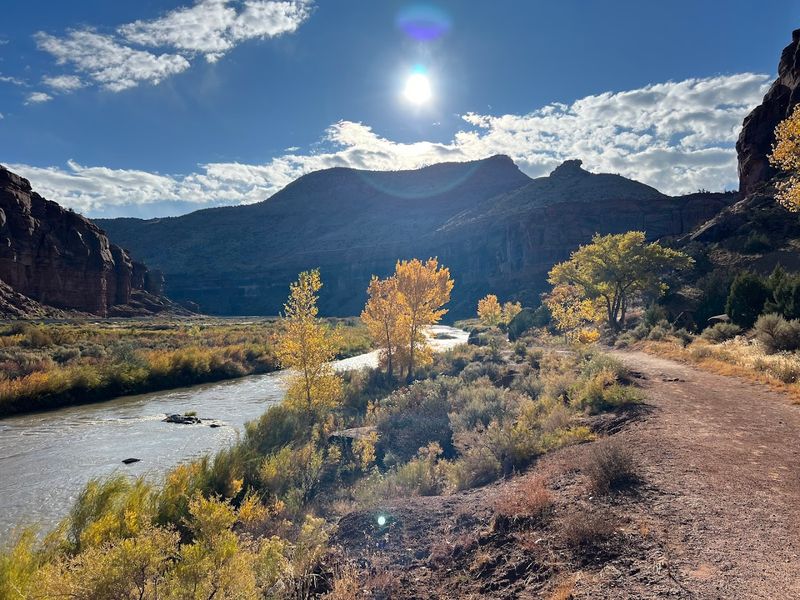
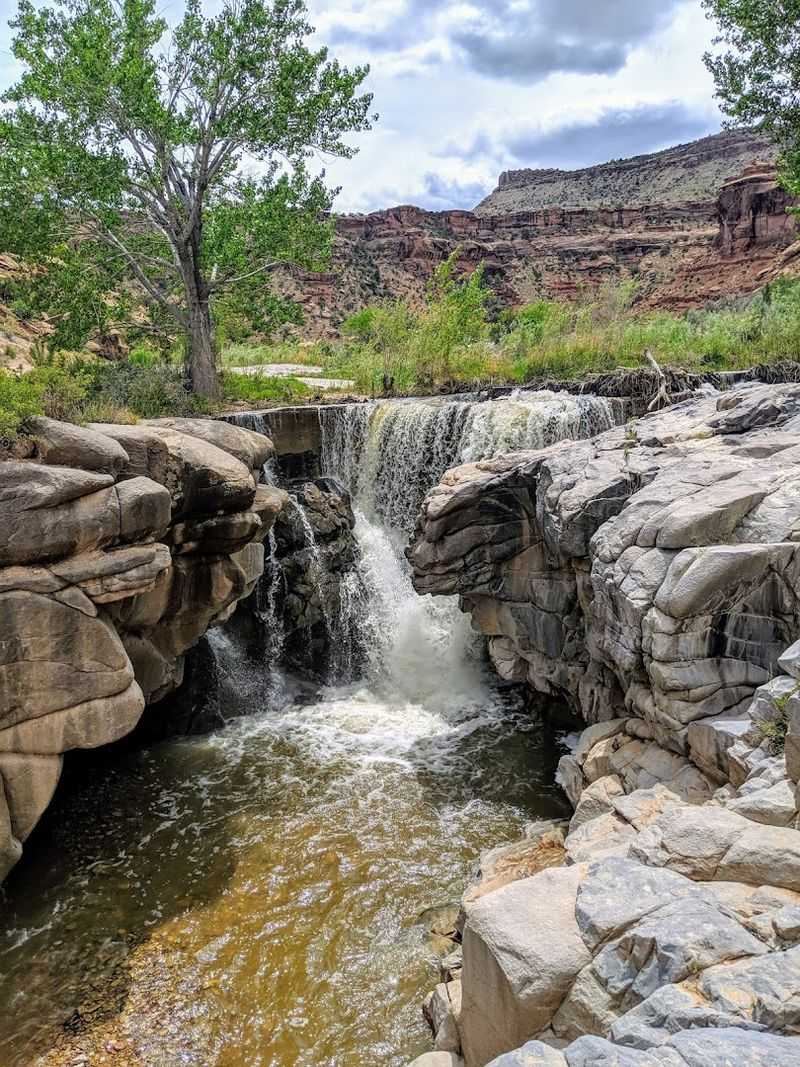
Nobody expects cottonwood trees in a canyon carved from red sandstone and high desert rock, and that is precisely what makes stumbling across them so satisfying. Along Dominguez Creek, a corridor of cottonwoods creates a shaded, almost improbable stretch of green that stands in vivid contrast to the surrounding arid landscape.
In spring and fall especially, the effect is quietly spectacular.
Cottonwoods follow water, and Dominguez Creek provides enough of it to sustain a tree line that feels genuinely out of place in the best possible way. The shade they cast over the trail offers welcome relief on warmer days when the canyon floor can turn surprisingly hot.
Visitors have noted the temperature difference is noticeable the moment you step under the canopy.
One historically poignant detail worth knowing: about four and a half miles up Little Dominguez Canyon, the trees surrounding an old settler’s cabin died quickly once the homesteader was no longer there to water them. The remaining stump and fallen trunk near the old buckboard serve as a quiet reminder of how intentional that green corridor once was.
Why It Matters: The cottonwood grove is the unexpected visual payoff that turns a good hike into a genuinely memorable one, especially for first-time visitors.
Ancient Voices On Stone: Petroglyphs Along The Canyon Walls
Scattered across the sandstone walls of Big Dominguez Canyon are petroglyphs that predate every other landmark in the area by centuries. These ancient carvings appear at various points along the trail, particularly after the canyon splits into its Big and Little Dominguez forks.
They are not roped off or behind glass; they are simply there, on the rock, waiting to be noticed by anyone paying attention.
That accessibility comes with responsibility. Visitors have reported instances of graffiti added near or over the original carvings, which is both illegal and genuinely disheartening.
The canyon asks for very little in return for what it offers, and leaving the petroglyphs undisturbed is the most basic form of respect a visitor can show.
Photographing them is encouraged, defacing them is not, and the distinction matters more than it might seem in the moment. These are irreplaceable records left by people who lived in this canyon long before any road reached it.
Treat them accordingly.
Insider Tip: Petroglyphs appear at multiple points along the trail rather than one concentrated spot, so keep your eyes on the canyon walls throughout the hike rather than waiting for a designated viewing area.
Waterfalls In The Desert: Finding The Falls Along The Trail
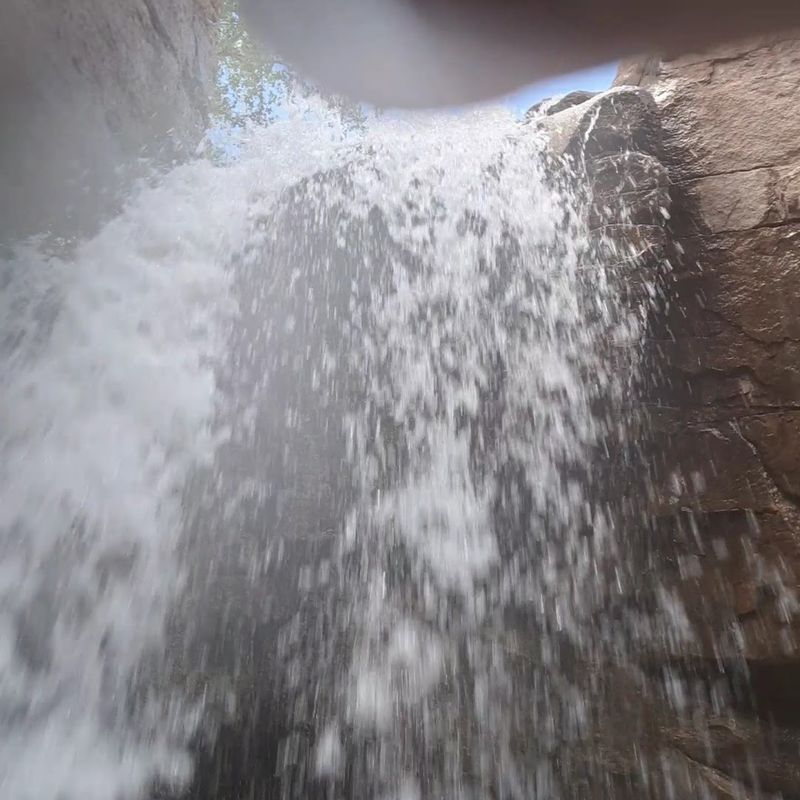
Finding a waterfall in a high desert canyon feels like discovering a rumor turned out to be true. Big Dominguez Canyon delivers not one but multiple waterfalls along its trail system, with the first appearing roughly two miles in near a bridge crossing.
Visitors have reported locating at least three distinct falls before turning back, depending on how far they push into the canyon.
The first small waterfall tends to get the most attention because it arrives just as the trail starts feeling genuinely remote. The sound of moving water carries before you see it, which adds a nice anticipatory quality to the approach.
Crossing to the opposite side of the creek improves the view considerably, as the falls can be difficult to spot from the main trail alone.
Water levels vary by season, so spring visits after snowmelt tend to produce the most dramatic flow. Summer heat can reduce some of the smaller falls to a trickle, though the canyon remains worth visiting regardless.
The combination of waterfalls, petroglyphs, and cottonwoods in a single hike is the kind of triple feature that makes people drive eight miles of dirt road without complaint.
Planning Advice: Visit in spring for peak waterfall flow and wildflowers, or fall for cottonwood color. Summer is doable but demands serious water intake and an early start.
Who Should Make The Drive: Matching The Trail To The Hiker
Big Dominguez Canyon is one of those rare trails that genuinely works for a wide range of visitors without pretending to be something it is not. The terrain is mostly flat along the canyon floor with only gradual elevation gains, which means families with younger children can manage it comfortably.
One visitor brought a six-year-old on the hike and reported the child handled it without trouble.
Couples looking for a day away from the predictable weekend routine will find plenty here: scenery that changes every half mile, spots along the creek for a quiet lunch, and enough trail length to feel like an actual adventure without requiring a multi-day commitment. Solo hikers and backpackers are equally well served, with free campsites near the river and creek available for those who want to stay overnight.
Equestrian visitors have specific notes worth reading: the bridge crossing requires care, the road has sharp blind turns, and the section near the train tracks carries real hazard potential for horses. Bringing a personal locator beacon is strongly recommended for anyone venturing deep into the backcountry, where cell service disappears quickly beyond the upper parking lot.
Who This Is Not For: Anyone expecting paved paths, cell coverage throughout, or shade without planning for it. This canyon rewards preparation and punishes the assumption that it will be easy.
Final Verdict: Why Big Dominguez Canyon Earns A Return Trip
A 4.7-star rating across 166 visitor responses is not something a trail earns by accident. Big Dominguez Canyon has accumulated that score the honest way: by delivering a genuinely varied, visually rewarding experience that holds up across seasons, group sizes, and hiking speeds.
The choose-your-own-distance format means the trail never forces a commitment you are not ready for.
The combination of features packed into a single hike is legitimately unusual. Ancient petroglyphs, multiple waterfalls, free camping, swimming holes along the Gunnison River, wildflowers in spring, cottonwood corridors, towering sandstone walls, and occasional mountain goat sightings add up to a trail that would charge an entrance fee if it were located anywhere near a major city.
Located off Bridgeport Road near Whitewater, Colorado, the canyon sits close enough to US 50 to work as a day trip from the Grand Junction area without requiring expedition-level planning. Bring more water than you think you need, start early on warm days, keep dogs leashed, leave the petroglyphs exactly as you find them, and tell the next person you see heading toward the trailhead that they made a good decision.
Key Takeaways: Flat canyon floor trail, multiple waterfalls, ancient petroglyphs, free camping, cottonwood oasis, family and equestrian friendly, and eight miles of unpaved road that is absolutely worth the drive.