
This Remote Colorado Mountain Village Is So Beautiful, You’ll Wonder Why No One Talks About It
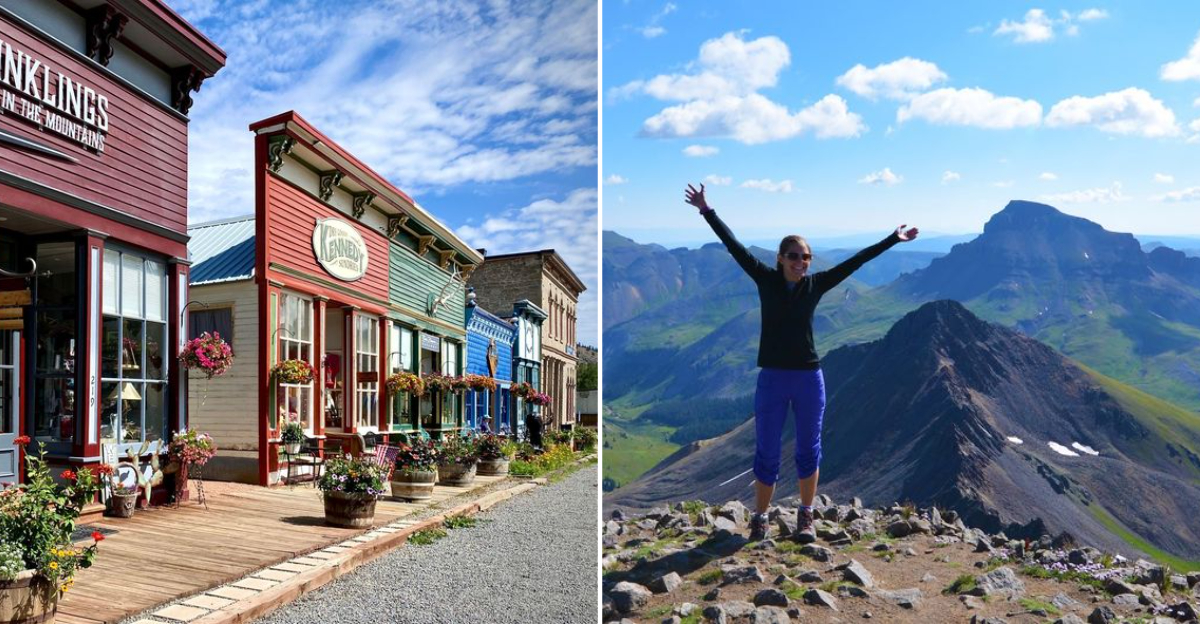
I stumbled into Lake City by accident three summers ago, chasing a rumor about wildflowers and a road that twisted through volcanic badlands.
What I found was a town so quiet you could hear the river breathing, tucked into a county that claims the title of most remote in the Lower 48. No traffic lights, no chain stores, just red cliffs glowing at sunset and a Main Street that still remembers mining boots and mule trains.
If you crave a place that refuses to hurry, where night skies swallow you whole and peaks pile up like promises, this Colorado city might just ruin you for everywhere else.
A Village Between Volcano Cliffs and River Calm
Slip along Colorado 149 and you’ll land in Lake City, the only town in wild, high Hinsdale County. Red-gold volcanic cliffs hold a blue river hush, and the pace drops the second you ease off the gas.
The county calls itself the most remote in the Lower 48, and you feel it in the quiet, in the distance between road signs, in how darkness returns the stars.
The population hovers around 400, and that number includes the dogs. Main Street runs just a few blocks, lined with false-front buildings that wear their age with pride. I sat on a bench there once for an hour, watching exactly three cars pass.
Getting There Is Part of the Spell
The approach itself slows you down: the Silver Thread Scenic Byway rolls over Spring Creek Pass at 10,901 feet and Slumgullion Pass at 11,530 feet before curling into town.
CO-149 is a paved, year-round highway, yet winter squalls can make it feel like a world away. Plan for mountain conditions even when the plows are humming.
Every bend reveals another postcard moment: aspen groves in autumn gold, meadows stitched with wildflowers, peaks that scrape clouds.
I’ve driven hundreds of scenic routes, but this one never feels rushed. The road teaches patience before the town ever comes into view.
The Blue Heart: Lake San Cristobal
South of the village, Lake San Cristobal mirrors the peaks. Formed when a prehistoric slide dammed the river, it’s Colorado’s second-largest natural lake, a place for quiet shore walks, trout talk, and a sky that doubles at dusk.
The water holds that high-altitude clarity that makes you want to reach in and touch the bottom.
Campgrounds hug the western shore, and fishermen wade in at dawn when the mist still clings. I’ve watched ospreys dive here, watched thunderheads build over the ridgeline, watched the sun paint everything pink.
It’s the kind of spot that begs for a blanket and no agenda.
The Landslide That Made a Landscape
Look up from the water to the Slumgullion Earthflow, a rare, still-moving mass of golden tuff designated a National Natural Landmark.
Centuries ago it slumped down the mountain and created the lake; today, you can study its ripples from roadside overlooks on the pass. Geologists come here to watch the earth breathe in slow motion.
The flow creeps a few millimeters each year, carving fresh wrinkles into the hillside. Standing at the overlook, you realize landscapes aren’t fixed – they’re just pausing between movements.
I spent twenty minutes there once, trying to wrap my head around geologic time, and left feeling wonderfully small.
High Roads to Ghost Towns
When the snow recedes, the Alpine Loop Backcountry Byway threads over Engineer and Cinnamon passes and into a filmstrip of mines and ghost towns between Lake City, Ouray, and Silverton.
Most of this rugged loop is unpaved and seasonal, which is exactly why it still feels like discovery. Four-wheel-drive is the ticket, and clearance matters.
Old cabins tilt into hillsides, rusted equipment leans against time, and you can almost hear the pickaxes echoing. I took the loop in late July, windows down, dust in my teeth, grinning the whole way.
It’s rough, it’s raw, and it’s worth every rattling mile.
Peaks on the Doorstep
From a coffee-warm morning in town, you can be on a trail to a fourteener by lunch. Lake City is the basecamp for five 14ers: Handies, Redcloud, Sunshine, Uncompahgre, Wetterhorn.
Classic routes like Nellie Creek to Uncompahgre start just up the valley, and summer weekends see a steady trickle of summit seekers.
You don’t need technical gear for most routes, just legs, lungs, and respect for altitude. I bagged Handies on a bluebird August day, and the view from 14,048 feet stretched into three states.
The descent felt like floating, and the burger I ate afterward tasted like victory.
Streets That Remember
Even the sidewalks whisper. The Lake City National Historic District, on the National Register since 1978, preserves over 200 historic structures, from churches and cabins to the courthouse.
Walk it slow; the details reward lingering. Victorian trim, hand-carved doors, windows that once watched stagecoaches roll past.
I wandered the district on a cool September morning, coffee in hand, reading plaques and peeking through gates. The buildings aren’t museums – they’re still lived in, still loved.
History here isn’t cordoned off behind velvet ropes; it’s woven into daily life, quiet and stubborn and real.