
This Remote Maine Island Fort Is One Of New England’s Best Hidden Treasures
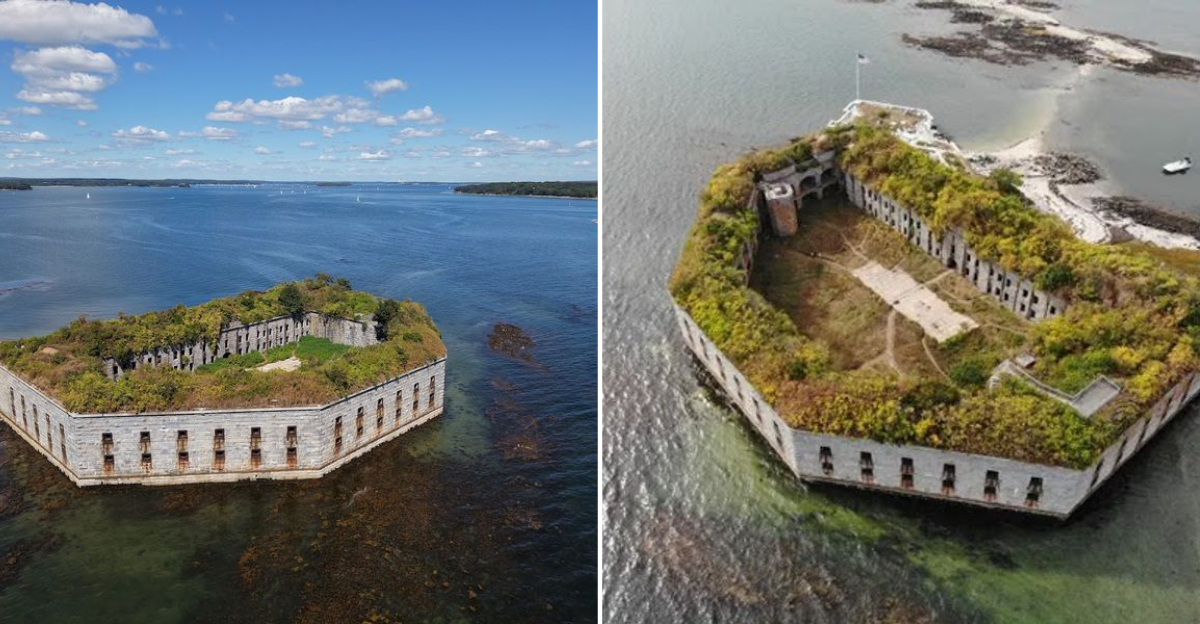
Imagine paddling over a sparkling stretch of water in Maine, salt air sharp and fresh, as a massive granite fortress slowly rises into view. The approach alone feels cinematic, with thick stone walls seeming to grow straight out of the sea.
Set on a rocky ledge in Casco Bay, this 19th-century military fort has long drawn curious visitors eager to wander its shadowy corridors, climb narrow spiral staircases, and take in wide, open ocean views. There’s a quiet, almost forgotten atmosphere here that makes every step feel like a discovery.
It’s the kind of place that blends history, adventure, and raw coastal scenery in a way that’s hard to match.
A Fortress Rising From The Sea
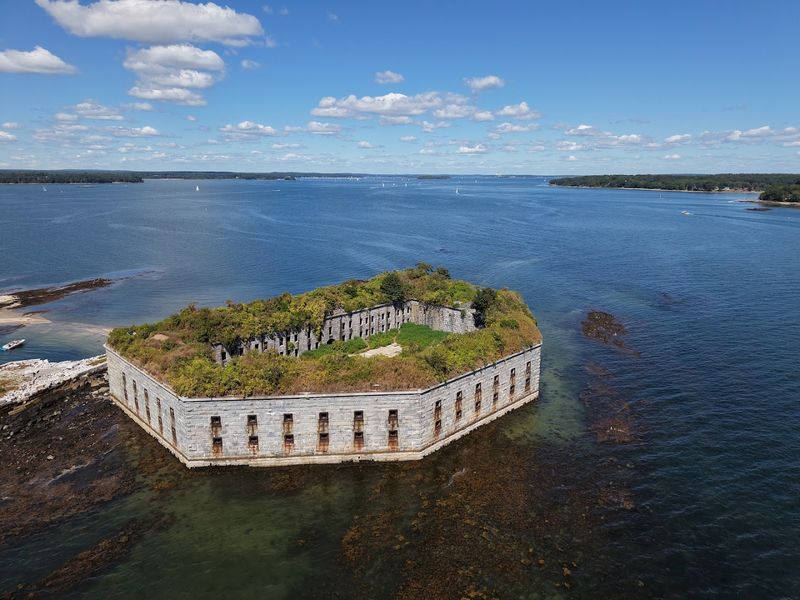
Fort Gorges sits on Hog Island Ledge, a small rocky outcrop in the middle of Casco Bay in Portland, Maine. The island is so compact that the fort essentially covers most of it, making the whole structure feel like it grew straight out of the ocean.
Construction on the fort began in 1858, and the granite walls were carefully designed to blend strength with strategic positioning. From nearly every angle on the water, the fort commands your full attention.
Its massive arched openings and thick stone walls look almost too grand for such a small island.
The location was chosen specifically because it offered a clear line of sight across the bay, making it an ideal defensive position. Standing on the fort’s upper level today, you can see Portland’s skyline, nearby lighthouses, and the open Atlantic beyond.
The island setting creates a sense of total isolation that feels rare and genuinely thrilling for any history-minded traveler.
The Fort That Never Saw Battle
Here is a quirky twist for a military fort: Fort Gorges was built to defend Portland Harbor but was never actually used in combat.
Construction and later modifications stretched over many years, and by the time the fort neared completion, military technology had already moved beyond what it was designed to withstand.
Rifled artillery, which became standard during the Civil War era, could punch through granite walls that would have stopped older cannonballs easily. The fort was essentially outdated before it was ever finished.
The U.S. Army quietly abandoned active plans for it, and it was never fully completed as originally designed.
What makes this fact so fascinating is that much of the fort’s structure survives because it was never put through the damage of actual warfare, even though it has deteriorated over time.
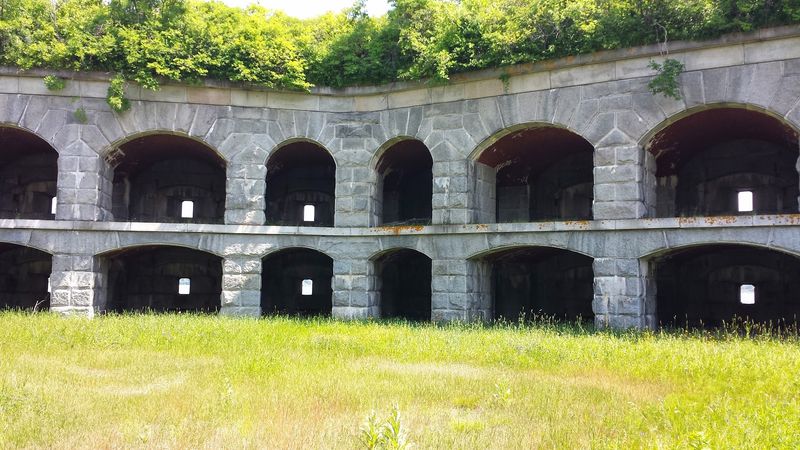
The walls, arches, and gun casemates survived intact largely because they were never truly tested. History preserved it through neglect rather than battle, and that irony makes every visit feel strangely poetic.
Who Was Gorges, Anyway?
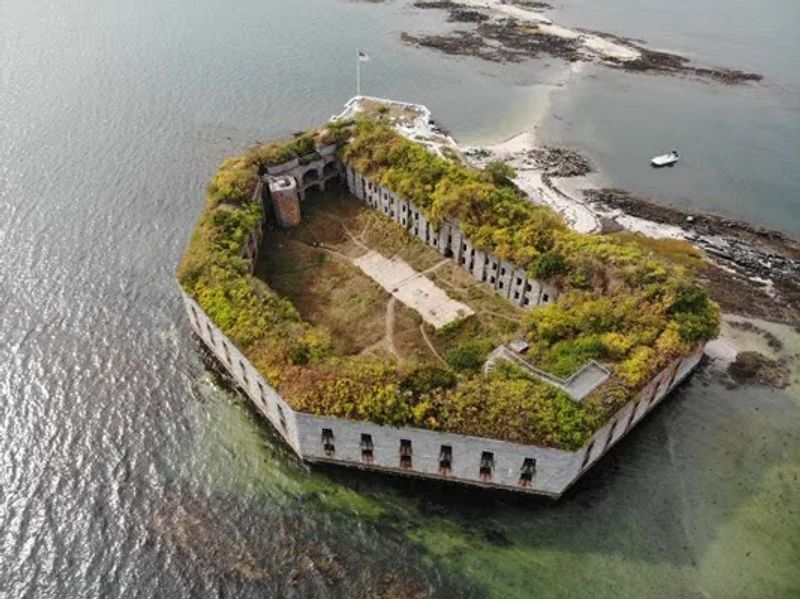
The fort carries the name of Sir Ferdinando Gorges, an English military officer and colonial promoter who played a major role in early Maine history. Gorges was one of the key figures behind the colonization of what is now the state of Maine, and he held a royal charter for the Province of Maine in the 17th century.
He never actually set foot in New England himself, which adds a slightly ironic layer to having such a powerful stone structure bear his name.
Despite never making the voyage across the Atlantic, his influence on the region’s early European settlement was significant enough to earn him a lasting tribute in granite.
Naming military forts after historical figures was a common American tradition, and Fort Gorges fits neatly into that pattern. Learning about Gorges before your visit adds a rich layer of context to what you see.
The fort becomes not just a building but a physical bookmark in the long story of Maine’s colonial past.
Only Accessible By Water
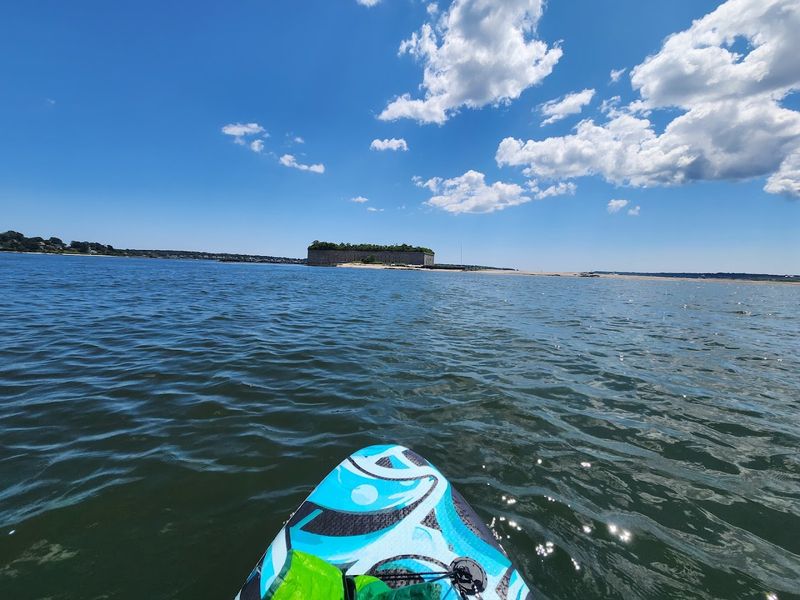
Getting to Fort Gorges is half the adventure. There is no bridge, no ferry schedule to follow, and no parking lot waiting for you on the other side.
The only way to reach the island is by boat, kayak, water taxi, or guided paddling tour, which immediately filters out casual visitors and keeps the experience feeling special.
Portland Paddle, a local outfitter based at East End Beach, offers guided kayak tours across the bay to the fort. The paddle time varies depending on conditions such as wind, current, and boat traffic, which can make the crossing more challenging.
If you are kayaking independently, checking tide charts and wind forecasts beforehand is genuinely important. The harbor sees heavy boat traffic, and tides in Casco Bay can shift quickly.
Landing on the island typically means pulling up onto a small rocky or sandy shoreline, as there is no formal dock. That rough-around-the-edges arrival only adds to the fort’s rugged, off-the-beaten-path character.
Free To Explore Once You Arrive
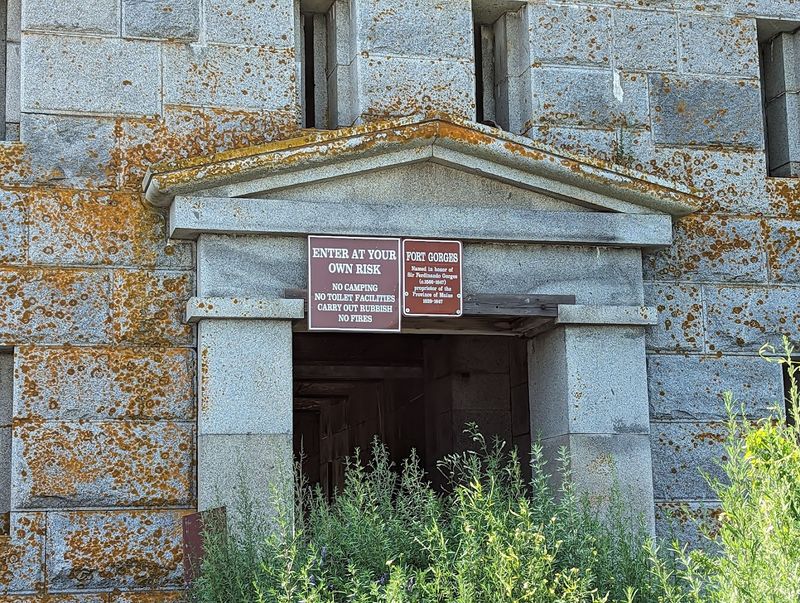
One of the most refreshing things about Fort Gorges is that there is no admission fee. Once you make it to the island, the fort is open and free to explore at your own pace, with no tickets to buy and no timed entry windows to manage.
There are no staff members stationed inside, no guided tours built into the visit, and no roped-off gift shop waiting at the exit. What you get instead is raw, unfiltered access to a 19th-century military structure that feels genuinely untouched.
The “enter at your own risk” sign at the entrance sets the tone immediately.
The fort is open daily from 6:30 AM to 10 PM according to current listings, giving visitors a generous window to explore.
Friends of Fort Gorges, a nonprofit organization, works to preserve the site. Their occasional guided tours offer expert historical context that transforms a simple walk-through into a genuinely memorable educational experience.
Bring A Flashlight
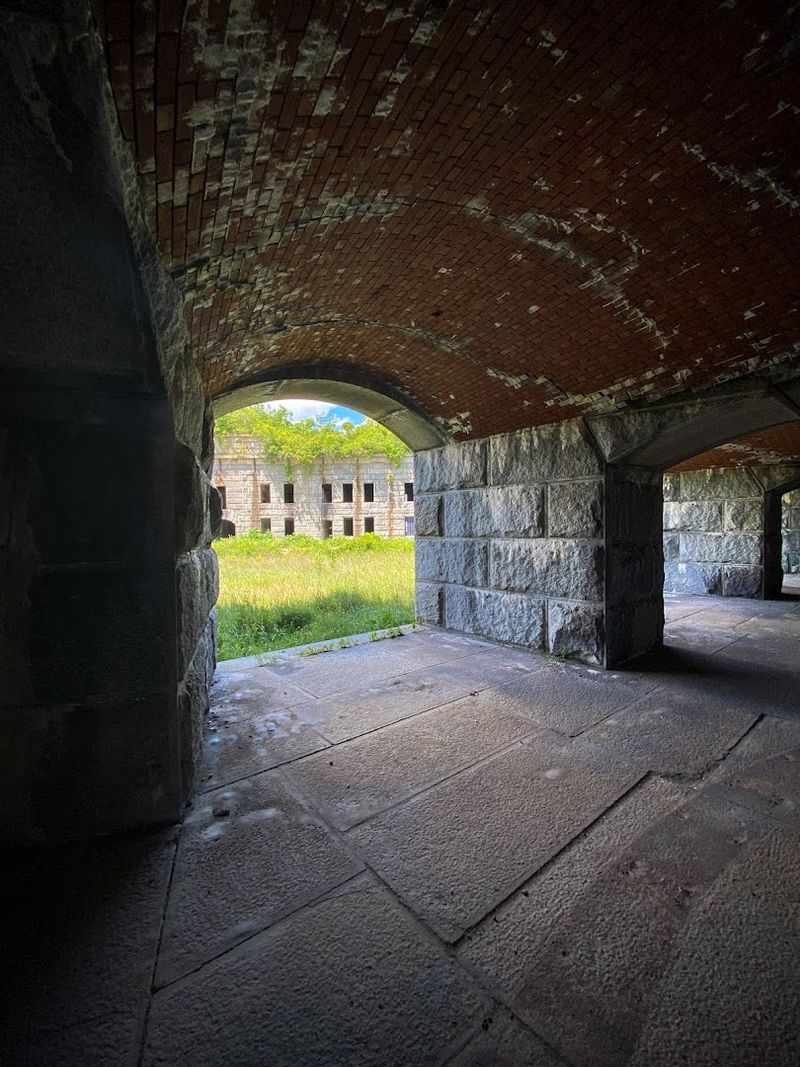
Bring a flashlight. That piece of advice comes up again and again from anyone who has visited Fort Gorges, and for very good reason.
Large sections of the fort’s interior have no electric lighting whatsoever, and some corridors plunge into near-total darkness even in the middle of a sunny afternoon.
The gun casemates, which are the vaulted chambers where cannons would have been positioned, stretch deep into the granite walls. Exploring them without a light source is genuinely disorienting.
A headlamp or a sturdy handheld torch makes the difference between a frustrating shuffle and a fully immersive adventure through stone tunnels and shadowy rooms.
The darkness also adds an atmospheric quality that no amount of museum lighting could replicate. Sound bounces off the thick walls in unusual ways, and the cool, damp air inside the casemates feels noticeably different from the open bay breeze outside.
It is the kind of sensory contrast that sticks with you long after you paddle back to shore, and it makes the fort feel genuinely alive with history.
Climb For The Best Views
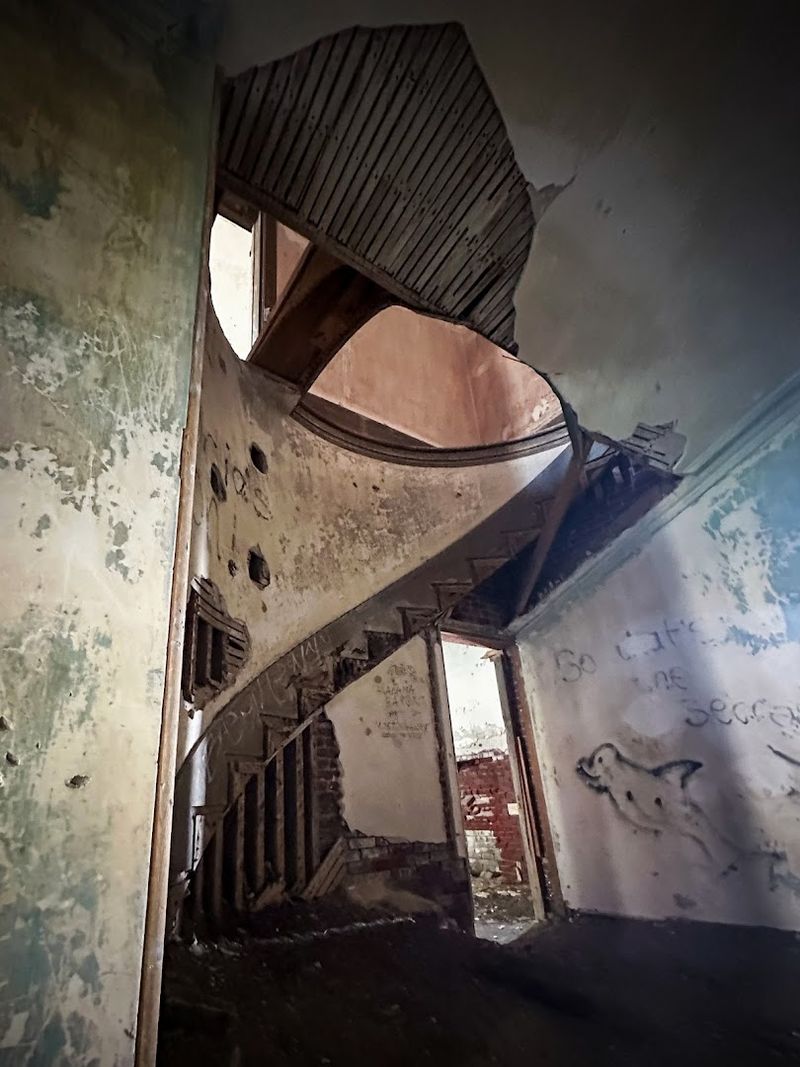
Among the fort’s most impressive architectural features are its spiral staircases, which wind upward through the thick granite walls connecting the lower casemate level to the upper tier.
These staircases are not just functional relics but genuinely elegant pieces of 19th-century military engineering built to last centuries.
Climbing them rewards you with access to the fort’s upper level, where the views across Casco Bay open up dramatically. On a clear day, you can spot Portland Head Light, Spring Point Ledge Lighthouse, and the hazy outline of the open Atlantic stretching toward the horizon.
The panoramic quality of the view from the top is one of the strongest arguments for making the paddle out to the island.
It is worth noting that some interior areas, including parts of the former officers’ quarters, have deteriorated and may be unsafe or restricted.
Sticking to the stone casemates and using only the spiral staircases for vertical movement is the smart and safe approach. The fort rewards careful, attentive explorers who respect its aging structure.
Wildlife All Around You
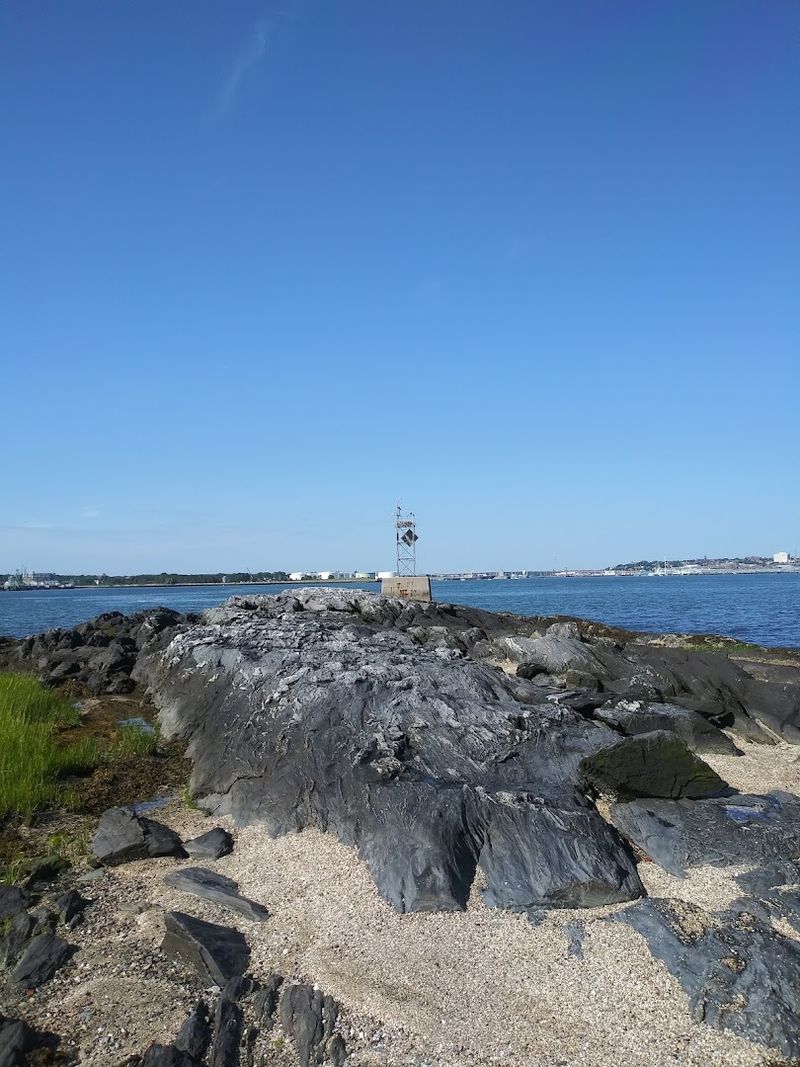
The paddle out to Fort Gorges is not just a means to an end. The crossing through Casco Bay puts you right in the middle of one of Maine’s most active coastal ecosystems, and the wildlife encounters along the way can be genuinely unforgettable.
Harbor seals are a common sight in the waters around the fort. They often haul out onto nearby rocks or pop their whiskered faces above the surface to watch kayakers pass with obvious curiosity.
Ospreys are also regularly spotted circling above the bay, scanning the water for fish with that sharp, focused intensity that makes them so mesmerizing to watch.
Depending on the season, you might also spot cormorants, shorebirds, and other coastal wildlife in the surrounding bay. The natural setting surrounding Fort Gorges is a reminder that this is not just a history trip but a full outdoor experience.
Maine’s coast has a way of turning even a short paddle into something that feels much bigger than the distance covered.
A Dream For Photographers
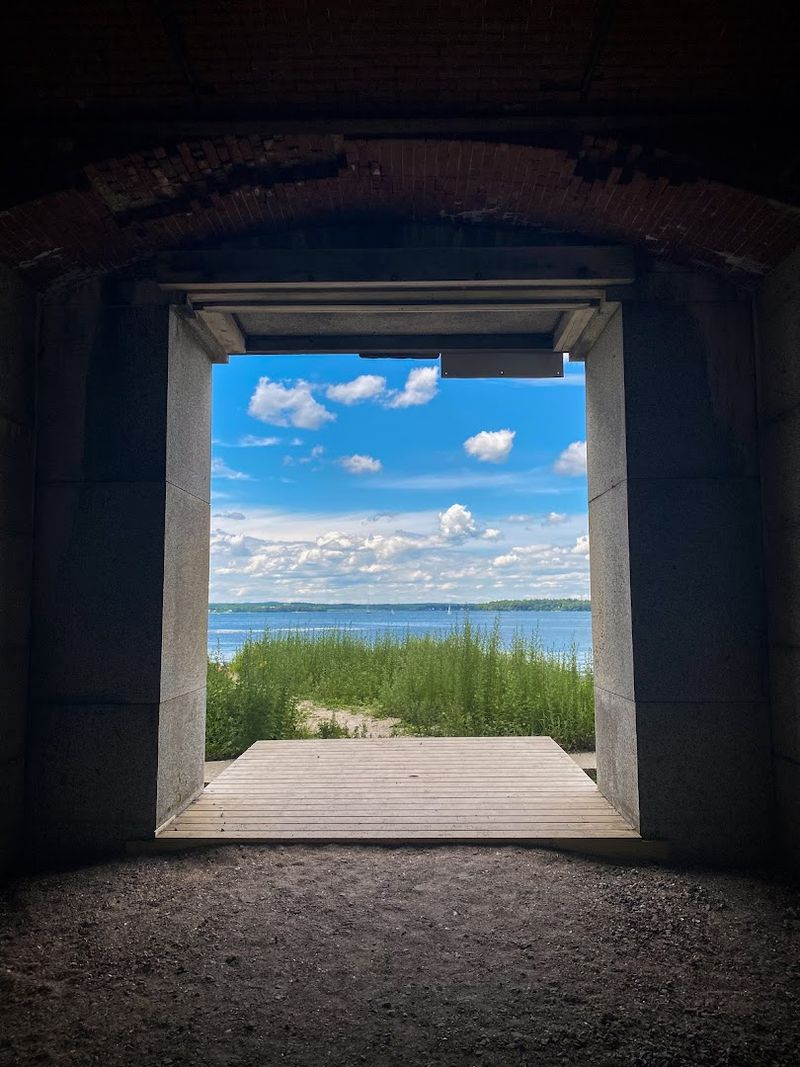
Fort Gorges has a visual quality that photographers find almost impossible to resist. The contrast between the weathered granite walls and the surrounding ocean creates a moody, cinematic backdrop that looks completely different depending on the light, season, and weather conditions when you visit.
Golden hour, when the low sun turns the stone walls a warm amber color and the bay reflects the sky like a mirror, is widely considered the best time to shoot the exterior.
Inside, the interplay of natural light filtering through arched openings and the deep shadows of the casemates offers endless compositional possibilities for anyone with a camera.
Urban explorers are drawn to the fort for different reasons. The partially deteriorating rooms, moss-covered stones, and general sense of frozen time make Fort Gorges feel like a place that history quietly walked away from without fully closing the door.
Multiple lighthouses visible from the island add even more photographic variety to the trip, making the whole outing feel rich with creative potential from start to finish.
Tips Before You Go
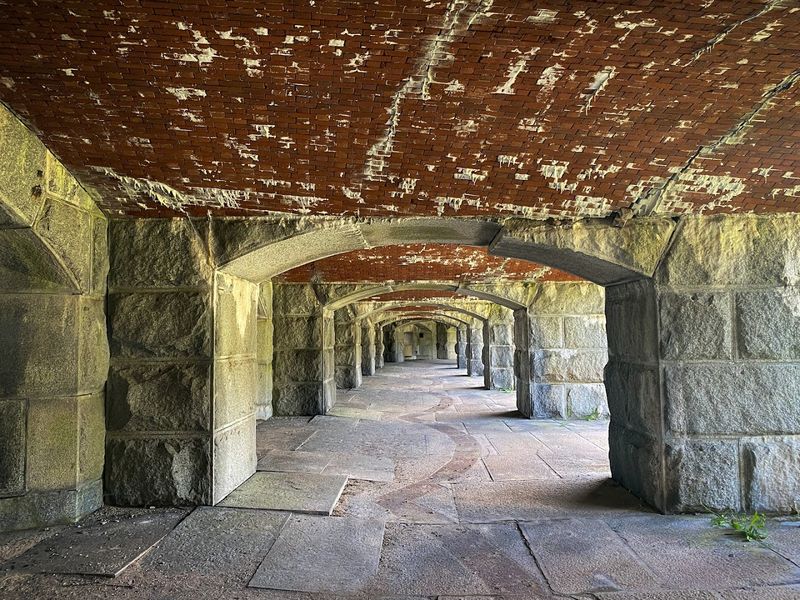
A little preparation goes a long way when visiting Fort Gorges. Beyond the flashlight, sturdy footwear is essential.
The floors are uneven stone, and you’ll run into loose rubble and slippery spots that regular sneakers just don’t handle well.
A good pair of boots or trail shoes with ankle support will make exploring a lot easier and way more enjoyable.
Bring your own water and snacks, too. There’s nothing on the island, no food, no vending machines, no restrooms, so it’s best to plan ahead before you head out.
It’s also worth checking the tide chart. Conditions in Casco Bay can change quickly, and tides can affect how easy it is to land and leave.
If you’d rather not go it alone, Portland Paddle offers guided kayak tours from East End Beach with some great historical context along the way. And if paddling’s not your thing, you may be able to catch a water taxi depending on conditions.
The fort is open daily from 6:30 AM to 10 PM, so you’ve got plenty of time to explore at your own pace without feeling rushed.