
This Retro Florida Roadside Diner Still Feels Like A Slice Of The ’70s

Pull off North Boulevard in Leesburg and Old Time Diner appears like a postcard propped carefully against the present, a place where chrome catches the light just right, nostalgic knickknacks fill every corner with intention rather than clutter, and the overall effect makes you slow down before you even reach the door.
The décor leans comfortably into the 1950s and 1960s, not as a theme but as a lived-in habit, framing a menu that moves easily from seafood boils to ham-and-bacon omelets, from griddled classics to comfort plates that seem designed for people who still eat by appetite rather than trend, all priced with a weekday logic that assumes you might be hungry but not reckless.
What stays with you is the rhythm of the room.
Service can be brisk and genuinely friendly, though now and then you may find yourself lingering at the host stand longer than expected, watching regulars slide into booths with complete confidence that the wait will resolve itself, because here it always does.
Conversations overlap, coffee cups clink, and no one treats the experience like an event that needs managing.
If you’re drawn to road food that feels like it had a home long before it had a price tag or a review score, this is the kind of diner that earns attention quietly, by repeating what works and trusting familiarity to do the rest.
Slide Into The Vinyl And Scan The Walls
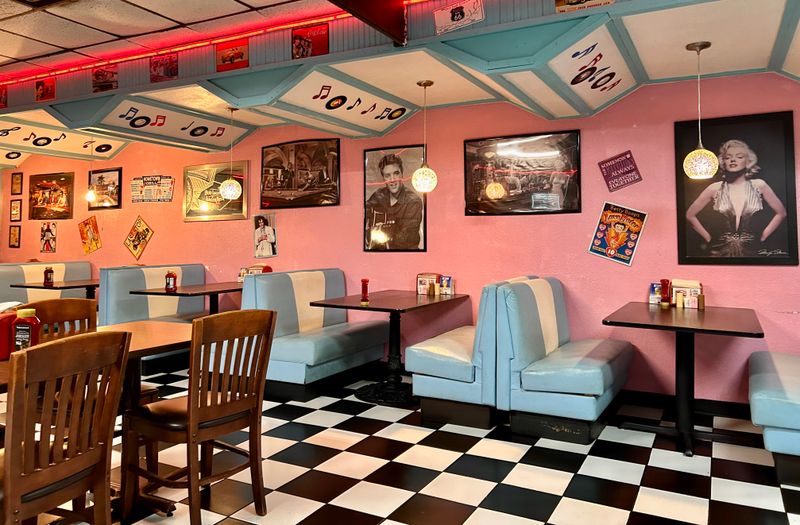
The moment you ease into the cracked vinyl booth, the diner announces itself not through spectacle but through accumulation, a dense layering of chrome trim, vintage clocks, enamel signs, and roadside memorabilia that quietly insists it has been collecting stories longer than most places have been repainting walls.
Nothing feels curated for effect, because the seats show their age honestly, the edges worn smooth by decades of bodies sliding in after work or road trips, creating a kind of visual shorthand that tells you this room has been used consistently rather than preserved selectively.
Lighting shifts with the day, landing bright and practical in the morning and mellowing into a warmer glow as afternoon slides toward evening, while the steady murmur of conversations, clinking plates, and short kitchen calls settles into a rhythm that never feels hurried or staged.
Menus are scanned the way locals scan them, quickly and without ceremony, because the environment encourages confidence rather than deliberation, nudging you toward familiar comfort instead of novelty chasing.
When food begins landing on nearby tables, you notice how plates look purposeful rather than decorated, portions laid out with a kind of diner logic that favors appetite and clarity over display.
The room carries a grounded energy that makes both solo diners and full families feel equally legitimate, as if time stretches just enough for you to notice the details without asking anything of you in return.
By the time your own order arrives, the walls no longer feel crowded, because your attention has already adjusted to the sensory density, and what first felt busy now reads as reassuring, like visual proof that this diner has always known exactly who it is.
Breakfast That Behaves Like A Promise
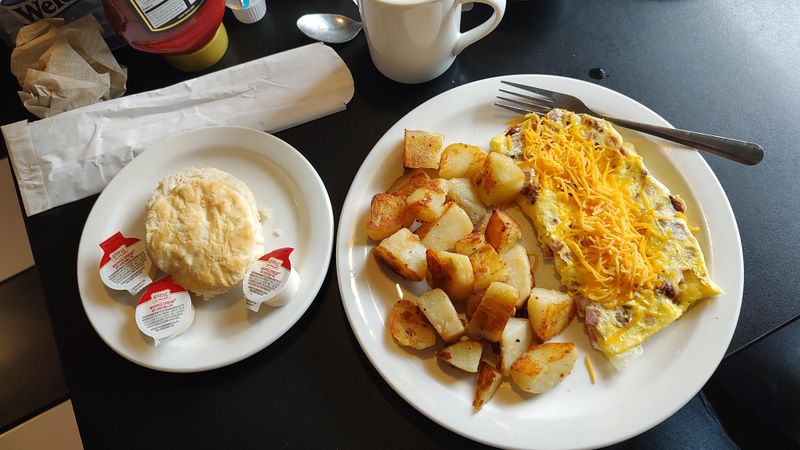
Morning settles into the room with an unspoken agreement that certain things will arrive exactly as expected, beginning with omelets folded generously around ham, bacon, and melted cheese, their weight reassuring rather than theatrical as they slide onto warm plates.
Eggs follow instructions carefully here, landing over easy with intact yolks that hold until nudged, while grits arrive quietly steaming, soft enough to take butter without resistance and sturdy enough to stand alone as a chosen side rather than an obligation.
Pancakes show a little individuality from batch to batch, sometimes uneven at the edges or slightly darker than anticipated, yet consistently hot and filling in a way that signals speed without carelessness from the flat top.
The opening hour commitment, daily at 7 AM, matters more than signage, since it allows commuters, retirees, and travelers to trust the clock rather than check a website before pulling off the road.
A menu this wide could feel unfocused, but decades of repetition have trained it into something legible, where breakfast, lunch, and dinner coexist without crowding each other or confusing the kitchen’s priorities.
Midweek mornings move especially smoothly, with orders arriving promptly and refills appearing before you think to ask, a rhythm that rewards those who arrive neither too early nor too late.
By the time the last bite disappears, breakfast no longer feels like a gamble or a treat, but a fulfilled expectation, the kind that steadies the day ahead rather than trying to impress it.
Seafood Surprise In Landlocked Lanes
Expectations shift quietly when seafood enters the picture here, because despite the distance from saltwater the plates arrive with a confidence that suggests repetition, familiarity, and a kitchen that understands frying as a discipline rather than a shortcut.
Catfish lands flaky and well seasoned beneath a crust that snaps cleanly without greasiness, while shrimp keep their shape and sweetness intact instead of collapsing into anonymous crunch, a detail regulars clock immediately.
Crab cakes hold together with restraint, avoiding filler heaviness, their browned edges giving way to a soft interior that tastes deliberate rather than opportunistic.
Hush puppies drift onto the table almost as an aside, warm and gently sweet, yet they often become the item people remember most clearly after the meal ends and conversation shifts.
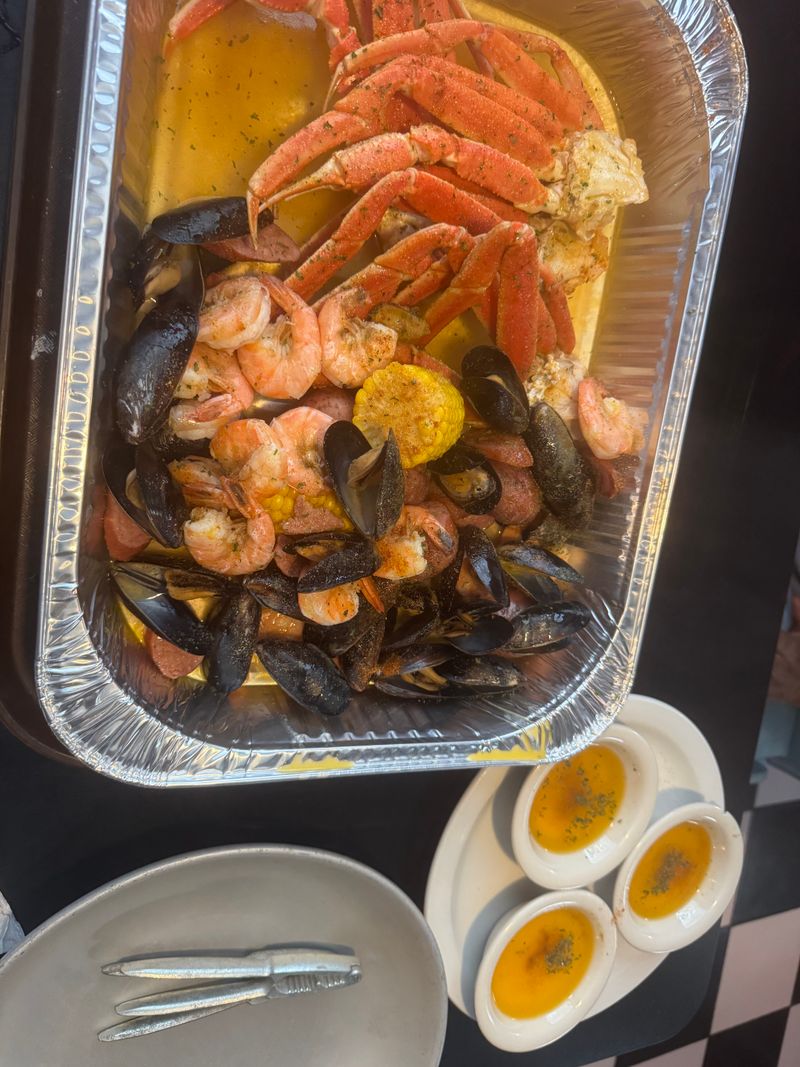
On certain days the seafood boil appears, generous and assertive, carrying spice and steam that recalibrate the room with energy and a faint sense of occasion uncommon for an inland diner.
Consistency matters more than novelty here, and plates moving past neighboring booths tend to mirror each other in portion, color, and care, which quietly builds trust over time.
By the time the table is cleared, the surprise isn’t that seafood works in this setting, but that it feels settled, as if it has always belonged among vinyl booths and roadside traffic.
When A Steak Sub Meets The Flat Top
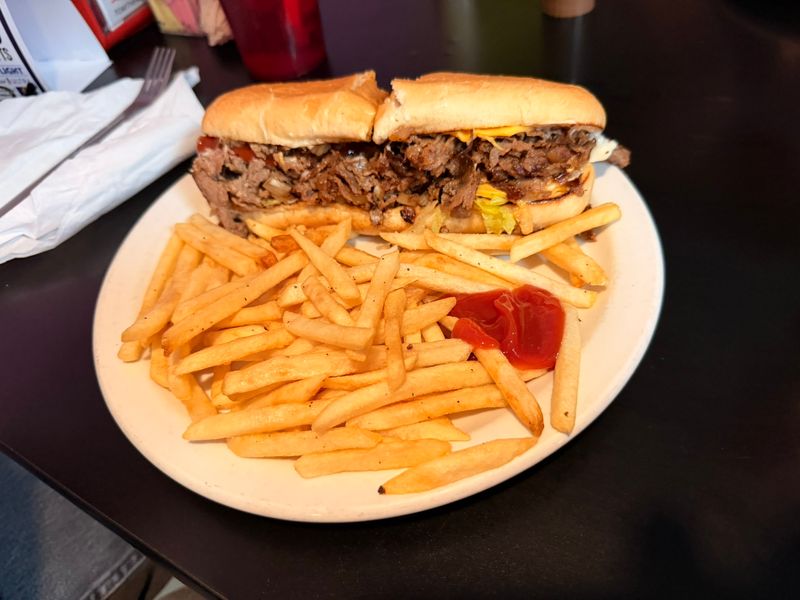
Technique announces itself immediately when thin slices of beef hit the seasoned grill, releasing a smell that reads as practiced rather than improvised, signaling that this sandwich earns its reputation through muscle memory.
Browning develops quickly but not aggressively, allowing the meat to stay tender while collecting caramelized edges that later cling to melted cheese in slow, satisfying pulls with each bite.
The roll plays a quiet but crucial role, staying warm and flexible without disintegrating, a balance that keeps the sandwich intact until the last corner disappears from the paper wrapper.
Optional onions and peppers soften just enough on the flat top to contribute sweetness and depth without stealing attention, integrating rather than competing with the beef.
What sells the sub most convincingly is pacing, because the assembly happens fast enough to preserve heat yet slow enough to respect texture.
Around the room, this plate appears often, especially among regulars who order with minimal discussion, suggesting a long running confidence rather than curiosity.
When set back onto the counter after the final bite, the steak sub leaves behind the sense that nothing decorative was attempted, and nothing essential was skipped.
Fried Fish Sub With A Side Of Sweet Potato Calm
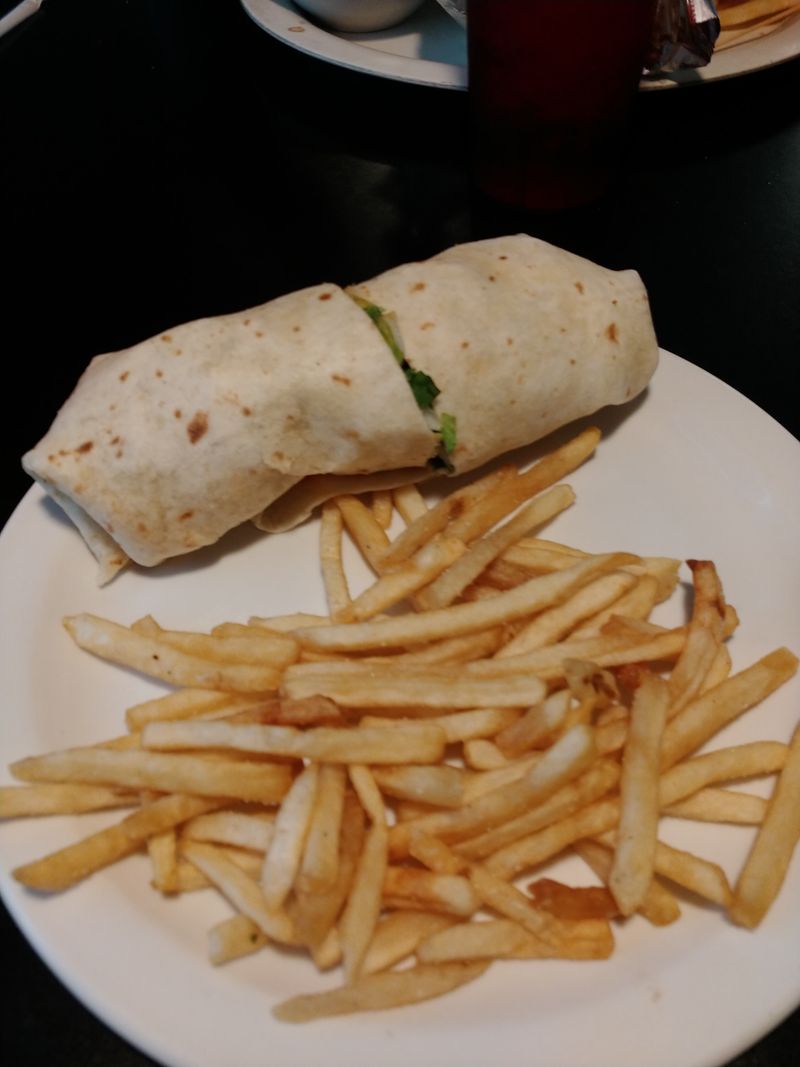
A clean fryer aroma precedes the plate, subtle but reassuring, implying fresh oil cycles and attention that carries through before the first bite even registers.
The fish arrives encased in a light, even crust that protects moisture instead of masking it, holding its structure beneath sauce without collapsing into sogginess halfway through the meal.
Sweet potato fries accompany the sandwich with measured restraint, bronzed at the edges and tender within, avoiding excess sugar while still leaning into their natural warmth.
Around the dining room, the décor murmurs roadside memory through tin signs and faded logos, creating a backdrop that feels accidental rather than curated.
Service during calmer hours remains attentive without hovering, with refills and check ins appearing naturally as conversations pause rather than interrupt.
Regulars note that flavor stays remarkably stable across visits, a quality that matters more than occasional peak greatness in places built on habit.
By the end, the combination of fish and fries feels less like a special order and more like a steadying ritual, calming in both taste and repetition.
Read The Room Then Order Big
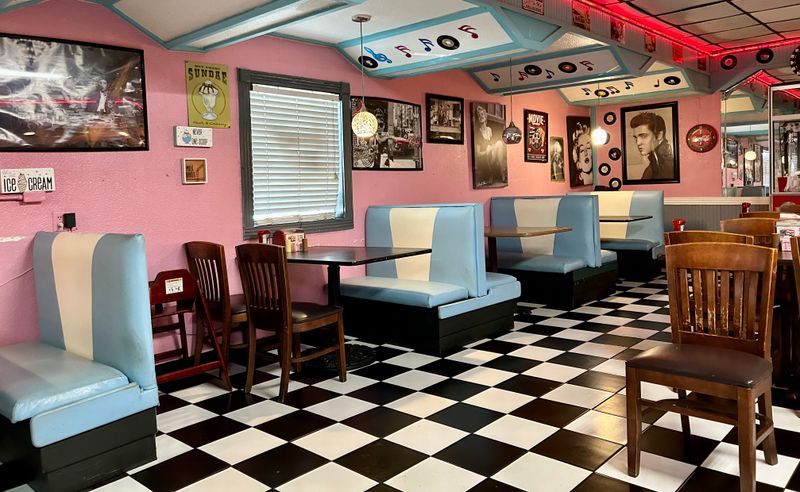
Timing becomes its own ingredient here, because on slower afternoons plates move briskly from kitchen to booth, while busier evenings invite a more patient rhythm that rewards those willing to settle back and observe the room before committing.
When the dining room hums evenly, larger orders land more cohesively, suggesting that the kitchen finds its stride when repetition sets in and momentum replaces rush.
Seafood platters and country fried classics benefit most during these windows, arriving hot and proportioned with confidence rather than haste.
The staff balances multiple tables with an easy familiarity, checking in without urgency and letting conversations breathe between refills and follow-ups.
Prices stay grounded even as portions grow generous, reinforcing the sense that abundance here is meant to satisfy rather than impress.
Watching what longtime diners choose often offers better guidance than the menu itself, as patterns emerge quickly among those who already know the pacing.
By reading the room before ordering, the meal unfolds smoothly, feeling less like a transaction and more like participation in a well rehearsed daily ritual.
Country Fried Steadiness And Gravy Logic
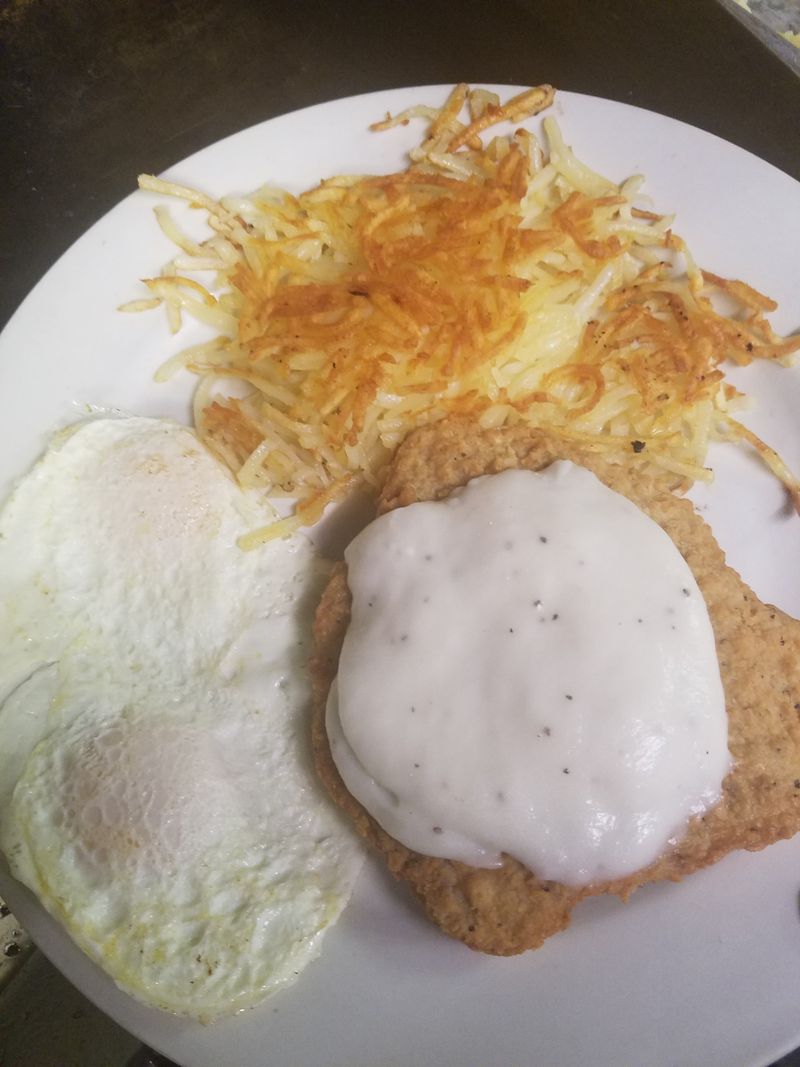
Certain plates announce comfort through structure alone, and the country fried steak does so immediately with a craggy crust sturdy enough to withstand gravy without surrendering its crunch.
Beneath that exterior, the meat stays fork tender, offering resistance only long enough to remind you that texture still matters even in the most familiar dishes.
The gravy arrives creamy but restrained, coating rather than drowning, allowing the steak’s seasoning to remain present instead of disappearing under dairy weight.
Eggs ordered alongside, especially over easy, add richness that integrates naturally, their yolks acting as a secondary sauce with a softer edge.
Visually the plate fits the room, echoing diner photographs and laminated menus from decades past, yet execution keeps it anchored in the present.
Regulars tend to adjust one detail rather than overhaul the order, asking for gravy on the side or swapping a starch, which speaks to trust in the base preparation.
What remains after the last bite is not nostalgia alone but a sense that restraint and repetition have done the heavy lifting.
Hush Puppies That Do Not Apologize
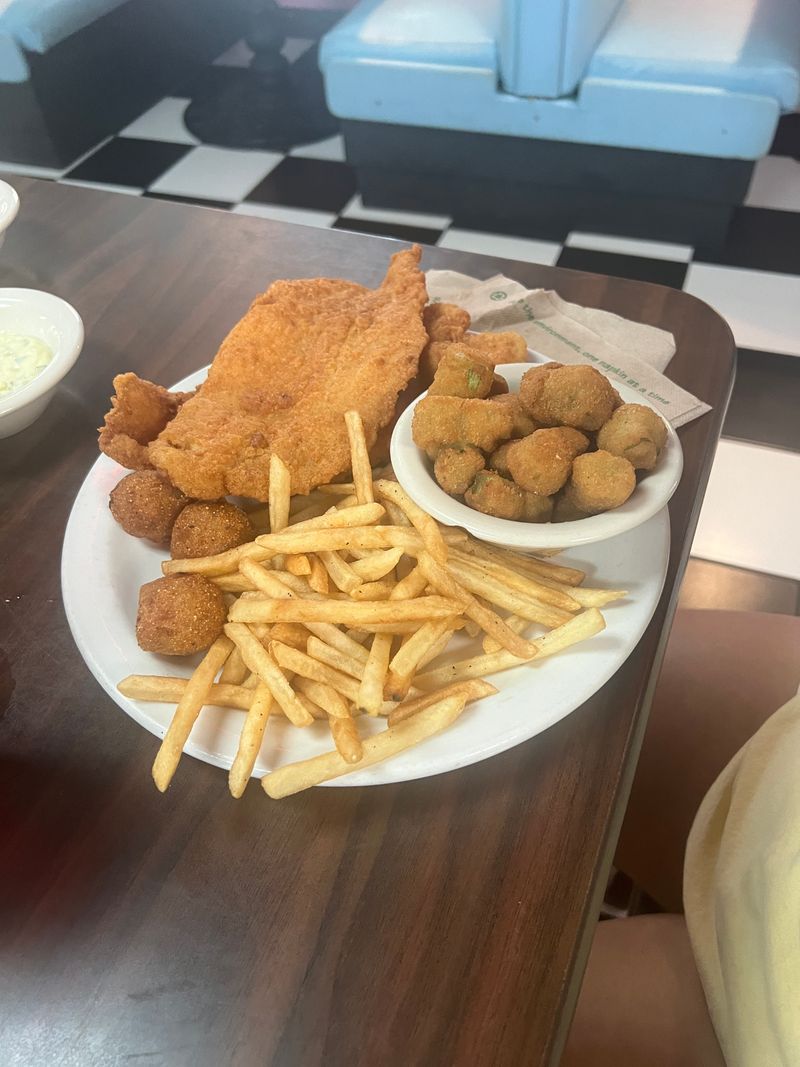
The hush puppies arrive unannounced but unmistakable, their crackle audible enough to momentarily redirect attention from neighboring tables.
Each piece offers a balanced crunch that gives way to a soft interior leaning gently sweet without crossing into dessert territory.
Frying technique holds steady across baskets, suggesting consistent oil management and timing rather than luck of the draw.
They pair naturally with seafood plates but hold their own as a standalone order, often disappearing faster than expected once conversation pauses.
Condiments arrive sparingly, yet even without accompaniment the corn flavor remains clear and forward.
Many diners reach for lemon or honey butter instinctively, creating contrast without overwhelming the base.
By the final crumb, the hush puppies leave no need for explanation, having spoken plainly through texture, warmth, and confidence.
Dessert Timing And A Respectful Coffee
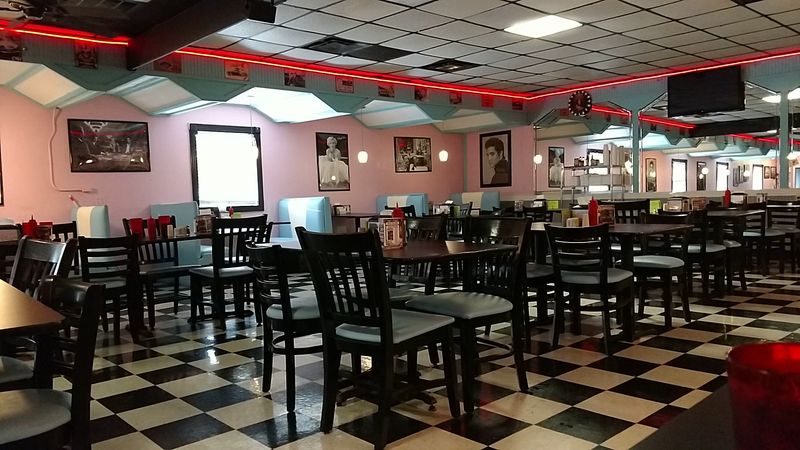
Finishing well here depends less on impulse and more on quiet foresight, because most plates arrive filling enough that a little restraint earlier makes room for a calmer, more satisfying ending.
Dessert feels less like an add-on and more like a change of pace, especially when pie slices or milkshakes arrive after the table has settled into slower conversation and clinking cutlery has faded.
Coffee plays a supporting role rather than a dramatic one, brewed strong enough to reset the palate without shouting for attention or overstaying its welcome.
Refills appear with steady awareness, timed naturally between bites rather than interrupting them, reinforcing the sense that rhythm matters here as much as flavor.
The chrome reflections and muted hum of the room lend themselves to lingering, turning a simple cup and dessert into a brief pause from the road outside.
Ordering dessert alongside a final refill often shortens the closing stretch, keeping momentum gentle instead of restarting the waiting cycle.
When timed well, the last minutes at the table feel unhurried and complete, leaving satisfaction that lingers longer than sweetness alone.
Plan Your Visit Like A Local
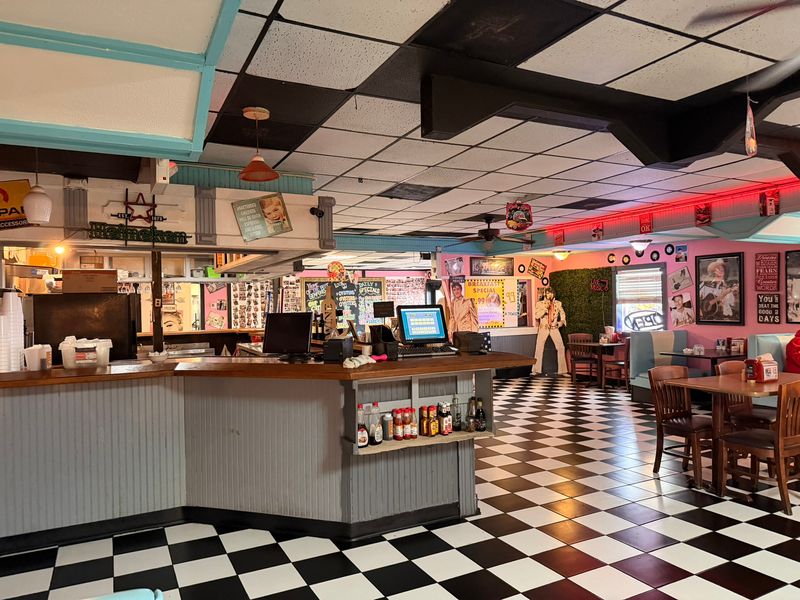
Understanding the daily rhythm makes the experience smoother, since consistent hours from morning through evening allow visits to fold easily around errands, drives, and unplanned detours.
Prices stay comfortably within reach for both breakfasts and larger plates, reinforcing the diner’s role as a repeat stop rather than a once-only splurge.
Calling ahead remains useful for seafood nights or group seating, not because access is limited, but because clarity improves the flow for everyone involved.
Parking can require a small calculation, yet once inside the room’s layout absorbs the crowd efficiently, preventing congestion from becoming part of the meal.
The menu’s breadth supports groups with different appetites, allowing varied orders to land without fragmenting the table’s rhythm.
Regulars tend to arrive knowing roughly what they want but remain flexible, adjusting based on pace and availability rather than forcing a plan.
Approaching the visit with that same adaptability turns the diner into less of a destination and more of an extension of the road itself.