
This Retro Oregon Roadside Diner Feels Like A Trip Back To The ’60s
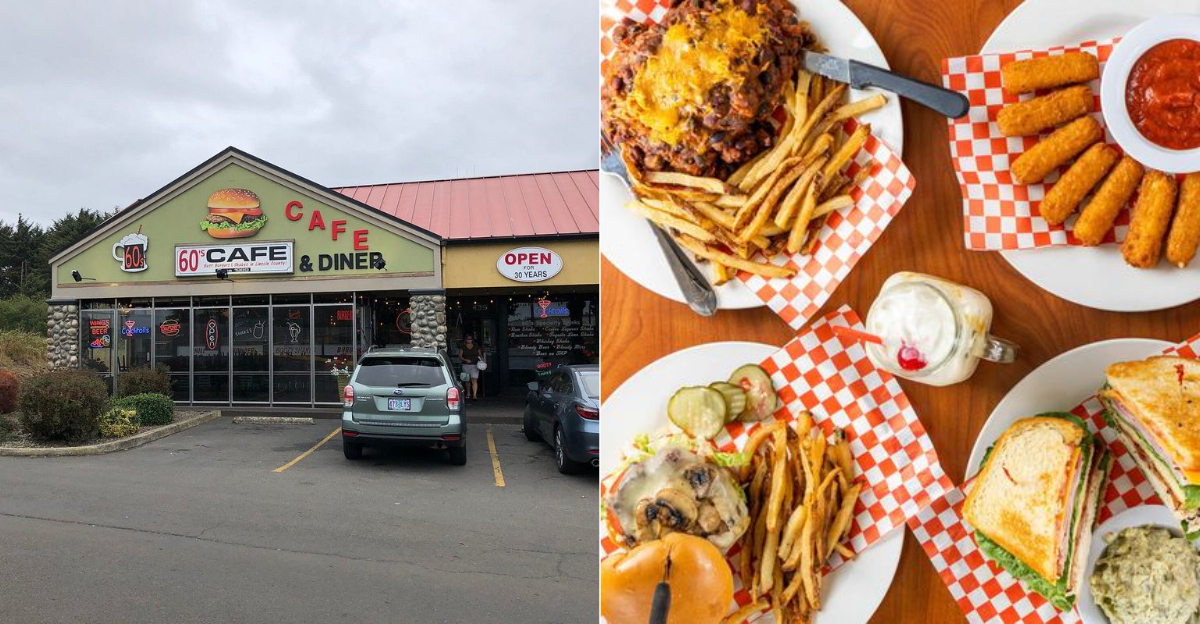
Nestled along the misty Oregon coastline, you’ll find a roadside time machine cleverly disguised as a diner. The 60’s Cafe & Diner in Lincoln City isn’t just about satisfying your appetite—it’s about serving up pure nostalgia with every plate.
Step through the doors and you’re instantly surrounded by jukebox tunes, shiny chrome fixtures, and walls adorned with vintage memorabilia that capture the spirit of mid-century America.
I discovered this retro gem during a rainy coastal drive last summer, and within minutes I felt transported back to a simpler era, where milkshakes, burgers, and optimism seemed endless.
Chrome-Trimmed Time Capsule Location
Perched perfectly along Highway 101’s scenic stretch, this diner’s location couldn’t be more fitting for a blast-from-the-past experience. The contrast between Oregon’s moody coastal landscape and the diner’s vibrant presence creates an almost cinematic effect.
Fog rolling off the Pacific provides the perfect dramatic backdrop for the gleaming chrome exterior. I remember pulling up during a light drizzle, the neon sign cutting through the mist like a beacon from another decade.
The building itself stands defiantly unchanged while modern establishments have sprouted around it, making the time-travel sensation all the more powerful when you step through those doors.
Red Vinyl Booth Magic
Sliding into those cherry-red vinyl booths feels like slipping into a scene from American Graffiti. The unmistakable squeak of the upholstery announced my arrival as I settled in, running my fingers along the cool, smooth surface that’s welcomed thousands of travelers before me.
Each booth offers a private universe while still connecting you to the buzzing energy of the diner. The tables – solid and sturdy with that distinctive metal edging – hold decades of stories beneath their laminate surfaces.
From my corner perch, I watched families create memories, solo travelers find comfort, and locals exchange friendly banter, all framed by those magnificent red booths that haven’t changed since Buddy Holly topped the charts.
Jukebox Soundtrack That Transports You
The vintage Wurlitzer jukebox isn’t just decoration – it’s the beating heart of this time-traveling experience! Doo-wop harmonies and early rock ‘n’ roll float through the air, creating an authentic soundtrack that makes impossible not to tap your feet.
My breakfast arrived just as The Beach Boys started crooning about California girls. The waitress – wearing a period-appropriate uniform complete with name tag – hummed along while refilling my coffee cup.
Unlike modern restaurants with carefully curated playlists, this musical selection feels organically grown from the era itself. No algorithm could replicate the magic of watching someone walk up to that glowing jukebox, drop in a quarter, and select a memory in musical form.
Milkshakes Thick Enough For Time Travel
Hand-spun and served in frosty metal mixing cups, these milkshakes could stand up to any from the actual 1960s! My chocolate malt arrived with a mountain of whipped cream and that telltale extra serving in the mixing container – the hallmark of a truly authentic diner experience.
The straws actually need muscle to pull that thick, creamy concoction upward. Each sip delivers flavors that haven’t been compromised by modern shortcuts or artificial ingredients.
While enjoying my shake, I noticed families sharing sundaes in glass boats and couples with two straws in one shake – scenes that could have been photographed decades ago but were happening right in front of me, proving some traditions are simply timeless.
Breakfast Served All Day, Just Like 1962
Pancakes at 4pm? Absolutely! The liberation of all-day breakfast feels quintessentially American and perfectly aligned with the diner’s time-warp charm. My late afternoon order of golden flapjacks arrived steaming hot, butter melting down the sides.
The griddle has clearly seasoned over decades, imparting that distinctive flavor you simply can’t replicate in newer establishments. Hash browns arrive crispy on the outside, tender inside – the way they’ve been made since Kennedy was president.
Watching the short-order cook flip eggs with practiced precision through the service window, I realized this wasn’t performance art – it was muscle memory developed through years of maintaining traditions that modern restaurants have long abandoned in favor of efficiency.
Memorabilia-Covered Walls Tell Stories
Every inch of wall space serves as a museum to mid-century Americana! License plates from all fifty states share space with vintage advertisements featuring products at prices that make you do a double-take. Route 66 signs hang alongside black-and-white photographs of the diner’s early days.
Between bites of my burger, I discovered a signed photo of a young Robert Redford who apparently stopped by during a coastal road trip in the late 60s. The waitress caught me studying it and shared the story behind it – apparently he ordered the blueberry pie.
Unlike corporate chain restaurants with their focus-grouped “vintage” decorations, these artifacts feel genuinely collected and personally significant, each one adding another layer to the diner’s rich historical tapestry.
Authentic Service From People Who Remember
The waitstaff doesn’t just wear vintage-inspired uniforms – they embody the friendly, personalized service style that defined the era! My server, Betty (according to her perfectly pinned name badge), called everyone “hon” without a hint of irony and remembered regular customers’ orders without writing them down.
When I asked about the history of the place, she pulled up a chair for a moment and shared stories spanning three decades of service. This wasn’t rehearsed tourist patter but genuine connection to the establishment’s legacy.
Most telling was watching her interact with local customers – using their names, asking about family members, creating that community hub feeling that defined diners before fast food changed American dining forever. No corporate training program could replicate this authentic human connection.