
This Riverside Park In Battle Creek, Michigan Has A Historic Covered Bridge Worth Pulling Over For
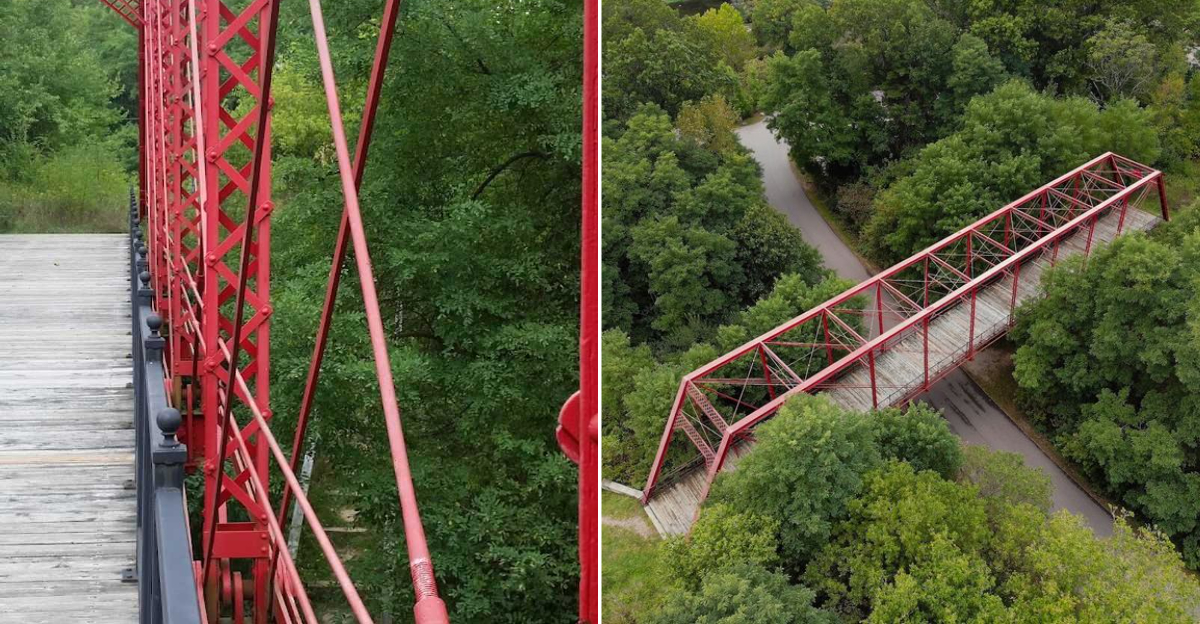
Roadside modesty is a dangerous disguise in Michigan. From I-94, this Battle Creek park looks like a quick stretch spot, then the Kalamazoo River, Dickinson Creek, shade, and old ironwork start making a better argument.
The trails are short enough for tired legs, but the restored truss bridges give every crossing a little clang of purpose. Dating from 1880 to 1906, they turn a simple walk into a small engineering scavenger hunt.
Michigan travelers can turn an easy I-94 pause into bridge history, riverside trails, shaded creek views, and open-air museum wandering without committing to a full-day detour. Slow down for the rivets, plaques, angles, and the way each span frames water differently.
The pleasure is quiet but sturdy: movement, history, and curiosity sharing one path. It is the rare roadside stop that improves your mood and teaches your eyes something useful before you merge back into traffic again, somehow.
Notice The Entrance Before You Miss It
The first trick with Historic Bridge Park is simply spotting it. Even though it sits near I-94, the park can feel slightly tucked away, so watching for signage matters more than you might expect.
The entrance is at 13880 Beadle Lake Road, and the posted coordinates used for the park entrance are 42.292119, -85.114802.
That hidden quality adds a small thrill once you turn in and the landscape opens. Instead of a grand reveal, the park gives you a practical, local sort of welcome that suits its character.
If you are road-tripping, this is a smart pull-off because parking is easy, admission is free, and the first bridge appears quickly enough to reward the detour almost immediately.
Where Old Bridges Get A Second Life
Historic Bridge Park, 13880 Beadle Lake Rd, Battle Creek, MI, is easy to reach from the Battle Creek area, but it feels more unusual once you arrive.
The road brings you close to the Kalamazoo River, where restored historic bridges turn a simple park stop into a small open-air museum.
Park, walk slowly, and cross whatever catches your eye first. This is a place where the best arrival happens on foot, one bridge at a time.
Read The Structure Like An Outdoor Museum
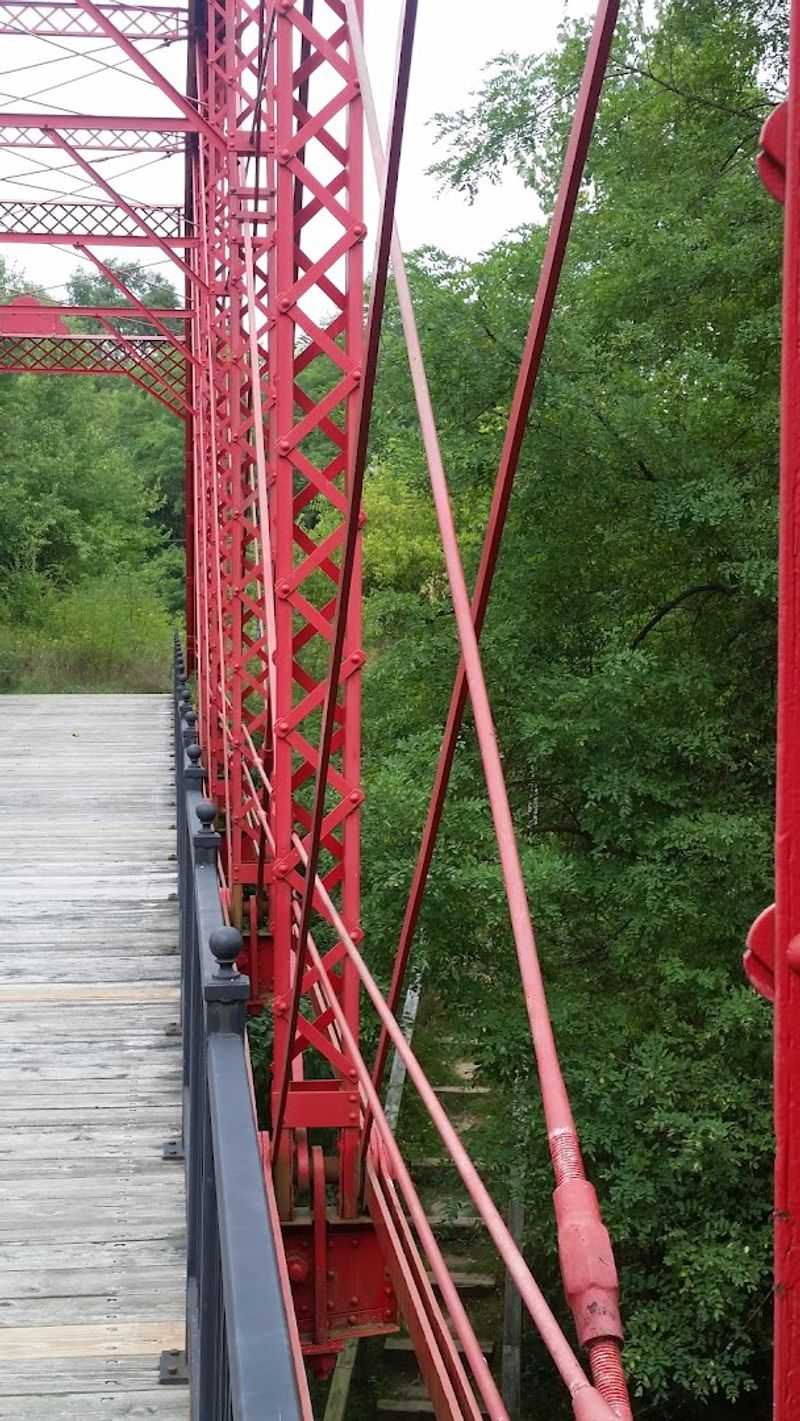
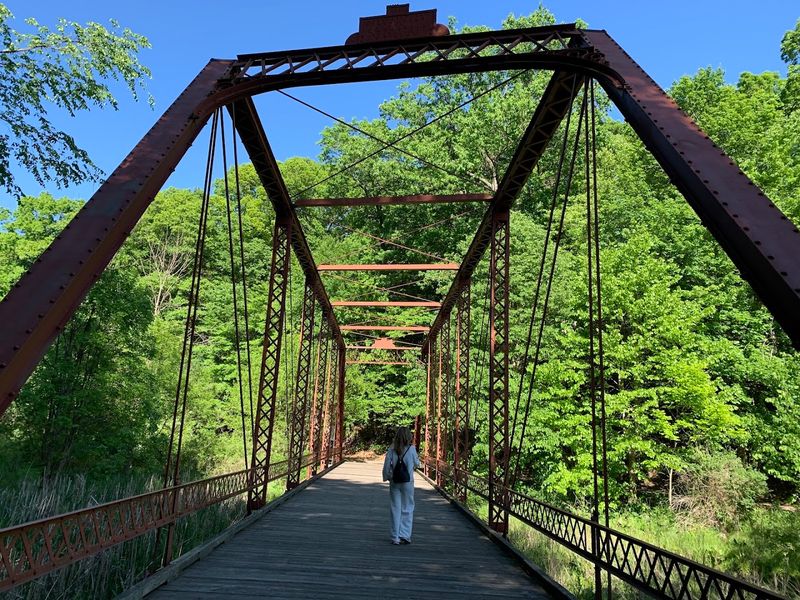
Look closely and the bridges reward more than a quick photo. Their trusses, rivets, and repeating metal patterns show the transition from cast iron to steel fabrication, which is one of the reasons this park feels more intellectually satisfying than the average stroll by the river.
Restoration here focused on preserving original materials whenever possible, or using exact replicas when necessary, and that care shows in the details. You can see how each span keeps its own personality while still fitting into the larger park.
Bring a little patience and walk slowly across each one. The pleasure is not only scenic.
It is also in noticing how practical design from more than a century ago still looks elegant under open sky and trees.
Expect Freeway Sound, Then Notice What Survives It
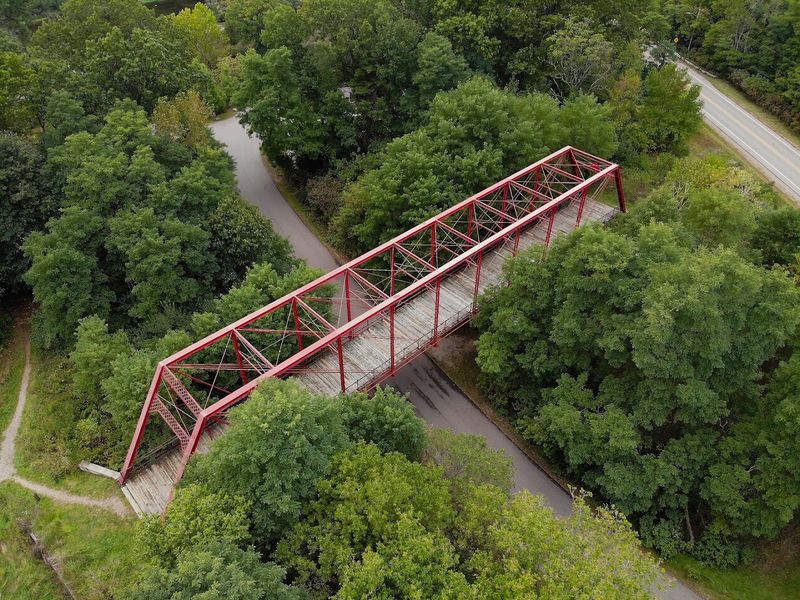
One of the park’s strangest qualities is the constant white noise from the nearby freeway. Around the picnic area and some of the bridge zone, traffic hum is part of the atmosphere whether you want it or not.
Oddly, that contrast gives the place a sharper identity instead of ruining it.
The old bridges feel even more resilient when modern traffic is rushing nearby. A nineteenth-century truss beside a twenty-first-century stream of cars is a vivid pairing, and it reminds you this park is about continuity as much as nostalgia.
If you want the calmest experience, keep walking farther from the amenities and toward the connecting trail system. The farther you drift from the highway edge, the more the river, trees, and footfalls begin to take over.
Use It As A Short Walk Or A Longer Trailhead
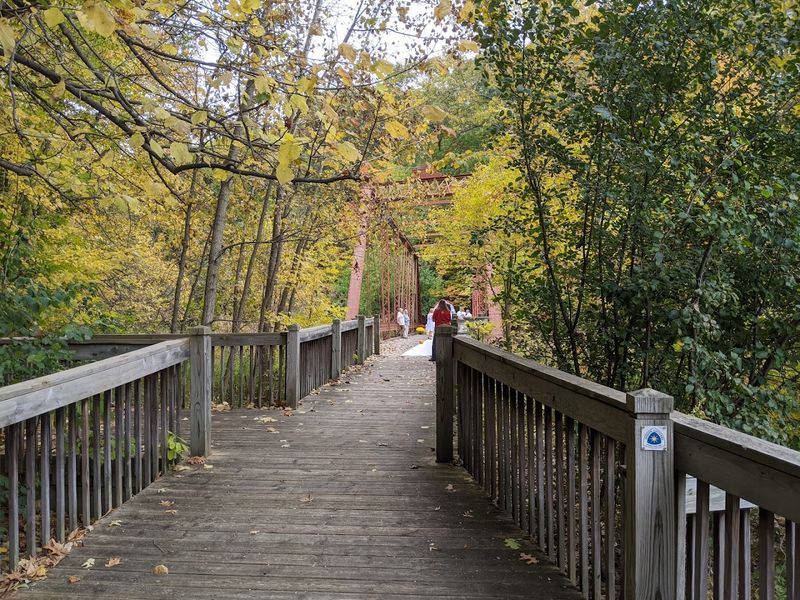
This is a good park for people who dislike all-or-nothing outings. You can do a short loop among the bridges and picnic areas, or you can treat the park as the trailhead for the 5.3-mile Calhoun County Trailway.
That trail links onward to the Battle Creek Linear Trail and the North Country Trail system.
In practical terms, it means the stop can fit whatever energy level you brought with you. Some days a compact bridge walk is enough; other days, the connected routes make it easy to extend the visit into something more serious.
The transition from museum-like exhibits to active trail use is one of the park’s smartest qualities. It serves families, walkers, cyclists, and curious history fans without forcing everyone into the same pace.
Do Not Skip The Stone Tunnel Bridge
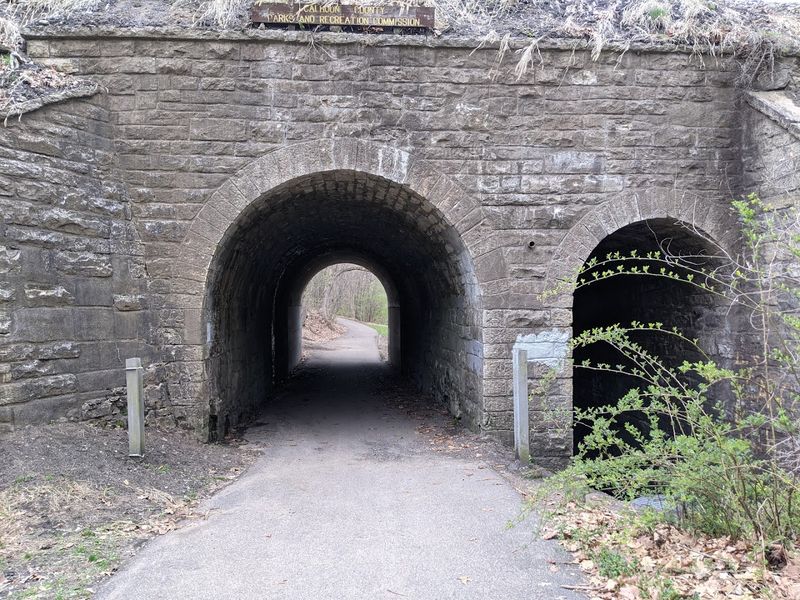
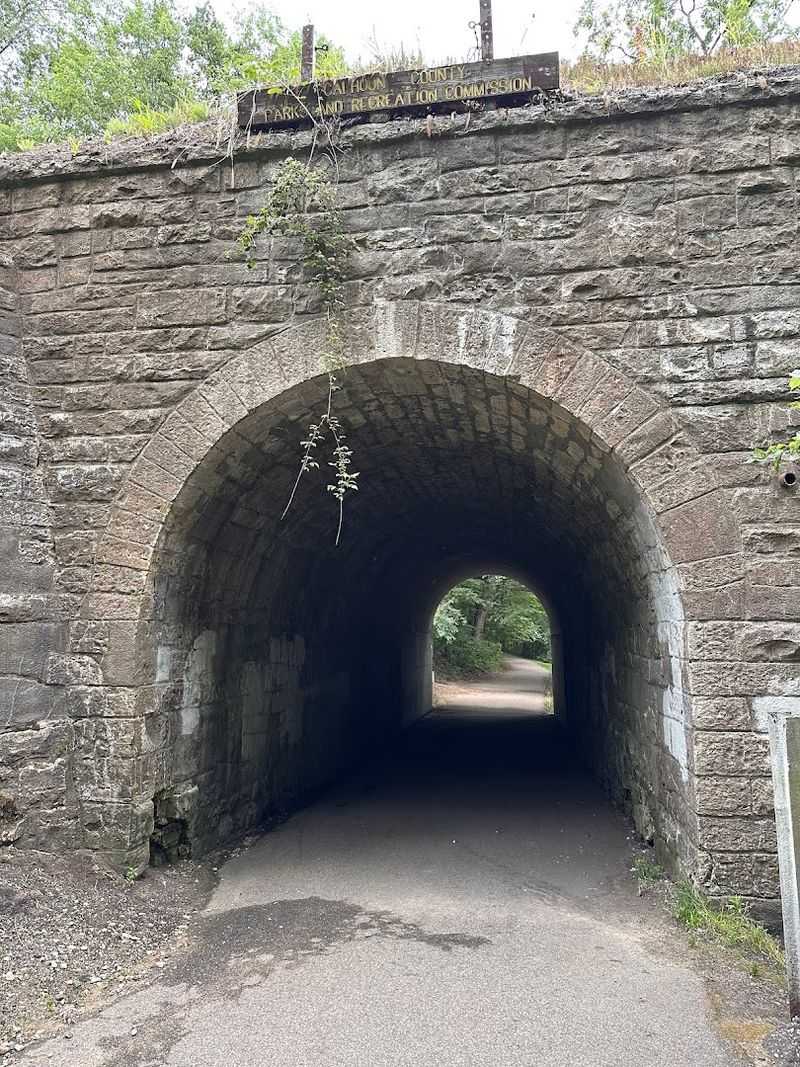
The stone tunnel bridge under the railroad tracks adds a completely different mood from the metal spans. Where the truss bridges feel airy and skeletal, the tunnel is compact, cool, and a little secretive.
That shift in texture keeps the park from feeling like a single-note exhibit.
I found it especially memorable because it changes how you move through the site. Instead of simply admiring bridges from the outside, you pass into one kind of historic infrastructure and then out toward another.
The materials matter here: stone behaves differently from steel, and your eye picks that up immediately. If you enjoy photographs, the tunnel gives you deeper shade, stronger contrast, and a more enclosed backdrop than the open bridges, which can look softer and more delicate among the trees.
Bring A Picnic, But Keep Your Expectations Practical
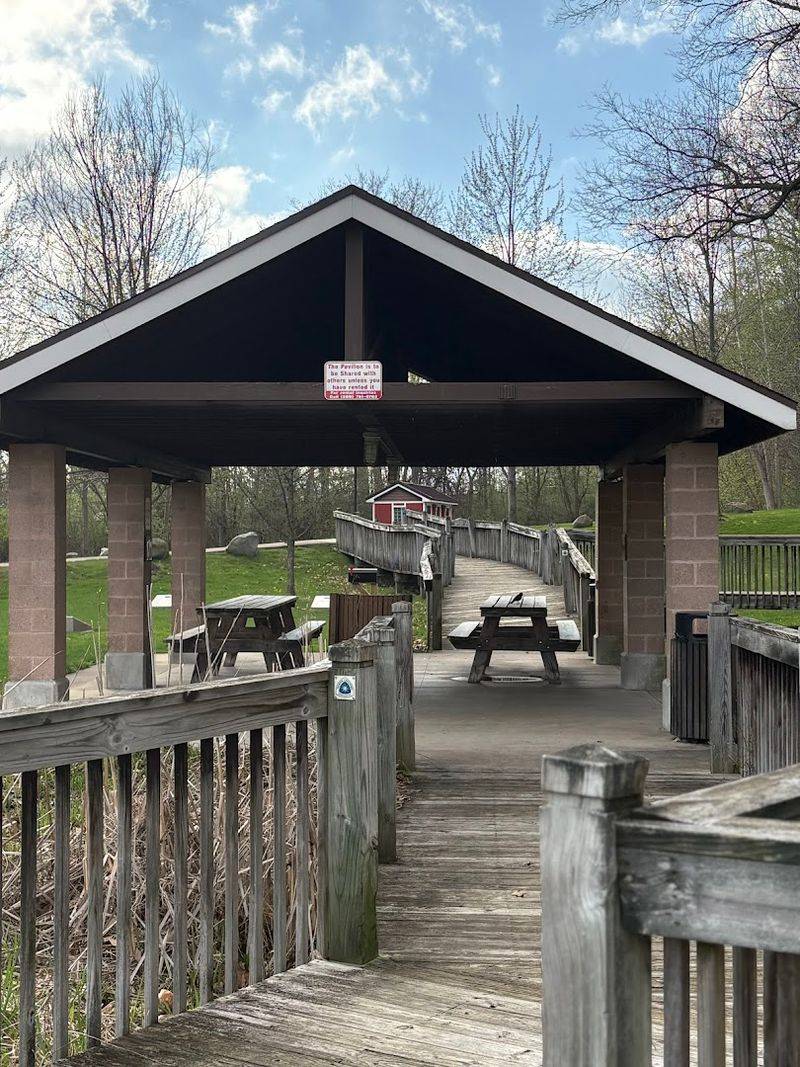
Historic Bridge Park works well as a low-key picnic stop because the practical amenities are solid. The park has picnic tables, grills, running water restrooms, a playground, and a pavilion that can be rented for small gatherings.
That combination makes it useful even for visitors who are less interested in bridge history than in simply having a comfortable place outdoors.
The setting is best approached with realistic expectations. This is not a secluded wilderness lunch spot, and the nearby freeway can be loud around the main amenity area.
Still, there is plenty of shade, enough room to settle in, and an easy rhythm to the place. For families or travelers stretching their legs, convenience is part of the appeal, not a compromise.
Accessibility Here Is Not An Afterthought
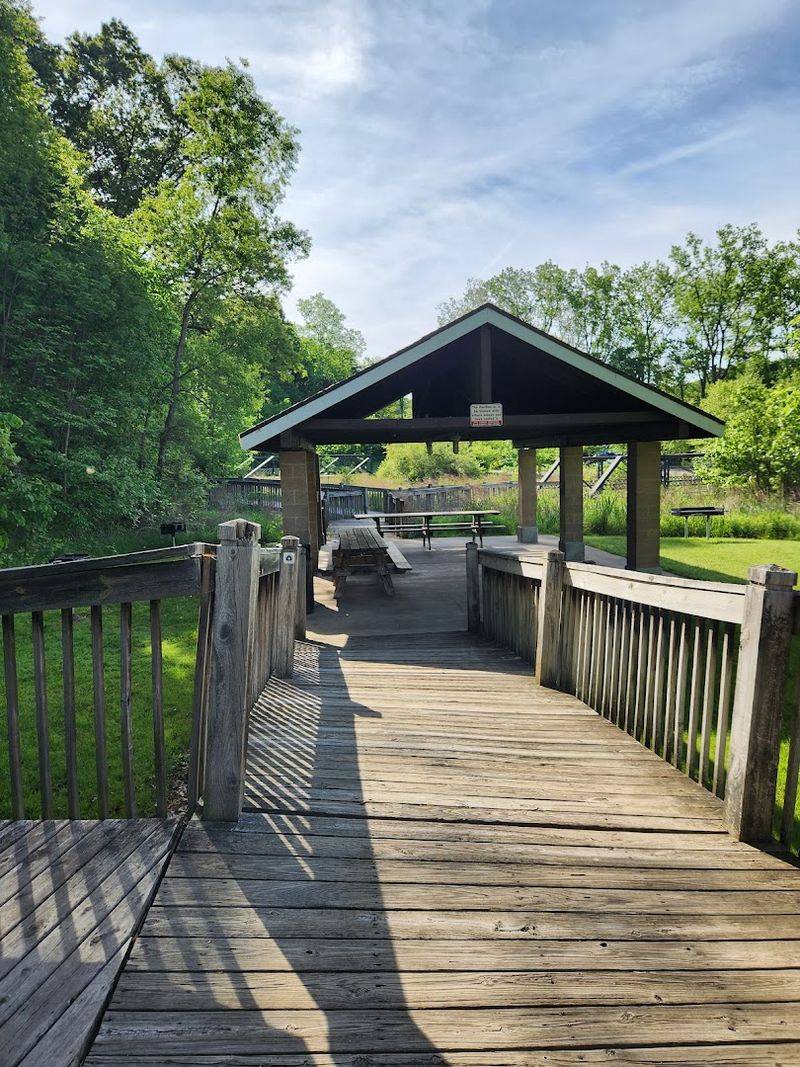
One of the most encouraging things about this park is how seriously accessibility has been built into the visitor experience. Improvements completed in 2012 included ADA-compliant restrooms, accessible picnic tables, and accessible parking.
Four of the five historic bridges are handicap accessible by boardwalks and pathways, while one bridge is reached only by stairs.
That balance matters because the park’s whole identity centers on getting people onto the bridges, not just near them. When historic preservation and access are handled together, the site feels welcoming instead of merely admirable.
If mobility needs shape your planning, this is a place where the official infrastructure is worth noting before you arrive. The accessible kayak and canoe launch adds another thoughtful layer to that design.
The River Access Makes The Park More Than A Museum
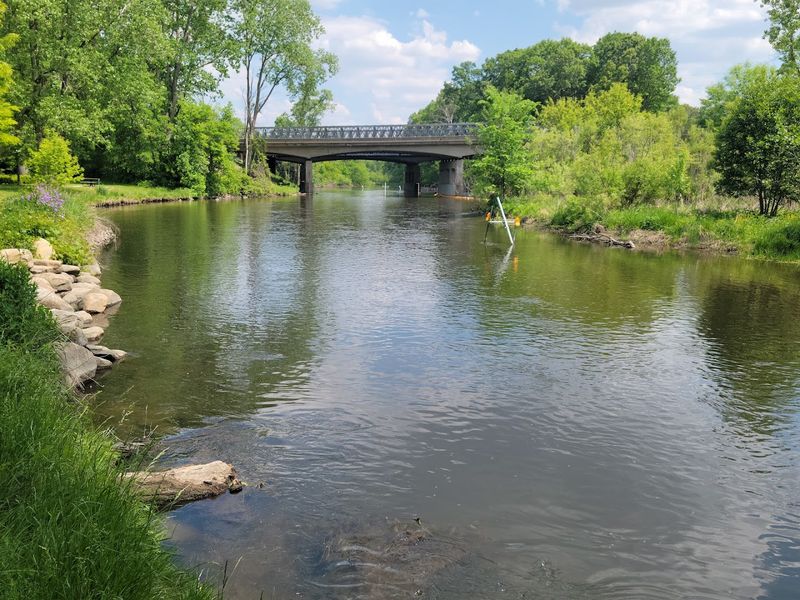
The Kalamazoo River gives this park a second identity beyond its bridges. There is a handicap-accessible kayak and canoe launch, and the water access changes the mood from static history lesson to active recreation.
Even if you are not paddling, the river edge adds movement, light, and a reason to linger.
That mix of uses is one reason the park feels alive rather than ceremonial. People come to walk, bike, paddle, fish, watch wildlife, or simply sit near the water, and the old spans end up woven into ordinary outdoor life.
I appreciate that the bridges are not isolated as precious objects. They remain part of a lived landscape, which is probably the most convincing kind of preservation a public park can offer.
Choose Your Season With Intention
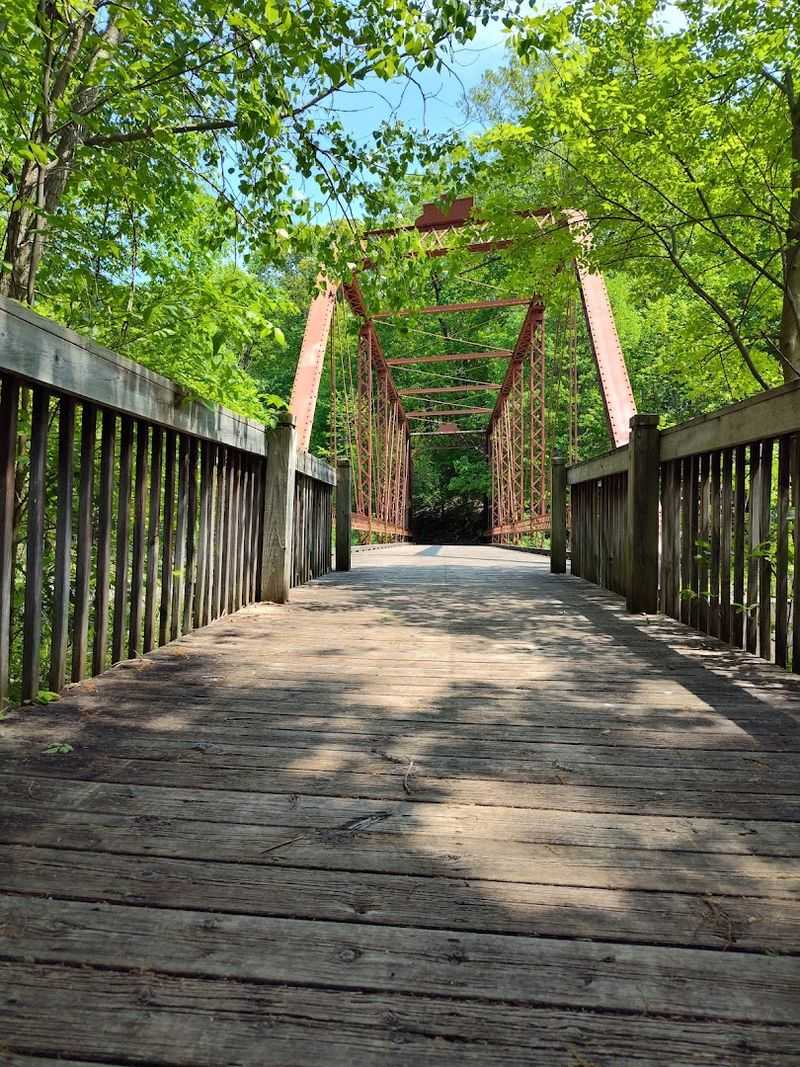
Because the park is open year-round, the question is less whether to go and more when the setting suits your style. Warm months bring easy walking, green shade, river activity, and full use of the picnic areas.
They also bring more bugs and, at busy times, a livelier park atmosphere.
Cooler seasons sharpen the bridges visually. Their lines stand out more clearly through thinning leaves, and the whole site can feel calmer and more architectural.
Winter strips the place down to structure, water, and sky, which has its own appeal if you enjoy stark landscapes. Whenever you visit, aim for decent walking shoes and a little flexibility.
This park rewards people who are happy to alternate between observation, wandering, and brief practical pauses.
Treat It As A Stop Worth Slowing Down For
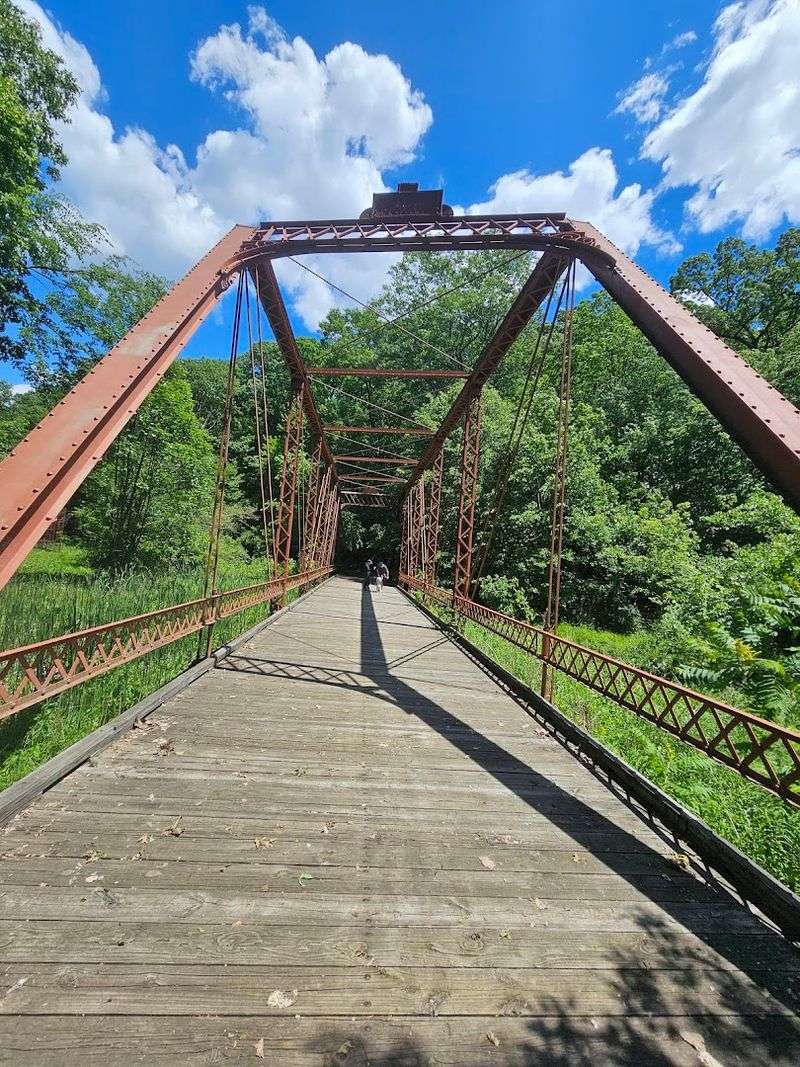
Historic Bridge Park is easy to underestimate because its pleasures are layered rather than flashy. The bridges are the headline, but the real appeal is how the site blends preservation, recreation, and roadside practicality into one coherent visit.
You can arrive curious about a single old span and leave having walked through a compact piece of Michigan infrastructure history.
That makes it especially good for travelers who like places with substance but not much fuss. The park is free, open daily beginning at 8 AM, and simple to navigate once you are inside.
If you are passing Battle Creek and need a stop that feels more memorable than a standard rest break, this one earns its pull-over status through detail, not spectacle.