
This Rustic Michigan Cabin Is Packed With 200 Handcrafted Pine Masterpieces
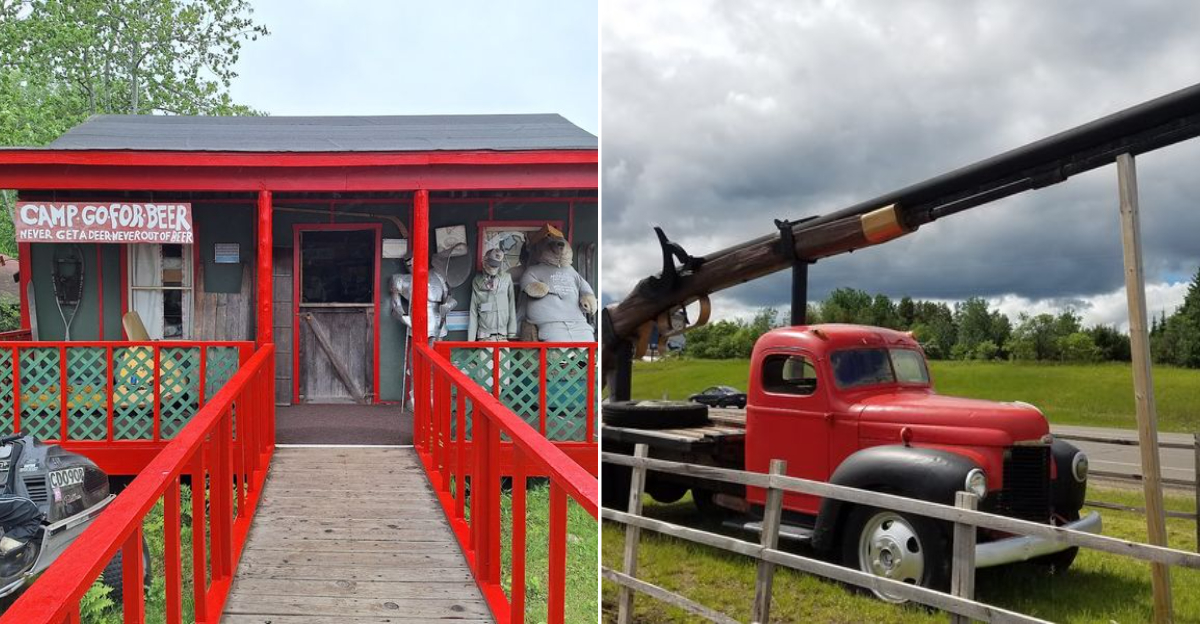
Most roadside stops are just cynical traps for your wallet, but this Ishpeming outlier is a different breed of chaos. It’s a sprawling, chainsaw-carved fever dream that manages to be deeply weird without feeling desperate for your “like.”
Walking through the clutter of oversized machinery and tongue-in-cheek camp displays feels less like a tourist errand and more like a crash course in the specific, iron-willed humor of the Upper Peninsula. I’ve wandered past enough “world’s largest” junk to be a skeptic, but there’s a gritty, DIY pride here that you can’t fake.
It’s a landscape of oddball inventions and rustic cabins that perfectly captures the “Yooper” ethos: if you can’t fix it with a welder and a laugh, it probably wasn’t worth having. It’s blunt, it’s hilarious, and it’s refreshingly free of the polished irony that ruins most modern attractions.
The most authentic Upper Peninsula roadside attractions are located in Ishpeming, featuring legendary Yooper humor, chainsaw art, and the world’s largest working rifle.
Start Outside Before You Shop
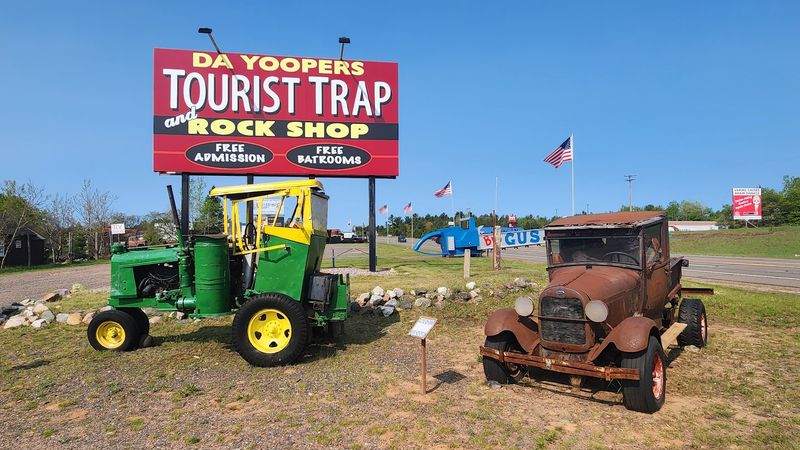
The best way to understand Da Yoopers Tourist Trap is to linger in the yard before stepping inside. The outdoor displays set the tone immediately, mixing oversized machinery, handmade oddities, and a distinctly Upper Peninsula sense of humor. Nothing feels polished in the modern attraction sense, which is exactly why it works.
You move from one visual joke to another while also noticing how much effort went into the construction. Big Gus, the giant working chainsaw, anchors the scene with pure roadside bravado. Give yourself at least thirty minutes here, because the place rewards slow looking more than quick snapshots, especially if you read the signs and let the details connect.
Discover It
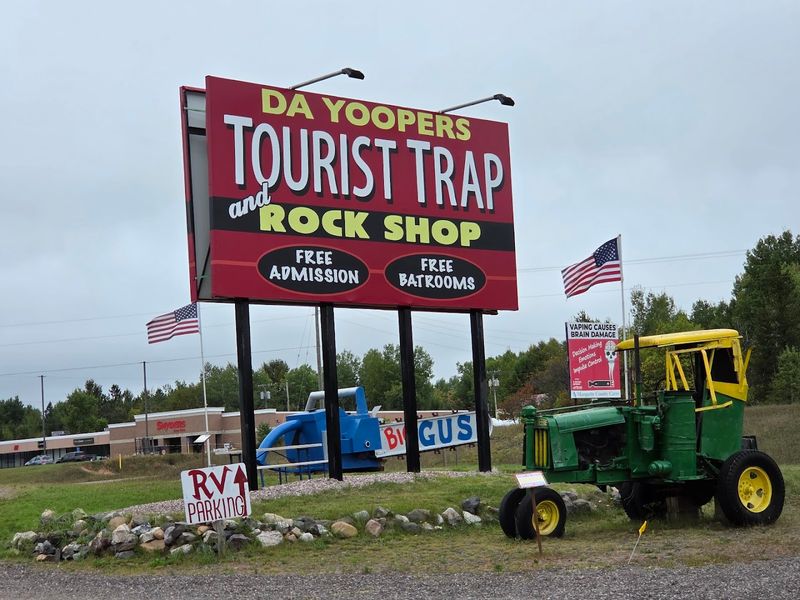
Getting to Da Yoopers Tourist Trap and Rock Shop at 490 Steel St, Ishpeming, Michigan 49849 involves a straightforward journey across the rugged interior of the Upper Peninsula via US-41.
The drive is defined by the vast, dense timberlines and rocky outcrops of the Marquette Iron Range, with the highway serving as the primary artery connecting the region’s historic mining towns.
As you approach the outskirts of Ishpeming, the landscape transitions from the untamed forest to a more industrial and commercial corridor. The pace remains steady, but the sight of massive mining equipment and local landmarks along the roadside begins to signal your entry into the heart of Yooper country.
The final arrival is unmistakably marked by the appearance of oversized, humorous roadside sculptures and eccentric mechanical displays situated right off the highway. Turning into the expansive parking area, the transition from the long, scenic stretches of US-41 to the colorful, high-energy bustle of this local institution marks your arrival.
Treat The Carvings As Local Craft, Not Filler
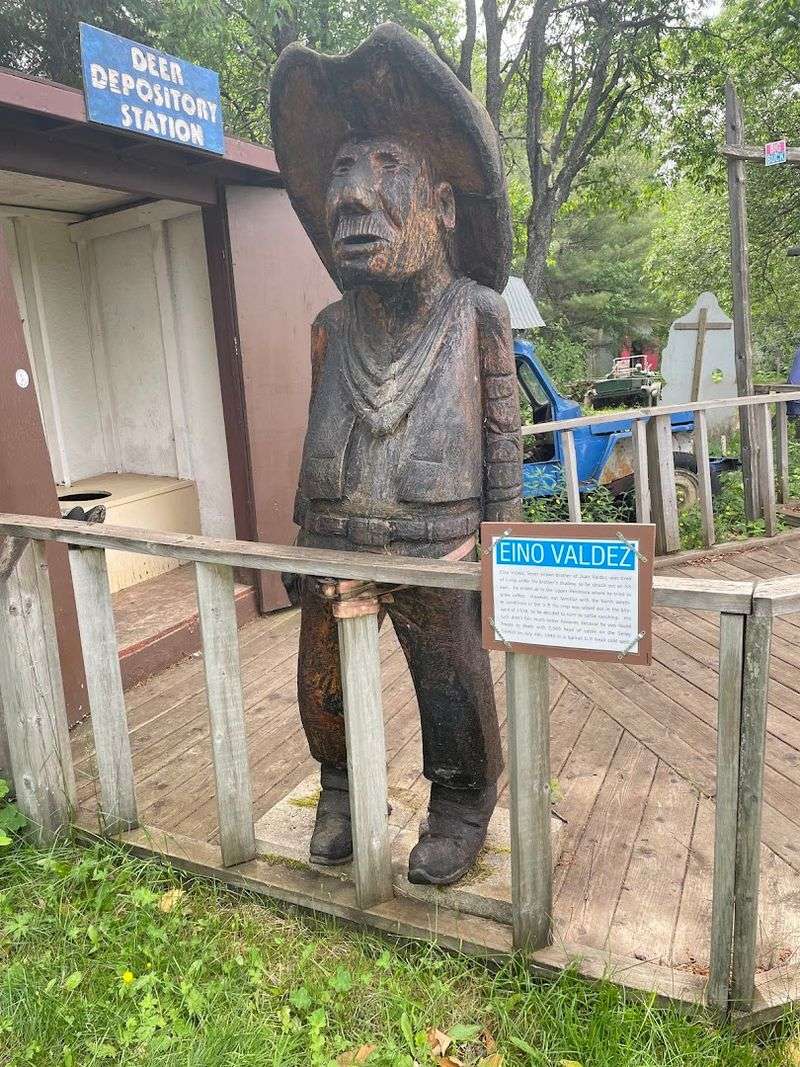
The title might tempt you to expect a neatly counted collection, but the better approach is simply to notice the wood craftsmanship on site. Da Yoopers Tourist Trap is known for Yooperland chain saw sculptures by George Barasko, along with other handcrafted items sold and displayed around the property. These pieces read less like decorative filler and more like a folk-art extension of local identity.
The carving style suits the setting because it shares the same directness as the humor. Surfaces stay rough enough to show the tool, while figures remain bold enough to read from a distance. When you find a sculpture you like, step close and look at the cuts, because the technique is part of the pleasure here.
Do Not Rush Past The Record-Size Machines
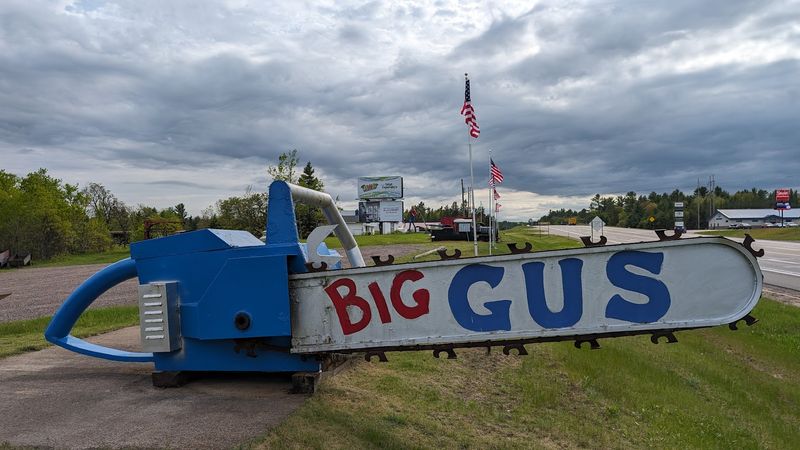
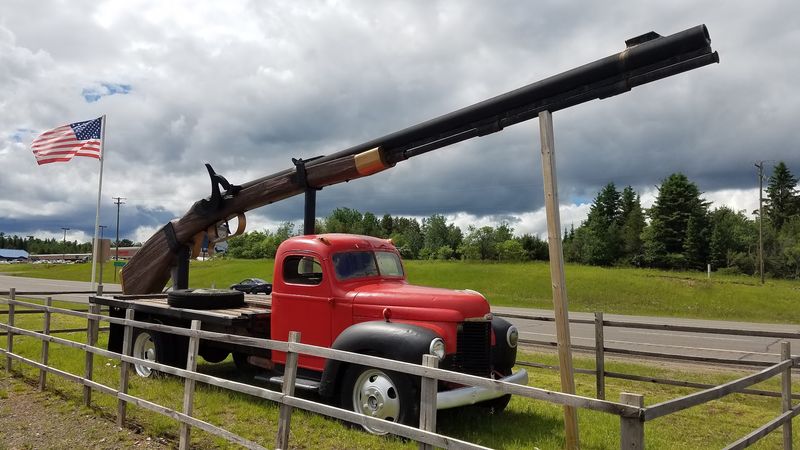
A place this playful could have relied on cheap gags, yet the large mechanical pieces give it real presence. Big Gus, recognized as the world’s largest working chainsaw, and Big Ernie, the world’s largest working rifle, bring a note of earnest engineering into the comedy. They are funny at first glance, then impressive once you start taking in their dimensions and construction.
That shift matters because it keeps the attraction from feeling one-note. The joke is never only the size of the object, but also the commitment behind making it functional and displayable. Stand back for the full silhouette, then move closer to study the hardware, because scale alone does not tell the whole story at this stop.
Notice How Recycled Parts Become Regional Storytelling
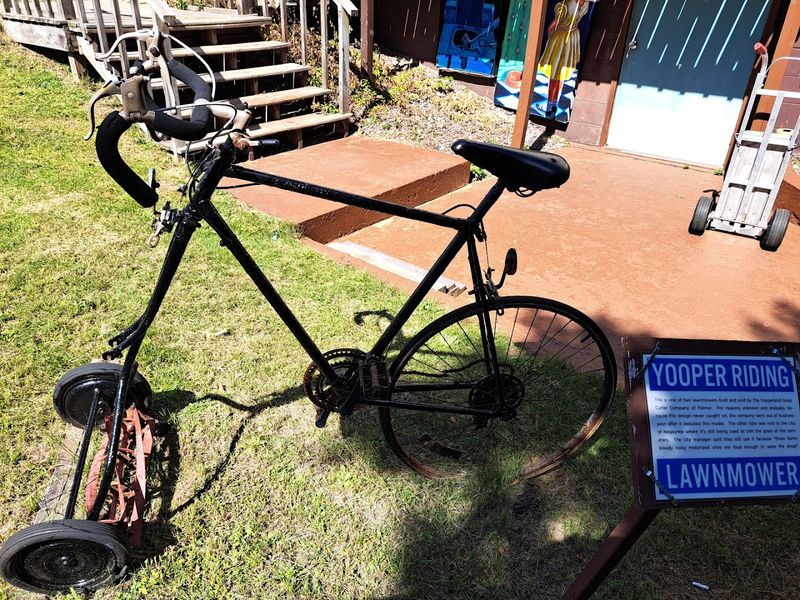
Some of the most revealing pieces here are not the famous ones but the handmade contraptions assembled from old parts. Jim DeCaire’s so-called Yoopervations turn financial necessity, winter boredom, and regional inventiveness into sculpture, often using junked vehicles and found materials. They are whimsical, but they also document a practical strain in Upper Peninsula culture.
You see that clearly in the modified machines and oddball seating pieces, including the Finnish-flag-painted car turned into a love seat. These objects make sense only in a place comfortable with improvisation and self-mockery at once. I found them easier to admire when viewed as local storytelling in metal, not just roadside chaos built for laughs alone.
Make Time For The Rock Shop Side Of The Visit
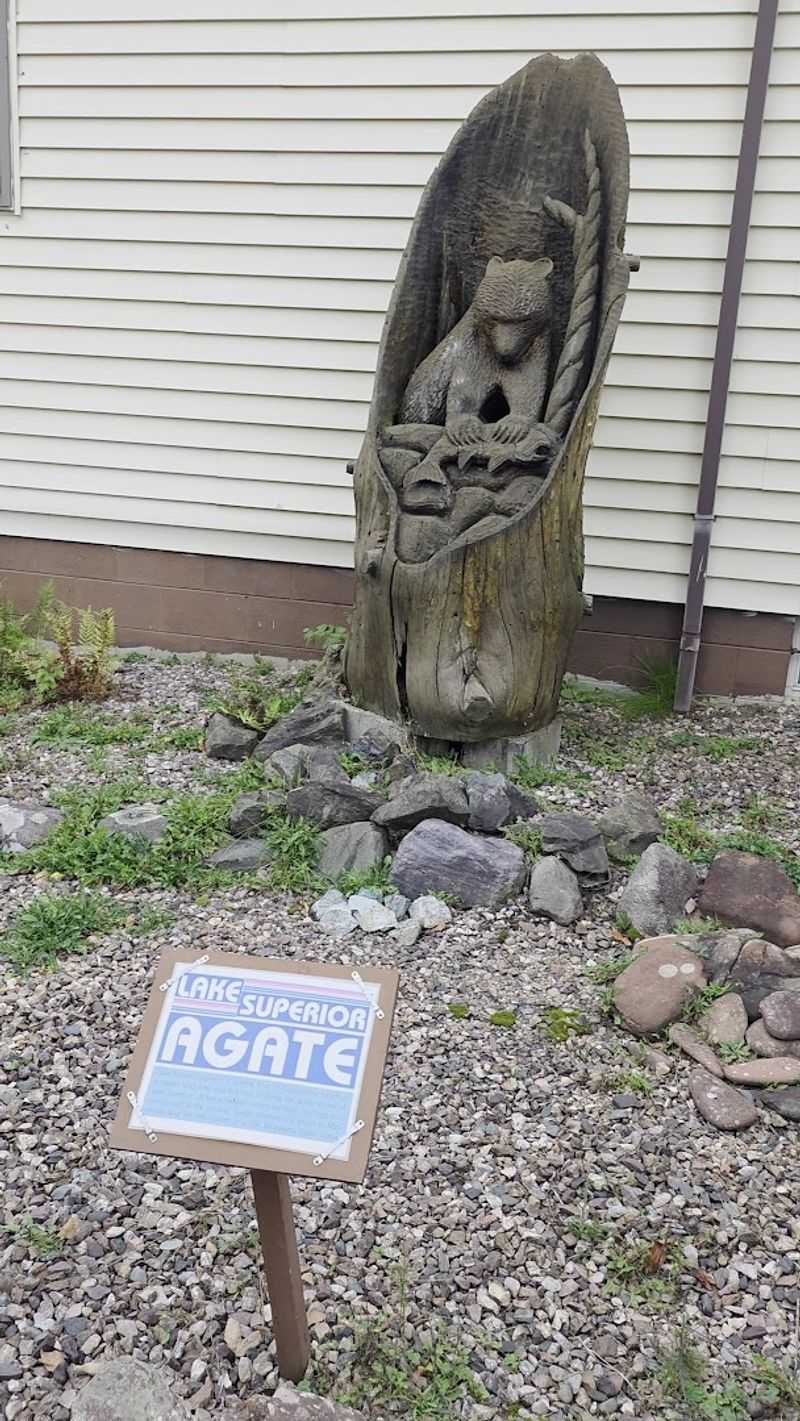
The rock shop changes the rhythm of the visit in a useful way. After the visual noise of the yard, the minerals and geology displays bring in another layer of Upper Peninsula identity, one tied to mining history and the region’s physical ground rather than comic exaggeration. That contrast keeps the attraction from becoming purely novelty based.
It also makes practical sense in Ishpeming, where mining heritage remains central to local memory. The specimens connect the place to Marquette County’s wider story without pretending to be a formal museum. If you are traveling with someone who prefers quieter detail to giant props, this is usually where the stop opens up and becomes more substantial than its name suggests.
Read The Signs Because The Humor Is Written As Much As Built

The visual clutter can distract you from one of the place’s sharpest tools, which is language. Signs, labels, and names around Da Yoopers Tourist Trap carry much of the comic timing, leaning on Yooper phrasing, camp references, and regional understatement rather than generic punch lines. The written humor gives the sculptures context and keeps the displays grounded in a specific voice.
Without that text, some scenes would register only as odd. With it, they become part of a broader comic portrait of local habits, weather, ingenuity, and stubbornness. Slow down enough to read rather than skim, because a lot of the wit arrives half a beat later, and the place becomes richer once you hear its vocabulary in your head.
Understand The Founder’s Role In Shaping The Place
Understanding the founder’s role helps the whole place make more sense. Da Yoopers Tourist Trap and Rock Shop was shaped by Jim “Hoolie” DeCaire, a founding member of Da Yoopers, the comedy-music group that built much of its identity around Upper Peninsula humor, language, and local stereotypes.
That means the attraction is not random roadside clutter, but an extension of a very specific comic voice. What DeCaire seems to have brought most strongly is tone. The Tourist Trap mixes Yooper-themed merchandise, rock and mineral displays, and exaggerated outdoor sculptures and jokes, all filtered through the same blend of affection, parody, and regional pride that made Da Yoopers recognizable in the first place.
That is why the place works best when you read it less as a normal museum or gift shop and more as a founder-shaped cultural performance. DeCaire was not just selling souvenirs, he was packaging a version of Yooper identity, playful, exaggerated, local, and self-aware, into a place people could walk through.
See Deer Camp Humor As Regional Theater
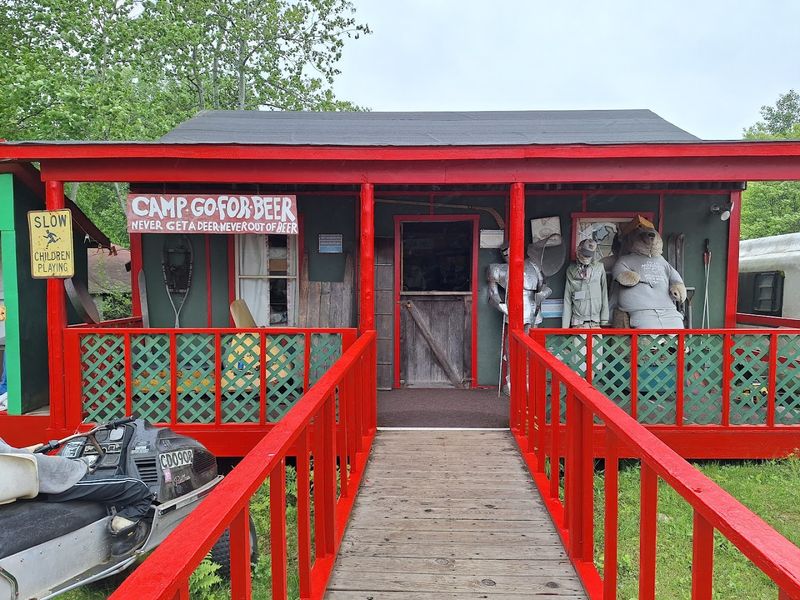
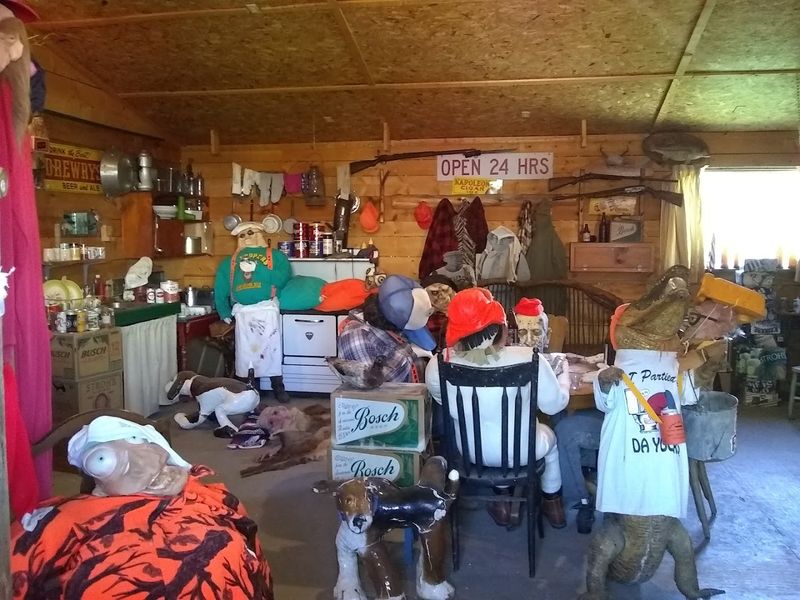
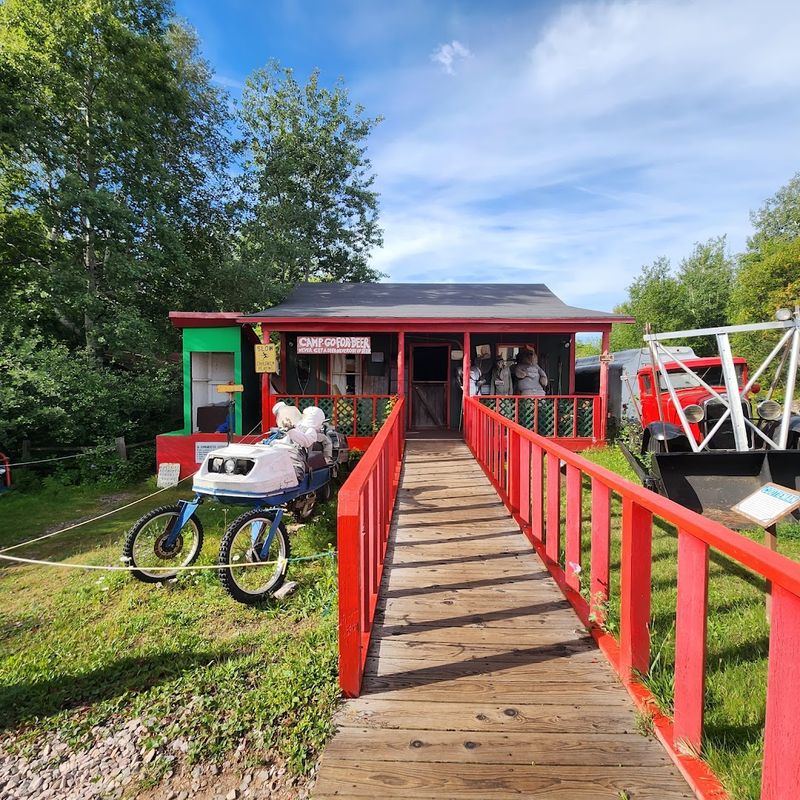
The camp displays are funniest when you treat them as theatrical sets built from familiar local material. Da Man Camp and related scenes reverse hunting expectations, stage camp life as absurd ritual, and push regional jokes just far enough to expose the affection underneath. They are satirical, but not detached from the culture they tease.
That balance is harder to pull off than it looks. The cabin styling, props, and rough-built interiors give the scenes enough credibility that the exaggeration lands cleanly. If you have any background with northern camp traditions, the references come quickly, but even without that context, you can still appreciate how carefully the joke depends on setting, scale, and recognizable patterns of life.
Plan For A Year-Round Stop, But Let The Season Color It
This is one of those Upper Peninsula stops that changes mood with the weather even when the objects stay the same. Open year-round, it can feel breezy and comic in mild weather, then more rugged and almost stubborn when the season turns colder around Ishpeming. The setting gains character from that seasonal pressure rather than fighting it.
You notice how naturally the wood, metal, and camp imagery belong to a place with long winters and practical habits. That may be why the handmade displays feel less fabricated than many roadside attractions farther south. Check current hours before arriving, and bring shoes that can handle an outdoor wander, because the yard is part of the experience, not an afterthought.
Leave Room For The Gift Shop Because It Completes The Story
The gift shop is not a separate commercial add-on so much as the final chapter of the visit. Inside, you find Yooper-themed souvenirs, music, novelty items, and handcrafted products that extend the same blend of pride, sarcasm, and regional specificity seen outside.
After the larger displays, the shelves offer a smaller, more portable version of the place’s personality. Even the clutter feels part of the design, as if the joke only fully lands once it has been miniaturized, priced, and set near the register.
That matters because it shows how the attraction functions as both roadside theater and cultural retail space. You do not need to buy anything for the stop to feel complete, but browsing helps you see which jokes, materials, and symbols people actually carry home.
For me, that made the whole place feel less random and more intentionally curated than it first appears. The shop turns observation into participation, letting visitors leave not just amused, but carrying a small piece of the place’s oddly coherent worldview.