
This Scenic Arkansas Park Takes You To Waterfalls And Ancient Rock Art
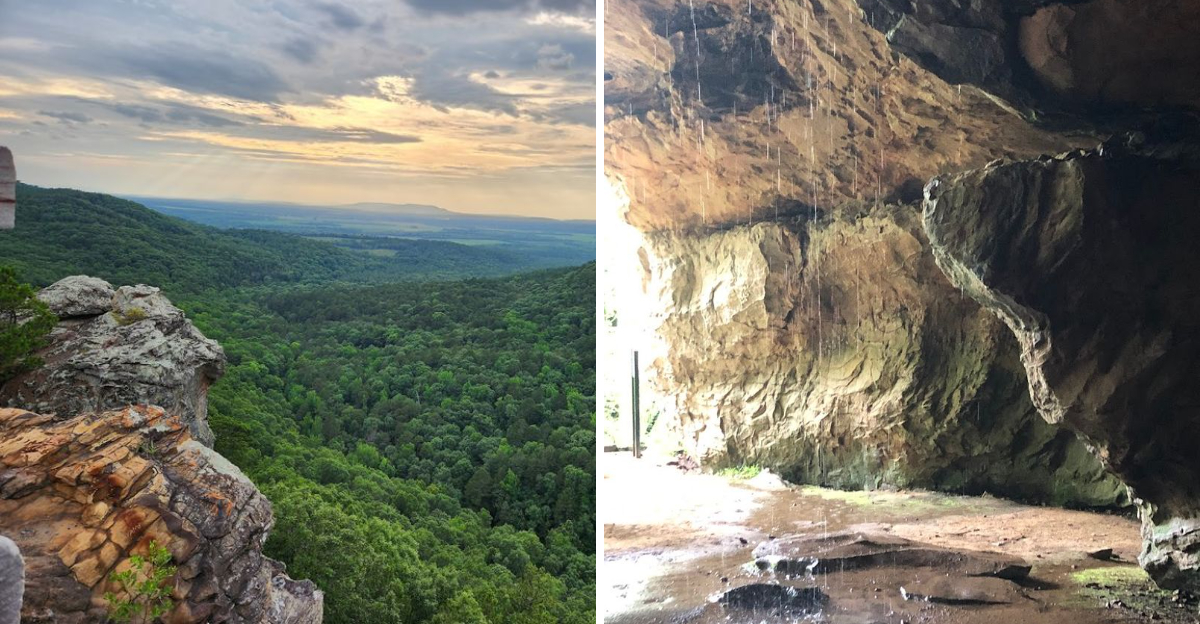
I remember the exact moment the trail dropped and I first heard the water. At first it was faint, just a soft, steady sound that made me keep going.
The path curved along tall rock walls that stayed cool even in the Arkansas heat. Then it opened up, and I just stood there for a second.
Water poured over a wide stretch of stone, the kind of view that makes you forget whatever you were thinking about before. Not far past that, I noticed markings across a shallow rock overhang.
They weren’t flashy, but they stopped me all the same. I ended up lingering longer than planned.
It’s the kind of place that slows your pace without you realizing it. Every step feels shaped by time, water, and the people who were here long before we ever showed up.
A Mountain Plateau Shaped By Time And Silence
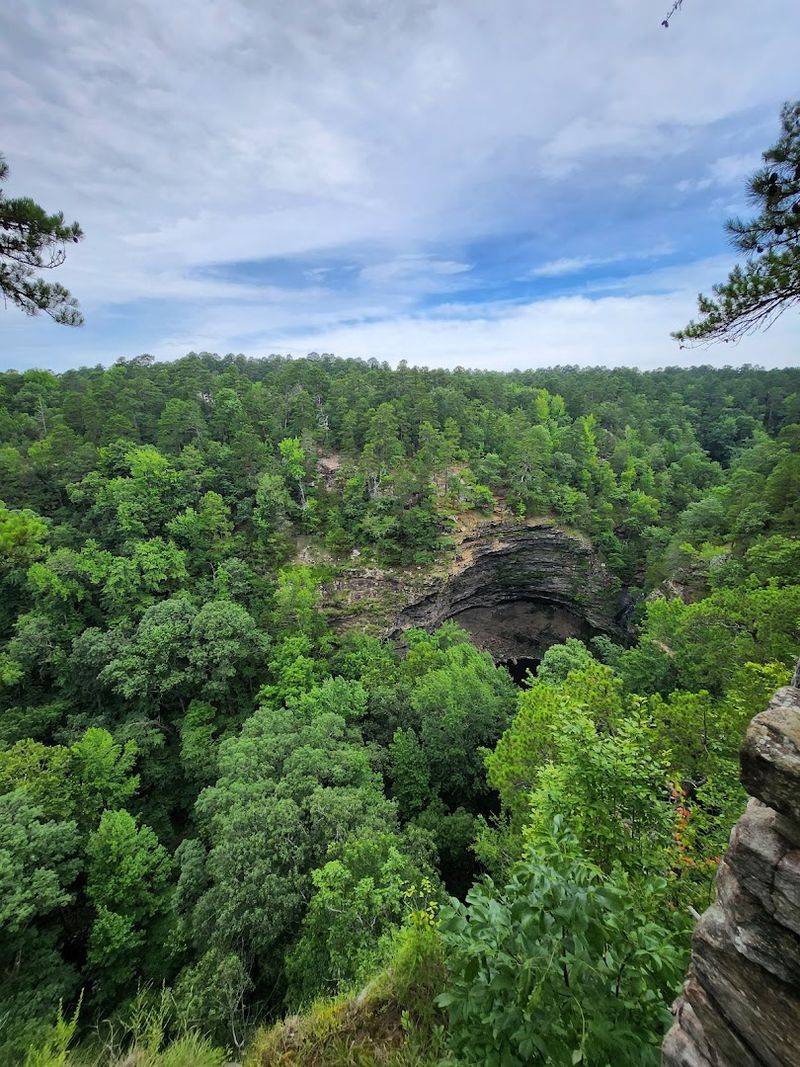
Some places make you feel small in the best possible way, and the moment I crested the road leading up to this mountain plateau, that feeling hit me instantly.
The entire park sits roughly 1,100 feet above the surrounding Arkansas River Valley, which means the air feels cooler, the horizon feels wider, and the noise of everyday life simply disappears.
Spanning 3,471 acres, the mountain carries layers of geological history in every exposed rock face and every cedar-lined ridge, built up across millions of years of erosion and uplift.
Hikers, photographers, and families all find something different up here, whether it is a quiet picnic spot beneath the canopy or a dramatic bluff edge where the view stretches for miles.
The Civilian Conservation Corps helped shape much of what visitors see today, constructing roads, trails, and structures during the 1930s that still stand as a testament to skilled craftsmanship.
Arkansas became a better state the day Petit Jean State Park opened at 1285 Petit Jean Mountain Rd, Morrilton, AR 72110, back in 1923 as the very first state park in the state.
A Stone Corridor That Echoes With Rushing Water
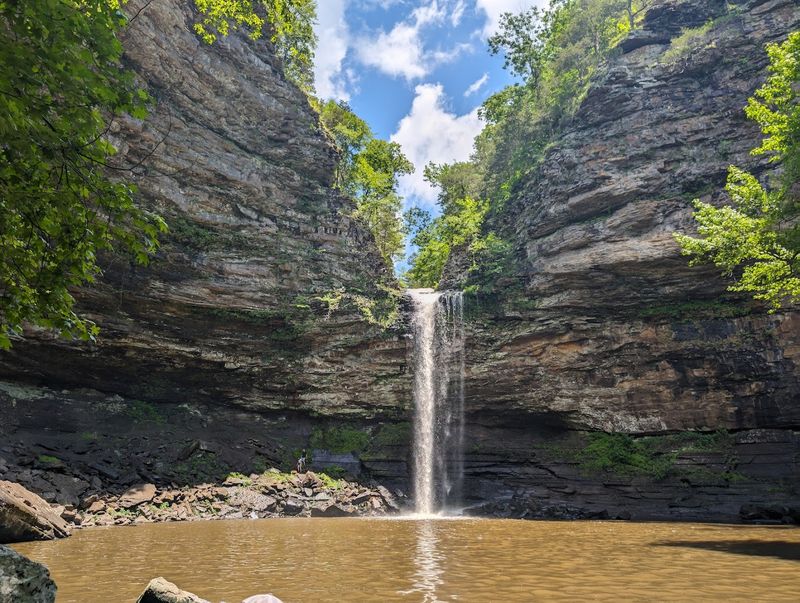
Cedar Creek Canyon does not ease you in gently; it grabs your attention the second the trail drops below the rim and the sandstone walls close in around you.
I remember pausing at the canyon floor and just listening, because the sound of water moving over rocks bounced off the bluff walls in a way that made the whole corridor feel alive.
The canyon stretches deep into the park and serves as the natural drainage system for much of the plateau above, carrying water from seasonal rains down toward Cedar Creek below.
Trail conditions here can shift with the seasons, so waterproof footwear is a genuinely smart call rather than just cautious advice, especially after spring rains swell the creek.
Mosses and ferns cling to the damp canyon walls, painting the stone in shades of green that contrast sharply against the warm rust and tan of the exposed sandstone.
Standing inside that corridor with the walls towering above me, I understood why so many hikers return to this trail year after year without needing much convincing at all.
A Hidden Cascade Carved Into Sandstone Cliffs
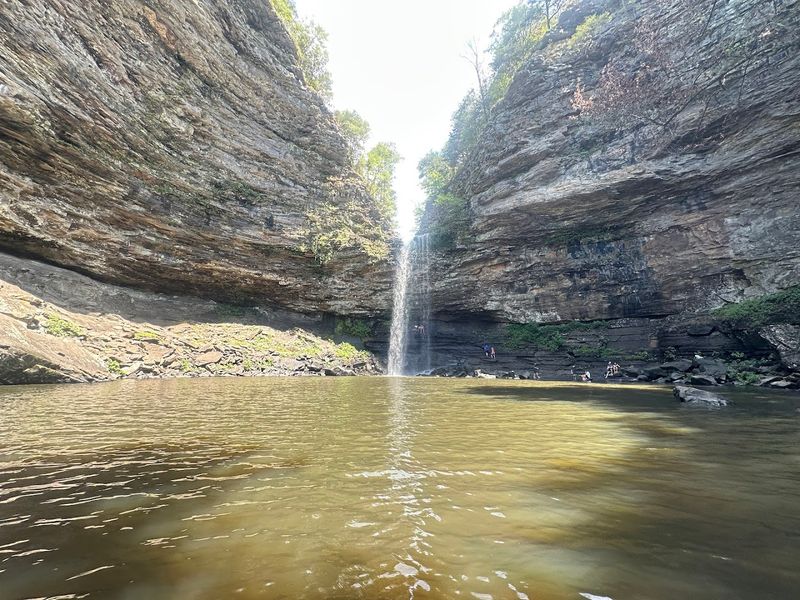
Cedar Falls is the kind of waterfall that earns its reputation before you even see it, because you hear that deep, rolling roar echoing through the canyon long before the view opens up.
Measuring 95 feet tall, it ranks among the tallest continuously flowing waterfalls in all of Arkansas, which is a title it holds with complete confidence year-round.
The water drops from a sandstone ledge and fans out as it falls, creating a curtain effect that catches the light differently depending on the time of day and the season.
I visited on a clear October morning and the falls were surrounded by trees just starting to turn gold and orange, which made the whole scene feel almost too good to be real.
The trail leading to the base is about 1.5 miles round trip and involves some rocky terrain near the bottom, so sturdy shoes make a real difference in how much you enjoy the descent.
Photographers especially love arriving early in the morning when the mist from the falls drifts across the canyon floor and the light has that soft, golden quality that cannot be manufactured.
A Canyon Path Lined With Towering Bluff Walls
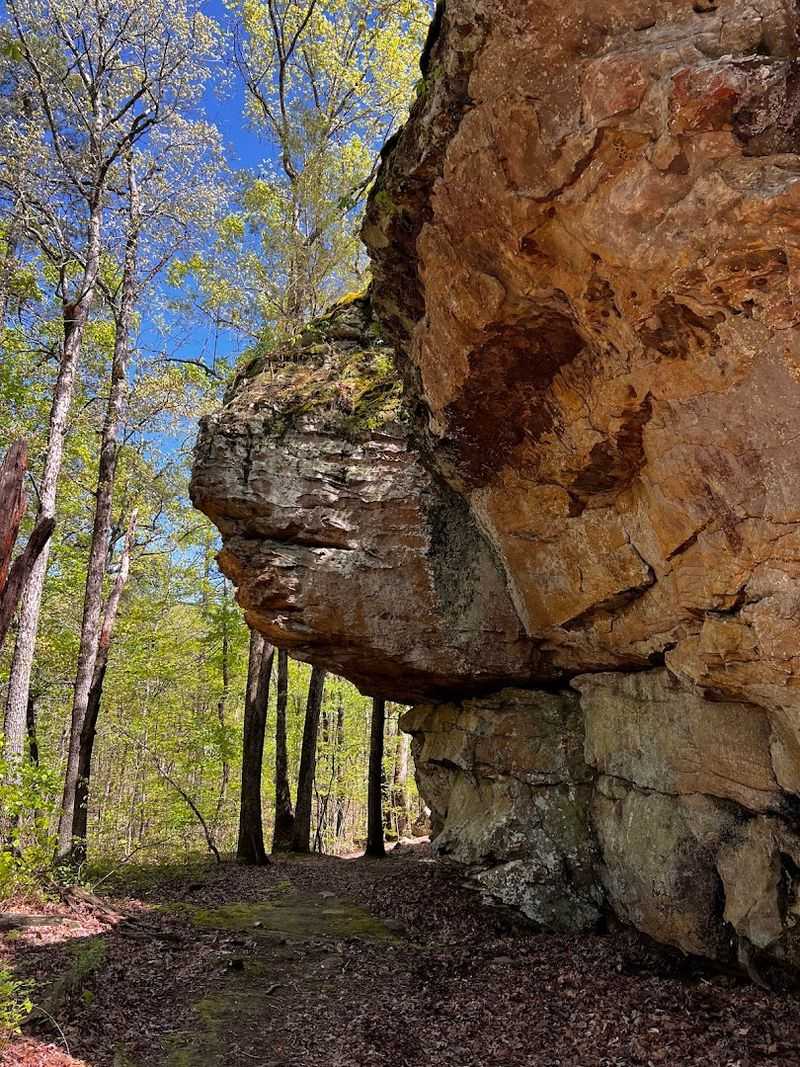
The Cedar Falls Trail is the park’s most popular path, but the Seven Hollows Trail is the one that kept pulling me forward with every new twist and turn through the canyon system.
Stretching 4.5 miles through the park’s interior, Seven Hollows winds past natural bridges, rock shelters, and formations that feel like they belong in a geology textbook rather than a day hike.
The bluff walls along this route climb dramatically on both sides in certain sections, creating narrow passages where you almost feel like the mountain is leaning in to share a secret.
I spotted a natural bridge tucked into one of the hollows that most casual visitors walk right past, which is a good reminder to slow down and look beyond the obvious landmarks.
Wildlife sightings are common along this trail, with deer, wild turkeys, and various bird species appearing regularly among the cedar and oak trees that line the canyon edges.
Carrying at least two liters of water is practical advice here, not overcaution, because the trail’s length and the canyon’s enclosed warmth in summer can sneak up on even experienced hikers.
A Shelter Of Stone Marked With Ancient Symbols
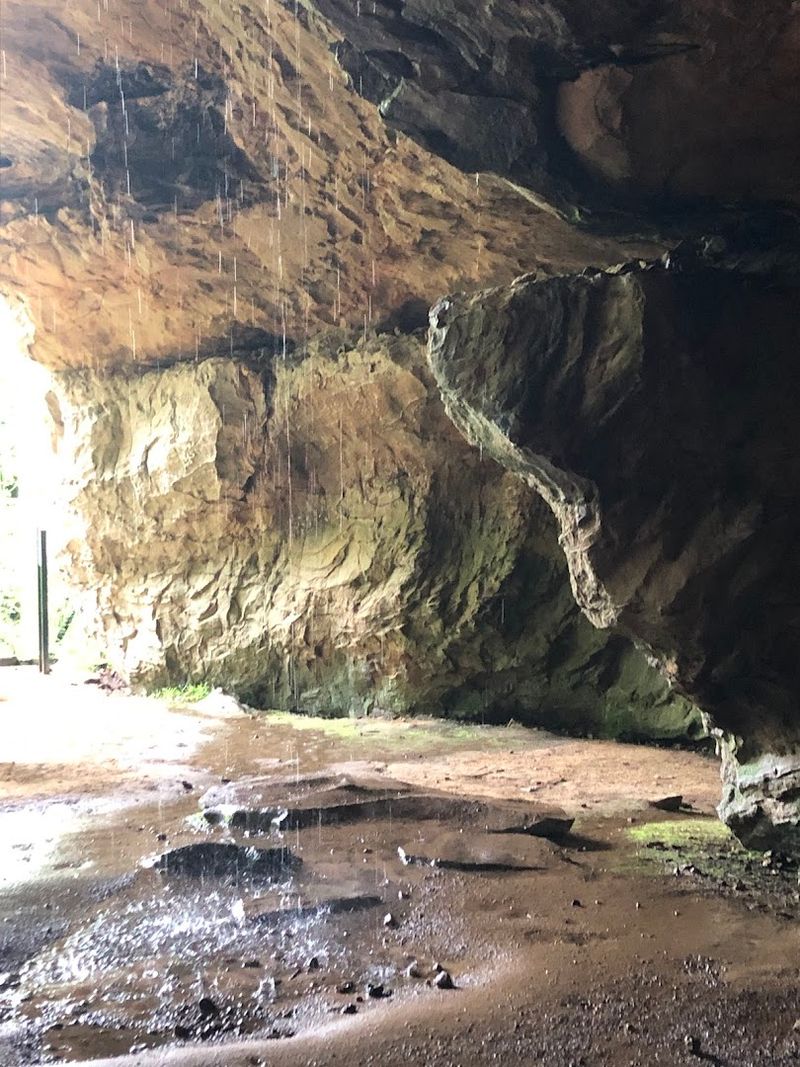
Rock House Cave stopped me in my tracks the first time I rounded the bend on the trail and realized I was looking at artwork made by human hands over a thousand years ago.
The bluff shelter is a large natural overhang in the sandstone, and its protected ceiling and walls carry pictographs created by Native American peoples long before European explorers arrived in the region.
Archaeologists have studied the site carefully, and the symbols include geometric shapes, handprints, and other markings that researchers believe held cultural and possibly ceremonial significance for the communities who created them.
The cave itself measures impressively wide, offering natural shelter from rain and sun, which likely explains why it served as a gathering place for generations across many centuries.
Standing beneath that overhang and looking up at the faded red ochre images, I felt a quiet connection to people whose daily lives I can barely imagine but whose creativity was unmistakably human.
Park staff ask visitors to keep a respectful distance from the pictographs and to avoid touching the rock surface, which is a small courtesy that helps preserve the site for everyone who comes after you.
A Cool Hollow Where Shadows Preserve The Past
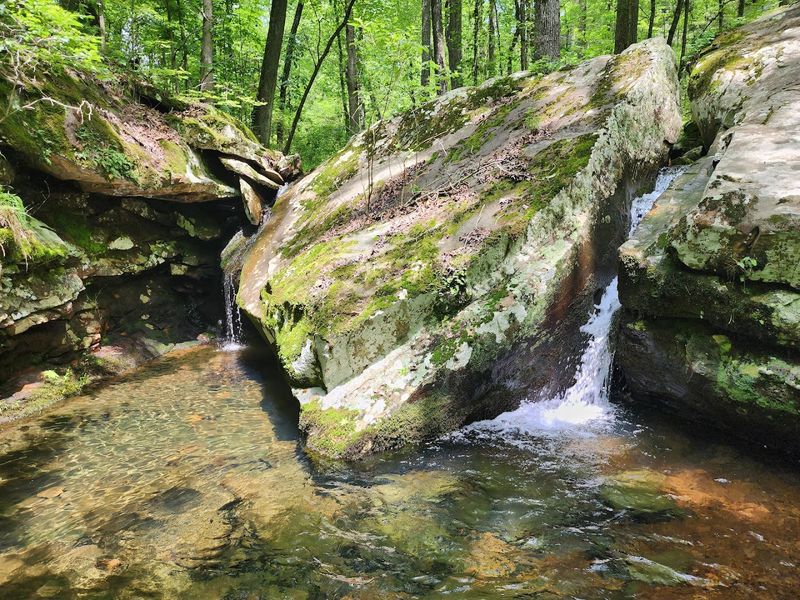
Tucked deep within the Seven Hollows system, the Grotto feels like a place the rest of the world simply forgot to disturb, and stepping into it felt like crossing into a completely different atmosphere.
Temperatures inside the hollow drop noticeably compared to the open trail, which is a welcome discovery on a warm Arkansas afternoon when the sun has been pressing down steadily for hours.
A small waterfall trickles into the Grotto during wetter seasons, coating the rock surfaces in moss and encouraging a dense growth of ferns that carpets the floor in vivid green.
The sandstone walls here show the kind of layered erosion that takes thousands of years to produce, with smooth curved surfaces and deep undercuts that speak to the slow, patient work of water over time.
I sat on a flat rock inside the hollow for about twenty minutes just absorbing the quiet, and I can honestly say that few places I have visited have offered that kind of effortless stillness.
The Grotto rewards hikers who complete the full Seven Hollows loop rather than turning back early, making it a natural incentive to push through the longer stretch of trail before reaching it.
A Natural Amphitheater Of Wind, Water, And Rock
Geology has a way of building structures that no architect could plan, and the natural amphitheater formations scattered through Petit Jean’s canyon system are perfect proof of that principle.
Wind and water have sculpted the sandstone over millennia into curved, bowl-shaped hollows where sound moves in interesting ways and the acoustics feel almost intentional, as if the rock itself enjoys the effect.
I found one such formation along a quieter section of trail where the bluff walls curved inward and created a space that amplified even the softest sounds from the creek below into something theatrical.
These curved recesses also served as natural shelters for wildlife and, historically, for the Native American communities who moved through this mountain landscape across generations.
The park’s geological story is rooted in the Pennsylvanian period, meaning the sandstone and shale layers visible in these formations were deposited roughly 300 million years ago when this region looked nothing like it does today.
Pausing inside one of these natural bowls and hearing the wind move through it is the kind of small, unexpected experience that ends up being the detail you describe most enthusiastically when you get back home.
A Panoramic Ridge Overlooking Forested Valleys
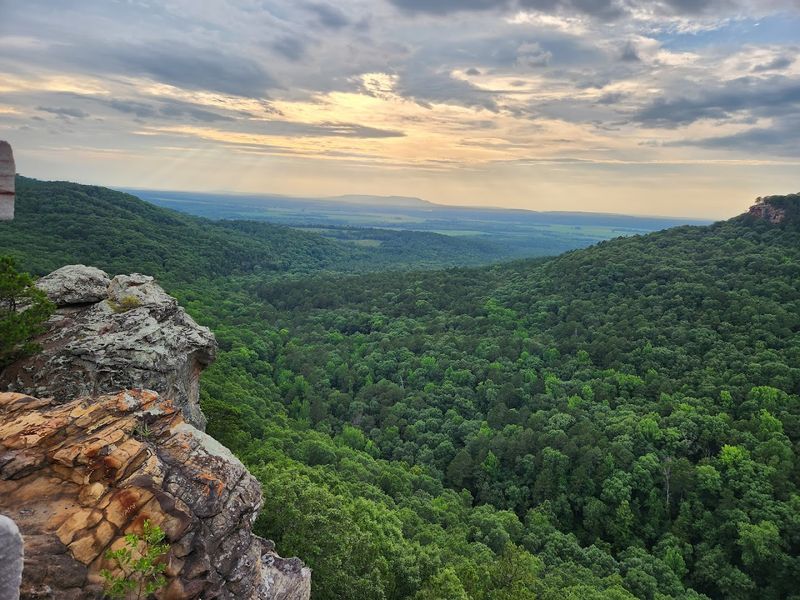
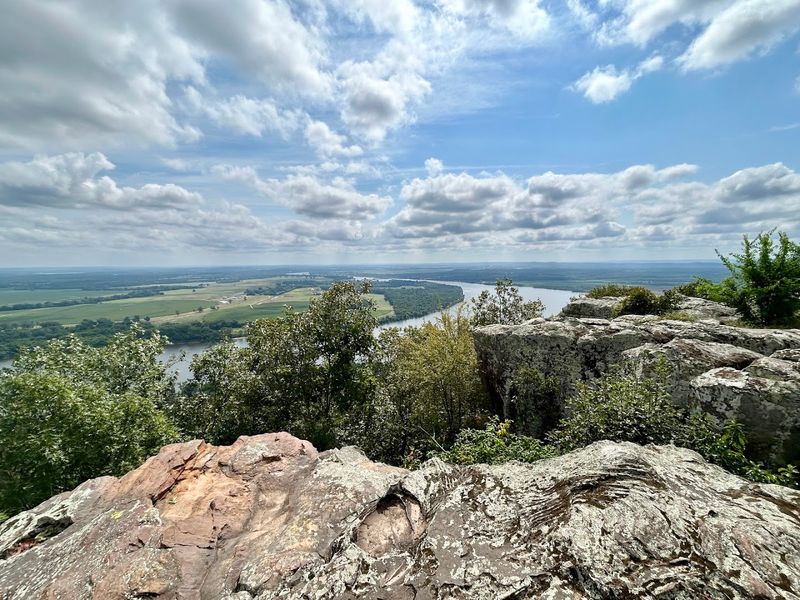
The Palisades Overlook delivers the kind of view that makes you stop mid-sentence because your brain simply needs a moment to process how much landscape is spread out below you.
From this ridge, the Arkansas River Valley unfolds in a broad, flat expanse framed by distant ridgelines, with the river itself visible as a silver thread cutting through the patchwork of fields and forests.
The overlook sits along the park’s Palisades Trail and can be reached without an extremely strenuous hike, which means the payoff-to-effort ratio here is genuinely impressive for visitors of most fitness levels.
Sunrise visits reward early risers with a low-angled light that turns the valley below into a warm, glowing panorama, while late afternoon brings long shadows and a softer, more golden quality to the scene.
I counted at least four distinct ridgelines visible from the overlook on a clear day, each one slightly hazier than the last, giving the whole view a layered depth that photographs struggle to fully capture.
Whether you are wrapping up a full day of hiking or simply driving up for the view, the Palisades Overlook sends you home with a mental image of Arkansas that stays with you for a long time afterward.