
This Secluded Arkansas Valley Offers A Canoe Trip Into A Lost World
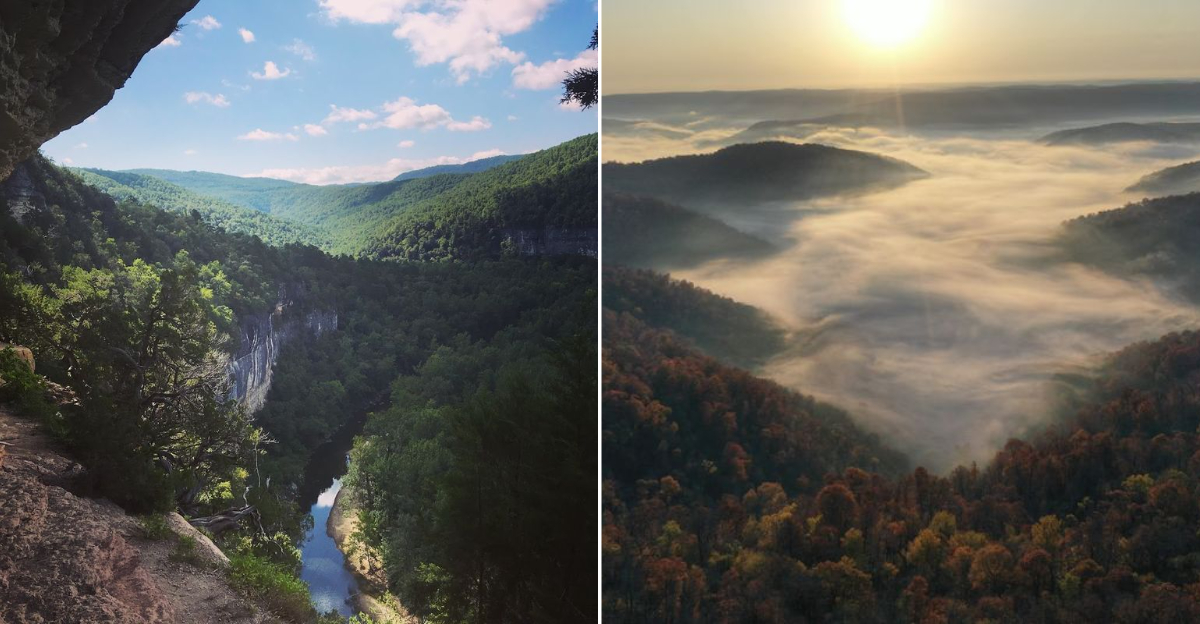
The river speaks before anything else does, a low, steady murmur against stone. I pushed off on a cool autumn morning and let the current carry me.
Within minutes, the outside world faded. No traffic, no buzz, just water and cliffs rising straight up on both sides.
My arms felt it pretty quickly, but I didn’t mind. Each bend pulled me farther into a place that feels older than the road that brought me there.
Limestone walls catch the light in strange ways, and the water stays clear enough to watch every ripple pass beneath you. Cell service drops off early, and honestly, that’s part of the draw.
I’ve paddled a lot of rivers across Arkansas, but this one resets your pace. It slows you down, then keeps you there longer than you planned.
Limestone Corridor Beneath Towering Ozark Walls
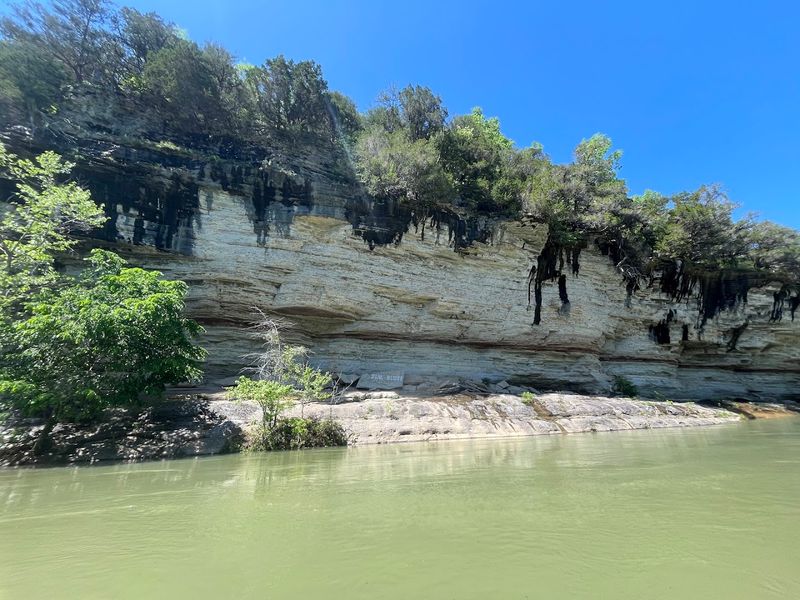
Standing at the put-in point and looking downstream, the first thing that hits you is scale. The limestone bluff walls on either side of the Upper Buffalo rise so dramatically that your neck cranes back just to find the sky.
These canyon walls were carved over millions of years by water working patiently through soluble rock, and the results are breathtaking in a way that photographs simply cannot capture. Horizontal ledges stripe the bluffs in layers of cream, tan, and gray, telling a geological story written before humans existed.
Paddling through this natural corridor feels less like recreation and more like trespassing through an ancient cathedral. The river narrows in places, forcing the current to quicken beneath overhanging rock faces draped with ferns and mosses fed by seeping groundwater.
Newton County, Arkansas, holds some of the most rugged terrain in the entire Ozark Plateau, and the Ponca region sits at the heart of that wild geography. Every bend in this limestone corridor reveals a new wall, a new shadow pattern, a new reason to rest your paddle and simply stare.
Morning Fog Over Pasture And Grazing Elk
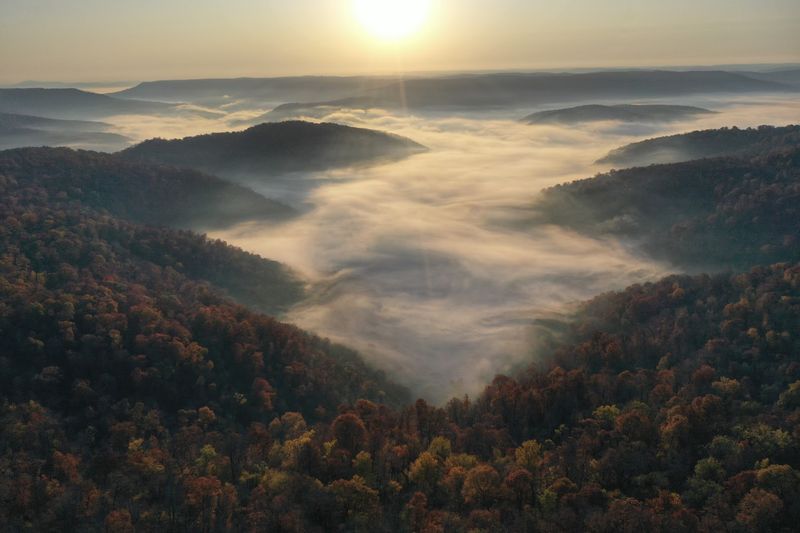
Before the sun clears the ridgeline, the valley near Ponca fills with a fog so thick and white it looks like the hills are floating. I stepped out of my tent one morning and found a small herd of elk standing in the pasture not far from the river, completely unbothered by my presence.
The elk herd in the Buffalo River country is one of the most remarkable wildlife restoration stories in the mid-South. Reintroduced to Arkansas in the 1980s after being absent for over a century, the animals have thrived in the lush bottomlands and forested ridges of Newton County.
Seeing them at dawn, backlit by soft gray light with fog curling around their legs, is the kind of moment that stops your breath. The big bulls carry antlers that seem almost too large for any creature to balance, yet they move through the pasture with unhurried grace.
Quiet and patience are the only equipment you need for this show, and the reward for an early wake-up call is a wildlife encounter that most people only see in nature documentaries. The fog lifts slowly, and the elk drift back into the tree line like they were never there at all.
Narrow Launch Where Gravel Meets Clear Current
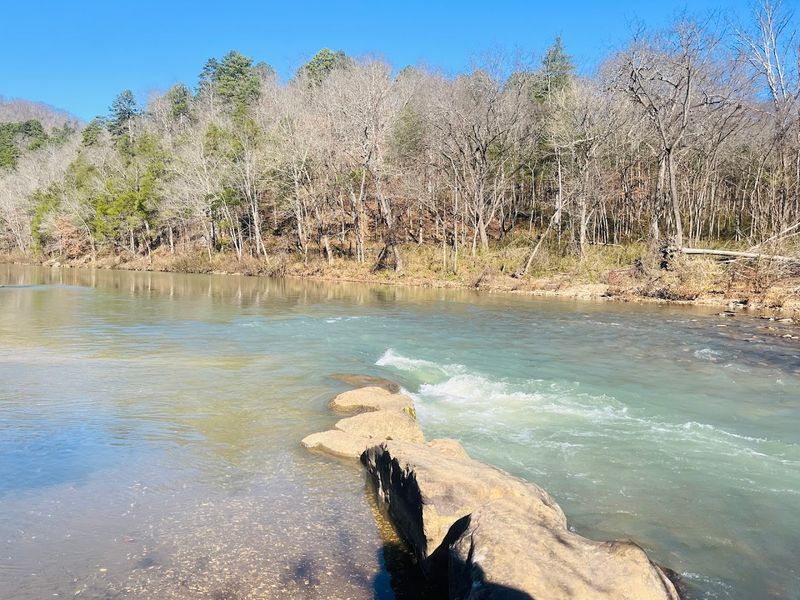
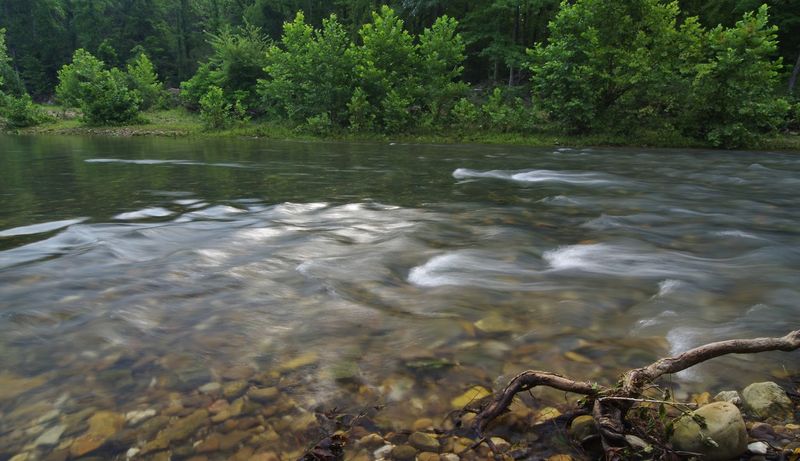
There is something quietly ceremonial about the moment a canoe slides off a gravel bar and the current takes hold for the first time. The launch points along the upper river near Ponca are unpretentious affairs, mostly natural gravel bars where the bank slopes gently into water so clear you can count the individual stones on the bottom.
Steel Creek and Boxley Valley access points are popular starting spots for paddlers who want to experience the river at its most wild and intimate. The water in this upper section runs cold even in summer, fed by springs and shaded by forest canopy that closes in tightly above the channel.
Gravel crunches under your feet as you load gear, and then the current catches the bow and the trip officially begins. The transition from standing on solid ground to floating is always a little thrilling, a small surrender to wherever the river decides to take you.
First-time visitors often underestimate how technical some sections can be at certain water levels, so checking conditions before launching is genuinely important. The reward for a well-planned start is hours of paddling through one of the most pristine river corridors remaining in the American South.
Sheer Bluffs Above Slow Glassy Bends
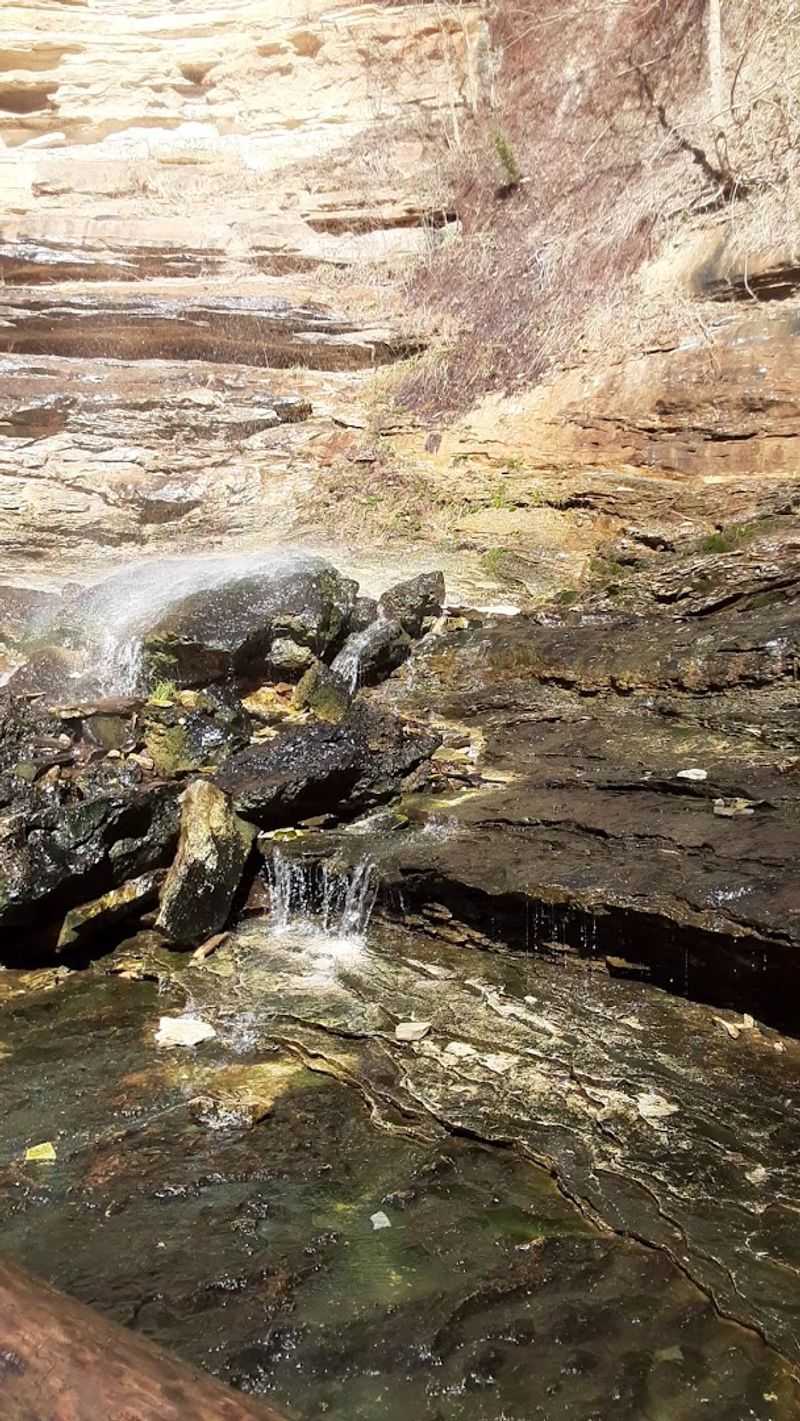
Not every section of the upper river charges forward with urgency. Some of the most memorable moments happen on the slow bends where the current nearly stops and the water turns into a mirror.
On those glassy stretches, the towering bluffs above are reflected so perfectly in the surface that you feel suspended between two identical worlds, one solid and ancient, one liquid and shifting. The stillness on these bends is so complete that a single paddle stroke sounds almost rude.
Geologists would tell you those sheer faces were undercut by centuries of river action, and the vertical drops of some bluffs reach well over two hundred feet in certain sections of the upper river canyon. I prefer to skip the science and just sit in the canoe with the paddle across my knees and stare.
Autumn is an especially rewarding season for these slow bends, when the hardwoods above the bluffs turn orange and gold and every color doubles in the reflection below. Spring brings its own version of the show, with fresh green growth softening the hard edges of the rock and wildflowers spilling over ledges toward the water.
Quiet Stretches Where Paddles Echo
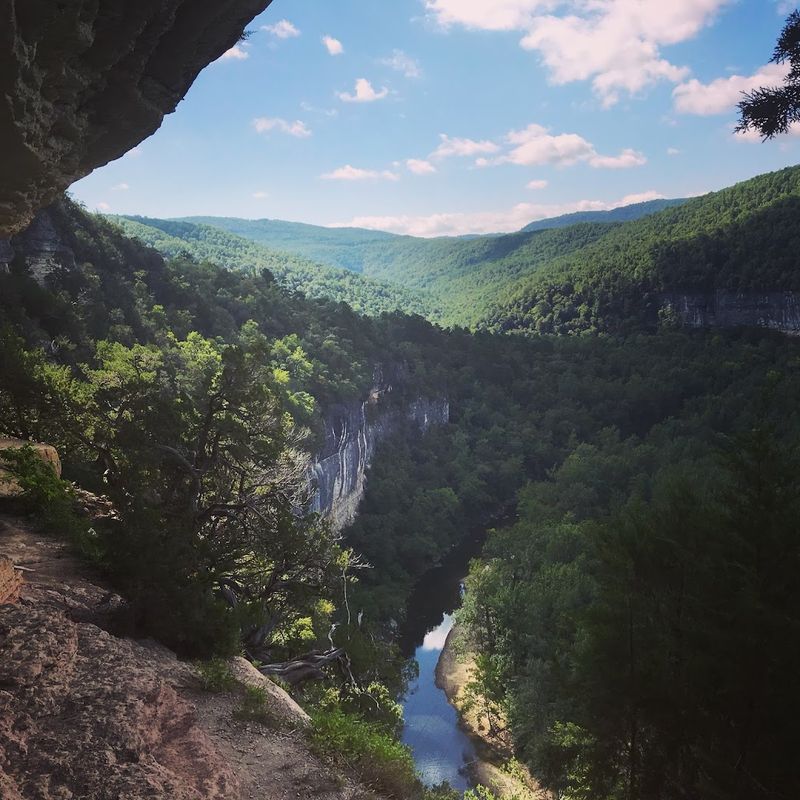
Sound behaves differently inside a river canyon. I noticed it first on a long, straight section where the walls pressed close and every dip of the paddle came back to me a half-second later, a soft watery echo bouncing off limestone.
The quiet on the Upper Buffalo is not the absence of sound but rather a very specific collection of sounds that the modern world rarely offers. Water moving over gravel, kingfishers rattling from branch to branch, the creak of a canoe settling into a current change, and nothing else.
Cell service disappears almost immediately after you leave the Ponca area, and most paddlers find that the disconnection is not an inconvenience but a relief. There is a loosening that happens somewhere around the second bend when you realize that no notification is going to interrupt whatever the river has planned for you next.
These quiet stretches also serve as the best wildlife observation corridors on the trip, since animals along the bank have not yet heard you coming. Wood ducks flush from overhanging branches, great blue herons lift off with prehistoric wingbeats, and the occasional river otter slips below the surface just ahead of the bow, leaving only rings on the water as evidence.
Hidden Hollows With Springs And Waterfalls
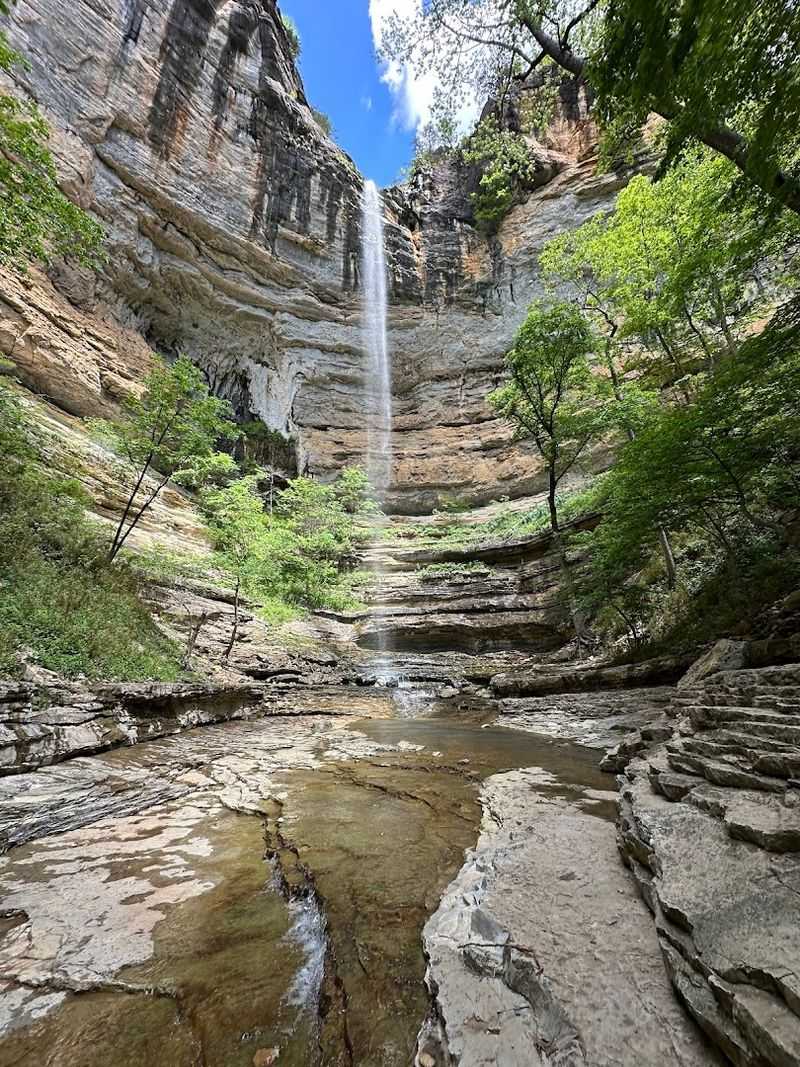
Pull your canoe onto a gravel bar at the right moment and you might hear it before you see it, a faint rushing sound coming from a side hollow that the main river does not advertise. The Ozark landscape around Ponca is riddled with tributary hollows, each one holding its own small ecosystem of springs, seeps, and seasonal waterfalls.
These hollows stay cool even in July, fed by groundwater that emerges from the karst limestone at a nearly constant temperature year-round. Walking into one feels like stepping into a refrigerator lined with ferns, and the transition from warm river air to hollow chill is immediate and startling.
Some of the waterfalls tucked into these side canyons drop in thin ribbons over mossy ledges into pools barely wide enough to stand in. Others spread across wide shelves of layered rock and create curtains of water that catch afternoon light in ways that make you reach for a camera you will never hold still enough.
The springs that feed these features often support rare plant communities found nowhere else in Arkansas, since the constant moisture and temperature create micro-habitats that have persisted undisturbed for thousands of years. Finding one of these hollows on a paddle trip feels like discovering a small secret the river has been keeping specifically for you.
Campsites Set Beneath Amber Glowing Cliffs
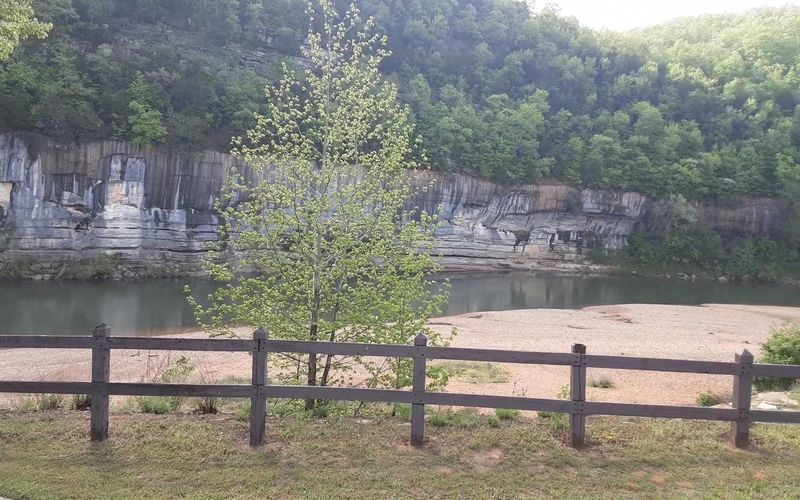
Gravel bar campsites along the upper river are primitive by design, which means no electrical hookups, no camp store, and no hum of generators carrying across the water. What you get instead is a flat stretch of gravel, a simple fire ring, and a front-row seat to one of the quietest evenings you’ll find anywhere in Arkansas.
As the sun drops behind the ridge, the limestone bluffs begin to change. Gray fades into warm amber, then deepens into a rich orange that lingers long after direct light disappears.
Sitting beneath those cliffs as they hold the last color of the day feels almost unreal, like the landscape is putting on a final show before night settles in.
Camping on these gravel bars is allowed under National Park Service guidelines, but it comes with responsibility. You need to choose spots that are naturally bare, stay clear of private land, and follow leave-no-trace practices so the riverbank stays as wild as you found it.
When the fire burns low and the sky fills with stars, the sound of the current becomes the only background noise. It’s simple, quiet, and exactly enough.
A Downstream Journey Beyond The Modern World
The Upper Buffalo corridor between Ponca and Pruitt offers a long, uninterrupted stretch of river that feels genuinely removed from the twenty-first century. The exact mileage depends on your chosen access points and water levels, but the rhythm of the trip settles in quickly.
You push off, find your pace, and then the hours begin to blur together in the best possible way.
Cliffs rise and fall with each bend, sometimes closing in tight, sometimes opening just enough to let the sky widen overhead. Gravel bars appear when you need them, then vanish again around the next turn.
There’s no fixed timeline out here, only the steady pull of the current and the quiet decisions of when to stop, when to drift, and when to keep moving.
This sense of distance from everything familiar is not accidental. The Buffalo became America’s first national river in 1972, protected specifically to preserve its free-flowing character and the wild landscape it moves through.
By the time you near the end of the float, something shifts. The urgency you brought with you has slipped away somewhere upstream, replaced by a slower, steadier way of moving through the day.