
This Secret Arkansas Trail Reveals A Giant Natural Stone Bridge You Can Walk Across
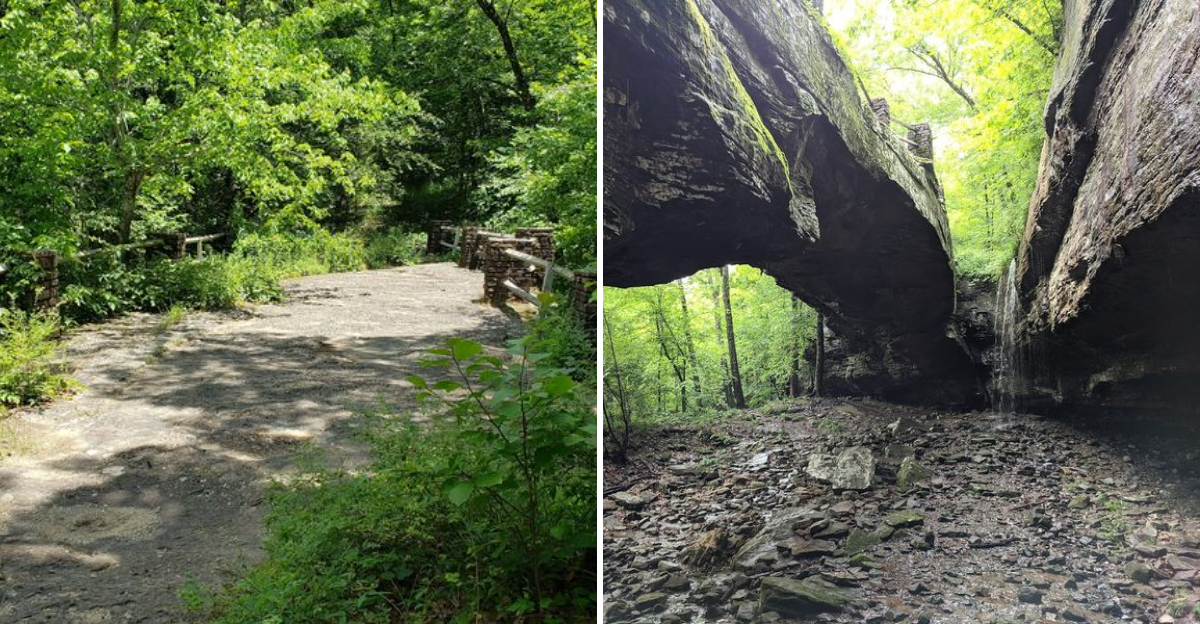
Most people pass this trail in the Ozark National Forest without ever realizing what sits just beyond the trees. It starts simple.
A dirt path, soft light through the canopy, nothing unusual at all. Then the landscape shifts.
A massive natural stone bridge rises into view, stretching across open air, carved from quartz sandstone by centuries of weather shaping every edge. I came across it by chance and just froze for a second.
No exaggeration at all. You can walk right across it, which makes the experience even wilder in person.
It feels solid, ancient, and slightly surreal all at once. Arkansas is full of scenic spots, but this one feels different in a quiet, almost unexpected way.
The trail does not rush you at all. It builds slowly, step by step, until suddenly you are standing on something that feels almost impossible to fully believe.
A Little Known Forest Path Hides A Colossal Stone Span
Most people have never heard of it, and honestly, that feels like one of the best-kept secrets in the entire state of Arkansas.
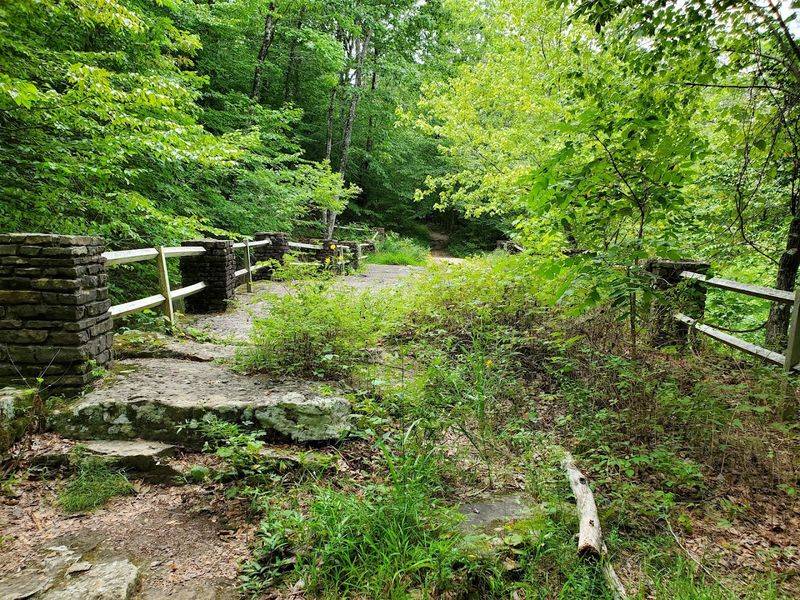
Standing at the trailhead, I had no idea that a colossal stone span was waiting just a short walk into the trees.
The path begins modestly, threading through a canopy of hardwoods that filter sunlight into soft, shifting patches on the forest floor.
Nothing about the quiet entrance hints at the geological spectacle ahead, which makes the eventual reveal feel genuinely earned.
It is easy to imagine early travelers noticing this arch and wondering how it might have been used during wet seasons when crossing the streambed became difficult.
The overhang would have offered natural shelter for people moving through the area on long journeys or hunting trips.
That sense of possible human history adds a quiet weight to every step you take along the route.
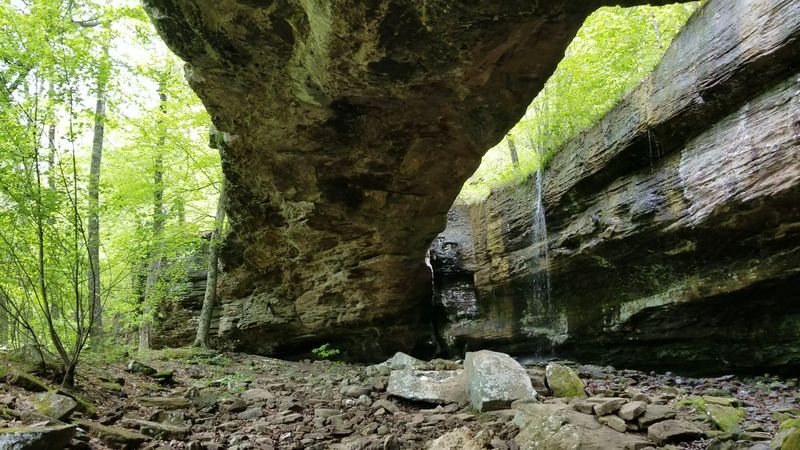
The arch itself measures 130 feet in length and 20 feet in width, formed from quartz sandstone that erosion slowly transformed from a cave into an open span.
The place that holds all of this wonder is the Alum Cove Natural Bridge Trail, located in Deer, AR 72628, and it is absolutely worth finding.
A Short Loop Winding Through Quiet Ozark Woodland
At just 1.1 miles, this loop trail proves that a hike does not need to be long to leave a lasting impression on you.
I completed the full circuit in under an hour, but I lingered far longer because the woodland kept offering new things to look at around every bend.
The trail passes a small stream that gurgles quietly alongside the path, and after heavy rain, a modest waterfall appears to add a little extra drama to the scene.
Gravel sections, exposed tree roots, and occasional narrow passages keep the terrain interesting without ever becoming genuinely punishing.
Benches are placed thoughtfully along the route, which I appreciated more than I expected, especially on the uphill return stretch.
The forest canopy stays thick overhead for most of the loop, creating a cool, shaded corridor that feels refreshing even on warm summer days.
Visitors of most fitness levels can handle this trail comfortably, though the uneven ground means you should wear proper footwear rather than sandals.
For anyone wanting a peaceful morning in the Ozarks without committing to a grueling all-day adventure, this loop delivers exactly the right balance of effort and reward.
Towering Bluff Walls Carved With Honeycomb Patterns
When I ran my fingers along the bluff walls here, it felt like touching a giant piece of natural sculpture that took thousands of years to complete.
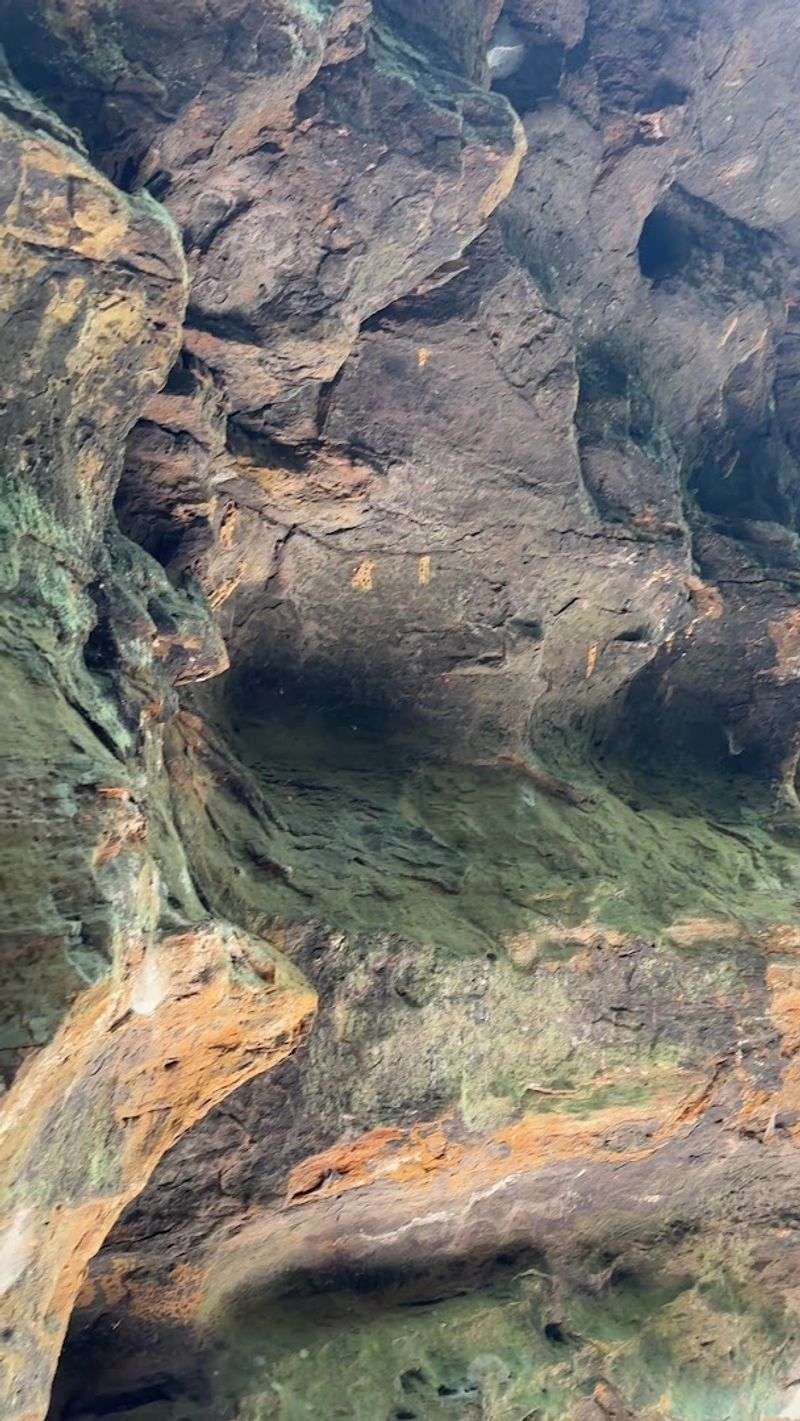
The sandstone surfaces are pitted and pocketed with rounded cavities that cluster together in patterns resembling a honeycomb, created by differential weathering across the rock face.
Wind, moisture, and freeze-thaw cycles worked together over an enormous span of time to hollow out these intricate textures in the quartz sandstone.
Up close, the walls shift between warm amber, rust, and pale cream depending on the angle of the light, making them genuinely photogenic at almost any time of day.
I spent a good stretch of time just staring at one section of bluff, noticing how each pocket cast its own small shadow and gave the surface an almost three-dimensional quality.
These formations are not just visually striking but also tell the geological story of how water and time shaped the entire Alum Cove landscape.
Children especially seem fascinated by these walls, reaching up to touch the cavities and asking questions that even geology textbooks would struggle to answer simply.
Honestly, the bluff walls alone would justify a visit here even if there were no natural bridge at all.
A Massive Natural Bridge Stretching Across Open Air
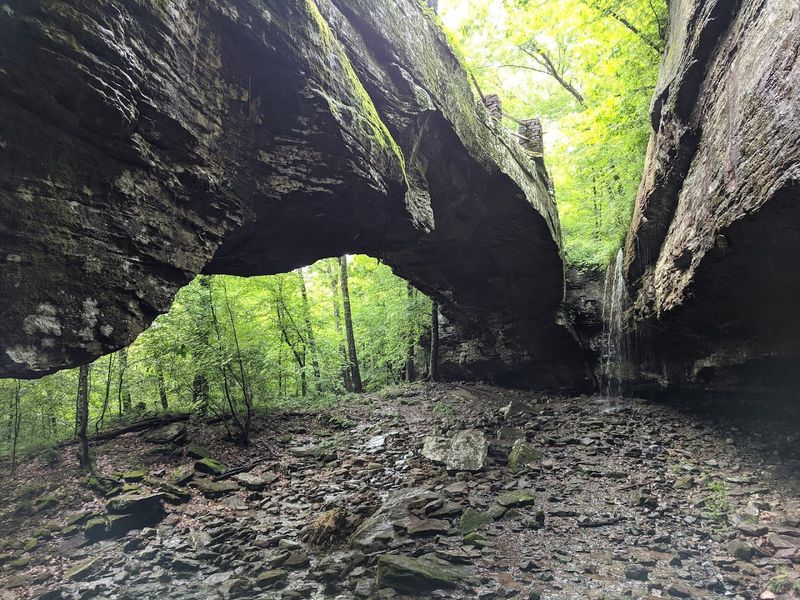
Nothing quite prepares you for the first moment you step out of the tree line and see the full span of the natural bridge hanging in the air above you.
At 130 feet long and 20 feet wide, this arch is not a subtle geological footnote but a commanding stone structure that dominates the entire cove.
The bridge formed when erosion gradually ate through a quartz sandstone cave, widening the opening until the cave ceiling became a freestanding arch suspended between two cliff walls.
Looking at it from below, the underside of the span shows the same layered, textured sandstone that appears throughout the surrounding bluffs, only here it is framed by open sky on either side.
Visitors often describe their first view of the arch as genuinely surprising, with many noting that photos do not fully capture how large and impressive it feels in person.
The arch is widely praised by visitors, reflecting how reliably it delivers on the promise of something spectacular.
I stood beneath it for a long time, watching the light shift across the stone surface and feeling that particular stillness that only very old things seem to carry.
Few natural landmarks in Arkansas hit with the same immediate visual punch as this one does.
Walking Across Solid Rock Suspended Above The Forest Floor
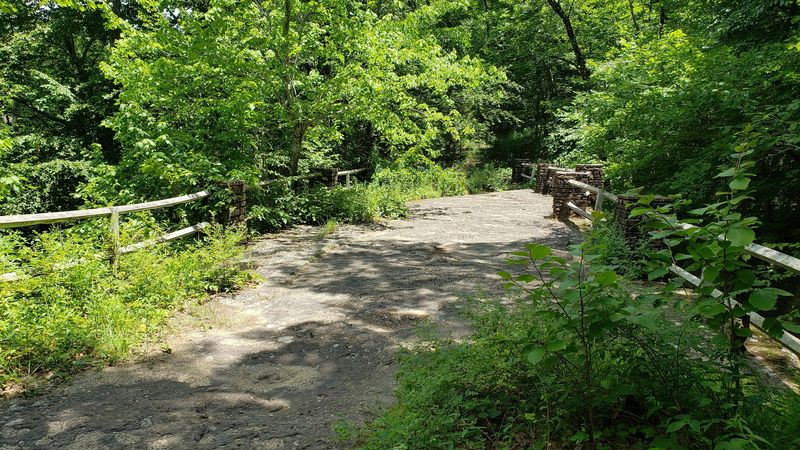
You feel a quiet thrill on top of a natural bridge when it finally clicks that the ground beneath your boots is suspended in midair. The trail routes hikers both over and under the arch, giving two completely different perspectives on the same formation within a single loop.
Walking across the top, the surface feels broad and stable, nothing like the narrow, precarious crossing you might imagine before arriving.
The stone is rough and grippy underfoot, so even on damp days the footing feels secure as long as you stay alert and move at a sensible pace.
From the top of the bridge, you can look down into the shaded cove below and see the trail continuing along the creek bed, giving you a clear sense of the landscape’s layered depth.
The experience of crossing a natural stone span that has existed for thousands of years carries a quiet sense of perspective that is hard to replicate anywhere else.
I paused in the middle of the bridge and just listened, catching birdsong, the distant trickle of the stream, and the faint rustle of wind through the canopy below.
That moment of stillness on solid ancient rock is the kind of memory that sticks with you long after the hike is over.
A Cool Shaded Rock Shelter Beneath The Cliff Overhang
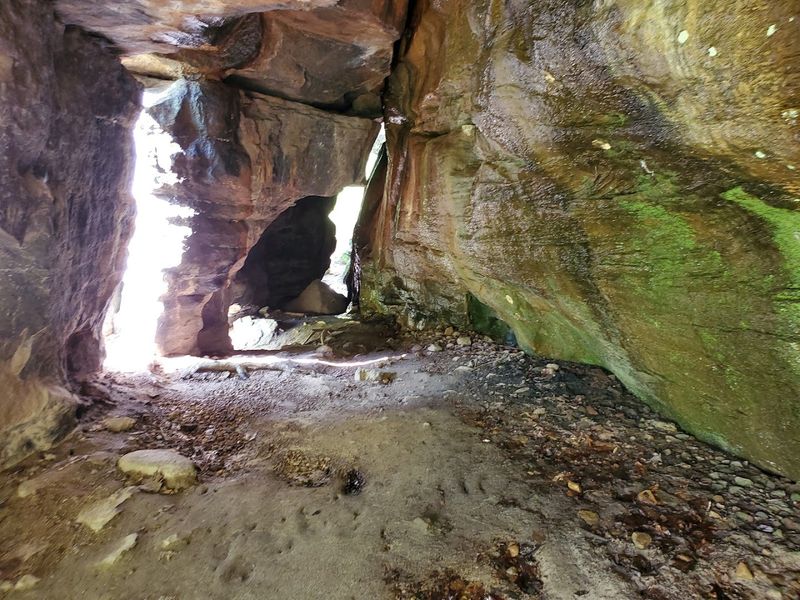
Stepping under the cliff overhang at Alum Cove feels like the forest has quietly offered you its best shaded seat in the house.
The rock shelter stretches along the base of the bluff wall, creating a naturally cool, dim space that drops the temperature noticeably compared to the open trail.
The overhang would have offered natural shelter long before any hiking trail existed here, providing a dry and protected space along the bluff.
The ceiling of the shelter is streaked with mineral stains and small fern clusters that cling to cracks in the sandstone, adding living color to the cool grey stone.
These rock shelters are not caves in the underground sense but rather open-air overhangs, which makes them feel accessible and comfortable rather than claustrophobic.
I sat inside the shelter for a while and watched the dappled light play across the mossy ground just outside the overhang’s edge.
The shelter also provides a useful rest point on warm days, offering genuine relief from the sun without requiring you to stop the hike entirely.
There is a particular peacefulness here that feels earned, the kind you only find when you have walked a little way into the quiet to reach it.
Uneven Stone Steps And Subtle Scrambles Along The Route
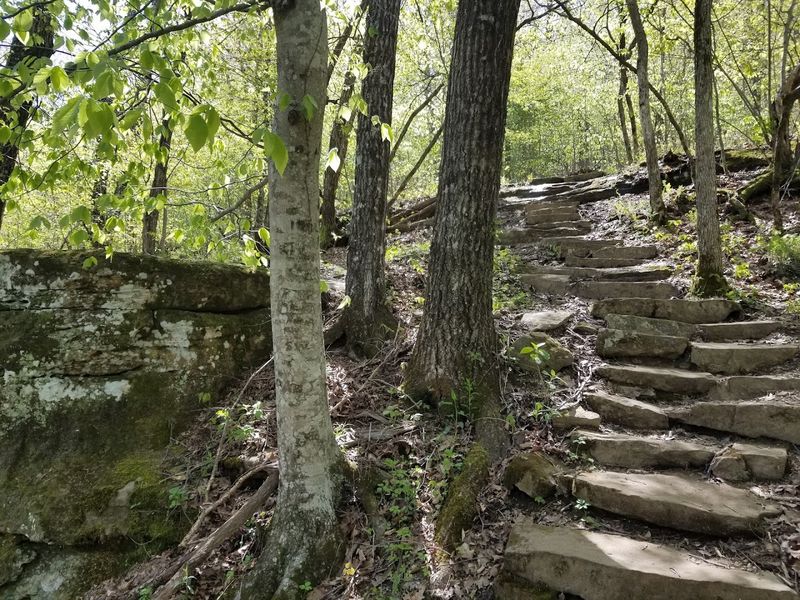
Calling this trail flat would be a generous stretch of the truth, and that is actually part of what makes it interesting.
The route includes sections of hand-carved stone steps, exposed tree roots acting as natural footholds, and a few short scrambles where the terrain asks you to pay close attention.
None of these challenges rise to the level of technical climbing, but they do require steady footing and a reasonable degree of attention, especially for younger children or older visitors.
The oddly shaped steps can catch you off guard if you are moving too quickly, which is a fair warning worth keeping in mind.
Proper hiking shoes or trail runners make a real difference here, and I would strongly advise against attempting the loop in flip-flops or casual sneakers.
The uphill return stretch on the loop is the most demanding section, but benches placed at thoughtful intervals along the trail give you easy excuses to pause and catch your breath.
These small physical challenges actually enhance the overall experience, making the arrival at each new feature feel more satisfying than it would on a completely paved path.
The trail rewards hikers who stay present and take their time rather than rushing through to check a box.
Spring Greenery And Autumn Color Transforming The Landscape
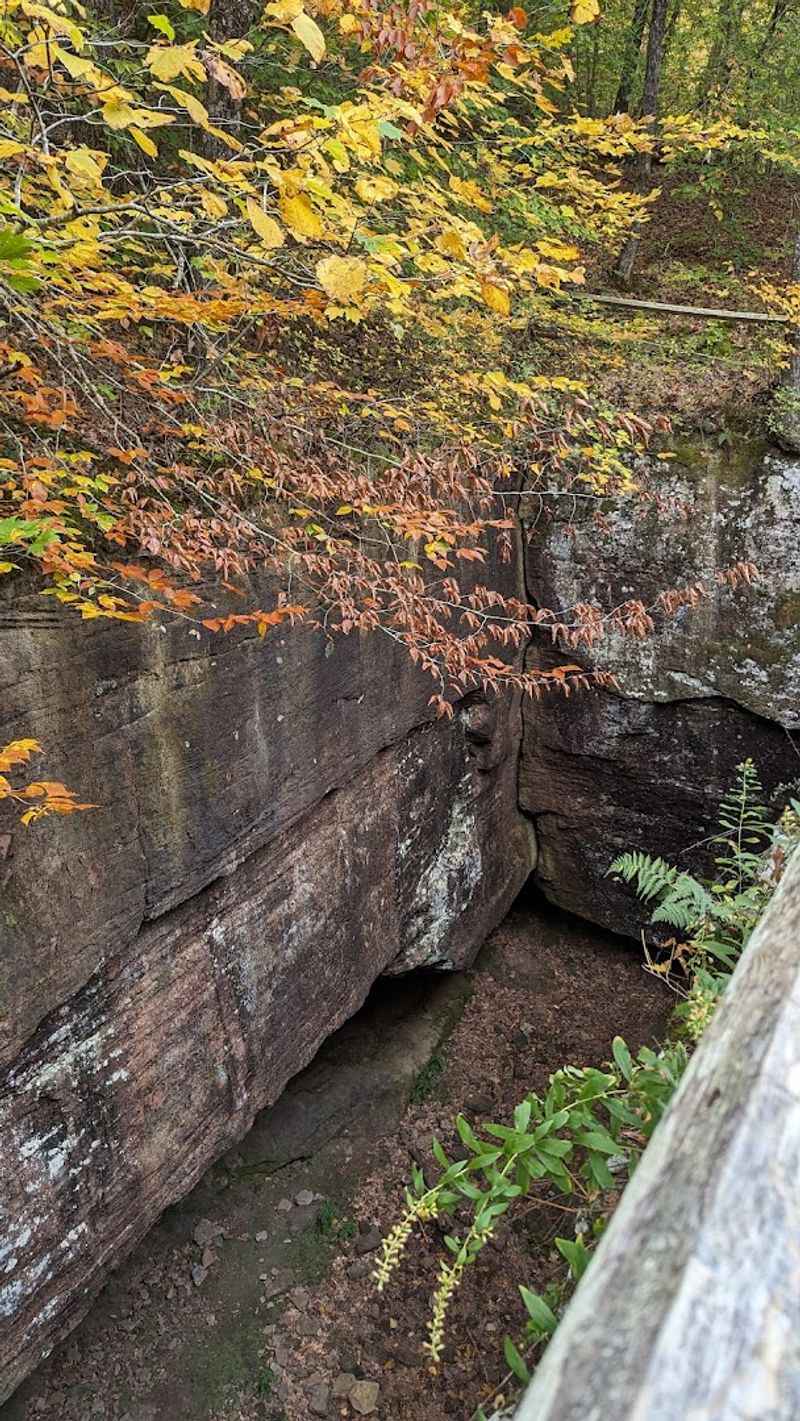
Timing a visit to Alum Cove around the seasons is genuinely worth thinking about because the trail transforms dramatically depending on when you arrive.
Spring brings an explosion of fresh green growth that coats every surface, from the forest floor to the upper canopy, creating a lush tunnel of vegetation that makes the sandstone formations pop with contrast.
Wildflowers appear along the creek edges, and the small stream runs fuller and livelier after winter snowmelt, occasionally feeding a modest waterfall that adds a pleasant soundtrack to the hike.
Autumn shifts the entire palette toward warm amber, burnt orange, and deep red, turning the woodland surrounding the arch into something that looks almost deliberately composed for a photograph.
In October, the landscape can feel quietly overwhelming, especially compared to drier regions where this level of color is far less common.
Summer visits are very manageable thanks to the dense canopy that keeps the trail shaded for most of its length, though tick awareness is important and checking yourself thoroughly after the hike is strongly recommended.
Winter strips the trees bare and reveals the geological bones of the landscape with unusual clarity, making the arch and bluff walls look even more dramatic against a pale sky.
Every season offers a genuinely different version of this trail, which means one visit rarely feels like enough.