
This Secret Ohio Nature Preserve Hides Acres Of Forest Trails With Seriously Stunning Views
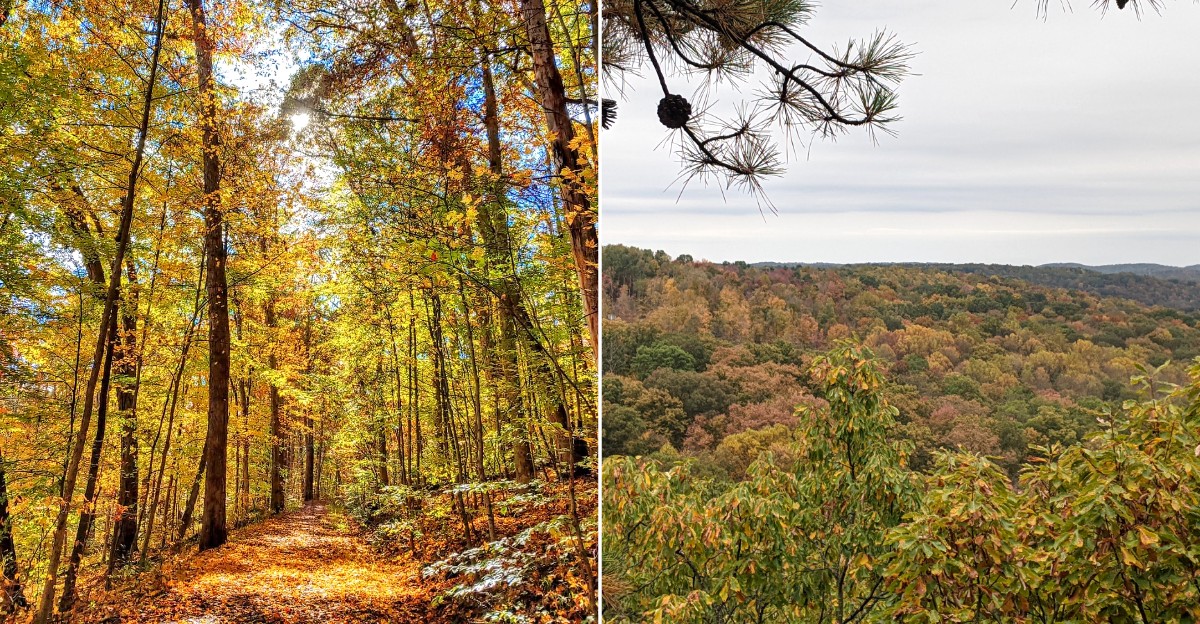
I thought I was heading out for an easy walk in central Ohio. A few steep minutes later, the hills had other plans.
That is part of what makes this quiet preserve such a surprise. The terrain feels much rougher than you might expect, with shady creekside paths, steep climbs, and forest trails that stay pleasantly quiet.
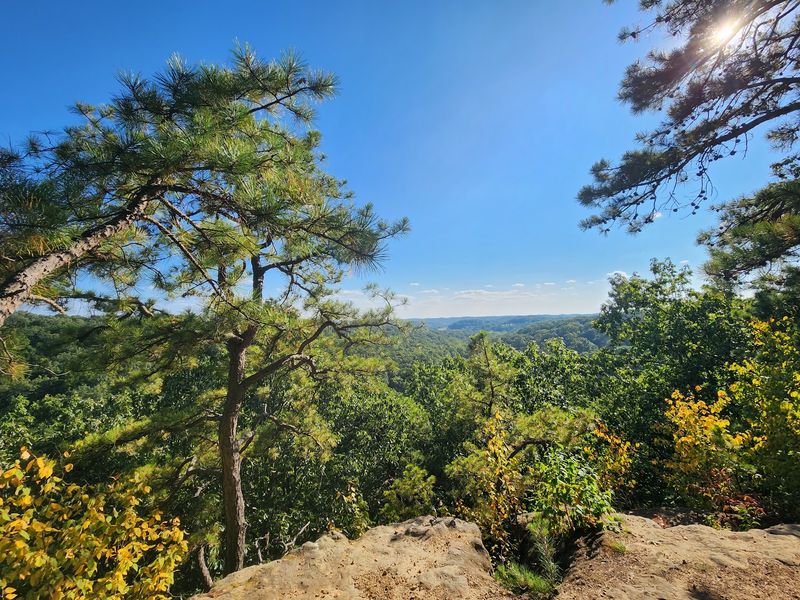
The best reward waits higher up. A rocky overlook opens across the surrounding hills and makes the climb feel completely worth it.
If you like finding a wilder side of central Ohio, this trail is a good place to start. Lace up your boots, bring some water, and let’s head into the woods.
A Preserve With A Holiday Name And Year-Round Charm
The name made me grin before I even laced up my boots. Christmas Rocks sounds like a holiday card, yet this preserve looks lovely in every month of the year.
Tucked into the rolling hills southwest of Lancaster, the preserve protects a slice of forest, sandstone ridges, and a peaceful valley.
The land sits in the Hocking Hills region, so the rugged terrain feels like a quieter cousin of the famous parks nearby.
I loved that the place is managed as a state nature preserve. That means the focus stays on protecting plants, rocks, and wildlife rather than building big visitor centers or snack shacks.
You will not find crowds here, and you will not find much fuss either. The trails are simple, clearly marked, and wind through some of the most scenic woods I have seen in central Ohio.
My visit felt like a secret someone had whispered to me on purpose. The mix of gentle valley walking and steep hillside climbs gives hikers of different skill levels something to enjoy.
Plan your trip to Christmas Rocks State Nature Preserve at 2340 Meister Rd SW, Lancaster, OH 43130, United States.
Parking By The Covered Bridge
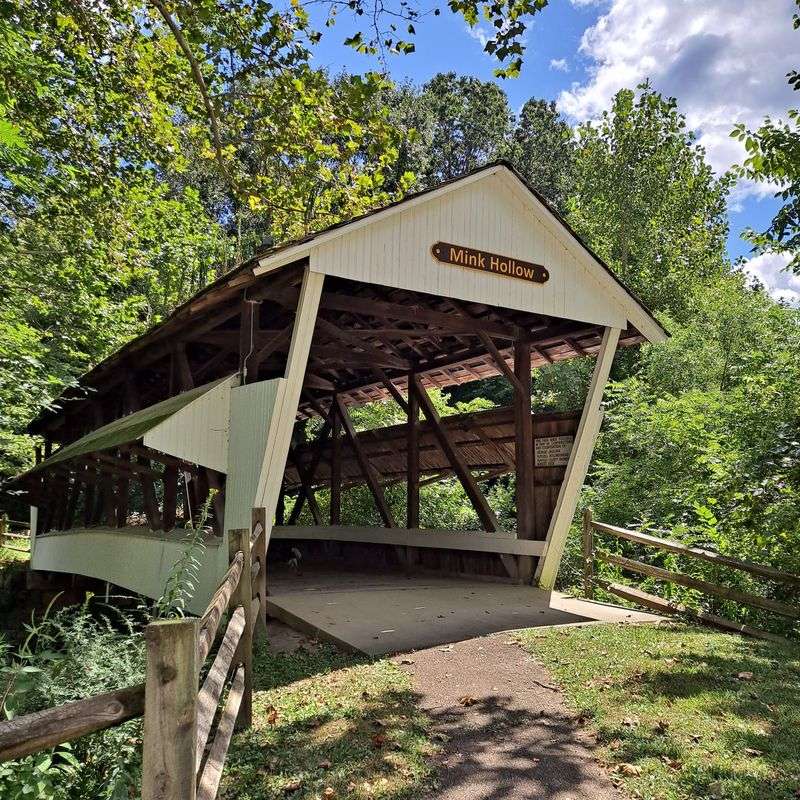
Here is the tip that saved my morning. The map pin can be a little misleading, so do not drive up the private road hoping to find a closer spot.
Parking sits along Meister Road near a small park and a charming covered bridge. I pulled into the lot, snapped a quick photo of the bridge, and got ready to walk.
Visitors should not drive or park up the gravel access road. Stick with the designated parking area near Meister Road and the covered bridge.
From the lot, I crossed the street and followed signs to a well-kept gravel lane. It looks a bit like a private driveway, which made me hesitate for a second.
Keep going with confidence, because the signs point the right way. The walk to the actual trailhead is roughly half a mile and passes a few homes before the woods take over.
That short stroll works as a nice warm-up for your legs. By the time the gravel turns into an old rocky road grade, the houses fade and the forest feels wide open.
Consider the covered bridge your official starting line and your finish-line reward too.
The Double Lollipop Trail Layout
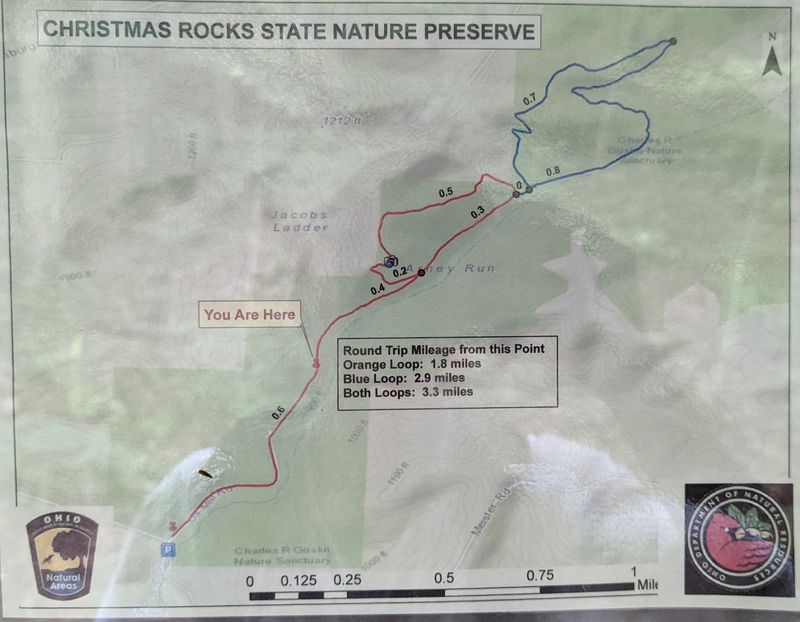
Picture a stick with two candy loops on the end. That is basically how the trail system works, and I found it surprisingly easy to follow.
After the access lane, the path reaches the first loop, marked in orange. This one holds the famous Jacob’s Ladder climb and the best-known overlook.
Farther along, a second loop marked in blue curls up another hillside. Together, both loops add up to around four miles, depending on how much you wander.
I did the orange loop first and then tacked on the blue loop because my legs were feeling brave. Hikers can easily pick just one if time or energy runs short.
Trail information and maps are posted at kiosks along the approach, and colored markers help guide the way.
I downloaded the official map from the Ohio Department of Natural Resources website before leaving, and it helped a lot.
Cell service was decent during my visit, but a saved screenshot is always a smart backup. Knowing how the loops connect keeps you from doubling back by accident.
With a little planning, the layout lets you build a hike that fits your mood that day.
Climbing Jacob’s Ladder
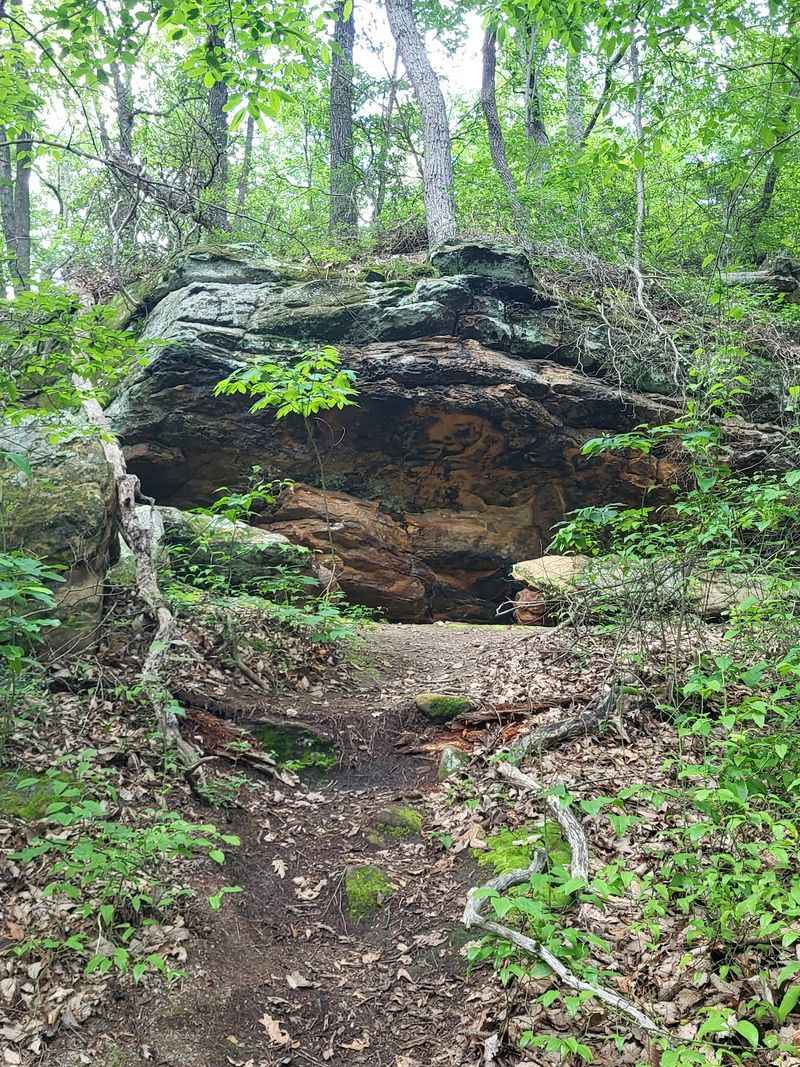
My heart rate had opinions about this part. Jacob’s Ladder is short, but it climbs so steeply that I stopped twice just to breathe.
The trail heads up the hillside with a grade some hikers estimate near thirty percent. Rocks and roots poke through the dirt, giving your feet plenty to think about.
Trekking poles made a real difference for me. They helped on the way up and felt even more useful when I thought about coming down.
Here is a smart trick I picked up. Climbing Jacob’s Ladder and then descending the gentler side of the orange loop feels much kinder to your knees.
Hikers who want to skip the steep section entirely can continue straight and look for stairs leading to the other side of the orange trail. That route is longer but far less intense, and it still reaches the overlook.
Either way, the effort pays off quickly. The steep part lasts only a short stretch before the ground levels out near the top.
I laughed when I reached the ridge, because the name finally made sense. It really does feel like climbing rungs toward the sky.
The Overlook That Steals The Show
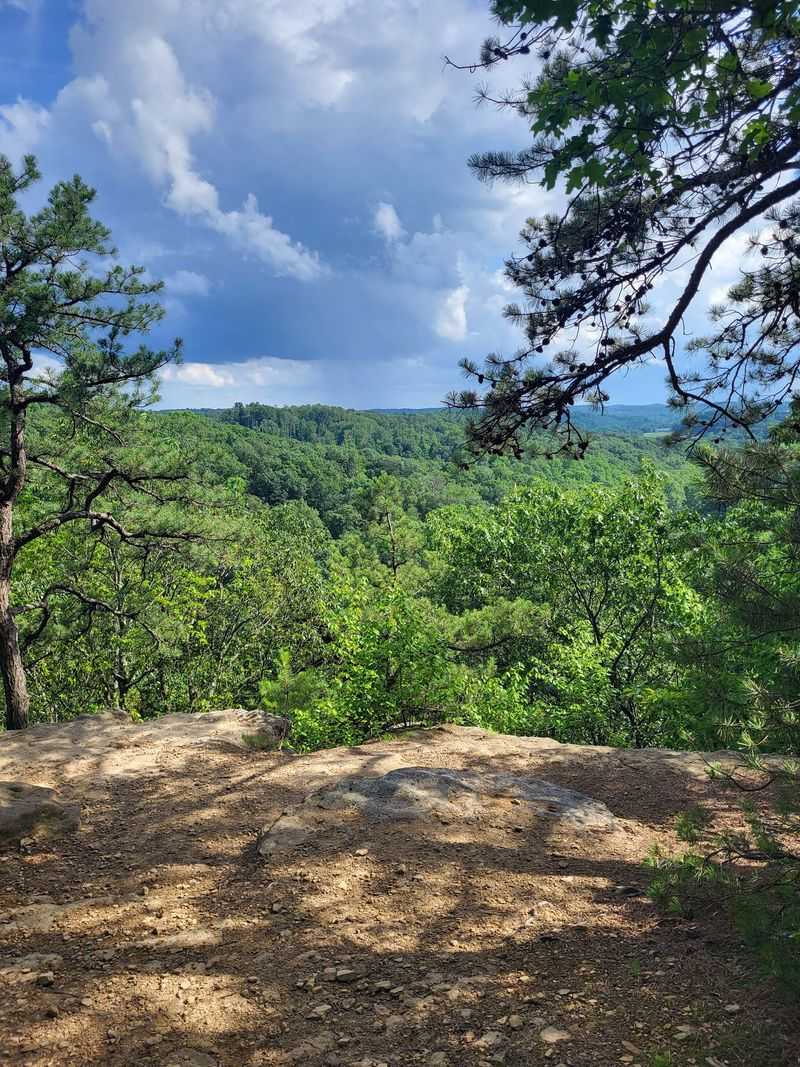
Nothing prepared me for the view. After all that climbing, the trees suddenly opened up, and a wide valley rolled out below the sandstone ledge.
The Jacob’s Ladder overlook actually has three rocky outcroppings. I made sure to visit each one, since every spot shows the hills from a slightly different angle.
Wooded ridges stretched as far as I could see. For someone used to flat Ohio farmland, the scene felt almost unreal.
There are no guardrails up here, so caution matters. I kept a safe distance from the edges, especially since the rock can get slick after rain.
This spot makes an excellent place for a snack break. I sat for about twenty minutes, munching trail mix and watching birds glide over the treetops.
Photographers should think about timing. Morning light felt soft and pleasant, while fall sunsets reportedly light the whole valley in warm colors.
Families with very small kids should keep them close or pick a different spot for resting. The cliffs are no place for running around.
Once I finally tore myself away, I already knew I would be back for another look.
Quiet Forest Magic On The Blue Loop
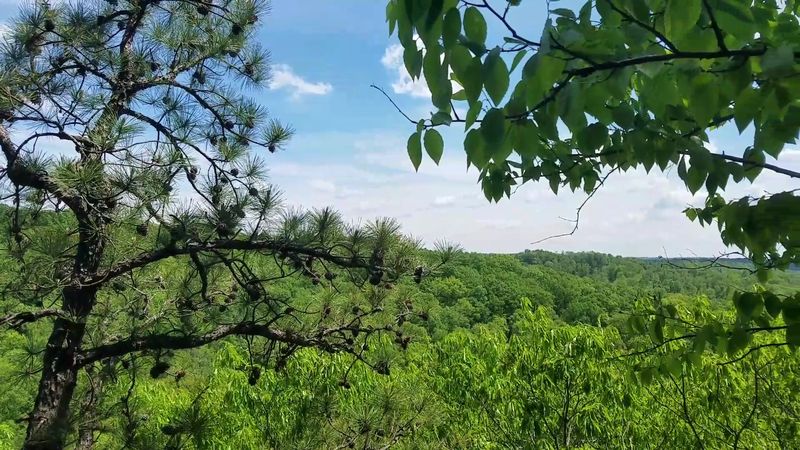
Softer and sneakier, the blue loop won me over slowly. It winds up the hill instead of charging straight at it, which my legs appreciated.
This trail does not share the same big overlook as the orange loop. Instead, it rewards hikers with deep forest scenery and a few pretty viewpoints along the ridge.
I noticed the plant life changing as I climbed. Mossy rocks gave way to feathery ferns, and then a patch of tall pines filled the air with a fresh scent.
Nature lovers will enjoy spotting these little shifts in the forest. It feels like several mini habitats packed into one walk.
The path narrows in places, and some sections turn muddy after rain. Waterproof shoes kept my socks dry and my mood cheerful.
Along the way, I heard woodpeckers tapping and robins chattering. Bird watchers might want to bring binoculars for this stretch.
Solitude is the real bonus here. I walked a long time without seeing another person, which made the forest feel like my own private classroom.
Take your time on this loop, because slow steps reveal the best tiny details.
An Easy Valley Walk Along The Creek
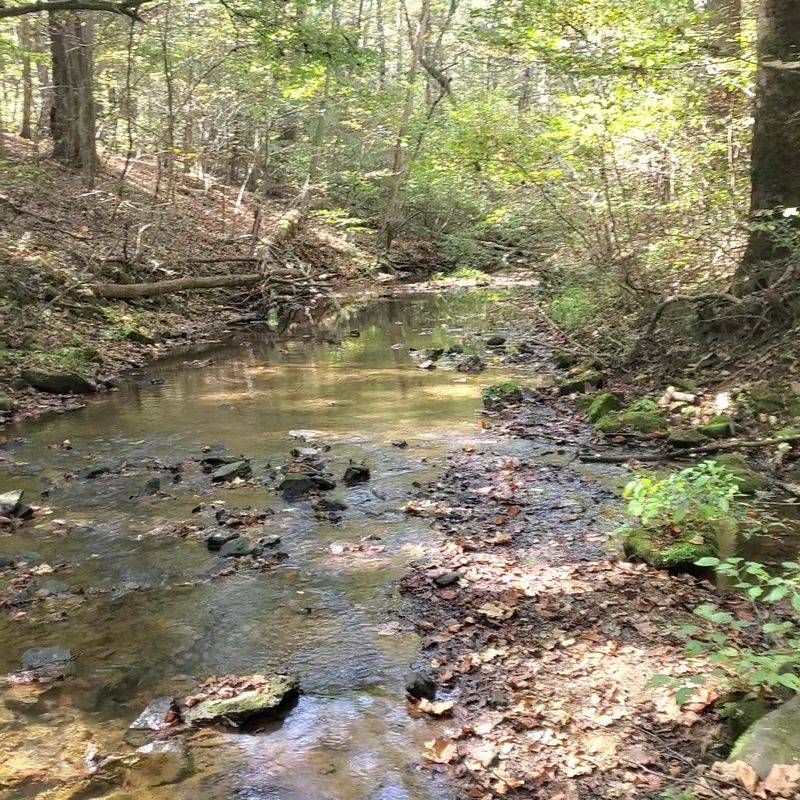
Good news for anyone who just wants a pleasant stroll. The main trail follows a stream through a shady valley, and much of it is flat and relaxing.
I enjoyed this section most on my way back. After the climbs, the level path felt like a gentle reward.
Tall trees create a thick green roof overhead. Even on a warm summer day, the valley stayed noticeably cooler than the open fields around it.
Beginners and casual walkers can stick to this lower route and still see plenty of beauty. Kids tend to love watching the water and hunting for interesting rocks.
The old road grade here is wide but rutted in spots. Watch your footing, since stones and small puddles can surprise you.
I spotted a few small trails of animal tracks in the soft mud. Deer seem to enjoy this quiet valley as much as hikers do.
Families with mixed energy levels can split up here. Stronger hikers can tackle a hill spur while others wander the valley and meet back up.
For me, this peaceful stretch was the perfect balance to the tougher climbs above.
Fall Colors And Every Season In Between
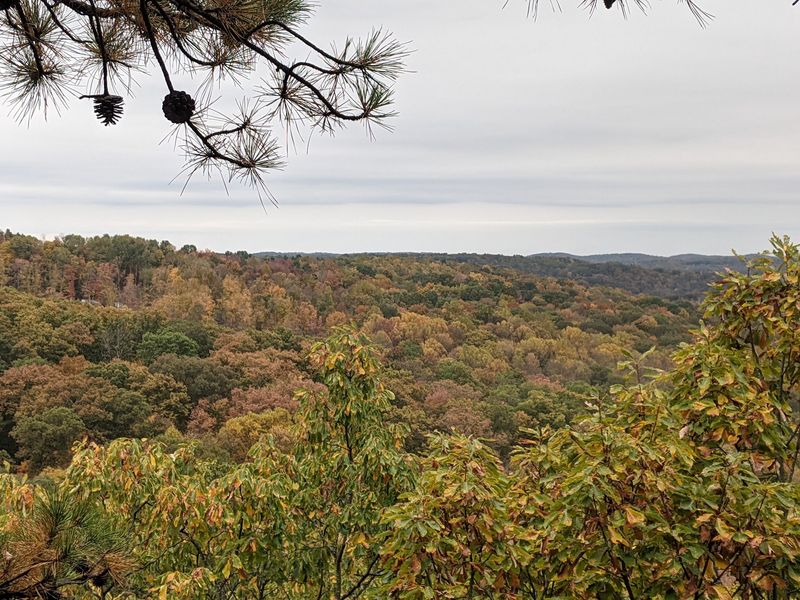
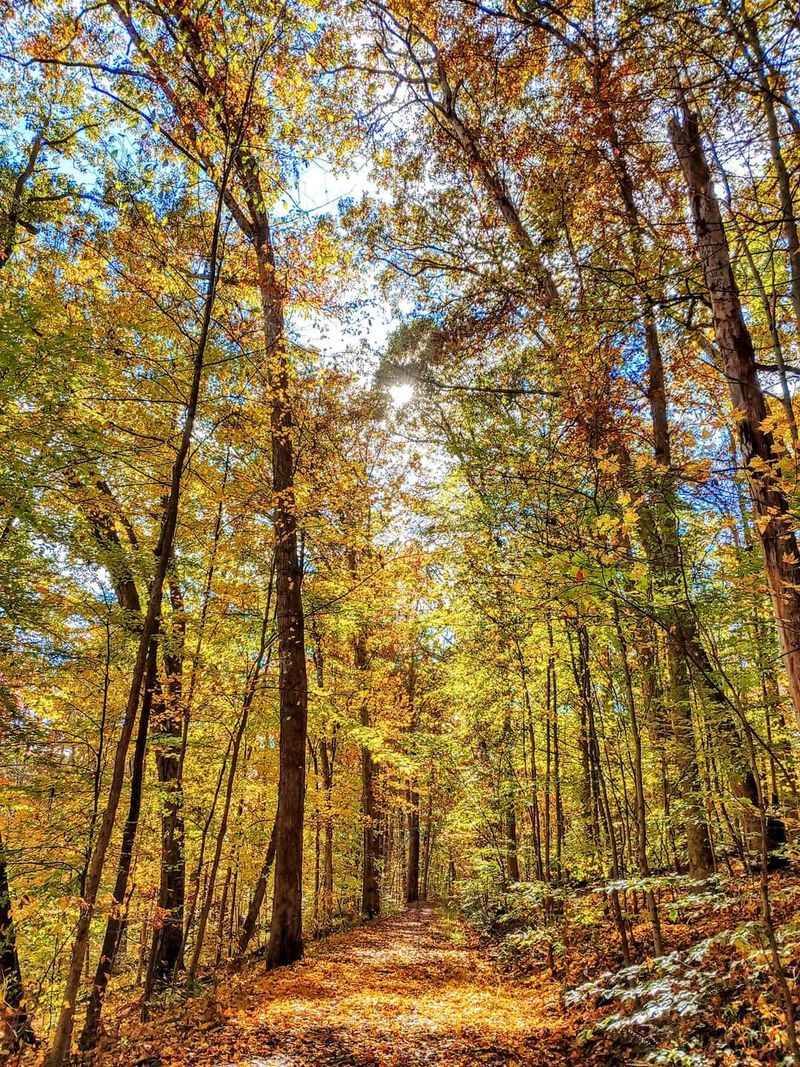
October might be my favorite month here. The hillsides burst into orange, red, and gold, and the overlook turns into a giant painting.
Fall hikes are hugely popular for good reason. Crunchy leaves underfoot and crisp air make the steep climb feel much easier.
Winter has its own quiet charm. Snow on the pines and rocky ledges gives the preserve a fitting holiday look for a place named Christmas Rocks.
Spring brings fresh green leaves, flowing water, and plenty of birdsong. Trails can get muddy after rain, so sturdy boots are a must.
Summer offers deep shade, though bugs and spider webs join the party. I held my trekking pole out in front of me to clear the webs across the path.
Morning visits work best in the warmer months. The air stays cooler, and you can linger at the overlook without baking in the afternoon sun.
Even a rainy day has perks. Mist in the valley makes the forest look mysterious and calm.
No matter when you go, the preserve seems to put on a slightly different show each time.
What To Pack Before You Go
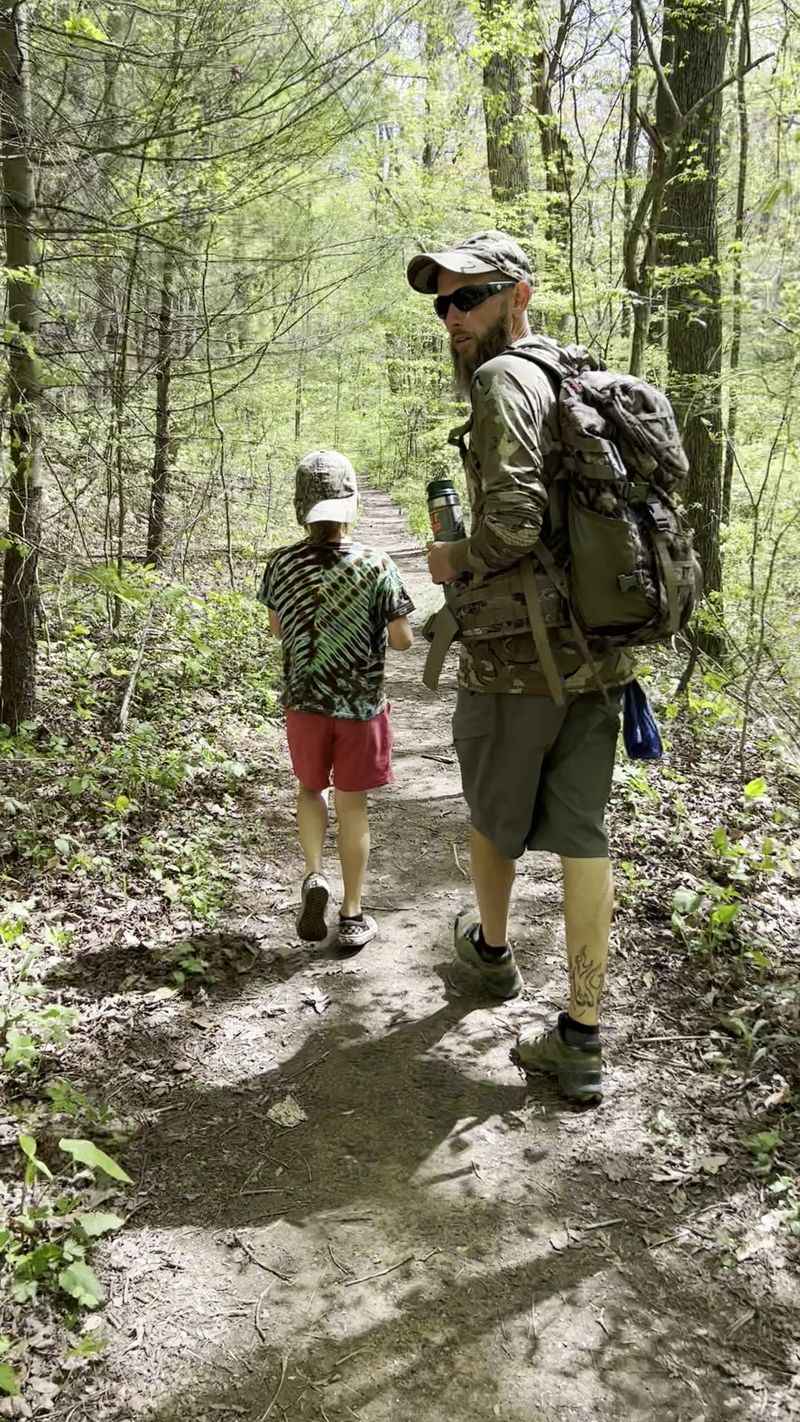
Packing smart made my hike far more fun. This preserve is simple and wild, so bring what you need from home.
There are no restrooms or drinking fountains here. I carried about a liter of water and wished I had packed a bit more for the full four miles.
Sturdy hiking shoes are essential. Rocks, roots, and muddy spots make sneakers with smooth soles a slippery choice.
Trekking poles helped me on the steep slopes. They also came in handy for sweeping away spider webs during summer.
Bug spray is a big deal in the warmer months. Insects seemed extra interested in my ears, so I made sure to cover those too.
A hat keeps sun and bugs off your head. Long pants or tall socks help protect your legs from patches of poison ivy near the trail.
I also tossed a small snack and a phone with a downloaded map into my backpack. The overlook is the perfect spot for a treat.
With the right gear, the hardest part of the day becomes choosing which ledge to sit on.
Respecting A Protected Place
Protected land comes with a few simple rules. Following them keeps the preserve beautiful for the next hiker and for the wildlife living there.
State nature preserves focus on conservation first. I stayed on marked trails, since stepping off can damage delicate mosses and ferns.
Pets are not permitted on the preserve trails, and picnicking is limited to the immediate parking area.
I checked the Ohio Department of Natural Resources rules before heading out, since a quick look can save you from surprises at the trailhead.
Neighbors live along the access lane. Keeping voices low and parking only in the proper lot helps everyone get along.
I packed out every wrapper and crumb. With no trash cans on the trails, leaving no trace is part of the deal.
Quiet hiking also means better wildlife viewing. When I paused and listened, I heard woodpeckers, songbirds, and rustling leaves all around me.
Treating the preserve kindly felt good, almost like being a guest in nature’s home. That small effort made my visit even more rewarding.
Long after my boots dried, I kept thinking about those quiet woods and that sweeping overlook, and I am already planning my next hike there.