
This Secret Pennsylvania Pond Is Crawling With Wildlife, And It’s Scarier Than You Think
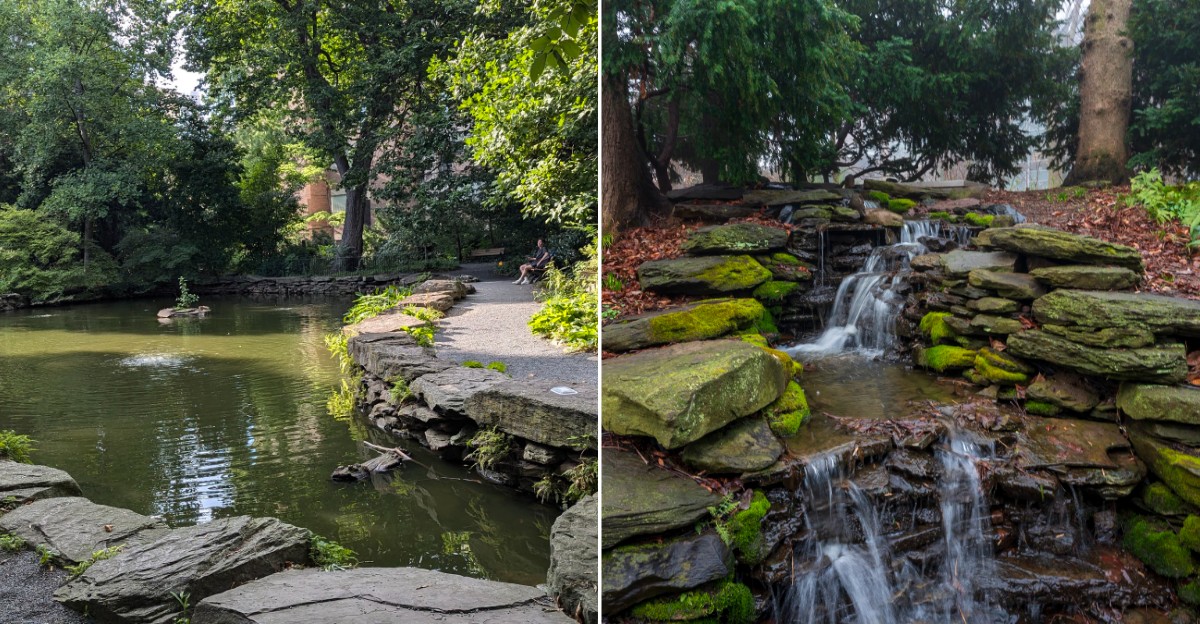
Back in 1902, a young Ezra Pound was reportedly tossed into this pond by his own classmates. Yes, that Ezra Pound.
The future famous poet got an unplanned swim lesson in a campus lily pond.
That pond still exists today, and it has gathered a much stranger crowd since then. Dozens of turtles now crowd its rocks and logs.
Many of them are invaders that people dumped there after deciding pets were too much work.
This quiet green pocket sits in the middle of a busy Pennsylvania city. It holds more than 1,500 kinds of plants and draws over 100 bird species.
I like how a place this small can hide this much drama. I can’t imagine a calmer spot with a wilder backstory.
A Century-Old Research Garden Started All This Mischief
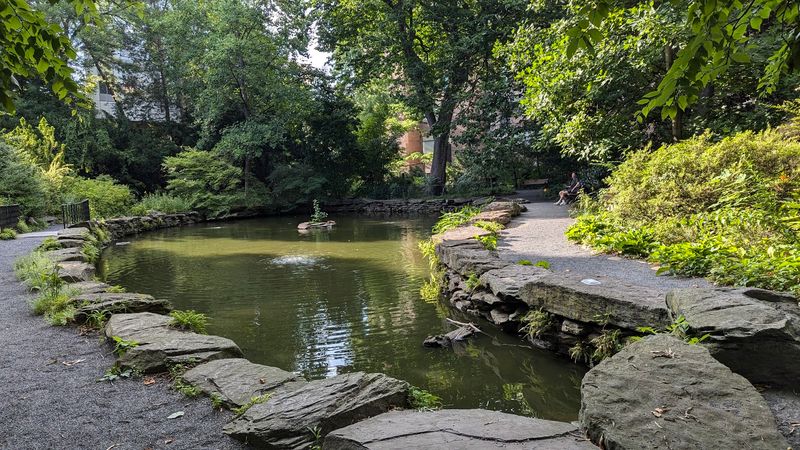
Scientists planned this little pond long before anyone worried about turtles. James G.
Kaskey Memorial Park, better known as the BioPond, began as a University of Pennsylvania research garden in 1897.
The idea came from Dr. J.T. Rothrock.
Professor of Botany Dr. John M. MacFarlane then turned that idea into a real, working garden.
Back then, the space covered about five acres. Some folks even called it too small to be a true botanical garden.
Campus growth later shrank it to roughly 3.5 acres. Along the way, it lost a second lotus pond and many plant beds.
The pond once had a sweeter name, too. People called it the Lily Pond, which sounds far more peaceful than its later headlines.
I believe that history makes every visit feel richer. You aren’t just strolling through a pretty garden in Pennsylvania.
You’re walking through a living lab that students and professors have used for well over a century. That’s a lot of science packed into just 3.5 acres.
Not bad for a spot people once said was too tiny to matter.
The Famous Poet Who Took An Unplanned Swim
Ezra Pound became one of the best-known poets of the 20th century. In 1902, though, he was simply a Penn student who reportedly got thrown into this pond by classmates.
Talk about a rough day at school. One minute you’re a budding writer, and the next you’re dripping with lily pond water.
The story has stuck around for more than a hundred years. It gives the BioPond a quirky spot in campus legend.
It’s also a reminder that this place has always been part of student life. Long before phones and selfies, students gathered here, goofed around, and made memories.
Some of those memories were clearly wetter than others. Hopefully Pound found a way to turn the moment into a good line or two.
Today, nobody needs to recreate the event. Please keep your friends on dry land and enjoy the view from the paths instead.
Still, it’s fun to stand near the water and picture that splash. Few small ponds can claim a literary celebrity among their surprise swimmers.
That’s one bragging right this little pond has earned for good.
Those Sunbathing Turtles Aren’t All Welcome Guests
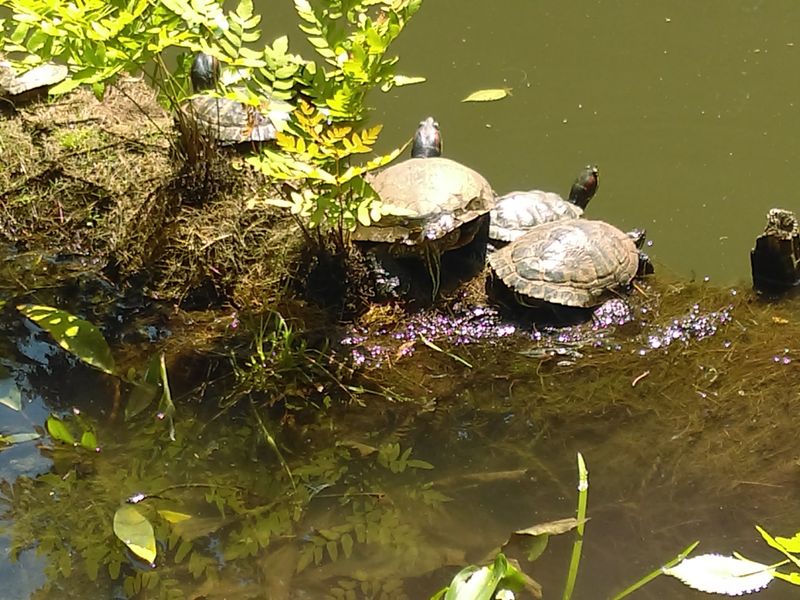
Count the turtles on the rocks and you might lose track fast. Plenty of them are red-eared sliders, and that’s where the scary part begins.
Red-eared sliders aren’t native to this area. Many end up here because pet owners dump them when they can’t care for them anymore.
That choice causes real trouble. These turtles push native species off the best basking spots and swim more aggressively.
They can also carry diseases like Salmonella or ranavirus. That puts the local turtle population at risk in a pond that’s supposed to be a safe haven.
The Penn School of Veterinary Medicine is working on the problem. Experts there ask the community to report red-eared slider sightings so they can map and manage the population.
So here’s your mission if you visit. Look for a red stripe near each ear, then share what you see with Penn Vet.
And please, never release a pet turtle into any pond in Pennsylvania. A cute little shell can grow into a big headache for a whole ecosystem.
The turtles look relaxed, but their story is anything but.
The Day The Water Turned Blood Red
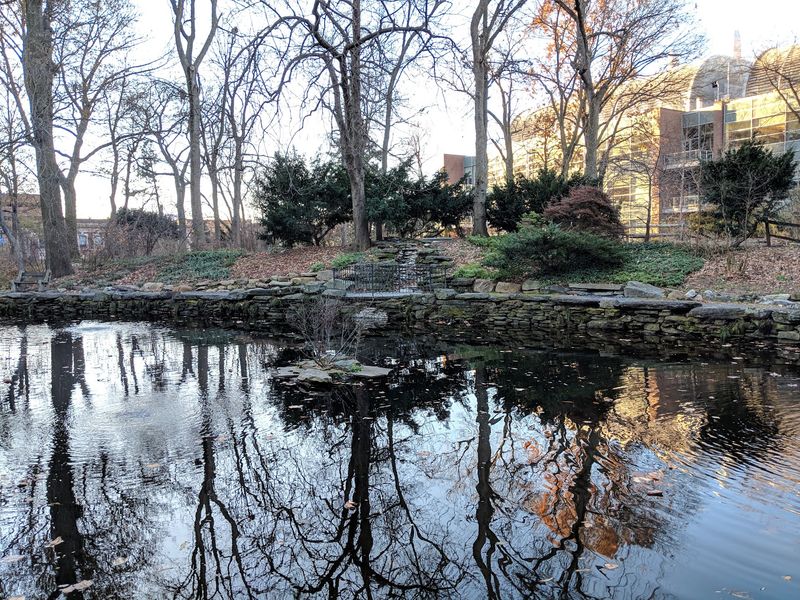
March 2023 brought a sight straight out of a spooky movie. The pond turned red after an apparent act of vandalism, transforming the peaceful water into a startling crimson pool.
The incident led to an investigation. Officials had not established exactly what substance caused the red coloration.
Environmental Health and Radiation Safety also stepped in. Their job was to check that the pond’s many creatures and plants stayed safe.
For a place packed with birds, fish, turtles, and frogs, that check really mattered. An unknown substance in the water could mean trouble for small living things.
I like how quickly the university treated the pond like the living system it is. Nobody brushed it off as a silly joke.
The episode shows how fragile a small city pond can be. One careless act can threaten the wildlife that depends on clean water.
It’s also a good lesson for anyone stopping by. Leave the water exactly as you found it, and keep anything that isn’t nature out of it.
Thankfully, the pond carries on as a green oasis. Red is a lovely color for flowers, just not for ponds.
More Than 100 Kinds Of Birds Drop By
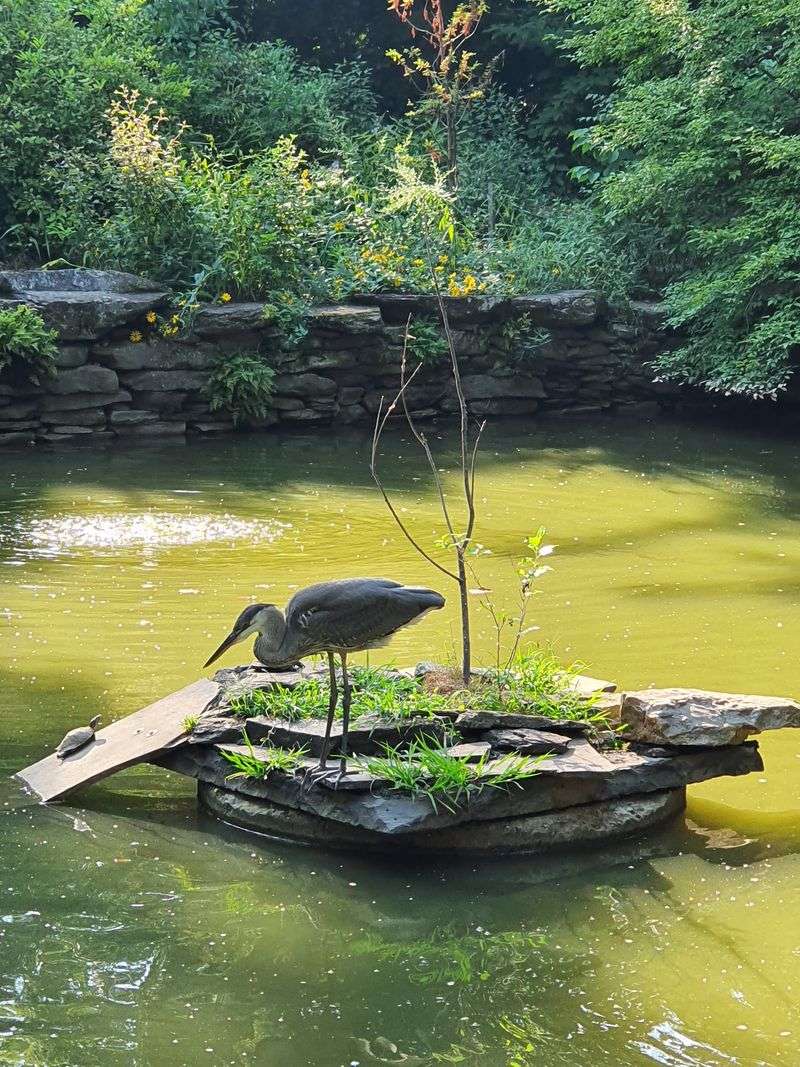
Bring binoculars, because the sky over this tiny garden stays busy. More than 100 bird species either live at the BioPond or visit it.
That’s a huge number for such a small patch of green. In a city full of concrete, birds clearly know a good stop when they find one.
The garden also takes a hands-off approach to pests. Instead of rushing to spray, it lets nature help keep insects in check.
Aphids, for example, count as food for birds and other insects. One creature’s snack becomes part of a balanced little food web.
That approach turns the park into a real-life science lesson. You can watch how plants, bugs, and birds all depend on each other.
Squirrels add their own busy energy, too. They dart around the paths like they own the place, which honestly they might.
Ducks also show up on the water at times. Between the feathers and the fluff, there’s always something moving.
A quiet bench and a little patience can turn into a surprisingly lively bird-watching session. Just keep your snacks guarded from the squirrels.
Over 1,500 Plants Packed Into A Few Acres
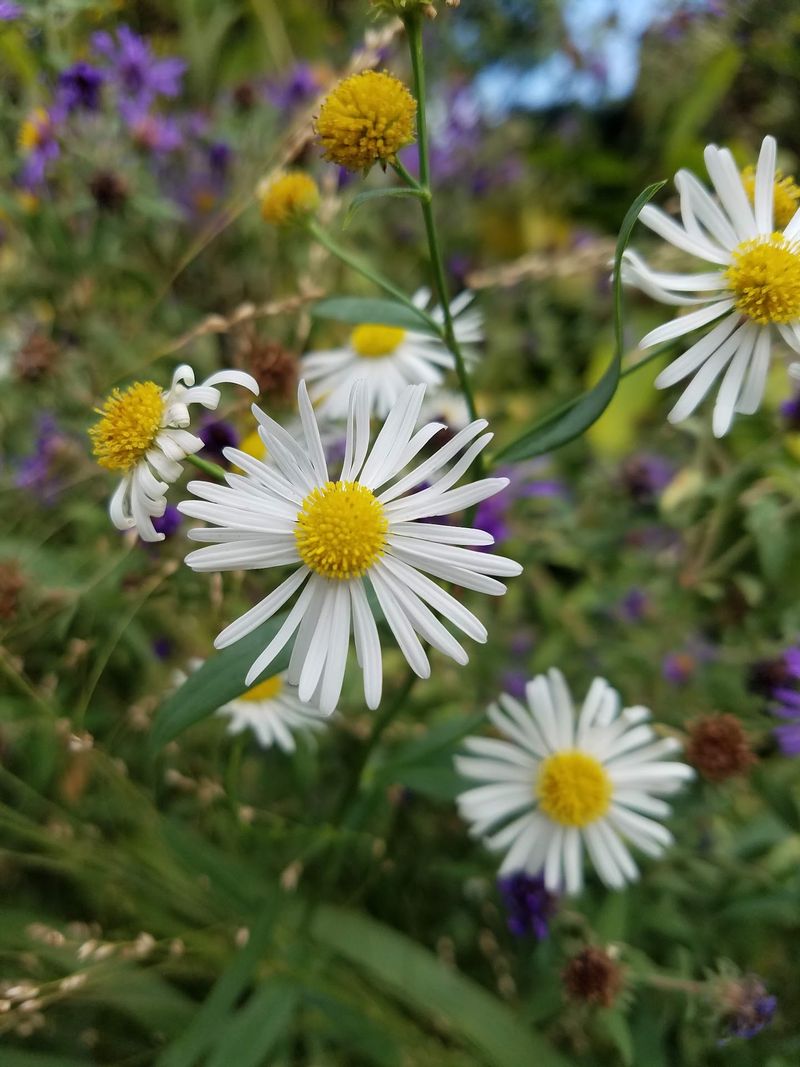
Plant lovers, prepare to slow way down. James G.
Kaskey Memorial Park holds more than 1,500 species and varieties of plants.
That variety is spread across several distinct areas. You’ll find a woodland garden, a wet meadow, and a host plant and pollinator garden.
The pollinator garden helps butterflies and other helpful insects. Host plants give certain species a place to feed and grow.
The wet meadow shows off plants that love soggy ground. Meanwhile, the woodland garden offers a shady, forest-like feel right in the city.
One standout is a majestic American elm. The park treats it carefully to protect it from Dutch elm disease, which has wiped out many elms across the country.
Seeing a healthy, grand elm in a city is a treat. It’s like spotting a living piece of history still standing tall.
Helpful signs around the garden explain what you’re looking at. That makes it easy to learn without needing a botany degree.
Every season changes the look of the beds. Come back in spring and fall, and you’ll practically see a different garden.
Benches, Waterfalls, And A Hush You Won’t Expect
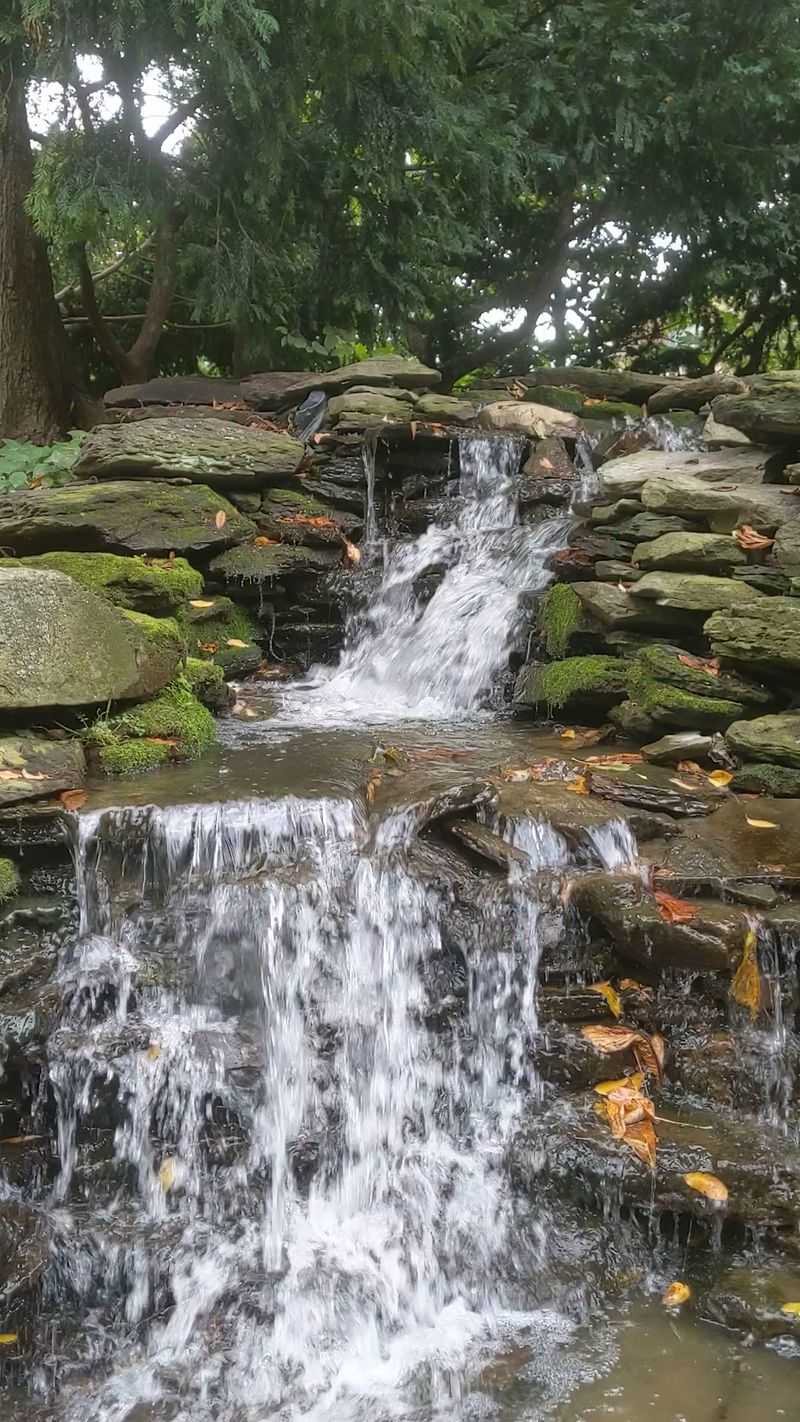
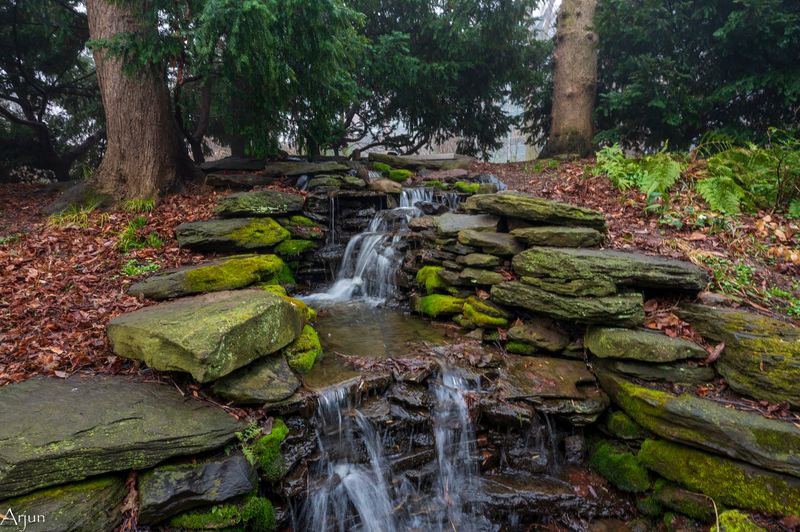
Sound is the first surprise here. A small waterfall and water walls add a soft, steady splash that helps drown out city noise.
Winding paths loop through the garden. They lead to secluded benches where you can read, think, or simply watch the water.
Picnic tables offer a great spot for lunch outdoors. A packed sandwich tastes better with a turtle show on the side.
The paths feel made for wandering without a plan. Turn one corner, and you’ll find a fresh view of the pond or a new plant bed.
The artistic water features give the park a calm, thoughtful look. They also make the space feel bigger than its size.
The waterfall and weeping water walls were added during a major renovation funded by Richard and Jeanne Kaskey in 2000. The project also involved dredging and relining the pond and reshaping its edges.
So the soothing waterfall does double duty. It looks nice, and the water features provide drinking spots for birds.
Grab a seat, breathe slowly, and give your phone a break. The pond puts on a better show anyway.
Finding It Takes A Little Detective Work
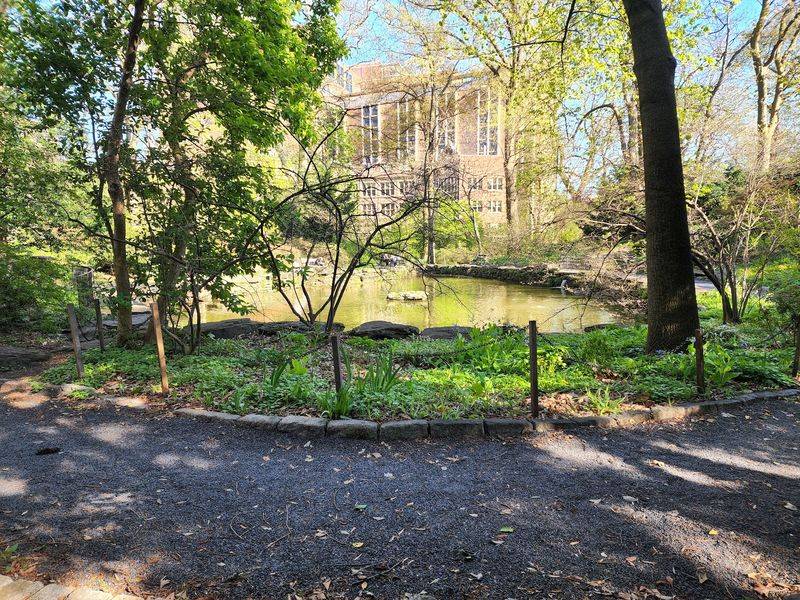
Getting here is half the adventure. The park sits at 433 S.
University Avenue in Philadelphia, Pennsylvania, beside the Carolyn Lynch Laboratory on Penn’s campus.
Because it sits next to a lab building, it’s easy to walk right past. Keep your eyes open, and look for the green space near the Lynch Laboratory.
The good news? Entry is free and open to the public.
The park is open from dawn to dusk every day, year-round, so plan a daytime trip. An early morning stop is a smart way to start a campus walk.
Parking can be tricky in University City, as it usually is around a big campus. Public transit or walking from nearby spots can make life easier.
Once inside, the city fades fast. It feels like a secret room tucked inside a busy neighborhood.
Bring a water bottle, comfy shoes, and maybe a notebook. Students, families, and nature fans can all find a peaceful corner.
Just remember to respect the space, since it’s still a working research garden. Quiet voices go a long way here.
People Fought Hard To Keep This Pond Alive
Cranes and construction plans once came close to shrinking this garden even more. In the 1990s, students, faculty, and staff rallied to protect the BioPond from campus building plans.
Their efforts helped save what remains today. Without them, this green pocket might have become another building or parking lot.
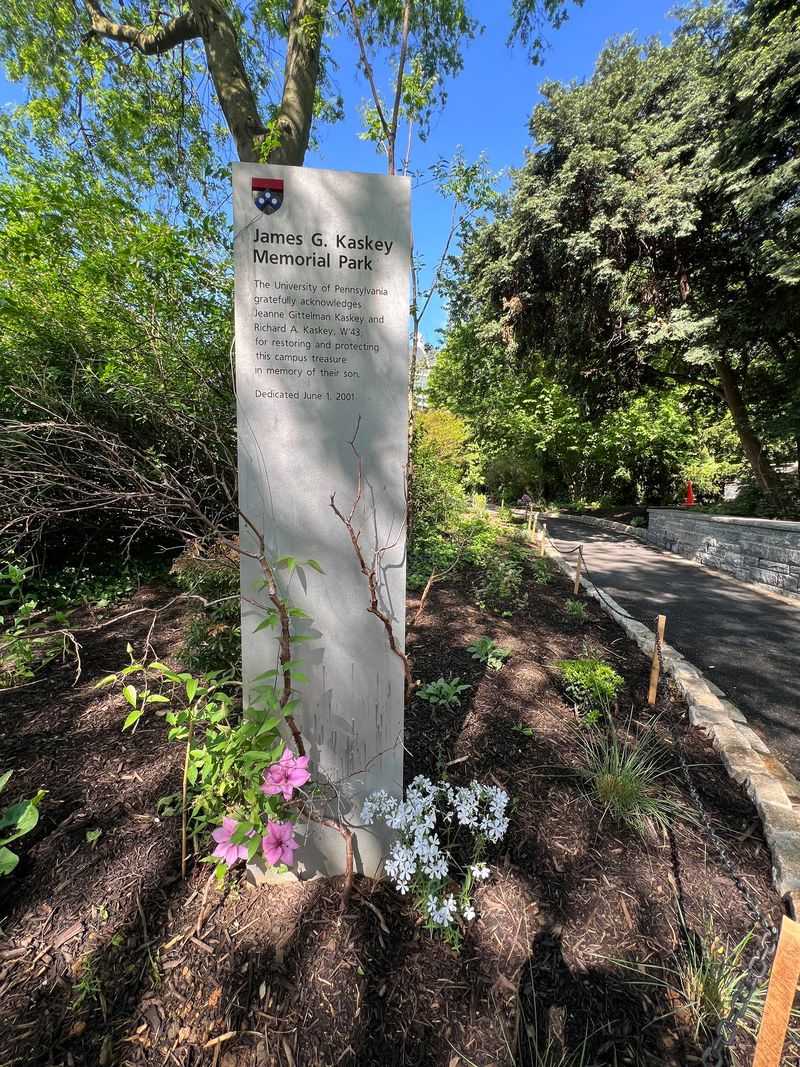
Later, a big boost came from Richard and Jeanne Kaskey. They funded a major renovation in the early 2000s.
Their endowment still helps pay for the park’s upkeep. That’s why the garden carries the name James G.
Kaskey Memorial Park.
I believe that kind of care is what keeps special places going. Gardens don’t stay healthy by accident.
So the next time you sit by the pond, think about those efforts. Real people stood up for turtles, birds, and plants they couldn’t easily replace.
Pennsylvania has bigger parks, sure. Few have a story of community grit packed into just 3.5 acres.
Visit, learn, and report any red-eared sliders you spot. Helping this pond thrive is a small task with a big payoff, and the turtles would surely approve.