
This Secret Waterfall Trail In Arkansas Leads To Stunning Cascades
Some places do not ask for attention, which is probably why they feel so good when you finally notice them.
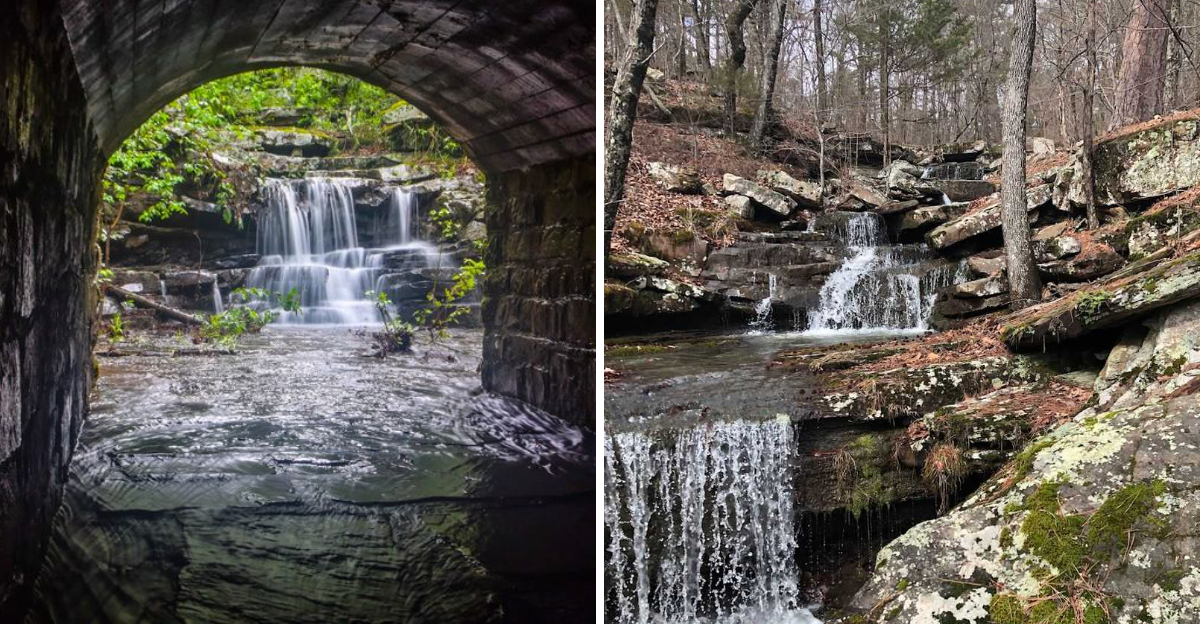
In the Ozark National Forest of Arkansas, a seasonal waterfall drops beside a 1930s stone culvert, creating the kind of roadside scene that makes you hit the brakes and look twice. After rain, the water can turn from quiet trickle to rushing flow, and the whole forest seems to wake up around it.
What I love about this stop is how simple it is. You do not need a packed schedule or a serious hike.
You just need a day with recent rain and a reason to wander a little slower than usual.
The old culvert adds history without making the place feel staged. It feels quiet and easy to miss.
Honestly, that might be the whole point. Some of the best stops do not announce themselves at all here.
A Quiet Path Into The Ozark Woods
Some places earn their reputation through crowds and noise, but this one earns it through silence and surprise. The approach to this waterfall spot feels less like a trailhead and more like a gentle invitation to slow down and notice the world just a few feet below the pavement.
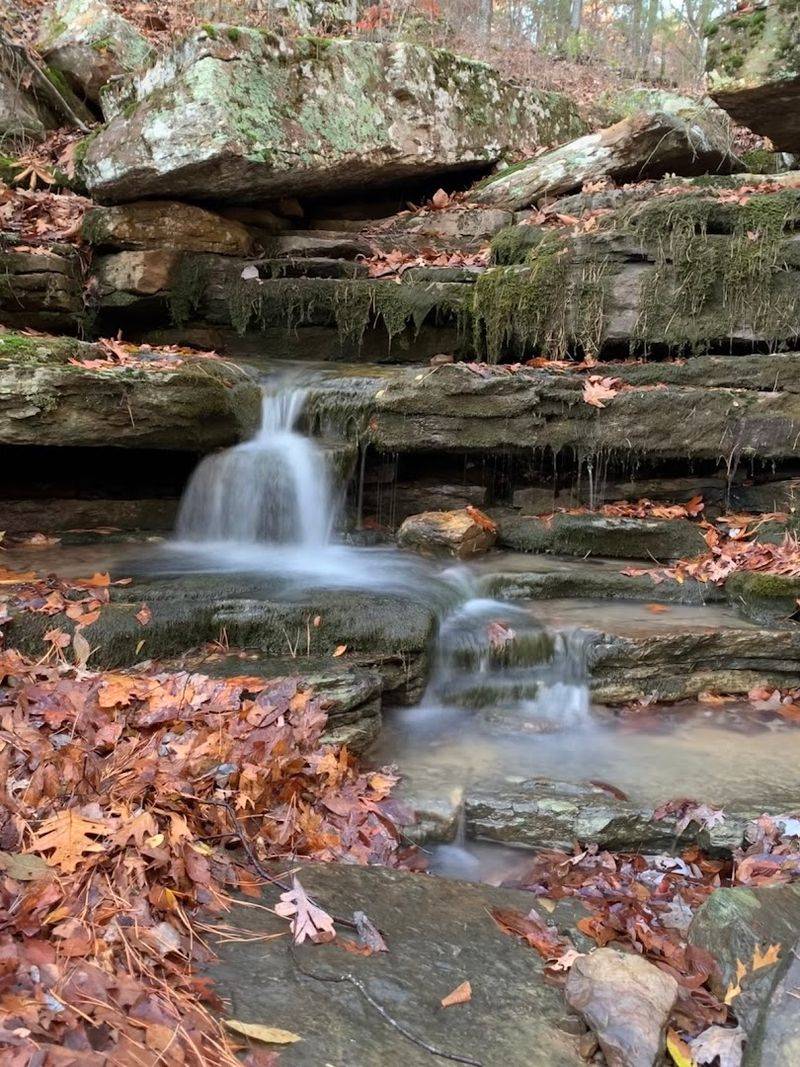
The Ozark National Forest surrounds everything here with a density of trees that muffles road sounds almost immediately. Hardwoods crowd the slope, and the ground underfoot shifts quickly from gravel to mossy stone as you move toward the water.
This is not a formal trail in the traditional sense, which actually adds to the charm rather than taking away from it.
You can enjoy the view directly from your vehicle or scramble down for a closer look, making this accessible to many comfort levels. The short distance from the road to the falls means even a five-minute stop can feel rewarding.
This hidden pocket of Arkansas beauty sits at Hardy Falls, located at 5C2P+PP, Paris, AR 72855.
Where Clear Water Slips Over Stone
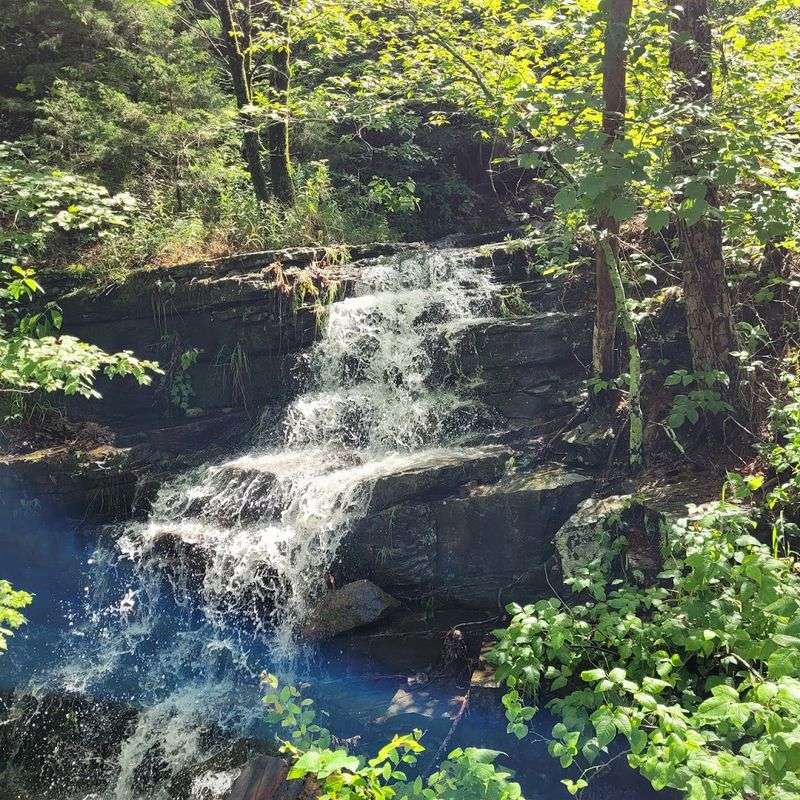
Water slipping over stone never really gets old, no matter how many waterfalls you have seen. At this spot, the falls drop roughly eight feet over layered rock, creating a clean, smooth sheet of water that catches whatever light filters through the canopy above.
The flow here is seasonal, which means the experience changes dramatically depending on when you visit. After a sustained stretch of rainfall, the cascade runs full and loud, filling the small hollow with sound and mist.
During drier months, the rock face may be nearly bare, though the stonework and surroundings still make the stop worthwhile.
A visit after heavy rain gives you the best chance of seeing Hardy Falls at its strongest. The clarity of the water when it does run is striking, almost glassy as it slides over the smooth stone surface.
A quick look at recent weather before heading out can make the difference between a good visit and a truly memorable one.
Soft Forest Light Along The Trail
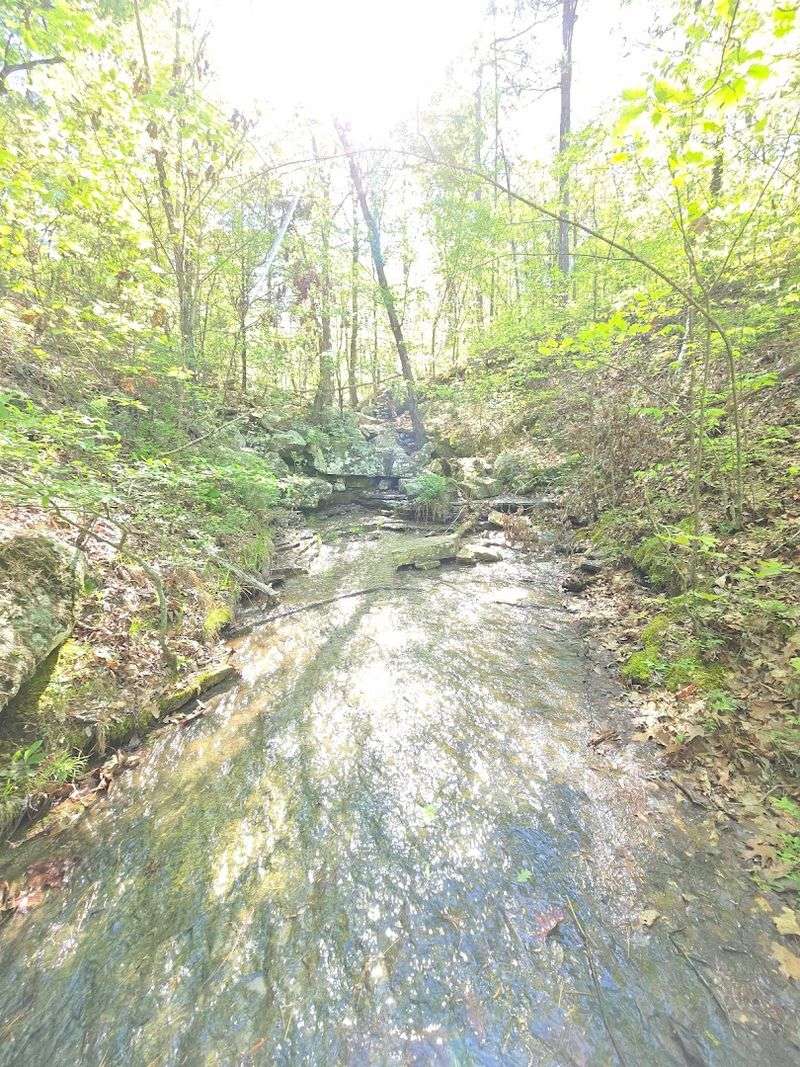
Ozark light has a soft quality that photographers chase and hikers often find by accident. The tree canopy near this waterfall filters sunlight into something gentler than open-sky brightness, casting the whole scene in a natural glow that makes every photo look better than you expected.
Morning visits tend to produce the most interesting light, when low-angle sun pushes through the eastern gaps in the trees and catches the moisture rising from the creek below. The contrast between shadowed rock and lit water creates depth that feels almost theatrical without any effort on your part.
Even on overcast days, the forest light here has a calm, even quality that suits photography and quiet observation equally well. Ferns and low ground cover catch the diffused brightness in a way that makes the whole understory feel alive and textured.
A camera, even just a phone camera, is worth bringing because the light along this stretch of Ozark hillside can make ordinary moments look quietly beautiful.
Mossy Rocks Beside Falling Water
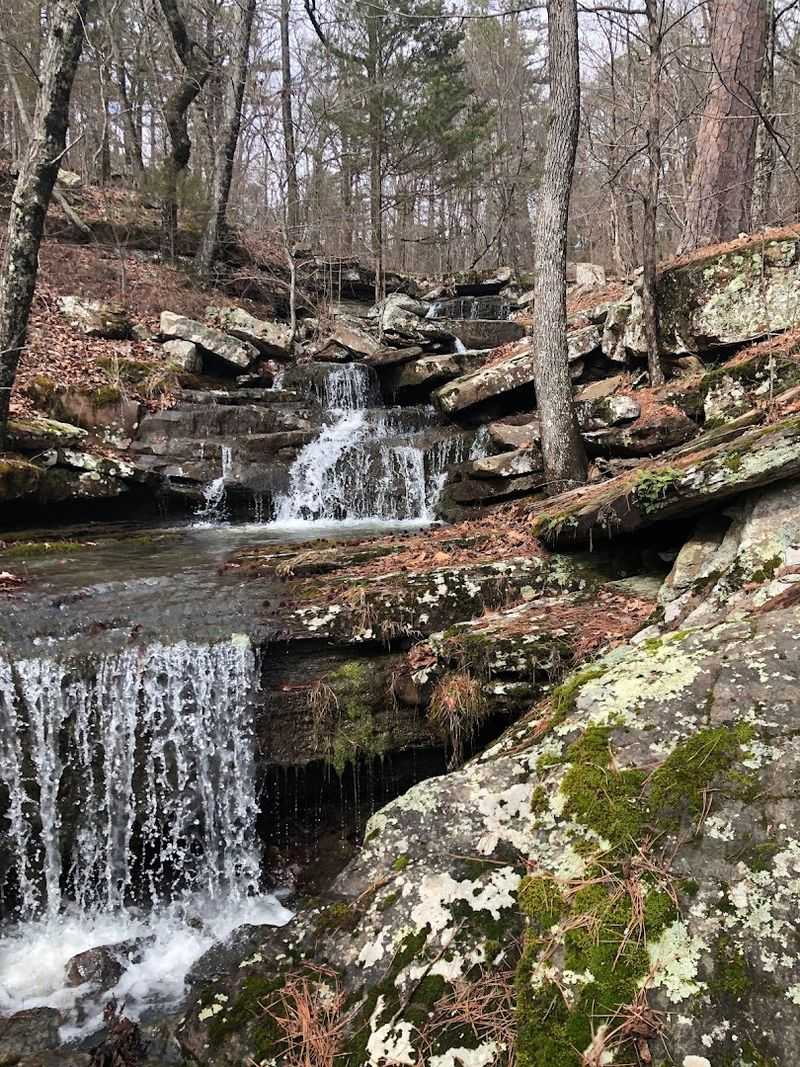
The rocks at this spot have been collecting moss for decades. The result is a surface texture so rich and layered that it almost looks painted.
Green moss covers much of the stone surrounding the falls, softening the hard edges of the Ozark sandstone and giving the whole scene a lush, almost otherworldly quality.
One thing worth knowing before you scramble down for a closer look is that those mossy surfaces are genuinely slippery. It is easy to underestimate how quickly wet moss can send your feet sideways.
Wearing shoes with good grip is not optional here; it is practical advice that can save you a bruise or two.
Beyond the safety note, the moss itself is worth studying up close. The variety of textures, from flat mats to cushioned mounds, reflects just how consistently moist this microenvironment stays even between rainfall events.
The combination of layered stone and thick moss creates a visual density that rewards slow, careful observation far more than a quick glance from the road.
A Peaceful Cascade Hidden In The Trees
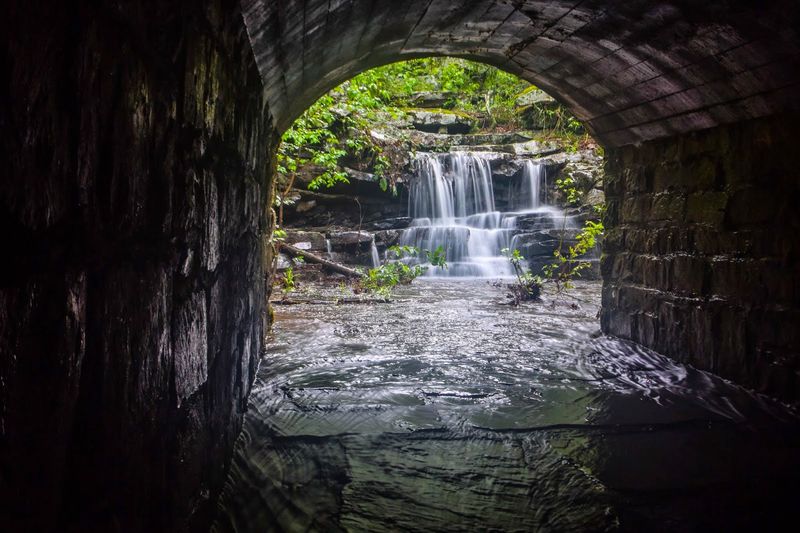
Hidden is exactly the right word for this place. Drivers passing along Highway 309 near Mount Magazine State Park would have no reason to suspect that just off the pavement, water is tumbling over an eight-foot stone ledge into a quiet, tree-shaded hollow below.
The seclusion here feels earned even though the access is easy. The trees close in quickly once you step away from the road, and the sound of the cascade, when water is running, replaces traffic noise with something far more pleasant.
It is the kind of spot that invites you to sit for a while rather than snap a photo and leave.
The falls were named after James W. Hardy, the engineer responsible for designing and building Highway 309 in the 1930s, which adds a layer of historical meaning to what might otherwise seem like just a pretty roadside feature.
The fact that his name is now attached to a waterfall rather than a stretch of asphalt feels like a fitting tribute. Quiet and carrying a piece of Arkansas road-building history, this cascade earns its reputation slowly.
Natural Stone Steps Near The Creek
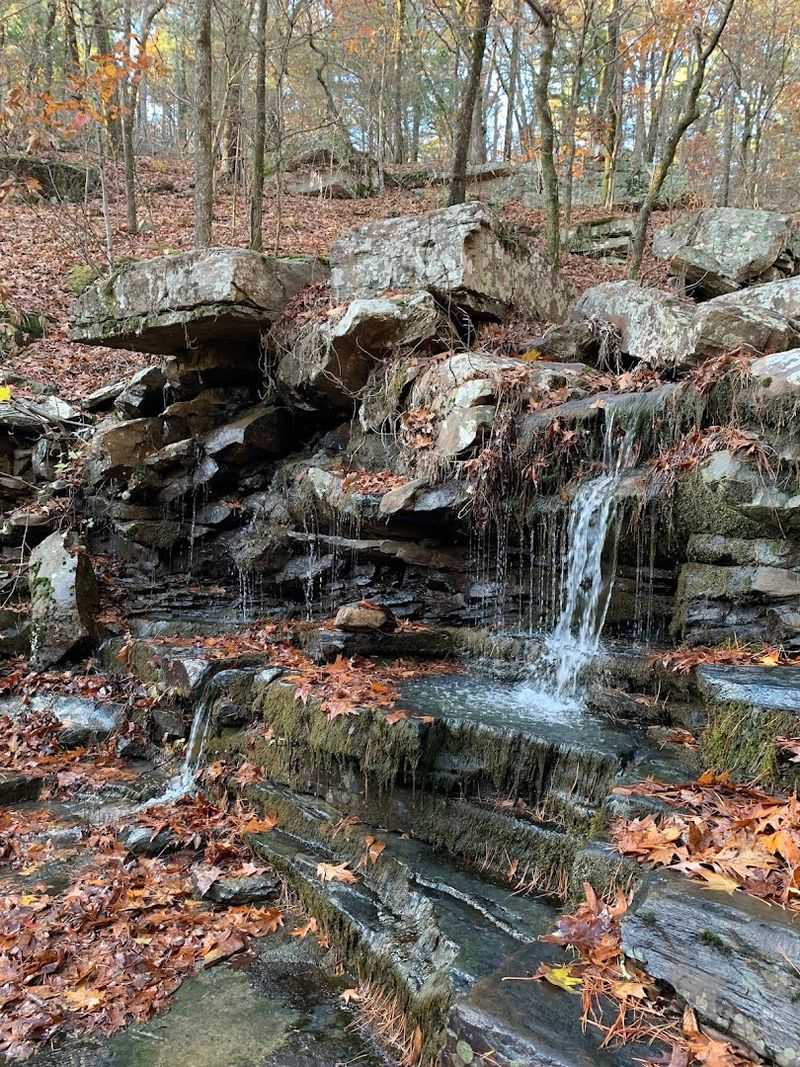
The short way down to creek level involves a real scramble over natural stone. In several places, the rocks form something close to rough steps.
The layered sandstone breaks into flat, stacked surfaces that give your feet reasonable purchase, though the moss and moisture keep things interesting throughout the descent.
Once you reach creek level, the perspective shifts entirely. Looking up at the falls from below gives you a completely different view than the roadside angle, and the stone culvert that James W.
Hardy built in the 1930s becomes much more visible and impressive from this vantage point. That historic structure, aligned almost perfectly with the waterfall, is one of the features that sets this spot apart from a typical roadside cascade.
The creek bed extends downstream from the falls, and adventurous visitors who are comfortable with a more challenging scramble may be able to continue toward Goats Bluff Falls.
The natural stone underfoot throughout this area tells its own slow geological story, written in layers of Ozark sandstone over millions of years.
Shaded Views With A Wild Arkansas Feel
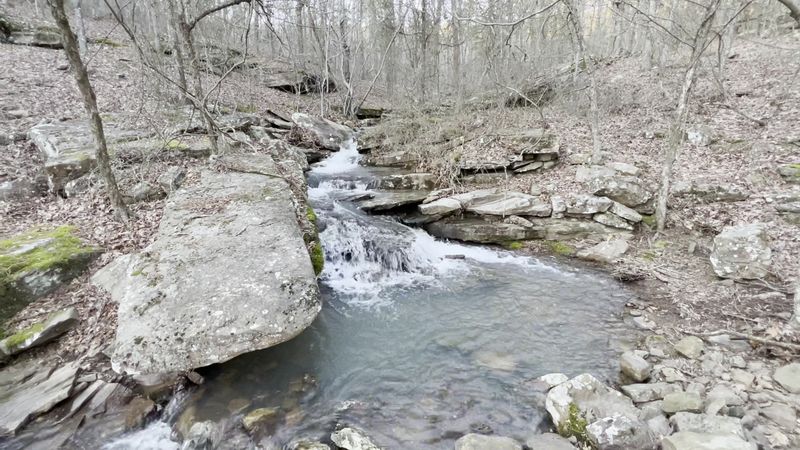
The shade beside this waterfall feels deeply tied to the Ozarks. With the canopy blocking most of the sky and the creek running below, the whole place feels raw and unpolished.
Nothing about this spot feels manicured, and that is a large part of what makes it appealing to people who want something beyond a maintained park experience.
The surrounding forest feels genuinely untouched in the way that older sections of the Ozark National Forest often do, with fallen logs and creek-carved rock faces that show no signs of human tidying. That wildness keeps the atmosphere honest and the experience grounded in something real.
People who use this area for trail running and hill training along Highway 309 get scenery that shifts with the seasons, especially from the green density of summer to the color of fall.
Each version of the landscape offers something different, which means this is not a one-visit destination for people who live within driving distance.
The shade keeps temperatures noticeably cooler than the open road above, making summer visits more comfortable than you might expect.
The Sound Of Water Through The Pines
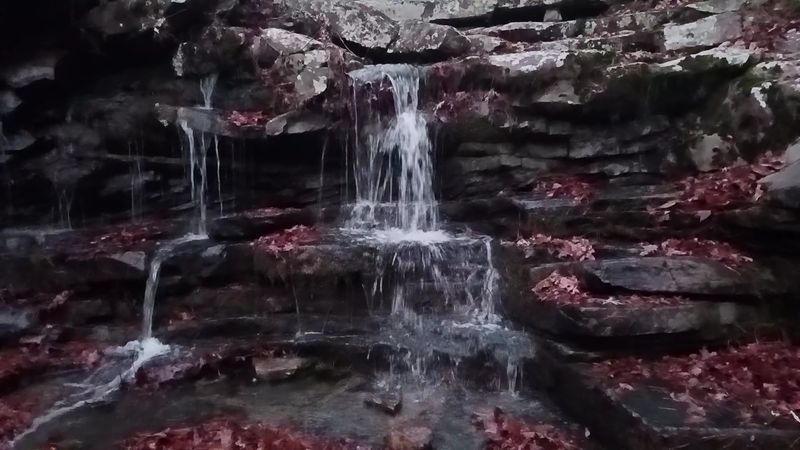
Before you see the water, you hear it. On a good flow day, the sound of Hardy Falls carries up through the trees and reaches the road before the visual does, giving you an auditory preview of what is waiting just off the pavement.
That sound, layered over the ambient noise of the forest, is one of the more underrated pleasures of visiting this spot.
The mix of pine and hardwood in the Ozark National Forest around here creates a particular acoustic environment where water sounds travel cleanly without the muffle of dense broadleaf canopy.
It is a subtle difference, but it gives the waterfall a slightly brighter, crisper presence in the soundscape than you might expect from an eight-foot drop.
A quiet pause near the creek is often the best part of the stop. The combination of moving water and wind through the upper branches layers into something genuinely restorative.
Hardy Falls earns attention not just through visuals but through the full sensory experience that this quiet corner of the Ozarks delivers without any fanfare.