
This Short Arkansas Hike Leads To Ancient Art And Unique Turtle Rocks
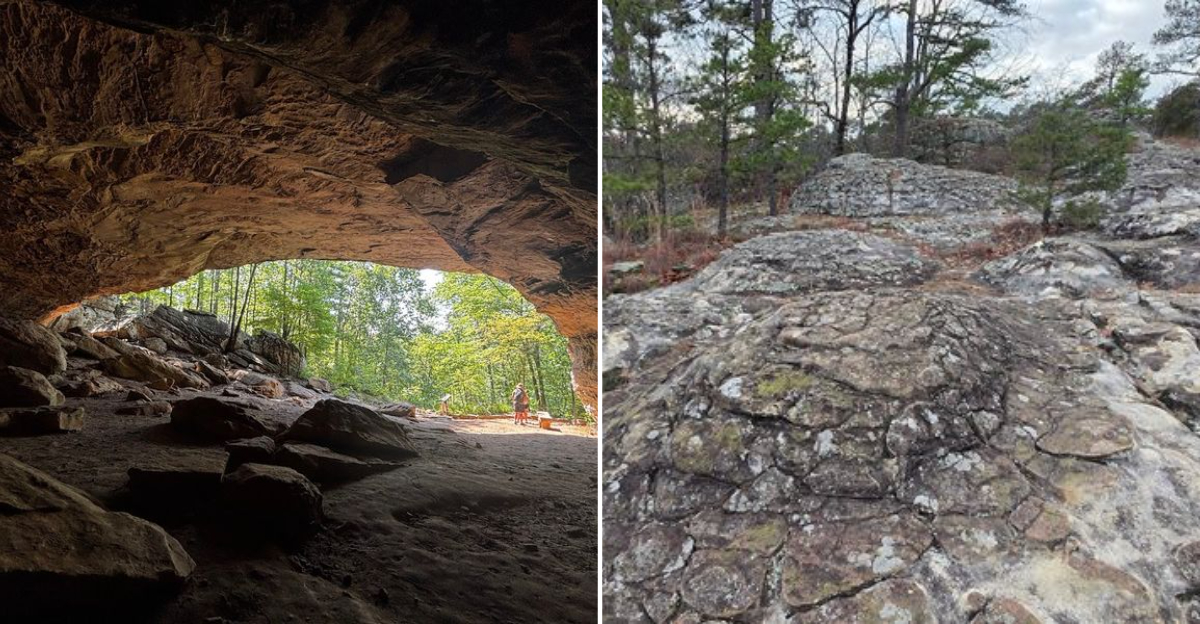
Arkansas has no shortage of scenic trails, but this one hits differently almost immediately. It begins like any other short walk.
Calm. Straightforward. Then those rock formations show up. Big, rounded, almost playful in shape.
You’ll probably slow down without realizing it. Something about the shapes pulls your attention. They don’t look quite real at first glance. Then comes the real surprise.
A wide rock shelter appears, and across its surface are paintings that have been there for generations. Not behind glass.
Not marked off. Just there, open and raw. You’re not just looking at rocks anymore. You’re looking at history, right where it happened.
It’s quiet in a way that feels intentional. Like the place wants you to notice. No long hike required. No complicated route.
Just a short walk and a moment that stays with you. Bring water, wear something comfortable, and take your time.
The Short Trail That Feels Like A Secret Discovery
Some trails announce themselves with grand parking areas and polished signs, but this one greets you almost like a whisper, daring you to follow it and see what waits around the bend.
This 0.25-mile loop takes roughly 30 minutes to complete, which sounds almost too short to bother with until you actually start walking it.
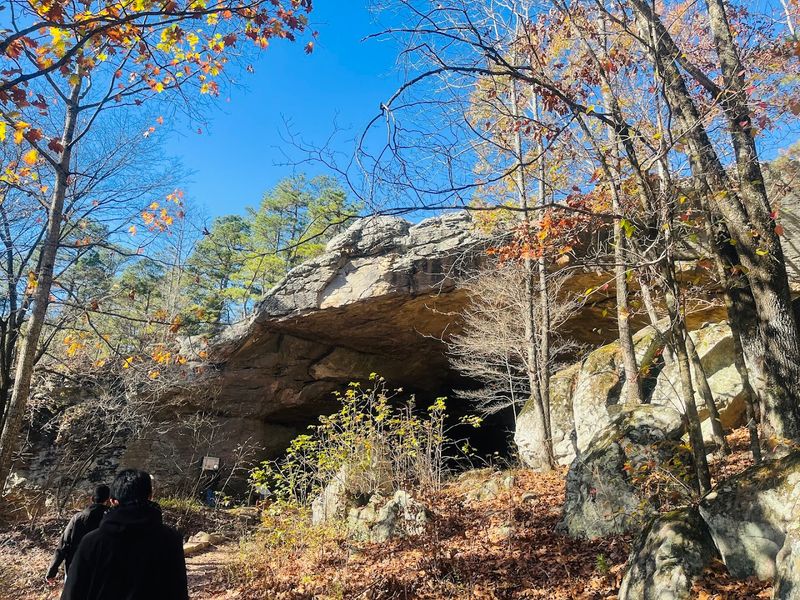
Purple blazes mark the path through the trees, and the terrain shifts quickly from packed dirt to chunky, uneven sandstone that keeps your eyes busy and your feet honest.
Sturdy shoes are a smart call here, since the trail drops down through rocky sections that demand a bit of attention, especially if you are moving at a relaxed pace.
Families with young children have completed this hike, though some sections near the turtle rocks require careful footing and a steady hand for the little ones.
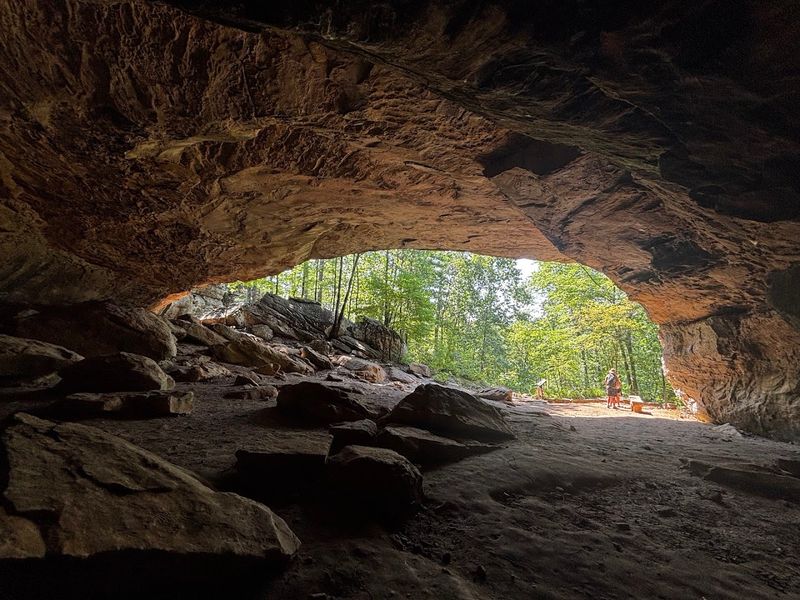
The trailhead sits off Red Bluff Drive inside Petit Jean State Park, and the cave entrance appears almost suddenly beneath a dramatic sandstone overhang that makes the short walk feel like the best kind of surprise.
You’ll find it at Rock House Cave at 364-294 Red Bluff Dr, Morrilton, AR 72110.
A Quiet Path Where History Hides In Plain Sight
Walking this trail feels oddly personal, like the forest is keeping a secret and slowly deciding whether to let you in on it.
The path winds through a canopy that filters sunlight into soft patches, and the sounds of the park, birds, rustling leaves, and distant water, settle around you as you move.
What makes this particular stretch of trail so quietly powerful is the knowledge that people have been walking this same general corridor for over 8,000 years.
Native Americans used this rock shelter for shelter, ritual, and possibly as a base for fishing the nearby Arkansas River, leaving behind a layered record of human presence that archaeologists are still working to fully understand.
The trail does not shout this history at you with loud interpretive boards every ten feet, which actually makes the discovery feel more meaningful when it arrives.
You round a curve, the bluff comes into view, and something about the scale and stillness of the place makes the centuries feel surprisingly thin.
For anyone who enjoys travel that connects the present to a much older story, this quiet little path delivers that feeling in a way that lingers long after you return to the parking lot.
The Moment Ancient Art Comes Into View
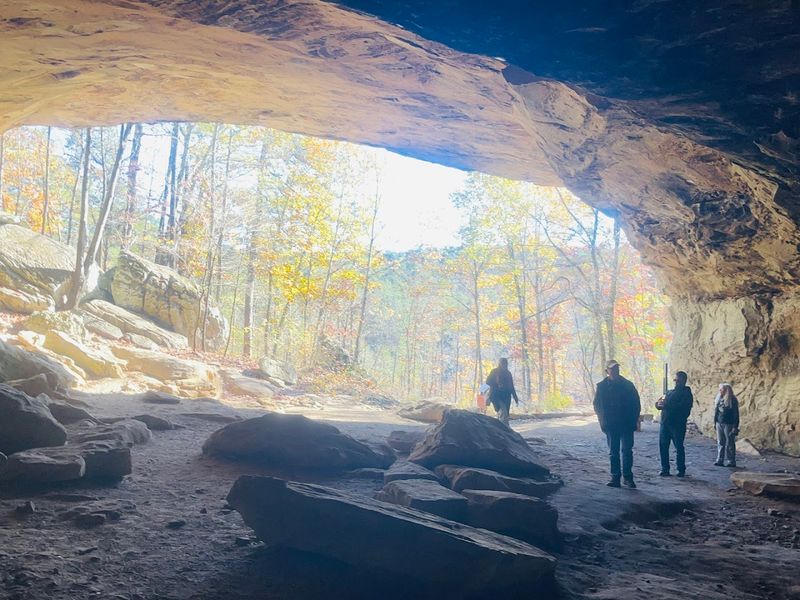
There is a specific moment on this trail when the rock shelter opens up around you and the walls stop being just rock, and that moment is genuinely hard to shake.
At least 105 rock art images have been documented inside this shelter, ranging from fish and animals to abstract shapes that researchers are still working to interpret fully.
The pictographs were created using crushed iron ore as pigment, which gives them a reddish hue that holds up surprisingly well against the stone, even after more than 500 years of exposure.
One of the most striking images is a red depiction of a paddlefish, shown from above in a perspective that captures the creature’s distinctive elongated snout and broad fins with remarkable clarity.
Standing beneath the overhang and scanning the walls for images is its own quiet game, since lighting conditions affect visibility significantly, and bringing a small flashlight or headlamp helps reveal details that daylight alone tends to wash out.
The cave is under video surveillance to protect these images from vandalism, so visitors are asked not to touch the pictographs under any circumstances.
Seeing ancient art in its original setting, rather than behind museum glass, changes the experience entirely.
Stories Painted Into Stone Centuries Ago
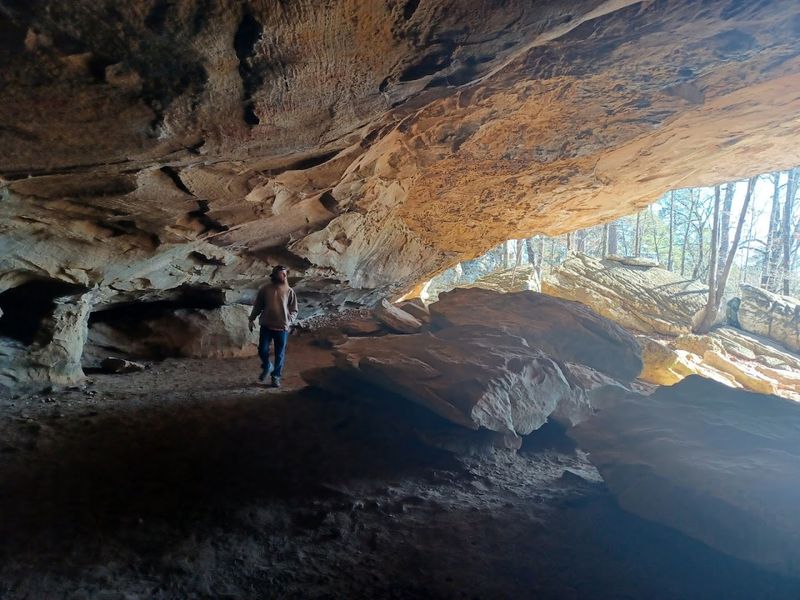
Every mark on these walls was made by someone with a reason, and sitting with that thought for a moment changes how you look at the images entirely.
The pictographs at this shelter include depictions of fish, which makes sense given the site’s proximity to the Arkansas River and its historically rich paddlefish population.
That overhead view of the paddlefish is particularly remarkable because it suggests the artist understood the animal’s anatomy well enough to render it from an angle that required careful observation.
Researchers from the University of Arkansas have studied the site extensively, and their work continues to uncover images that earlier surveys missed, partly because different light angles reveal pigment that appears invisible under standard conditions.
The shelter has been used by humans for over 8,000 years, making these painted images relatively recent in the broader timeline of the site’s history, which adds another layer of depth to an already layered place.
Abstract figures and geometric shapes appear alongside the animal imagery, suggesting the space held ceremonial or spiritual significance beyond simple record-keeping.
Visitors who take time to look carefully, rather than snapping one photo and moving on, tend to find more images than they expected, making patience the most rewarding tool you can bring.
The Curious Rocks That Look Strangely Alive
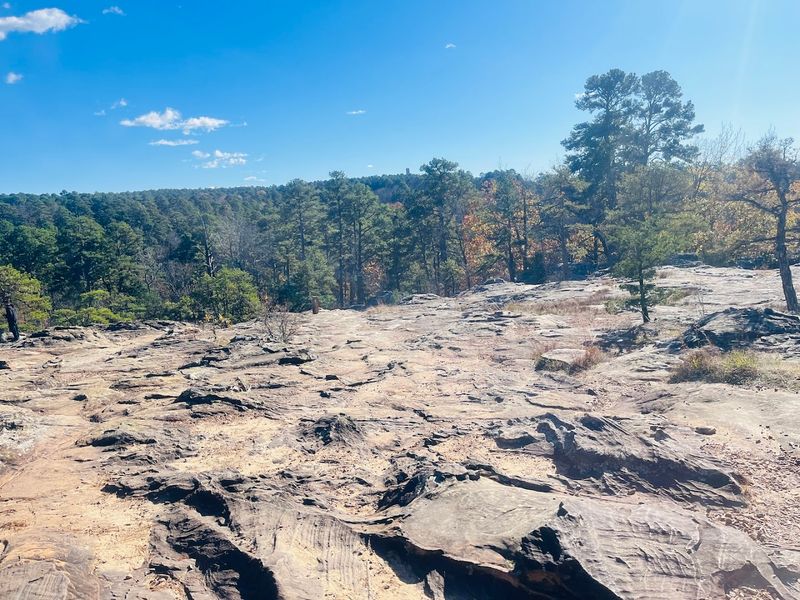
Before you even reach the cave, the trail hands you something unexpected, a cluster of sandstone formations that stop most hikers mid-step and send hands reaching for cameras.
These rounded, textured boulders have been shaped by centuries of erosion into forms that look unmistakably like the shells of enormous turtles, complete with the segmented, domed surface that makes the resemblance almost eerie.
The formations sit right along the trail path, meaning you literally have to navigate through them to continue toward the shelter, which turns the approach into its own little adventure.
Some reviewers have noted that first-time visitors occasionally rush past the turtle rocks in their eagerness to reach the cave, only to circle back and spend more time with the formations than they originally planned.
The sandstone here is part of the same geological story that shaped the bluffs and overhangs throughout Petit Jean State Park, carved by water and wind over millions of years into shapes that seem almost intentional.
Children tend to have an especially strong reaction to these rocks, since the turtle resemblance is clear enough to spark imagination without requiring much creative stretching.
They are one of those trail features that photographs well but feels even better in person.
Why These Turtle Shaped Formations Stand Out
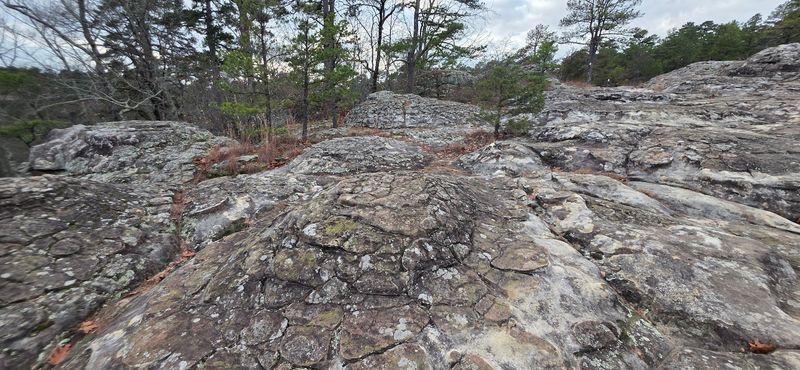
Not every hiking trail comes with a geological side show, but this one does, and the turtle rocks have developed their own loyal fan base among repeat visitors to the park.
What makes these formations particularly interesting is that their resemblance to turtle shells is not just a matter of general shape but extends to surface texture, since the erosion patterns create a segmented appearance that mirrors the scutes on an actual turtle’s carapace.
The sandstone in this area dates back millions of years, and the specific combination of rock composition and weathering conditions in this part of Arkansas produced formations that are genuinely unusual even by state park standards.
Several visitor reviews mention the turtle rocks as a highlight equal to or even exceeding the cave itself, which says something about how striking they are in person.
The formations also serve a practical trail purpose, since navigating over and around them adds a small but satisfying physical element to what is otherwise a relatively easy walk.
Geologically curious visitors will appreciate that the turtle rocks are not a single boulder but a grouping, creating a landscape that feels sculpted rather than random.
Plan to spend a few extra minutes here because the rocks reward close inspection and every angle offers something slightly different.
What Makes This Hidden Spot Worth The Trip
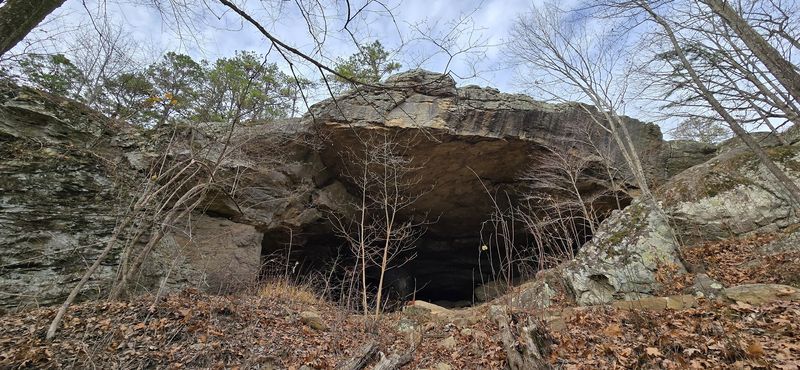
Consistently high ratings from visitors are not an accident, and spending time at this site makes the enthusiasm easy to understand.
The combination of geological spectacle, ancient human history, and accessible trail length creates an experience that delivers far more than its modest distance suggests.
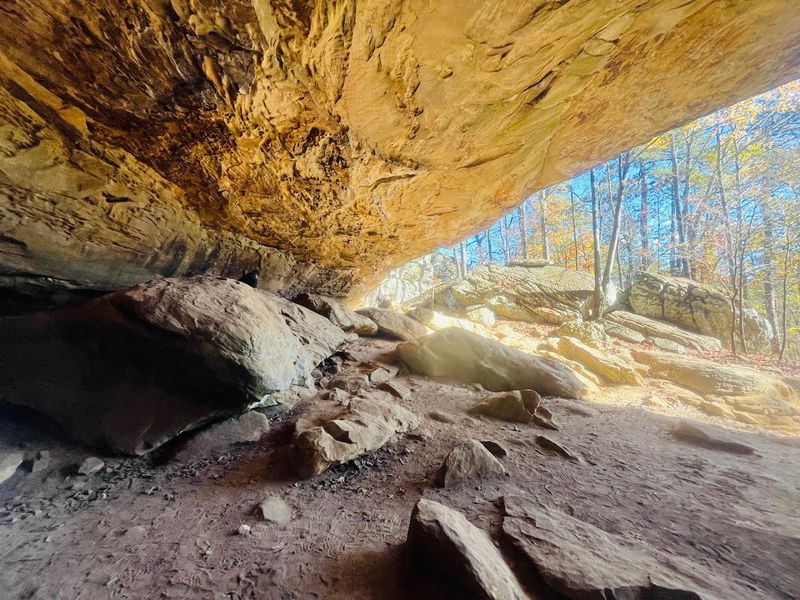
The rock shelter itself is significantly larger than most first-time visitors expect, with a ceiling height and interior depth that create an almost room-like feeling beneath the overhang.
On warm days, the shade inside the cave provides genuine relief, and the cool air that pools beneath the bluff makes it a natural resting spot before the uphill return to the parking area.
The site is accessible throughout the day, and while most visitors arrive during daylight for obvious reasons, the ease of access is part of what makes it so appealing.
Petit Jean State Park itself surrounds the trail with additional hiking options, waterfalls, and overlooks, so pairing this short hike with a longer park exploration turns a quick stop into a full day out.
The site’s phone number is (501) 727-5441 if you want to check trail conditions before making the drive.
A Quick Adventure That Leaves A Lasting Impression
Short hikes sometimes get dismissed as not real hiking, but this trail consistently earns its reputation as one of the most rewarding quarter-miles in the state.
The sequence of experiences, parking lot to turtle rocks to ancient shelter to pictographs, unfolds in a way that feels almost narratively satisfying, like the trail was designed to build toward something rather than just connect two points.
Visitors who bring a small flashlight report seeing significantly more pictograph detail than those who rely on ambient light alone, which is a simple tip that makes a meaningful difference in what you take away from the visit.
The uphill return to the parking area provides a modest workout that balances out the downhill approach, and most visitors describe the overall physical demand as manageable with appropriate footwear and a water bottle.
Families, solo hikers, and older visitors have all completed this trail successfully, though parents should keep a close hand on young children near the rockier sections.
Making the trip even once tends to put Rock House Cave permanently on the list of places worth returning to when the season changes and the light falls differently on those ancient painted walls.