
This Short Maine Trail Leads To A Coastal View You Will Never Forget

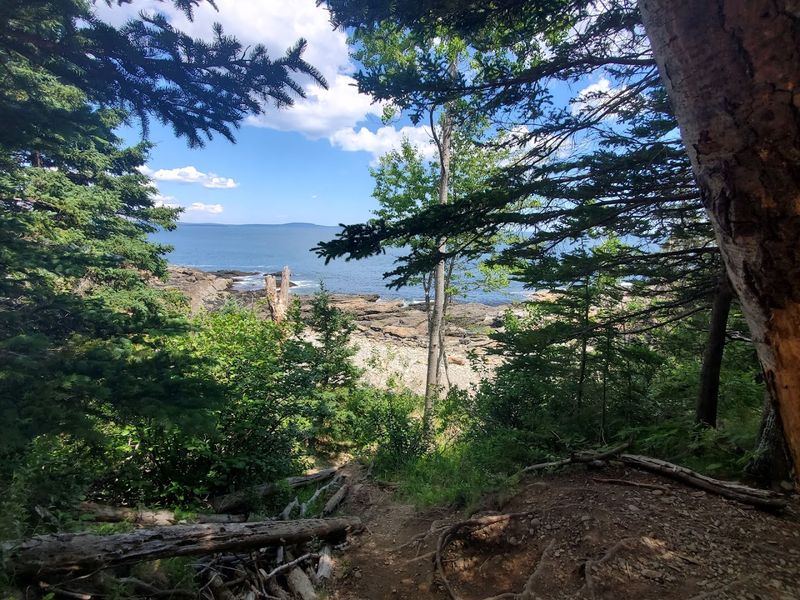
A short trail should not feel this dramatic, but this one manages to deliver cliffs, ocean wind, and sweeping Atlantic views in less than two miles. The route climbs quickly above a sheltered beach, then opens onto broad granite ledges where the coastline suddenly feels much bigger than expected.
The hike is compact, but it never feels ordinary. Rocky footing keeps the pace interesting, while forested stretches give you a brief pause before the next ocean overlook appears.
On a clear day, the water seems endless, and the exposed cliffs create the kind of view that makes people stop talking for a moment. It is one of those Maine hikes that proves distance has very little to do with impact.
The trail responsible for all that scenery is Great Head Trail in Bar Harbor.
A Short Hike With A Huge Payoff

Most people expect a jaw-dropping coastal hike to take half a day, but Great Head Trail offers a shorter 1.3-mile loop and a longer 1.9-mile loop, depending on the route chosen.
That compact distance is part of what makes it so appealing to a wide range of visitors, from families with kids to solo travelers looking for a quick but meaningful outdoor experience.
The trail sits within Acadia National Park, one of the most visited national parks in the United States. Despite that high traffic, Great Head Trail manages to feel surprisingly personal and uncrowded, especially if you time your visit right.
The loop winds through a mix of forested paths and open rocky terrain, giving you variety even within such a short distance.
Finishing the hike in about an hour is very realistic for most people with a moderate fitness level. That said, the trail is not completely flat, and there are sections with rock scrambles that require a bit of careful footing.
Short does not mean boring here, and the payoff at the cliffs makes every step feel completely worth the effort.
Where Granite Meets The Atlantic

Standing at the top of the cliffs along Great Head Trail is the kind of moment that makes you forget what day it is. The Atlantic Ocean spreads out below in an almost unreal shade of deep blue, and on a clear day, the horizon seems to go on forever.
The granite cliffs drop sharply toward the water, making the view feel both thrilling and humbling at the same time.
Bringing a pair of binoculars is a smart idea because the ocean views reward a closer look. You might spot seabirds riding the wind currents, distant sailboats cutting through the water, or even the occasional seal lounging on a rocky ledge far below.
The cliffs themselves are wide enough to sit comfortably and simply take it all in without feeling rushed. Sunset visits are particularly striking, when the light turns the granite a warm orange and the ocean catches the colors like a mirror.
There are no safety railings along the edge, so staying aware of your footing is important, but the natural, unobstructed setting is exactly what makes the view feel so raw and real. Few spots on the Maine coast match this one.
Start With Sand Beneath Your Feet
One of the best ways to begin the Great Head Trail loop is by starting at Sand Beach, one of the most unusual beaches in all of New England.
Unlike typical sandy shores, Sand Beach sits in a sheltered cove framed by granite mountains and dense forest, creating a setting that feels almost sculpted by design rather than nature.
The beach itself is worth a few minutes of your time before you head up the trail. The sand here is actually a mix of tiny shell fragments and mineral sand, giving it a texture and color that is slightly different from most Atlantic beaches.
The water is famously cold even in the middle of summer, hovering around 55 degrees Fahrenheit on warm days, which makes swimming a bold choice rather than a casual one.
The trailhead for Great Head Trail begins at the far end of Sand Beach, making the transition from beach to trail feel seamless and natural.
Parking at the Sand Beach lot is one option, though it fills up fast on busy summer mornings. Arriving early or using the Island Explorer shuttle bus are both smart strategies for starting your hike without the stress of hunting for a parking spot.
The Rocks Keep Things Interesting

If you thought this was going to be a gentle stroll on a paved path, the rock scrambles along Great Head Trail will pleasantly change your expectations.
Several sections of the trail require you to use both your hands and feet to navigate large granite boulders, which adds a playful, adventurous quality to the hike that most short trails simply do not offer.
The scrambles are not technically difficult for most adults and older children, but they do require focus and decent footwear.
Wearing sturdy hiking shoes or trail runners with good grip makes a noticeable difference, especially on sections where the rock surface can be uneven.
Avoiding the trail on rainy days or right after heavy rain is genuinely wise advice, since wet granite can become slippery in a way that turns a fun scramble into a frustrating one.
Older children with hiking experience may manage the rocky sections with close supervision, but suitability depends on each child’s ability and comfort around exposed terrain.
Younger kids or anyone with mobility concerns may find certain sections more challenging than expected, so planning accordingly matters. The scrambles break up the trail in a way that keeps your energy and attention fully engaged from start to finish, making the loop feel like a real adventure rather than just a walk.
The Loop Has Two Very Different Sides

One small but genuinely useful detail about Great Head Trail is that the loop works in both directions, giving you flexibility based on your preference.
Many hikers choose the counterclockwise direction, which takes you up through the forested section first before delivering you to the dramatic cliff views later in the hike. That sequence works beautifully as a build-up, saving the best scenery for when you have already warmed up your legs.
Going clockwise, on the other hand, puts you at the cliffs relatively early in the hike. Some people prefer this approach because it gets the most scenic section out of the way while their energy is at its peak, and then the forest walk back feels like a calming cool-down after the excitement of the ocean views.
Neither direction is objectively better, and the trail is clear enough in both ways that navigation is rarely confusing.
Trail markers are present throughout the loop, and the path itself is well-worn and easy to follow for most of its length.
Picking up a free trail map from the Acadia National Park visitor center or downloading the park’s official map before your visit is still a good idea, especially if you plan to explore beyond just this one trail during your time in the park.
A Smarter Way To Reach The Trail

Getting to Great Head Trail requires a bit of planning, especially during the busy summer months when Acadia National Park draws large crowds from across the country.
The two most common access points are the Sand Beach parking lot and the smaller lot off Schooner Head Road, and choosing between them can genuinely shape how your morning goes.
The Sand Beach lot fills up remarkably fast on summer weekends, sometimes reaching capacity before 9 in the morning. If you arrive and find it full, the Schooner Head Road lot is a solid backup option that tends to stay more manageable.
From there, you can walk a short connector path to reach the Great Head trailhead without any major detour or added difficulty.
An America the Beautiful pass or an Acadia National Park entrance fee covers parking in both lots, so having your pass ready before you pull in saves time at the kiosk.
The Island Explorer bus system, which runs free routes throughout the park during the summer season, also stops near Sand Beach and is a genuinely convenient way to skip the parking situation entirely.
Planning your arrival for early morning on weekdays gives you the best chance of a smooth and relaxed start to the hike.
Wildlife And Nature Sightings

Great Head Trail passes through a stretch of coastal forest that feels genuinely alive with natural activity.
The mix of granite outcroppings, low shrubs, and dense evergreens creates a habitat that supports a surprising variety of wildlife, and keeping your eyes open as you walk adds a whole extra layer of enjoyment to the experience.
Birdwatching along this trail is particularly satisfying. Peregrine falcons are known to nest in the cliffs of Acadia National Park, and spotting one diving through the air above the ocean is the kind of sight that stays with you.
Common eiders, cormorants, and herring gulls are also frequently seen along the coastal sections, riding the wind currents or resting on the rocks below the cliffs.
White-tailed deer occasionally wander through the forested portions of the trail, and harbor seals sometimes haul themselves onto rocks visible from the cliff overlooks. Wildflowers appear along the path in late spring and early summer, adding splashes of color to the rocky landscape.
Carrying a small field guide or using a nature identification app on your phone turns casual observation into something closer to a genuine discovery experience, making the hike feel richer and more connected to the natural world around you.
The Best Time To Visit For An Ideal Experience

Timing your visit to Great Head Trail makes a real difference in the kind of experience you walk away with. Summer is the most popular season, bringing warm temperatures, long daylight hours, and the full energy of Acadia National Park in peak form.
However, the crowds are at their densest in July and August, which means earlier wake-up calls and more competition for parking spots and quiet moments on the trail.
Early June and September offer a compelling middle ground that many experienced park visitors prefer. The weather is still pleasant, the trails are noticeably less crowded, and the quality of light during those shoulder months tends to be softer and more photogenic than the harsh midday sun of midsummer.
September in particular brings the early edges of fall foliage to the forest sections of the trail, adding warm reds and golds to the already beautiful scenery.
Morning visits are almost universally better than afternoon ones, regardless of the season. The air is clearer, the crowds are thinner, and the ocean light during the first few hours after sunrise has a quality that afternoon haze simply cannot match.
Checking the weather forecast before heading out and avoiding the trail on foggy or rainy days ensures you get the full visual impact of those remarkable coastal views.