
This Small Utah Town Was Abandoned, But Its Story Was Never Forgotten
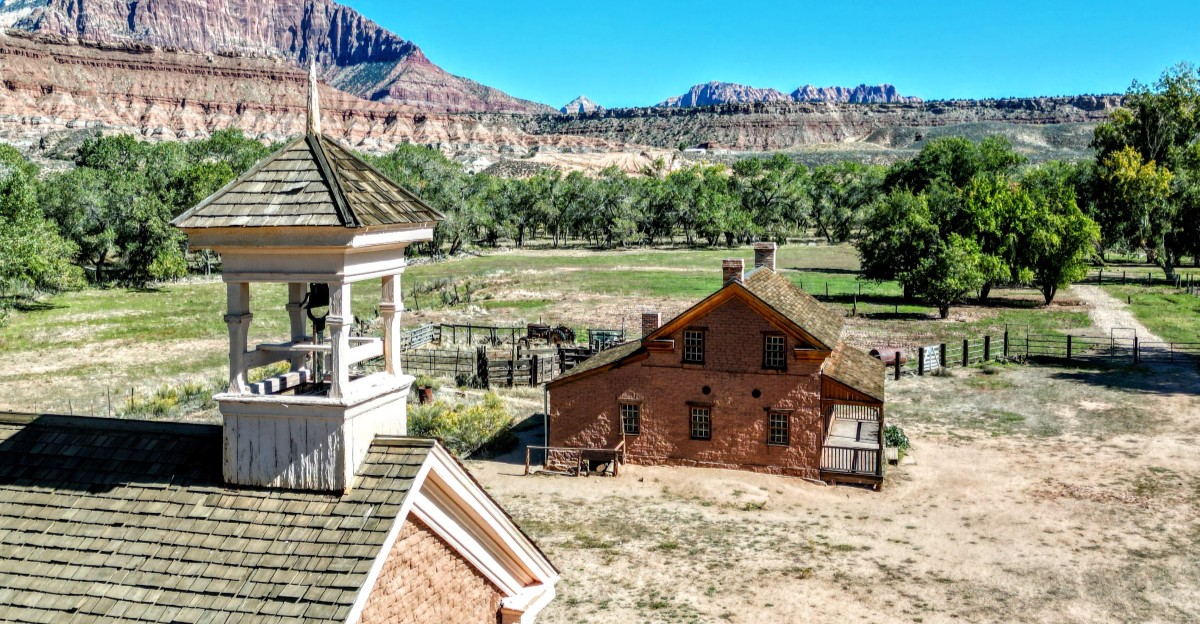
Paul Newman pedaled a bicycle through this abandoned Utah town while “Raindrops Keep Fallin’ on My Head” played. The scene became iconic, but the town had already been through enough plot twists to fill a Hollywood script.
Floods forced settlers to rebuild farther upriver, and eventually, the residents left for good. Yet the schoolhouse, old homes, and cemetery remain beneath those towering red cliffs.
Somehow, the buildings outlasted the town itself, and that’s the part I find hard to shake.
Newman got the soundtrack and the close-up. The town got centuries of weather, a few floods, and a place in film history.
Not exactly a fair trade, but I’d say it held its own.
Hollywood Found Its Favorite Ghost Town Long Before You Did
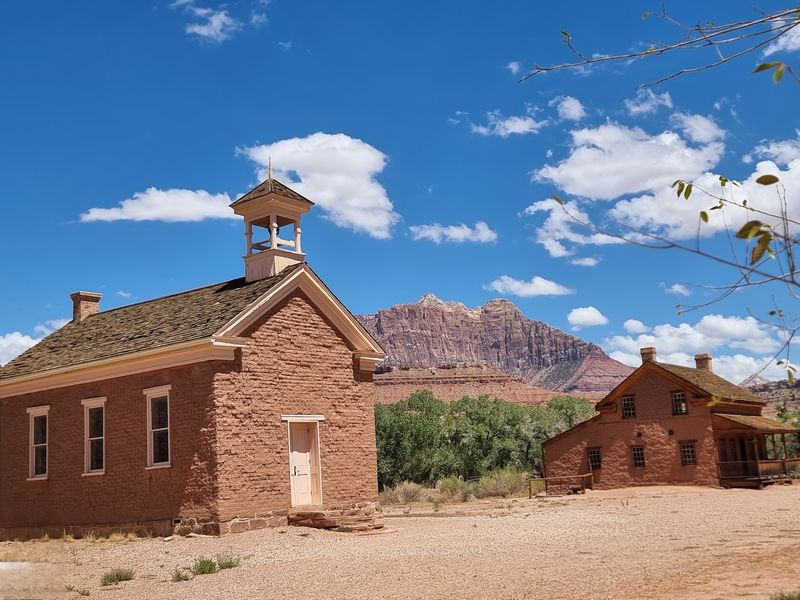
Grafton Ghost Town has better film credits than most actors. Its most famous moment came in 1969, when Butch Cassidy and the Sundance Kid filmed here.
That movie gave the world the famous bicycle scene set to Raindrops Keep Fallin’ on My Head. Paul Newman rode through this very setting, and the buildings still look the part.
The movie magic goes back even further. In 1929, In Old Arizona filmed scenes here and made history in the process.
It became the first talkie ever filmed outdoors. That’s a big deal, since early sound movies were usually stuck inside studios.
So when you stroll past these old walls, you’re standing on a real piece of film history. Few ghost towns can claim that kind of resume.
Grafton is also known as one of the most photographed ghost towns in the West. Once you see the setting, that title makes perfect sense.
Bring your camera and channel your inner cinematographer. Old buildings, open fields, and towering cliffs do most of the work for you.
Leave the bicycle stunts to Paul Newman, though. The dirt paths here deserve respect, and your knees will thank you later.
A Flood Wiped Out Version One, So Settlers Built It Again
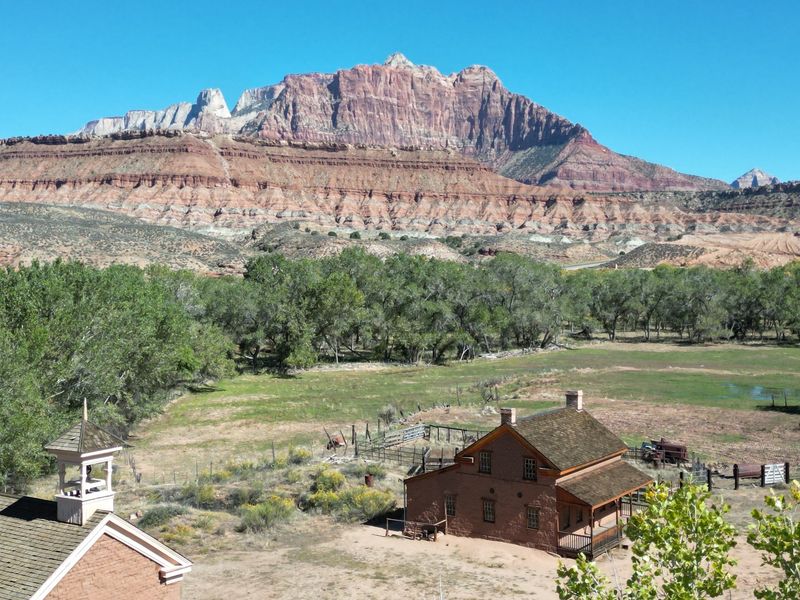
December 1859 brought five families from nearby Virgin to a spot along the Virgin River. They called their new settlement Wheeler, and it was part of Brigham Young’s Cotton Mission.
The goal was simple but tough. Settlers were sent to build farming communities in southern Utah and grow crops in a dry, rugged land.
Then January 1862 arrived with serious trouble. A flood on the Virgin River lasted about a week and largely destroyed Wheeler.
Most people would pack up and leave after that. These settlers moved about a mile upriver to higher ground instead.
They rebuilt in 1862 and gave the town a fresh name. New Grafton honored Grafton, Massachusetts, and the name eventually stuck as plain Grafton.
I can’t imagine starting over with so little. Yet that stubborn spirit is exactly what makes this place worth knowing.
By 1864, the town held 28 families, about 168 people. That’s a lot of grit packed into one small river valley.
Keep that comeback story in mind when you visit. Every surviving wall here exists because people refused to quit the first time.
The Schoolhouse Did Triple Duty And Still Steals The Show
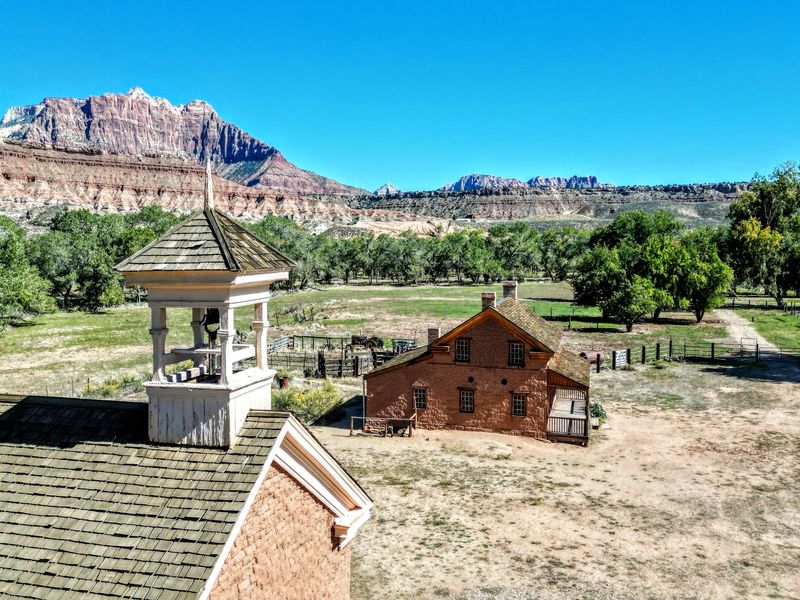
Talk about multitasking. The two-story adobe schoolhouse, built in 1886, served as a school, a church, and a public meeting place.
Kids learned their lessons here during the week. The same building also held church services and town gatherings, so it really was the heart of Grafton.
The schoolhouse reflects a busy, thriving time in the town’s life. Building something this big took effort, and it shows how much residents believed in their future.
Today, it’s one of the restored structures at Grafton Ghost Town. Its tall shape makes it easy to spot as soon as you arrive.
Photographers tend to gravitate here first, and it’s easy to see why. The adobe walls look striking against the open sky and nearby cliffs.
Don’t count on going inside, though. The building may be locked, so plan to admire it from the outside.
That’s still a great deal. You get a front-row view of the building that held this whole community together for years.
Picture the school bell, the Sunday gatherings, and the town meetings. One building, three jobs, zero complaints.
Pretty impressive work for adobe.
Peek Inside Pioneer Homes That Outlasted Their Owners
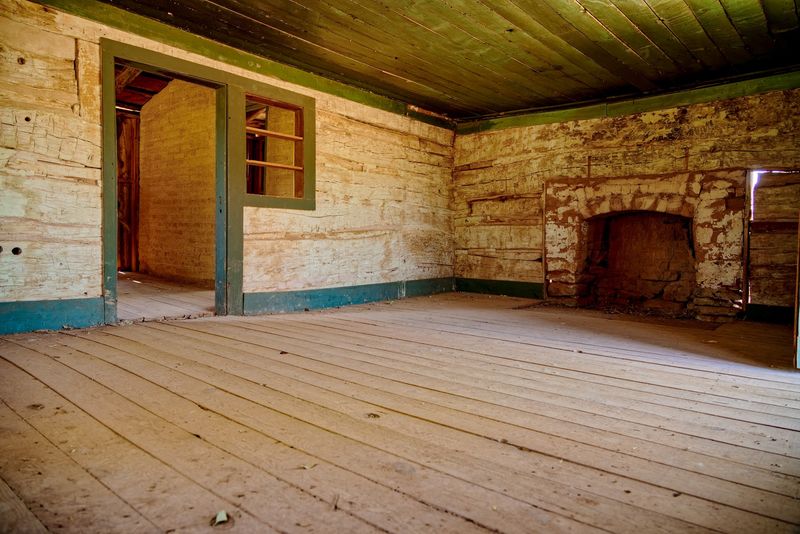
Old houses tell the best stories, and Grafton has several worth hearing. About five of the original 30-plus structures still stand today.
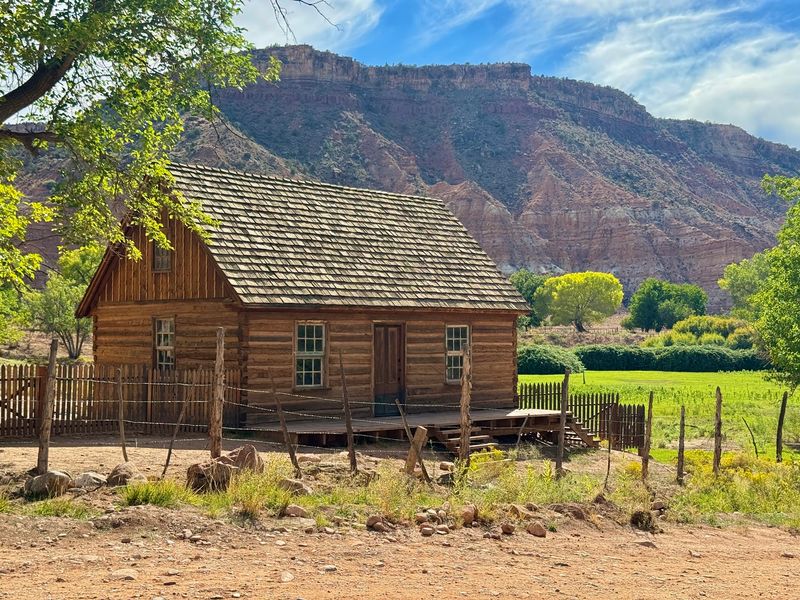
The Alonzo Haventon Russell Home is one of the town’s restored historic houses. It’s one of the town’s showpieces and a great place to start.
Next up is the John Wood Home, built of brick in 1877. Brick was a step up from simpler pioneer homes, which makes this one interesting to compare.
The wooden Ballard Home and barn arrived later, in 1907. Seeing homes from different decades helps you track how the town changed over time.
Don’t skip the smaller farm buildings, either. A log barn and a granary show how families stored crops and kept their farms running.
Some buildings may be open for you to look inside. Watch your step, since older floors can be uneven in places.
Interpretive signs explain who lived where and what life was like. They turn a quick stroll into a mini history lesson without the pop quiz.
It’s a little like house hunting in 1880. Just without a realtor, a mortgage, or indoor plumbing.
Make Time For The Quiet Cemetery Down The Road
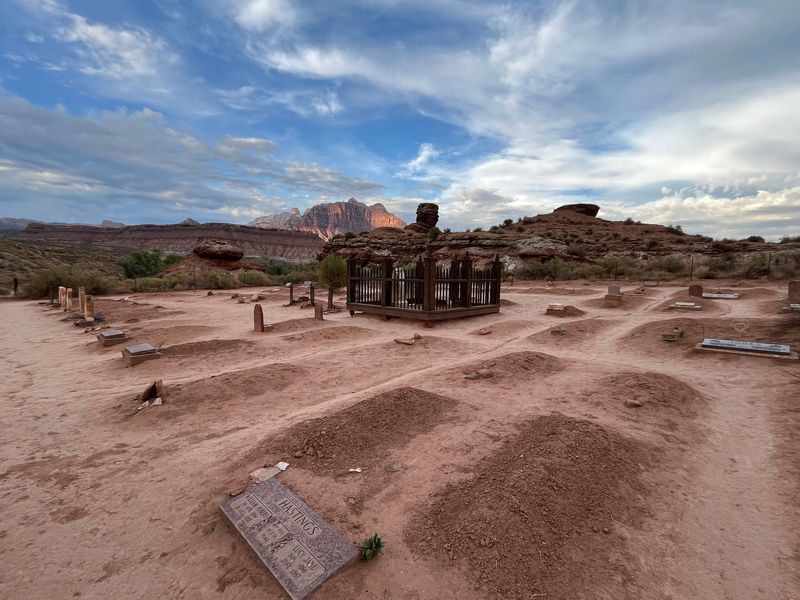
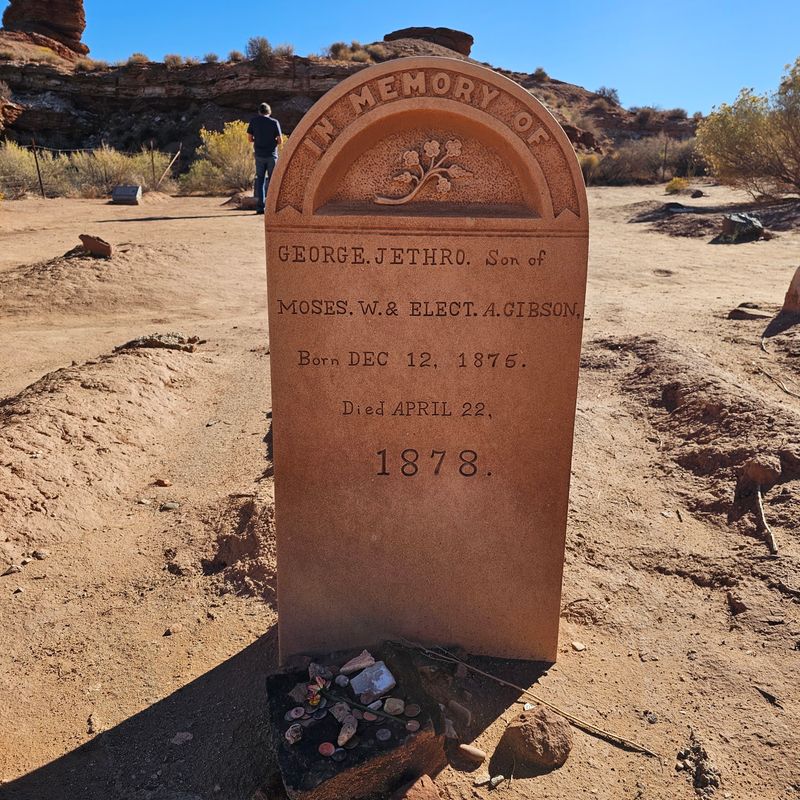
A short way from the townsite sits one of Grafton’s most moving stops. The historic Grafton Cemetery holds graves dating mostly from 1860 to 1910.
It served residents until 1924. Early settlers rest here, including some Native Americans, which adds another layer to the area’s story.
Reading the old markers brings history down to a personal level. Names and dates become real people who worked this land and called it home.
The headstones also hint at how hard frontier life could be. Many dates are close together, and that speaks volumes without a single sign.
I believe this is the spot that makes Grafton feel truly human. Buildings show how people lived, but the cemetery shows who they were.
Please treat it with care and respect. Stay on paths, avoid touching fragile markers, and keep voices low.
The setting is peaceful, with open land and cliffs on the horizon. It’s a good place to pause and soak in the quiet.
Plan to stop here on your way in or out. The cemetery is easy to miss if you’re focused on the town, so keep your eyes open.
Floods, Conflict, And A Canal Slowly Emptied The Streets
Ghost towns rarely empty overnight, and Grafton took decades. The trouble came in waves, sometimes literally.
In 1866, conflict during the Black Hawk War reached the area. Raids forced settlers to move to Rockville for safety for a time.
Some families returned and kept farming. Others decided the risk wasn’t worth it and stayed away for good.
The Virgin River also kept causing problems. Repeated floods and irrigation struggles made growing crops a constant battle.
Then came the Hurricane Canal, finished in 1906. It opened better farming land elsewhere, and many residents moved on to greener pastures.
By 1921, the local church unit, the Grafton Ward, was discontinued. That move basically signaled the end of the town as a community.
The last permanent resident left in 1944, though some sources say 1945. After that, Grafton officially joined the ghost town club.
It’s a story of slow goodbyes rather than one dramatic exit. Knowing it makes the empty lanes feel a lot less spooky and a lot more meaningful.
Descendants Stepped Up And Saved The Whole Place
Here’s the happy twist in Grafton’s story. In 1997, descendants of the original settlers teamed up with several agencies to protect what was left.
Together they formed the Grafton Heritage Partnership Project. Their mission was to restore the historic buildings and the surrounding landscape.
Thanks to their work, the structures you see today aren’t crumbling into dust. They’ve been stabilized, repaired, and given a second life.
The group also helped bring back orchards around town. Green trees and pastures help Grafton look like the farming village it once was.
The Grafton Historic District is listed on the National Register of Historic Places. That national recognition shows just how important this spot really is.
Visiting Grafton Ghost Town is free, which feels almost too generous. Donations are accepted and go toward ongoing preservation.
Toss a few bucks in if you can. It’s a small way to say thanks for keeping this slice of Utah history standing.
Honestly, it’s a pretty great family reunion project. Most families just argue over potato salad, but these folks saved an entire town.
The Drive In Comes With A Bridge And A Bumpy Finale
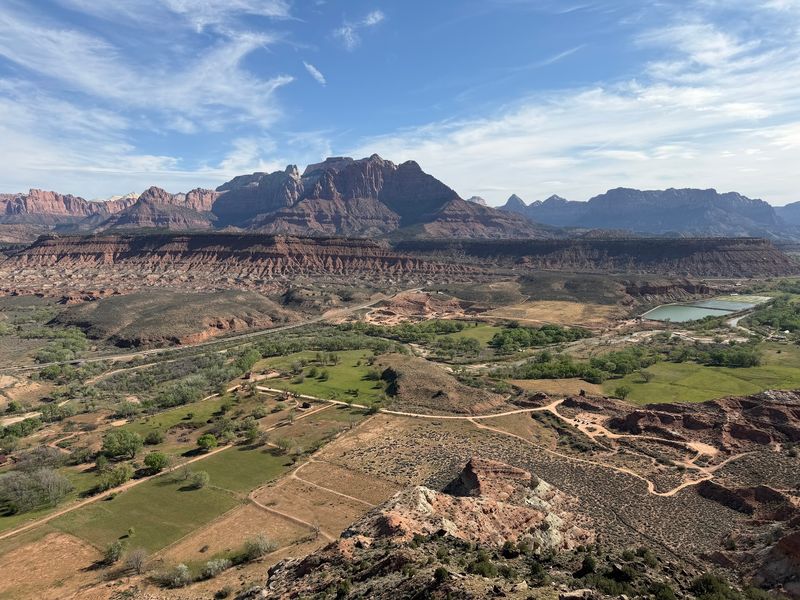
Getting there is half the adventure. Grafton Ghost Town sits in Washington County, Utah, just south of Zion National Park.
The nearest town is Rockville, which now includes Grafton within its legal boundaries. Google lists the site under Springdale, UT 84767, so either name gets you close.
From UT-9 in Rockville, turn south on Bridge Road, also called Grafton Road. Soon you’ll cross the Virgin River on a historic single-lane iron bridge.
That bridge is a treat all by itself. Take it slow and enjoy a crossing that feels straight out of another century.
After the bridge, the road heads west and eventually turns to dirt. The unpaved stretch can get rough, especially after rain.
Drive carefully and give yourself extra time. Your car’s suspension will appreciate the gentle approach.
Restrooms aren’t available at the site, so plan ahead. Rockville has facilities, so make that stop before you leave the pavement.
Once you park, the self-guided tour is yours to explore at your own pace. No tickets, no lines, and no tour guide hurrying you along.
Zion Practically Photobombs Every Picture You Take Here
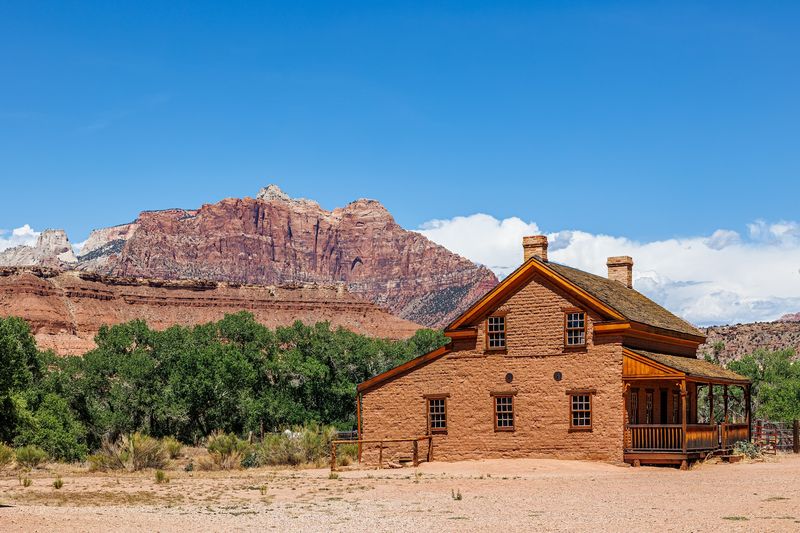
Few ghost towns get a backdrop this dramatic. Mount Kinesava rises over Grafton, and Zion National Park’s red cliffs fill the horizon.
Green pastures and orchards soften the scene around the old buildings. The Virgin River adds another natural touch to the whole valley.
That mix of history and scenery makes Grafton an easy add-on to a Zion trip. You can explore the town and still catch the park the same day.
The site stays open daily from dawn until dusk. Early morning and late afternoon light can make those cliffs glow even brighter.
Pack water, snacks, and sturdy shoes before you head out. Services are limited, and the ground can be uneven in spots.
Plan to linger a bit longer than expected. Between the buildings, the signs, and the views, time slips by surprisingly fast.
Utah has plenty of famous scenery, but this combo feels rare. Pioneer cabins framed by giant cliffs aren’t something you see every day.
So grab a shot of the schoolhouse with Zion behind it. Your friends back home will assume it’s a movie set, and technically they’d be right.