
This South Carolina Adventure Could End With A Pocket Full Of Real Gemstones
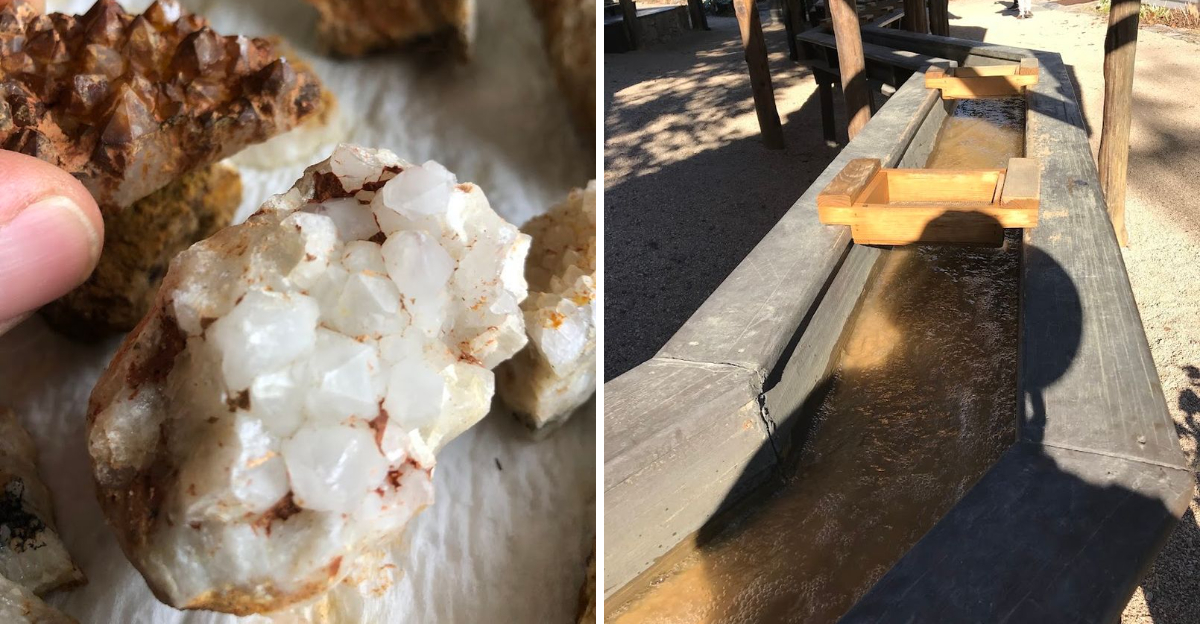
Most attractions ask you to bring home a souvenir.
This South Carolina destination asks you to find your own.
That is a very different experience.
Instead of browsing gift shops, you spend the day searching through red clay, turning over rocks, and wondering whether the next shovel of dirt might reveal something extraordinary. Every discovery feels earned because it is.
That is the contrast.
South Carolina is home to countless family attractions, but few let visitors leave with genuine treasures they uncovered themselves. There are no staged displays or guaranteed prizes waiting at the end.
Just real gemstones, a little patience, and the excitement of never knowing what might appear next.
Every bucket holds a little mystery.
Every sparkling stone raises your hopes.
Every great find makes the effort worthwhile.
That is why people keep coming back.
Some South Carolina attractions are built around watching someone else do something impressive.
This one puts the adventure entirely in your hands. Whether you uncover a small quartz crystal or a gemstone you’ll proudly keep for years, you leave with more than a souvenir you leave with the story of how you found it yourself.
You Keep Every Single Stone You Find
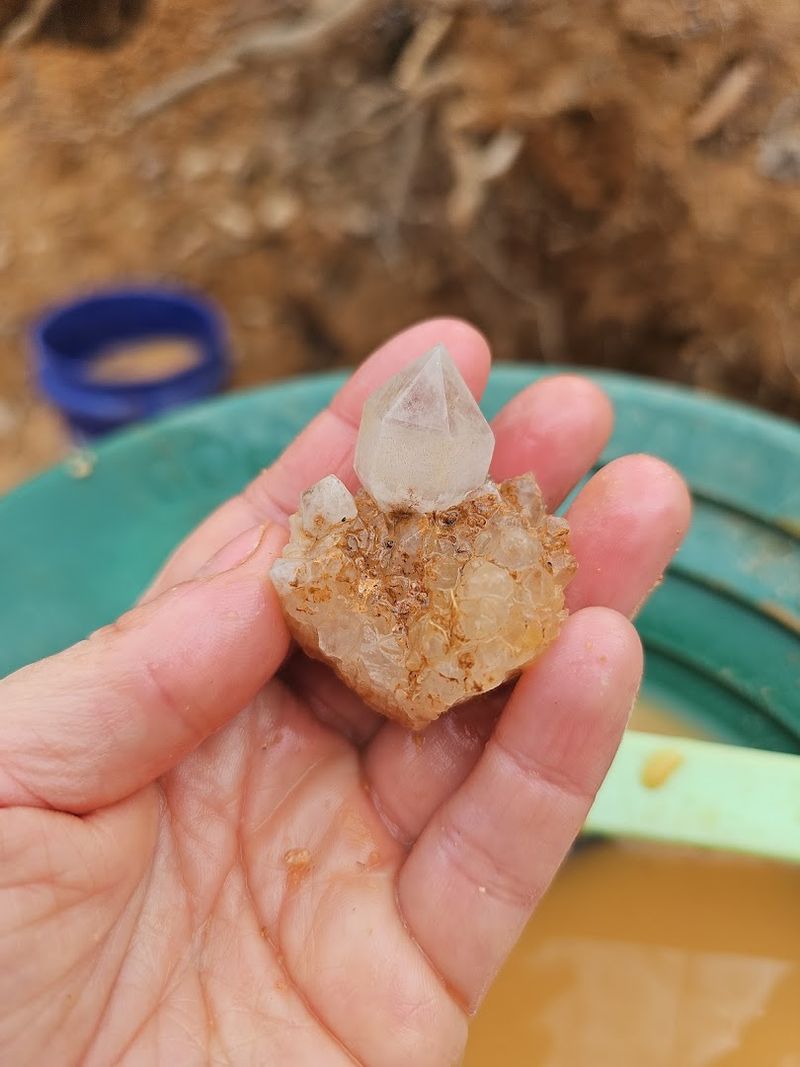
Most attractions charge you to look, touch, or take photos, but Diamond Hill Mine flips that script entirely. Everything you pull from the ground becomes yours to take home, no limits, no hidden fees, no surprise charges at the gate.
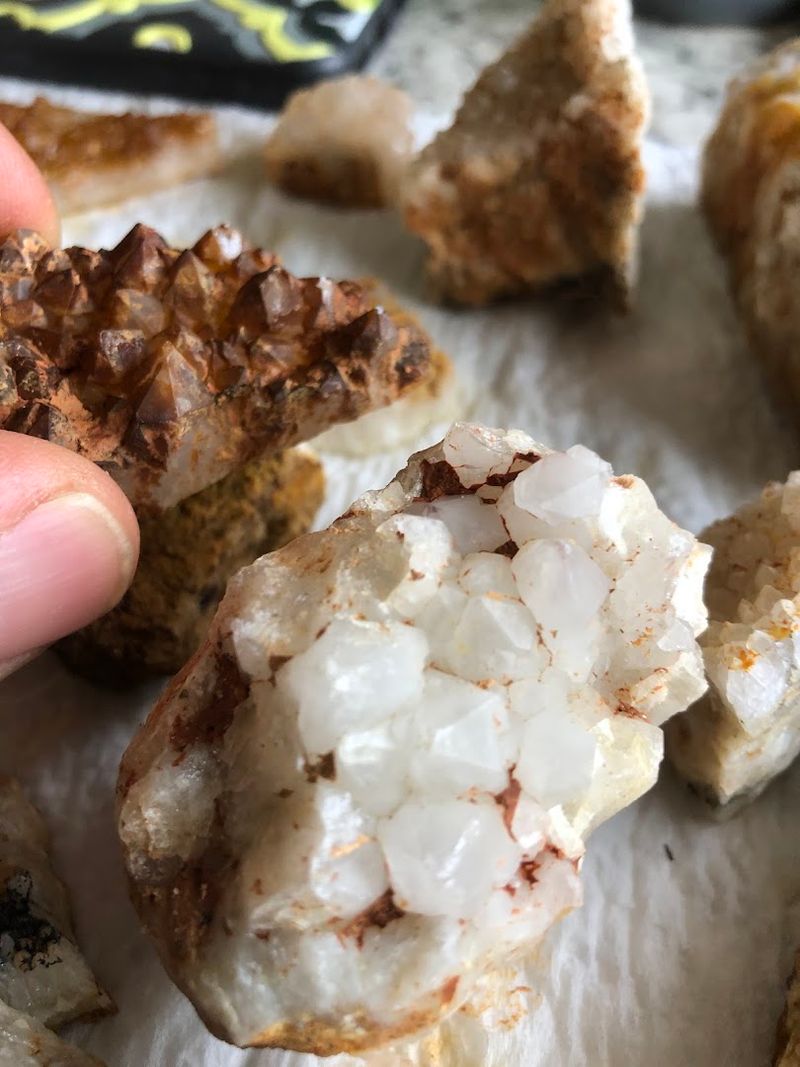
Families fill buckets with smoky quartz, clear crystals, and chunks of matrix rock that glitter when you rinse them clean. Kids who start the day skeptical often refuse to leave because they keep spotting one more sparkle in the dirt.
The property spans enough acreage that you can wander from spot to spot, testing different areas until you find your personal honey hole. Some visitors surface hunt along the paths, while others bring shovels and dig deep into the clay.
Rain actually helps because it washes the soil off crystals and makes them easier to spot on the surface. One reviewer found a nine-and-a-half-pound quartz crystal just by scanning the ground carefully, proving that the biggest finds don’t always require the most digging.
Bringing home a five-gallon bucket full of specimens feels like winning a lottery you earned through effort and attention.
Twenty Dollars Buys You All Day
Admission costs twenty dollars per person, and that price covers you from the moment the gates open at nine in the morning until they close at five in the afternoon. No hourly rates, no timed sessions, no pressure to rush through your search.
Reviewers consistently mention how refreshing it feels to pay less for a full day of outdoor fun than they would spend on a single movie ticket and popcorn. The value becomes even clearer when you compare it to other fee-dig mines that charge by the bucket or limit your digging time.
Military families receive a discount, which adds another layer of appreciation for those who serve. The straightforward pricing means you can budget your trip without worrying about surprise add-ons or mandatory purchases.
Children and adults pay the same rate, making it affordable for families of any size to spend quality time together. You can pack your own lunch, bring your own tools, and settle in for as long as your energy holds.
That twenty-dollar investment often yields finds worth far more, especially when you uncover gem-quality specimens or large crystal clusters that would cost hundreds at a rock shop.
David and Marcy Make Every Visitor Feel Welcome
Walking onto the property, you’re greeted by staff members who genuinely care about your experience and want you to succeed. David and Marcy earn praise in review after review for their warmth, knowledge, and patience with beginners.
David provides tips on where to dig based on what you hope to find, pointing out areas that recently produced good specimens or explaining how to recognize crystals still covered in clay. His enthusiasm never dims, even when answering the same questions from dozens of first-timers each weekend.
Marcy shares her expertise freely, helping visitors identify their finds and even gifting special specimens to excited kids who remind her why she loves this work. She celebrates your discoveries as if she unearthed them herself.
These aren’t just employees punching a clock; they’re ambassadors for rockhounding who want every guest to leave with treasures and memories. One reviewer mentioned David gently scolding children who broke safety rules, showing he balances friendliness with responsibility.
Their presence transforms what could be an overwhelming experience into an approachable adventure where questions are encouraged and mistakes become learning moments.
The Property Offers Space For Everyone
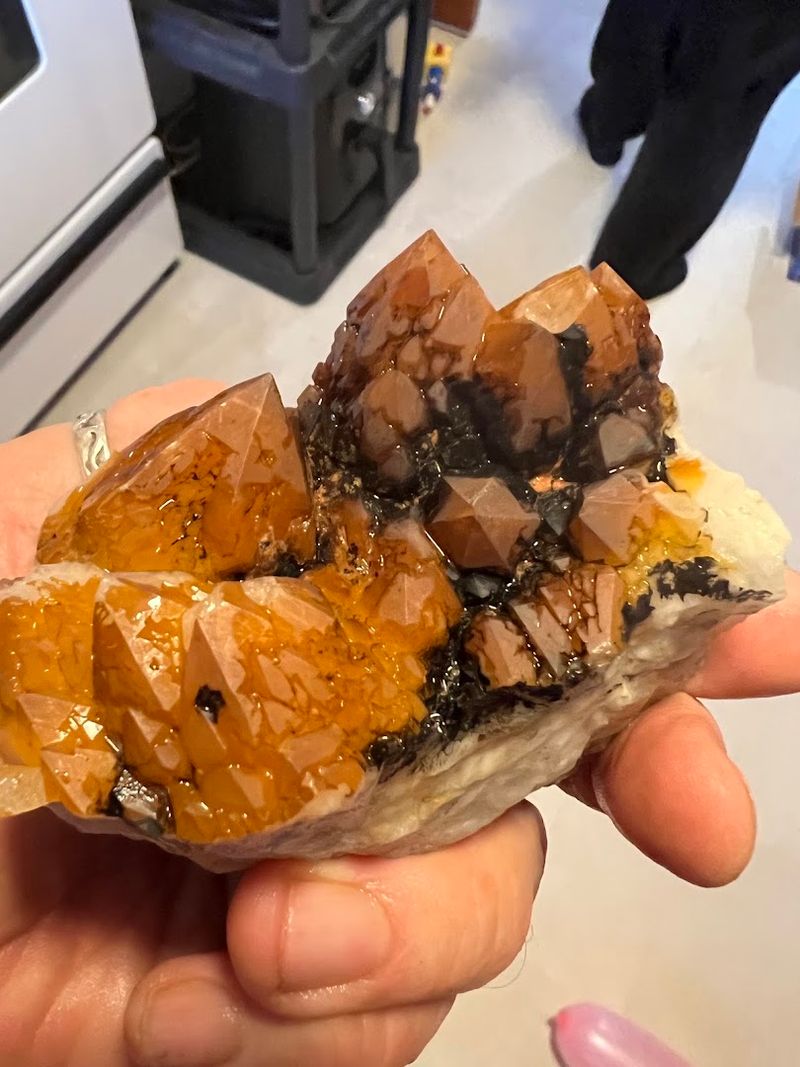
Diamond Hill Mine sprawls across enough land that even on busy weekends, you rarely feel crowded or compete for digging spots. The property includes multiple zones where different minerals concentrate, giving you options to explore based on your interests.
Families can claim their own section and work together without bumping into other groups every few minutes. Tree lines along the edges provide shaded areas where you can dig without baking in direct sun all day.
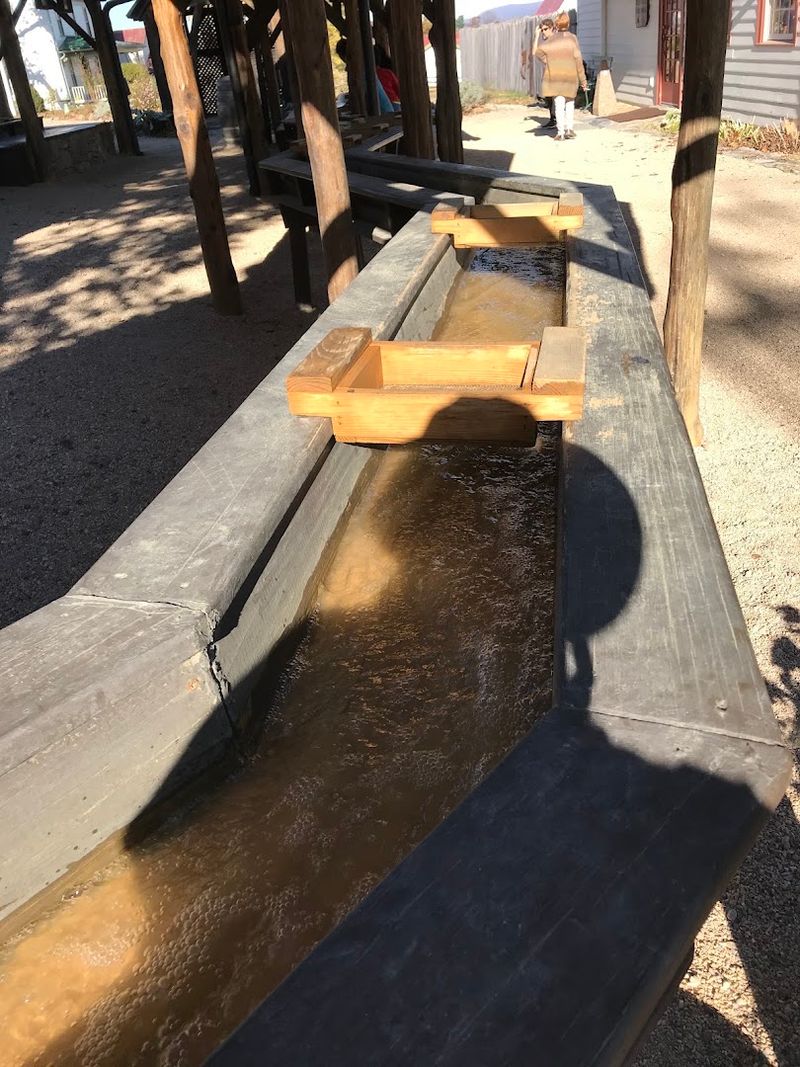
A creek runs through part of the property, offering a place to rinse your finds and cool off when the South Carolina heat becomes intense. The walk down to the water provides a refreshing break and a chance to clean your specimens enough to see what you actually found.
Picnic tables sit in shaded spots, perfect for lunch breaks where you can examine your haul and plan your afternoon strategy. The layout encourages wandering and discovery rather than confining everyone to a single small plot.
Even with a full parking lot, the mine never feels cramped because there’s simply so much ground to cover and so many different areas to investigate.
Quartz Crystals Are the Star Attraction
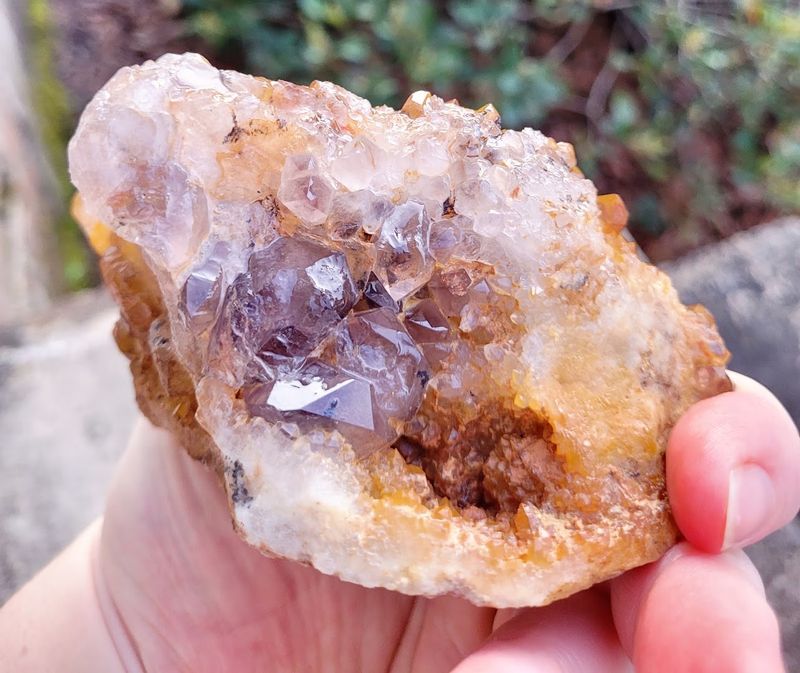
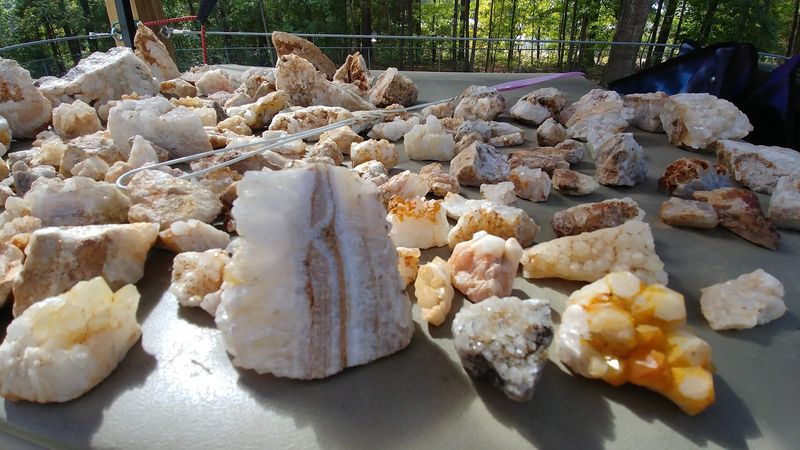
Clear quartz, smoky quartz, and crystal clusters dominate most buckets by the end of the day, ranging from thumbnail-sized points to specimens weighing several pounds. The thrill of spotting a crystal tip poking through red clay never gets old, no matter how many you’ve already found.
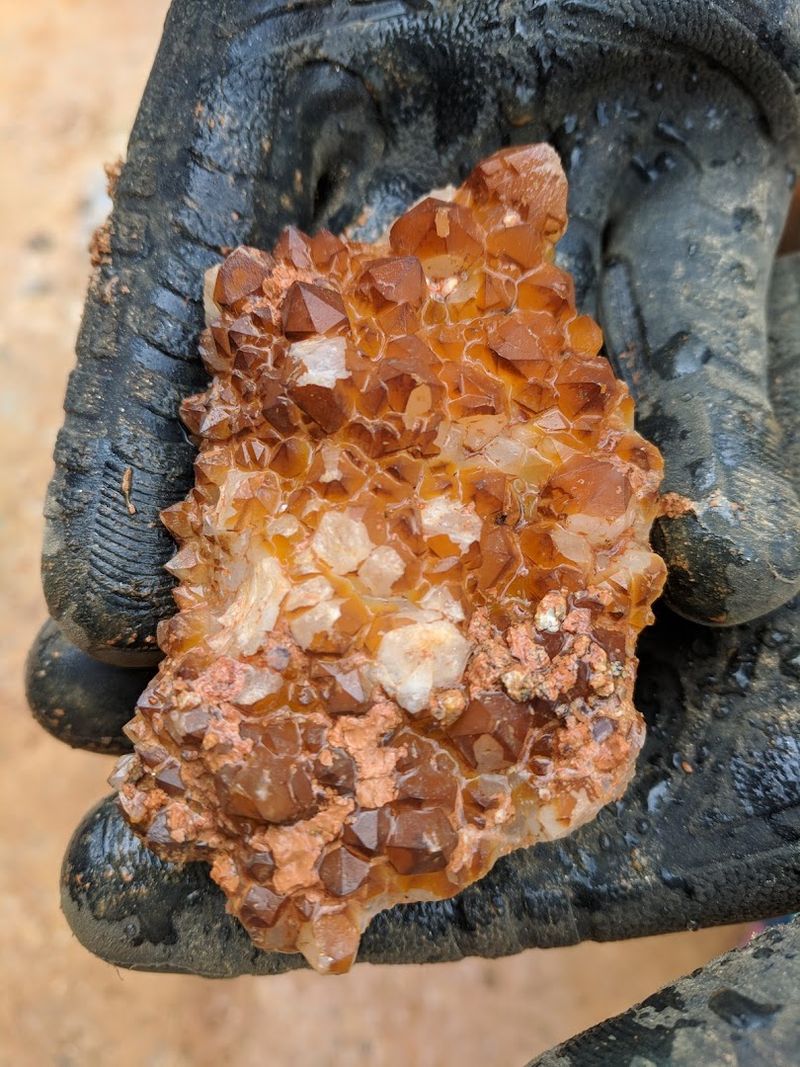
Smoky quartz earns special attention because its brown to black coloring creates dramatic contrast against lighter matrix rock. Some crystals grow in clusters that look like miniature cities of geometric towers.
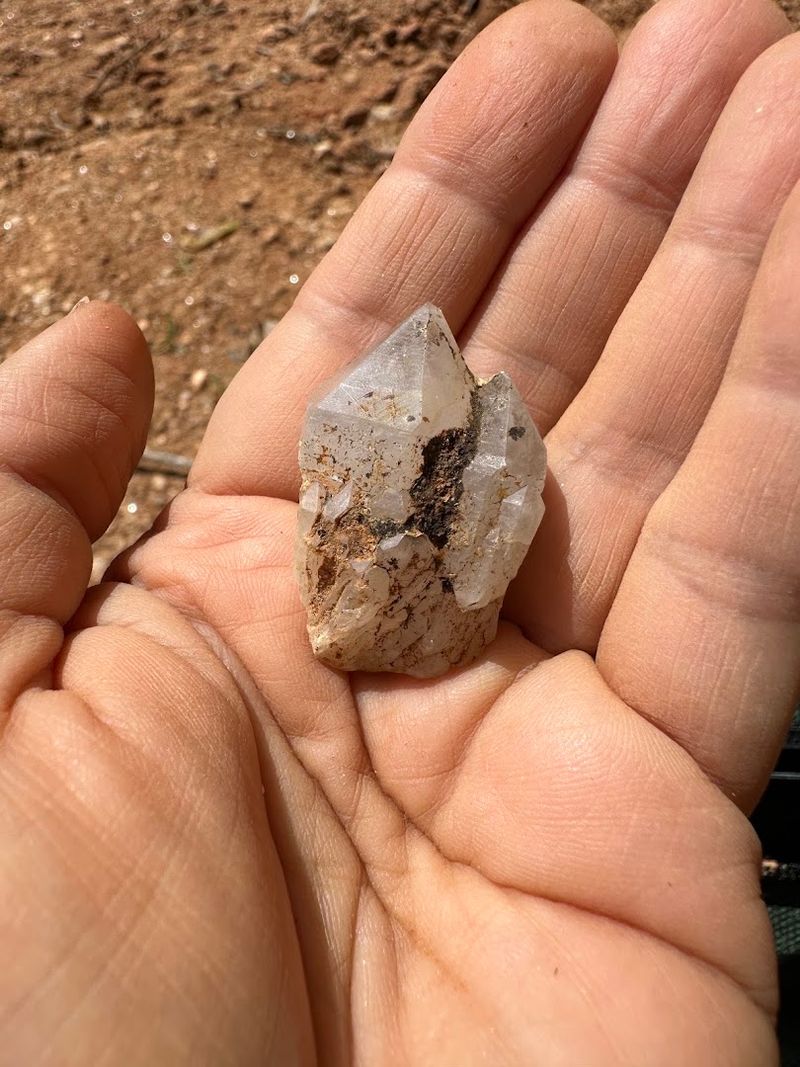
Clear quartz specimens with perfect terminations become prized finds, especially when they catch sunlight and throw rainbows across your palm. The mine’s quartz varies in clarity from glass-clear to milky white, with some showing interesting inclusions or phantom crystals inside.
Large specimens require careful extraction because quartz can be brittle despite its hardness, and you don’t want to damage a beautiful point through careless digging. Many visitors specifically target quartz because it’s recognizable, abundant, and genuinely valuable when you find quality pieces.
Walking the surface after rain often reveals crystals that washed clean naturally, saving you scrubbing time and letting you immediately appreciate what you discovered.
Amethyst and Aquamarine Hide Among The Common Finds
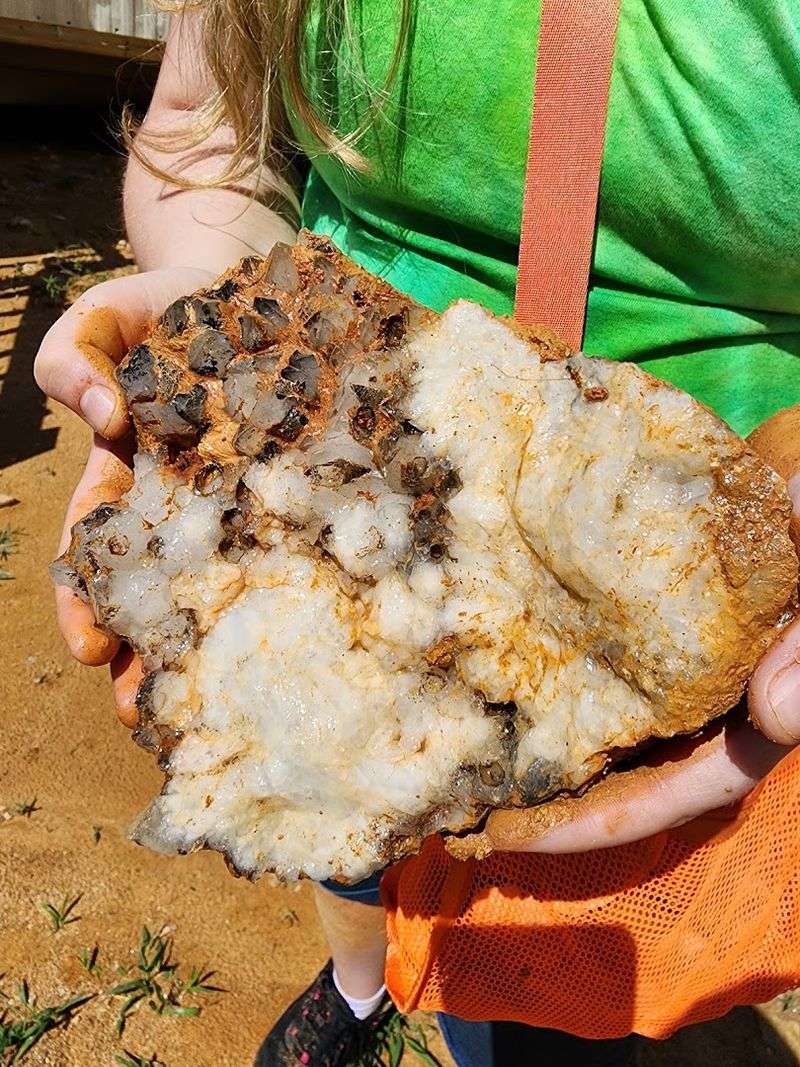
While quartz makes up the bulk of discoveries, the real excitement comes when you spot purple amethyst or the pale blue-green flash of aquamarine. These rarer finds send your heart rate up because you know you’ve just unearthed something genuinely special.
Amethyst appears in shades from light lavender to deep purple, sometimes as small points within quartz clusters and occasionally as standalone crystals. The color can be subtle, requiring good light and a clean surface to confirm you’ve found the real thing.
Aquamarine at Diamond Hill tends to be small but genuine, often embedded in matrix rock or attached to quartz. Finding even a tiny specimen feels like winning because this gemstone commands high prices in jewelry stores.
Staff members help identify these trickier finds since beginners might mistake pale amethyst for dirty quartz or overlook aquamarine entirely. One reviewer mentioned finding a large smoky quartz with aquamarine attached, creating a combination specimen worth keeping forever.
These gems remind you that patience pays off and that the next shovelful of dirt might contain something extraordinary hiding beneath ordinary-looking clay.
Bring The Right Tools For Success
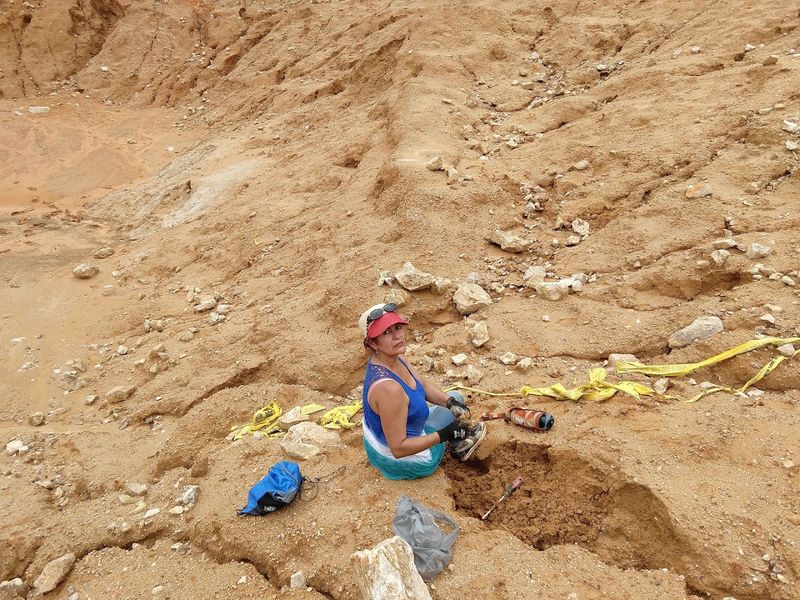
Successful digging requires more than enthusiasm; you need proper equipment to make your day productive and comfortable. Five-gallon buckets top every recommended list because they hold substantial finds without becoming too heavy to carry when full.
A small shovel or garden trowel helps you move dirt efficiently, while a pick or three-pronged cultivator loosens compacted clay. Some visitors bring long screwdrivers for probing and prying crystals from tight spots without damaging them.
Spray bottles filled with water let you rinse specimens on-site to see what you’ve actually found before deciding whether to keep or discard them. Gloves protect your hands from blisters and sharp crystal edges during hours of digging.
A wagon or cart proves invaluable because you often park a distance from your chosen digging spot, and loaded buckets get heavy fast. Wear boots you don’t mind coating in red clay, and bring a complete change of clothes for the ride home.
Sunscreen, hats, and plenty of drinking water rank as essential rather than optional, especially during summer months when the South Carolina sun shows no mercy to unprepared rockhounds.
The Mine Operates Year-Round With Consistent Hours
Diamond Hill Mine opens its gates every day of the week from nine in the morning until five in the afternoon, including Sundays and holidays. This consistent schedule means you can plan your visit without worrying about unexpected closures or limited weekend-only access.
Year-round operation gives you flexibility to choose your season based on weather preferences and crowd levels. Spring and fall offer moderate temperatures that make all-day digging comfortable, while summer brings heat that some visitors actually prefer because it keeps crowds smaller.
Winter digging appeals to hardcore rockhounds who don’t mind cold fingers in exchange for having the property nearly to themselves. Rain doesn’t close the mine; in fact, wet conditions often improve surface hunting by washing soil off crystals.
The reliable hours let you build trips around the mine, knowing you can arrive mid-morning and stay until closing without rushing. Families traveling from out of state appreciate the dependability since they’re investing time and gas money to reach Abbeville.
Calling ahead at 864-934-3744 confirms any rare closures, though reviews suggest the mine maintains remarkable consistency in staying open regardless of weather or season.
Surface Hunting Rivals Digging For Results
Many visitors assume the best finds require deep digging, but experienced rockhounds know that careful surface hunting often produces equal or better results. Walking slowly across freshly turned areas with your eyes focused on the ground reveals crystals that erosion, rain, or equipment exposed.
The key involves training your eyes to recognize the glassy shine of quartz or the geometric shapes of crystal faces among irregular dirt clods. Sunlight helps tremendously because crystals catch and reflect light differently than surrounding soil.
One reviewer found their personal best, a nine-and-a-half-pound quartz crystal, simply by scanning the surface rather than digging. Another mentioned discovering quality specimens by walking areas other visitors had already worked over but not examined closely enough.
Surface hunting conserves energy, keeps you cleaner, and covers more ground than stationary digging. You can combine both methods by surface hunting first to identify promising spots, then digging deeper in areas that show good surface indicators.
After rain, surface hunting becomes especially productive because water washes crystals clean and settles them on top of softer soil, creating ideal conditions for spotting treasures without moving a single shovelful.
Families Create Lasting Memories Together
Diamond Hill Mine excels as a family destination because it offers genuine adventure where everyone contributes to the success and shares in the excitement of each discovery. Parents and children work side by side, teaching patience, observation, and the satisfaction of earning rewards through effort.
Two-year-olds enjoy playing in the dirt even if they don’t understand the crystal hunting, while teenagers who normally resist family outings get genuinely engaged when they start finding specimens. The activity levels the playing field since luck and sharp eyes matter more than age or strength.
Picnic lunches at the shaded tables create natural breaks where families examine their morning finds and share stories about the best discoveries. The mine provides an electronics-free zone where conversations happen naturally and everyone focuses on the same goal.
Scout troops regularly visit for geology merit badges and group bonding, finding that the mine offers both educational value and pure fun. Multiple reviews mention families vowing to return, proving the experience creates positive memories strong enough to pull people back.
Driving home with buckets of crystals gives everyone tangible souvenirs that spark conversations and remind them of the day they spent together digging in South Carolina red clay.