
This South Carolina Park Is The Rare And Beautiful Place Where The Mountains Meet The Swamp
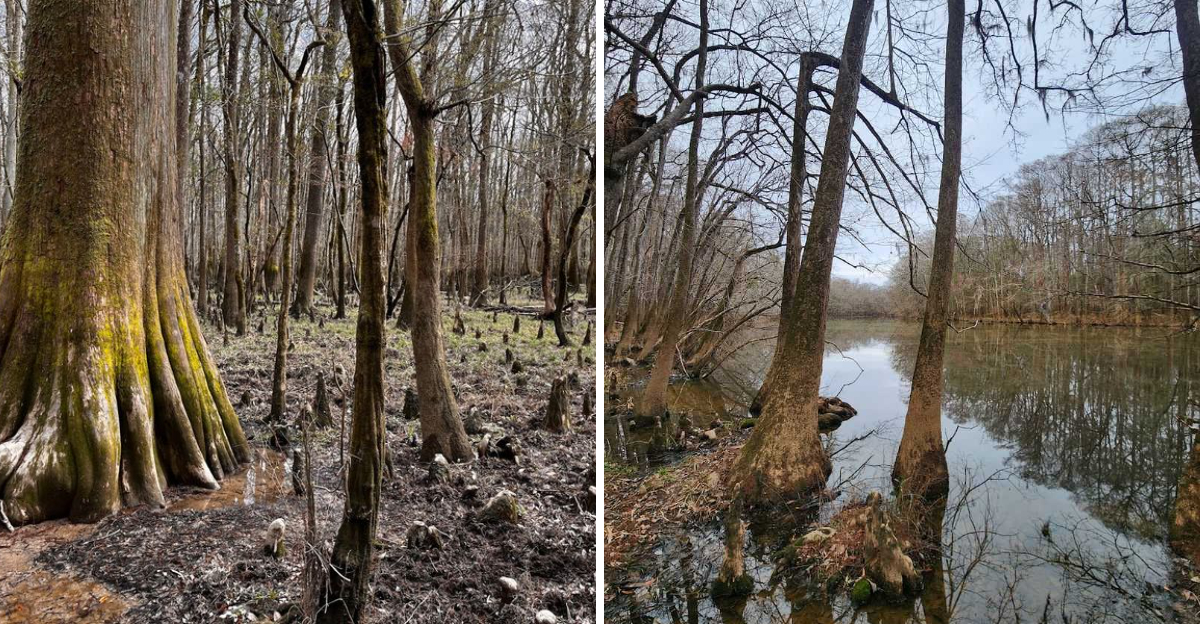
Silence is becoming increasingly difficult to find in South Carolina.
Congaree National Park has plenty of it.
Step beneath the towering canopy and something changes almost immediately. Traffic noise disappears.
Phone notifications stop feeling important. And the pace of the outside world begins to fade beneath the sounds of rustling leaves, birdsong, and water moving quietly through the forest.
That transformation is part of what makes this place so remarkable.
The park feels wild in a way that few places still do.
Ancient trees rise overhead.
Boardwalks disappear into the shadows.
And every trail seems to lead deeper into a landscape that feels untouched by time.
The contrast is striking.
Just outside, modern life moves at full speed.
Inside the park, nature sets the schedule.
For hikers, paddlers, wildlife lovers, and anyone craving a genuine escape, Congaree offers something increasingly rare: the chance to slow down and experience one of South Carolina’s most extraordinary natural treasures.
The Largest Old-Growth Bottomland Hardwood Forest In North America
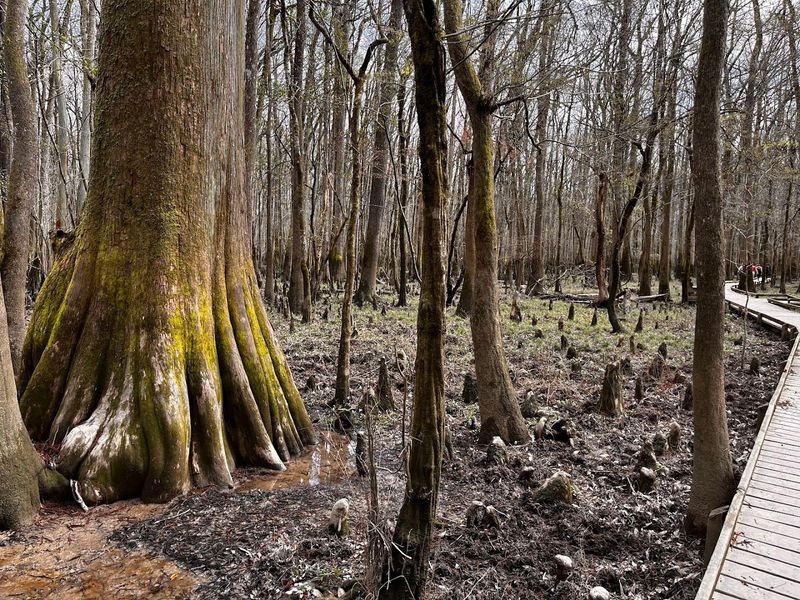
Standing inside Congaree National Park feels less like visiting a park and more like stepping into a forest that has been growing, quietly and stubbornly, for centuries.
The park protects the largest intact old-growth bottomland hardwood forest in all of North America, which is a title that carries real weight when you are standing beneath trees that stretch more than 150 feet into the sky.
These are not just tall trees. Many of them are national and state champions, meaning they are the largest recorded specimens of their species in the entire country.
Bald cypress, loblolly pine, cherrybark oak, and water tupelo all compete for space in this dense, layered canopy that blocks out much of the sky above.
The forest floor below is equally alive, with ferns, fungi, and tangled root systems spreading across the dark, nutrient-rich soil.
Visiting Congaree reminds you just how extraordinary a forest can become when humans simply leave it alone long enough.
The Elevated Boardwalk Trail That Floats Above The Swamp
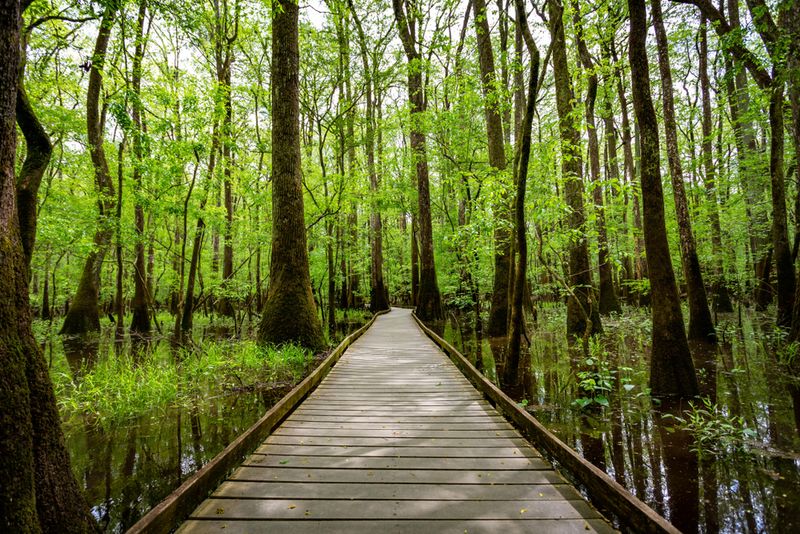
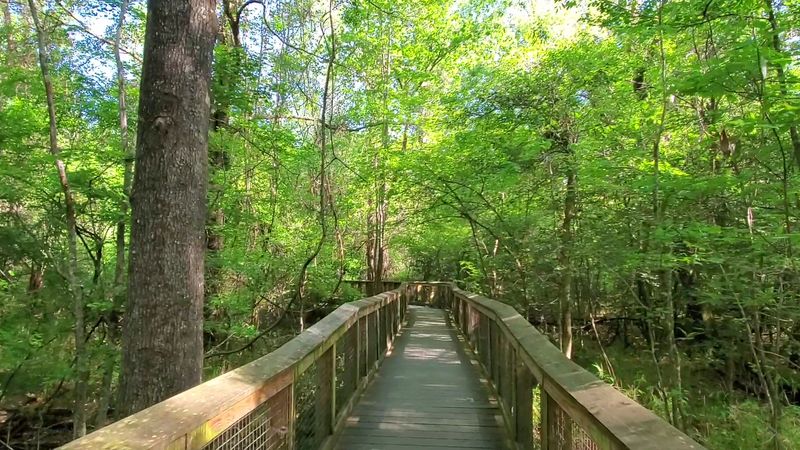
There is something almost magical about walking on a path that seems to float just above the swamp, with dark water and tangled roots stretching out beneath your feet in every direction.
The elevated boardwalk at Congaree National Park stretches approximately 2.4 miles and begins right at the Harry Hampton Visitor Center, making it easy to access without any complicated navigation.
The boardwalk was designed to protect the fragile floodplain ecosystem while still giving visitors a front-row seat to one of the most unique forest environments in the country.
Part of the loop has been closed for renovation, but rangers and trail markers guide you through alternative routes using the Sims Trail and Firefly Trail to complete a satisfying loop back to the visitor center.
Along the way, informative signs explain the ecology, history, and wildlife of the floodplain, turning a simple walk into a genuinely educational experience.
Even a rainy day on this boardwalk carries its own quiet, foggy charm that is hard to forget.
A Floodplain Ecosystem That Pulses With Every Season
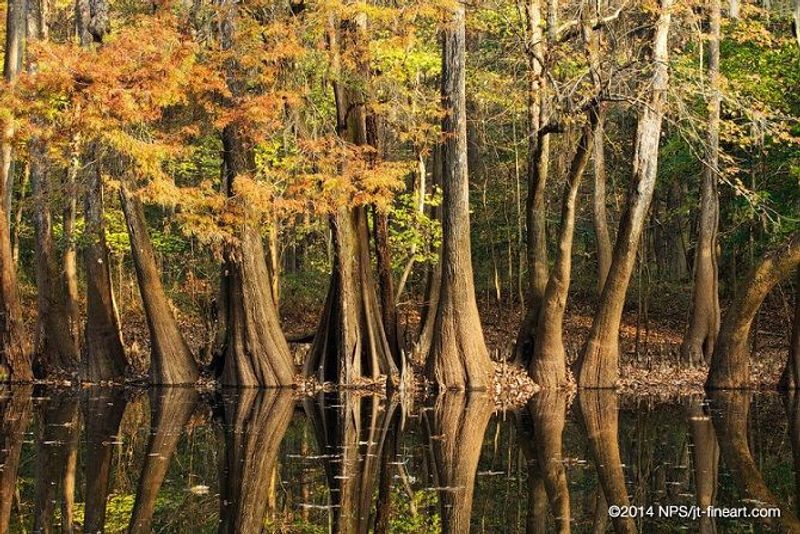
Most parks look more or less the same year-round, but Congaree operates on a completely different schedule, one dictated entirely by water, weather, and the rhythms of the Congaree River.
The park sits on a floodplain, which means the entire forest floor can be covered in several feet of water during high-water events, transforming familiar trails into temporary waterways.
These regular floods are not a problem for the park. They are actually the engine that keeps this ecosystem so rich and productive, depositing nutrients across the forest floor with every cycle.
In spring, the forest bursts with wildflowers and birdsong, making it a favorite season for photographers and birdwatchers who know exactly where to look.
Summer brings dense humidity and a buzzing, chirping forest soundtrack, while winter strips the leaves and reveals the full, dramatic architecture of the ancient trees.
Each season at Congaree feels like a completely different version of the same beautiful place, which gives you every reason to return more than once.
The Famous Firefly Synchronization Event
Every May and June, something happens at Congaree National Park that sounds almost too extraordinary to be real, and yet thousands of people enter a lottery each year just for the chance to witness it.
Synchronous fireflies, a species called Photinus carolinus, gather in the forest and begin flashing their lights in coordinated, rhythmic pulses that wash across the dark woods like a slow, living light show.
Only a handful of places in the world are known for this behavior, and Congaree is one of the most accessible and well-managed viewing sites anywhere in the United States.
Because the event draws such large crowds, the National Park Service uses a timed-entry permit system to protect both the fireflies and the experience itself, keeping the forest from becoming overcrowded during peak viewing nights.
Visitors who secure a permit are guided to viewing areas where rangers provide context and help protect the fragile habitat.
Watching thousands of lights pulse together in the darkness of an ancient forest is, without question, one of the most unforgettable experiences in American nature tourism.
Canoeing And Kayaking Through Ancient Cedar Creek
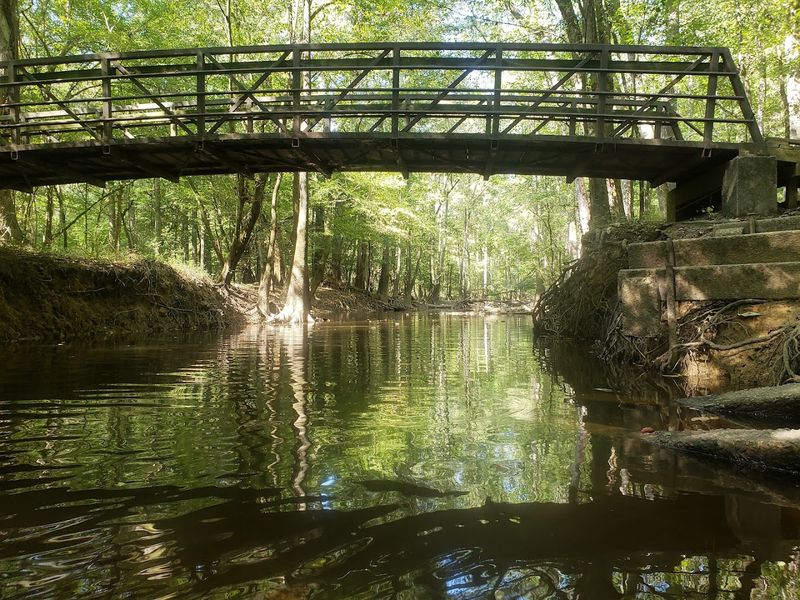
Paddling through Cedar Creek inside Congaree National Park is the kind of experience that reframes your entire understanding of what a canoe trip can be.
The creek winds for miles through the bottomland forest, threading between ancient cypress trees whose knobby knees rise from the dark water like silent sentinels standing guard over the swamp.
The water moves slowly, the canopy closes in overhead, and the sounds of the outside world disappear entirely within the first bend of the creek.
Visitors can rent kayaks or join guided paddle tours that take you deep into sections of the park that are simply unreachable on foot, especially during periods of higher water.
Wildlife sightings along the creek are common, with river otters, wood ducks, great blue herons, and turtles frequently spotted along the banks and in the shallows.
Cedar Creek paddling is consistently rated as one of the top outdoor experiences in South Carolina, and spending even a few hours on the water makes it very easy to understand exactly why.
Champion Trees That Hold National Records
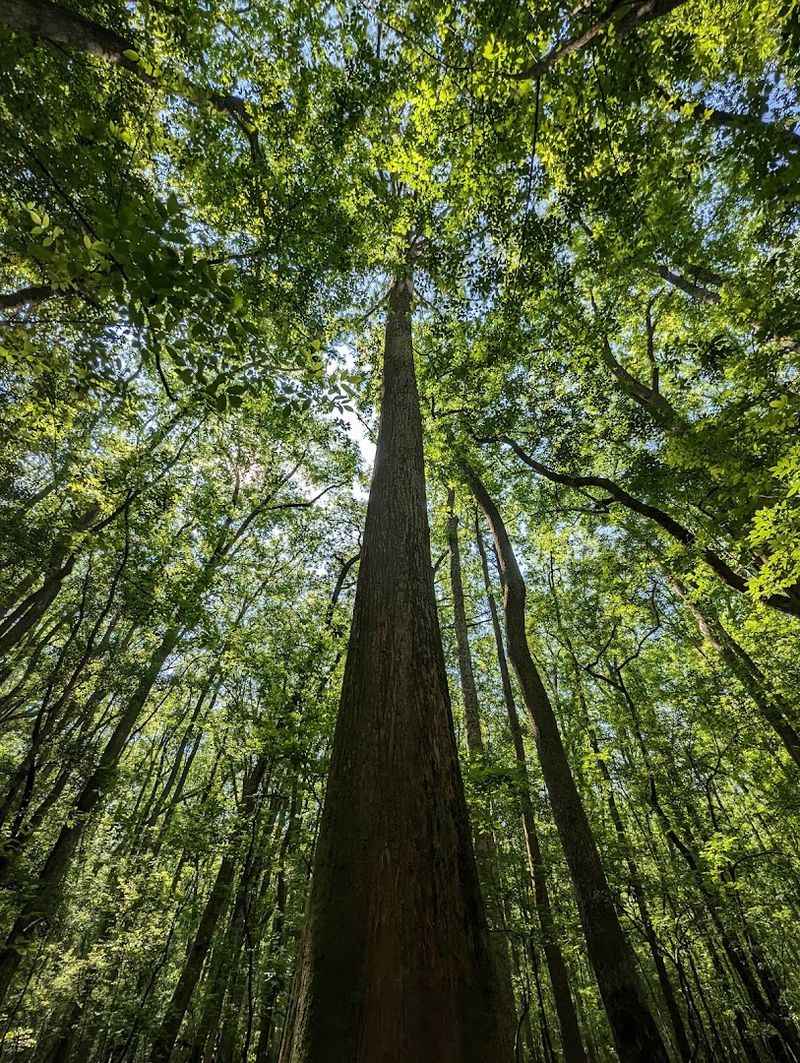
Not every forest can claim to be home to record-breaking trees, but Congaree National Park holds that distinction with a quiet kind of pride that feels entirely fitting for a place this unhurried.
The park contains more national and state champion trees than almost any other protected area in the eastern United States, with species including loblolly pine, cherrybark oak, swamp chestnut oak, and common persimmon all reaching extraordinary sizes within its boundaries.
A national champion tree is simply the largest known living specimen of a particular species, measured by a combination of height, trunk circumference, and crown spread.
Standing next to one of these record holders is a genuinely humbling experience, especially when you realize some of them have been growing in this same spot for well over two centuries.
The park service maintains updated records of these trees and rangers are often happy to point you toward the most impressive specimens along the trails.
These living records are one of the most compelling reasons to visit Congaree, where the trees themselves tell the story of deep time and patient growth.
Rich Wildlife That Calls The Floodplain Home
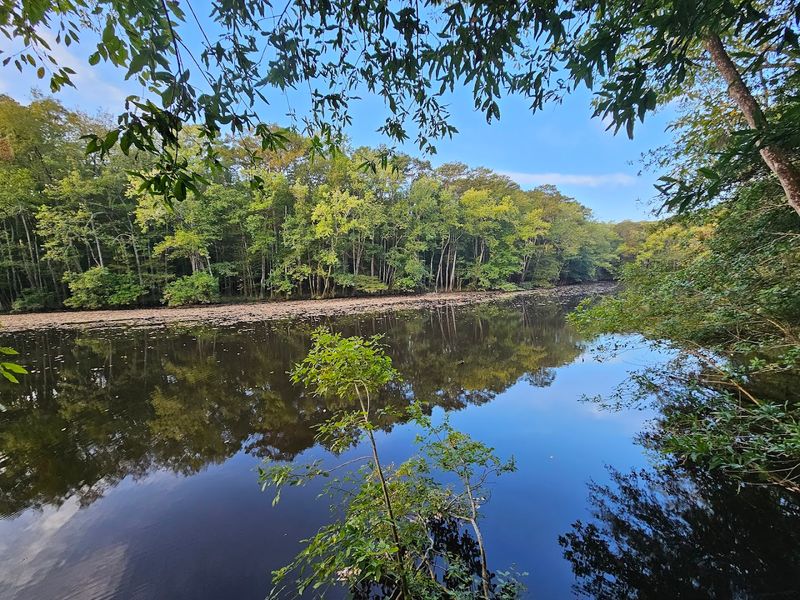
For a park that does not always make the top of travel bucket lists, Congaree punches well above its weight when it comes to wildlife variety and sheer visibility.
White-tailed deer move through the forest with surprising ease, and it is not unusual to round a bend on the boardwalk and find one standing completely still just a few yards away, watching you with the calm confidence of an animal that knows it has nothing to fear here.
Birdwatchers are especially well served, with more than 170 species recorded in the park, including pileated woodpeckers, prothonotary warblers, barred owls, and the occasional red-cockaded woodpecker, which is a federally protected species.
River otters and bobcats also inhabit the park, though they tend to be more elusive and reward patient, quiet visitors who take the time to slow down and observe.
Wild turkeys, wood ducks, and various species of turtles add to the diversity along the creek corridors.
The floodplain habitat creates such a layered, productive ecosystem that wildlife encounters feel less like lucky surprises and more like a natural part of every visit.
The Harry Hampton Visitor Center And Its Welcoming Start
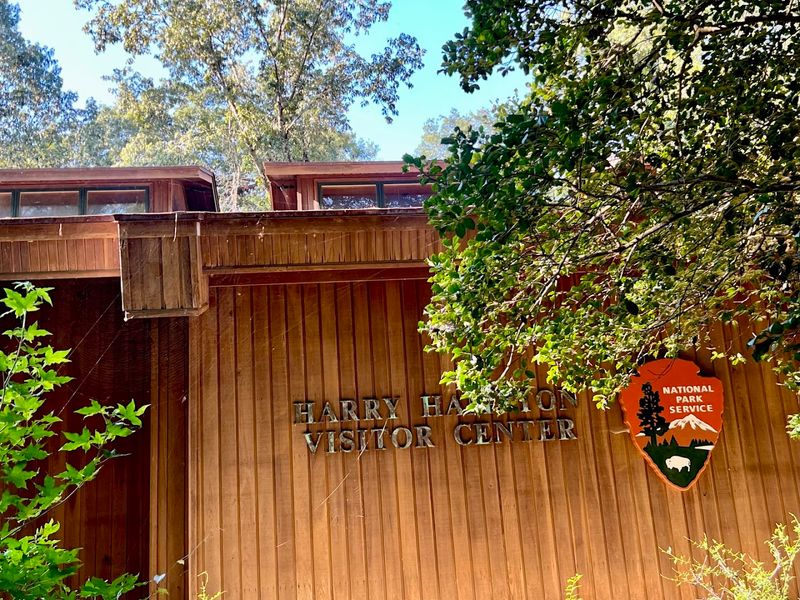
Before you set a single foot on any trail at Congaree, the Harry Hampton Visitor Center gives you a genuinely useful and enjoyable introduction to everything the park has to offer.
Located at 100 National Park Road, Hopkins, South Carolina, the center features exhibits on the park’s ecology, history, and the Indigenous peoples who lived in and around this landscape long before European contact.
One of the most talked-about features inside the center is an actual tree built directly into the wall of the building, a whimsical design choice that immediately signals the park’s commitment to celebrating its forest identity.
Friendly and knowledgeable rangers are on hand to answer questions, hand out trail maps, and give recommendations based on your fitness level, available time, and specific interests.
The center also has clean restrooms, a small gift shop where you can pick up a park stamp for your National Park Service passport book, and a short introductory film about the park.
Starting your visit here sets a warm, informed tone that makes the trails feel even more meaningful once you step outside.
Winter Visits That Offer A Bug-Free And Beautifully Bare Forest
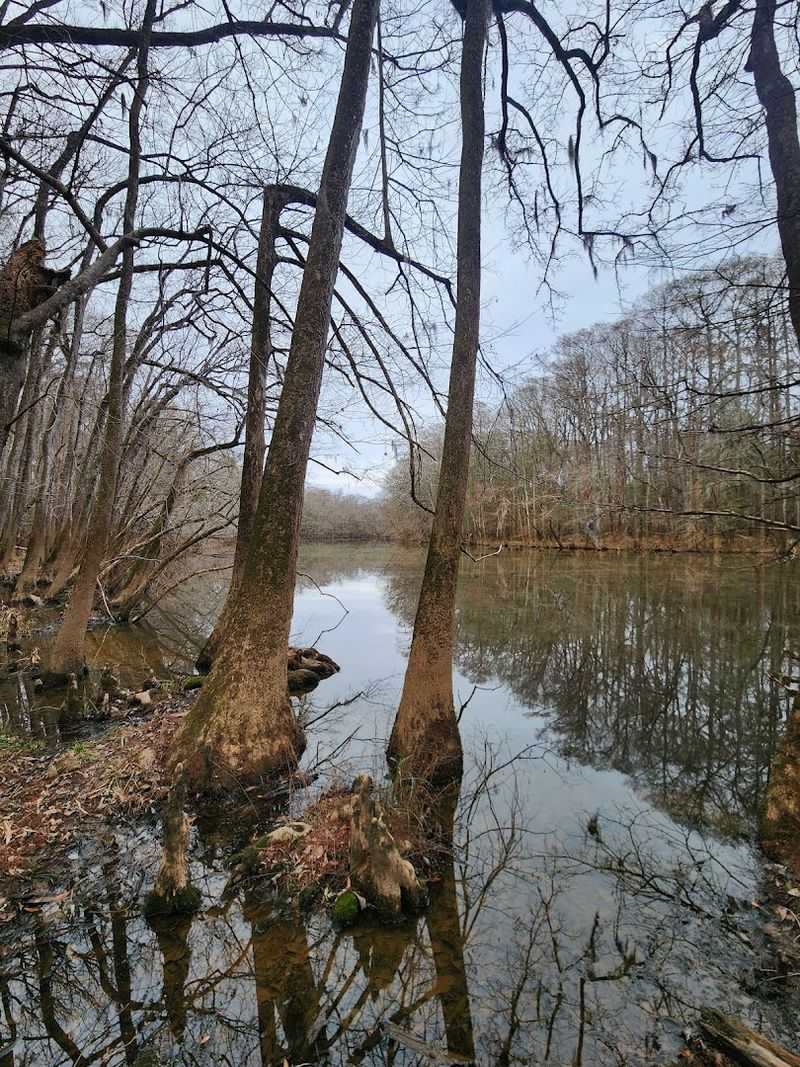
Summer at Congaree is beautiful, but if you ask experienced visitors when they prefer to go, a surprising number will tell you without hesitation that winter is their favorite season in the park.
When temperatures drop, the mosquito population, which can be genuinely intense during warmer months, essentially disappears, making long hikes and slow boardwalk strolls a much more comfortable experience for everyone involved.
The deciduous trees shed their leaves in late autumn, and what remains is a forest that reveals its true skeletal structure, with tall, bare trunks rising in every direction like columns in a cathedral with no roof.
The cooler air carries a crispness that makes breathing feel like a small luxury, and the trails tend to be far less crowded than during the busy spring and summer months.
Wildlife is still active in winter, and the bare canopy actually makes it easier to spot birds moving through the upper branches.
Visiting between December and February offers a quieter, more introspective version of Congaree that rewards those willing to trade warm weather for a genuinely peaceful experience.
Free Admission And Easy Access From Columbia, South Carolina
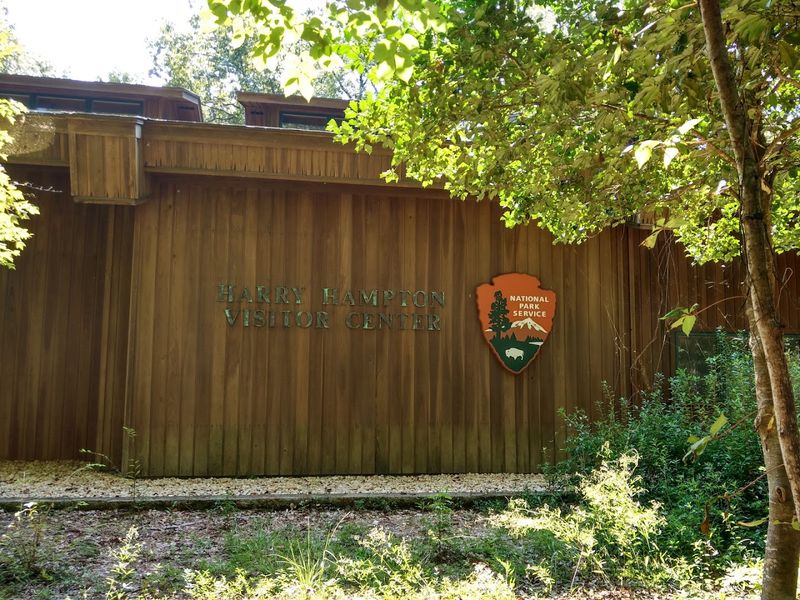
One of the most quietly impressive things about Congaree National Park is that it costs absolutely nothing to enter, making it one of the most accessible national parks in the entire country for families and budget-conscious travelers.
The park sits just 30 minutes southeast of downtown Columbia, South Carolina, which means a spontaneous afternoon visit is entirely realistic without any elaborate planning or long drives.
The roads leading to the park are easy to navigate, parking at the visitor center is free and generally plentiful, and the trail network is well-marked enough that first-time visitors rarely feel lost or overwhelmed.
Dogs are welcome on most trails as long as they are kept on a leash, which makes Congaree a popular destination for pet owners who want to share a genuine outdoor adventure with their four-legged companions.
The park is open year-round, though some trails and water access points may be temporarily closed during periods of flooding or active maintenance work.
For anyone living in or passing through central South Carolina, skipping Congaree would be a decision you would almost certainly regret by the time you got back in the car.