
This South Carolina Park Lets You Dig Ancient Fossils Out Of The Dirt And Take Them Home
In South Carolina, a handful of sand can hide a shark tooth millions of years older than your weekend plans. Give the screen a shake, and suddenly you have a reason to pay very close attention to the dirt.
A dark shape catches your eye, you brush it off, and what looked like a pebble begins to tell a much older story. That possibility makes the search exciting, even before you find anything.
A casual outing can become a fossil hunt you are in no hurry to finish. Your knees may have a different opinion.
Beyond the sand, dark water and cypress trees invite you to explore by boat. Walking paths offer another way to see grounds that once surrounded a working rice plantation, adding a different chapter of history to the afternoon.
This South Carolina park pairs the excitement of finding ancient fossils with the quiet pleasure of paddling through cypress water. You can spend part of your visit searching the screen for a tiny treasure, then follow the water into a setting that gives you a whole new reason to look around.
Treasure Hunting For Fossils You Can Keep
Ask any kid what the best part of Cypress Gardens is, and you will probably hear two words: shark teeth. The park has a fossil dig area where you scoop up sand and gravel, shake it through a screen, and watch for tiny treasures.
The Lowcountry is famous for fossils. Long ago, much of coastal South Carolina sat under a warm, shallow sea full of sharks and other ocean creatures.
Their teeth and bones settled into the mud, and many of them still turn up today. Small shark teeth are the most common finds, usually dark gray or black because minerals replaced the original material over time.
Here is the fun part. What you find, you can usually take home, so bring a small zip bag or an old pill bottle to keep your loot safe.
Kids love comparing finds, and adults often get just as hooked.
A quick tip from experience: look for the shine. Fossil teeth have a smooth, glossy surface and a pointed triangle shape that stands out from plain pebbles.
Patience pays off, so dig slowly and check the screen twice before dumping it. Policies can change, so ask staff at the front desk how the dig works on the day you visit.
A Blackwater Swamp That Looks Like A Mirror
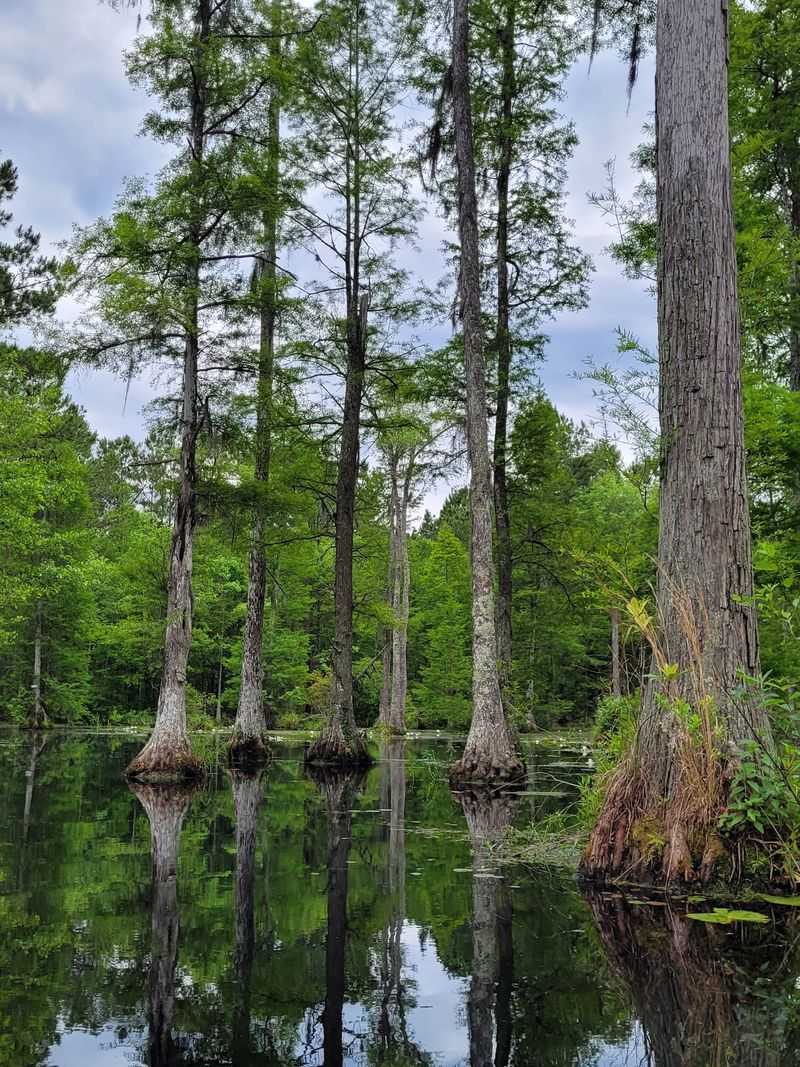
The first time you see the water, you might think someone spilled ink across the forest floor. Cypress Gardens sits around a blackwater swamp, and the dark color comes from tannins, natural chemicals that leak out of fallen leaves, kind of like tea steeping in a cup.
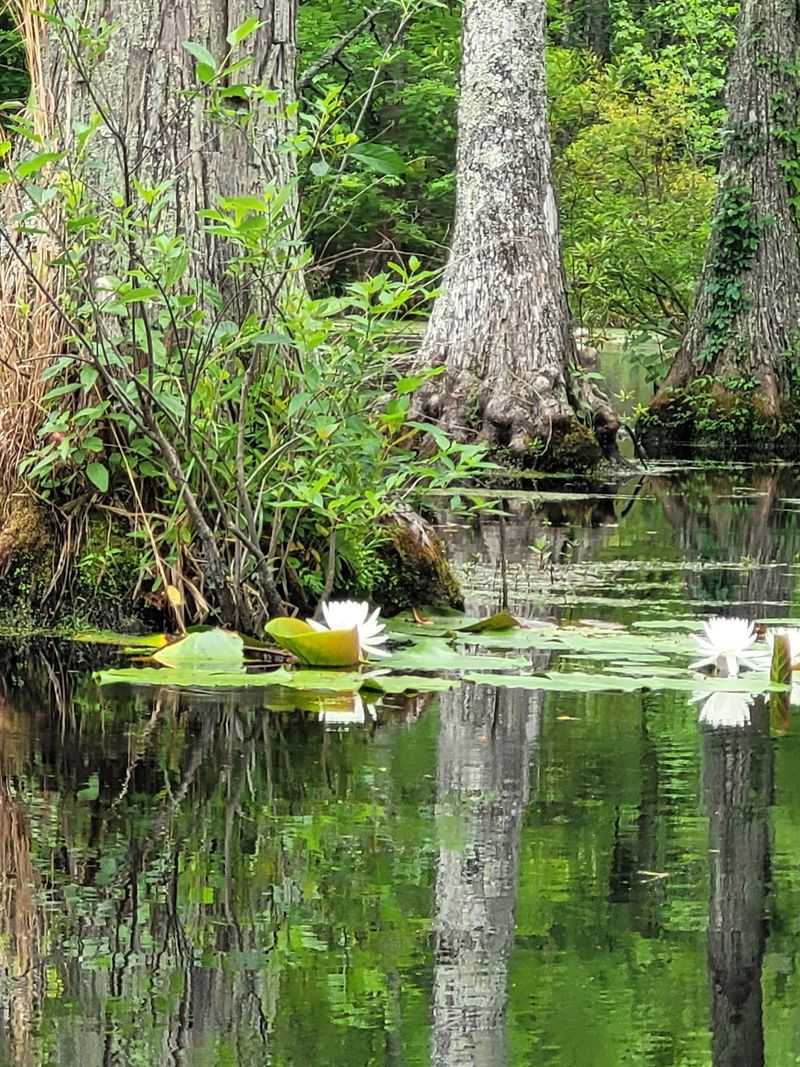
All that dark water creates something magical. On a calm morning, the surface acts like a giant mirror.
Tall bald cypress trees and gray Spanish moss reflect so perfectly that photos can look upside down. Visitors often stop mid-sentence just to stare.
Look closely at the bases of the cypress trees. You will spot knobby wooden bumps poking out of the water called cypress knees.
Scientists still debate exactly what they do, which makes them a fun mystery to talk about while you walk.
The air here feels thick and earthy, with a smell of wet wood and blooming plants. Birds call from the treetops, and frogs croak from somewhere you can never quite find.
It is peaceful, a little spooky, and totally unforgettable.
For the best reflections, arrive early when the wind is still. Midday sun can wash out the colors, so mornings and late afternoons are your photo sweet spots.
Paddle Your Own Boat Through The Trees
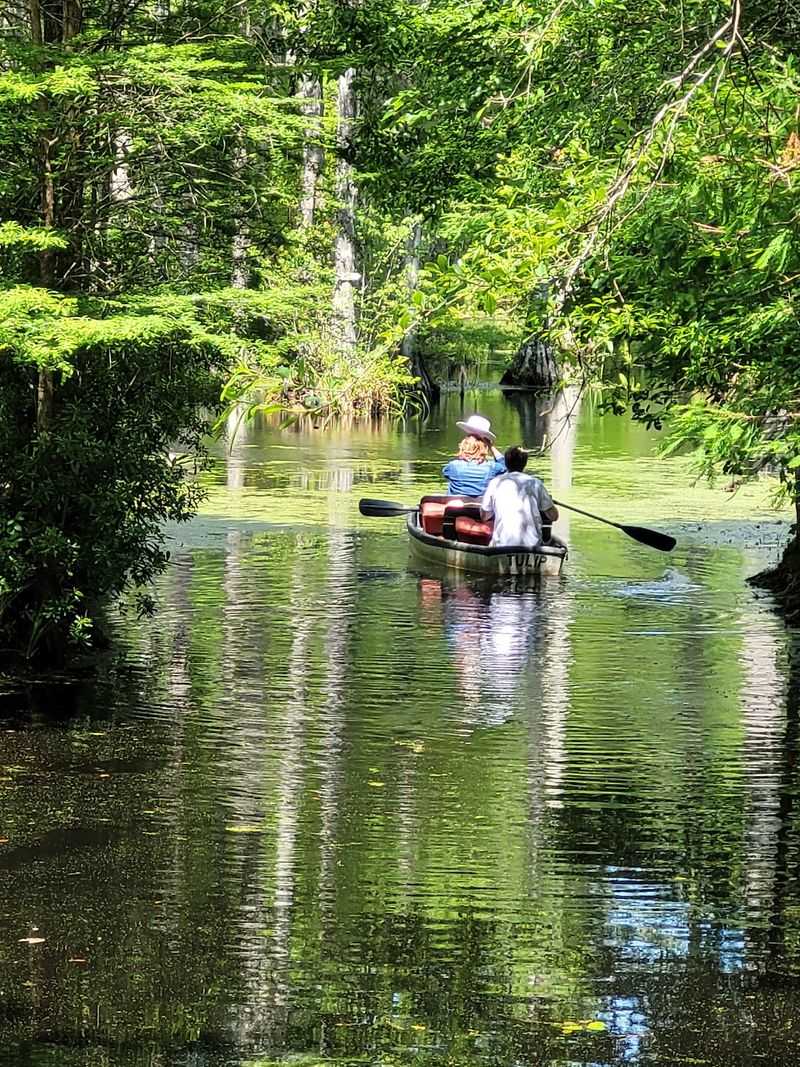
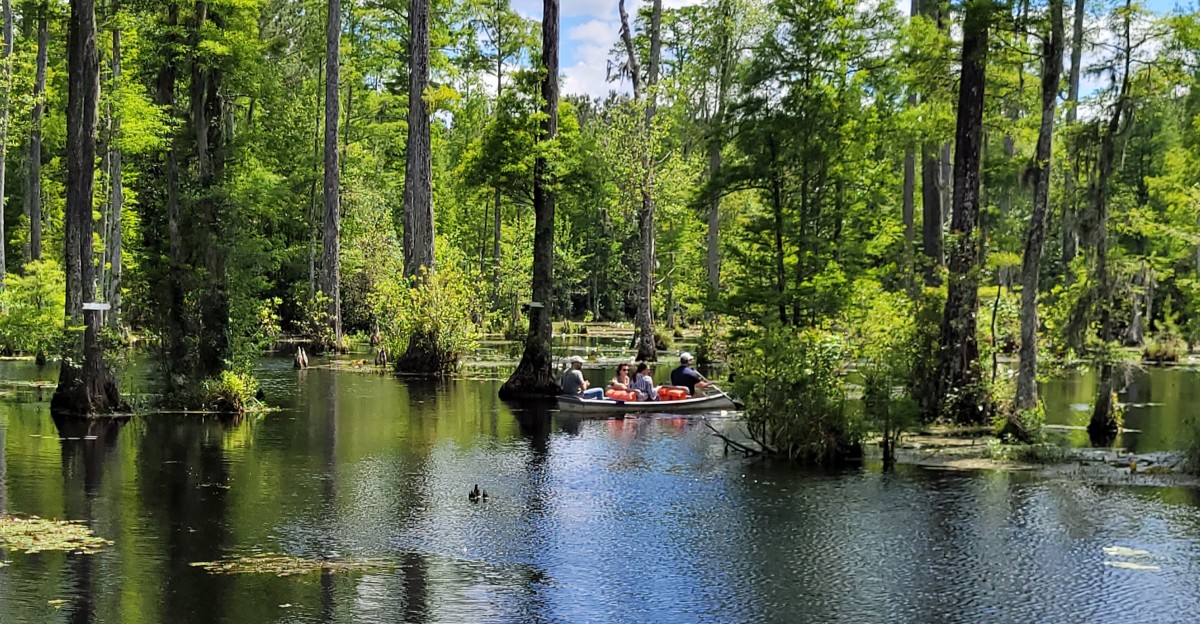
Few parks let you steer your own little boat between ancient trees, but here it is part of the deal. Flat-bottom boats float along marked water trails, and you get to glide right through the heart of the swamp.
Don’t worry if you have never paddled before. The water is calm, shallow in many spots, and the boats are steady.
Most people figure out the rhythm in a few minutes, even if they spin in a circle once or twice first. Laughing at yourself is part of the experience.
Out on the water, everything slows down. You hear the drip of the paddle, the buzz of dragonflies, and the soft splash of a turtle sliding off a log.
Sometimes the only other sound is your own whispering, because shouting just feels wrong in a place this quiet.
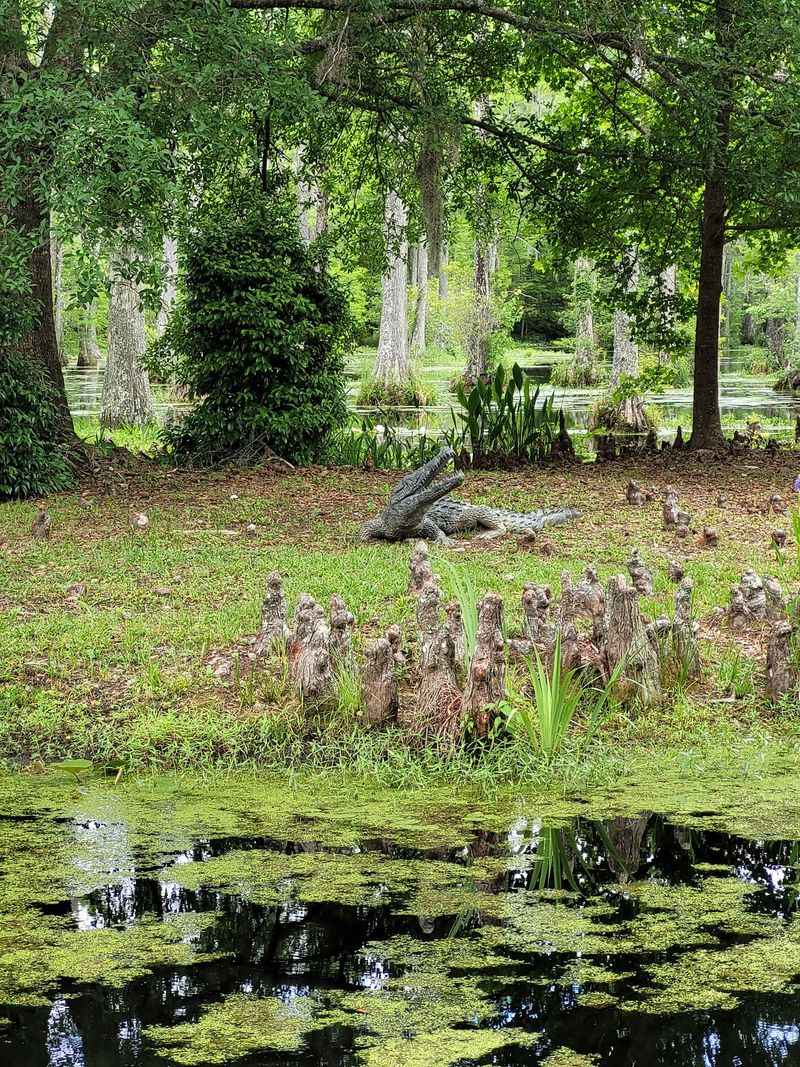
Keep your eyes open for wildlife. Turtles, wading birds, and yes, alligators live here, so keep hands and feet inside the boat.
Alligators usually ignore people, but give them plenty of space.
Boat availability can depend on weather and water levels, so check with staff when you arrive. Wear clothes you don’t mind getting a little damp, and bring sunscreen for the open stretches.
Rice Fields With A Powerful Past
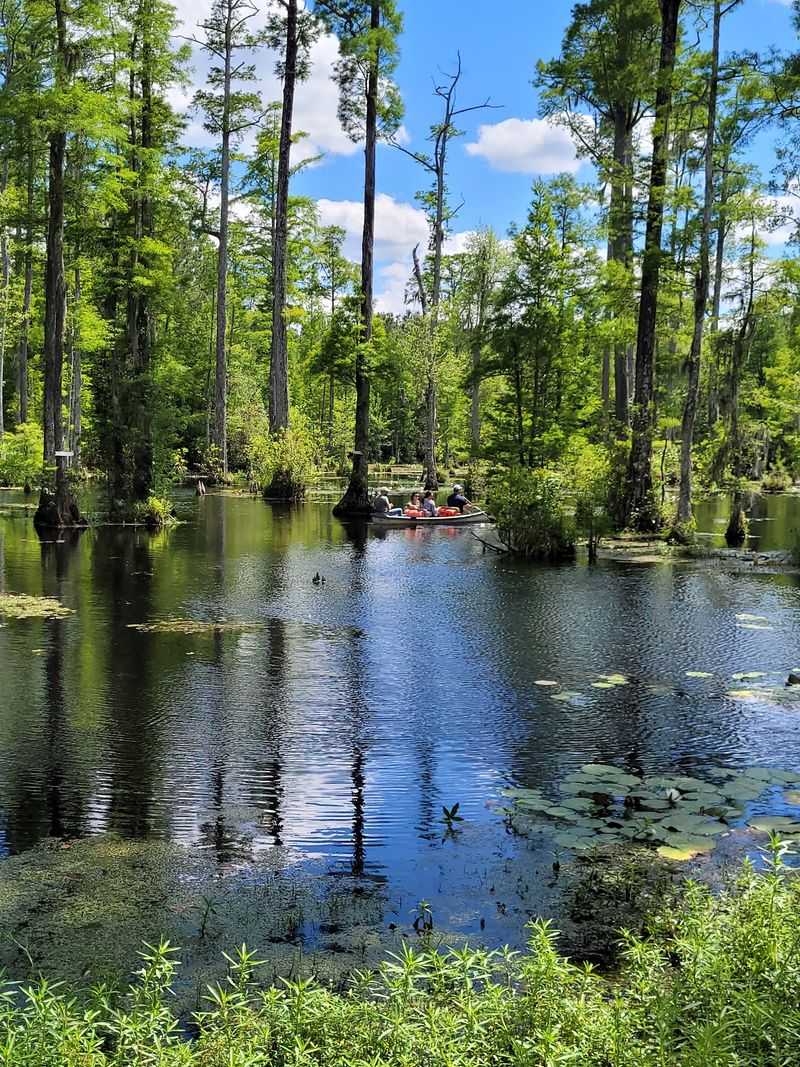
Long before tourists arrived, this swamp had a hard job. The land was once part of Dean Hall Plantation, and the dark water you paddle today was used as a reservoir to flood rice fields along the Cooper River.
Rice made the Lowcountry incredibly rich in the 1700s and 1800s. Carolina Gold rice became famous around the world.
That wealth came at a terrible cost, though, because enslaved Africans did the brutal work of clearing swamps, building dikes, and planting crops in hot, muddy fields.
Many enslaved people came from rice-growing regions of West Africa. Their knowledge and skill shaped how these fields were designed and managed.
When you walk past old earthen banks and canals, you are seeing work done by their hands.
It is worth slowing down and thinking about that history. A beautiful place can also hold painful stories, and both deserve attention.
Parents might use this spot to talk with kids about how the Lowcountry was built and who built it.
Look for signs and exhibits around the park that share pieces of this past. Asking staff questions is a great way to learn more, since they often know details you won’t find anywhere else.
A Rich Couple’s Dream Garden
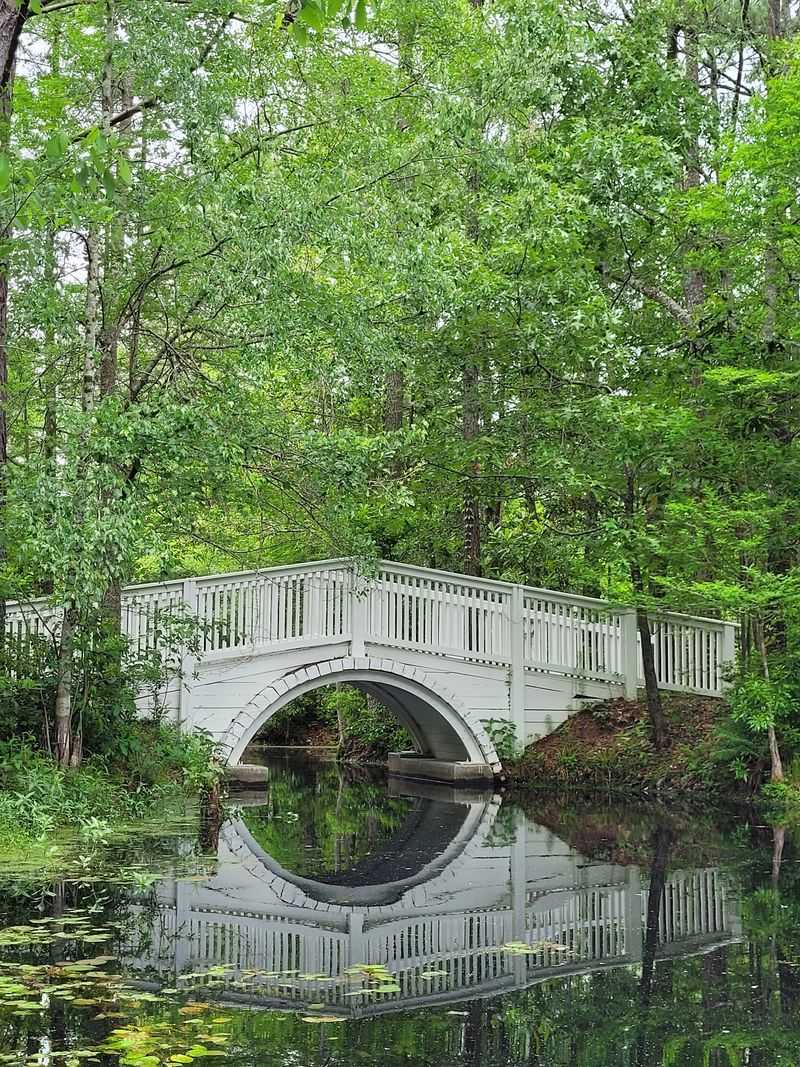
Back in the early 1900s, a businessman named Benjamin Kittredge bought Dean Hall, and he and his family had a big idea. Instead of growing rice, why not turn the old reservoir into a stunning garden?
Workers cleared paths, planted thousands of azaleas, camellias, and other flowering plants, and shaped trails around the water. The garden opened to the public in the 1930s, and visitors came from all over to see blooms reflected in the black water.
Old photos show people in fancy hats rowing boats through clouds of pink flowers.
Fast forward many decades, and the gardens changed hands. The property was given to the City of Charleston for a time and is now run by Berkeley County.
Those changes helped keep the park open so new generations could enjoy it.
Spring is when the Kittredge dream really shines. Azaleas usually explode with color in March and April, though exact timing depends on the weather each year.
Walking the loop during peak bloom feels like stepping into a painting.
Here’s a fun thought to carry along the trail: nearly every flower bed you pass started as somebody’s wild plan to make a working swamp beautiful.
Hollywood Came Calling
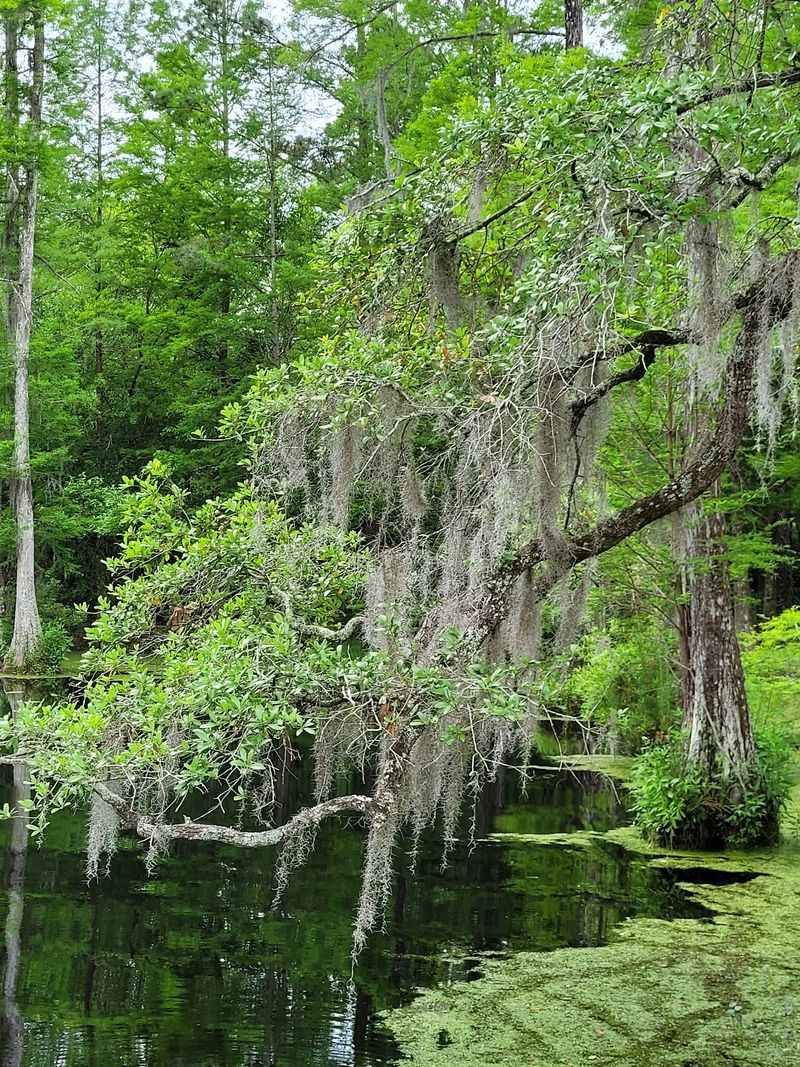
Movie buffs, get ready to squeal. Cypress Gardens has shown up on the big screen more than once, and some scenes may look very familiar.
The most famous example is The Notebook. That dreamy rowboat scene with drifting water and trees all around?
Many fans connect it to this swamp, and people come just to recreate the moment. Other films linked to the park include The Patriot and the cult classic Swamp Thing, which honestly fits the setting perfectly.
It makes sense that filmmakers love this spot. The light filters through moss like a spotlight, the water reflects everything, and there is a timeless look that works for love stories, history dramas, and creepy monster flicks alike.
Want to play director for a day? Bring a friend, hop in a boat, and snap some photos where the stars once floated.
Couples often ask passersby to take a picture of them paddling, and most folks happily help out.
Fun challenge for families: watch one of the movies before your trip, then try to spot familiar views during your visit. Kids get a kick out of pointing at trees and yelling, that was in the movie, even if they are only partly right.
Creepy Crawlies Inside The Swamparium
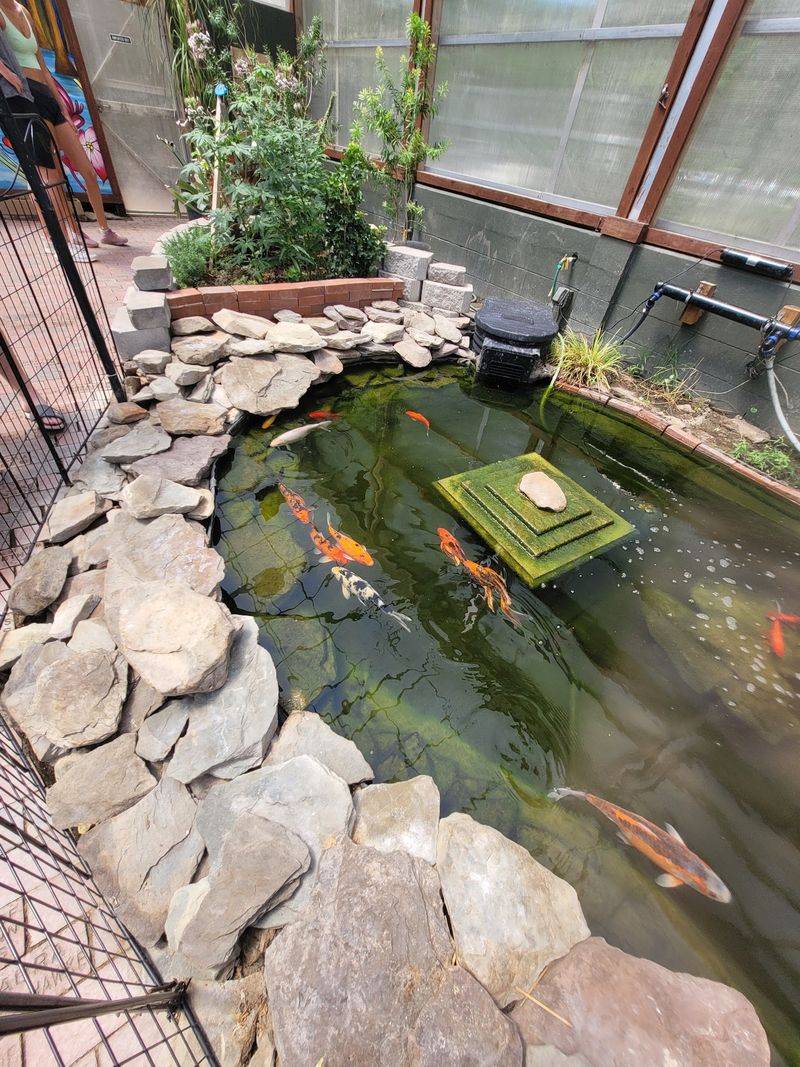
Snakes, gators, turtles, and fish all in one building? That is the Swamparium, and it is a favorite stop for anyone who loves animals that slither, swim, or scuttle.
Inside, tanks and displays show off creatures from swamps and wetlands. You can get nose-to-glass with reptiles and amphibians that would normally hide from you outdoors.
Some animals stay perfectly still, which makes kids wonder if they are real, until one suddenly blinks.
The exhibits help explain how a swamp works. Every animal has a role, from tiny fish that eat bugs to big predators that keep everything balanced.
Learning that makes your walk outside much more exciting, because you start recognizing what you see.
It is also a great escape when the weather turns. Lowcountry summers get steamy, and afternoon thunderstorms pop up fast.
Ducking inside to meet a sleepy snake beats standing under a tree in the rain.
Exhibits and animals can change over time, so you may see something different from what a friend saw last year. Take a few minutes to read the signs.
You might learn which local snakes are harmless and which ones to avoid on the trail, handy knowledge for any outdoor adventure.
Butterflies Landing On Your Shoulder
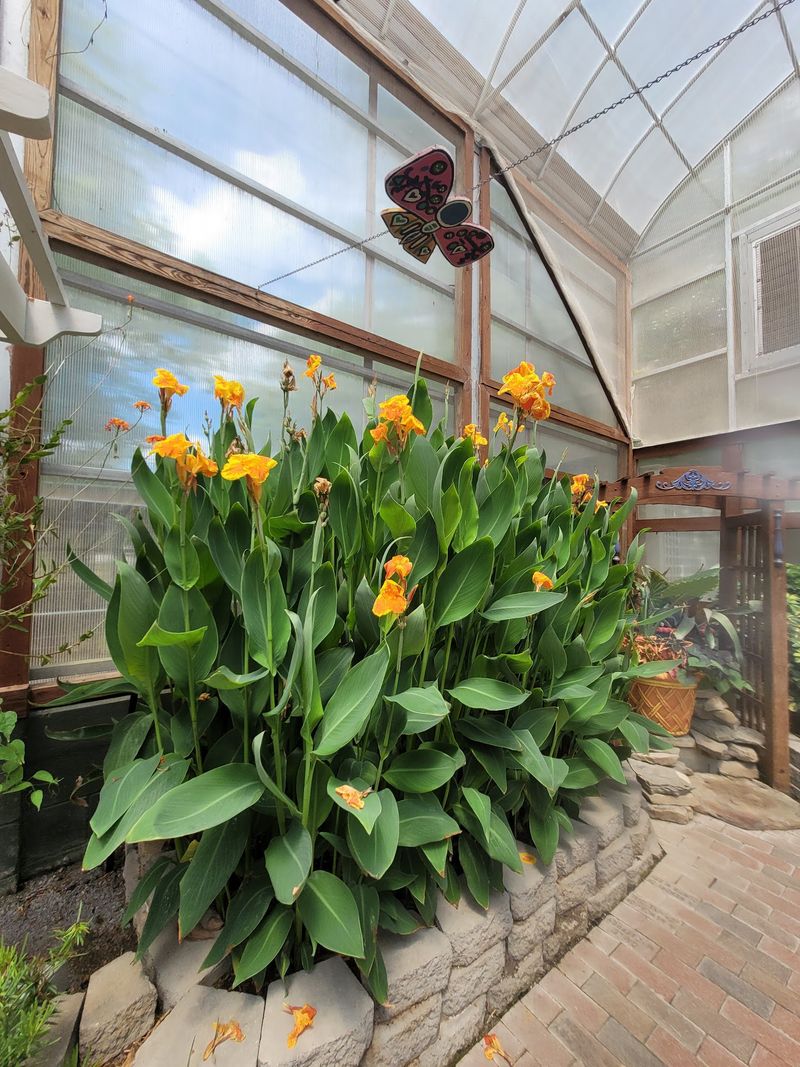
Stand still for a minute inside the butterfly house, and you might get a surprise visitor. Bright wings flutter past your face, and every so often one lands on a sleeve or hat like it owns the place.
The butterfly house is a warm, plant-filled space where butterflies fly freely. Colorful flowers provide nectar, and you may spot butterflies in different life stages, which is a great chance to see how a caterpillar becomes something so delicate.
Bright clothing seems to attract attention, so wearing red, orange, or yellow could boost your odds of a landing. Move slowly and keep your voice soft.
Grabbing at them is a no-go, since their wings are fragile and easily damaged.
Photographers, this is your playground. Butterflies resting on flowers make easy subjects, especially in the morning when they are a bit slower.
Turn off your flash and get close with patience.
Before leaving, do a quick check of your back and shoulders. Staff members sometimes remind visitors that butterflies like to hitch rides out the door.
Nobody wants to accidentally kidnap a monarch. It is a sweet, calm stop that balances out the bolder thrills of swamp boats and fossil hunting.
Bouncing Back From Big Storms
Hurricanes and floods have tested this park hard, and somehow it keeps coming back. Its comeback story is one of the most inspiring parts of a visit.
In 1989, Hurricane Hugo slammed into South Carolina and caused heavy damage across the Lowcountry, including at Cypress Gardens. Trees fell, paths were wrecked, and recovery took serious time and effort.
Later, flooding in 2015 hit the park again, forcing more repairs and a temporary closure.
Each time, people worked to restore the gardens. Trails were cleared, buildings fixed, and plants replaced.
Today, many visitors have no idea how much damage once happened, which says a lot about the hard work behind the scenes.
Bald cypress trees are true survivors in this story. Their wide bases and deep roots help them stay standing in wet ground and strong winds.
Some cypress trees across the South have lived for hundreds of years, shrugging off storms that knock over other trees.
Keep this history in mind as you walk. Spotting a leaning trunk or a patched bridge feels different when you know the full story.
It is a reminder that wild places need care, and visiting helps support the people who keep them going.
Smart Tips Before You Pull Into The Parking Lot
A little planning turns a good day here into a great one. Cypress Gardens sits about 25 miles north of downtown Charleston near Moncks Corner, so it makes an easy half-day trip.
Hours generally run during the daytime, often from around 9 in the morning to 5 in the evening, but days open and seasonal schedules can change. Check the official Berkeley County website before you go.
Admission is usually modest, roughly in the range of 10 to 20 dollars for adults, with lower prices for kids and seniors, though exact rates may differ.
Parking is free on site, and the lot is close to the entrance. Main paths near the visitor buildings are fairly easy to manage, while some swamp trails are dirt, gravel, or uneven, so wheelchair and stroller users may find certain areas tricky.
Calling ahead about accessibility is a wise move.
Mosquitoes love this place as much as you will, so bring bug spray. Comfortable shoes, water, sunscreen, and a hat make summer visits much more pleasant.
Spring offers flowers and mild weather, while fall brings cooler air and fewer crowds. Weekday mornings tend to be quietest, giving you the swamp, the boats, and the best fossil screens almost to yourself.