
This South Dakota Reptile Garden Is One Of The Strangest Animal Stops In The Country
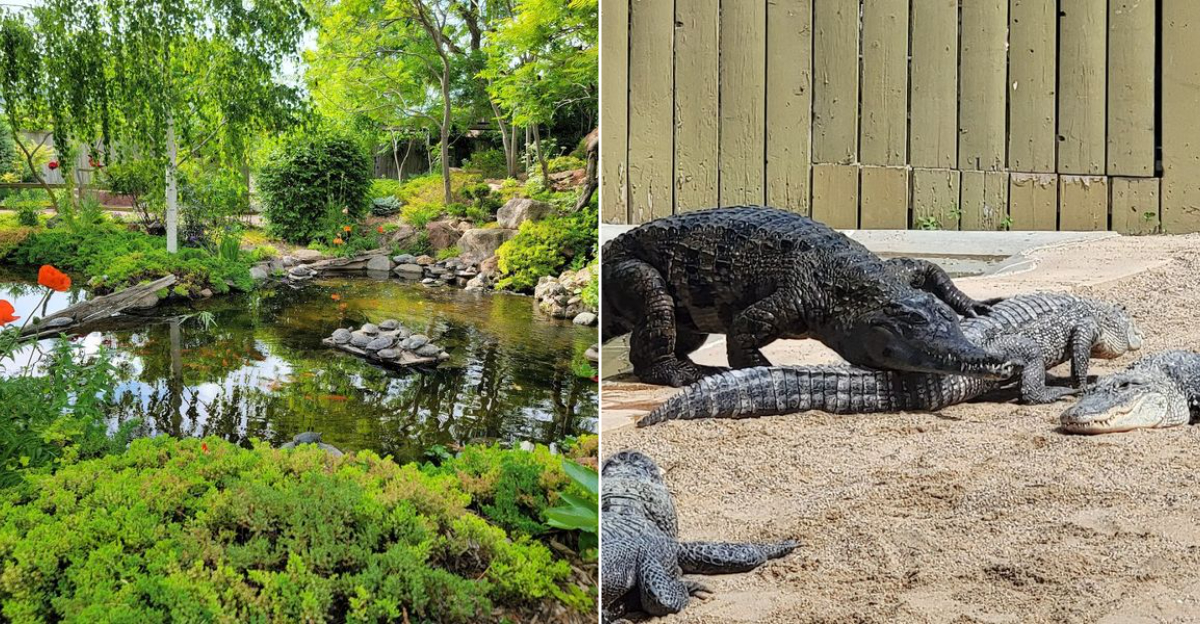
That slow, creeping realization, you’re not in control here, that’s the vibe the second you pull in. Except instead of dinosaurs, it’s a 16-foot crocodile named Maniac, sitting still behind glass, completely unbothered.
This wasn’t even part of the plan. Just a random roadside stop during a Black Hills drive in South Dakota.
Somehow, it stole the entire trip. This place isn’t your average attraction.
It’s the largest reptile zoo on the planet, holding a Guinness World Records title more than once. And it’s been pulling people in since 1937, when things were… already a little wild.
But it’s not just reptiles. There are massive gardens, unexpected animals, and moments that feel completely surreal.
One minute you’re staring down a crocodile, the next you’re somewhere totally different. It’s strange, chaotic, and way better than it has any right to be.
And yeah, your jaw will drop.
The Guinness World Record Reptile Collection
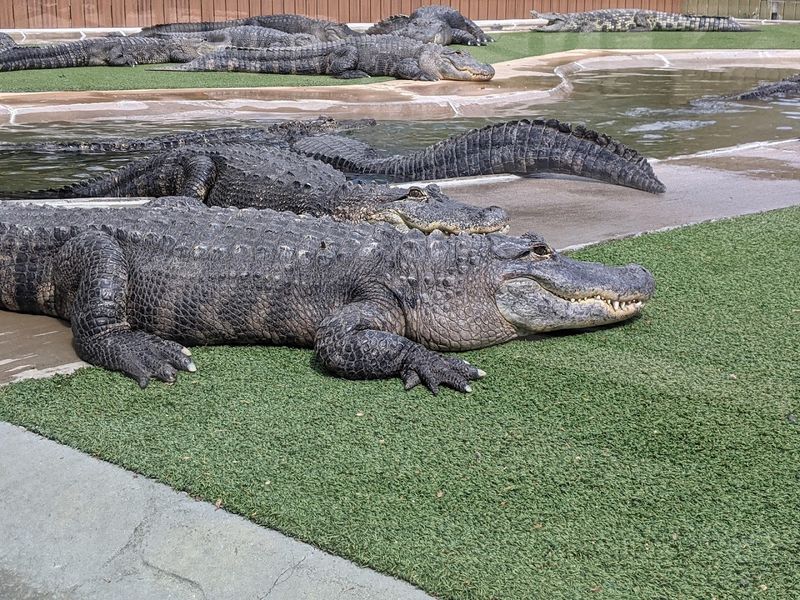
Walking through the main reptile building felt like stepping onto a movie set where the creatures were not CGI. Pythons as thick as my thigh were coiled behind glass, cobras swayed in their enclosures, and black mambas watched me with an unsettling calm that made me walk just a little faster.
Reptile Gardens earned its Guinness World Record title for a very good reason.
The collection spans an almost absurd range of species. From rattlesnakes native to the South Dakota plains to exotic vipers found deep in rainforests, every display felt like a biology lesson I actually wanted to attend.
Little placards explained venom types, hunting habits, and geographic ranges in ways that were surprisingly easy to absorb. I caught myself reading every single one.
What really got me was the sheer scale of it all. This is not a small-town snake exhibit with three tanks and a sad tortoise.
The park has been building this collection since 1937, when founder Earl Brockelsby started displaying local snakes to curious travelers passing through the Black Hills. That founding energy, part showmanship, part genuine passion for reptiles, still pulses through every corner of this place.
Reptile Gardens does not just show you animals. It makes you genuinely curious about creatures you probably spent your whole life avoiding.
That shift in perspective alone made the stop completely worth it.
The Sky Dome Tropical Rainforest Experience
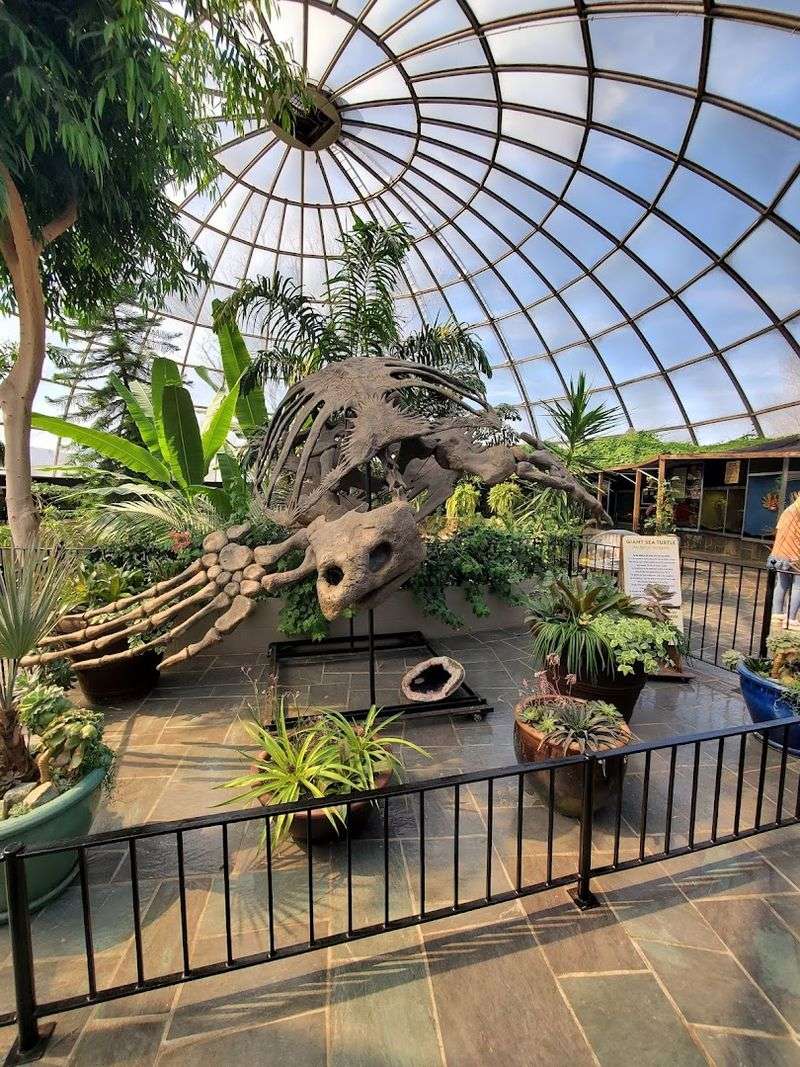
Nothing quite prepares you for stepping through a door in the middle of South Dakota and suddenly being surrounded by a tropical rainforest.
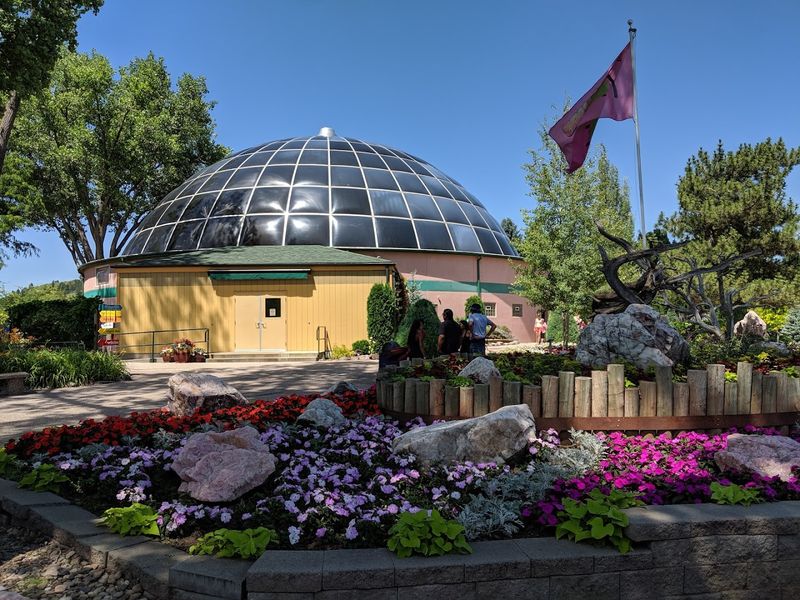
The Sky Dome at Reptile Gardens, located at 8955 US-16 in Rapid City, is a 60-foot-high black plexiglass dome that creates a warm, humid, entirely different world from the dry Black Hills air outside. It was one of the first tropical rainforest exhibits of its kind in all of America.
Free-roaming lizards skittered across the pathways without a care. Colorful frogs clung to broad tropical leaves overhead.
Birds swooped past my head at least twice, and I am not ashamed to admit I ducked both times.
The exotic plant life was so dense and lush that it genuinely felt like I had been teleported to another continent entirely.
The mezzanine level brought the intensity up considerably. Pythons, cobras, mambas, and rattlesnakes were displayed in careful enclosures lining the upper walkway, creating this surreal contrast between paradise below and danger above.
The lower level housed crocodilians, amphibians, and a Big Bugs exhibit featuring scorpions, cockroaches, and spiders that made several visitors near me audibly gasp. The Sky Dome is not just an exhibit.
It is a full sensory experience that somehow manages to be beautiful, educational, and slightly terrifying all at the same time. Honestly, I could have spent an entire afternoon just in that dome.
Maniac The Giant Saltwater Crocodile
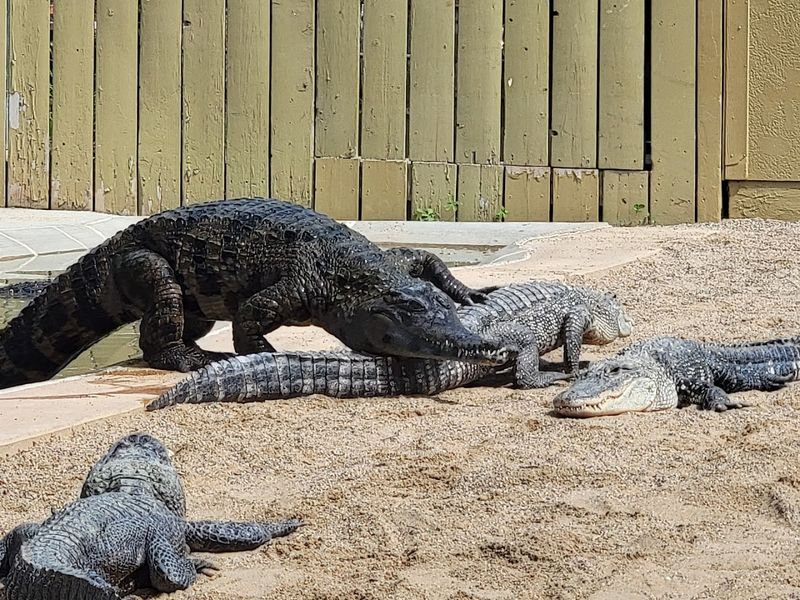
Let me be very clear about something. I thought I understood what a large crocodile looked like before visiting Reptile Gardens.
I was wrong. Maniac, the park’s giant saltwater crocodile, is nearly 16 feet long and weighs somewhere between 1,250 and 1,300 pounds.
Standing at his enclosure, I felt genuinely humbled in a way that very few museum exhibits have ever managed to achieve.
Saltwater crocodiles are the largest living reptiles on Earth, and Maniac is considered one of the biggest in the entire Western Hemisphere. He moved with this eerie, slow-motion confidence that communicated exactly how little he needed to rush for anything.
The glass between us suddenly felt very thin, even though I knew logically it was more than adequate. Logic does not always win when Maniac is staring at you.
What made the encounter even more interesting was the interpretive information surrounding his enclosure. Learning about saltwater crocodile behavior, their prehistoric lineage, and their jaw strength gave context to the raw physical presence in front of me.
These animals have been essentially unchanged for millions of years, and it shows in every detail of their design. Maniac is not a zoo novelty.
He is a living reminder that nature has already perfected some of its blueprints. Seeing him in person rearranges your understanding of what the word powerful actually means.
Giant Aldabra Tortoises You Can Actually Pet
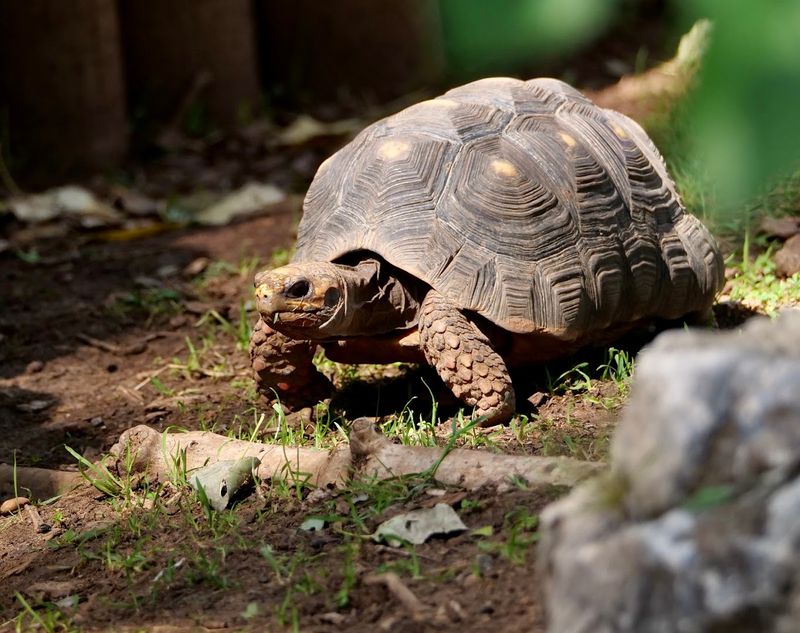
Somewhere between the cobras and the crocodile, I found myself sitting on a low wooden fence watching giant Aldabra tortoises lumber around their enclosure with the energy of creatures who have absolutely nowhere to be.
These tortoises are massive, ancient-looking, and surprisingly interactive. And yes, you can pet them, which is an experience that immediately resets whatever stress you walked in with.
Running my hand along one tortoise’s shell felt like touching a piece of living history. Aldabra tortoises are among the largest land tortoises in the world, native to the Aldabra Atoll in the Indian Ocean.
The park was also once home to a famous Galapagos tortoise named Methuselah, who lived to be 130 years old. That kind of longevity puts a lot of things into perspective rather quickly.
There is something genuinely grounding about interacting with an animal that has been on this planet far longer than you have, and will likely outlive you by decades.
The tortoise I was petting seemed completely unbothered by my presence, which I found oddly comforting. They move slowly, eat steadily, and exist in this calm, unhurried way that feels almost philosophical.
Watching them made me want to slow down for the rest of the day.
The giant tortoise area is one of those unexpected moments that sneaks up on you and quietly becomes the most memorable part of the whole visit.
The Stunning Botanical Gardens And Tortuga Falls
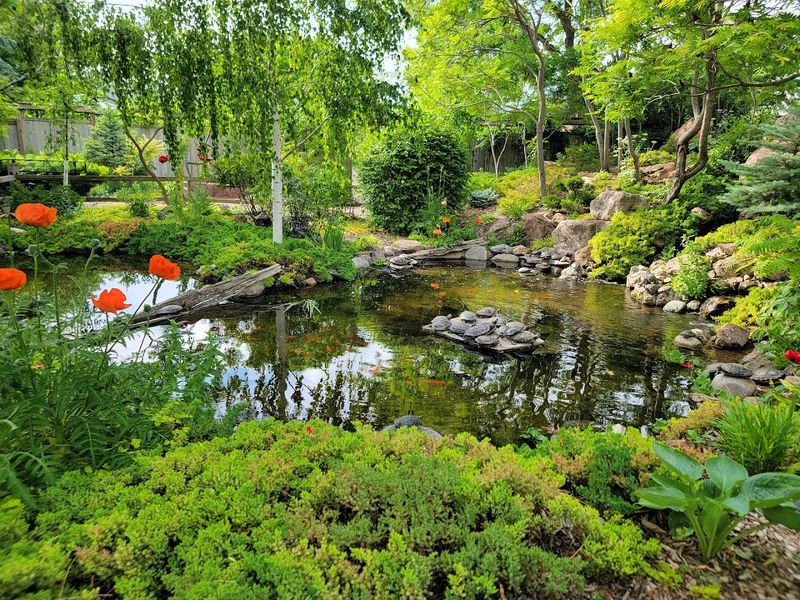
No one mentioned the flowers. I showed up for reptiles and ended up wandering through one of the most beautiful gardens I’ve ever seen at any attraction.
Reptile Gardens maintains acres of botanical gardens featuring over 40,000 flowering plants cultivated every single year. Walking through it after the intensity of the reptile exhibits felt like the world’s most perfectly timed palate cleanser.
Tortuga Falls was a genuine showstopper. The waterfall feature sits nestled among carefully arranged plantings and creates this peaceful, almost meditative corner of the park that felt completely separate from everything else around it.
I sat nearby for a solid ten minutes just listening to the water and watching hummingbirds dart between blooms. It was not what I expected from a reptile zoo, and that surprise made it even better.
The Living Wall was another feature that stopped me mid-stride. A vertical garden installation covered in dense, layered greenery, it looked like something pulled directly from a design magazine.
The botanical team at Reptile Gardens clearly takes this side of the park just as seriously as the animal collection. The contrast between the wild, primal energy of the reptile exhibits and the carefully tended beauty of the gardens creates a dynamic that keeps the entire visit feeling fresh and varied.
Reptile Gardens is genuinely two experiences packed into one extraordinary destination.
Cheyenne The Resident Bald Eagle
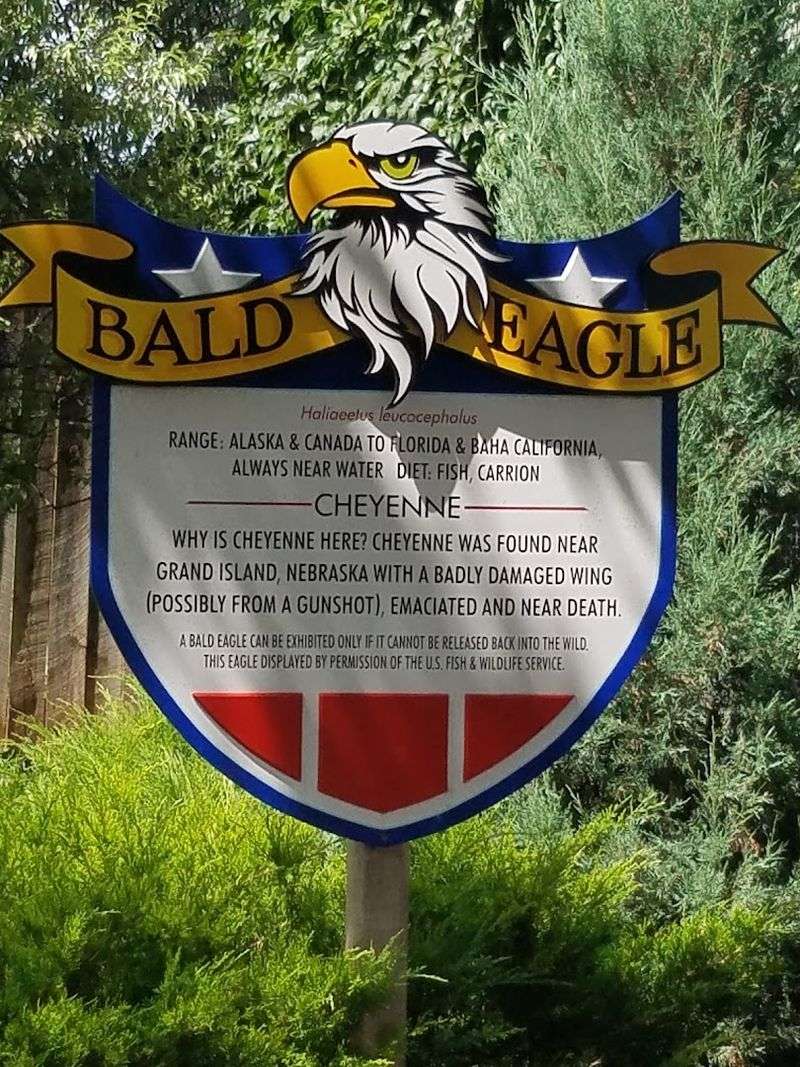
Meeting Cheyenne was one of those moments that made me stop scrolling through my camera roll and just be present. Cheyenne is a bald eagle who lives permanently at Reptile Gardens due to a wing injury that prevents her from surviving in the wild.
She is magnificent in a way that photographs honestly cannot fully capture. Standing near her enclosure, I felt an unexpected surge of genuine admiration.
Bald eagles are already impressive birds by any measure. Their wingspan can reach over seven feet, and up close, the contrast between that stark white head and deep brown body is even more striking than it appears in photos.
Cheyenne carried herself with a regal stillness that felt almost intentional, like she knew exactly how impressive she was and saw no need to prove it further.
Her permanent residency at the park gives her story an added layer of meaning. She represents the kind of animal care that Reptile Gardens genuinely prioritizes, providing a high-quality, enriching environment for animals that cannot return to the wild.
Learning about her background made me appreciate the park’s role beyond entertainment. Reptile Gardens functions as a sanctuary for animals like Cheyenne, giving them a safe, well-maintained home while also educating thousands of visitors about wildlife conservation.
Seeing her perched calmly while visitors gathered quietly nearby was a genuinely moving way to spend a few minutes of an already remarkable day.
Spring Creek Gulch Wild West Area And Gemstone Sluicing
Reptile Gardens saved one last surprise for the back corner of the park, and I almost missed it entirely. Spring Creek Gulch is a Wild West-themed area that feels like a completely different world tucked inside an already wonderfully strange destination.
Rustic wooden storefronts, old-timey signage, and a general frontier atmosphere made me feel like I had wandered onto a movie set between crocodile encounters.
The gemstone sluicing station was the unexpected highlight of this section. You scoop a bag of rough material into a wooden sluice trough, run water over it, and start sorting through what washes out.
I found amethyst, quartz, and a few stones I could not immediately identify, which made me feel like an amateur geologist having the time of my life. It is simple, tactile, and genuinely satisfying in a way that surprised me completely.
The 3D safari experience in this area added another layer of fun that I was not expecting from a reptile park. The Wild West theme ties the whole section together with a playful energy that balances nicely against the more educational and intense parts of the main exhibits.
Spring Creek Gulch is proof that Reptile Gardens understands how to keep a visit dynamic from start to finish. If you ever find yourself on US-16 between Rapid City and Mount Rushmore, do yourself a favor and block out a full half-day for this place.
You will absolutely need it.