
This Storybook Ohio Hiking Trail Feels Like A Fairytale In Springtime
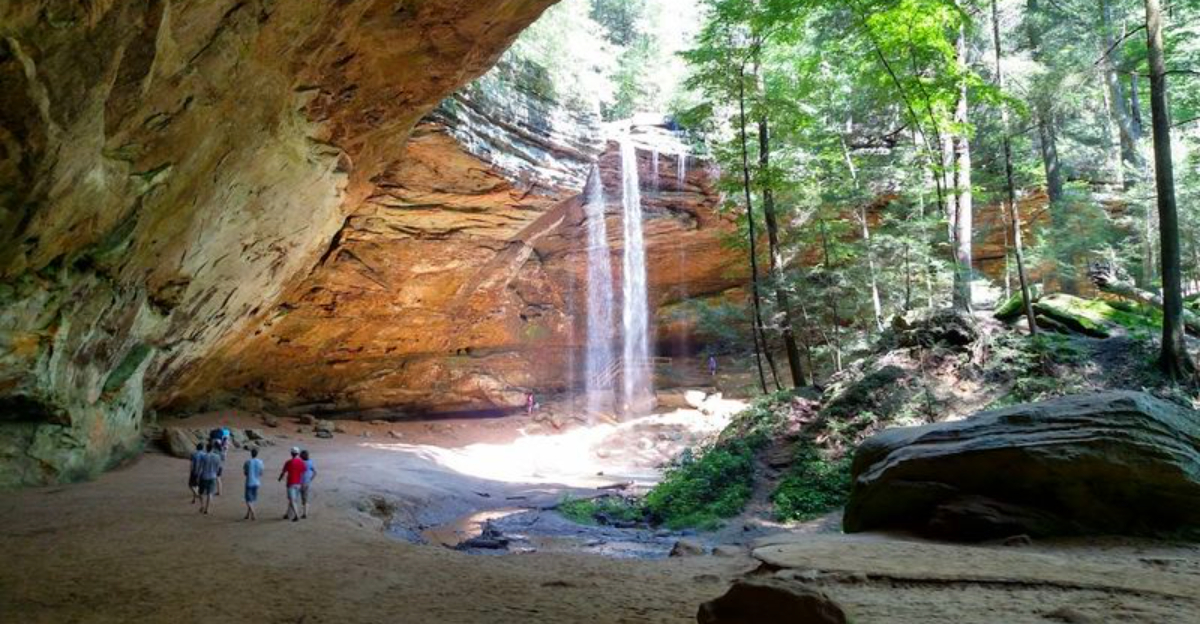
A short trail can feel surprisingly grand when the forest decides to go full storybook. In Ohio, this spring walk leads through sandstone walls, soft green ferns, a quiet creek, and the kind of cave reveal that makes you slow down before you even realize you have stopped.
This is the spring hike your camera has been waiting for. The path may be easy, but the scenery shows up like it has something to prove.
The real beauty is how quickly the place pulls you in. Water rushes harder after spring rain, the gorge feels cool and alive, and every turn adds another detail that makes a simple walk feel like a small Hocking Hills adventure.
The First Steps Into the Gorge
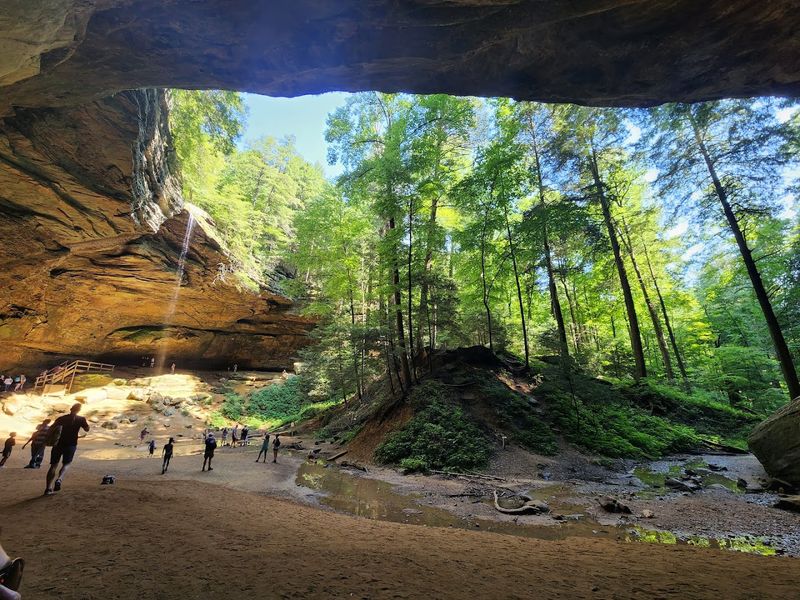
Most hikes make you work a little before the scenery shows up, but Ash Cave clearly missed that memo.
The moment you leave the trailhead parking lot, the gorge starts doing the heavy lifting, with sandstone walls rising around the path and a quiet creek running beside you like it has its own tiny soundtrack.
The lower trail is paved, smooth, and flat, which makes the walk feel easy from the start.
That means you can actually enjoy the mossy rock walls, bright spring ferns, and cool shaded air instead of spending the whole time staring at your shoes and hoping for the best.
In spring, the whole gorge feels especially alive. Fresh greenery clings to the stone, the creek sounds fuller after rain, and the cooler air makes the short walk feel like a small escape from the rest of the day.
Families with strollers, older visitors, and first-time hikers can all handle this lower stretch comfortably, which is part of what makes the trail so easy to recommend.
It does not rush you, and honestly, the entrance alone feels worth the drive before the cave even appears.
You can start your visit to Ash Cave from the trailhead parking area at 26400 OH-56, South Bloomingville, OH 43152.
The Massive Horseshoe Cave Reveal
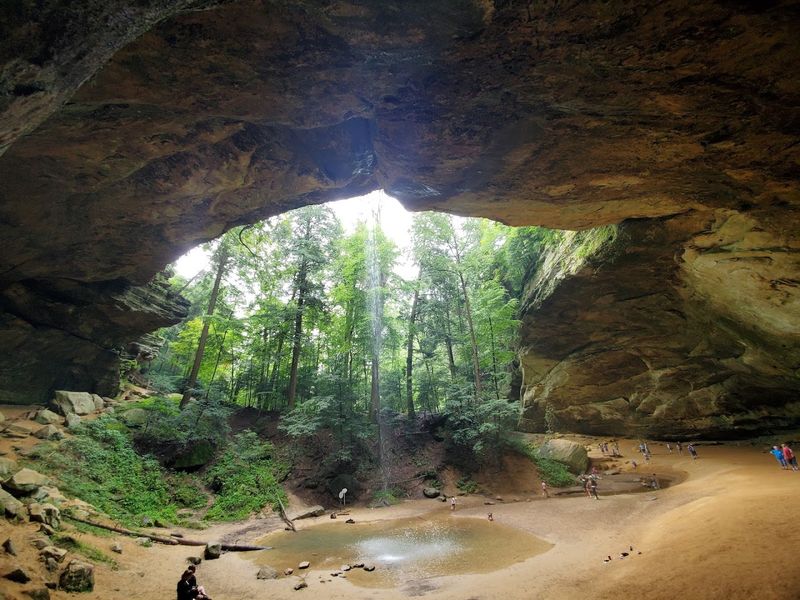
Nothing quite prepares you for the moment the cave comes into full view around a bend in the trail.
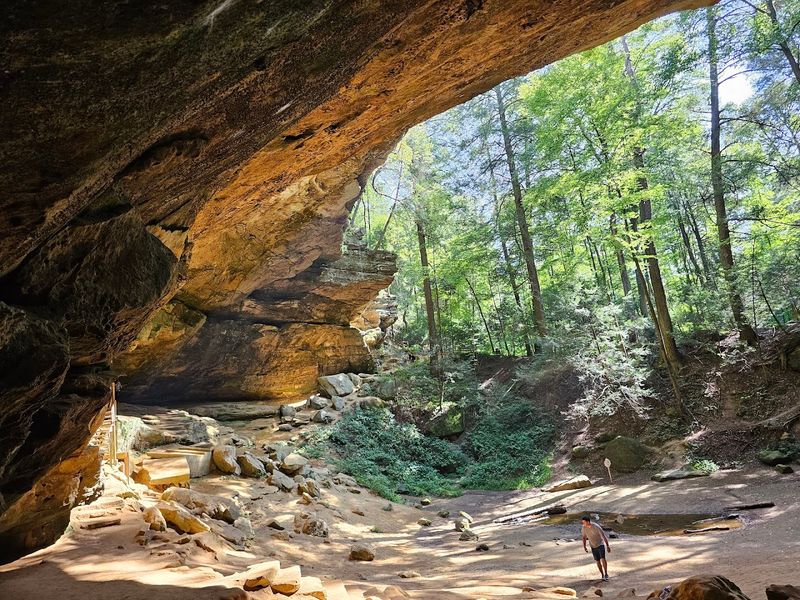
Ash Cave is one of the largest recess caves east of the Mississippi River, and that fact hits differently when you are actually standing beneath its enormous overhang.
The ceiling arches nearly a hundred feet overhead, and the cave stretches roughly seven hundred feet across in a sweeping horseshoe shape that frames a natural stage-like floor of compacted sandy earth.
Visitors instinctively go quiet for a moment, not out of obligation but because the scale of it genuinely takes the words right out of you.
The back wall curves inward and upward, streaked with mineral deposits in shades of rust, gray, and charcoal that tell millions of years of geological story.
Children tend to sprint the last few yards once the cave comes into sight, which is honestly the correct reaction.
From inside the overhang, looking back out at the gorge framed by spring foliage is its own separate reward.
The Seasonal Waterfall at the Center
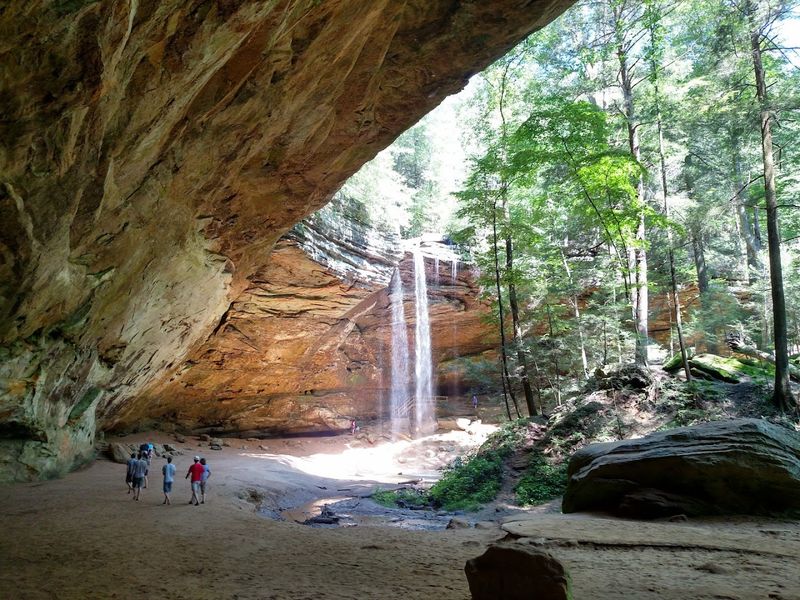
Waterfalls have a way of making everything around them feel cinematic, and the one inside Ash Cave earns that effect without any effort.
Fed by rainwater and snowmelt, the falls drop from the rim of the cave down to the sandy floor below, creating a fine mist that drifts across the interior on breezy spring days.
After heavy spring rains, the flow becomes genuinely dramatic, a white ribbon of water cutting through the shadowed cave interior with real force and sound.
In drier stretches, the falls thin to a delicate trickle that catches whatever light filters through the gorge, turning it into something that looks almost decorative.
Winter visitors sometimes find a towering ice cone formed at the base of the falls, which is its own spectacular version of the same feature.
Spring, though, tends to offer the most consistent and photogenic flow, especially in April and May when rainfall keeps the upper rim well saturated.
Positioning yourself at the cave floor and looking straight up toward the falls is the angle that most cameras struggle to fully capture.
The Acoustic Magic Under the Overhang
Sandstone caves have a reputation for interesting acoustics, but Ash Cave takes that quality to a surprisingly moving level.
The curved ceiling and hard rock walls create a natural amplification effect that catches even quiet sounds and bounces them around the interior in a way that feels almost theatrical.
Clapping hands, speaking in a normal voice, or humming a note produces a resonance that makes the space feel alive rather than hollow.
Visitors have been known to break into spontaneous song under the overhang, and the results reportedly stop nearby hikers in their tracks.
One account from the trail describes a group of singers whose voices carried so beautifully through the cave that nobody ever saw who was performing, only heard the music drifting through the gorge.
Even without planned performances, the ambient sounds of the waterfall and the wind moving through the gorge create a constant, layered audio backdrop that feels nothing like ordinary outdoor silence.
Bring a friend with a good singing voice, or just speak softly and listen to the cave answer back in its own unhurried way.
Spring Wildflowers and Forest Floor Details
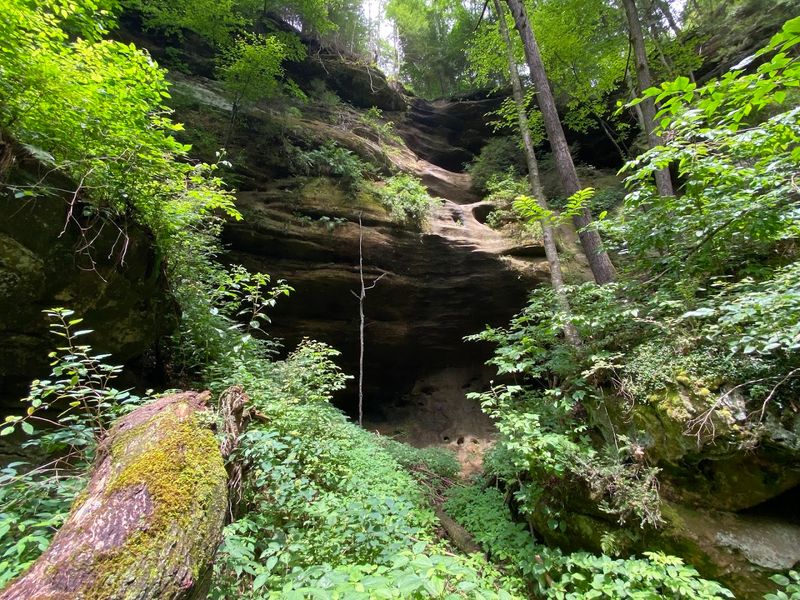
The gorge trail in spring is not just about the cave at the end; the journey through the forest is its own quiet spectacle worth slowing down for.
Trilliums, Virginia bluebells, and wild geraniums appear along the trail edges in April and May, tucked between exposed sandstone roots and mossy boulders in clusters that look almost deliberately arranged.
The ferns deserve their own mention because they carpet the gorge floor in a density that turns the whole path into something lush and almost otherworldly.
Overhead, the canopy transitions from bare branches to full leaf cover over the course of spring, shifting the light quality on the trail from bright and open to dappled and soft.
Birdsong fills the air from early morning onward, with wood thrushes, warblers, and red-eyed vireos particularly active during the spring migration period.
The combination of running water, fresh green growth, and sandstone geology creates a layered sensory experience that photographs struggle to fully translate.
Early morning visits in May offer the best wildflower viewing before foot traffic concentrates along the main path later in the day.
Two Trail Options for Different Energy Levels
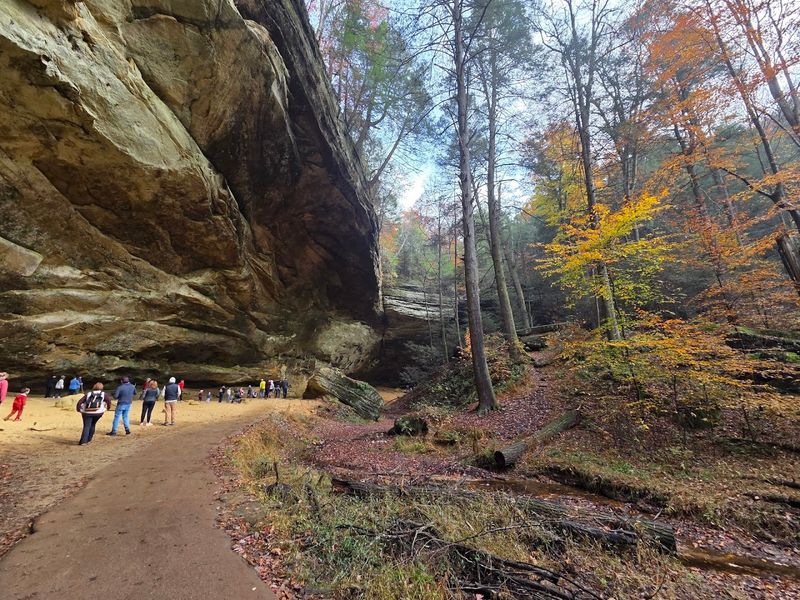
Not every hiking destination offers a built-in choice between a gentle stroll and a genuine workout, but Ash Cave manages both without sending the two groups to completely different parks.
The lower gorge trail is paved, flat, and roughly a quarter mile from the parking area to the cave, making it comfortable for strollers, wheelchairs with assistance, and anyone who simply wants a relaxed walk through beautiful scenery.
The upper rim trail is a different story entirely, involving a series of staircases that climb the gorge wall and follow the ridge above the cave before looping back down to the trailhead.
That upper route rewards the extra effort with elevated views over the gorge canopy and a perspective on the cave from above that most visitors never see.
The out-and-back option along the lower trail is the smarter choice for families with young children or anyone watching their knees.
Combining both routes into a loop gives you the full experience of the site, from the cave floor looking up to the rim looking down.
Either way, the total distance stays manageable enough to leave energy for exploring other nearby trails in the area.
What to Know Before You Go
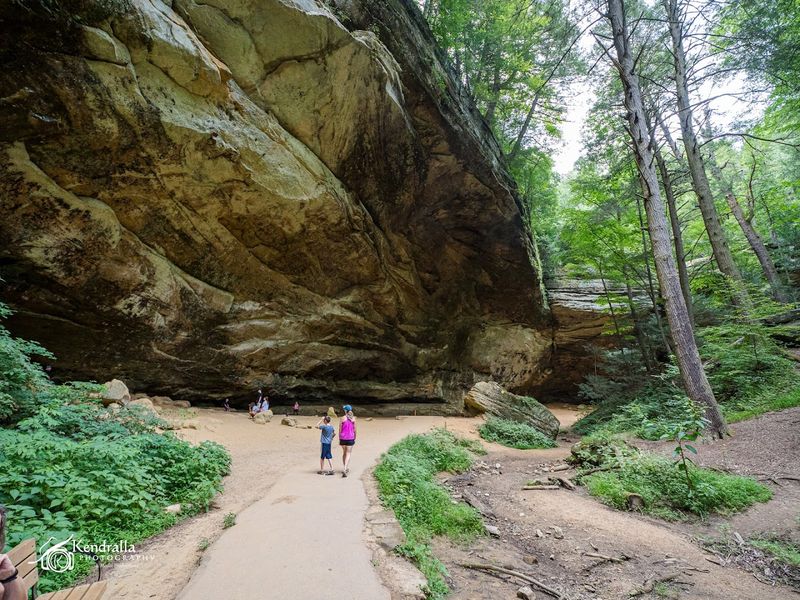
A little planning makes the difference between a smooth visit and a frustrating one, especially at a spot this popular.
Hocking Hills State Park trails and picnic areas are generally open from one-half hour before sunrise to one-half hour after sunset, so early morning arrivals get the quietest conditions and the best parking options near the trailhead.
Weekend afternoons draw the largest crowds, particularly on sunny spring weekends when the trail can feel noticeably busy near the cave.
Weekday mornings offer a noticeably calmer experience, with fewer people on the path and more room to linger at the cave without jostling for a good viewpoint.
The parking area is sizable and generally well-organized, though it fills quickly on peak days, so arriving before 9 AM is a reliable strategy.
Restroom availability can change, and ODNR has noted that the restrooms by the Ash Cave shelter house are closed indefinitely, with pit latrines across the road available.
Wearing sturdy walking shoes is worth doing even on the paved lower section, and carrying water is a smart habit regardless of how short the trail looks on paper.
The park can be reached by phone at 740-385-6842 for current conditions.
The Sandstone Geology That Built This Place
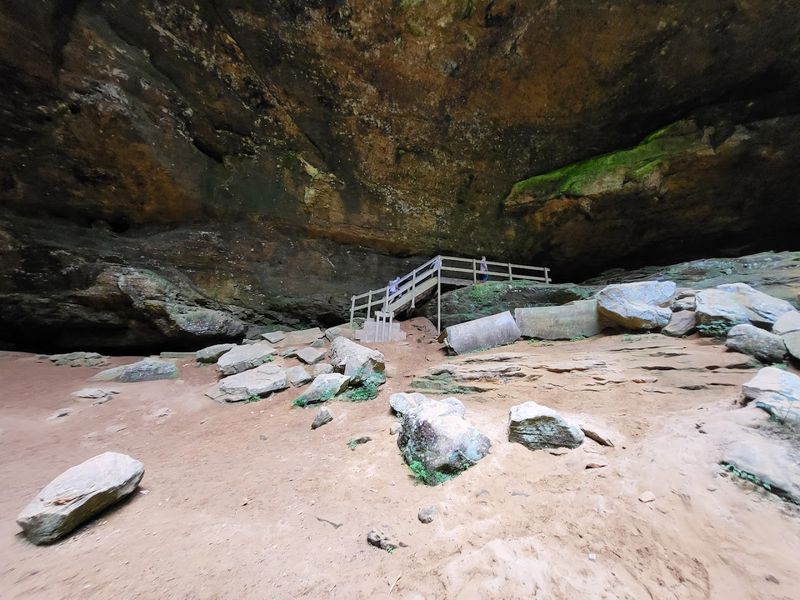
The cave did not appear overnight, and understanding even a little of its geological backstory makes standing inside it feel considerably more significant.
Ash Cave is carved into Black Hand sandstone, a type of rock formed from ancient river deltas and coastal sand deposits laid down roughly 320 to 350 million years ago during the Mississippian period.
Water is the sculptor responsible for everything you see here, seeping through cracks in the sandstone over countless centuries and gradually undermining the rock from below until massive sections of the overhang broke away.
The result is a recess cave rather than a true cave in the spelunking sense, meaning it is open-faced and formed by erosion rather than by underground water carving a tunnel.
The streaks of rust and orange on the cave walls come from iron oxide minerals washing down from the rock above, painting the interior in warm earth tones that shift with the light throughout the day.
Geologically speaking, the gorge itself was carved by meltwater drainage from glaciers during the last ice age, which explains the steep walls and narrow valley shape.
The landscape is essentially a slow-motion sculpture that is still technically in progress.
The History Carved Into the Walls
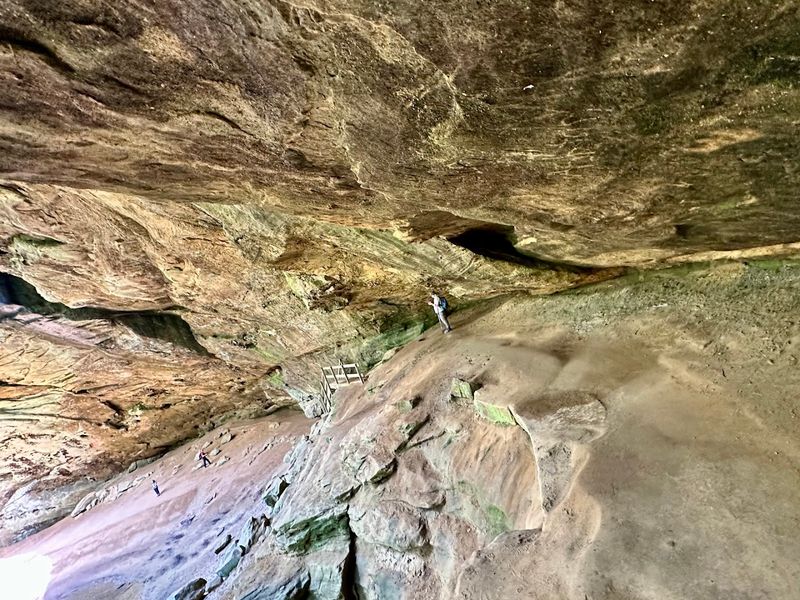
Beyond the geology, Ash Cave carries layers of human history that add a quieter kind of depth to the visit.
The cave takes its name from a large pile of wood ash discovered inside the recess by early European settlers, believed to have been left behind by Indigenous peoples who used the site as a sheltered gathering place long before the area became a state park.
The overhang would have provided natural protection from rain and wind, making it a practical and logical campsite for groups moving through the region across many centuries.
Early settlers also used the cave for various purposes, and their presence is literally written into the rock in the form of carvings and inscriptions that date back generations.
The park discourages any new marking of the rock, but older carvings remain visible for those who take time to look closely at the cave walls.
Finding those old inscriptions tucked into the stone feels like stumbling onto a personal note left by someone who stood in the same spot, looked up at the same ceiling, and felt the same quiet amazement.
History has a way of becoming more real when the ground beneath your feet is the same ground.
Closing the Loop on a Perfect Spring Day
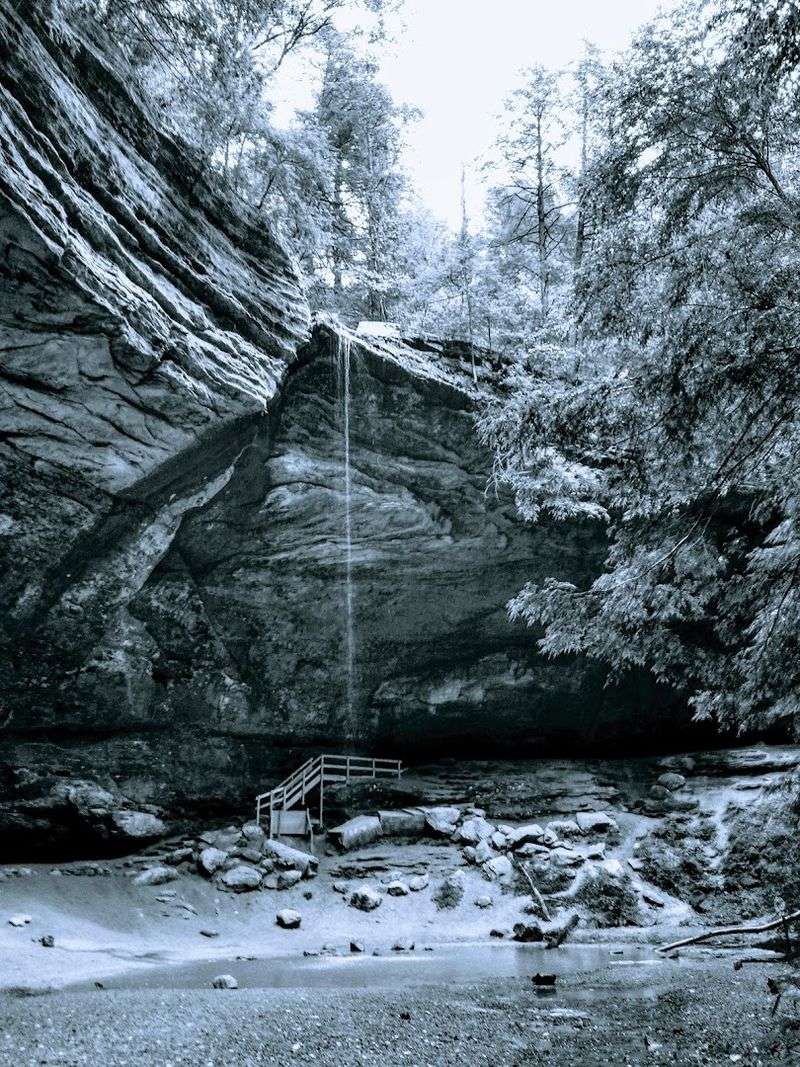
The drive back from Ash Cave tends to feel different from the drive in, and that shift is hard to explain but easy to recognize.
Something about spending time in a space that massive and that quiet recalibrates the way ordinary surroundings feel, at least for a little while.
Spring is the season that best matches the trail’s character, with the waterfall running strong, the gorge dressed in fresh green, and the whole place humming with the particular energy of a landscape waking back up after winter.
The Hocking Hills region of Ohio offers several other trails worth pairing with a visit here, including Cedar Falls just a few miles away, which makes for a natural second stop on the same day.
Ash Cave does not demand athletic ability, special gear, or a full day of commitment, which is part of what makes it so consistently rewarding for such a wide range of visitors.
The trail gives back exactly as much as you bring to it in terms of curiosity and attention.
Show up early, walk slowly, look up often, and let the gorge do the rest of the work for you.