
This Stunning Arkansas View Is Hiding Just A Short Hike From The Road
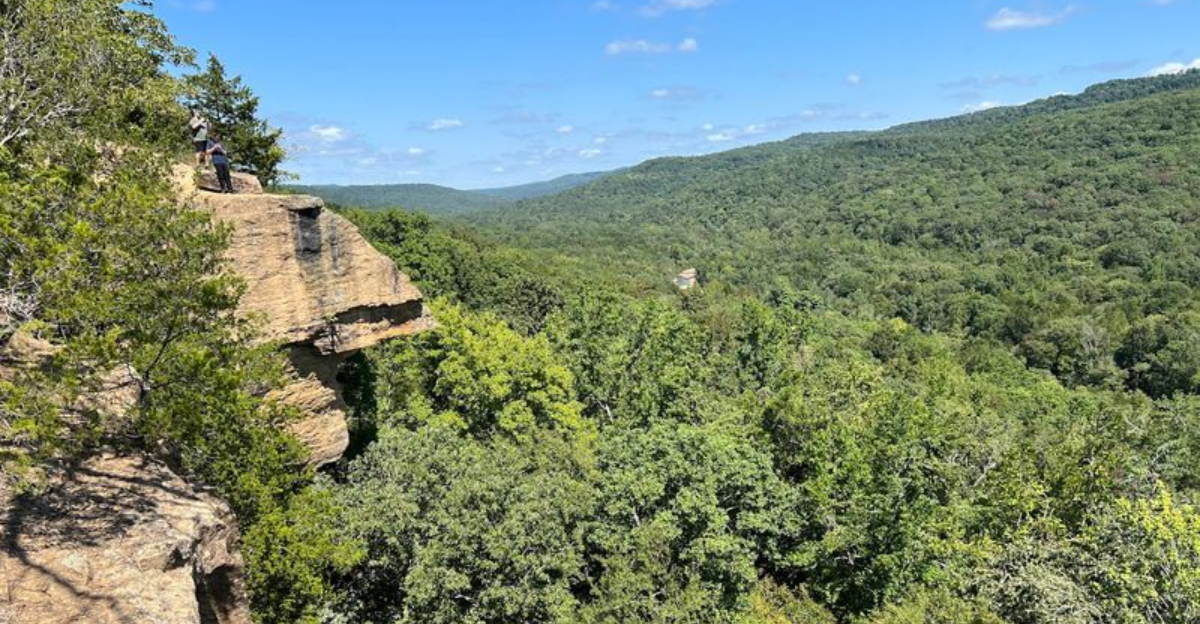
You know those places that make the car ride feel worth it before the day has barely started? This overlook in the Arkansas Ozarks has that energy.
The trail is short enough to squeeze into a road trip, but the view feels big enough to plan around. Ridges roll across the horizon, trees fill the valleys, and the whole scene has that quiet Ozark drama people keep coming back for.
It is not a hard hike, which makes the payoff even better. Bring a friend who always says they want a view but not a marathon.
This is their kind of stop. Take your time at the top, because the longer you look, the more the landscape seems to shift.
Morning feels calm. Late afternoon feels warmer.
Save this one for your next free weekend, then thank yourself when you are standing there smiling with your favorite person riding along.
A Cliffside View Worth The Climb
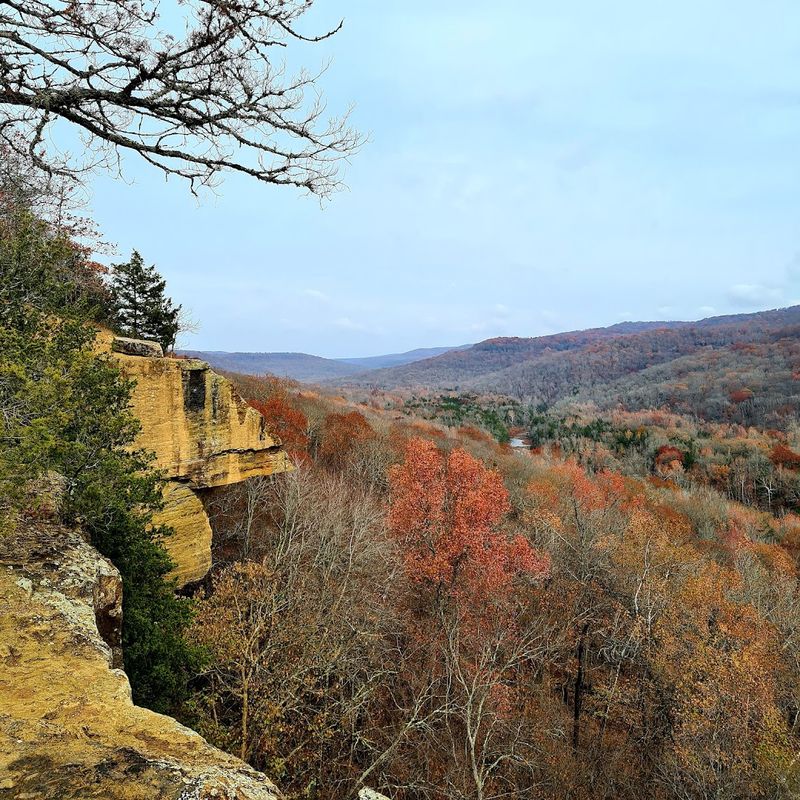
The first step onto the sandstone ledge feels like a pause button, with open sky ahead and treetops right below. It is easy to see why this spot lands so often on Arkansas must-visit hiking lists.
The rock itself is a warm golden-yellow color, which gives the spot its name and makes every photo look like it was shot during golden hour even at midday.
People who make the climb describe the view as beyond words, and I would not argue with that assessment for even a second.
The overlook sits high above Lee Creek Valley, and on a clear morning the visibility stretches across layer after layer of Ozark hills that fade into a soft blue haze in the distance.
Visitors with dogs, young children, and grandparents have all made it to this ledge, which says a lot about how accessible the reward really is.
A large drop-off runs along the front edge of the rock, so staying aware of your footing and keeping pets leashed is smart advice.
You can find all of this waiting for you at Yellow Rock Overlook in Devil’s Den State Park, 11333 West Arkansas Hwy. 74, West Fork, AR 72774.
Golden Light Over Forested Ridges
Early risers who arrive at this overlook before the sun fully clears the eastern ridgeline are treated to something that feels almost unfair in how beautiful it is.
The light comes in low and warm, painting the tops of the oak and hickory canopy in shades of amber and gold that shift every few minutes as the sun climbs higher.
On some mornings, a little fog settles into the valley below and quietly creates the kind of early view that photographs still simply cannot replicate with any real accuracy.
I showed up just after sunrise on a weekday, and the mist was still clinging to the lower hollows while the rock ledge itself was already catching full light.
The contrast between the bright sandstone under my feet and the shadowed forest below gave the whole scene a layered, almost painterly quality that kept me rooted in place far longer than I planned.
Autumn is particularly spectacular here, when the hardwood forest turns the ridges into a quilt of orange, red, and yellow that spreads as far as the eye can reach.
That soft golden light is reason enough to set an early alarm and hit the trail before breakfast.
A Short Trail With A Big Reward
Not every great view requires a brutal multi-day backcountry expedition, and Yellow Rock Overlook makes that point better than almost anywhere else I have hiked in the South.
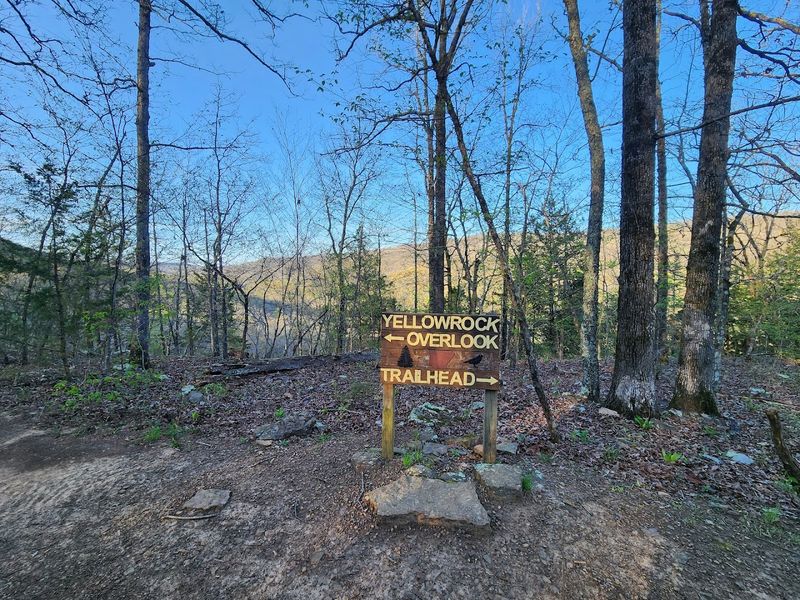
The Yellow Rock Trail is commonly listed at about 2.6 miles as a loop, meaning most hikers can complete it in roughly one to two hours without feeling rushed at the top.
The uphill sections can still take some steady effort, but the return trip usually feels quicker, which lines up almost exactly with my own experience on a moderate-pace morning walk.
The path is a mix of rocky terrain and packed dirt, with elevation changes that are noticeable but never punishing, making it a realistic option for families with older kids and adults of most fitness levels.
Good hiking shoes with solid grip are strongly recommended because the rocks range from small loose stones to larger flat slabs that can get slippery after rain.
A water bottle is always a smart move, especially during warmer months when the tree canopy provides some shade but the climb still works up a real sweat.
The short distance combined with the dramatic payoff at the top makes this one of the best low-commitment, high-satisfaction hikes in northwest Arkansas.
Sweeping Ozark Scenery From Above
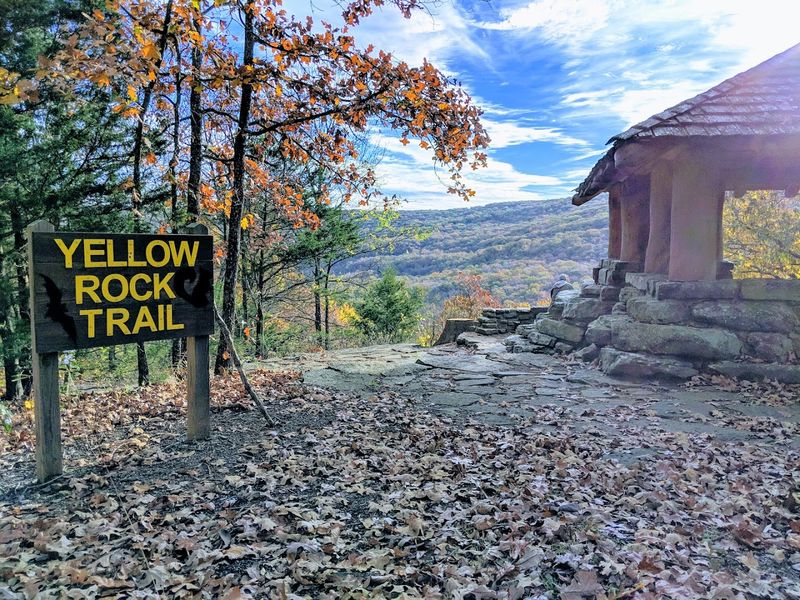
A certain kind of quiet settles over you almost immediately here when you reach a high point and realize the view in front of you stretches far beyond what you expected from a trail this short.
At the top of the overlook, the Ozark ridgelines stack up one behind the other in a way that gives the landscape real depth, almost like looking at a series of green waves frozen mid-roll across the terrain.
The forested hills visible from the ledge are part of the larger landscape surrounding Devil’s Den State Park, a place that has been drawing outdoor visitors to northwest Arkansas for decades.
At the sandstone edge, I quietly counted at least five distinct ridge lines before they blurred together into that characteristic Ozark haze that hangs over the hills on humid mornings.
Different seasons give this place a new look each time, which helps explain repeat visits, from the bare winter silhouettes that open up the long-distance views to the full summer canopy that turns the valley floor into a solid carpet of green.
Spring wildflowers along the trail add bursts of color to the approach, making the walk to the overlook almost as rewarding as the destination itself.
Few places in Arkansas pack this much scenery into such a compact, accessible, and memorable experience.
Quiet Moments Along The Rock Ledge
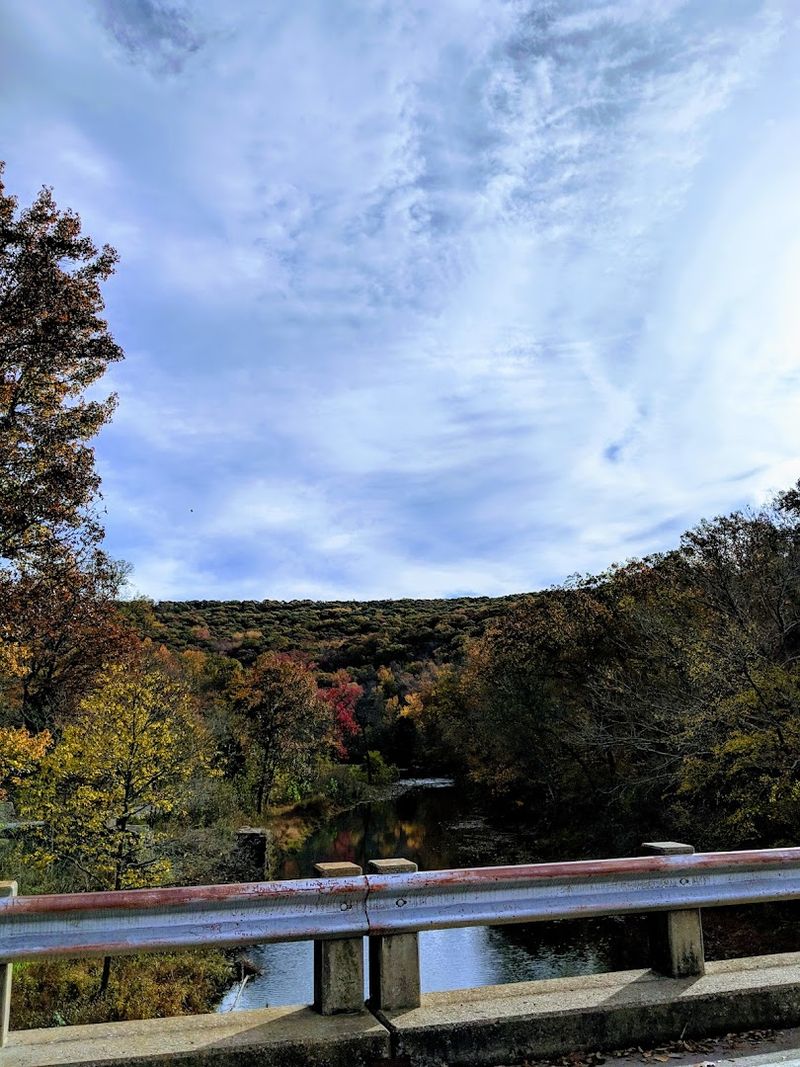
Weekday mornings at this overlook have a completely different energy than weekend afternoons, and if solitude is what you are after, timing your visit matters more than you might expect.
I arrived on a Tuesday and had the entire ledge to myself for nearly 20 minutes, long enough to sit down, eat a granola bar, and just listen to the wind moving through the trees below without a single interruption.
The rock ledge itself is wide and flat in several spots, giving you room to spread out, set down a pack, and take your time rather than snapping a quick photo and heading back down.
A night visit may sound tempting for stargazing, but trail access and park rules can change, so it is best to check current Devil’s Den State Park guidance before planning anything after dark.
Weekend crowds are real, particularly on sunny Saturdays and during fall foliage season, so arriving early in the morning is the most reliable strategy for finding a quieter version of the experience.
The rock surface stays cool in the early morning and warms gradually through the day, making it a comfortable place to linger, breathe, and take things slowly.
Stay there long enough, and you start to feel less like a visitor and more like part of the landscape for a few quiet minutes.
A Forest Path Leading To Open Sky
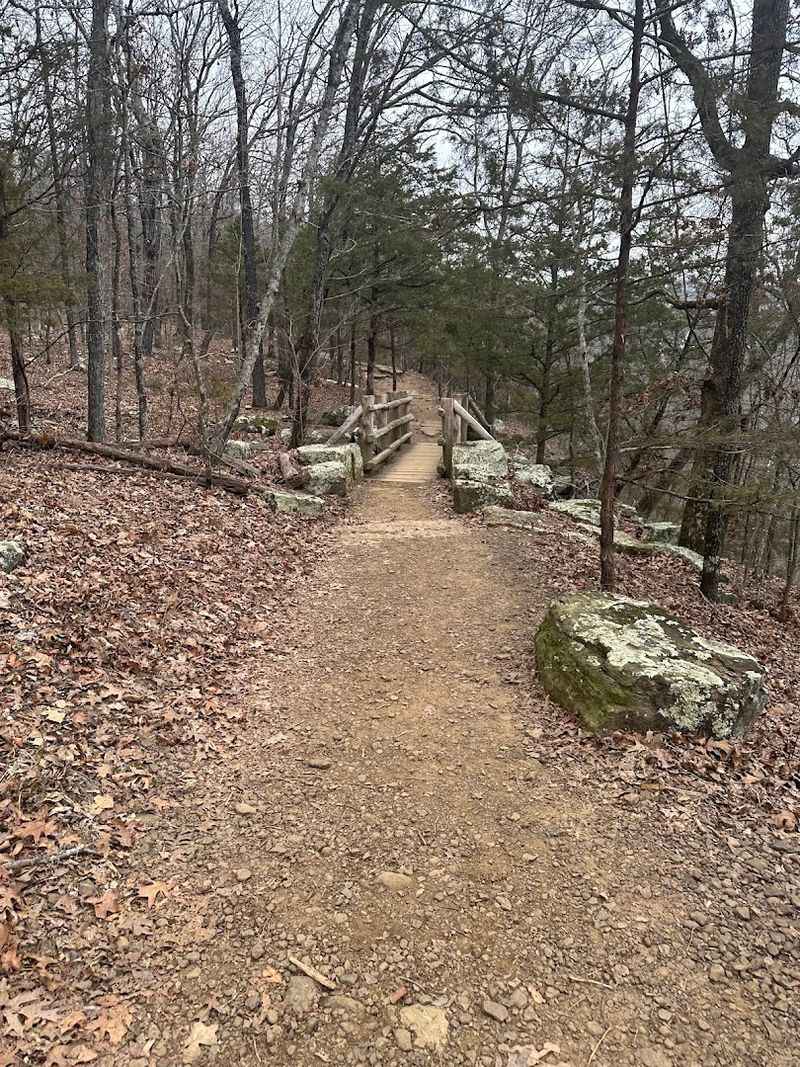
The trail toward this overlook keeps you under trees for most of the way, surrounded by a dense canopy of oak, hickory, and other Ozark hardwoods that keeps the destination hidden until the very last moment.
That slow reveal is part of what makes the payoff feel so dramatic, because one moment you are threading between tree trunks on a rocky path and the next you step out onto open sandstone with the whole valley laid out in front of you.
The trail is well-marked and easy to follow, which matters when you are moving through thick forest where the light shifts and landmarks can look similar from different angles.
Dogs are welcome on the trail, and I passed several hikers with leashed pets who were clearly having as good a time as their owners, tails wagging steadily the entire way up.
Families with kids mentioned turning the hike into a scavenger hunt by collecting interesting rocks, acorns, and fall leaves along the path, which is a clever way to keep younger hikers engaged on the rocky sections.
The forest itself has a lived-in quality, with mossy boulders and gnarled tree roots lining parts of the trail that feel like they have been there for centuries.
That walk through the trees makes reaching the open sky at the top feel well earned.
Layered Hills Stretching Into The Distance
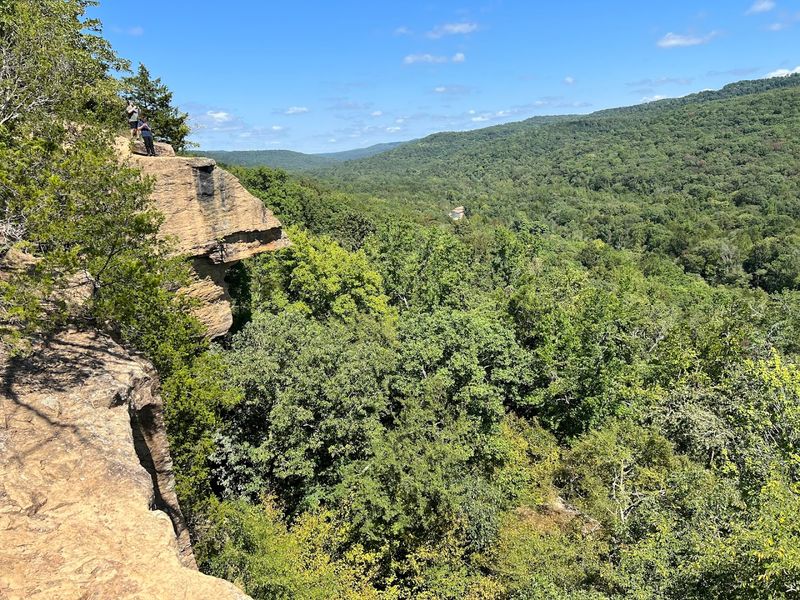
One of the details that surprised me most about this view was how far back the landscape actually extends, because photos taken from the ledge tend to flatten the depth in a way the naked eye never does.
Once I was on the rock and looking southwest, I saw ridgeline after ridgeline receding into the distance, each one slightly paler than the last as atmospheric haze softened the colors toward the horizon.
This kind of layered topography is a signature feature of the Arkansas Ozarks, where the ancient sandstone and shale have been carved by rivers and erosion into a landscape of repeating ridges and hollows that seems to go on indefinitely.
The Yellow Rock Trail sits within a park system that has been protected and managed for public use for many years, which means the forest visible from the overlook remains dense and largely undisturbed.
Hikers visiting in winter noted that the bare trees actually open up the long-distance views even further, adding a clarity to the distant ridgelines that the summer canopy partially obscures.
Photographers tend to set up on the left side of the ledge where the angle captures the deepest stack of hills without foreground branches interrupting the frame.
Every season rewrites this panorama in a completely different palette, which is exactly why so many people come back more than once.
A Peaceful Overlook Above The Trees
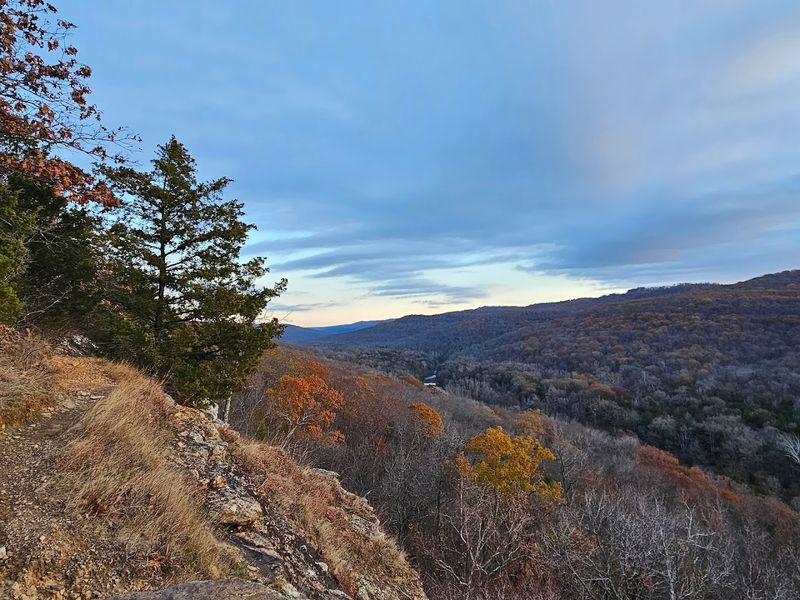
A few minutes on this rock ledge can shift your whole mood, because it puts you physically above the forest canopy, where the usual sense of being surrounded by trees flips into a feeling of open, unobstructed space.
The overlook at this trail’s endpoint sits high enough that the treetops below look like a continuous green surface rather than individual trees, and the effect is both humbling and calming in a way that is often hard to manufacture anywhere else.
People often describe the atmosphere up here as peaceful and almost meditative, which tracks with my own experience of finding it nearly impossible to feel rushed once I stepped out onto the warm sandstone.
The overlook easily earns its reputation through more than the view alone, because the short climb, open ledge, and quiet time above the trees all work together to make the stop feel memorable.
Families, solo hikers, couples, and groups of friends all seem to find their own version of the experience here, which says something about how widely the place connects with people.
Mornings with a light breeze and some high clouds are my personal favorite conditions for a visit, when the light is soft and the air still carries a cool edge from the night before.
If you need a place to breathe and reset, this peaceful ledge above the trees will do the job every single time.