
This Stunning Maine Lighthouse Is A Secret Worth Discovering
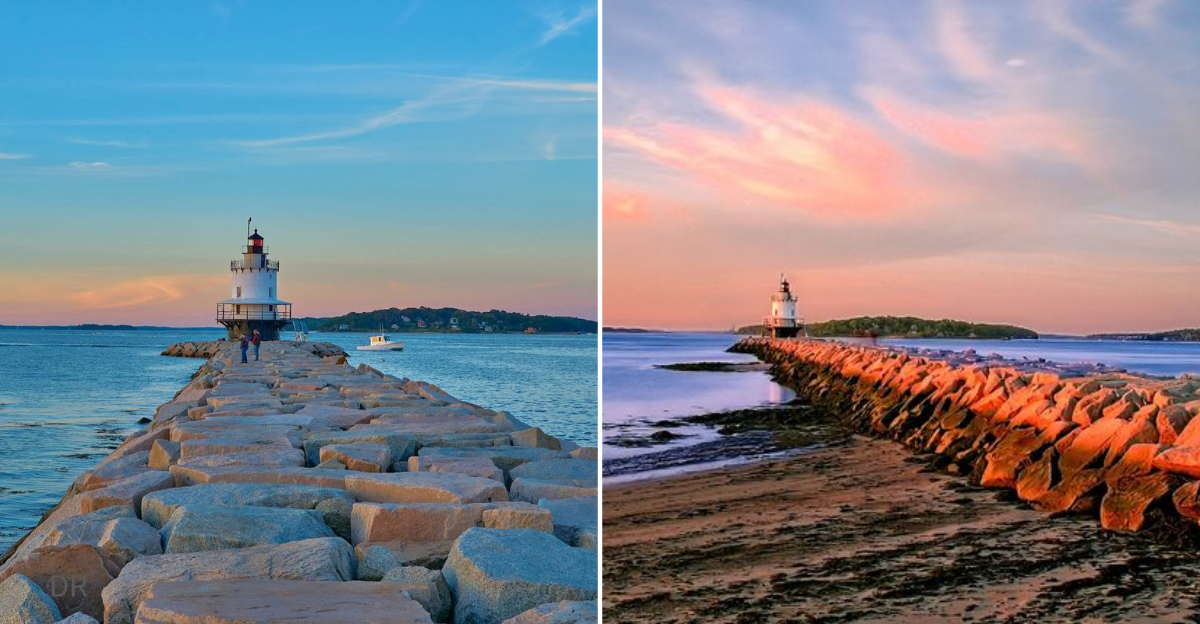
One of Maine’s most underrated lighthouse adventures starts with a path that barely feels like a path at all. Out on the South Portland waterfront, a black-and-white beacon waits at the end of a rugged granite breakwater, guarding Portland Harbor since 1897.
Reaching it means stepping carefully over massive stone blocks with ocean air on every side and the city skyline shining nearby. The reward is more than a pretty harbor view.
This compact tower carries shipwreck lore, old engineering tricks, keeper-life stories, and the kind of coastal drama that makes a quick stop turn into a memory.
Many travelers chase Maine’s famous postcard lighthouses, but this overlooked harbor sentinel offers something rarer: a walk, a view, and a piece of maritime history that still feels wonderfully alive.
A Lighthouse Built To Survive The Sea
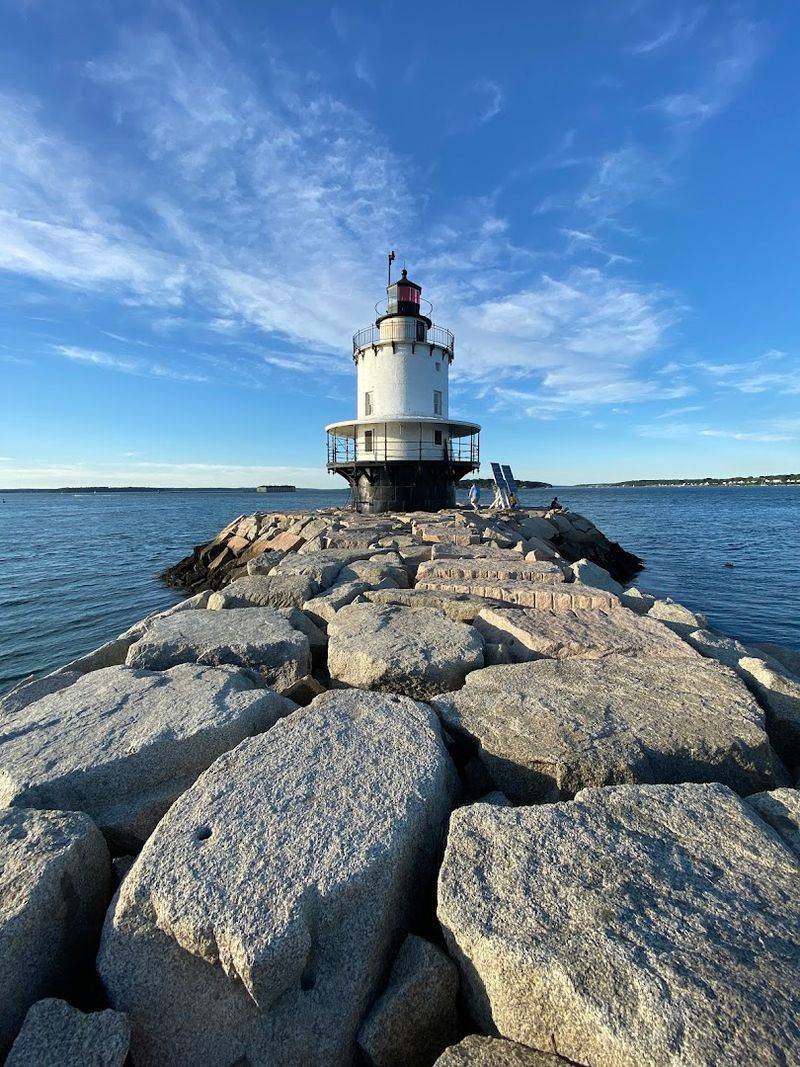
Back in 1897, the waters near Portland Harbor were a serious problem for sailors. The Spring Point Ledge, a dangerous underwater rocky shelf, had already caused enough shipwrecks to make the U.S. Lighthouse Board take action.
Their solution was a caisson-style lighthouse, a design where a massive cast-iron cylinder is filled with concrete and sunk directly into the seafloor.
This gave the structure an incredibly sturdy foundation, capable of withstanding brutal New England winters and pounding Atlantic waves. The lighthouse stands about 54 feet tall and was built to house a keeper full-time, which explains why its interior is surprisingly well-organized across multiple levels.
The caisson design was nicknamed the “sparkplug” style because of its distinctive squat, cylindrical shape. Spring Point Ledge Lighthouse is one of the finest surviving examples of this construction method on the entire East Coast.
Walking up to it for the first time, you get the immediate sense that this thing was built to last forever.
The Granite Breakwater
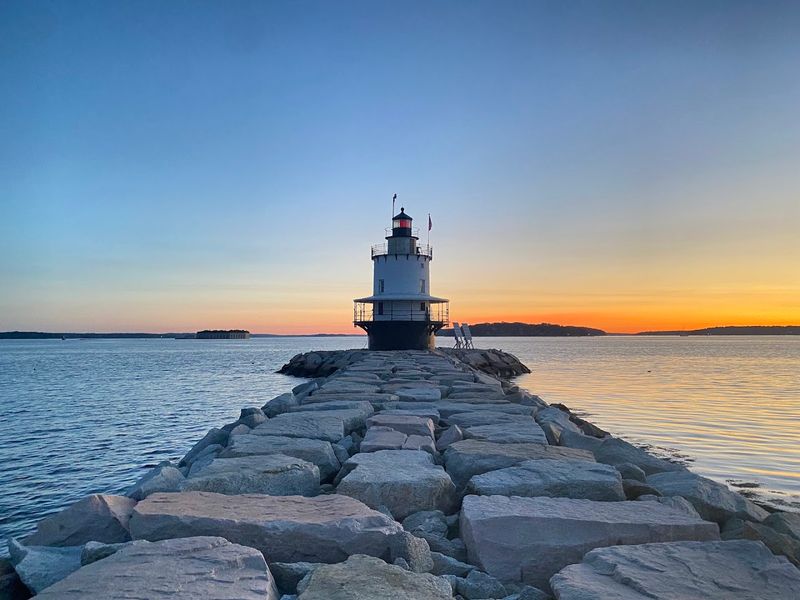
Getting to the lighthouse is half the experience, and it starts the moment you step onto the granite breakwater. Stretching about 900 to 950 feet out into the harbor, this rocky path is made up of massive flat boulders placed side by side.
There is no handrail, no paved surface, and no shortcut.
You pick your way across the stones carefully, watching your footing as gaps between rocks appear unexpectedly. The sound of the ocean is on both sides of you, and the lighthouse grows bigger with every step.
On a sunny morning, the water sparkles in a way that makes the whole scene feel almost unreal.
The walk takes about ten to fifteen minutes at a relaxed pace, and it is worth every careful step. Families with young children should keep a close eye on little ones near the edges.
Anyone with balance or mobility challenges may find the terrain difficult, but the view from the shore is still completely rewarding on its own.
Inside The Lighthouse
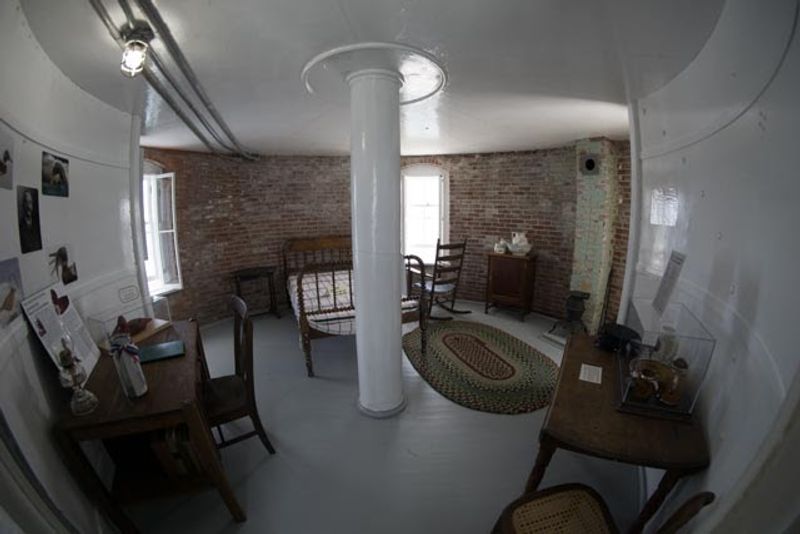
On select days, Spring Point Ledge Lighthouse opens its doors for guided tours, and they are absolutely worth the ten-dollar admission. Once you climb the small ladder at the base and step inside, a knowledgeable volunteer guide takes over and walks you through every level of the structure.
The main keeper’s quarters include a compact but surprisingly complete living space, with a historic stove, a narrow bed, a closet, and a writing desk.
Above that sits the assistant keeper’s quarters, nearly identical in layout. It is fascinating to imagine two people living here through frozen Maine winters, isolated on a rocky breakwater.
Higher up, you reach the beacon room, where a rotating light mechanism once relied on a heavy counterweight system to keep it turning.
That weight, ranging from 30 to 500 pounds, had to be wound back up by hand regularly. Visitors even get to ring the original fog bell with a rubber mallet, which is one of those unexpectedly satisfying travel moments.
The Fog Bell
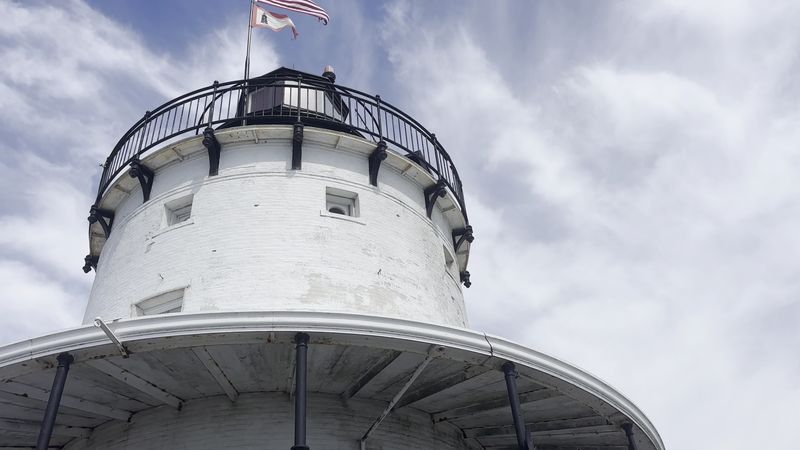
Before modern navigation technology, fog bells were lifesavers. At Spring Point Ledge Lighthouse, the fog bell was not just rung by hand whenever it got misty.
It operated through a genuinely clever mechanical system that reflects how seriously 19th-century engineers approached lighthouse engineering.
A hollow center pipe ran vertically through the lighthouse, and inside it hung an 800-pound counterweight. As this weight slowly descended under gravity, it powered a mechanism that struck the fog bell every 12 seconds with perfect regularity.
When the weight reached the bottom, the keeper had to crank it back up to the top by hand, a task that happened multiple times per day during foggy periods.
A second, lighter weight between 30 and 500 pounds powered the rotation of the main light. The keeper’s daily routine essentially revolved around maintaining these weight systems.
Tour guides explain this beautifully during visits, and when you ring that original bell yourself at the end of the tour, the history suddenly feels very personal and surprisingly loud.
Panoramic Harbor Views
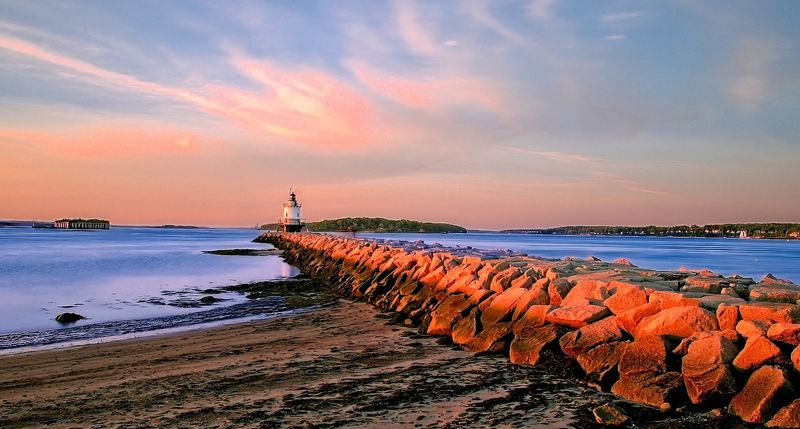
Standing at the end of the breakwater next to the lighthouse, the view opens up in every direction in a way that genuinely catches you off guard.
To the left, the downtown Portland skyline sits low and handsome across the water. Directly ahead, boat traffic moves steadily through the harbor, from lobster boats and sailboats to enormous cruise ships that dwarf everything around them.
Turn slightly to the right and you can spot the flashing beacon of Portland Head Lighthouse in the distance, one of the most photographed lighthouses in the country.
Peaks Island sits in the background like a quiet green brushstroke on the horizon. On a clear October morning, the whole scene feels like something from a postcard that has not been over-edited.
The breakwater is a popular spot for fishing, too, and on calm days you will often find people sitting quietly on the rocks, lines in the water, completely unbothered by the world. That kind of unhurried atmosphere is genuinely hard to find so close to a city center.
Fort Preble
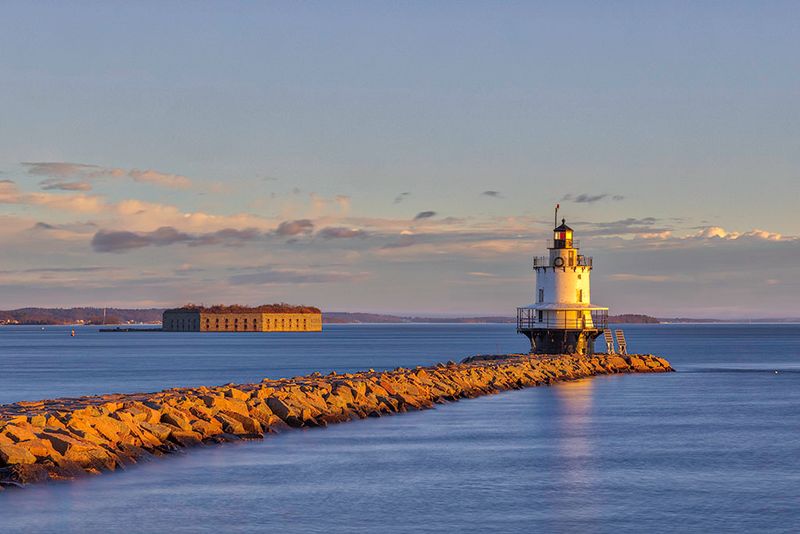
Right next to the lighthouse area sits something that many first-time visitors completely miss: the remains of Fort Preble.
This historic military fort dates back to the early 1800s and was built to defend Portland Harbor from naval attack. It served through several American conflicts, including the Civil War and both World Wars.
The fort’s remains are visible from the shoreline, though portions are currently fenced off and not accessible for walking through. Even from a distance, the old stone structures carry a quiet weight, hinting at how strategically important this stretch of coastline once was for the defense of New England.
Standing at Spring Point Ledge and looking back toward Fort Preble, you get a layered sense of history that goes well beyond just one lighthouse. This small peninsula in South Portland holds centuries of American maritime and military story in a remarkably compact space.
The combination of the lighthouse, the fort, and the harbor makes this one of the most historically dense spots in all of Maine.
Magic Hours On The Breakwater
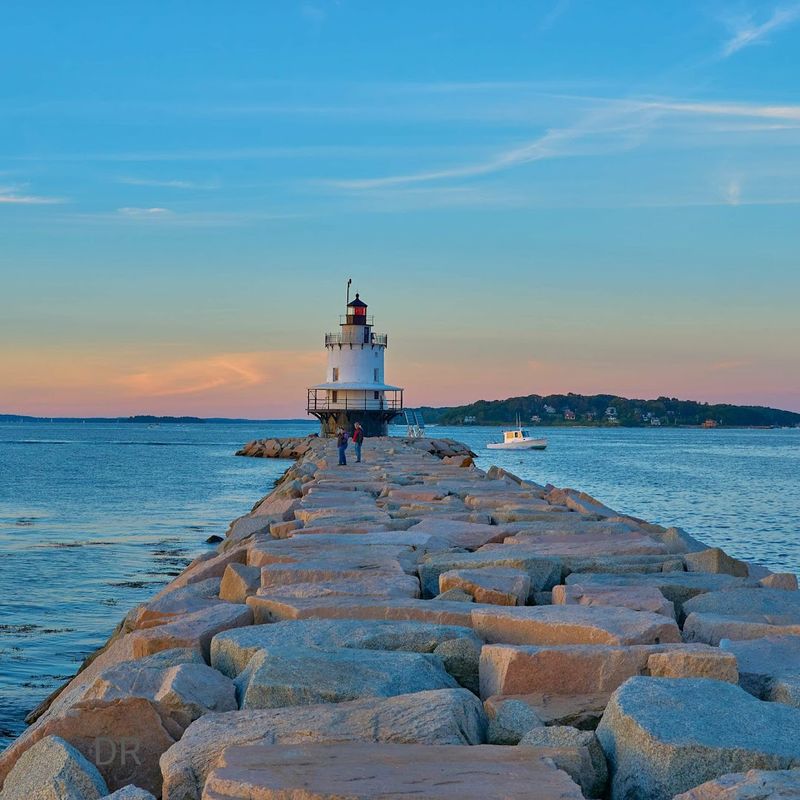
The lighthouse is open around the clock, every single day of the year, and that detail opens up some genuinely magical visiting options that most people never consider.
Arriving at sunrise means watching the light shift from deep blue to gold while the lighthouse stands perfectly still against the brightening sky. The harbor comes alive slowly at that hour, with lobster boats heading out and birds skimming the water surface.
Sunset visits offer something different: the warm light hits the black and white paint of the lighthouse in a way that makes every photograph look professionally composed.
The rocks glow amber and the water turns copper, and the whole breakwater becomes a front-row seat to one of Maine’s best evening shows.
Night visits are a different adventure entirely. The stars above the harbor, away from the brightest city lights, are surprisingly vivid.
Visitors who have walked the breakwater after dark recommend bringing flashlights and wearing warm layers, since the Maine coastal chill does not wait for autumn to arrive. Gloves are genuinely useful even in summer nights.
Practical Tips For Your Visit

Finding parking at Spring Point Ledge Lighthouse is the one part of the visit that requires a bit of patience and planning.
The site sits at 2 Fort Rd, South Portland, ME 04106, on the grounds of Southern Maine Community College. Most nearby lots are reserved for students and faculty, particularly on weekdays during the academic year.
There is a small visitor lot near Lighthouse Circle, but it fills up fast on busy days. Benjamin Pickett Street is a reliable backup option, putting you just five to ten minutes on foot from the lighthouse area.
Arriving early in the morning or visiting on a weekday generally makes parking much less stressful.
The walk along the breakwater is free of charge, and no tickets are required to access the grounds. Tours of the lighthouse interior run on selected days and cost around ten dollars per person.
The site is not wheelchair accessible due to the rocky breakwater surface. A small gift shop near the shore is worth a quick browse before or after your walk.
Small Stops Worth Finding
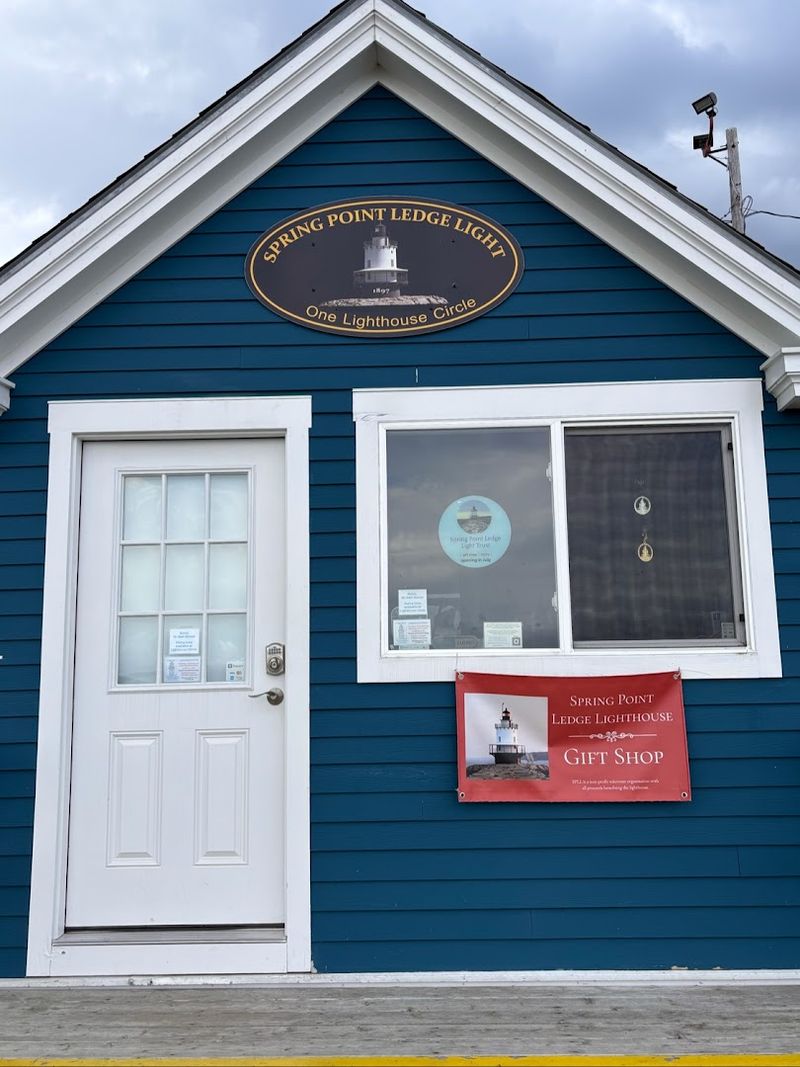
Not every lighthouse visit comes with a sandy beach and a souvenir shop, but Spring Point Ledge delivers both.
Just steps from the breakwater entrance, a small gift shop sells lighthouse-themed keepsakes, local books, and coastal mementos that make for genuinely thoughtful souvenirs rather than the generic trinkets you find at tourist traps.
The beach nearby is a pleasant surprise. It offers a stretch of sand and rocky shoreline where families spread out, children play near the water, and visitors simply sit and take in the harbor air.
It is the kind of low-key coastal spot that does not need a brochure to sell itself.
Volunteers are often present near the lighthouse, happy to answer questions even on non-tour days. The combination of the gift shop, the beach, the fort remains, and the lighthouse itself means you can easily spend two to three hours here without running out of things to see or do.
Bring snacks, wear comfortable shoes, and plan to stay longer than you originally intended.
Why This One Sticks With You
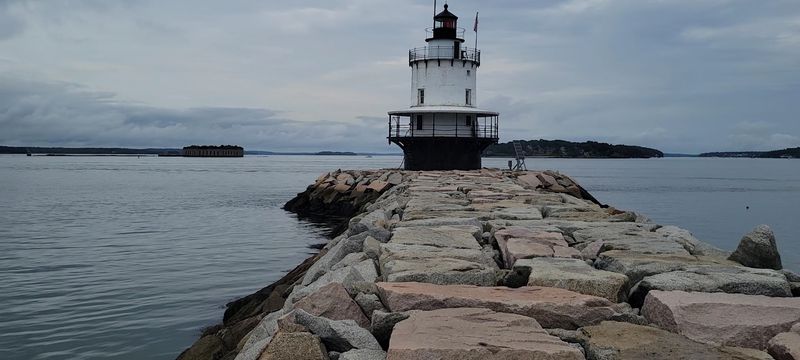
Maine has more lighthouses per mile of coastline than almost anywhere else in the United States, so standing out in that crowd is no small achievement. Spring Point Ledge manages it effortlessly.
The combination of its rare caisson construction, its guided interior tours, its dramatic breakwater approach, and its sweeping harbor views makes it one of the most complete lighthouse experiences in the entire state.
Portland Head Lighthouse gets all the fame and the tour buses, but Spring Point Ledge rewards visitors with something that famous landmarks rarely offer: a sense of discovery.
The walk across those granite boulders, the sound of waves on both sides, the view of the harbor opening up ahead of you, it all adds up to something that stays with you long after you leave.
Whether you are a lighthouse enthusiast, a history lover, a photographer, or simply someone who appreciates a good coastal walk, this South Portland treasure delivers on every front. Some secrets are worth sharing, and this one absolutely is.