
This Stunning Michigan Skyscraper Has A Jaw-Dropping Art Deco Lobby, And It’s Free To Enter
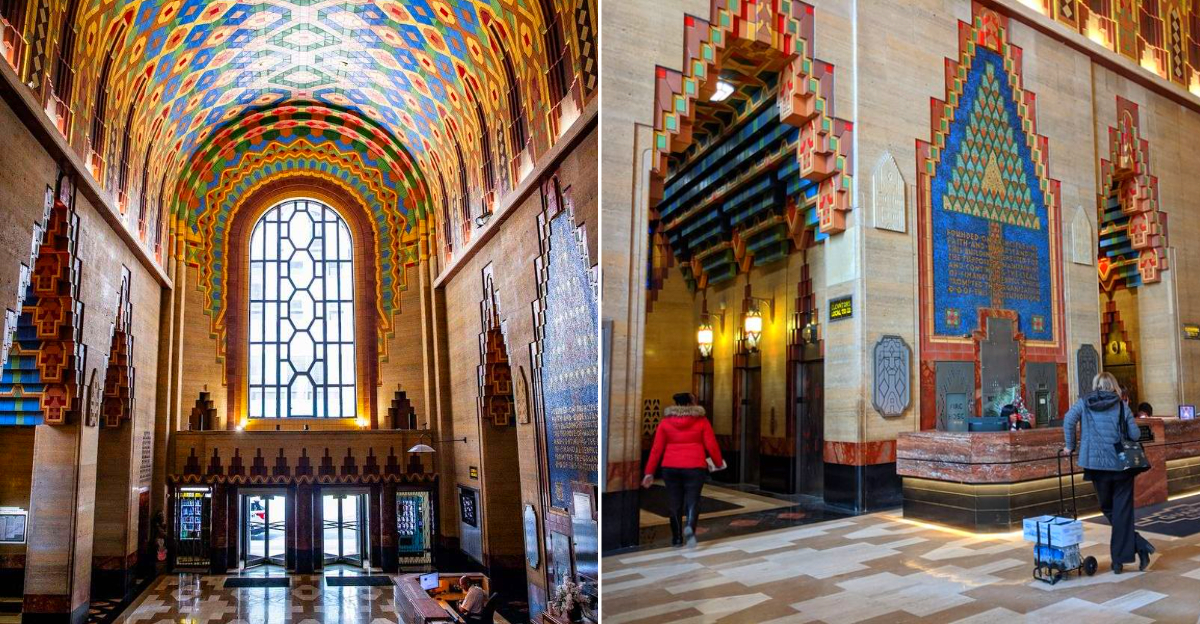
I have walked past this building probably fifty times without going inside. That changed last Tuesday when a guard told me the lobby was open to the public. I stepped through the entrance and stopped.
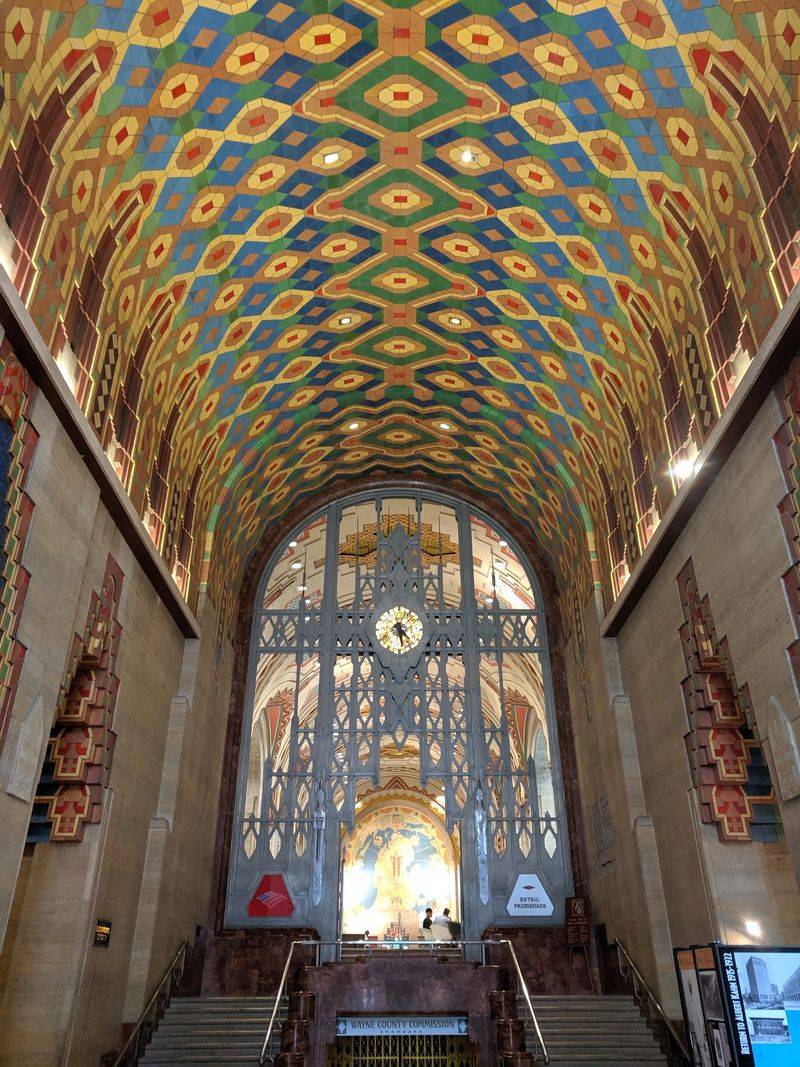
The ceiling stretches upward in arches covered in mosaic tile. Pewabic ceramics line the walls in shades of copper, gold, plus deep green.
Painted vaults depict the industries that built this city, each rendered in colors that glow under ambient light.
The floor is marble. The elevator doors are brass. Every surface was designed with detail that makes you realize the builders were making a statement about what the future should look like. I spent forty minutes on the lobby floor just looking up.
The scale is hard to describe without seeing it. Michigan has been hiding an Art Deco lobby so elaborate that most people walk past without looking up.
Follow The Colorful Tilework
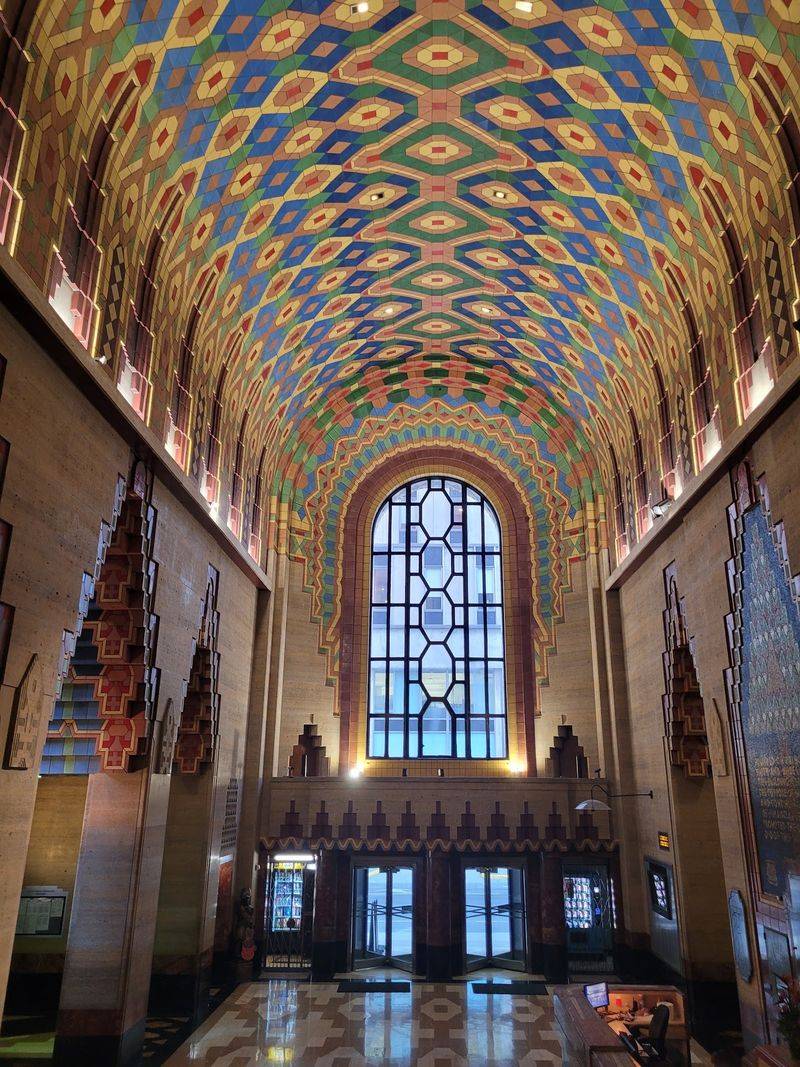
Color arrives before any single detail can explain it. Interlocking tiles spread across arches, ceilings, and walls in rich blues, greens, ochres, and warm orange, creating movement without making the room feel messy.
Detroit’s Pewabic Pottery contributed important ceramic work, while other makers also helped build the larger decorative program.
Bring a camera with a wide-angle setting, but take one full minute to look without a screen first. Light shifts across glazed surfaces, so a small change in position can reveal another color or pattern.
Avoid touching tilework and keep pathways open for workers.
For a useful game, hunt for repeated U and T shapes linked to Union Trust. Spotting them turns decoration into a quiet architectural treasure hunt indoors today.
Griswold Street Opens Into Detroit’s Art Deco Landmark
The Guardian Building stands at 500 Griswold Street in downtown Detroit, Michigan, in the heart of the Financial District. Griswold Street is the road to aim for, running south from the Campus Martius area toward the skyscraper.
Stay on Griswold as the downtown towers close in around you and the Guardian Building’s orange brick and terra-cotta exterior comes into view. The main public entrance faces Griswold Street, beneath the tiled semicircular arch that marks the doorway.
For a straightforward parking option, use the Griswold Larned Garage directly across the street from the Guardian Building. Public spaces there are available first come, first served; after parking, cross Griswold and enter through the building’s main street-level entrance.
Study The Rare Marble
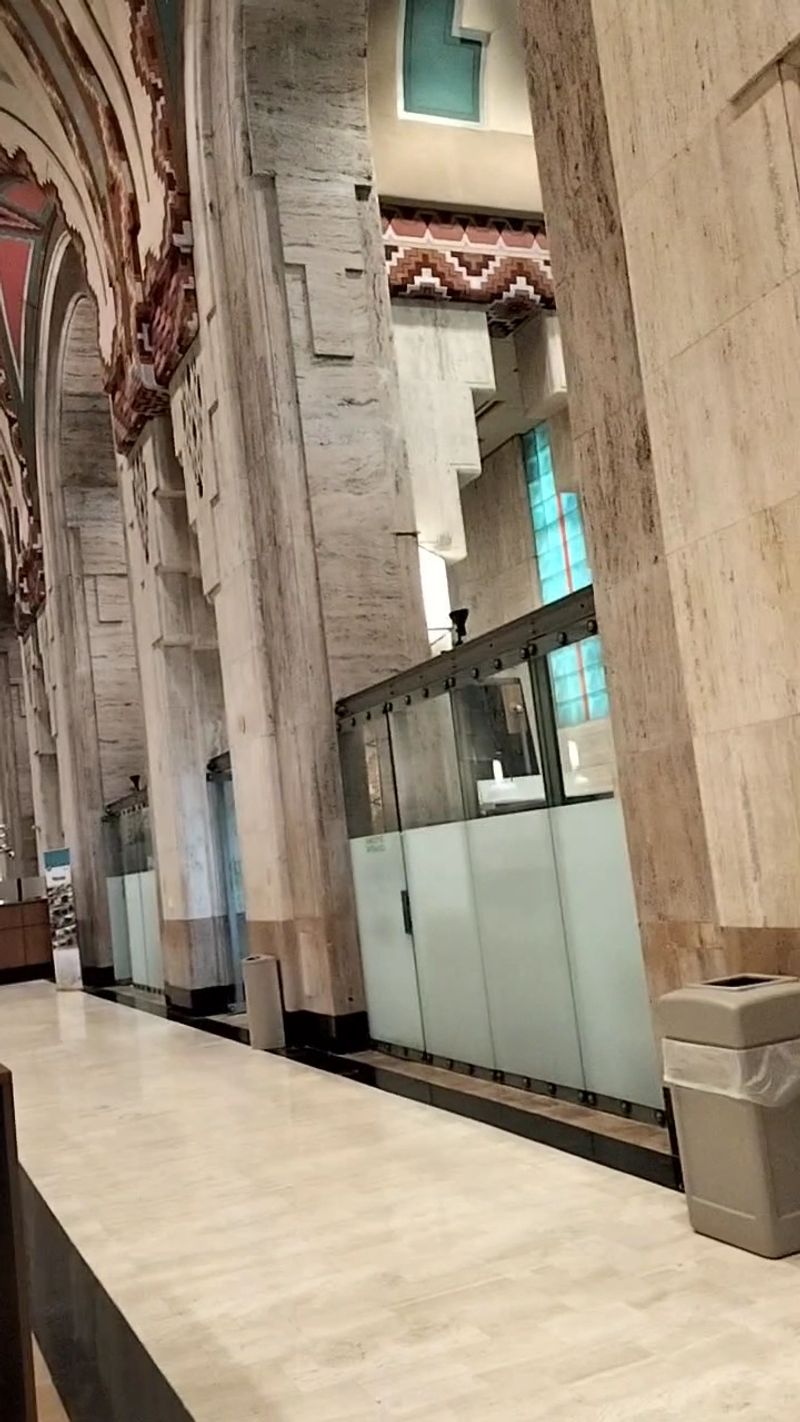
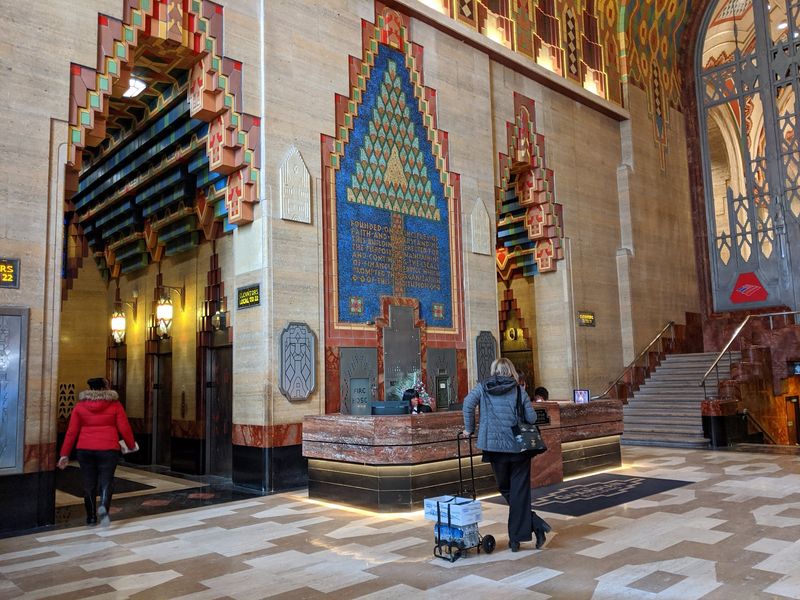
Stone under all that color gives the lobby surprising weight. Massive columns use Italian travertine, while dark Belgian marble appears near their bases, and deep red Numidian marble adds another dramatic note.
Rowland chose materials with unusual care, making the old banking space feel both worldly and rooted in Detroit craft.
Step closer without crossing barriers and compare polished stone with nearby glazed tile. Veins, tiny color changes, and surface textures are easier to notice from the side than from the center aisle.
A phone zoom can help inspect high details while respecting restricted areas.
I like spending extra time here because the materials make history tangible. They also explain why quick snapshots never capture the whole design properly indoors.
Read The Walls Like A Story
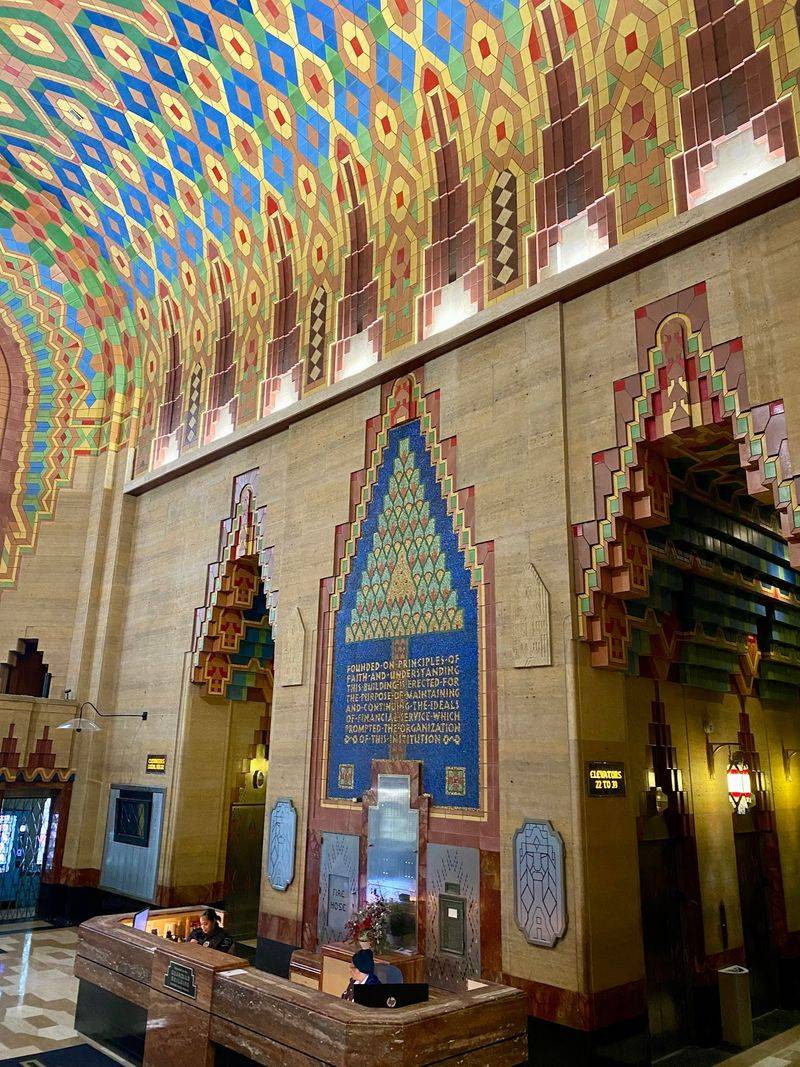
Above the main lobby desk, Ezra Winter’s large mosaic pulls the eye toward a pine tree and words tied to the Union Trust Company’s founding ideals. Farther inside, the former banking hall, another mural connects the building with Michigan industries.
Art and business were meant to speak together here.
Read the images from a comfortable distance, then notice how borders, colors, and nearby architecture continue the same visual language. Morning or midday light may make sections easier to see, though conditions vary with weather.
Keep voices low since employees and other visitors share the space.
Instead of photographing only the whole wall, take one wider frame and one close detail. The pair will better show both scale and craftsmanship later.
Find The Clock In The Metalwork
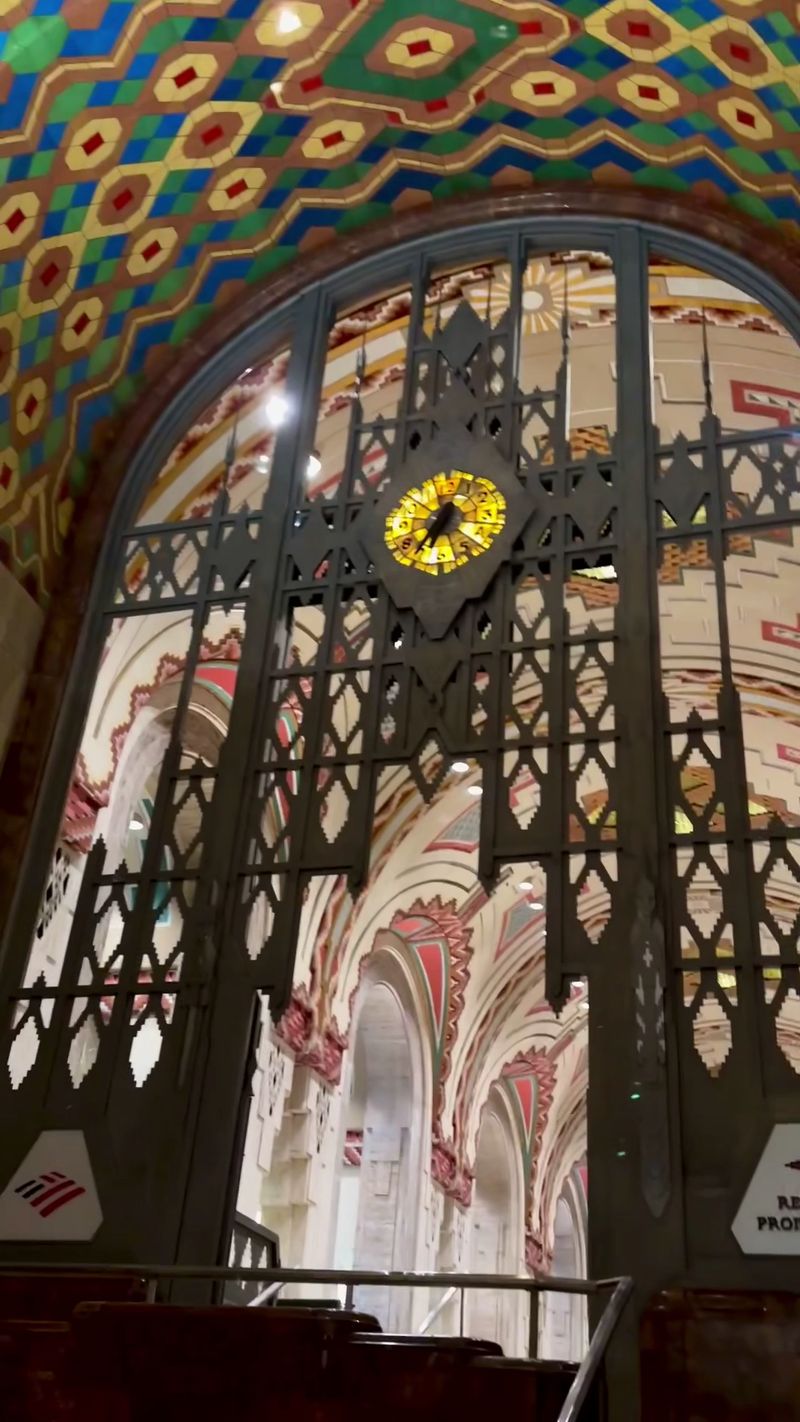
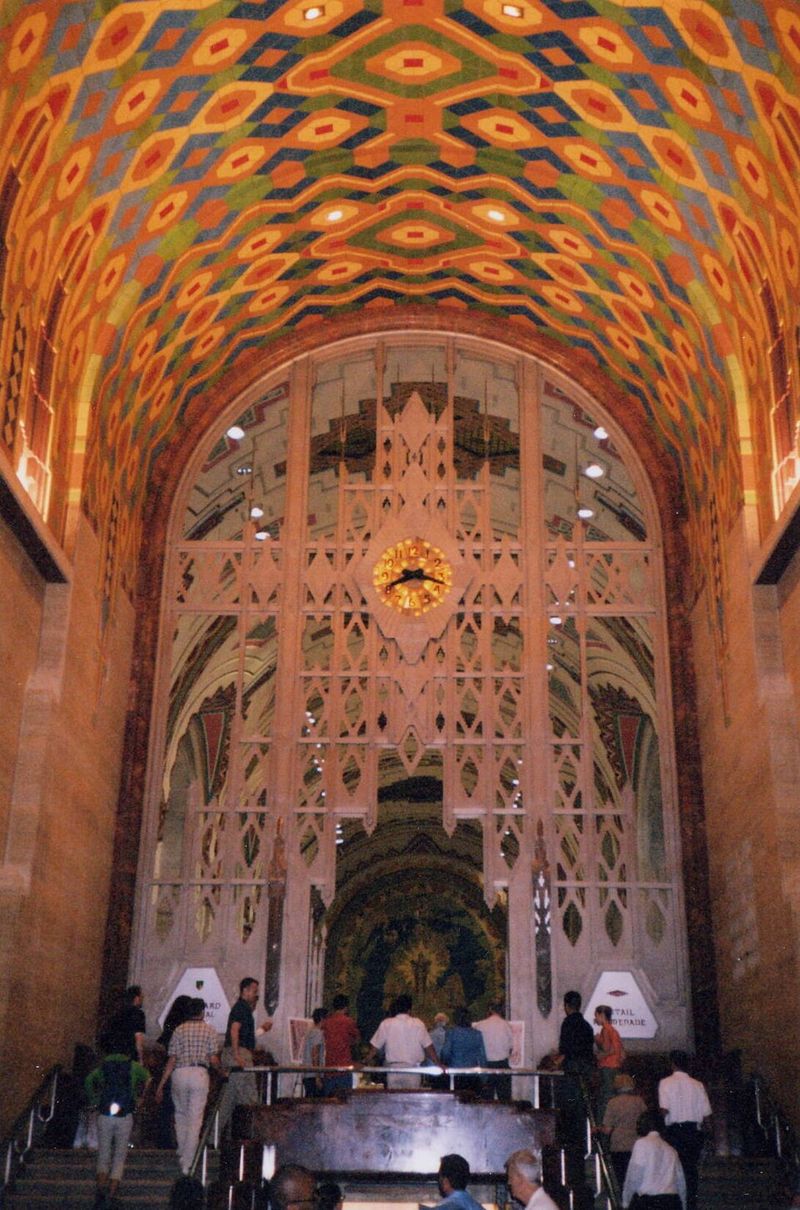
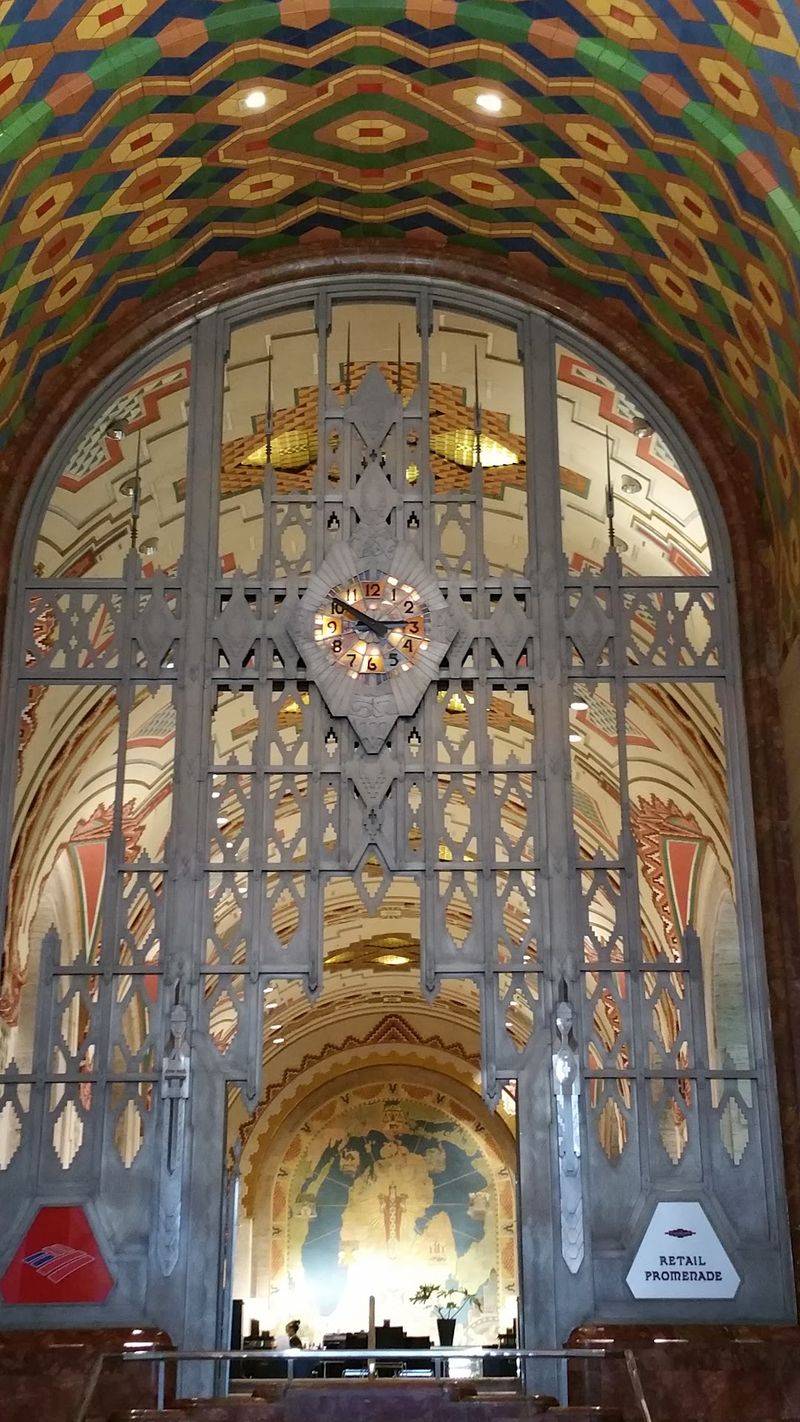
At the edge of the former banking hall, metalwork suddenly steals attention. Rowland selected Monel, a durable nickel-copper alloy, rather than the brass or bronze visitors might expect.
Its crisp Art Deco lines surround a Tiffany glass clock, adding precision and sparkle to an already energetic room.
Move a few steps left and right to watch reflections change across the screen. The clock works best as a visual anchor for photographs, especially when tile patterns threaten to crowd the frame.
Do not lean on the metal or block entrances while composing.
A close look reveals that decoration here was never pasted on afterward. Structure, technology, and ornament were planned together as one confident statement about modern Detroit in 1929.
Listen To The Clever Ceiling
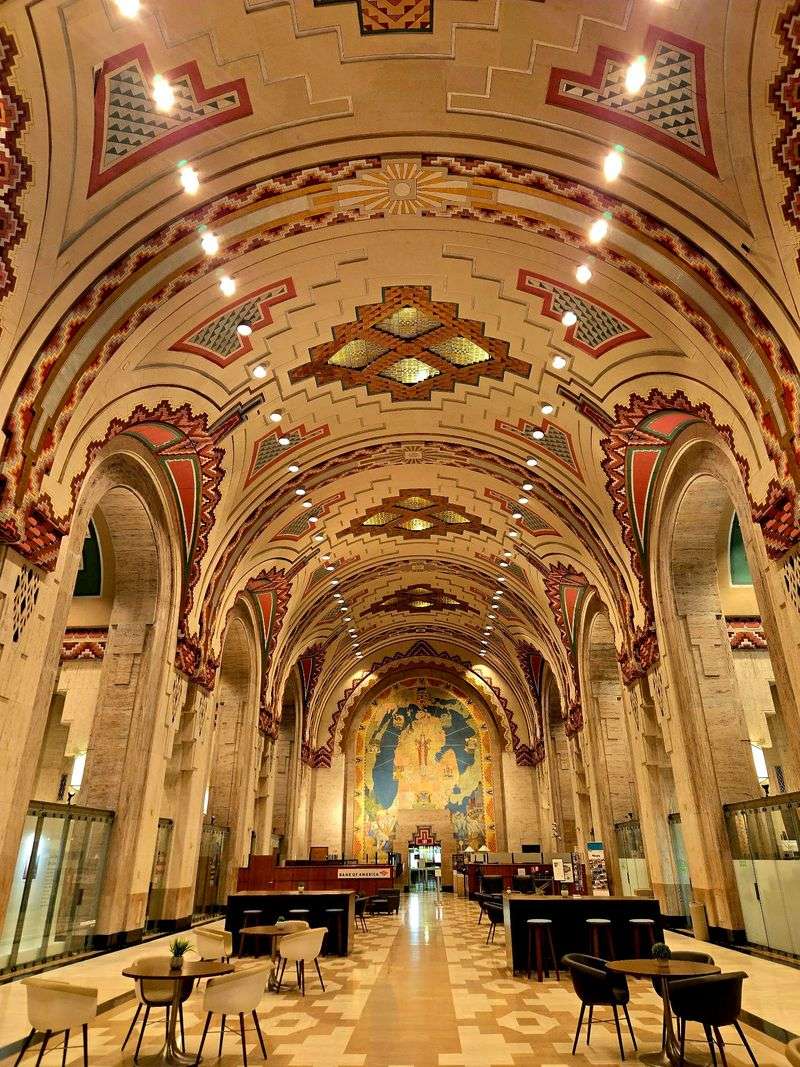
The former banking hall looks loud, but its ceiling was designed to soften sound. A painted canvas stretched over horsehair backing helped absorb noise when financial work filled the room.
Sixteen colors and geometric motifs turn that practical solution into a decorative feature rather than hidden engineering.
Pause quietly and notice the mood beneath the high surface. Crowds, conversations, and current activity affect what you hear, yet the room can feel calmer than its size suggests.
A guided tour may explain construction details more fully than signs alone.
Use binoculars only if they are compact and unobtrusive, or use camera zoom instead. Looking closely shows how Rowland solved an everyday problem without sacrificing color, pattern, grandeur, or human comfort anywhere.
Meet The Sculpted Guardians
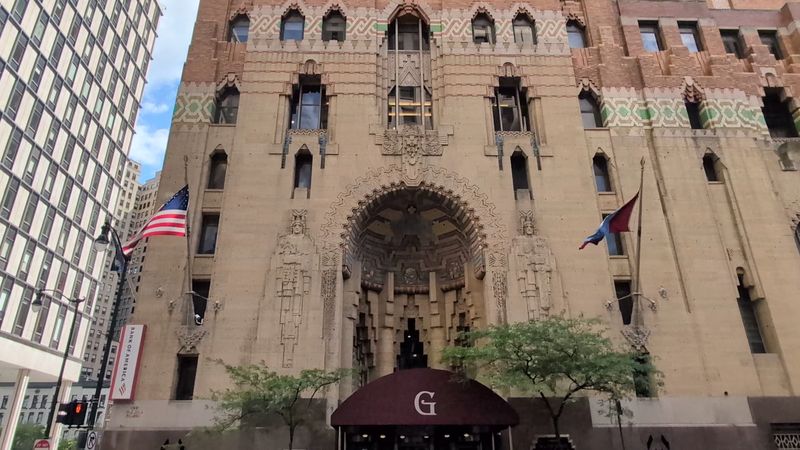
Before the lobby works its magic, the Griswold Street entrance offers a proper opening act. Sculptor Corrado Parducci’s stone reliefs, often identified as Safety and Security, flank the doorway.
Above them, symbolic ceramic details tied to Pewabic Pottery prepare careful eyes for the patterns indoors.
Cross the street only at a legal crossing to study the facade safely. The custom orange-red Guardian brick makes the tower easy to recognize among downtown buildings, especially when sunlight warms its surface.
Watch for traffic and avoid standing in doorways.
Photographers should take one vertical view for height, then a closer frame of the carvings. That sequence shows how the skyscraper moves from city scale to hand-finished detail before you even enter the lobby.
Notice The Towering Brick Design
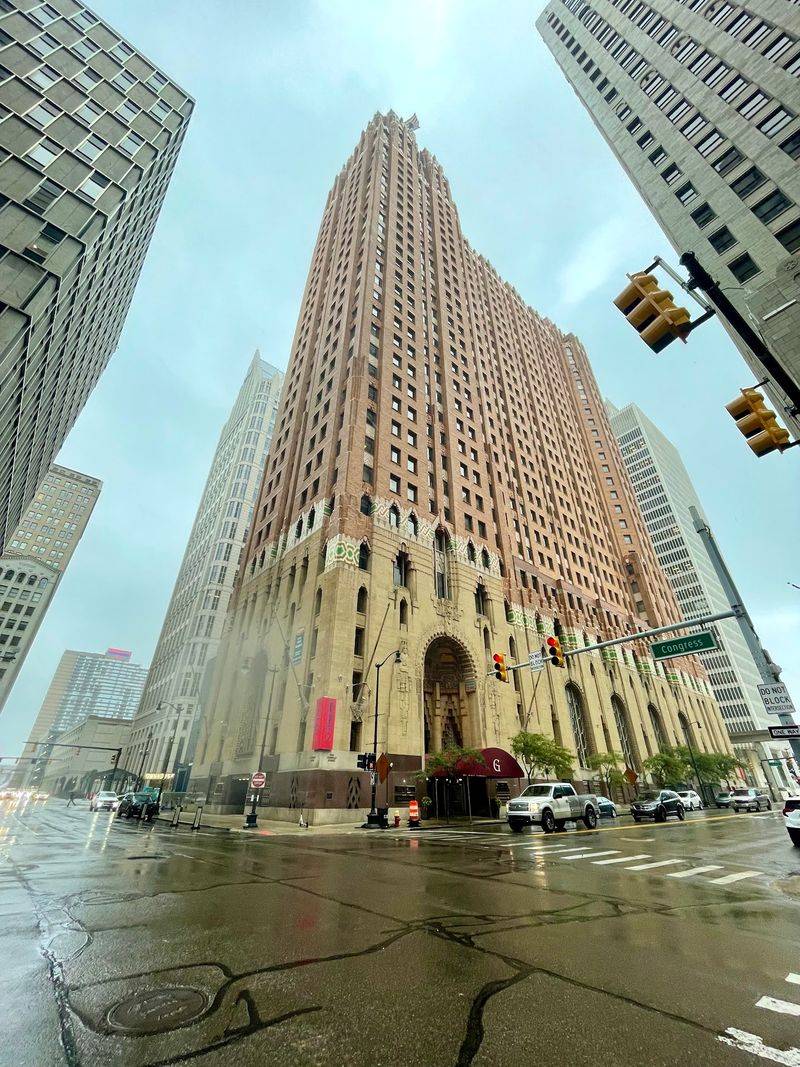
Nearly 1.8 million custom orange-red bricks wrap a skyscraper completed in 1929 after remarkably fast construction. Wirt C.
Rowland designed the towering building during Detroit’s industrial rise, and its strong vertical lines made ambition visible from blocks away. It was celebrated as an extraordinary masonry achievement for its time.
Walk around the accessible exterior before entering so the change from restrained mass to indoor color lands properly. Weather matters because rain deepens brick tones, while bright sun sharpens setbacks and shadows.
Comfortable shoes help on downtown pavement.
The building became a National Historic Landmark in 1989, recognizing architecture of national importance. Knowing that background changes the visit from pretty lobby stop into a lesson about Detroit’s bold late-1920s confidence downtown.
Plan A Daytime Visit
Free admission makes the Guardian Building unusually easy to add to a downtown day. Public access generally covers the grand lobby and former banking hall, while working offices and secure areas remain off limits.
Think of it as a living workplace, not an indoor playground.
Although online map listings may show broad building hours, lobby access can differ for weekends, holidays, private events, or security needs. Check the official Guardian Building website or call ahead, especially before a special trip.
Weekday daytime visits are the safest practical choice.
Carry minimal baggage, greet security, and follow posted signs without fuss. Courtesy keeps this remarkable public welcome working smoothly.
If an area is closed, simply enjoy what is open and return later.
Consider A Guided Tour
A casual lobby visit costs nothing, but a guided tour can reveal spaces not normally open to walk-in guests. Depending on the current offering, routes may include the historic bank vault or upper areas, along with deeper stories about artists, materials, and engineering.
Access and tour content can change.
Reserve through an official or established tour provider, and confirm the meeting point, price, duration, and accessibility before paying. Never assume a past route is guaranteed today.
Arrive early because late entry can be difficult in an operating office tower.
I found context especially useful after first wandering alone, since names like Rowland, Parducci, and Winter suddenly connected to visible details. Tour or not, the free lobby remains the essential experience.
Leave Enough Time To Wander
Rushing defeats a room built from thousands of small decisions. Set aside at least twenty to thirty minutes for the lobby, longer if you enjoy architecture, photography, or reading historical displays.
Seats may be available, but they can move or fill during events.
Start with one wide circuit, then return to a favorite corner. Elevator lobbies, stained glass figures, lanterns, and floor patterns deserve attention after the vaulted ceiling stops demanding every glance.
Retail and exhibit offerings may vary, so treat them as bonuses rather than promises.
Finish near the entrance and look back once. The colors arrange themselves differently from that angle, and the final view often feels richer than the first.
Leaving slowly is my simplest practical tip.