
This Stunning Ohio Cathedral Looks Like It Was Painted By The Hand Of God
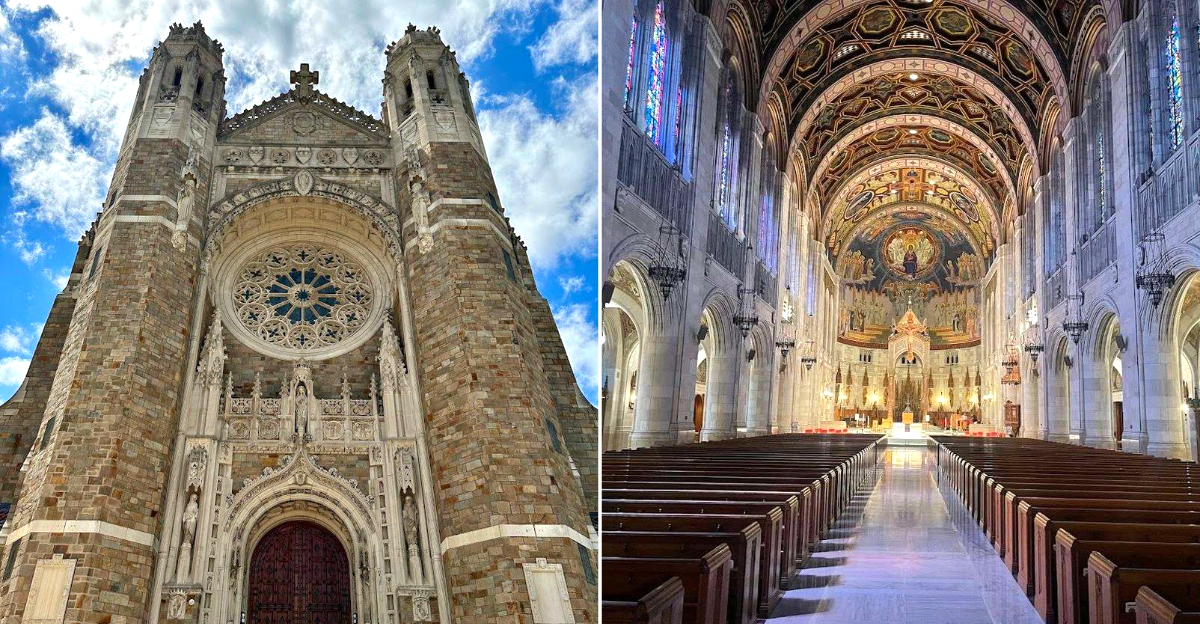
Some buildings do not need much time to make you stop talking.
This Toledo cathedral is one of them. You turn into a quiet neighborhood, see the stonework rise ahead of you, and suddenly the whole street feels like it is hiding something much bigger than expected.
Inside, the feeling only grows. The painted ceiling pulls your eyes up.
The stained glass changes the light. The marble, carvings, and silence make every step feel slower.
It is beautiful in a way that feels almost unreal, but not cold or distant.
This Ohio cathedral is a sacred space, an architectural treasure, and the kind of place that makes you lower your voice without even thinking about it.
2026 visitor notice: Rosary Cathedral is undergoing a major sanctuary restoration from June 8 through September 30, 2026. During this period, the cathedral is closed to ordinary sightseeing and is open to the public only for scheduled Masses.
A Cathedral That Rewrites Your Expectations
Most people drive past without realizing what they are looking at.
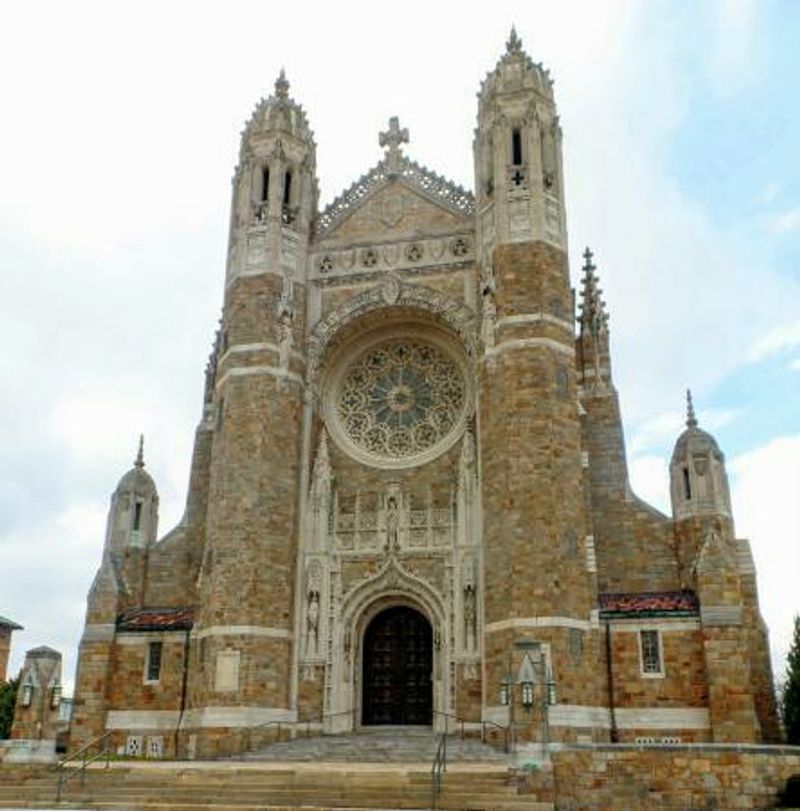
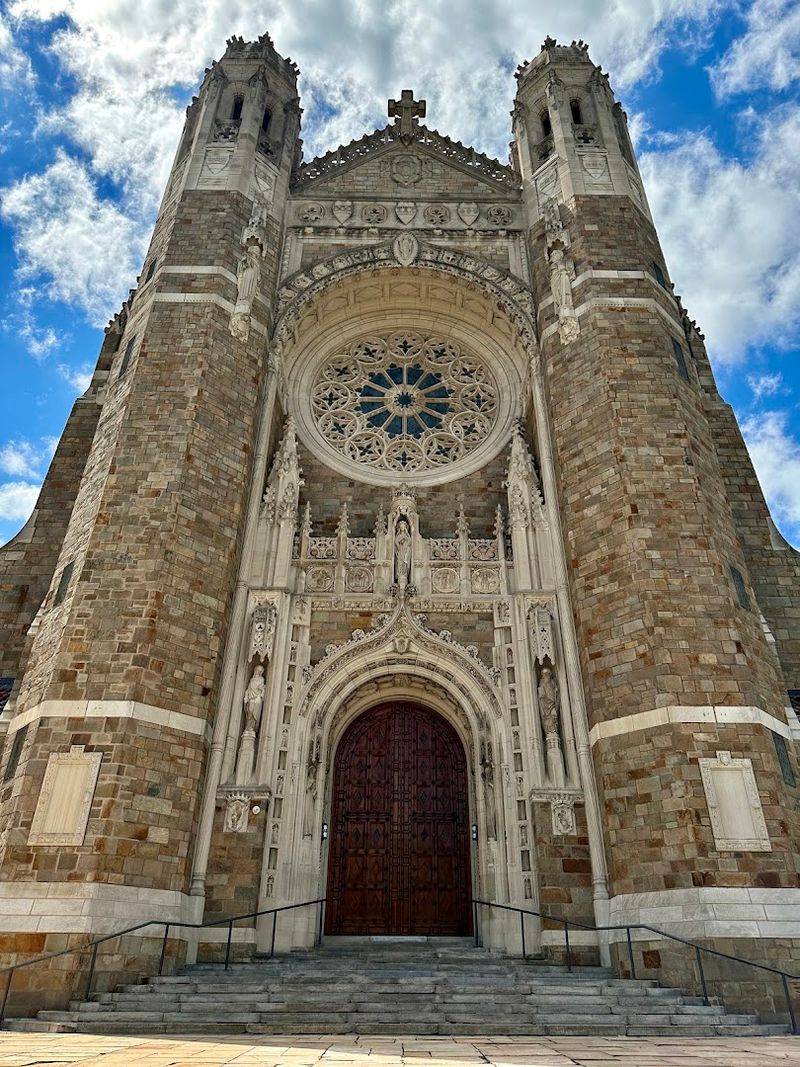
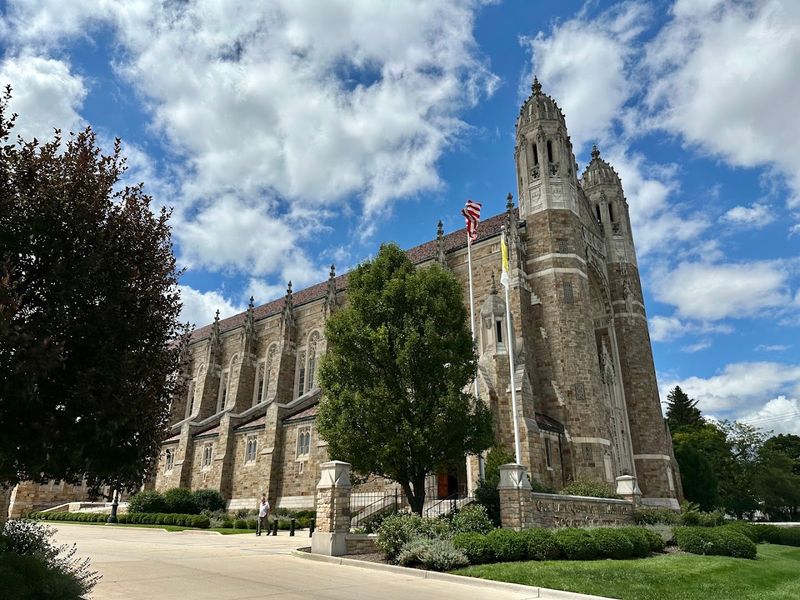
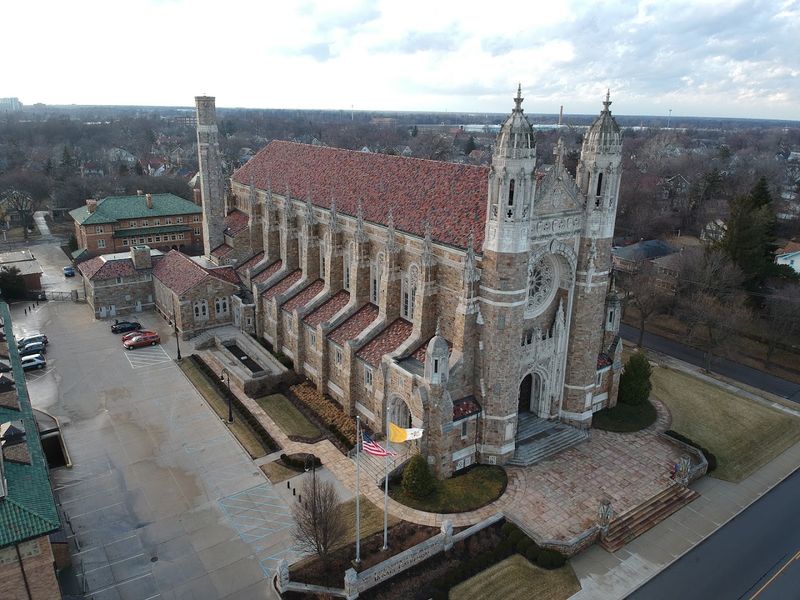
The exterior of Our Lady, Queen of the Most Holy Rosary Cathedral announces itself with the kind of architectural confidence that usually belongs to European capitals, not a mid-sized Midwestern city.
Built in the Spanish Plateresque style, the facade is covered in intricate stone carvings that seem to multiply the longer you stare at them. Grotesques, floral patterns, and religious figures compete for attention across every surface.
The building was constructed in the early twentieth century, and the craftsmanship on display reflects an era when artisans took genuine pride in the details that most people would never notice up close.
I spent a solid ten minutes just standing outside, tilting my head at different angles trying to absorb it all.
The cathedral sits at 2535 Collingwood Blvd, Toledo, OH 43610, right in the heart of a quiet neighborhood that makes the grand scale of the building feel even more surprising when you first round the corner.
The Painted Ceiling That Stopped Me In My Tracks
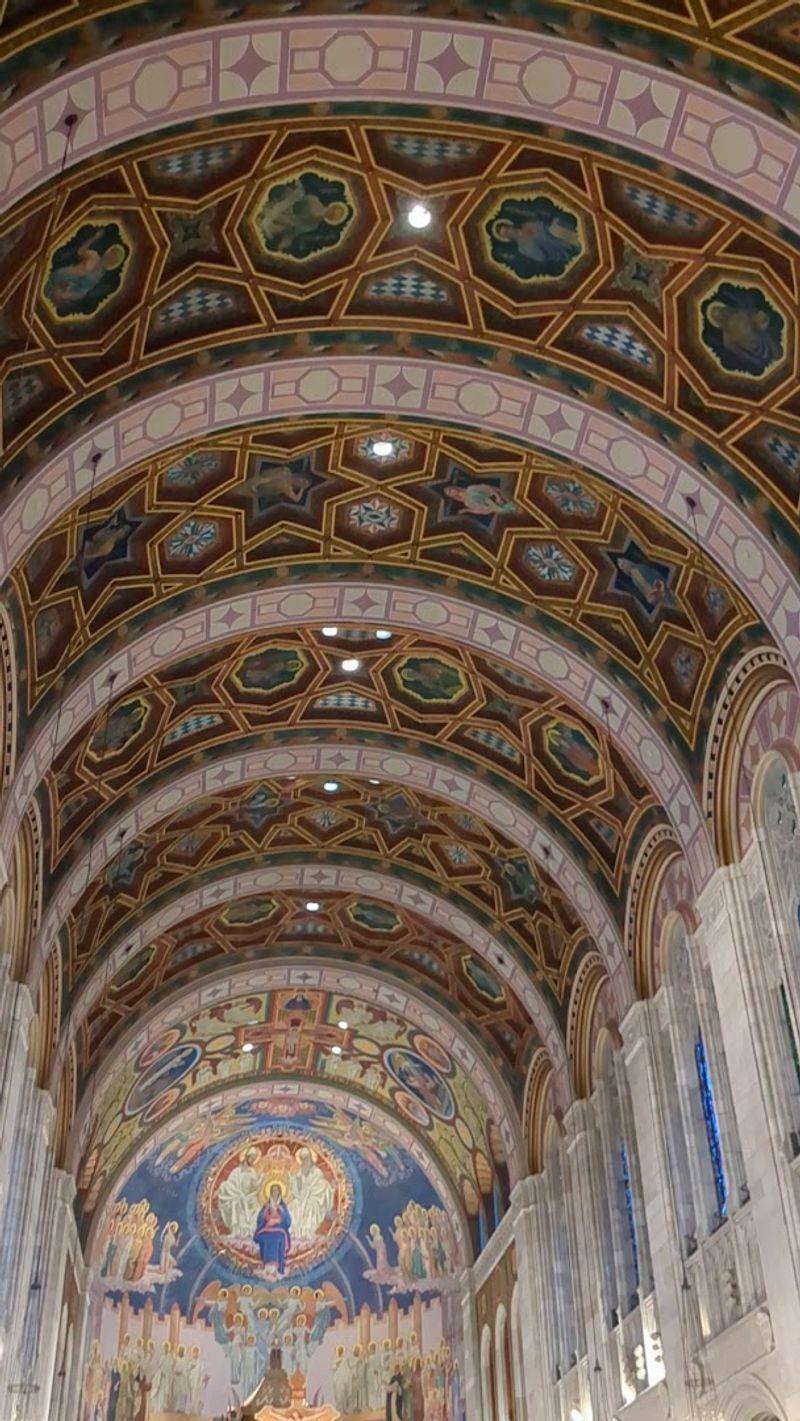
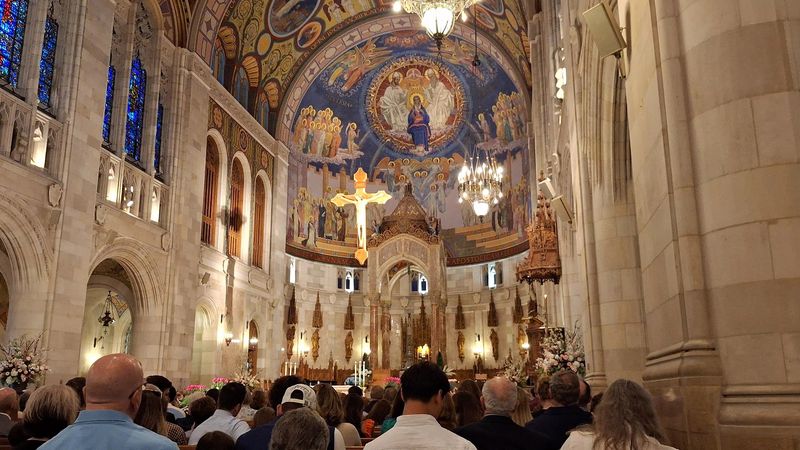
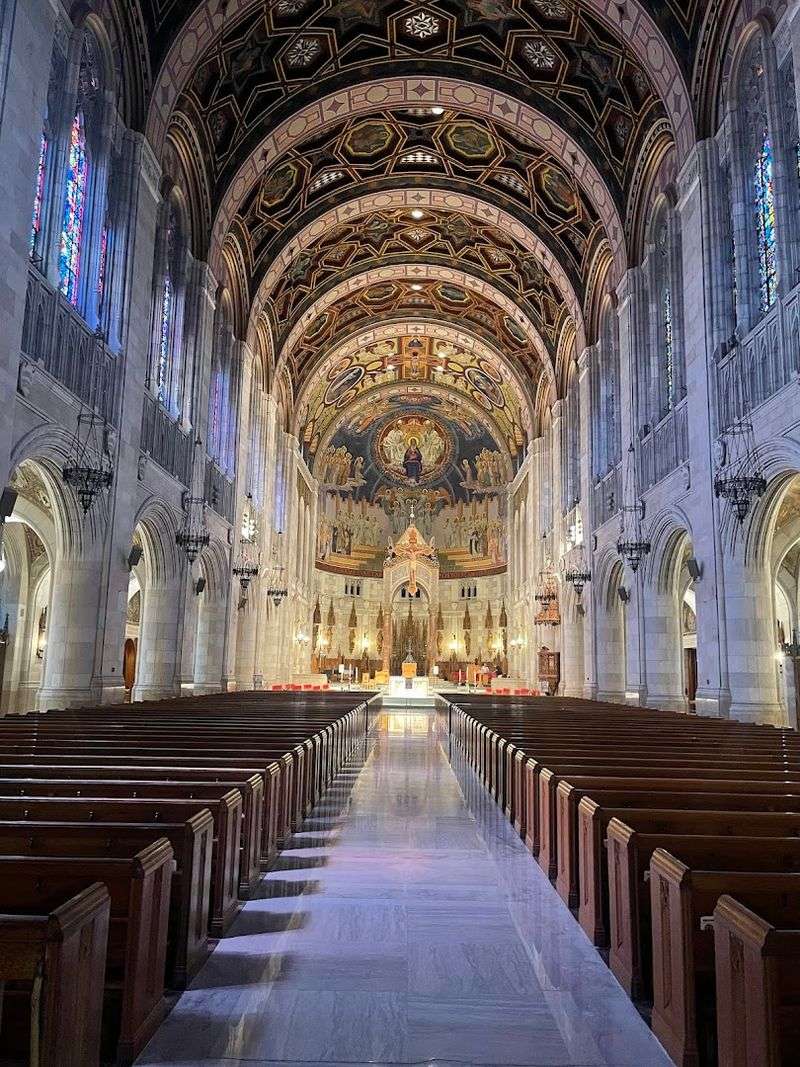
Nothing prepares you for looking up inside this cathedral. The ceiling stretches overhead in a sweep of color and detail that genuinely made me forget what I had walked in to do.
Rich blues, deep reds, and warm golds fill every panel, with religious scenes and decorative motifs woven together in a design that rewards close attention. It reminded me of the kind of ceiling you expect to find in Rome, not tucked away in northwestern Ohio.
The painted ceiling works in conversation with the architecture below it, so the whole interior feels unified rather than cluttered. There is a logic to the visual storytelling, and once you start following the imagery, it is hard to stop.
I found myself craning my neck for so long that I had to sit down in one of the pews just to give myself a better angle. Honestly, that was not a bad outcome.
The pews are comfortable, the light is soft, and the silence in here has a quality that city noise simply cannot touch.
Stained Glass That Turns Sunlight Into Something Sacred
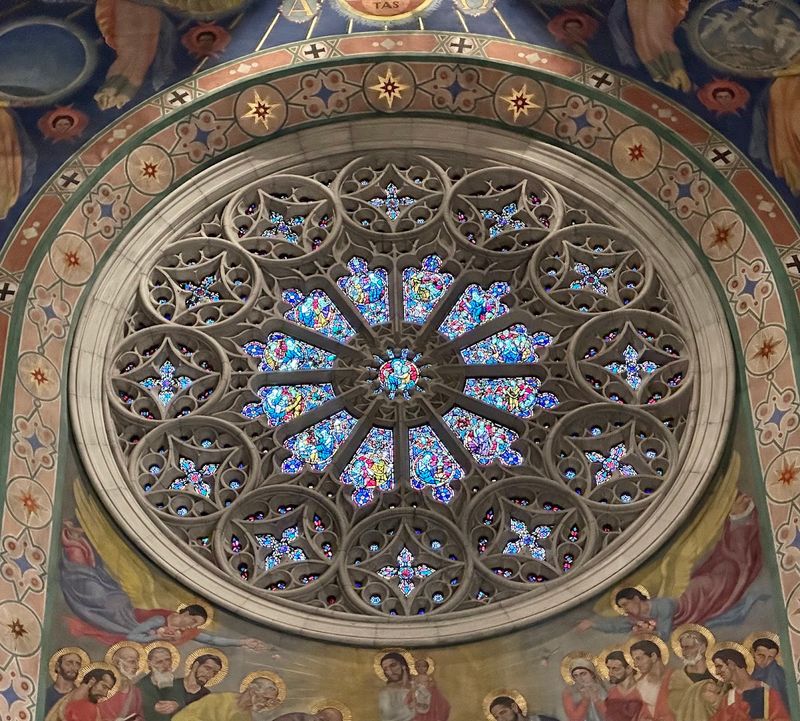
Sunlight behaves differently inside this cathedral. The stained glass windows filter it into ribbons of color that shift across the marble floors as the hours pass, turning the whole interior into something that feels almost alive.
The windows combine religious figures, Church symbolism, and carefully arranged artistic themes rather than each presenting a single story from scripture.
The large panels represent different orders and groups within the Church, while smaller windows depict patron saints associated with nations and continents.
What struck me most was how the appearance of the glass changes with the available daylight. The figures are expressive, the colors are deep and saturated, and the leading work is precise enough to suggest real artistic ambition behind every panel.
Visiting under different lighting conditions can give you a different view of the windows each time.
Under normal visitor conditions, the self-guided tour brochures available inside the cathedral do a solid job of explaining the iconography, so grabbing one before you start your walk-around is a smart move.
The Organ That Fills Every Corner Of The Room
Sound in a space like this is its own kind of architecture. The E.M.
Skinner pipe organ at Rosary Cathedral was installed in 1931, and when it plays during Mass or a scheduled concert, the music does not just fill the room, it occupies it completely.
The organ’s tonal range is wide enough to shift from delicate, almost whispered passages to full-throated, chest-vibrating waves of sound without ever feeling strained.
The acoustics of the cathedral work with the instrument in a way that makes attending a liturgy or concert feel like a genuine musical event.
I happened to catch a few notes during my visit, and even that brief sample was enough to understand why people mention the organ specifically when they talk about what makes this place special.
Sunday Mass begins at 10:00 AM and normally concludes around 11:00 AM.
During the summer 2026 restoration, the cathedral is open to the public only for scheduled Masses, making a liturgy the available way to experience the interior until ordinary visitor access resumes.
Marble And Stonework That Belongs In A Museum
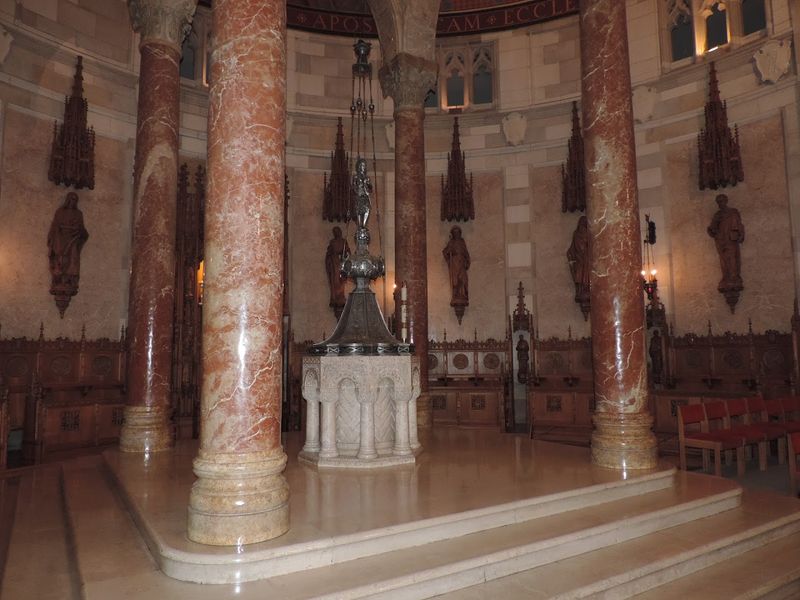
The marble inside this cathedral is not decorative in the way that a hotel lobby uses marble.
It is structural, expressive, and deeply intentional, appearing across floors, columns, altars, and chapel details in patterns that feel carefully composed rather than simply expensive.
The stonework throughout the building carries the same level of care. Carved details appear at eye level, above doorways, around the bases of columns, and along the edges of the sanctuary, so there is always something new to notice no matter how many times you have visited before.
I kept running my hand along the surfaces just to confirm that what I was seeing was real and not painted on. It is all real, and the texture of it adds a physical dimension to the experience that photographs simply cannot replicate.
The bronze tabernacle in the Blessed Sacrament Chapel deserves its own moment of attention. Rising more than six feet from an Italian onyx plinth, its tower-like design recalls architectural details associated with Toledo, Spain.
It is ornate, beautifully proportioned, and sits in a chapel that frames it perfectly. If you walk past it too quickly, you are genuinely shortchanging yourself on one of the best details in the building.
Biblical Stories Written In Stone And Color
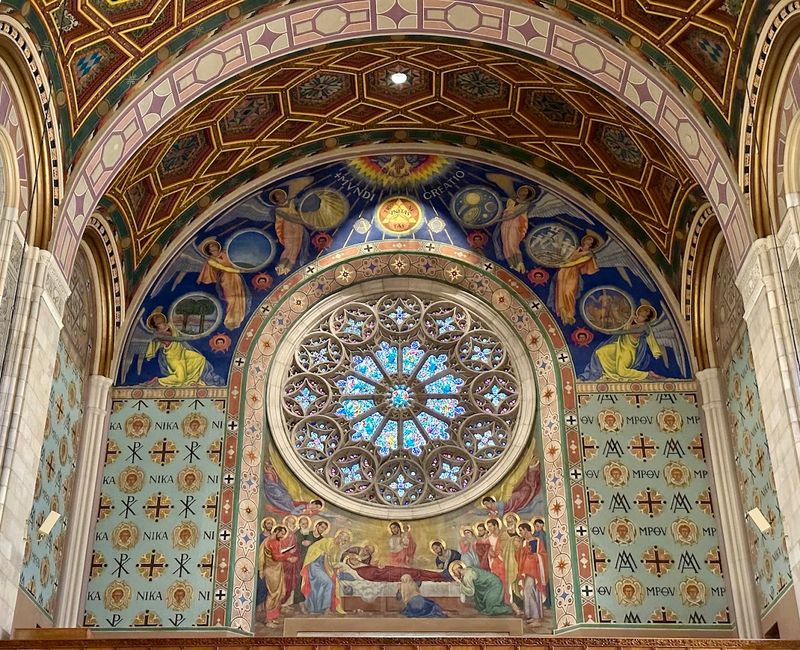
Every surface in this cathedral is doing narrative work. The icons, carvings, mosaics, and painted panels collectively tell the story of the Bible in a way that functions almost like a visual library for anyone willing to slow down and look.
The self-guided tour brochure available at the side entrance does an excellent job of mapping out which stories appear where, and working through it feels a little like solving a very beautiful puzzle.
I followed it section by section and kept discovering details I had missed on my first pass through the building.
What makes the iconography here particularly effective is the consistency of the artistic vision. Nothing feels random or tacked on.
The figures, the colors, and the compositional choices all speak the same visual language from one end of the cathedral to the other.
Religious art at this scale can sometimes feel overwhelming or inaccessible, but the design of this space guides your attention in a way that feels welcoming rather than demanding.
It is the kind of place that rewards curiosity without punishing ignorance.
How To Plan Your Visit Without Any Surprises
A few practical things are worth knowing before you show up. Rosary Cathedral is undergoing a major sanctuary restoration from June 8 through September 30, 2026, and during this period the building is closed to ordinary sightseeing.
The regular Mass schedule continues during the project, and the cathedral is open to the public for those liturgies.
Weekday Mass begins at 7:00 AM Monday through Friday, Saturday daily Mass begins at 8:00 AM, the Saturday vigil begins at 5:00 PM, and Sunday Mass begins at 10:00 AM.
Under normal visitor conditions, guests are welcome around Mass times and during parish office hours from 9:00 AM to 4:00 PM Monday through Friday.
The side entrance farthest from Collingwood Boulevard has an accessible ramp and is the entrance most commonly unlocked.
Self-guided tour brochures are normally available near that side entrance, and a printable copy can be found through the cathedral’s website. Guided tours for groups require advance arrangements.
The phone number is 419-244-9575 if you need to confirm restoration updates, access, Mass times, or tour availability before making the trip.
The Atmosphere That Makes You Lower Your Voice Automatically
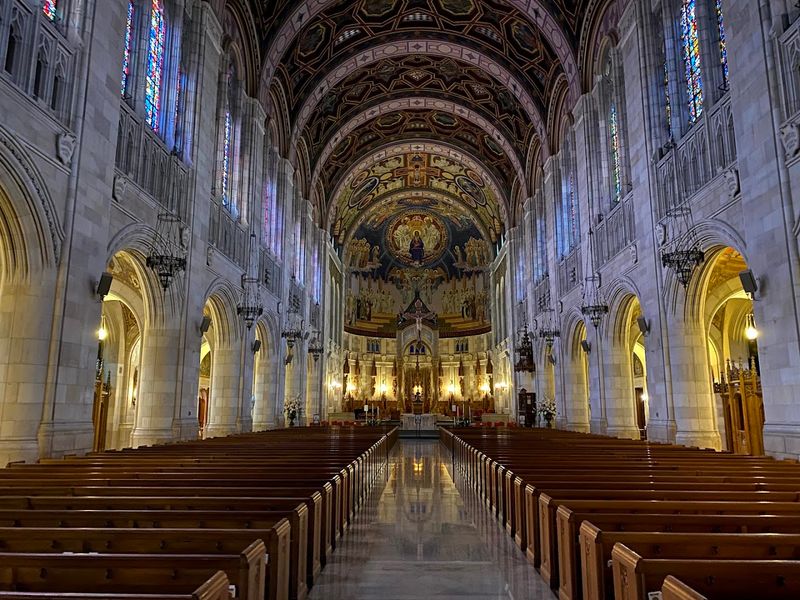
There is a particular quality of silence that old sacred spaces generate, and this cathedral has it in full measure.
The moment you step inside, the ambient noise of the street outside drops away completely, replaced by a stillness that feels almost physical.
The proportions of the nave contribute to this effect. The ceiling is high enough to create genuine acoustic separation from the world outside, and the thick stone walls absorb sound in a way that modern construction simply cannot replicate.
I noticed that everyone inside, regardless of whether they were there to pray or simply to look around, instinctively lowered their voices. The space itself seems to request a certain kind of attention, and most people respond to it without being asked.
That quality of peace is one of the things visitors mention most consistently, and it is easy to understand why.
Beauty and quiet together create a combination that is genuinely rare in daily life, and spending even thirty minutes in a space like this can reset your whole afternoon in the best possible way.
A Pilgrimage Destination For Groups And Individuals Alike
The cathedral welcomes organized groups interested in exploring its religious art, architecture, and history.
Volunteer-guided tours are available by appointment for groups of ten or more, depending on guide availability.
Groups with fewer than fifty people should provide at least one week’s notice. Groups of fifty or more are asked to contact the parish at least one month before the proposed visit so enough guides can be arranged.
Tours are most commonly scheduled during parish office hours or before and after regular Masses. Other times may occasionally be possible, but they should not be assumed without direct confirmation from the parish office.
Smaller groups and individual visitors can normally use a self-guided tour pamphlet when ordinary visitor access is available. The brochure explains many of the frescoes, windows, carvings, chapels, and symbolic details found throughout the building.
During the summer 2026 restoration, the cathedral is closed to ordinary tours and sightseeing and is open to the public only for Mass.
Groups planning a later visit should contact the parish directly before making transportation or itinerary arrangements.
What Makes This Place Feel Different From Other Cathedrals
Plenty of cathedrals are impressive. Fewer of them feel genuinely alive in the way this one does.
The combination of architectural ambition, detailed artwork, and a real active parish community gives Rosary Cathedral a quality that purely tourist-facing churches often lack.
The human element is a big part of what sets it apart. The ushers who hand you a hymnal at Sunday Mass, the staff who help groups plan their visits, and the regular parishioners who have been coming here for decades all contribute to a sense of place that goes beyond the physical structure.
The building itself is extraordinary, but buildings without people are just shells. Here, the two reinforce each other in a way that creates something genuinely special and hard to replicate elsewhere.
I have been to cathedrals in several countries, and the honest truth is that this one holds its own in that company.
The Spanish Plateresque style is relatively rare in American Catholic architecture, which makes Rosary Cathedral a legitimate architectural curiosity as well as a functioning place of worship.
That double identity is what keeps it interesting on every level.
Why Toledo Deserves A Spot On Your Travel Map
Toledo does not always make the top of people’s travel lists, and that is honestly its own kind of advantage.
The city is easy to navigate, relatively affordable to visit, and full of surprises for anyone willing to look past the obvious.
Rosary Cathedral is the kind of discovery that reframes a whole city for you. Once you have seen what is possible here, you start paying closer attention to everything else Toledo has to offer, and the city tends to reward that attention generously.
The cathedral’s neighborhood on Collingwood Boulevard has a quiet, residential character that makes the building feel even more remarkable by contrast.
There is no tourist infrastructure surrounding it, no souvenir shops or tour buses, just a genuinely stunning piece of architecture sitting in a real neighborhood where real people live.
That authenticity is increasingly hard to find in travel, and it is one of the best reasons to add this stop to your itinerary.
Ohio has more than its share of underrated destinations, and this cathedral sits comfortably at the top of that list for anyone who cares about beauty, history, and the kind of craftsmanship that takes your breath away.