
This Tennessee Mountain Overlook Is The Peaceful Spot Locals Flee To When Life Gets Loud
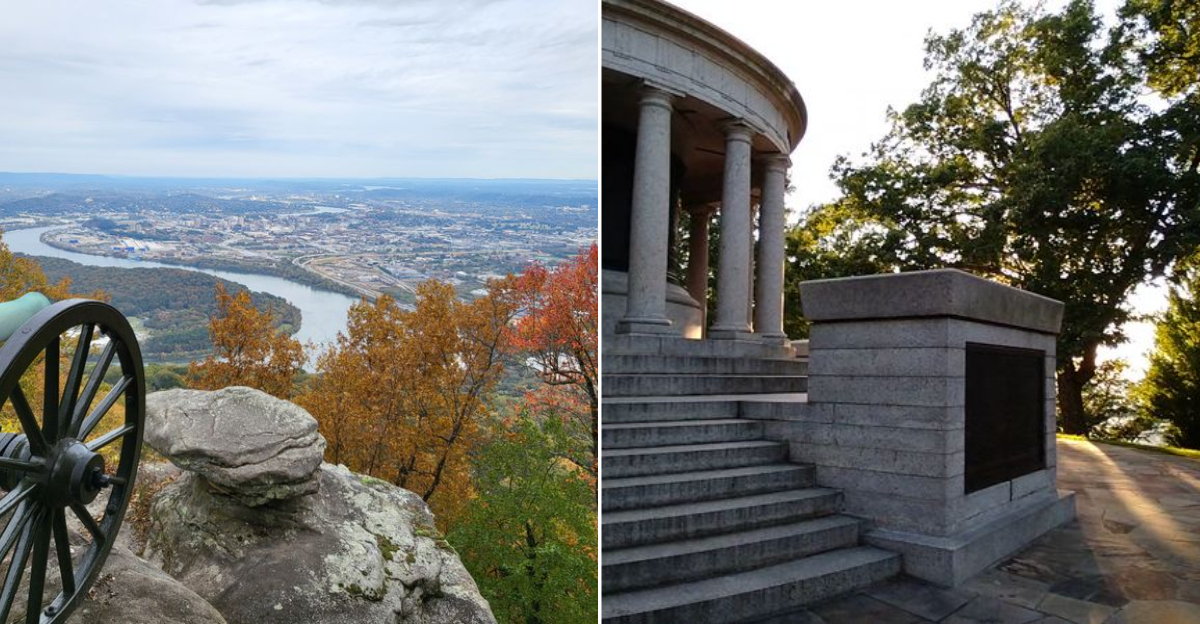
When life gets loud in a way that feels constant rather than momentary, the wind at Point Park Overlook on Lookout Mountain has a surprising ability to step in and hush it without asking permission.
The moment you reach the overlook, the city of Chattanooga spreads out below in a way that feels reassuring instead of overwhelming, the river tracing its familiar bends, bridges holding their lines, rooftops settling into a pattern that suddenly makes sense.
What felt chaotic from street level becomes legible from above, as if distance itself is doing some quiet work on your behalf.
The park carries its history calmly.
Cannons, stone pathways, and monuments sit firmly where they’ve stood for generations, not competing for attention but anchoring the space in a steady kind of silence.
Locals come here often, slipping up the mountain for a reset that doesn’t require a hike, a plan, or a specific mindset.
You can arrive tired, distracted, or restless and let the place absorb that for you. The breeze moves through in slow waves, conversations naturally drop in volume, and even busy thoughts seem to loosen their grip.
You don’t have to do much here except stay present long enough to notice the shift. Take a few deep breaths, walk the short paths, sit on a bench longer than intended.
These practical tips are meant to help you navigate the overlook smoothly, so you can spend less time figuring things out and more time savoring the view, the air, and the rare relief of a moment that asks nothing from you in return.
Timing Your Visit For Quiet
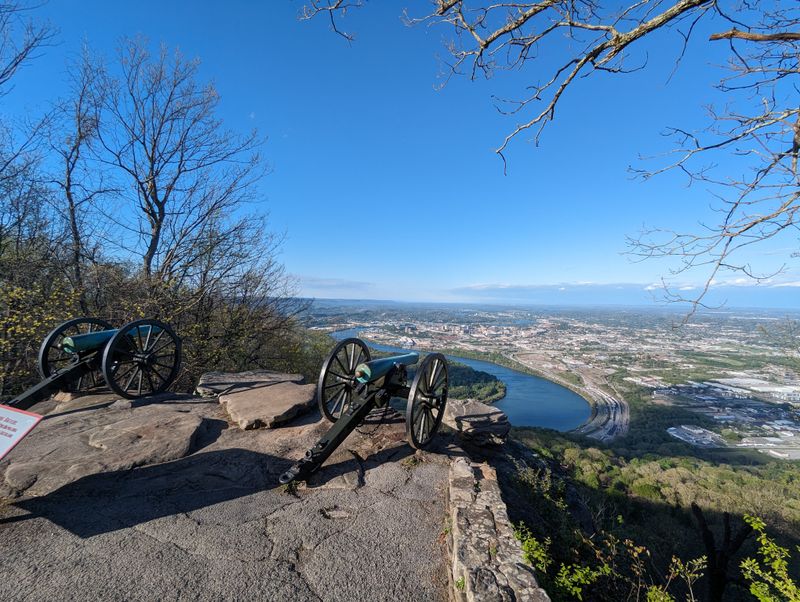
Arriving just after sunrise tends to be the moment when the park feels most like it belongs to you alone, with gates opening into air that still carries night coolness and a quiet that settles before the first voices arrive.
Soft morning light spreads across the Tennessee River below, turning its surface pale and silvery while the city stretches awake without urgency or noise.
Footsteps sound clearer at this hour, echoing lightly against stone paths and monuments that feel less like landmarks and more like calm witnesses.
Birdsong carries easily across the overlook, filling pauses that later hours surrender to conversation and camera shutters.
Choosing this window allows your thoughts to slow naturally, as if the mountain sets the pace without instruction.
Even a short stay feels elongated in the early hours, thanks to the absence of crowds and the generosity of space.
Leaving before midmorning often brings the quiet satisfaction of having received something private and fleeting.
Parking And Entry Made Simple
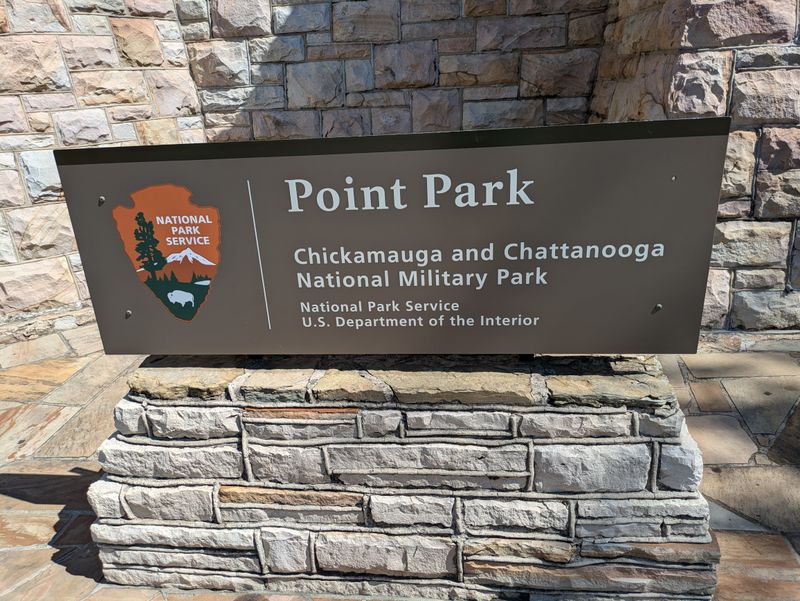
Setting your map to 110 Point Park Road gently guides you upward through curves that begin easing the mind long before you reach the entrance gate.
Parking sits close and clearly marked, eliminating the friction that often spoils scenic stops and letting anticipation remain focused on the view ahead.
The entrance kiosk keeps the process efficient, with a small fee collected quickly so arrivals never feel stalled or rushed.
Waiting briefly in line can actually serve as a soft transition, offering time to notice stonework, trees, and glimpses of the valley opening below.
Checking National Park Service hours ahead of time prevents distraction and keeps the visit aligned with calm rather than logistics.
Once inside, the path layout feels intuitive, guiding you forward without confusion or unnecessary decisions.
Within minutes of stepping past the gate, the overlook reveals itself, rewarding even the most impatient traveler.
Savoring The Signature View
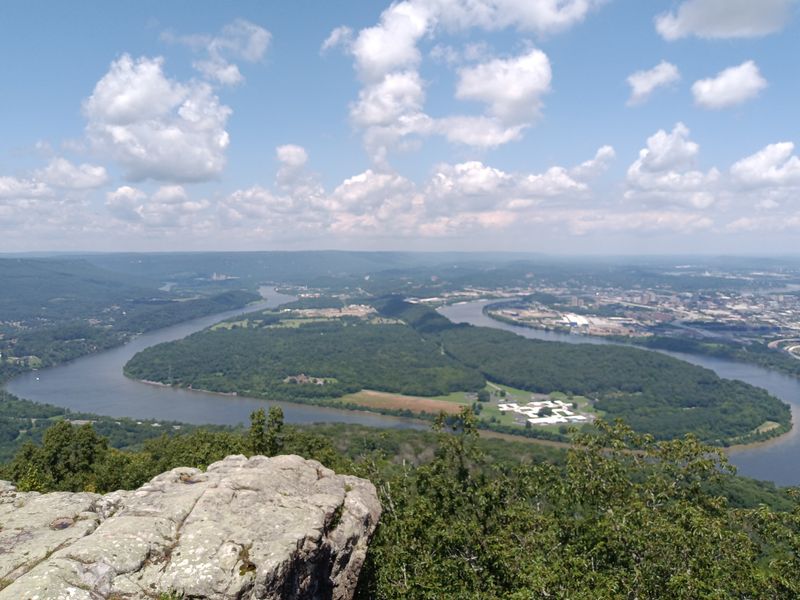
Stepping up to the overlook rail invites an instinctive pause, as the scale of the valley immediately shifts attention outward and downward.
The Tennessee River curves patiently through the landscape, its movement steady enough to slow breath and steady scattered thoughts.
Layered hills fade into soft distance, offering a visual reminder that perspective expands when space opens.
Bridges and neighborhoods below read clearly yet quietly, connected but no longer demanding participation.
Leaning against the rail grounds the body while the view gradually loosens mental tension without effort.
Wind brushes past in small waves, carrying sounds that blur into calming background rather than interruption.
Staying still for several minutes often feels easier here, as if the overlook itself holds space for unhurried reflection.
Respecting The Park’s Quiet Culture
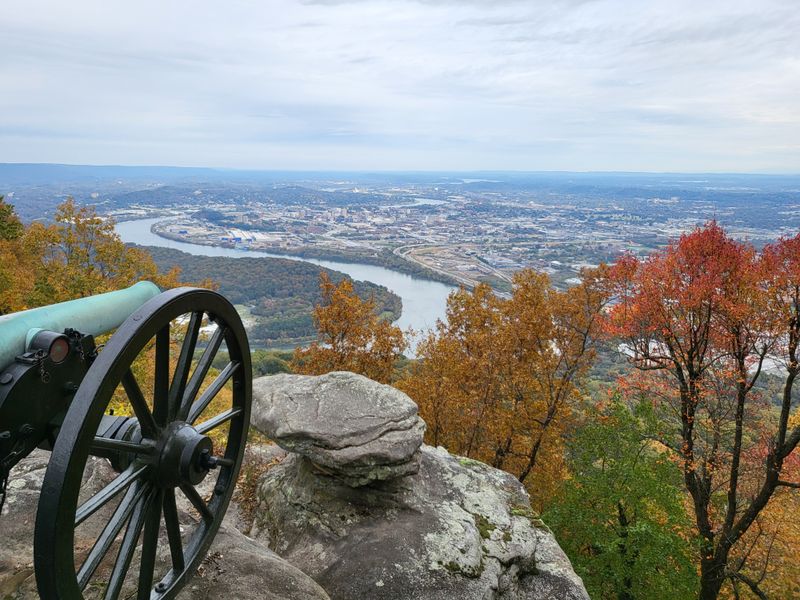
Voices naturally drop in volume once you spend a few minutes here, as the atmosphere subtly encourages softer speech and slower movement without any posted reminders or enforcement.
Keeping music confined to headphones and calls short helps preserve the shared calm that draws locals up the mountain when they need a break from everyday noise.
The stillness feels collaborative rather than imposed, shaped by visitors who intuitively sense that this overlook works best when everyone treats it gently.
Standing back from the rail when others are absorbing the view maintains a rhythm of courtesy that keeps the space from feeling crowded even on busier days.
Paths invite wandering at an unhurried pace, making it easy to coexist without negotiation or tension.
Small gestures, like a nod or quiet smile when yielding space, reinforce the sense that this is a collective retreat rather than a personal stage.
Leaving the park as calm as you found it ensures the next visitor arrives to the same rare hush.
Walking The Monuments And Cannons
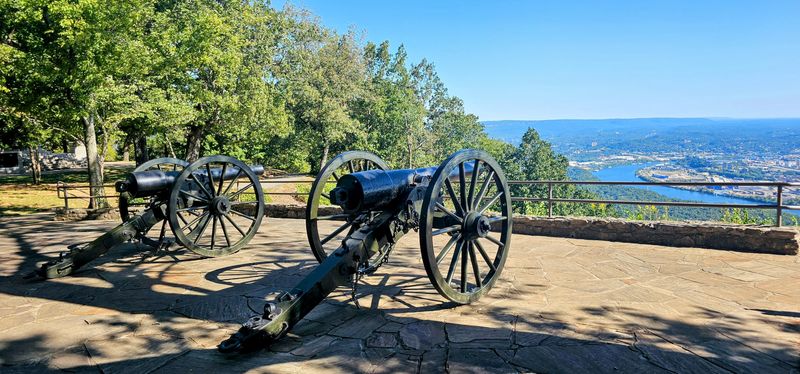
Stone paths loop past cannons and markers that feel less like dramatic statements and more like steady punctuation marks across the ridge.
Bronze and weathered stone create silhouettes against the valley that quietly anchor the park in time, offering grounding without demanding attention.
Moving slowly between these points allows history to settle in as context rather than content, present but never overwhelming.
The cannons frame the view in unexpected ways, reminding you how landscape and memory often share the same physical ground.
Reading plaques becomes optional rather than required, since the atmosphere encourages reflection more than information gathering.
The path itself is forgiving and gently sloped, making it possible to stay mentally present instead of focused on footing.
A loop around the monuments often ends back at the overlook, where perspective feels newly refreshed.
Packing Light But Smart
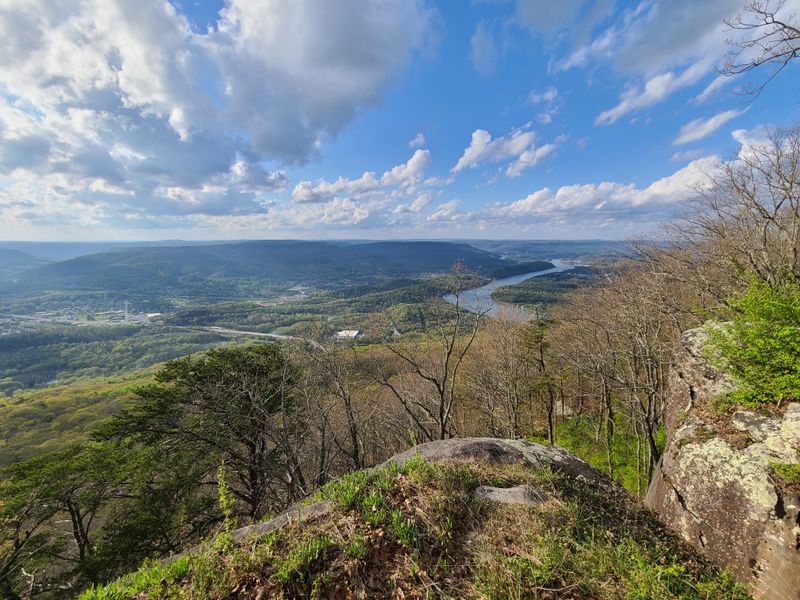
Carrying only the essentials helps keep the visit aligned with ease, reducing distractions that tend to follow heavier planning.
Water and a light jacket usually cover most needs, especially since breezes at the overlook can feel cooler than expected even on warm days.
A phone or compact camera is more than enough to capture the view without pulling attention away from experiencing it.
Notebooks or journals slip easily into a small pack, offering space for thoughts that surface naturally in quiet surroundings.
Footwear with minimal grip works well on stone paths and gravel, preventing unnecessary caution from interrupting the mood.
Skipping bulky gear reinforces the feeling that nothing needs to be managed here beyond your own presence.
Leaving with shoulders unburdened often mirrors the lighter feeling that settles in by the time you head back down the mountain.
Catching Golden Hour And Blue Hour
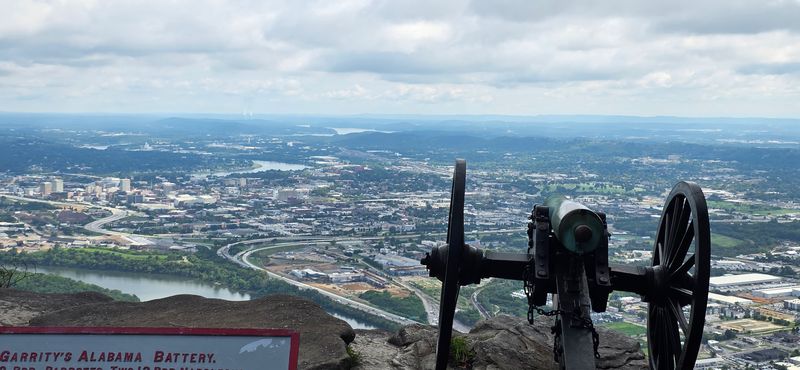
Arriving as the sun lowers toward the ridgeline allows the light to shift slowly across the valley, turning the Tennessee River into a reflective ribbon that gathers warmth first and then releases it in layered tones of amber and pale gold.
Buildings and streets below begin to glow softly rather than sparkle, creating a gradual transition that feels more meditative than dramatic as the city eases from afternoon movement into evening rhythm.
As golden hour fades, blue hour settles in almost unnoticed, cooling the scene and smoothing contrasts until everything feels evenly held within the widening dusk.
The overlook becomes quieter at this point, not because fewer people remain, but because conversations pause longer and voices naturally drop.
Watching lights flicker on across neighborhoods delivers a sense of continuity rather than urgency, suggesting life carrying on without requiring your involvement.
Standing still through both phases creates a full visual arc that feels complete even if the visit itself is brief.
Leaving after dark often carries a deeper calm, as though witnessing the transition helped close the day deliberately rather than abruptly.
Finding A Quiet Bench Retreat
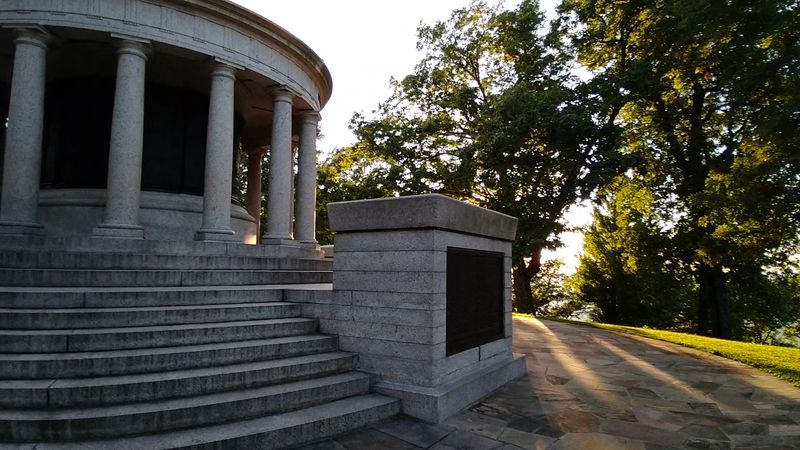
Stepping away from the main overlook reveals benches tucked gently along side paths, where the view narrows slightly and becomes softer rather than smaller.
These spots hold their own kind of stillness, framed by leaves, stone, and partial glimpses of the valley that feel private without being hidden.
Sitting here encourages posture to relax almost immediately, shoulders dropping and breath evening out as external stimulation thins.
Sounds become more textural than directional, wind in branches, distant footsteps, muted traffic far below.
Time stretches without notice while attention drifts toward small details like shifting shadows or lichen on stone.
The bench creates a pause that feels personal, allowing calm to settle inward rather than remain outward-facing.
Returning afterward to the main overlook often feels like seeing it for the first time again.
Mindful Breathing At The Rail
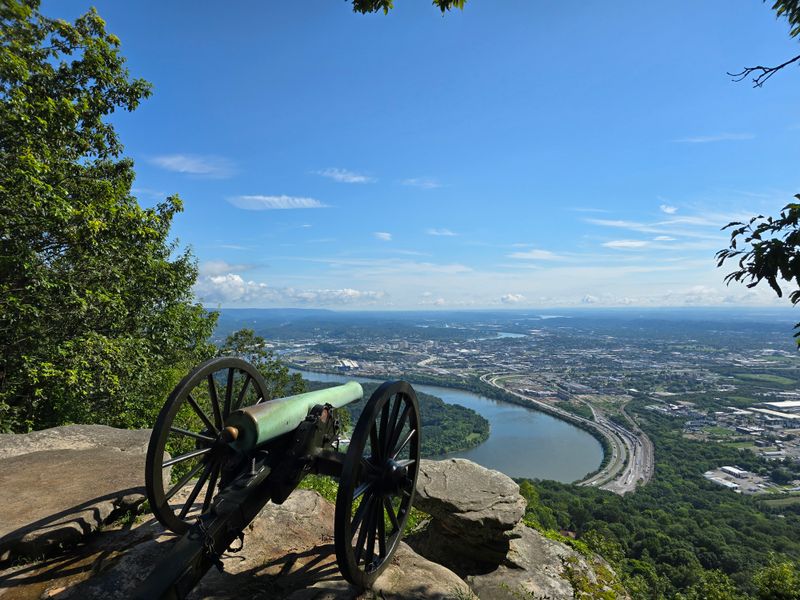
Resting both hands on the stone or metal rail establishes a sense of physical grounding that makes focused breathing feel natural rather than forced.
Slow inhalations paired with equally long exhalations synchronize easily with the visible expansiveness of the valley below.
The river’s steady curve provides a visual anchor for wandering attention, offering something constant when thoughts attempt to drift forward or backward.
Passing clouds or birds give motion without demand, making it easier to stay present without actively controlling the mind.
Counting only a few breath cycles creates measurable calm that builds quietly rather than dramatically.
Distractions lose urgency here, dissolving into background rather than requiring resolution.
Even a brief breathing pause often lingers afterward, carrying the mountain’s steadiness back into daily life.
Closing Your Visit With Gratitude
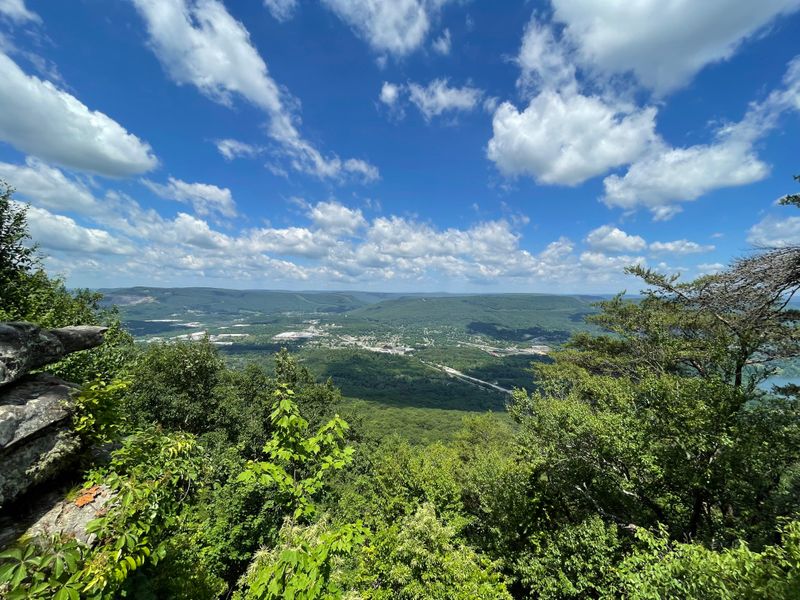
Before turning back toward the path and parking area, pausing for one last, unhurried look across the valley helps seal the calm you came for, allowing the full shape of the river, ridges, and city to settle into memory rather than slipping away as background scenery.
Naming a few simple points of gratitude, a steady breeze, a moment of quiet, the fact that this place exists and remains accessible, gives structure to the feeling without making it sentimental or performative.
The act is less about optimism and more about acknowledgment, recognizing that peace arrived not because anything was solved, but because perspective widened just enough.
Walking away slowly matters, as the transition from overlook to path mirrors the shift you are making internally, from stillness back toward movement.
Stone steps and monuments pass at an easier pace now, and even the sounds of other visitors register as part of the environment rather than interruptions.
The drive down the mountain often feels shorter than expected, carrying a residual softness that makes traffic and noise easier to absorb.
Knowing you can return without ceremony or announcement turns the overlook from a destination into a quiet resource, one that waits patiently for the next moment life becomes loud again.