
This Texas Gulf Town Proves Golf Carts Beat Cars
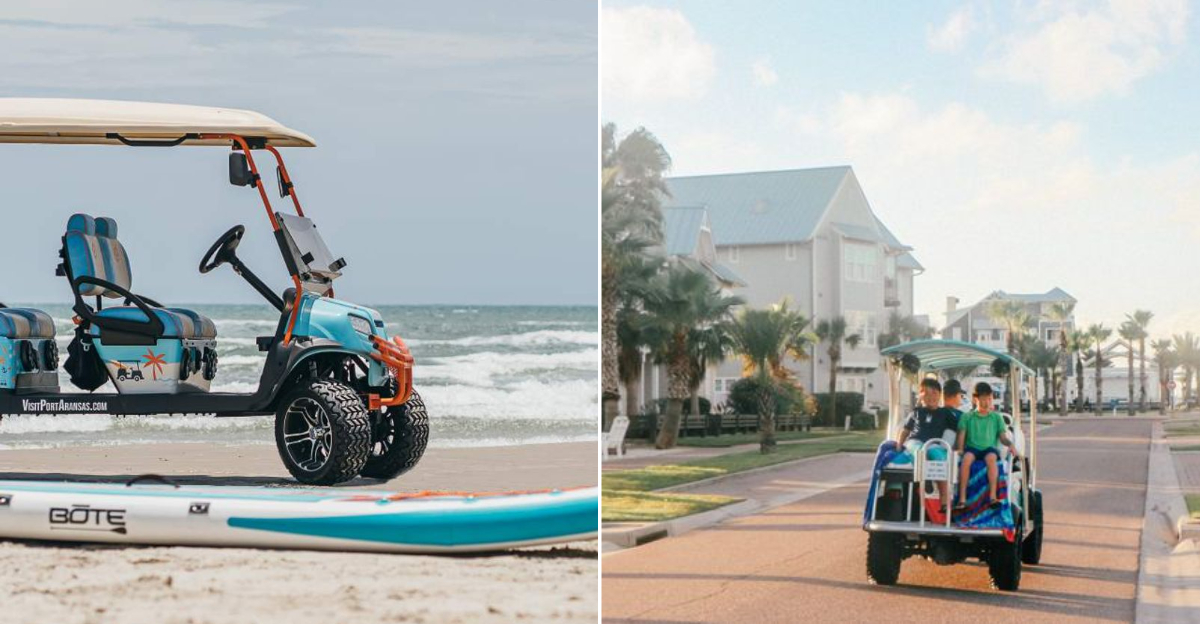
I came to Port Aransas with visions of sandcastles and fish tacos, only to discover the real thrill rides on four small wheels. Golf carts hum along the shoreline beside pickup trucks, headlights aimed at the surf, tires pressing into sand instead of pavement.
The whole town seems designed for this rhythm, alleys, crossings, and beach stretches where a cart takes you further than a car ever could. Locals wave as they pass, visitors grin as they figure it out, and suddenly you feel folded into the flow.
What starts as novelty quickly becomes necessity, a different way of seeing the island. Here are the quirks and rules that turn Port A’s cart culture into its own hidden adventure.
The Beach As A Street
Waves roll in just feet from where tires press into the sand, gulls circling overhead like impatient traffic cops. The shoreline feels less like a boundary and more like a boulevard.
City rules officially designate the beach as a roadway, meaning carts follow the same laws as cars, signals, lanes, and all.
I couldn’t stop grinning the first time I drove along the water. It felt surreal, like bending a rule, but here it’s the norm, and that makes every ride feel like discovery.
Navigating Highway 361
In Port Aransas, a golf cart can cruise downtown streets without issue, but Highway 361 south of Avenue G is a firm no. Signs mark the difference clearly.
The city established these limits to balance fun with safety. Legal crossings exist along 361, and drivers are expected to stick to them.
Memorize Avenue G as your mental landmark. I learned quickly that the locals use it as shorthand for cart rules, and it made navigating much easier.
Licensing And Rules
The hum of small engines blends with laughter, but every cart here counts as a motor vehicle in the eyes of the law. Licenses, seatbelts, and DWI rules all apply.
Port Aransas enforces cart laws with the same seriousness as car regulations. Police patrol both sand and street, making sure the system holds.
I liked that balance. Knowing the rules were clear let me relax into the ride, because the joy of cruising here is freedom, but the safety net keeps it sustainable.
Rentals Made Easy
The first thing I noticed was how rental shops line the streets like beach gear stores. Bright carts, four, six, even eight-seaters, sit ready for anyone stepping off the ferry.
Visitor guides encourage newcomers to rent immediately, and outfitters make the paperwork quick. Within minutes, you can be rolling toward the shoreline.
I grabbed mine right after arriving. The process was so simple that I was driving past pastel houses before my coffee had even cooled.
Understanding Local Rules
Rental shops hand you a cheat sheet when you sign the papers: no sidewalks, no parks, yield to faster vehicles, and always keep right.
Those reminders come straight from the city’s ordinance, boiled down so newcomers don’t miss the basics. It keeps the traffic mix surprisingly smooth.
Don’t toss the rules card. I tucked mine in the glove box and ended up checking it more than once while figuring out the town’s rhythm.
City Registration
Locals who own carts display city stickers on the back, a sign they’ve paid for an annual registration. It’s more than decoration, it’s your pass to drive legally.
The city enforces registration across the island, selling licenses that help fund maintenance and safety checks.
I spotted the sticker system right away, and it made sense. If you’re bringing your own cart, this is the step you can’t skip, or you’ll end up on the wrong side of a ticket.
Police Enforcement
Blue lights occasionally flicker along the sand, a reminder that in Port A, golf carts aren’t toys. Officers enforce the same laws that apply to cars.
The city’s stance is clear: speeding, reckless driving, or impaired operation will land you in the same trouble as if you were behind the wheel of a truck.
I actually saw a stop one evening. It made the whole scene feel more grounded, yes, it’s fun, but the town’s commitment to safety keeps it sustainable.
Beach Parking Perks
The sound of waves and the crunch of tires make parking on the beach oddly satisfying. Carts pull up in neat rows, their tires half-buried in soft sand.
A simple beach parking permit lets you claim a spot for the day, transforming the shoreline into your personal base camp.
I parked, swam, flew a kite, and came back to my cart like it was a little clubhouse on wheels. That freedom is what makes Port A feel different.
Dining And Shopping Excursions
Evening rolls in, and the same carts that spent the day on the sand now hum toward restaurants, headlights glowing. Locals treat them like second cars.
The legal cart zone includes many of the town’s shops and dining spots, so errands and meals can stay open-air.
Sitting down with salt still on my skin from the beach felt natural—and so much more fun than stepping out of a sedan.
A Town Designed For Carts
The town’s grid is small, compact, and punctuated by posted crossings. With the beach doubling as a street, low-speed travel naturally became the default.
This setup isn’t accidental, city planners leaned into what already worked, reinforcing the cart culture with laws and signage.
I realized quickly that cars felt like outsiders here. Carts blended with the environment, keeping the scale human, the pace gentle, and the whole town tuned to a slower beat.
Embracing Coastal Vibes
Spring break changes the energy, carts zip past, music thumping, laughter spilling into the streets. Come in fall or winter, and you’ll find a quieter hum, still rolling on four tires.
The carts adapt with the seasons, a reflection of the town’s personality more than its traffic plan.
I came in the off-season, and the difference was striking. The slower rhythm suited me, less chaos, more chances to notice small details along the boardwalk and beach roads.