
This Texas Stop Proves The Brisket Capital Isn’t Where You Think It Is
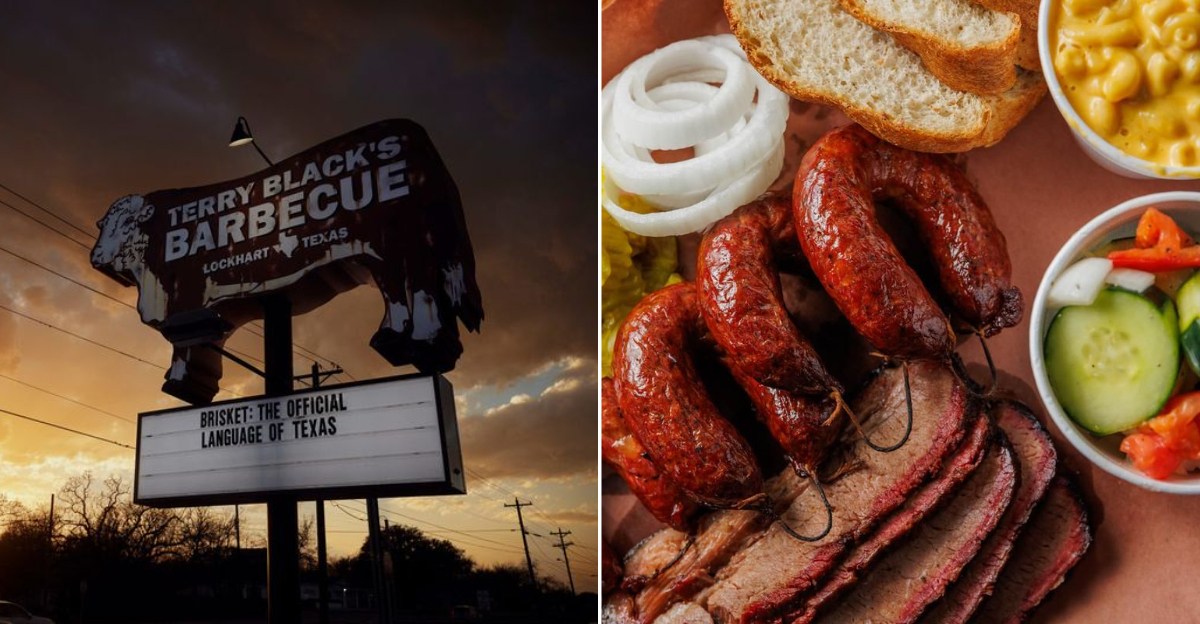
Lockhart smolders along US 183, its presence announced in the curl of wood smoke drifting over the highway. Long before you see the brick pits, you smell the work of generations, meat tended slowly, tradition passed hand to hand.
The town doesn’t need billboards or slogans; the lines outside its barbecue halls say enough. Brisket here carries history in every slice, ribs snap with quiet confidence, and sausage still hisses from the pit.
In Lockhart, barbecue isn’t claimed or performed, it’s lived, steady and sure, a reputation earned one fire at a time.
Lockhart Welcome Sign On US 183
There’s a kind of anticipation that builds when you see the bold white letters welcoming you into Lockhart. The sign announces that you’re entering a place where barbecue has shaped identity, economy, and appetite for generations.
Past the marker, smoke signals rise in the distance. Pits fueled by post oak and tradition send a message that’s more powerful than any billboard. The air smells of brisket, sausage, and history woven into the streets.
I’ll admit, my heart rate picks up every time I pass that sign. It’s not just hunger; it’s knowing you’ve crossed into sacred barbecue territory. You can almost taste the pepper-crusted edges before you park your car.
Caldwell County Courthouse Framing BBQ Row
Anchoring the town square, the red-brick courthouse rises like a backdrop to every hungry stroll. Its 19th-century architecture looms over the cluster of barbecue institutions lined around the block. You feel the weight of civic pride and smoky tradition sharing the same ground.
The courthouse’s clock tower seems to keep time with pit schedules. Morning briskets go on as the sun climbs. By noon, the square is filled with voices, clattering trays, and lines curving past historic walls.
Locals like to point out that courthouse steps have doubled as lunchtime benches for decades. Grab a sandwich, sit in the shade, and watch the slow rhythm of a town that never rushes barbecue.
Smitty’s Market Smoke Blackened Hallway
Walking into Smitty’s is like entering a tunnel carved from fire and history. The hallway is long, darkened by decades of smoke, with streaks of soot turning the walls into art. Heat radiates from the pit room, wrapping you in its haze.
That atmosphere leads you straight into the heart of barbecue making. The smoke doesn’t just flavor meat here, it clings to boots, hats, and conversations as customers shuffle forward with anticipation.
Few dining experiences are this physical, where environment becomes part of the flavor itself.
Chisholm Trail Tray With Brisket And Sausage
This spot doesn’t get the tourist fanfare, but it should. Chisholm Trail serves a tray loaded with brisket, sausage, and all the fixings without the fuss or high prices. Locals know it as the “everyday” barbecue joint, the place you go when you want comfort without ceremony.
The brisket is juicy, the sausage has that snap, and the sides taste like something a neighbor would bring to Sunday dinner. There’s an honesty to the flavors here.
I’ll be honest, I actually prefer this tray to some of the “big names” in town. It’s straightforward, delicious, and feels like a meal cooked by people who genuinely love feeding their community.
Close Up Of Pepper Crusted Brisket Slice
A thick slice of brisket glistens, edges crackling with black pepper bark. The texture is mesmerizing, smoke ring blushing pink just beneath, juices pooling where the knife passed. It’s the kind of close-up that makes time slow down.
This detail is where Lockhart barbecue really shines: technique visible in every cut, each grain of meat holding flavor from hours over post oak. A slice alone can tell a story.
Looking closely, you realize barbecue is both rustic and meticulous. The smallest details reveal the most.
Sausage Rings Hanging In The Pit Room
Walk into the pit room and you’ll find loops of sausage strung like garlands over heat and smoke. The sight is startling, rows of glossy links, each one hissing quietly as it warms above the fire.
It’s a visual that doubles as a promise: these rings will soon snap with spice and fat, cut fresh from the string onto a waiting tray. The pit doubles as kitchen and stage.
Locals often suggest ordering sausage first. It sells fast, and there’s nothing like catching it fresh from the pit.
Woodpile Stacked For All Day Fires
Behind every tray of meat lies the woodpile. Logs of post oak, stacked neatly, wait for their turn to fuel the pits. The air around them smells like raw earth and resin, a stark counterpoint to the savory haze inside.
This isn’t just storage; it’s the heartbeat of Lockhart’s smokehouses. Without steady, well-tended fires, no pit could achieve that deep, steady flavor.
I’ve always loved seeing these piles. They remind me that barbecue here is as much about patience and preparation as it is about eating.
Butcher Paper Platters No Fork Needed
The platters come wrapped in butcher paper, no frills, no ceremony, just meat, bread, and sides ready to be tackled by hand. The simplicity feels bold, like an announcement that flavor doesn’t need props.
Brisket slices and sausage links land straight on the paper, their juices soaking into its fibers, painting smoky, savory stains. It’s both rustic and honest.
There’s a freedom in eating this way. Forget utensils. The paper itself becomes part of the ritual, holding the meal together.
Vinegar And Pepper Sauce On The Side
At first glance, the bottles look plain, sitting quietly on the table. A clear liquid with flecks of red pepper swirling inside doesn’t shout for attention.
But taste it, sharp, tangy, with a slow burn that wakes up every bite of pork. The sauce doesn’t mask the meat; it sharpens it, cuts through richness, and leaves you craving another forkful.
Old-timers always advise going light at first. This is sauce with a purpose, not decoration. A dash is enough to change everything.
Sunset Smoke Rolling Over Colorado Street
As the day winds down, the air above town turns hazy with ribbons of post oak smoke drifting into orange sky. The smell alone could stop you mid-step.
The streets quiet, but the pits keep breathing, their steady exhale marking Lockhart’s rhythm as surely as church bells or courthouse clocks.
I’ve stood there, watching smoke lift against sunset, and felt something rare, a town entirely in sync with its food. That’s the Lockhart magic for me.