
This Tiny Michigan Harbor Town Does Not Look Like It Belongs In The Midwest
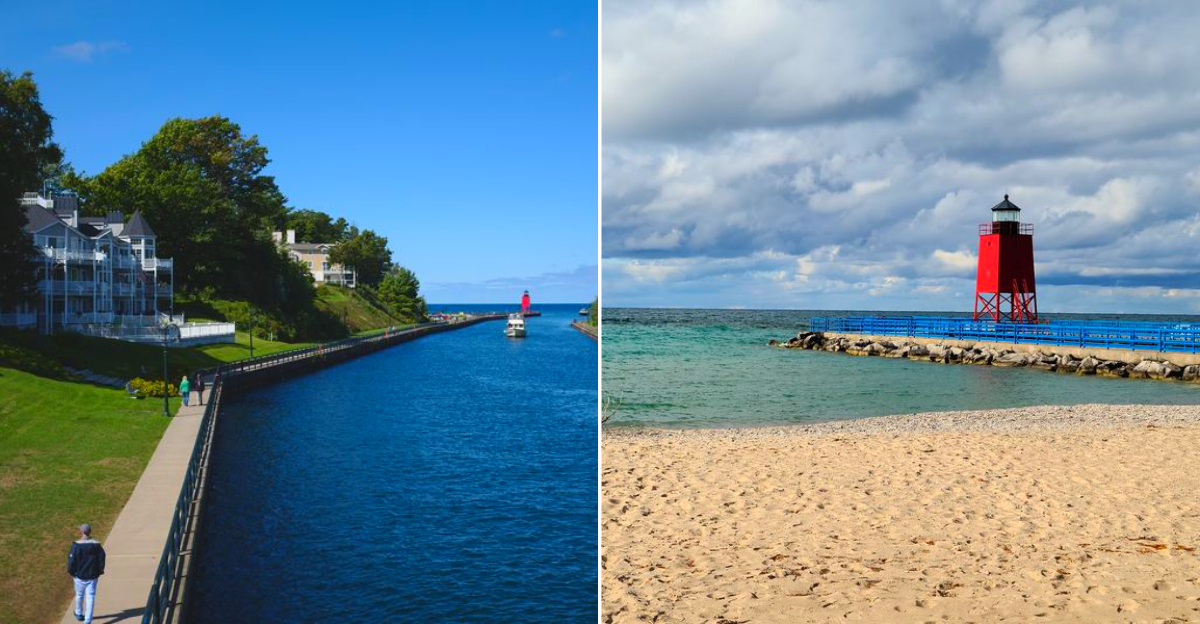
Stone houses with rounded roofs sit tucked into hillsides like they grew there organically. A channel connects two massive lakes right through the middle of town, and a drawbridge rises to let sailboats pass while pedestrians stop and watch.
The lighthouse at the end of the pier has been standing since the 1800s. Walking Bridge Street from one end to the other, I found fudge shops, art galleries, and restaurants serving whitefish pulled from the lake that morning.
Nothing about this town feels like a theme park version of a coastal village. It feels like the real thing because it is.
The mushroom houses alone are worth the trip.
The rest of the town makes you want to stay. Few places in Michigan pull off the trick of being beautiful without pretension and sophisticated without exclusivity.
This harbor town manages both without apparently trying very hard at all.
Wander Past The Earl Young Mushroom Houses
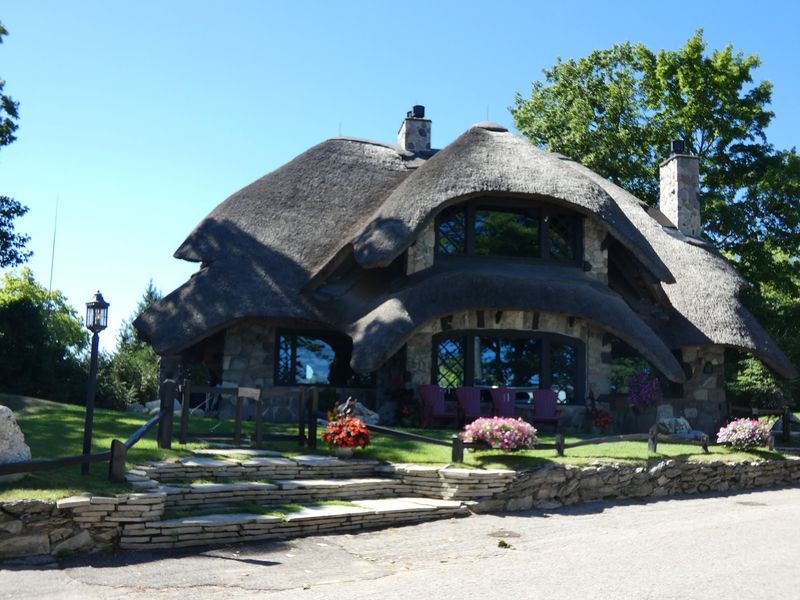
Nothing prepares you for the Earl Young houses until one appears around a corner looking half cottage, half daydream. These homes, often called Mushroom Houses or Hobbit Houses, were built from the 1920s into the 1970s using local stone, limestone, and glacial boulders.
Young worked without blueprints, and that freedom shows in every curved wall and low, sweeping roof. The best clusters sit near Park Avenue, Grant Street, and Clinton Street, where the houses seem to grow out of the ground instead of being placed on it.
Go slowly and stay respectful because most are private homes. A self-guided walk works well, though the Charlevoix Historical Society also offers context that helps you notice the craft, the whimsy, and the way each house fits its lot.
Bridge Street Reaches Town Between Three Lakes
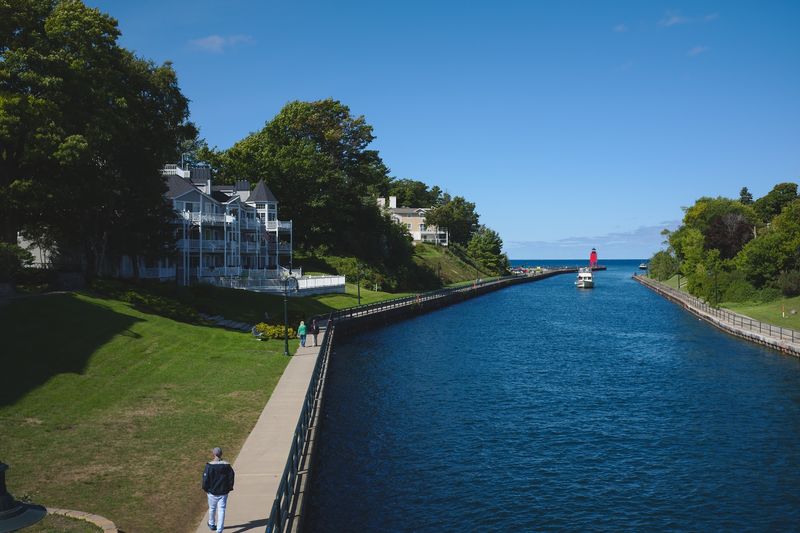
Charlevoix sits along US-31 in northern Michigan, between Lake Michigan and Lake Charlevoix. US-31 becomes Bridge Street as it enters the compact downtown district, making the main route through town the simplest approach from either Petoskey or Traverse City.
Stay on Bridge Street as shops gather around the roadway and the drawbridge appears over the Pine River Channel. Summer traffic can slow near the bridge, especially when it opens for boats, but the waterfront and downtown signs make the center of Charlevoix easy to recognize.
Metered spaces line parts of Bridge Street, while additional public parking is available just west of the main road toward Lake Michigan. Park once and continue on foot toward the shops, Bridge Park, marina, and waterfront paths.
Make Time For Castle Farms
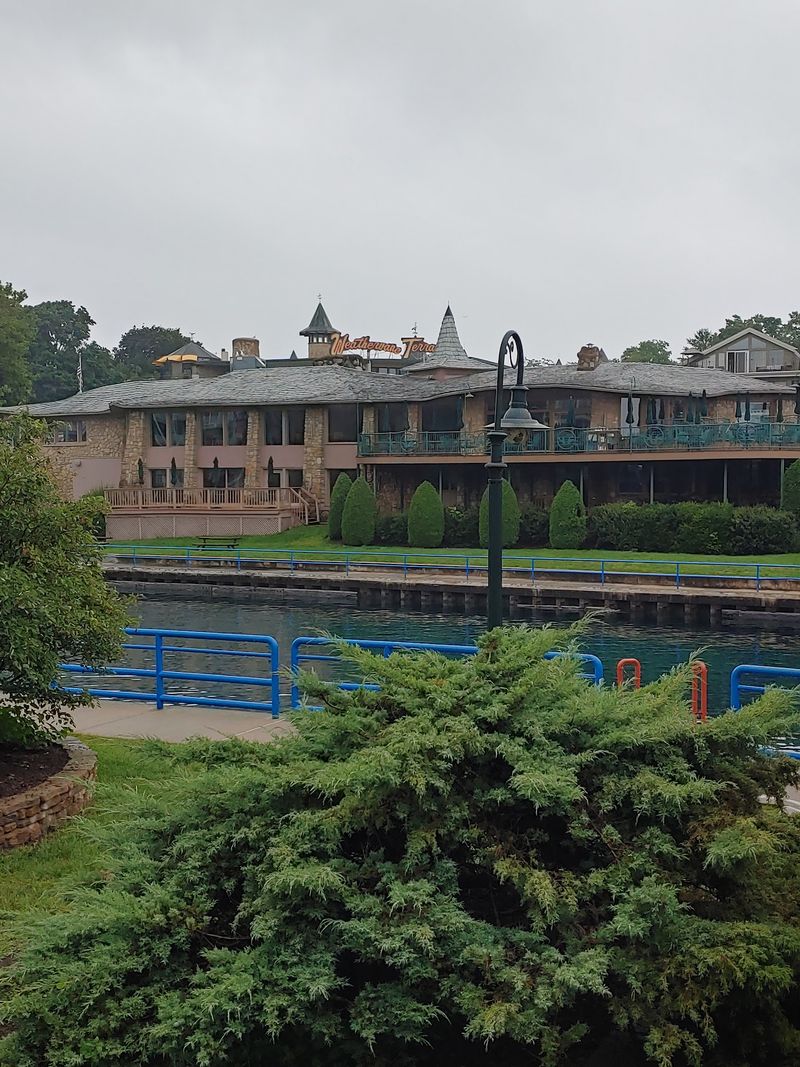
Then Charlevoix pulls another trick and hands you a castle. Castle Farms, established in 1918 by Albert Loeb of Sears, Roebuck and Company, looks more Normandy than Northern Michigan, which is exactly why it lingers in your memory.
Its story is stranger than the silhouette suggests. The estate began as a model dairy farm meant to showcase advanced equipment sold through the Sears catalog, then later shifted through other uses before a major restoration in the early 2000s.
Even from a distance, the scale feels surprising in such a small community. If you visit, give yourself enough time to appreciate the architecture and read the history, because the place makes more sense once you know it was built to impress and instruct at once.
Pause For The Memorial Drawbridge Rhythm
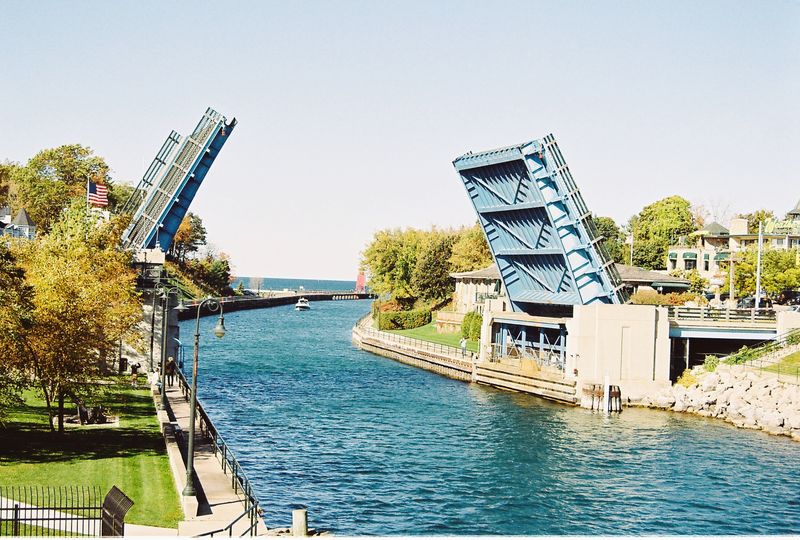
At the center of downtown, the drawbridge gives Charlevoix a pulse you can actually watch. The Charlevoix Memorial Drawbridge carries US 31 across the Pine River Channel, and when it opens for larger boats, everything briefly rearranges itself around water.
The current bridge dates to 1949 and is the fifth to span this channel, first dredged in 1870. Boats move between Lake Michigan, Round Lake, and Lake Charlevoix, while people on foot lean over railings and drivers settle into the pause.
I liked the way the delay never felt annoying for long. It felt like proof that the harbor still matters.
If you can, catch an opening from the sidewalk so you can hear the machinery, watch masts pass through, and see town life pivot around the channel.
Take The Ironton Ferry Shortcut
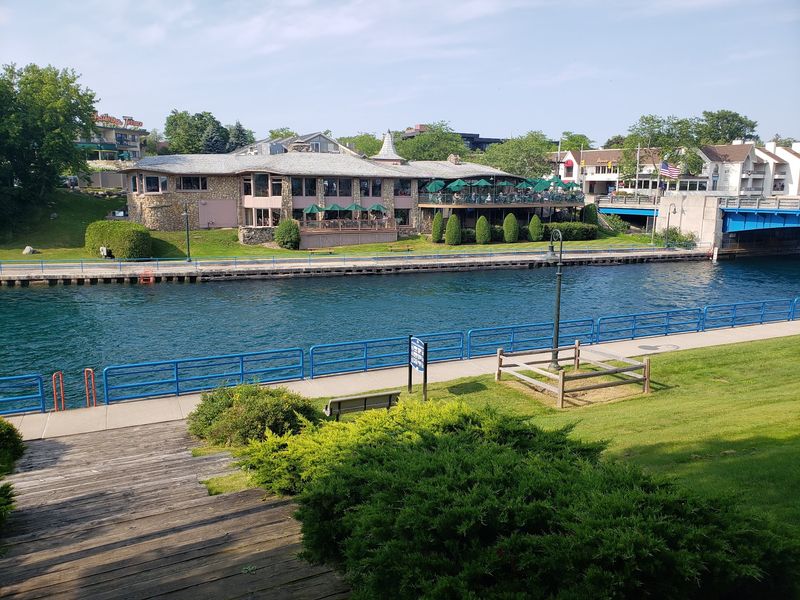
A tiny ferry crossing is one of Charlevoix’s most satisfying old-school experiences. The Ironton Ferry has operated across the Ironton Narrows of Lake Charlevoix since about 1876, and the current vessel dates to 1926.
It is not a long ride, usually just a few minutes over a 610-foot stretch, but it changes the day in a pleasing way. Instead of driving many extra miles around the lake, you roll aboard, wait a moment, and glide across a narrow gap that has linked local travel for generations.
That blend of usefulness and history is hard to resist. The ferry typically runs from mid-April until the day before Thanksgiving, and payment is simple with cash or the Token Transit app, so check the season and use it when your route lines up.
Walk Out To The South Pier Lighthouse
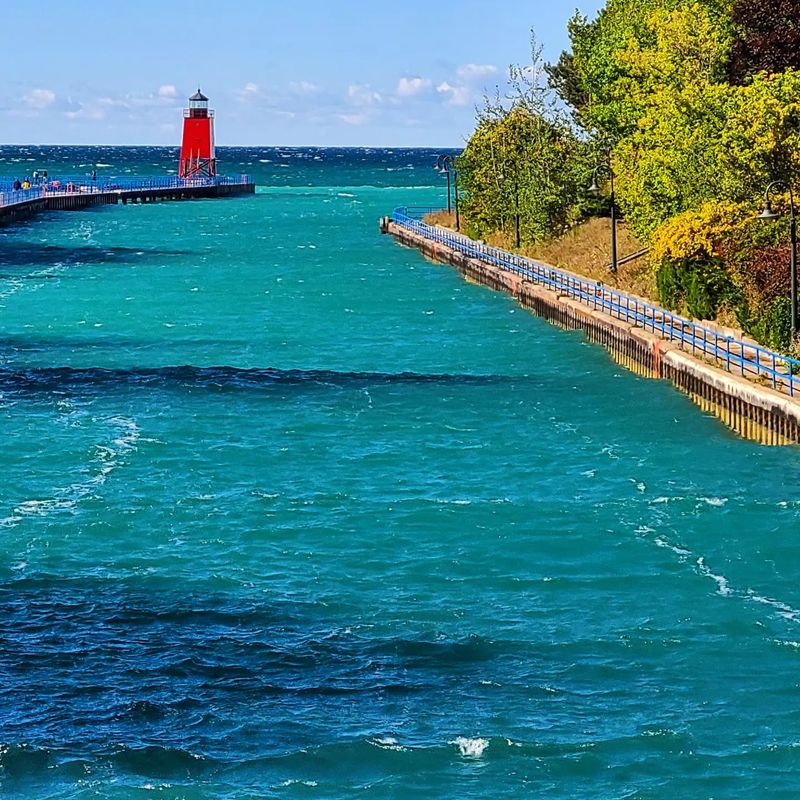
Red against blue water, the South Pier Light announces itself long before you reach it. Officially the Charlevoix South Pier Light Station, it has guided ships into the Pine River Channel from Lake Michigan since 1884.
The present steel tower dates to 1948, though its lantern room came from an earlier structure. That continuity gives the lighthouse an appealing sense of duty, as if each version simply stepped forward to keep watch while the harbor kept changing around it.
Walking the pier is part of the charm, not just the photo at the end. Wear shoes with grip, expect wind, and leave room to stand still for a minute.
From there, you can feel why Charlevoix seems split between inland town and lakefront outpost, with both identities visible at once.
Use Round Lake As Your Viewing Room
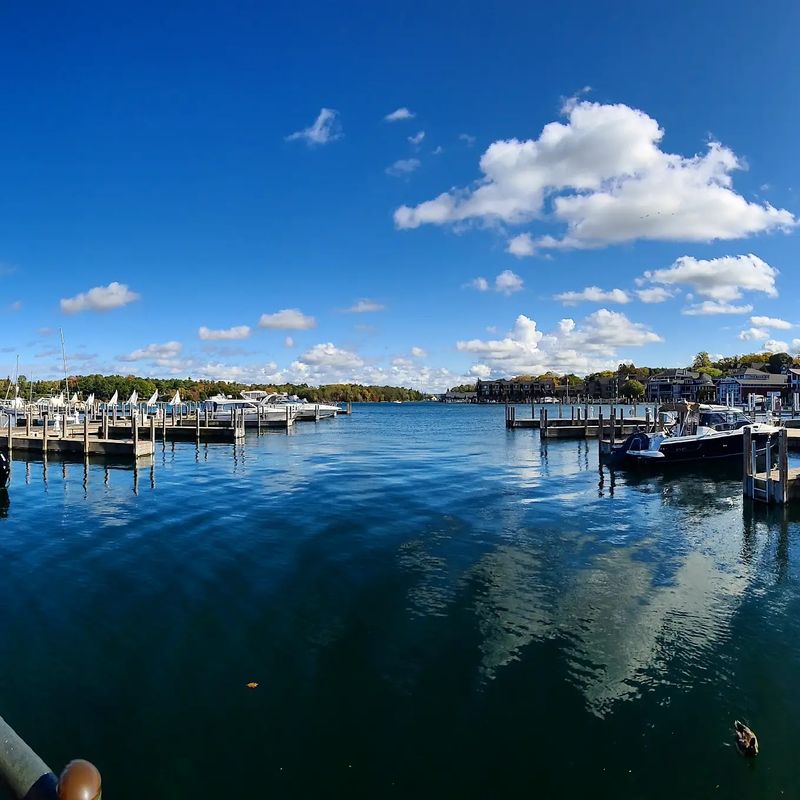
Round Lake is where Charlevoix feels most polished and most playful at the same time. Boats rock in the harbor, the shoreline curves neatly around them, and every direction offers a slightly different layer of water, docks, buildings, and sky.
Because it links Lake Charlevoix to the Pine River Channel and then Lake Michigan, Round Lake acts like the town’s watery living room. Big lake energy arrives here, but it gets softened into something easier to linger over, especially if you enjoy people-watching with your scenery.
Try circling it on foot in pieces instead of rushing. Morning gives you cleaner light and quieter docks, while evening brings movement and color.
It is one of the best places to understand why Charlevoix feels more coastal than continental, even without leaving downtown.
Catch The Venetian Festival If Timing Works
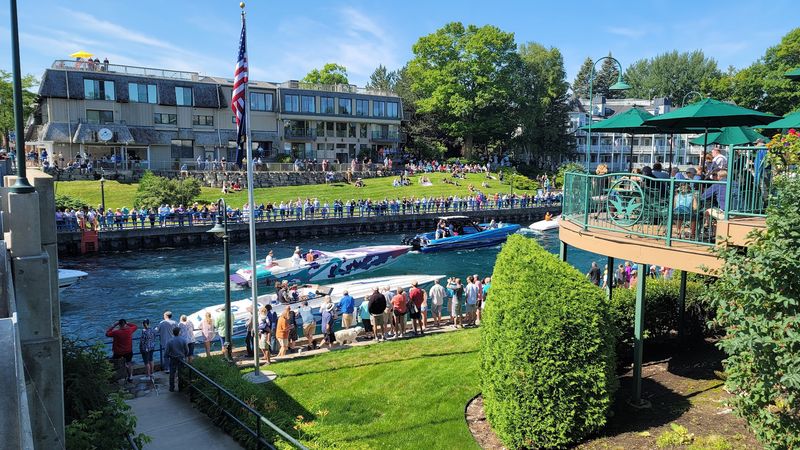
Summer in Charlevoix can suddenly turn festive in a very local, very charming way. The Venetian Festival began in 1931 as a candle-lit boat parade, and it has grown into an eight-day celebration centered on the harbor and community life.
Street parades, decorated boats on Round Lake, entertainment, fireworks, and busy waterfront scenes give the town extra sparkle without changing its scale. What I like most is that the event still makes sense here.
It belongs to the water, the boating culture, and the habit of gathering outside when Northern Michigan weather finally cooperates.
If your trip overlaps with festival dates, expect larger crowds and plan parking early. The payoff is a vivid look at Charlevoix when it is most animated, with the harbor acting as both stage and front porch for the whole town.
Try Michigan Beach For Big Lake Drama
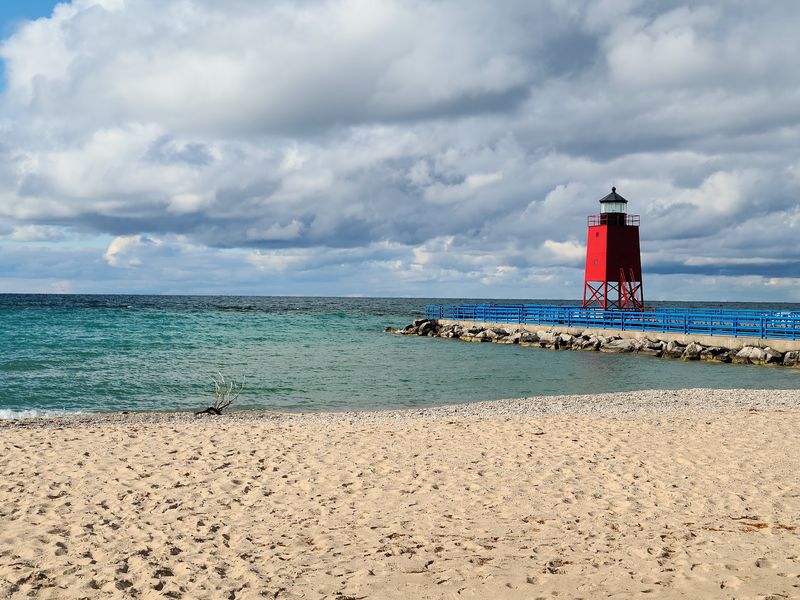
For the full Lake Michigan effect, head to Michigan Beach. The sand is broad and bright, the horizon feels generously open, and the shoreline has that fresh, slightly restless look that makes even a short stop feel like a real outing.
Practical details help here too. The beach offers restrooms, concessions, an ADA-accessible playground, and a beach access mat, so it is easier to settle in than many scenic places that look good but forget basic comfort.
People also come hoping to spot Petoskey stones along the shore, which adds a treasure-hunt mood to a swim or walk. Bring water shoes if you like beachcombing near the edge, and check wind conditions.
On rougher days, the lake is beautiful but less gentle than Charlevoix’s inland side, and that contrast is part of the appeal.
Choose Ferry Beach For Calmer Water
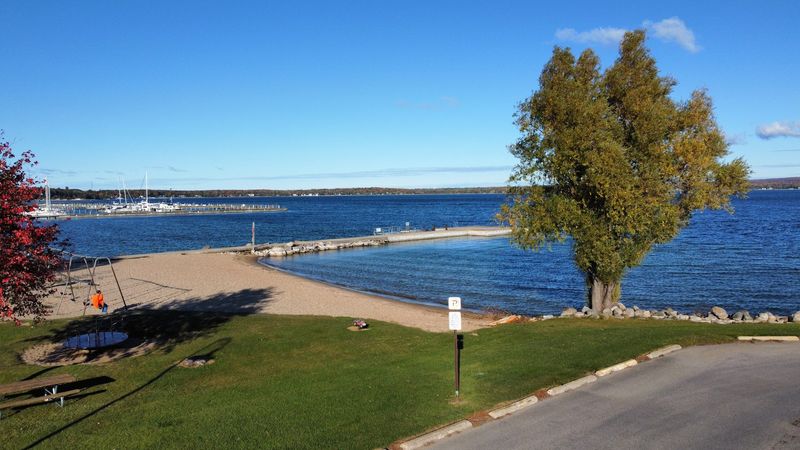
Not every beach day needs waves and a dramatic horizon. Ferry Beach, on Lake Charlevoix, offers gentler water and a softer pace, which makes it a smart choice for families, casual swimmers, or anyone who wants the lake without the bigger-lake mood.
The swimming area slopes gradually, and that easy entry changes the atmosphere right away. Instead of bracing yourself for cold chop, you can wade in slowly, float, and watch the shoreline activity with far less fuss.
There are restrooms and concessions here as well, so the practical side stays simple. I found it useful as a balance to Michigan Beach.
If one shoreline shows off Charlevoix’s wild edge, this one shows its everyday side, where inland water, neighborhood rhythm, and summer routines quietly make the town feel lived-in and welcoming.
Look For Beauty In The Public Gardens
Some of Charlevoix’s nicest moments are not grand at all. They appear in small public gardens, where flowers, careful maintenance, and a little civic pride soften the edges between history, streets, and shoreline views.
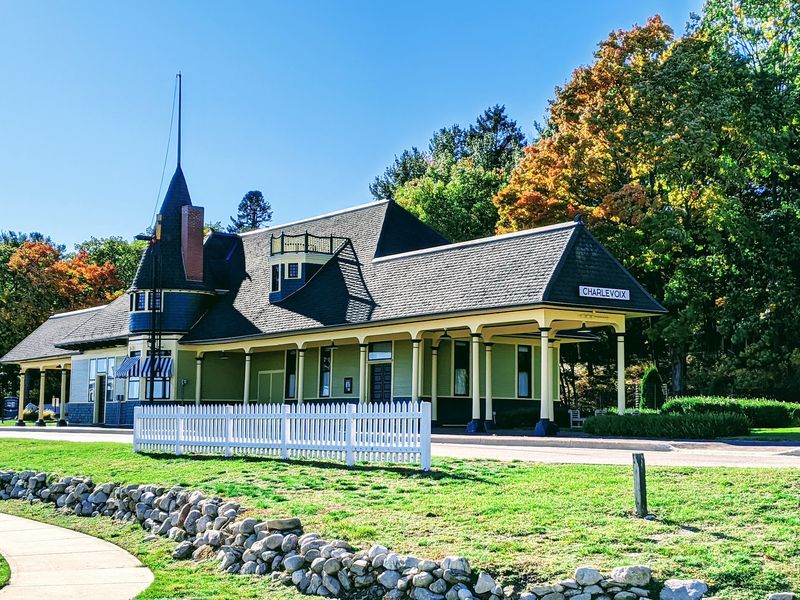
The Depot Heritage Gardens behind the 1892 train depot are especially worth a look, and other appealing spots include the Harsha House Museum gardens, the Pere Charlevoix Garden above Lake Michigan, and the Hospital Meditation Garden. Local garden clubs help care for several entrance plantings too, which partly explains why the town often feels unusually polished.
Use these spaces as pauses, not destinations you rush through. Sit when you can.
After boats, beaches, and stone houses, the gardens reveal another side of Charlevoix, one built less on spectacle than on steady attention, seasonal color, and welcome quietly offered to everyone.