
This Tiny Texas Town Has An 18th-Century Spanish Fortress And A Main Street Straight Out Of A Western
Texas usually doesn’t whisper. It announces itself, loud boots, big skies, bigger stories. Then you roll into this little town and something feels slightly… off.
The Main Street could’ve been borrowed from a Western set, right down to the weathered facades and frontier-town attitude. Except the plot takes a very unexpected turn.
Tucked into the story is a fortress built by the Spanish in the 1700s. Why would Spain plant a military outpost here?
Who were they trying to keep out? And how did a tiny Texas community end up carrying traces of Spanish soldiers, frontier battles, and Wild West legends all at once?
Look closely and the town starts giving away clues. A stone wall here.
An old street there. A name that sounds like it belongs somewhere much farther south.
Texas has a lot of strange corners. This one has layers.
The Fortress That Time Could Not Erase
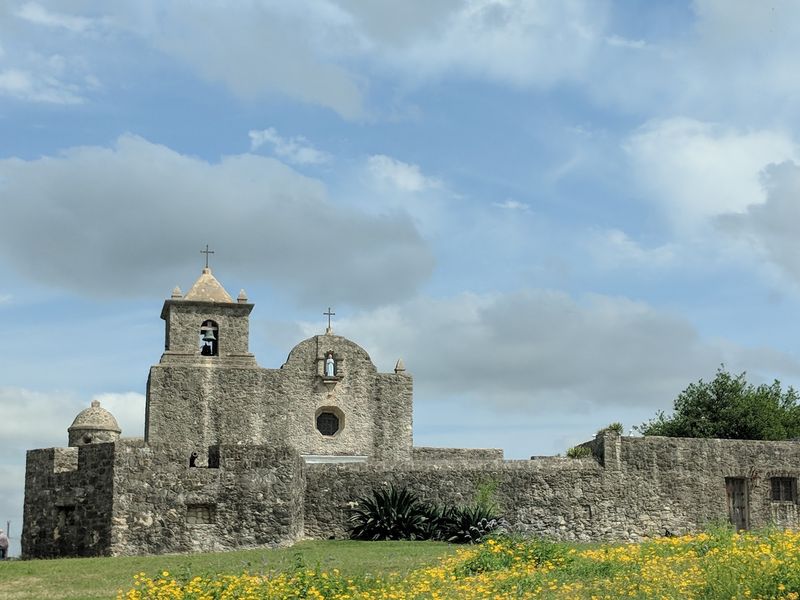
Standing in front of Presidio La Bahia feels like the universe just hit a giant rewind button. This is not a replica or a recreation.
It is the only fully restored Spanish colonial fort in the entire Western Hemisphere, and it has been standing on Texas soil since 1749.
Originally established in 1721 and relocated to its current Goliad site, the presidio served as a military outpost protecting nearby missions and the Texas frontier. Its thick stone walls have witnessed centuries of history, including a pivotal role during the Texas Revolution in 1836.
You can almost feel the weight of that history when you step through the entrance gate.
Inside, the Our Lady of Loreto Chapel still holds regular Sunday Mass, making it one of the few active places of worship inside a historic military fort in the U.S. The original groin vaulted ceiling inside the chapel is a rare surviving example of Spanish colonial construction craftsmanship.
A museum in the former officers quarters showcases artifacts from the colonial era. You can climb the bastions, walk the parade grounds, and even book an overnight stay in the historic quarters.
Presidio La Bahia is not just a landmark. It is a living, breathing piece of Texas soul.
Where Texas Ranching Was Born
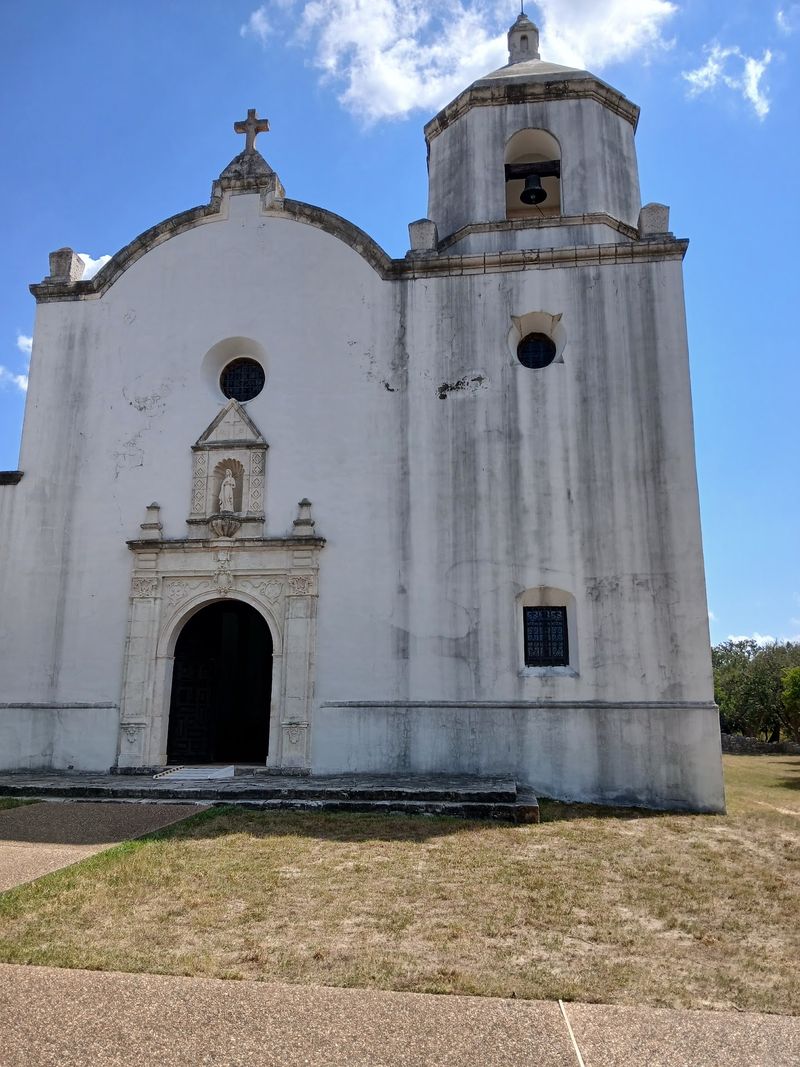
Long before Texas became synonymous with cattle and cowboy culture, a Franciscan mission just outside Goliad was quietly running one of the largest ranching operations in 18th-century North America.
Mission Nuestra Senora del Espiritu Santo de Zuniga is a mouthful of a name, but the story behind it is even bigger than the title suggests.
First established in 1722 and permanently settled in the Goliad area by 1749, this mission was a powerhouse of agricultural and spiritual activity.
Franciscan missionaries worked alongside Indigenous converts to build a community that raised thousands of cattle and shaped the ranching traditions that Texas still celebrates today.
The mission you see now was painstakingly rebuilt in the 1930s by the Civilian Conservation Corps, and the attention to detail is remarkable.
Touring the colorful chapel and walking through the interpretive exhibits gives you a genuine sense of what daily life looked like on the Spanish colonial frontier. Goliad holds a rare distinction here: it is one of the very few places in the world where a Spanish mission and its paired presidio still stand near each other.
That pairing tells a complete story that neither structure could tell alone. Come ready to be genuinely surprised by how much history fits into one riverside location.
Nature And History Sharing the Same Trail
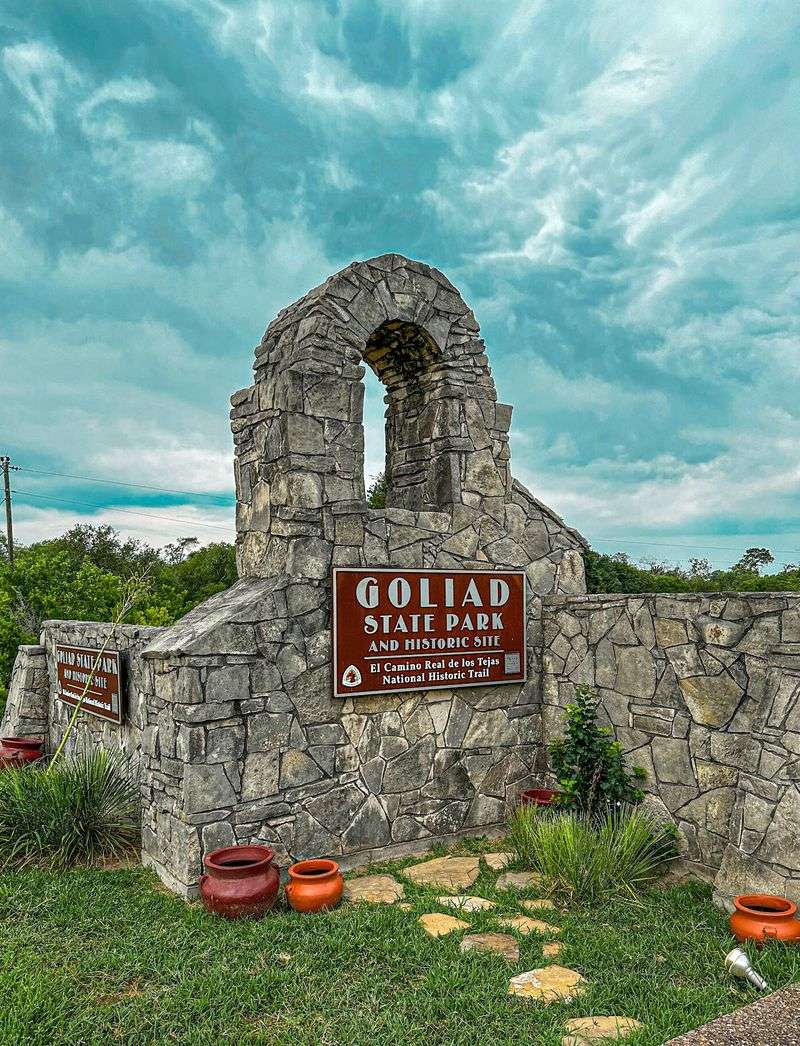
Not every state park can claim to have a restored 18th-century mission sitting right inside its boundaries, but Goliad State Park is not every state park. Managed by the Texas Parks and Wildlife Department, this place is where outdoor adventure and deep Texas history collide in the best possible way.
The park wraps around Mission Espiritu Santo and stretches along the San Antonio River, offering a range of activities that go well beyond sightseeing. Camping, picnicking, hiking, biking, fishing, and birdwatching are all on the menu here.
The 2.5-mile Angel of Goliad Hike and Bike Trail connects a meaningful statue to the heart of downtown Goliad, giving walkers and cyclists a route that doubles as a history lesson. River access points welcome kayaks and canoes, making the San Antonio River a peaceful backdrop for a slow morning paddle.
Goliad State Park is also part of the Great Texas Birding Trail, which means serious birdwatchers make special trips just for the wildlife alone.
The combination of riparian habitat, open grasslands, and historic structures creates a layered environment that rewards visitors who slow down and pay attention.
Whether you come for the mission, the trails, or the birds, the park has a way of making you want to stay longer than planned. That is always the sign of a place worth visiting.
A Courthouse Square That Belongs In The Movies
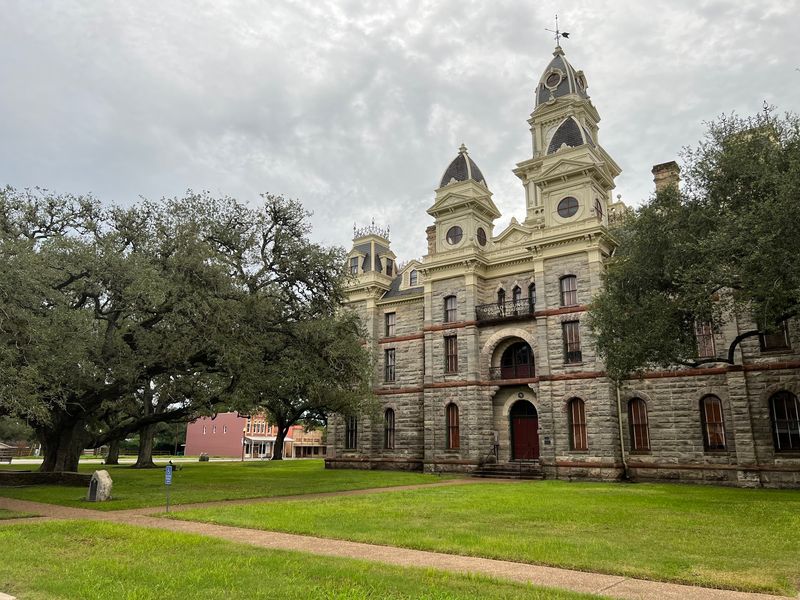
If someone told you a film crew used downtown Goliad as a backdrop for a classic Western, you would believe them without hesitation.
The square has that rare quality of feeling completely authentic, like a place that has not been polished for tourists but simply stayed true to itself across generations.
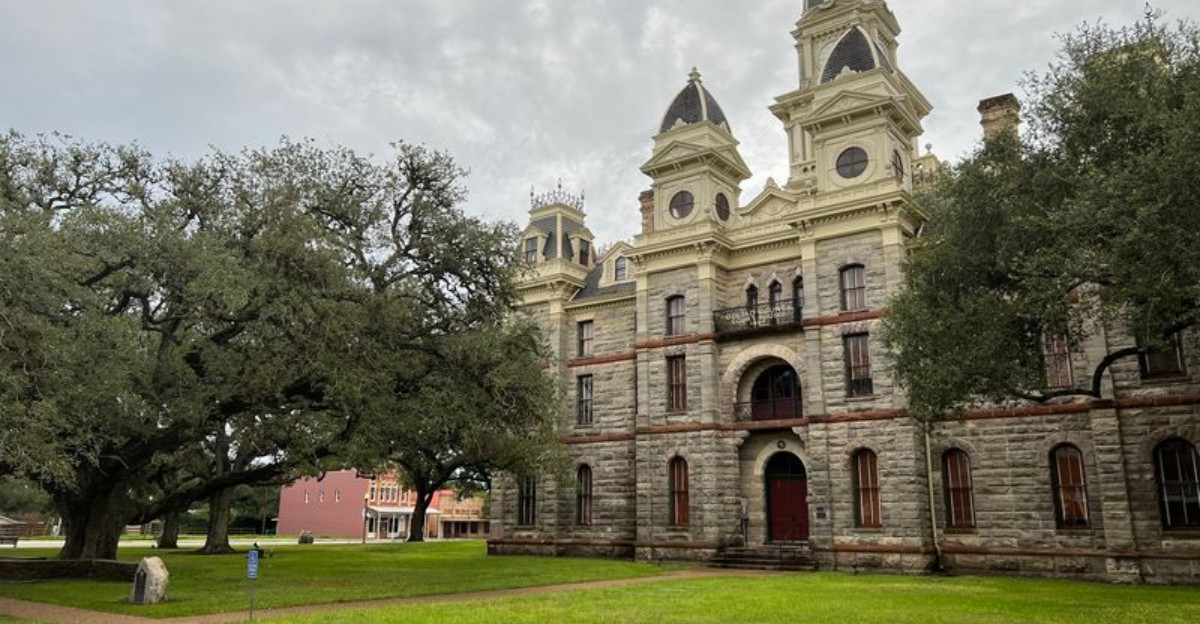
At the center of it all stands the Goliad County Courthouse, completed in 1894 and built from striking blue sandstone with red trim and slate roofs. It is the kind of building that makes you stop mid-step and just stare.
Majestic live oak trees surround the square, and here is a fun detail: when roads were widened over the years, the town actually paved around several of those trees rather than remove them. That says everything you need to know about Goliad’s priorities.
On the courthouse’s north lawn stands a historic old oak that served as a site for frontier justice between 1846 and 1870. Today the square buzzes with unique retail shops, antique stores, charming boutiques, and local dining spots that carry a distinctly Western personality.
Browsing around the square on a quiet weekday morning feels like discovering a secret that the rest of Texas somehow missed. Downtown Goliad earns its reputation as one of the most photogenic small-town squares in the entire state.
Cinco De Mayo Started Here
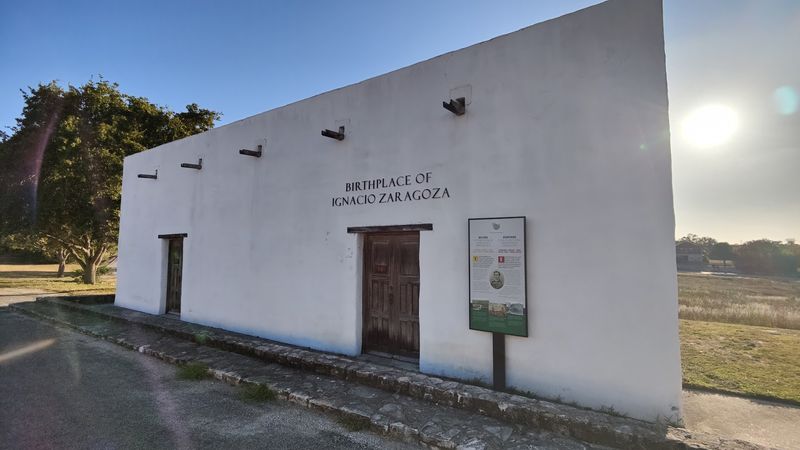
Here is a fact that tends to make people do a double take: the man whose military victory inspired Cinco de Mayo was born right here in Goliad, Texas. General Ignacio Zaragoza came into the world at this very site, and the connection between a tiny South Texas town and one of Mexico’s most celebrated holidays is genuinely mind-bending.
In 1862, Zaragoza led Mexican forces to a remarkable victory over French troops at the Battle of Puebla. That triumph became the foundation of what the world now celebrates as Cinco de Mayo every year.
The reconstructed birth home at this state historic site was completed in 1974 and gives visitors a tangible look at what life was like on the Mexican frontier in the early 19th century.
Located conveniently right next to Presidio La Bahia, the site features an amphitheater and a bronze statue honoring Zaragoza’s legacy.
Exhibits walk you through the historical context of his life and the broader significance of his military achievements. It is a compact site, but the story it tells carries enormous weight.
Visiting this spot alongside the nearby presidio creates a full afternoon of meaningful exploration that connects Texas history to Mexican heritage in a way that feels both surprising and entirely natural.
Where A Battle Changed Texas Forever
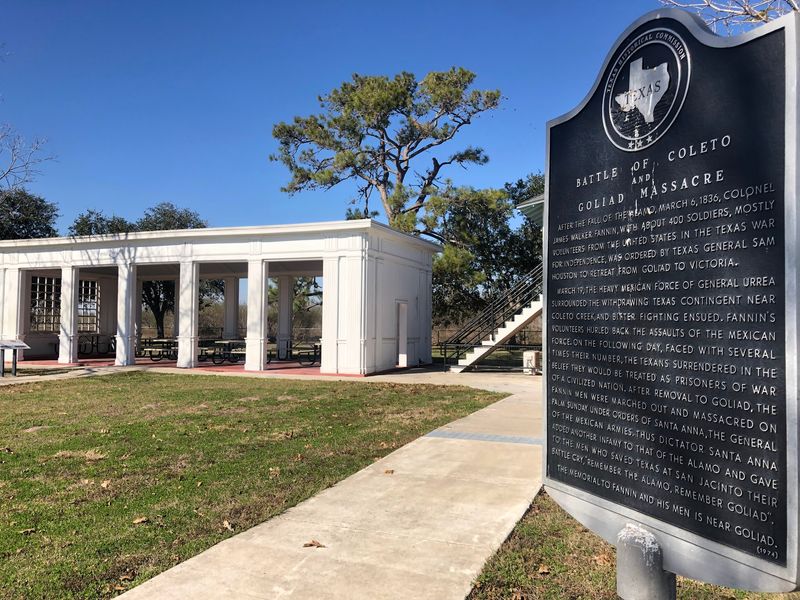
About nine miles east of Goliad, a wide open stretch of South Texas prairie holds one of the most significant and sobering chapters in the state’s fight for independence. The Fannin Battleground State Historic Site marks the location of the Battle of Coleto Creek, fought in March 1836 between Texan forces under Colonel James W.
Fannin and the Mexican army.
After a two-day standoff on the open prairie, Fannin and his men surrendered, believing they would be treated as prisoners of war. What followed at nearby Presidio La Bahia became a defining moment in Texas Revolutionary history.
The events sparked the rallying cry “Remember Goliad,” which echoed across Texas and fueled the decisive Battle of San Jacinto just weeks later. That cry, alongside “Remember the Alamo,” became the emotional engine of a revolution.
Today the site features interpretive exhibits, meaningful memorials, and an impressive stone obelisk honoring the soldiers. The landscape itself is quiet and vast, giving visitors space to reflect on the scale of what happened here.
Standing on that open prairie with nothing but sky and grass in every direction, the history feels immediate rather than distant. It is not a cheerful stop, but it is an essential one for anyone who wants to understand why Goliad matters so deeply to Texas identity.
A Story Of Courage Worth Knowing
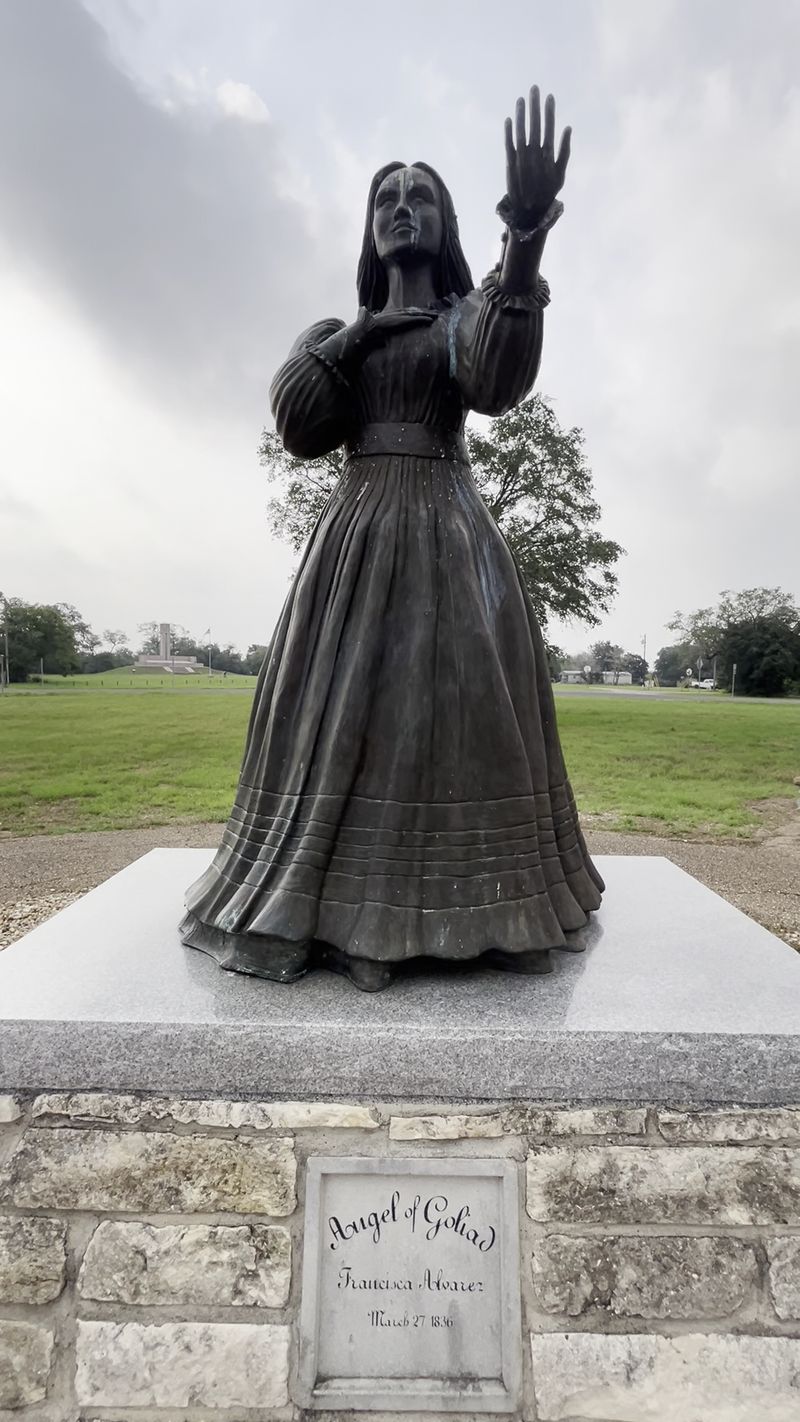
Every great historical place has at least one story that rises above the battles and politics to remind you what human beings are capable of at their best. In Goliad, that story belongs to the woman history remembers as the Angel of Goliad, known as Francita Alavez.
During the chaos of the Texas Revolution, Francita showed extraordinary bravery by helping Texian soldiers who were held captive at Presidio La Bahia. At great personal risk, she intervened on behalf of prisoners, offering aid and in some cases helping men escape a terrible fate.
Survivor testimonies passed her story forward, ensuring that her compassion would not be forgotten even when official records left her largely unnamed.
Today a bronze statue stands in her honor, and the 2.5-mile Angel of Goliad Hike and Bike Trail carries her name as well. Her legacy runs through the town in a way that feels genuinely woven into the fabric of Goliad’s identity.
Stories like hers are the reason history is worth studying, because they prove that courage shows up in unexpected places and in people who were never looking for recognition.
Goliad honors that truth, and the statue serves as a daily reminder that compassion can be just as powerful as any military force ever assembled.
Walk The Royal Road Through Goliad
Before highways, before railroads, before GPS existed to tell everyone where to turn, there was El Camino Real de los Tejas.
Translating to The Royal Road, this ancient trail connected Mexico through Texas and into Louisiana, serving as a lifeline for Spanish colonial expansion across the region for centuries.
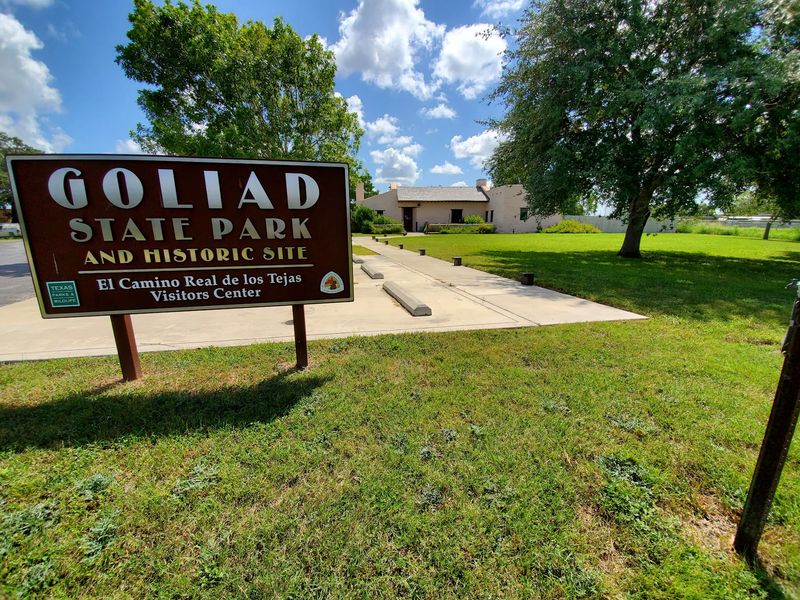
Goliad sits right along this nationally significant historic trail, and the El Camino Real de los Tejas Visitors Center in town makes sure that story is told well. The visitor center is housed inside the historic Custodian’s Cottage, a charming building constructed by the Civilian Conservation Corps in the 1930s.
Interactive exhibits inside showcase the trail’s deep influence on South Texas culture, trade, and settlement patterns. Walking through the exhibits, you start to understand just how many generations of travelers passed through this very ground.
The trail is now a designated National Historic Trail, recognized by the National Park Service for its cultural and historical significance. For history enthusiasts, the combination of the visitors center and the broader trail experience adds a rich layer of context to everything else Goliad has to offer.
By the time you have seen the fortress, the mission, the courthouse square, and the trail center, you realize Goliad is not just a footnote in Texas history. It is one of the chapters the whole story depends on.
Ready to plan your trip?