
This Tiny Washington Shore Lets You Harvest Oysters Straight From Hood Canal
I have always believed lunch tastes better when you have to pull on boots and collect it yourself. Along Hood Canal, one tiny Washington shoreline turns an ordinary low tide into a hands-on coastal adventure, complete with oyster shells, muddy gloves, and the possibility of bringing dinner home.
The beach is small, but the oyster beds can keep you exploring long after you planned to leave. You do not need to be an experienced shellfish harvester, either.
Bring the proper license, check the current season and health advisories, and learn the harvest rules before stepping onto the tidelands. I would gladly trade a grocery-store seafood counter for an afternoon beside the cold water, especially when the reward is as fresh as this.
Washington has plenty of beautiful shorelines, but collecting oysters straight from Hood Canal gives this one an experience you can taste long after the tide returns.
The History Behind Triton Cove Tidelands
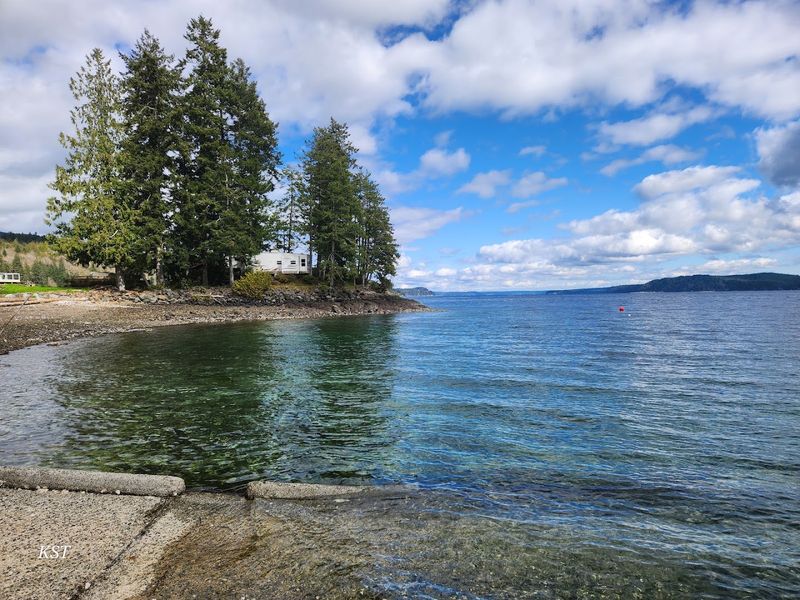
Long before it became a beloved state park, this unassuming strip of Hood Canal shoreline had a surprisingly lively past.
The land that is now Triton Cove State Park once operated as a modest gas station and country store during the 1930s, serving travelers making their way along the rugged Olympic Peninsula.
After World War II, the property transformed into a fishing resort, drawing anglers eager to tap into the rich marine life of Hood Canal.
Before any of that, the indigenous Coast Salish peoples, including the Skokomish and Squaxin Island tribes, harvested shellfish along these very tidelands for centuries. Oysters were not just food for these communities; they were currency, craft material, and cultural touchstone.
The park officially became part of Washington State Parks in 1990, preserving its 555 feet of saltwater shoreline for public enjoyment. Knowing that history makes each oyster you pull from the water feel connected to something much older and far more meaningful than a simple snack.
What Makes Hood Canal So Special For Oysters
Hood Canal looks like a canal on a map, but it is actually a natural fjord, carved by glaciers thousands of years ago and filled with some of the cleanest, coldest saltwater on the Pacific Coast.
That combination of cool temperatures, strong tidal flow, and nutrient-rich water creates near-perfect conditions for growing shellfish, particularly Pacific oysters.
The canal stretches roughly 65 miles along the western edge of the Kitsap and Olympic peninsulas, and its relatively sheltered waters stay calm enough for oyster larvae to settle and thrive on rocky substrate.
Local oyster farmers and recreational harvesters alike have long depended on Hood Canal’s consistent quality.
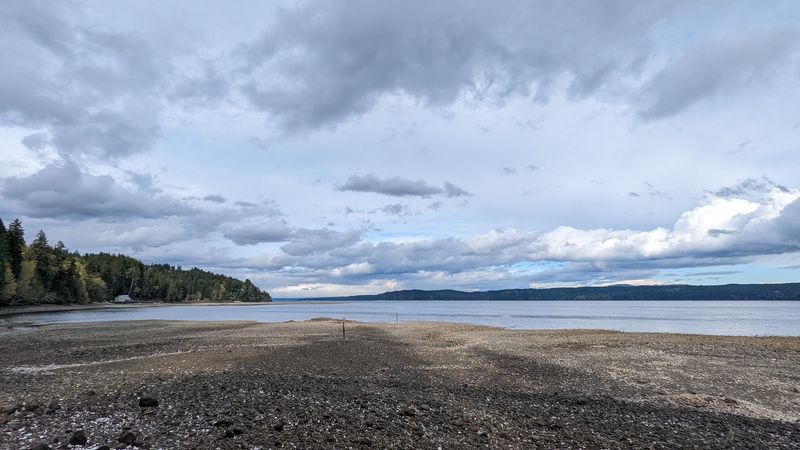
What struck me most during my visit was how clear the water looked at low tide, revealing beds of oysters clustered together on dark rocks like a natural mosaic. The fjord essentially does the heavy lifting, and all you have to do is show up, kneel down, and start picking.
Getting Your Shellfish License Before You Go
Here is a detail that can make or break your trip: you absolutely need a valid shellfish and seaweed license from the Washington Department of Fish and Wildlife before you harvest a single oyster.
Skipping this step is not worth the risk, as rangers do check, and fines are no fun to deal with on what should be a relaxing outing.
The good news is that purchasing a license is straightforward. You can buy one online through the WDFW website, at local sporting goods stores, or at certain retailers near the park. Licenses are available as annual options or short-term versions for those who just want a one-time experience.
Children under 15 do not need a license, which makes this an especially budget-friendly family outing. Once you have your paperwork sorted, you are legally cleared to harvest up to 18 oysters per person per day at Triton Cove Tidelands.
Planning ahead on this one small detail keeps the whole adventure running smoothly from start to finish.
How To Harvest Oysters The Right Way
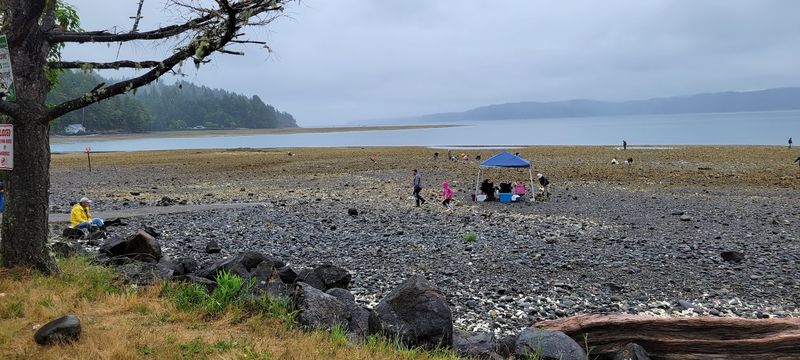
Harvesting oysters sounds intimidating until you actually try it, and then it feels surprisingly satisfying. At low tide, the rocky beds at Triton Cove become exposed and accessible, revealing clusters of Pacific oysters attached to stones and shells.
The technique is simple: use a sturdy glove to grip the oyster and a shucking knife or oyster tool to pry it free from its mooring.
Each oyster must measure at least 2.5 inches along its longest shell dimension before it qualifies for harvest. Carrying a small ruler or a marked stick saves you from guessing. Undersized oysters should be placed carefully back on the rocks, not tossed, to give them a chance to keep growing.
One rule that surprised me was the requirement to shuck your oysters on the beach and leave the shells at the same tide height where you found them.
Those empty shells serve as substrate for new oyster larvae, so leaving them behind is a small but genuinely important act of stewardship for the health of the tideland.
Best Time Of Year To Visit For Peak Flavor

Timing your visit to Triton Cove Tidelands can significantly affect the quality of the oysters you bring home. Most experienced harvesters agree that the coldest months, roughly October through April, produce the plumpest and most flavorful oysters.
During that window, the water temperature stays low enough to keep the shellfish firm and full of their characteristic briny richness.
Summer harvesting is still allowed, but warmer water temperatures during July and August increase the risk of bacterial contamination, so cooking your oysters thoroughly during those months is strongly recommended.
The oysters also tend to be thinner and less flavorful after spawning season in warmer weather. Hood Canal oysters in particular are known for their bold, briny character with a satisfying crunch and a faint bitter finish that serious oyster lovers tend to celebrate.
I visited in early November and found the oysters to be full, meaty, and intensely flavorful. Checking the WDFW tide chart before your trip and planning around a minus tide gives you the most exposure time on the beds.
What Else You Can Find On The Tideland
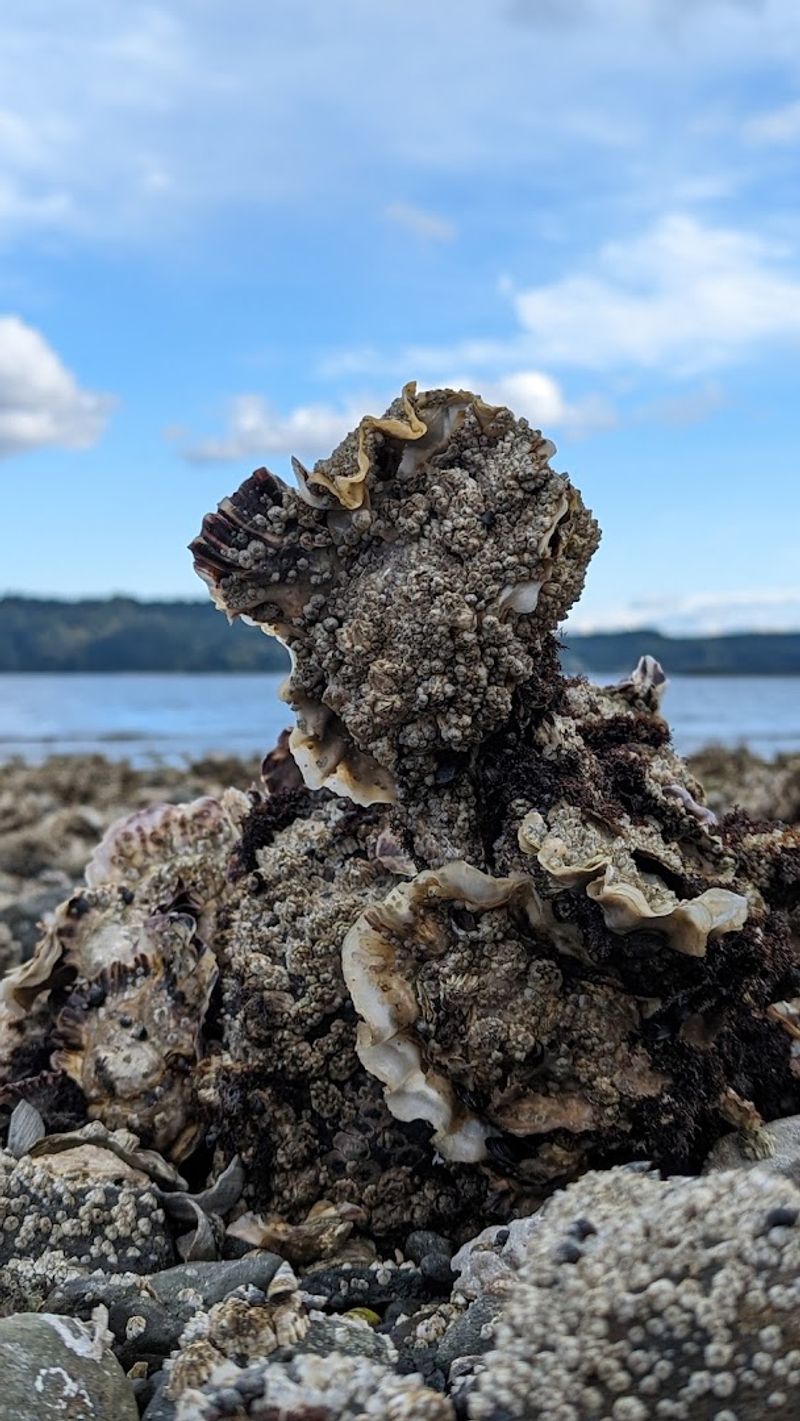
Oysters get all the attention at Triton Cove, but they are not the only treasure hiding beneath the surface. During the designated clam season, which typically runs from June 1 through August 31, harvesters can also dig for Manila clams, native littleneck clams, and butter clams along the tideland.
Each species has its own texture and flavor profile, making a mixed harvest a genuinely exciting culinary experiment.
Crabbing is another popular activity at the park, with Dungeness and red rock crabs occasionally found in the shallower areas. Saltwater fishing from the shoreline targets salmon, flounder, and rockfish, depending on the season and current regulations.
Beyond the harvest, the tideland is a living exhibit of Pacific Northwest marine life. Bald eagles patrol the treeline overhead, great blue herons wade with their trademark patience, and if you look carefully into the rocky pools, you might spot a small octopus tucked into a crevice.
Every low tide feels like turning a new page in a nature field guide.
Practical Tips For Planning Your Visit
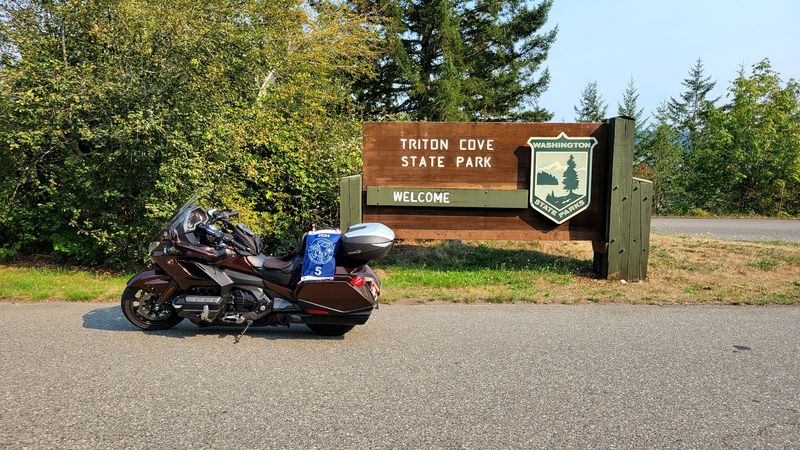
Triton Cove State Park sits at 24220 U.S. Highway 101 in Brinnon, WA 98320. Driving south from the town of Brinnon on Highway 101 for about two miles brings you to the signed park entrance on the west side of the road.
The parking area is a compact dirt lot, so arriving early on weekends is a smart move to avoid circling for a spot. A Washington State Discover Pass is required for vehicle access and can be purchased as a day pass or annual pass online or at various retail locations.
A vault toilet is available on site, which is a welcome convenience when you are spending a few hours outdoors.
Pack rubber boots as a non-negotiable item, since the tideland rocks are slippery and often submerged in shallow water. A pair of thick gloves protects your hands from sharp shell edges, and a sturdy bucket keeps your harvest contained.
Always check the WDFW website and the Department of Health shellfish safety map before leaving home to confirm the beach is open and free of biotoxin advisories.
It Deserves A Spot On Your Washington Bucket List
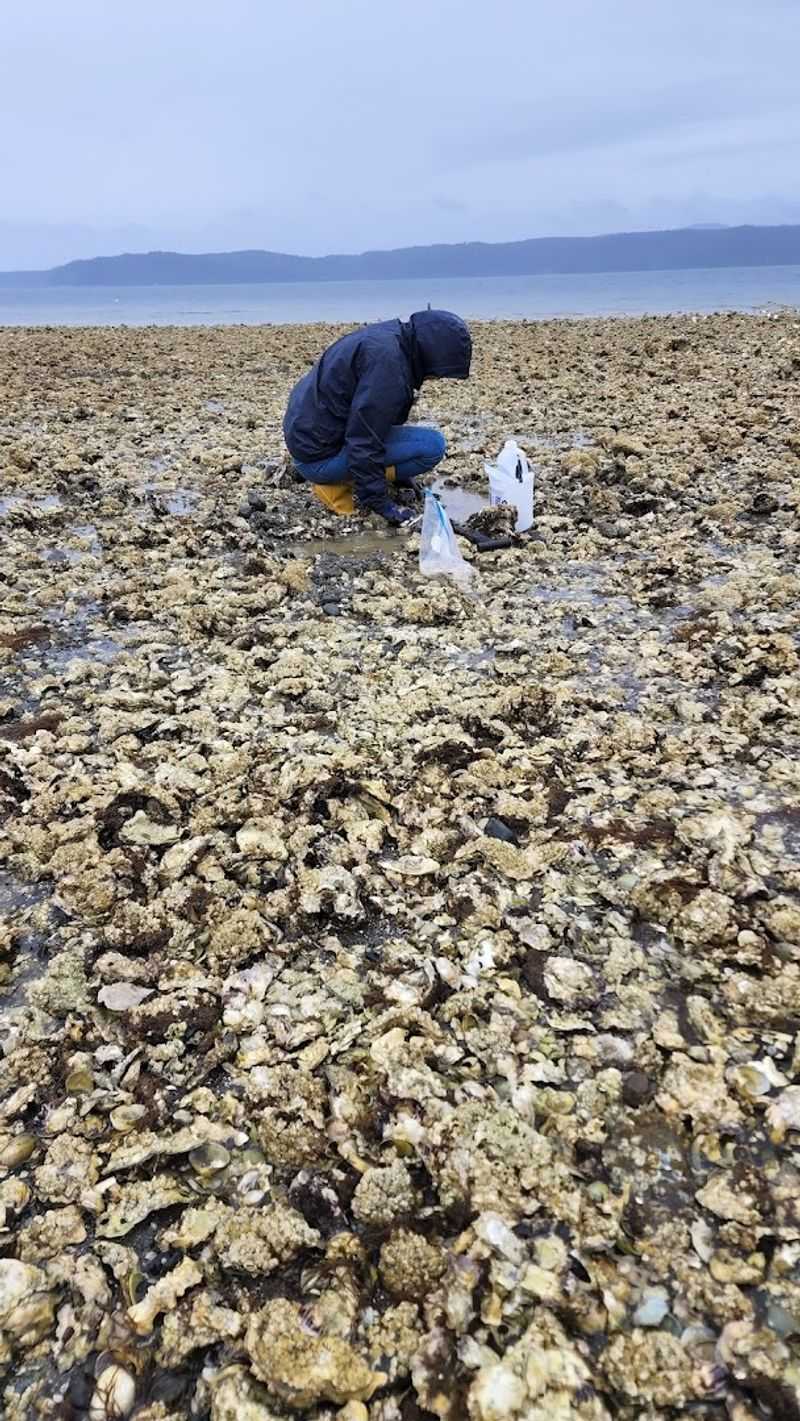
There are flashier destinations along the Washington coast, but few offer the kind of direct, hands-on connection to nature that Triton Cove Tidelands delivers so effortlessly.
Standing at the water’s edge with the Olympic Mountains behind you and a bucket of self-harvested oysters at your feet produces a quiet satisfaction that no restaurant meal can replicate. The experience is raw, simple, and genuinely memorable.
Families with kids find it especially engaging because the tideland doubles as a natural classroom, full of living creatures and real ecological lessons. Solo travelers and couples appreciate the meditative rhythm of walking the rocks and searching the pools during low tide.
What keeps people coming back to this tiny corner of the Olympic Peninsula is not just the oysters. It is the feeling that you stumbled onto something honest and unhurried in a world that rarely slows down.
Triton Cove Tidelands is proof that the most rewarding travel experiences are often the smallest ones, found just off a quiet highway with rubber boots on and no particular agenda.