
This Tucked-Away Outdoor Gallery In Arizona Feels Like It’s From Another Era
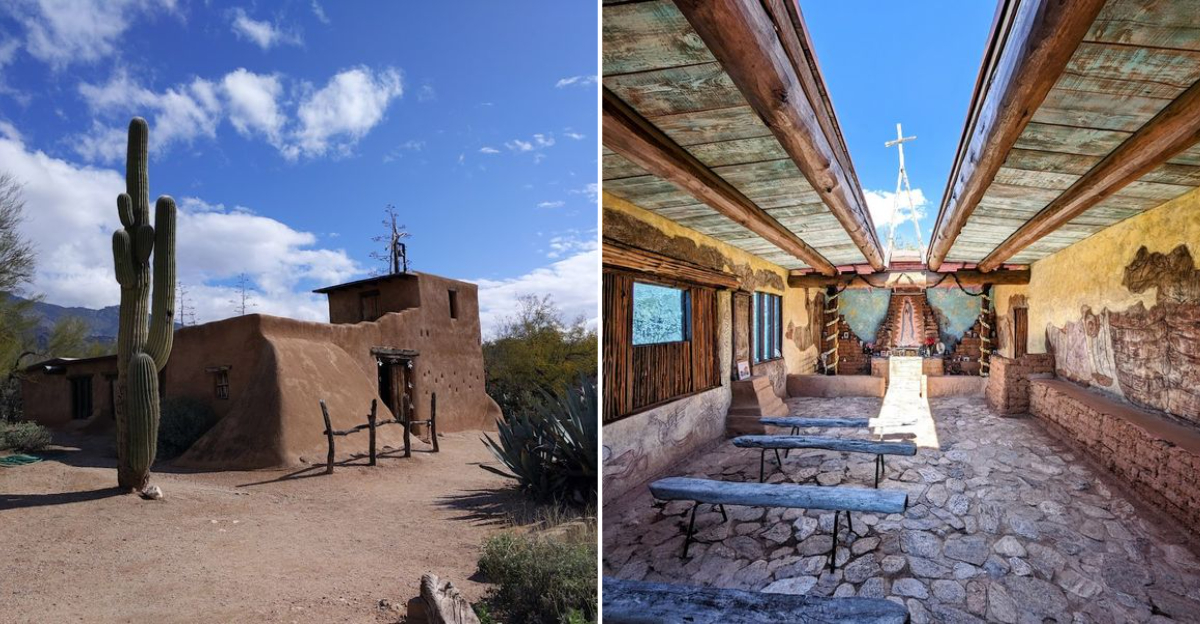
The moment the GPS stops making sense, you know you’ve stumbled onto something special. The road turns from asphalt to dirt, and the world narrows to a ribbon of dust that leads to a secret courtyard tucked into the desert.
Arizona feels like a living, breathing stage, and this hidden courtyard is its best‑kept set. I half‑expected a film crew to shout “Action!” under adobe arches where walls sing with color.
The air smells of desert sage and old paint, and the wind plays tricks on the metal sculptures. Each step feels like a time‑traveling snapshot, a quick peek at an era when art still whispered in the Southwest.
I leave with the feeling I’ve been let in on a secret show, and the desert winks. The 10-acre property at 6300 N. Swan Road is part open-air museum, part artist’s sanctuary, and part adobe dreamscape, all rolled into one unforgettable visit.
The Story Behind The Man Who Built It All
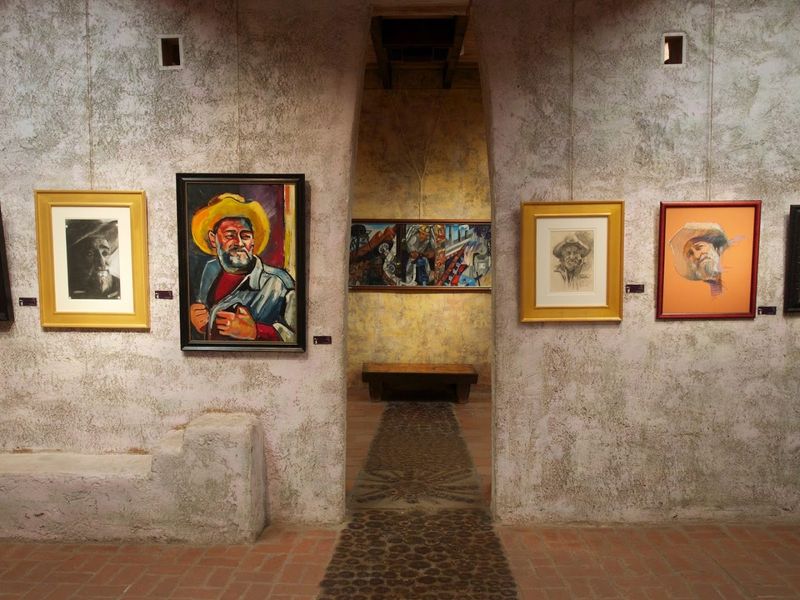
Not many artists can say they personally hauled water in a Model A Ford to make the bricks for their own museum, but Ettore “Ted” DeGrazia was not most artists.
Born in 1909 in Morenci, Arizona, DeGrazia spent decades developing a bold, colorful style that celebrated the cultures and landscapes of the American Southwest.
He earned multiple degrees, including a master’s from the University of Arizona, and studied under the legendary Diego Rivera in Mexico.
By the early 1950s, Tucson’s rapid growth was creeping toward his preferred solitude, so he acquired an isolated stretch of desert land and began building entirely by hand. Every adobe brick on the property was shaped from soil mixed with water he transported himself.
His vision was not just a gallery but a living expression of the Southwest’s spirit. DeGrazia worked and lived on this land until 1982, leaving behind approximately 15,000 original works and an architectural legacy that still feels startlingly personal and alive today.
That detail makes the place feel less like a museum someone designed and more like a piece of Arizona he slowly coaxed out of the desert with his own two hands.
Adobe Architecture That Feels Handmade And Honest
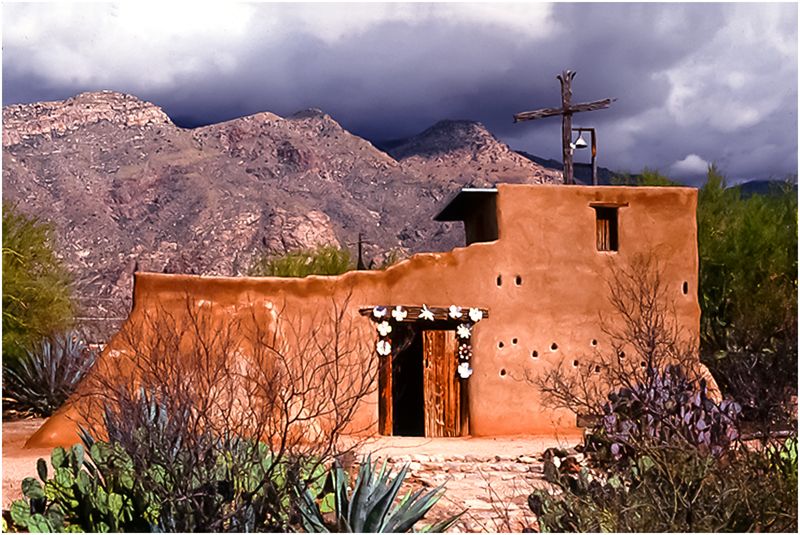
Walking through the gallery complex, the first thing that hits you is how organic everything feels.
There are no sharp corporate edges here, no polished marble floors or climate-controlled lobbies. Instead, you find thick adobe walls that seem to grow naturally from the desert floor, exposed wood beams overhead, and rock floors that crunch quietly underfoot.
Some areas even feature what DeGrazia called “cactus flooring,” where the natural ground was incorporated directly into the design.
The buildings are scattered across the 10-acre property rather than arranged in a tidy grid, which means every turn reveals something unexpected. An archway here, a small courtyard there, a doorway framing a perfect slice of desert sky.
DeGrazia made his adobe bricks on-site using local soil and water, which gives the structures a warmth and texture that manufactured materials simply cannot replicate.
Several areas of the complex, including the chapel and original homes, are intentionally left without air conditioning or heating, preserving the raw, historic atmosphere DeGrazia clearly intended visitors to experience firsthand.
The Mission In The Sun, A Chapel Unlike Any Other
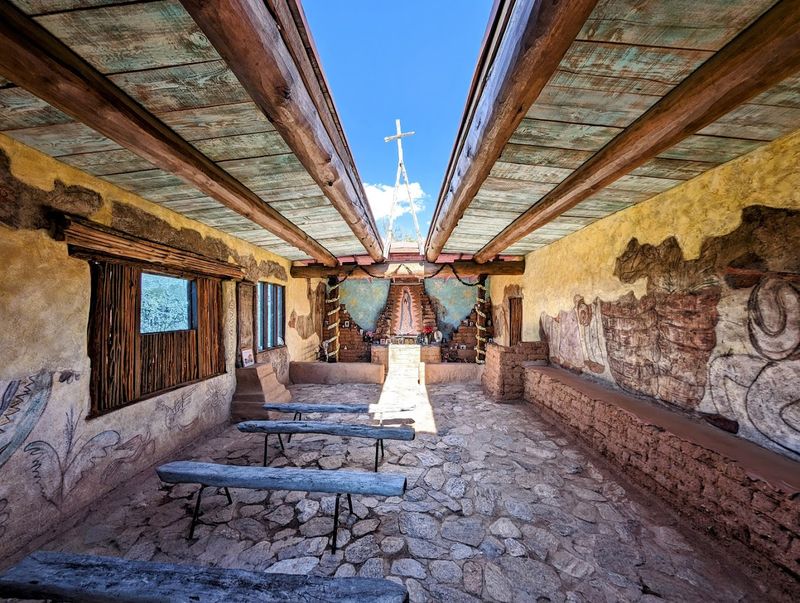
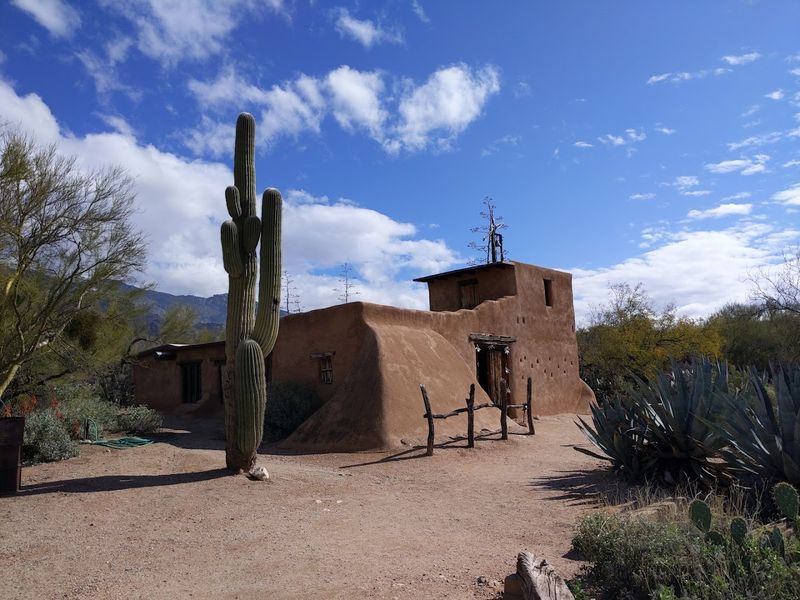
Of all the structures on the property, the Mission in the Sun is the one that tends to leave visitors standing quietly for longer than they planned.
This open-air adobe chapel was built by DeGrazia as a personal tribute to Our Lady of Guadalupe and the Jesuit missionary Padre Eusebio Kino, who played a pivotal role in the history of the Southwest.
The dedication ceremony in 1952 reportedly drew over 200 Tohono O’odham people, a moment that reflected DeGrazia’s deep respect for Indigenous communities.
The interior walls are covered with hand-painted murals that DeGrazia created himself, depicting figures with his signature rounded, expressive style. The rock floor, the rough adobe walls, and the open roof that lets in actual desert sky create an atmosphere that feels genuinely sacred and ancient.
Sunlight moves across the murals throughout the day, shifting the mood from quiet reverence in the morning to something warmer and more golden by late afternoon, making every visit feel slightly different depending on when you arrive.
That detail makes the chapel feel alive in a way few museum spaces do, as if the desert is still quietly participating in the art rather than simply surrounding it.
Paintings That Celebrate The Southwest’s Soul
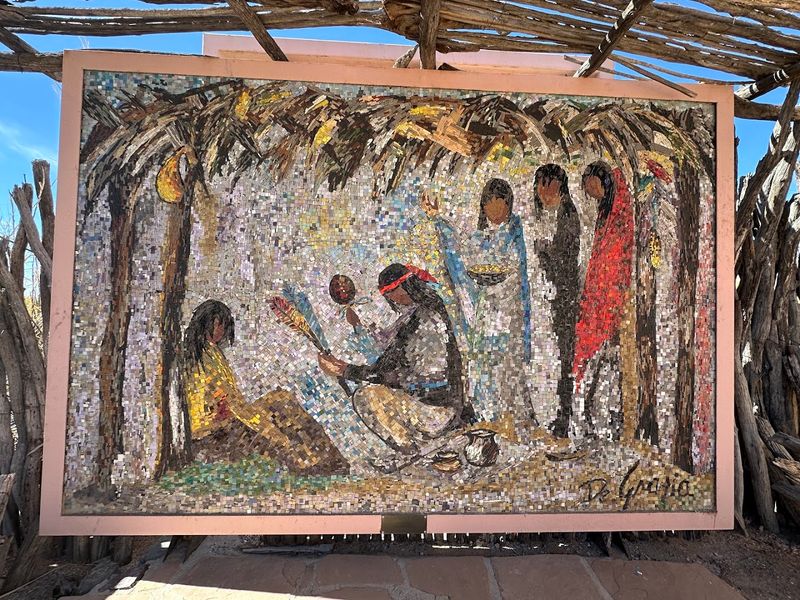
DeGrazia’s paintings are the reason the museum exists, and seeing them displayed inside the adobe rooms where he actually worked gives them an entirely different energy than you would get from a standard white-walled gallery.
His style is immediately recognizable: rounded, joyful figures rendered in vivid colors, often depicting Native American children, religious celebrations, and the landscapes of the Sonoran Desert. There is a warmth to his work that feels genuinely celebratory rather than documentary.
The museum houses six permanent collections that trace historical events and native cultures of the Southwest, rotating through a selection of approximately 15,000 original works.
These include oils, watercolors, sketches, ceramics, and sculptures, so the range of what you might see on any given visit is surprisingly broad. One interesting footnote: in 1976, protesting what he considered an unjust inheritance tax law,
DeGrazia famously burned a collection of his own paintings in the Superstition Mountains, a bold statement that became national news and cemented his reputation as someone who played by his own rules.
The Courtyard, Sculptures, And A Gate From Another Time
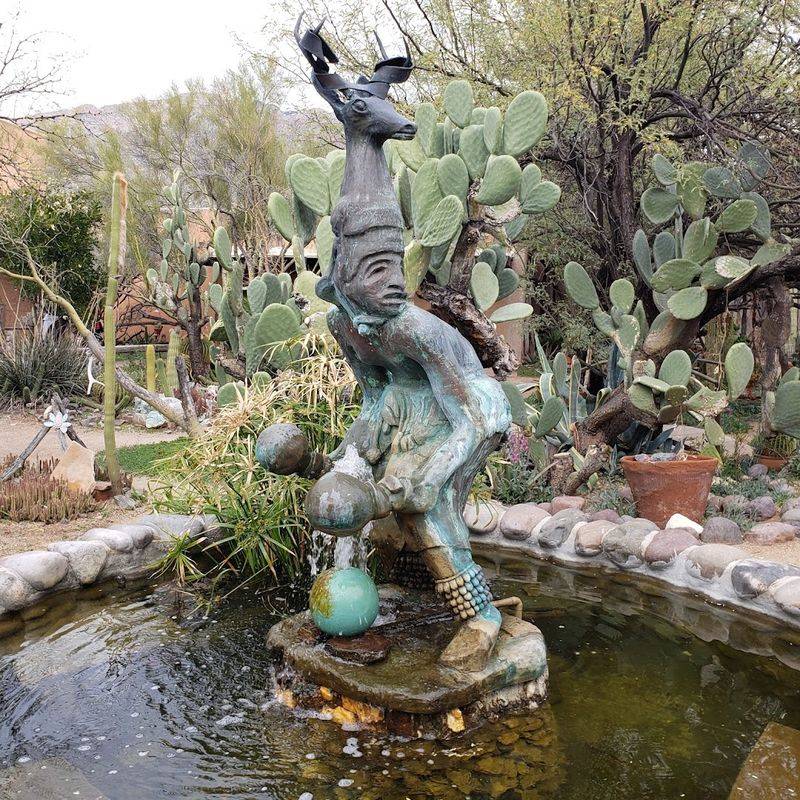
Stepping into the central courtyard feels a bit like discovering a secret garden that the desert agreed to share.
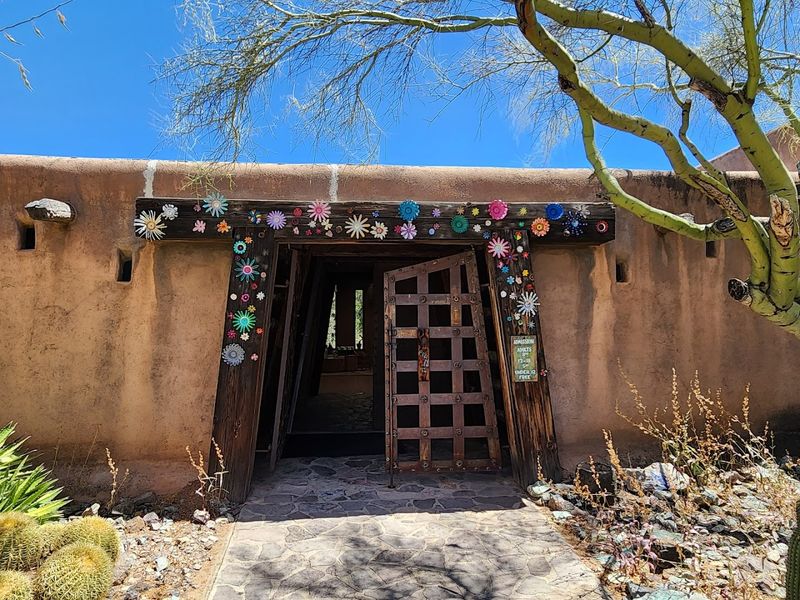
Gardens, fountains, and sculptures are arranged across the space in a way that feels intentional but not overly manicured. 4DeGrazia’s artistic instincts extended well beyond canvas, and the courtyard is where that becomes most obvious. Look closely at some of the decorative arches and you will notice they are constructed from recycled cans, a quirky, resourceful touch that says a lot about the artist’s personality.
At the entrance to the property stands a replica of the Yuma Territorial Prison gate, a striking iron structure that immediately signals you are entering somewhere with a strong sense of history and character.
It is the kind of detail that rewards curious visitors who pay attention to the edges of a place rather than rushing straight to the main attractions.
The courtyard also connects several of the museum’s key buildings, making it the natural heart of the complex and a good spot to pause, sit, and absorb the layered textures of adobe, metal, stone, and desert plant life surrounding you.
Practical Tips For Planning Your Visit
Getting the most out of a visit to the DeGrazia Gallery in the Sun takes just a little bit of planning, and the effort pays off quickly.
The museum is open daily from 10 a.m. to 4 p.m., though it closes on New Year’s Day, Easter, Thanksgiving, and Christmas. Admission fees apply for adults and older children, while kids under 12 get in free, making it a genuinely family-friendly destination.
Self-guided tours are the standard format, which actually works in your favor because it means you can linger as long as you like in the spots that grab your attention. Wear comfortable shoes because the rock floors and natural desert terrain require a bit of sure-footedness.
A hat and sunscreen are smart choices for the outdoor sections, especially in summer when Tucson temperatures can be intense.
The museum is located at 6300 N. Swan Road in Tucson, Arizona, tucked into the foothills of the Santa Catalina Mountains. Arriving closer to opening time gives you the best chance to enjoy the property in cooler, quieter conditions before midday heat sets in.
Why This Place Lingers Long After You Leave
There is something about the DeGrazia Gallery in the Sun that does not let go easily. Maybe it is the way the adobe walls hold the warmth of the afternoon sun.
Maybe it is the murals inside the chapel that feel painted for an audience of one.
Or maybe it is simply the knowledge that one person built all of this with his own hands, hauling water across the desert in a vintage car because he believed the Southwest deserved a permanent monument to its beauty and its people.
The property was listed on the National Register of Historic Places in 2006, a recognition that feels both appropriate and slightly understated for a place this singular.
It is a 10-acre National Historic District that manages to feel intimate rather than monumental, personal rather than institutional.
Long after your visit, you will probably find yourself describing it to friends with a slight pause before speaking, searching for words that do the place justice, and realizing that the best thing you can say is simply: you really need to go see it for yourself.
Even if you arrive expecting artwork, it is the feeling of being briefly folded into someone else’s lifelong devotion to the desert that stays with you most.