
This 2-Mile Arkansas Trail Winds Through A Wildlife Haven Most Drivers Miss
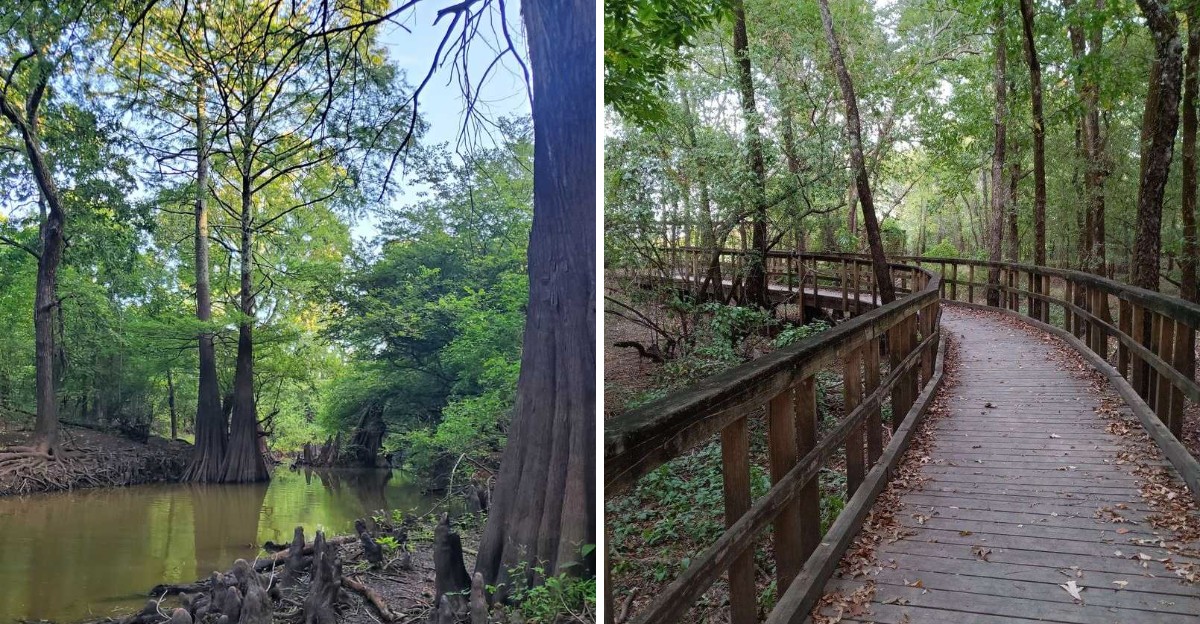
A short trail beside a busy road can feel like an unlikely place for a wildlife break, but this one changes the scene. The route slips into bottomland woods where birds call overhead and wetland views appear between the trees.
Boardwalk sections help carry walkers through soggier stretches, while crushed shale keeps the route easy to follow. It is a compact outing, but the landscape shifts enough to keep the walk interesting.
Wildlife viewing is a big part of the appeal here, especially during seasonal bird migrations. Deer also use the surrounding management area, so a quiet visit may bring an unexpected sighting.
In Arkansas, this kind of trail makes a detour feel surprisingly rewarding without demanding a long hike. Heavy rain can change conditions quickly, though, so checking access details before heading out is smart.
The route offers an easy way to trade pavement for wetlands for a while.
A Quiet Trail Goes Wild
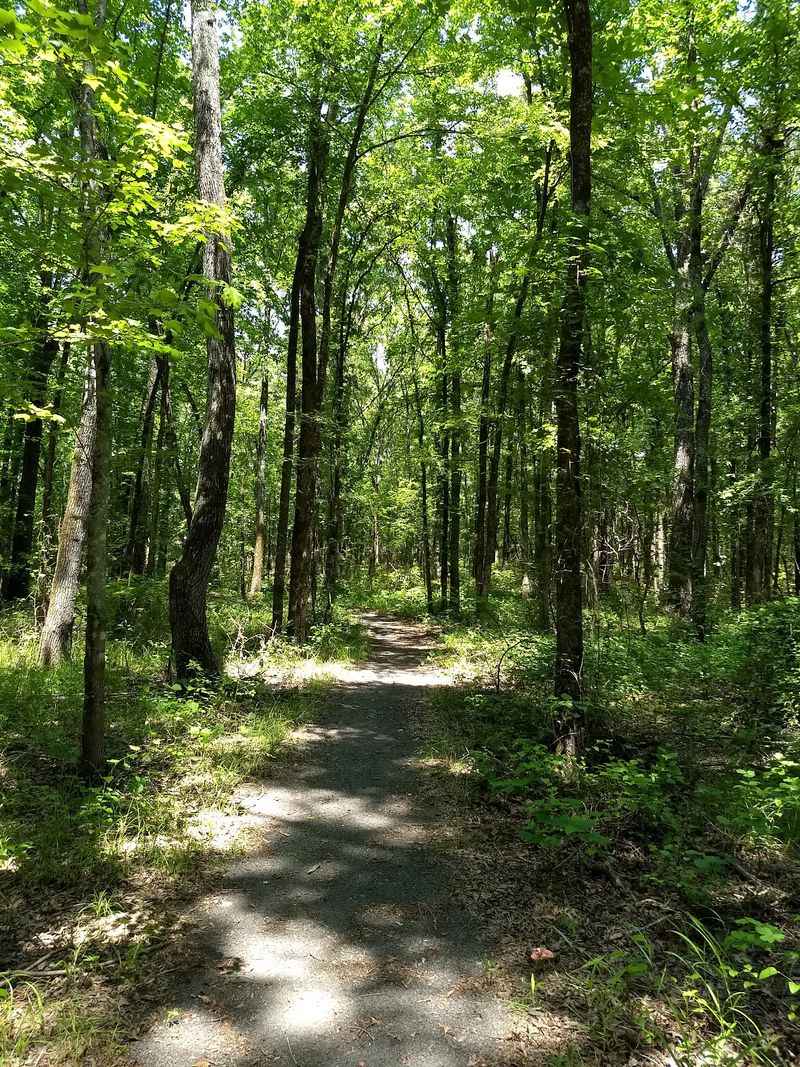
Most people zip past this spot at highway speed with their eyes fixed on the next exit. Just beyond the guardrails, a patch of bottomland forest hums with songbirds and croaking frogs.
The setting belongs to a state wildlife management area, so the land is kept for critters first and people second. Visitors 16 and older need a valid Arkansas hunting or fishing license or the annual WMA/Lake Conservation Permit to use the area.
Two loops make up the route, with a shorter option of roughly a mile and a quarter and a longer one close to two miles. Paths are covered in finely crushed shale, which keeps the footing steady and the grades pleasantly flat.
I love that a place built for wildlife still makes room for casual walkers in everyday sneakers. Benches and interpretive signs pop up along the way, giving everyone a reason to pause and read about the neighbors.
Traffic noise does drift in at times, since the interstate runs close by the parking area. That hum fades a bit once the trees thicken and the birds start talking over it.
Seasonal WMA restrictions limit access, although daylight remains the best window for spotting nearby wildlife. All of this quiet wildness waits at the Kenny Vernon Nature Trail at 10 Grassy Lake Rd, Mayflower, AR 72106.
Boardwalks Cross The Wetlands
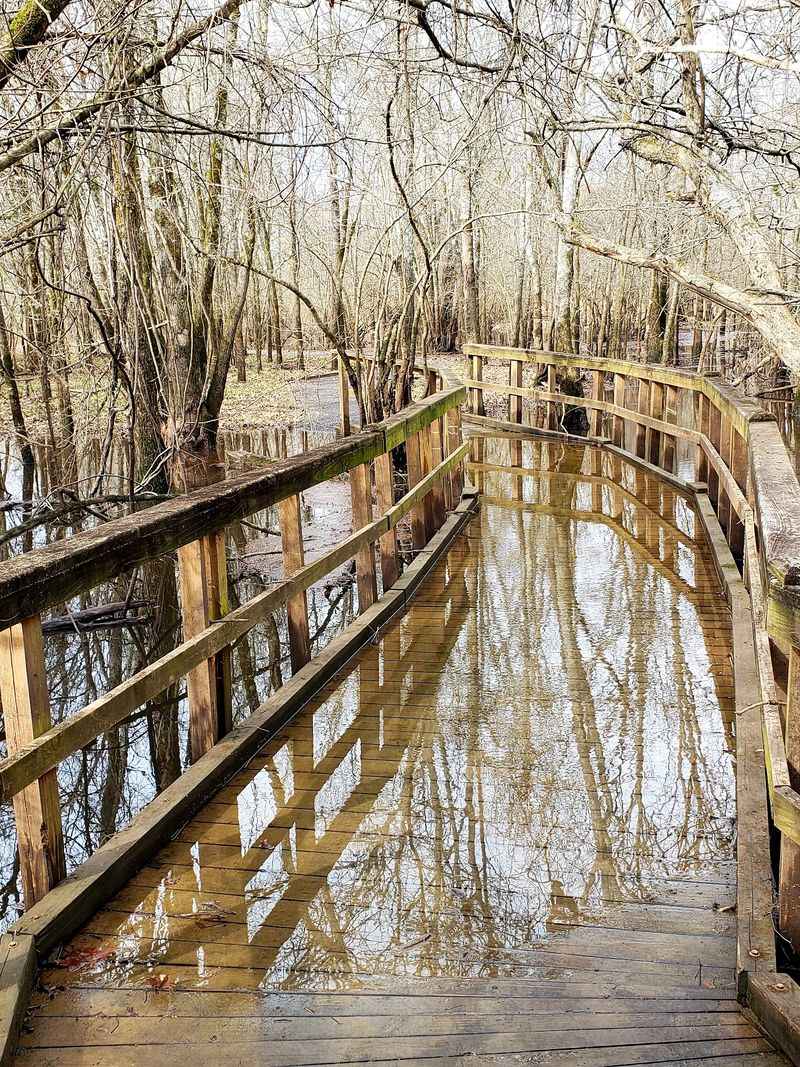
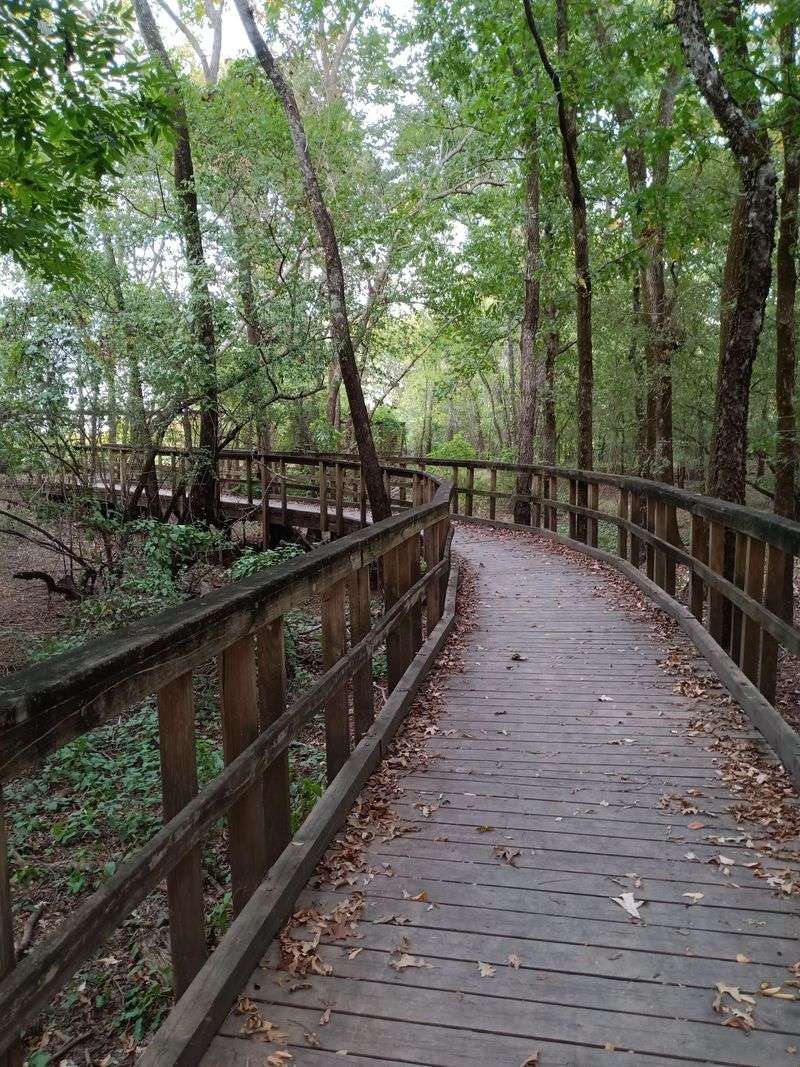
Wooden planks do a lot of heavy lifting on this route. Where soggy ground takes over, boardwalks and small bridges carry walkers above the muck so shoes stay mostly dry.
The design lets people peer right into the wetland without trampling the plants and critters living there. Looking down from the rails, visitors might catch ripples on the water or the flash of something small darting below the surface.
A short stairway also appears on one stretch, which is handy to know for anyone pushing a stroller. Much of the shale is smooth enough for wheels, but that staircase can send stroller crews looking for another way around.
I find it charming that such a simple walkway turns a swamp into a front-row seat. Boardwalks also change the soundtrack of the walk, with footsteps thumping softly on wood instead of crunching on gravel.
High water can sometimes rise right over the planks after heavy rain. When that happens, parts of the loop become more of a wading pool than a walkway.
Checking recent conditions before driving out saves a lot of disappointment and a few pairs of damp socks. On dry days, these boards offer the easiest way to walk on water without any magic.
Cypress Trees Change The View
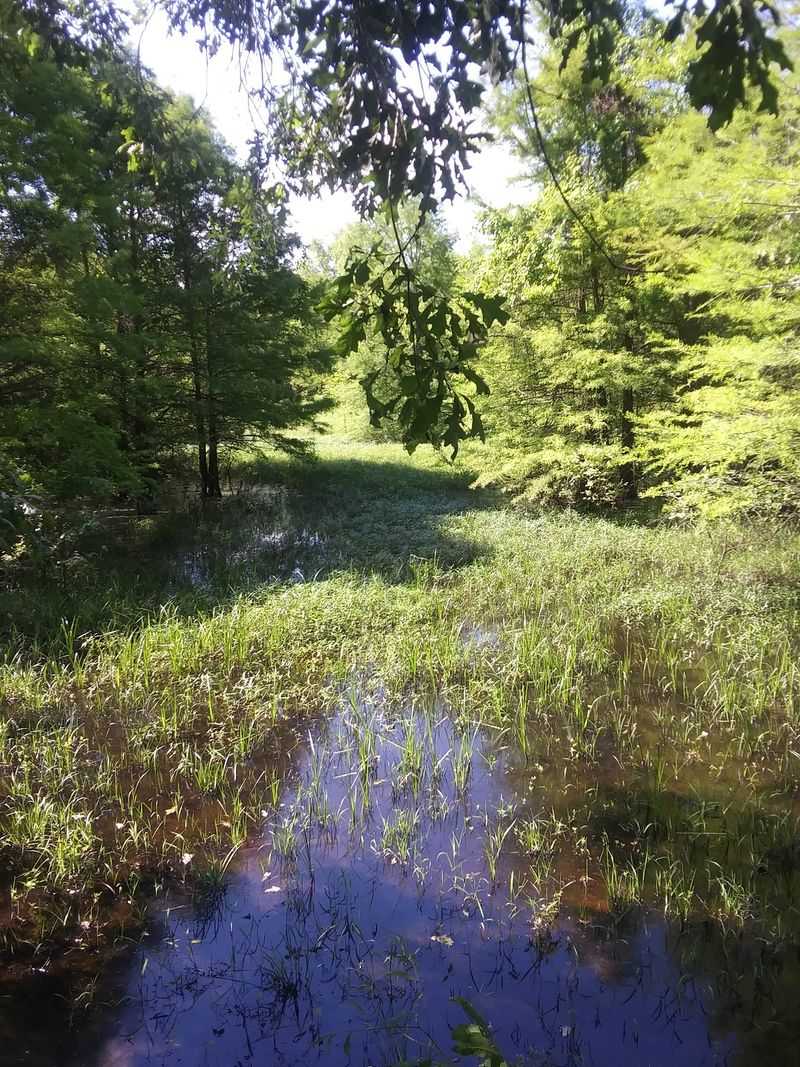
Knobby roots and flared trunks give wetland forests a look all their own. Water-loving trees such as bald cypress are a classic feature of bottomland like this, and they thrive where their feet stay wet.
The trail also climbs out of the low ground into drier hardwood forest on higher spots. That shift gives walkers two distinct woodlands in one short outing, which is a nice bonus for such a compact loop.
Stamped stones and signs along the path identify some of the trees and plants. Kids and grown-ups alike can play a friendly game of name-that-bark as they wander.
I can’t get enough of how a thick canopy can completely change the mood of a walk. Shade here keeps summer strolls a bit more bearable, and autumn paints the leaves in warm shades of rust and gold.
Central Arkansas bottomlands like this one act as natural sponges during storms. The trees hold soil in place while the soggy ground soaks up extra water that spills over after heavy rain.
Winter strips the hardwoods bare and opens up longer views through the forest. Every season, the trees quietly rearrange the scenery for anyone paying attention.
Wildlife Blinds Add Suspense
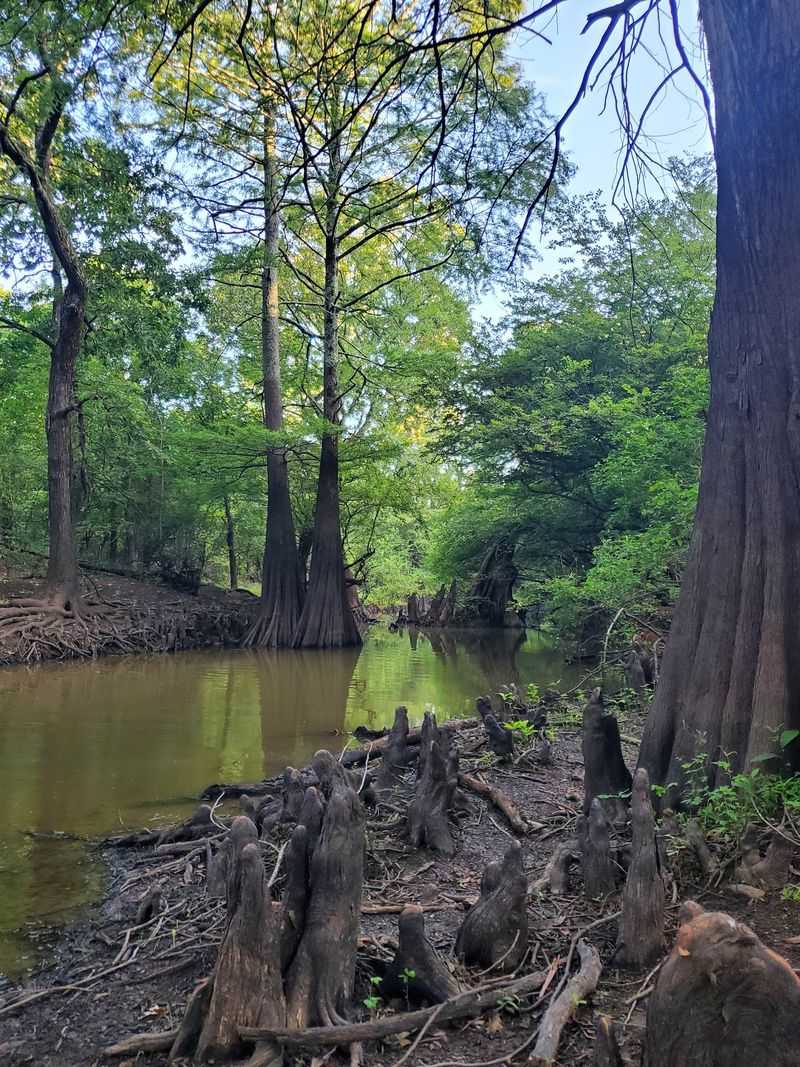
Patience gets a real reward at the viewing blinds located along the trail. Simple wooden structures let people watch wildlife while staying mostly out of sight.
Along with the regular viewing blinds, the trail offers a photo blind aimed at wildlife photography. Birders with long lenses tend to appreciate a spot where they can wait without spooking their subjects.
Sitting still inside a blind builds real suspense, since nobody knows who might show up next. Maybe a wading bird glides in, or maybe the only visitor is a curious dragonfly with excellent timing.
White-tailed deer have been spotted along the loops, and the wetlands draw waterfowl during cooler months. Quiet voices and slow movements give everyone a better shot at a sighting.
Personally, I think the anticipation is half the fun of any wildlife blind. Even an empty pond feels exciting when something could appear at any second.
Informational signs near the lookouts explain which creatures call the area home. Early morning and late afternoon usually bring more activity, when the heat of the day has softened.
Snakes live here too, since wetlands are prime reptile real estate. Watching the ground as closely as the treetops is simply part of the adventure.
Wetland Views Open Suddenly
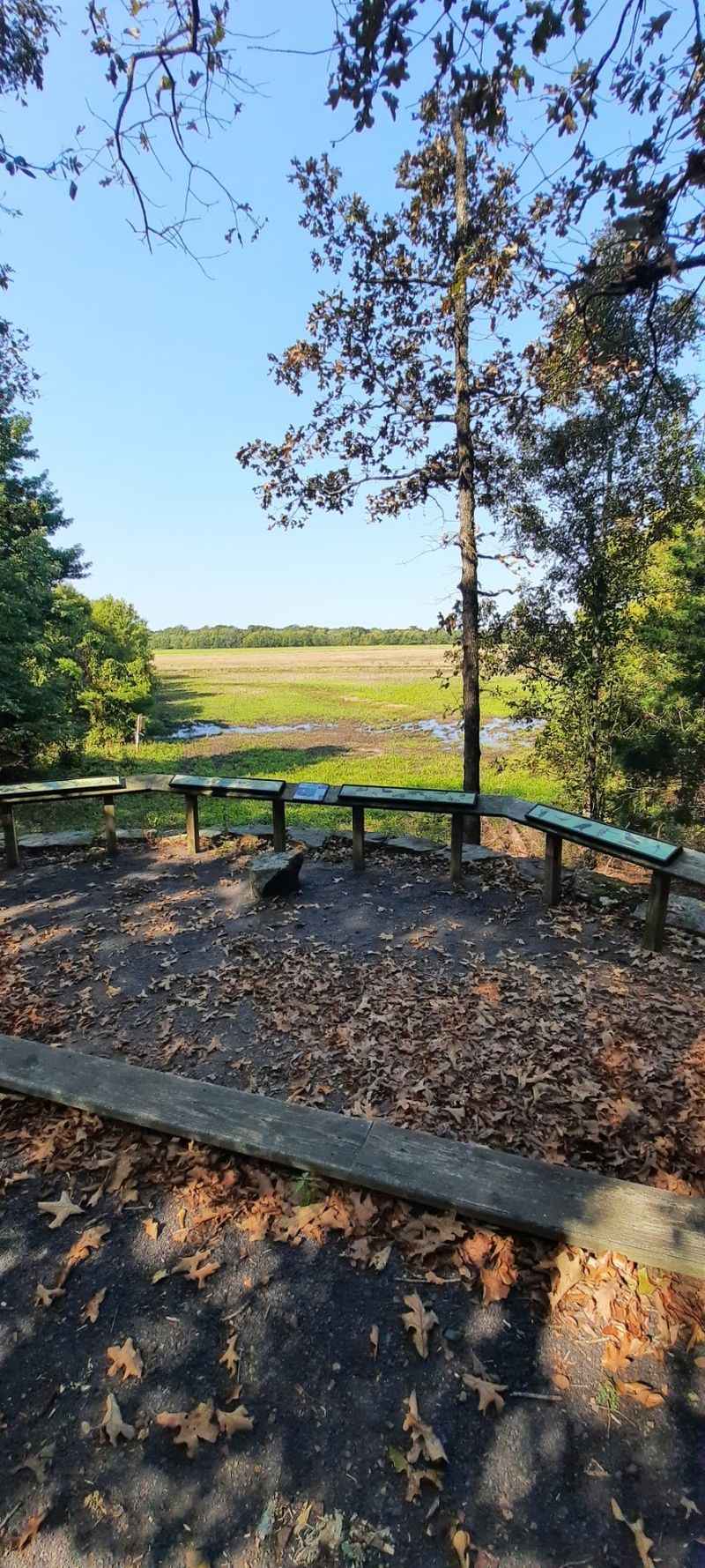
One moment the path feels closed in by trees, and the next it spills out beside open water. Those sudden reveals make the loop feel much bigger than its modest mileage.
Lookout spots with benches sit at several of these openings. Each one invites a pause to scan the marsh edges or simply catch a breath in the fresh air.
Protected wetlands surround much of the route, and they exist mainly for waterfowl. During parts of the year, the state Game and Fish Commission limits access to some open areas so resting ducks can enjoy their peace.
Checking current regulations before a visit helps avoid showing up to a closed section. Seasonal rules focus on protecting the birds, so a little homework keeps everyone happy.
I appreciate that the ducks get VIP treatment here, complete with their own quiet zones. It’s a fitting reminder that the area is a wildlife haven first and a walking trail second.
Morning light over the water can be especially lovely, with mist sometimes hanging low above the marsh. Sunset brings warmer colors, though mosquitoes tend to clock in for the evening shift.
Insect repellent earns its spot in any bag here. The views are worth it, even with a few buzzing fans tagging along.
Birdlife Fills The Canopy
Songbirds run the soundtrack on this trail, especially during the warmer months. Kentucky warblers and Carolina chickadees are among the species birders have spotted in these woods.
Wetlands next to hardwood forest give birds plenty of food and cover in a small space. That mix of habitats means woodland singers and water-loving species can both show up on the same walk.
Informational panels along the path describe some of the local wildlife and plants. They make it easier for beginners to put names to the chirps and flashes of color overhead.
I have a soft spot for any place where a casual stroll can turn into a birding session. A pair of binoculars turns the simple loop into a treasure hunt among the branches.
Spring migration and early summer usually bring the liveliest chorus to the canopy. Fall and winter shift the spotlight toward the wetlands, where waterfowl gather on the open water.
Summer heat and humidity can be intense in this low ground. Early starts keep birders cooler, and the birds are usually more active before the afternoon lull settles in.
Soft footsteps on the gravel help too. The canopy rewards anyone willing to tweet it with a little respect.
Seasonal Water Reshapes The Trail
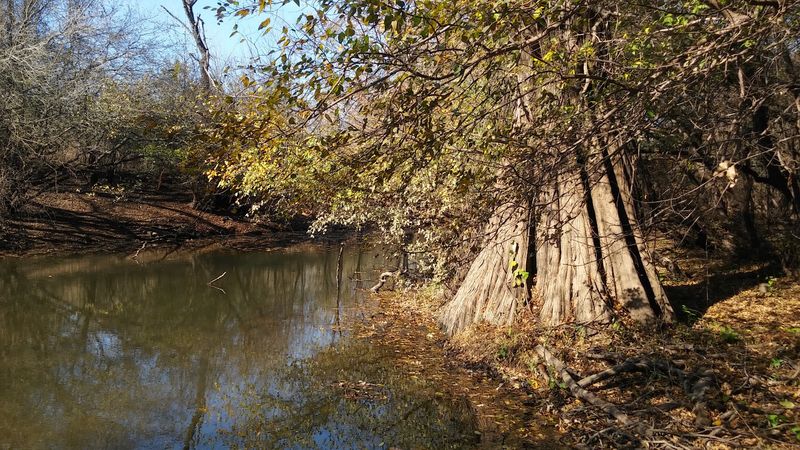
Rain has the final say on how this trail looks from week to week. After heavy storms, water can spread across low sections and even cover the boardwalks.
The land sits in bottomland near Palarm Creek, so flooding is a natural part of its rhythm. Wetlands are supposed to fill up, and that water is exactly what keeps the habitat healthy.
Both loops can end up underwater during especially wet stretches. On those days, walking is off the table and the trees stand in open water.
Dry spells flip the script entirely. Small creeks that wind through the woods can shrink to a trickle or vanish for a while.
Each version of the landscape offers something different to notice. High water brings shimmering reflections, while low water reveals muddy banks dotted with animal tracks.
Wet seasons also tend to bring out mosquitoes in full force. Snakes appreciate damp conditions as well, so staying on the gravel and watching each step makes good sense.
A quick look at recent weather or local updates helps set expectations before heading out. Conditions can change fast in low country like this, especially after several rainy days in a row.
No two visits here are guaranteed to look quite the same. That unpredictability is a big part of the charm.
A Wild Loop Near The Road
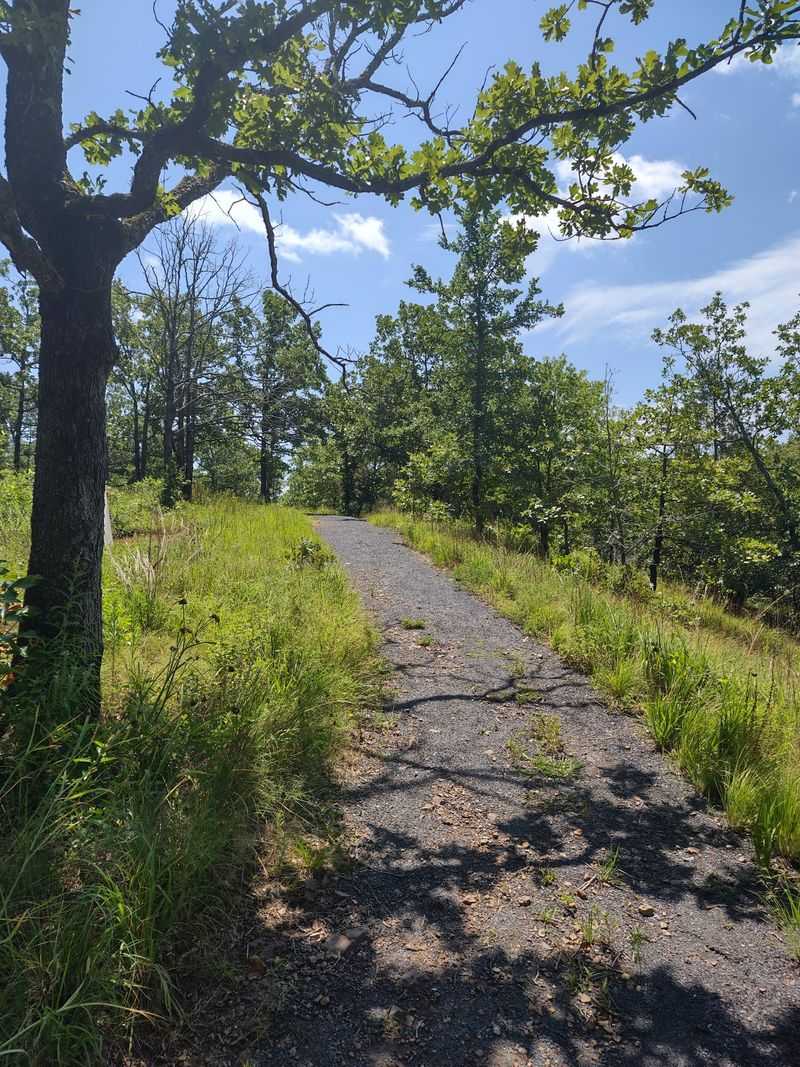
Hidden in plain sight might be the best way to describe this spot. Plenty of drivers pass nearby on the interstate every day without realizing a wildlife haven sits just off the road.
Easy access is a big part of the appeal. The trailhead has a parking area, and the flat shale loops suit families and solo walkers alike.
Picnic setups are not really the focus here, since the space is built mainly for walking and wildlife watching. Benches along the way handle the resting part nicely.
The location also makes it a handy stop for travelers crossing central Arkansas. Stretching legs among the trees beats pacing around a gas station parking lot any day.
Visitors 16 and older need a valid hunting or fishing license or WMA/Lake Conservation Permit. Seasonal access restrictions also apply, so checking current rules matters here.
Road noise never fully disappears, but the birds do their best to drown it out. Most walkers seem happy to trade a little hum for so much green.
In the end, this small loop proves that wild places do not always hide deep in the backcountry. Sometimes they wait right beside the highway, just past the next exit.