
This Under-The-Radar Arizona Park Might Be The Best Place To See Desert Wildlife Up Close This Spring
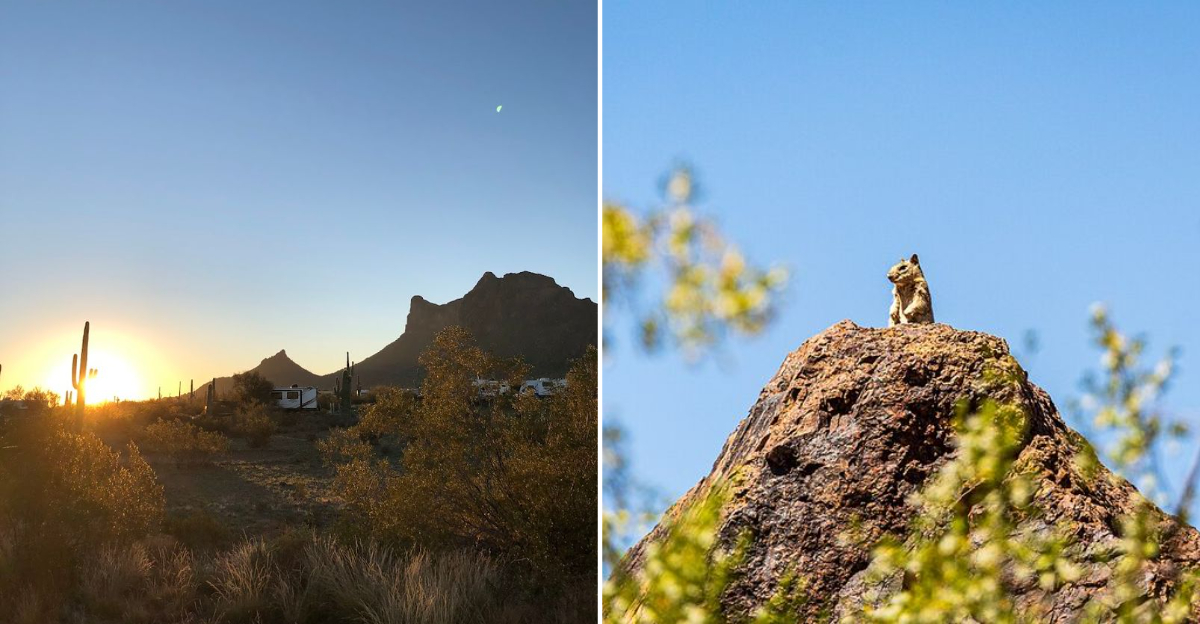
Spring is sneaking up on the desert, and the air is already humming with the promise of new life. I stumbled onto a modest ribbon of sky‑blue trail that winds up a solitary, sun‑kissed peak—an oasis of quiet that most travelers seem to overlook.
Here, the desert isn’t a barren backdrop but a theater of color and movement: curious jackrabbits pause to sniff the breeze, a flock of hummingbirds darts between blooming wildflowers, and a shy coyote watches from a rocky outcrop before disappearing into the scrub.
If you’ve ever wanted to feel the pulse of Arizona’s wild heart without battling crowds, this tucked‑away state park might just be the secret stage where spring’s cast performs up close and personal.
It is one of Arizona’s most rewarding yet surprisingly overlooked destinations.
Black-Tailed Jackrabbits Roaming The Desert Floor
Few desert encounters match the surprise of nearly stepping around a boulder and finding a black-tailed jackrabbit frozen mid-stride, those enormous ears tilted toward you like satellite dishes picking up a signal.
This is prime territory for spotting these speedy desert residents, especially during the cooler morning hours of spring when they are most active near the trailheads.
Black-tailed jackrabbits are not actually rabbits in the traditional sense but are classified as hares, born fully furred and eyes wide open.
Their oversized ears serve as natural cooling systems, radiating body heat during warmer parts of the day. You will often see them darting between saguaro cacti and desert shrubs along the lower trails.
For the best chance of a sighting, arrive early at Picacho Peak State Park and move quietly along the base-level paths. Bring binoculars to observe from a respectful distance without startling them.
These remarkable animals are fast, so keep your camera ready and your expectations flexible for a truly wild moment.
Harris’s Hawks Hunting In Cooperative Packs
Watching a Harris’s hawk hunt is like witnessing a perfectly choreographed team sport played out against an open desert sky. Unlike most raptors that hunt solo, Harris’s hawks are famously cooperative, working in small family groups to flush and catch prey across the scrubby terrain at Picacho Peak State Park.
Spring is an especially rewarding season to observe these birds because nesting activity ramps up and the hawks become more visible as they scout territory. Rich chestnut shoulders and bold white tail tips make them easy to identify even from a distance.
Scan the tops of saguaros and tall desert shrubs, as these hawks love elevated perches with wide views. I spotted a pair circling low near the picnic area on a breezy March morning, and the experience genuinely stopped me in my tracks.
Bring a long-lens camera or a good pair of binoculars, and be patient. Harris’s hawks reward calm observers with behaviors that feel almost impossibly intelligent for a wild bird.
Spring does not disappoint here.
Wildflower Blooms That Turn The Desert Neon

Nothing quite prepares you for the moment when a desert that looked bone-dry just weeks ago suddenly erupts into a carpet of gold, purple, and orange. Picacho Peak State Park is legendary across Arizona for its spring wildflower displays, and on a good bloom year the colors stretch as far as the eye can reach.
Mexican gold poppies are the undisputed stars of the show, covering entire hillsides in shimmering golden waves when winter rains cooperate. Owl clover adds purple splashes between the poppies, and desert lupine threads through the scene like nature decided to go all in on a color palette.
The blooms typically peak between late February and early April, depending on rainfall from the previous winter.
Plan your visit for a clear, sunny morning when the poppies open fully toward the light. Cloudy days cause the flowers to stay closed, which is genuinely heartbreaking after a long drive.
Check Arizona wildflower reports online before you go to time your trip perfectly and maximize every golden moment.
Desert Cottontail Rabbits Along The Lower Trails
Soft, round, and utterly unbothered by curious hikers, desert cottontail rabbits are practically the unofficial welcoming committee of Picacho Peak State Park.
You will spot them nibbling vegetation along the lower trail sections, particularly near the picnic areas where grasses and low shrubs provide both food and cover.
Spring brings these compact little mammals out in full force, as warming temperatures and fresh plant growth create ideal feeding conditions.
Cottontails are most active at dawn and dusk but are frequently visible throughout the morning hours in spring, making them one of the easiest wildlife sightings in the park. Their fluffy white tails flash like small flags as they hop away, which is honestly adorable every single time.
Unlike jackrabbits, cottontails tend to freeze rather than bolt immediately, giving you a solid window for a great photograph. Keep your distance and avoid sudden movements to extend the encounter.
Kids especially love spotting them along the family-friendly nature paths, making cottontail watching a crowd-pleasing highlight of any spring visit to the park.
The Hunter Trail Summit Climb And Its Jaw-Dropping Views
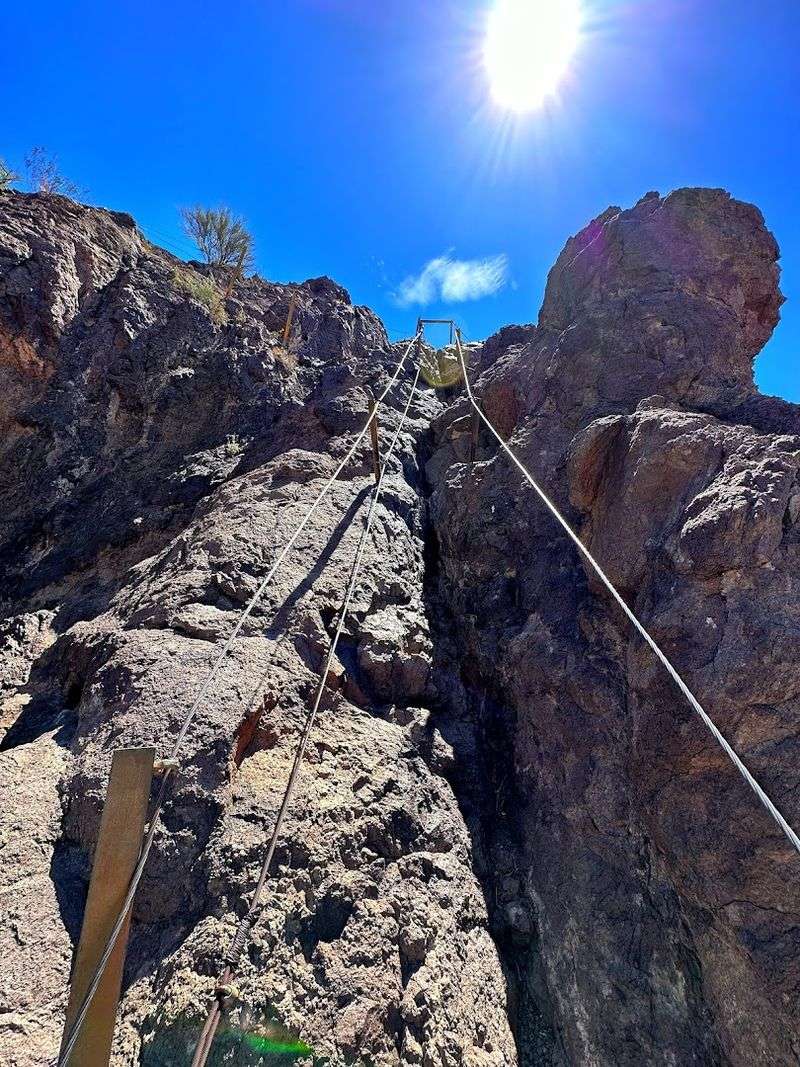
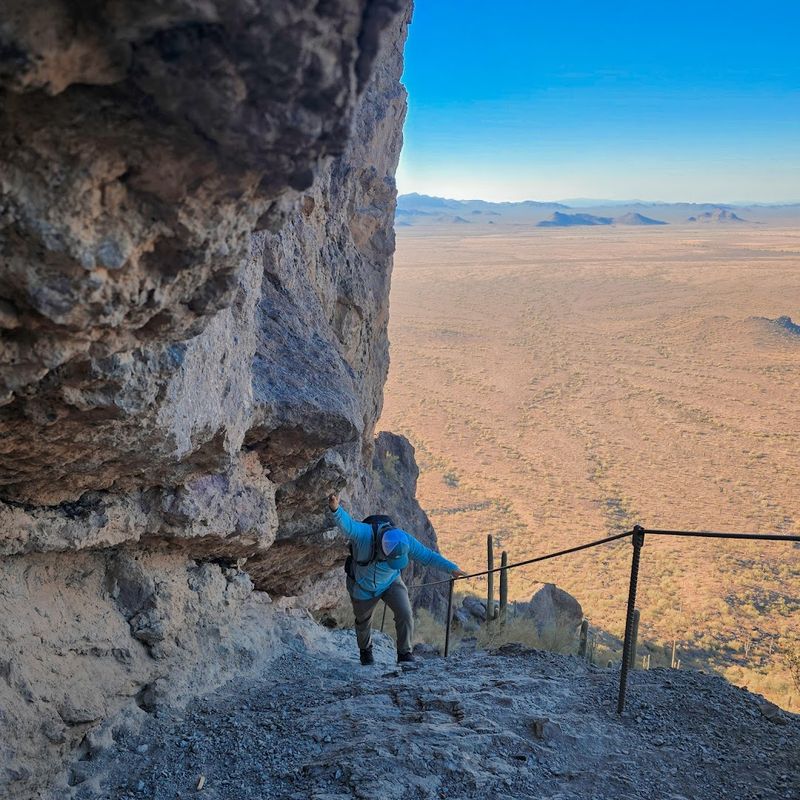
Standing at the summit of Picacho Peak after hauling yourself up via fixed cables is one of those experiences that makes your legs sore and your spirit soar at the same time.
The Hunter Trail is the park’s signature route, covering roughly 2.7 miles round trip but packing in elevation changes that feel considerably more ambitious than that modest number suggests.
Sections of the trail require you to grip steel cables bolted into the rock face and pull yourself upward at steep angles, which sounds intimidating but is genuinely exhilarating once you are in the middle of it.
Gloves are strongly recommended, especially in warmer weather when the cables heat up. Solid hiking boots with good grip are non-negotiable on the rocky scrambles.
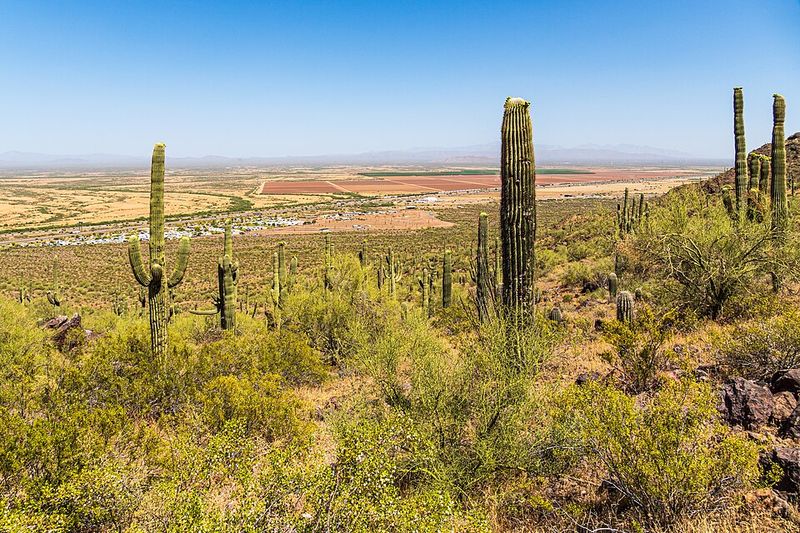
The reward waiting at the top is a full 360-degree panorama stretching from the Phoenix metro area to the outskirts of Tucson on a clear spring day.
Allow at least two to three hours for the round trip. Start early in the morning to beat both the heat and the crowds, because this view earns every single step.
Cactus Wrens And Curve-Billed Thrashers Singing At Dawn
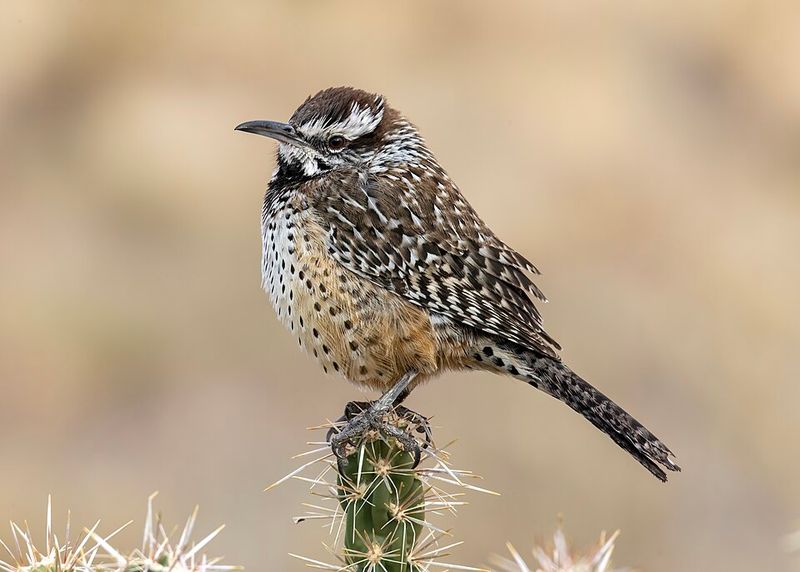
Spring mornings at Picacho Peak State Park come with a free soundtrack, and it is spectacular. Cactus wrens, the largest wrens in North America and Arizona’s state bird, belt out their raspy, mechanical calls from the tops of cholla and saguaro cacti as the sun crests the horizon.
Their bold spotted chests and curved bills make them as striking visually as they are vocally. Curve-billed thrashers join the chorus with a sharp, two-note whistle that carries remarkably far across the desert flats.
Both species are year-round residents, but spring amplifies their activity as nesting season kicks into gear. Early morning is when the desert soundscape reaches its peak richness, layering multiple bird calls into something genuinely worth pausing to appreciate.
Bring a field guide or download a bird identification app before your visit to match calls to species in real time.
The lower loop trails near the campground are particularly productive for bird watching at dawn. You do not need expensive gear to enjoy this, just open ears and a willingness to slow down a little.
Camping Under A Desert Sky Full Of Stars
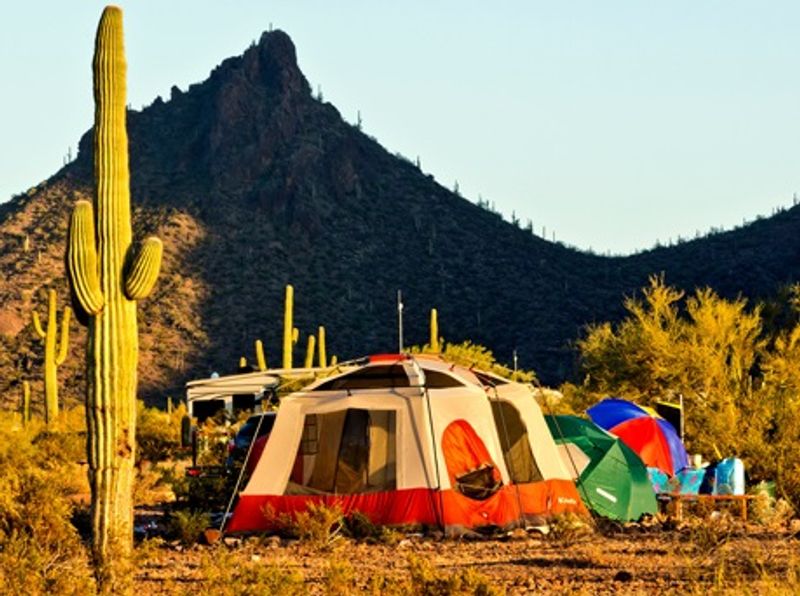
Spending a night at Picacho Peak State Park is the kind of experience that quietly recalibrates your sense of what quiet actually means. Once the day hikers head home and the park settles into evening, the desert transforms into one of the most peaceful places imaginable.
The campground sits right at the base of the peak, giving you a front-row seat to one of Arizona’s most dramatic natural silhouettes.
Every campsite comes equipped with electrical hookups, and the restroom facilities are kept impressively clean for a state park setting. The showers are genuinely good, which is a pleasant surprise after a sweaty day on the trails.
Spring nights are cool and comfortable, making sleeping outdoors here genuinely pleasant rather than a survival exercise. Stargazing from the campground is outstanding because light pollution is minimal this far from city centers.
Lay out a blanket after dinner and let your eyes adjust to the darkness. The Milky Way becomes visible on clear nights, and the silence around you feels almost three-dimensional.
Reservations are recommended, as spring weekends fill up quickly.
The Sunset Trail: A Scenic Alternative For Every Fitness Level
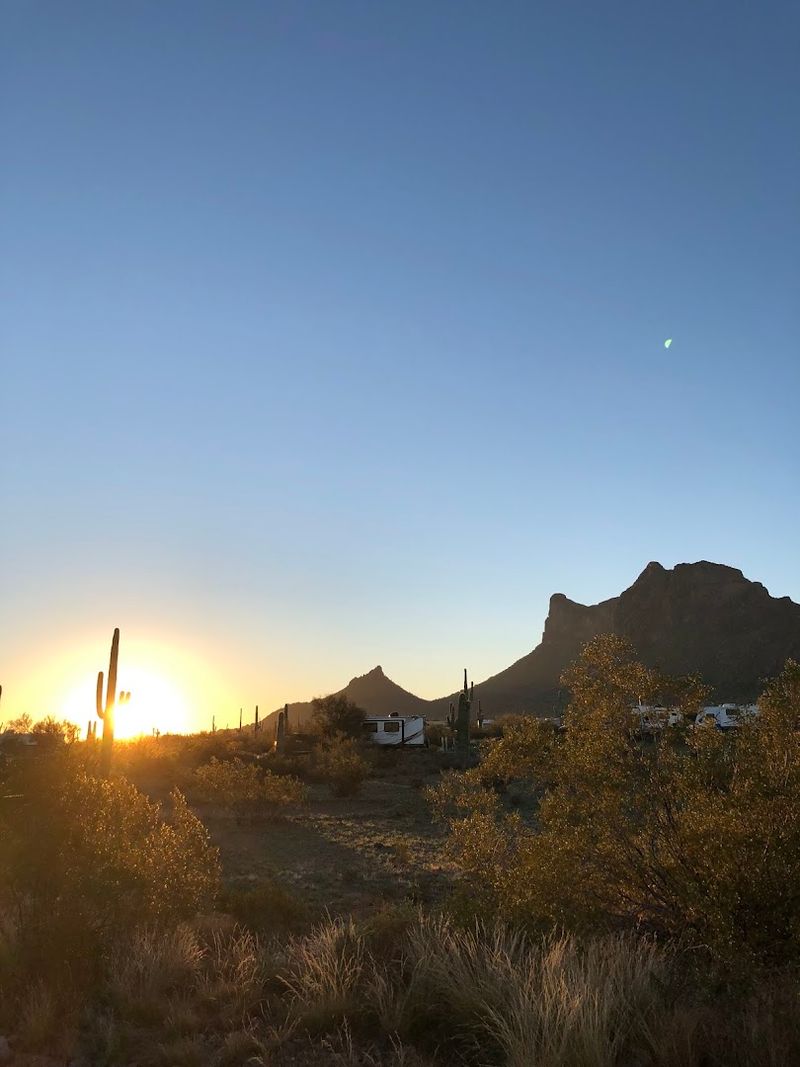
Not every great experience at Picacho Peak requires hauling yourself up a near-vertical rock face with cables. The Sunset Trail offers a completely different kind of reward, looping around the back side of the peak through some of the most scenically diverse terrain in the entire park.
It is longer and more gradual than the Hunter Trail, making it accessible to a wider range of hikers.
Spring wildflowers line the path in generous abundance here, and because fewer people choose this route, the wildlife encounters feel more intimate.
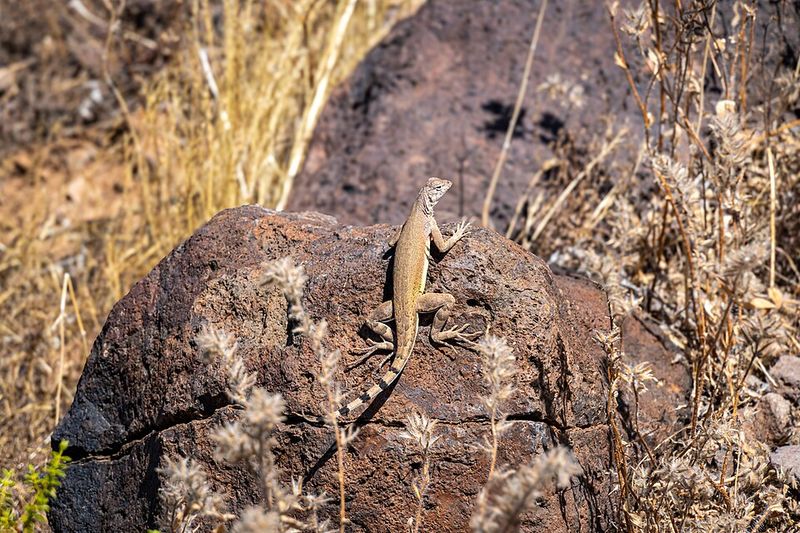
Desert cottontails, Gambel’s quail, and various lizard species are regular trail companions along this section. The golden afternoon light that washes over the rocky desert floor during the final stretch of the loop is genuinely photogenic.
My friend described watching the actual sunset from this trail as the highlight of an entire Arizona road trip, and based on personal experience, that assessment is not an exaggeration.
Carry extra water and plan your timing so you finish the loop before full darkness falls. The peace out here is the kind you carry home with you afterward.
Why Spring Is The Absolute Best Time To Visit Picacho Peak
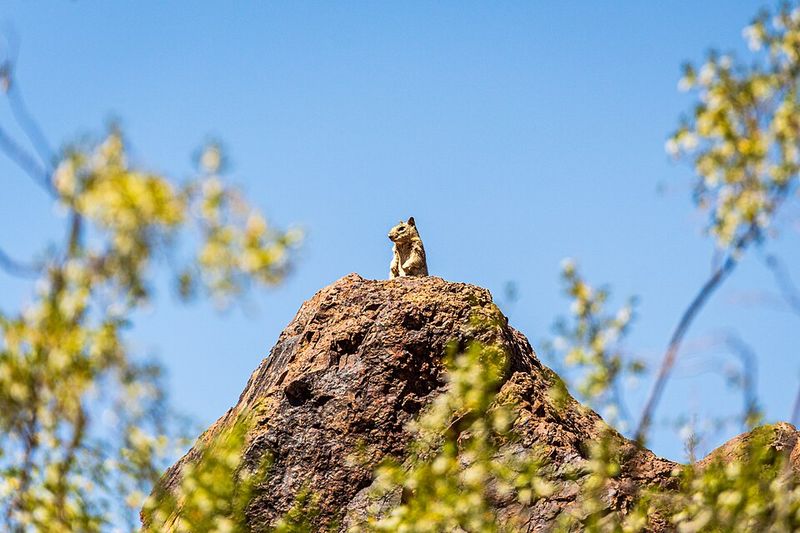
Timing a visit to Picacho Peak State Park correctly transforms a good trip into an unforgettable one, and spring is hands-down the season that delivers the full package.
Temperatures between late February and early April sit in the comfortable range of 65 to 80 degrees Fahrenheit, making hiking, wildlife watching, and camping genuinely pleasant rather than a battle against the elements.
The convergence of wildflower blooms, active nesting birds, and visible desert mammals during these weeks creates a layered nature experience that no other season can replicate.
Wildlife is more active in spring because animals are breeding, foraging, and establishing territories, which means more movement and easier spotting across the landscape. The park feels alive in a way that summer heat and winter cold simply cannot match.
Weekday visits during March offer the sweet spot of peak bloom conditions with lighter crowds than weekend rushes.
Arrive at opening time, pack a solid lunch, bring plenty of water, and plan to spend a full day exploring multiple trails. Picacho Peak in spring is not just a park visit, it is a proper desert adventure that earns its spot at the top of any Arizona spring bucket list.