
This Under-The-Radar Michigan Park Might Be One Of The Best Places To Spot Wildlife
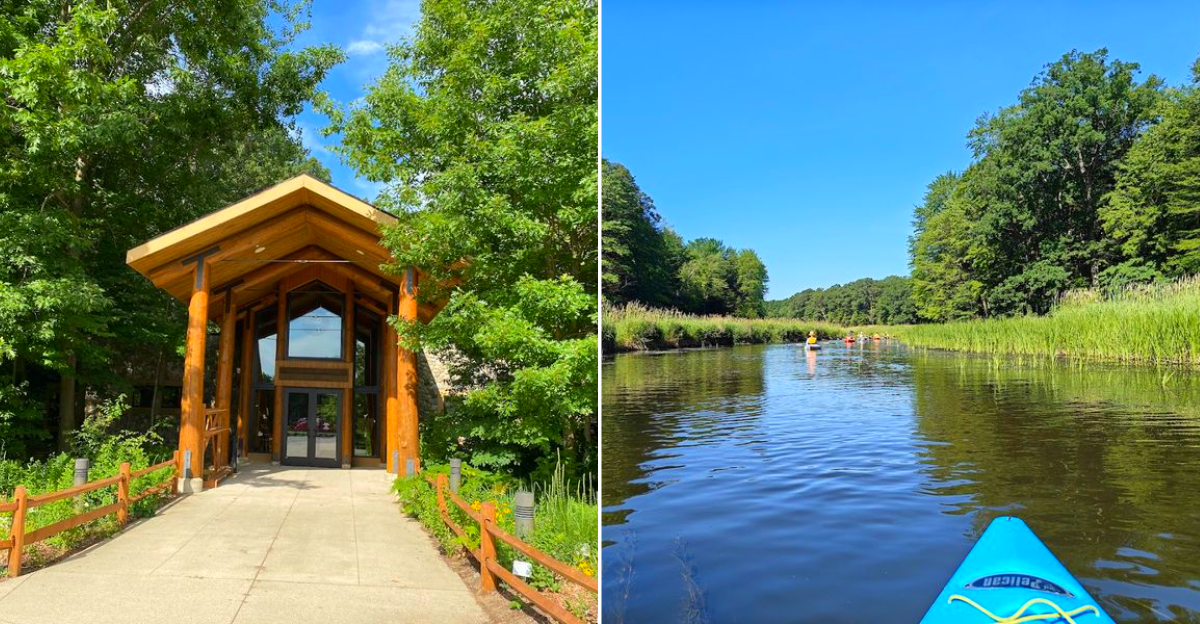
Most people drive past this park without knowing it exists. The entrance sign is small, the parking lot is never full, plus the trailhead looks like any other wooden boardwalk leading into a Michigan wetland.
Then the boardwalk opens onto a wide observation deck overlooking a marsh so quiet you can hear frogs plop into the water from thirty feet away. Herons stand still long enough to make you question whether they are real.
Turtles line every log that catches morning sun. A bald eagle nests somewhere in the canopy overhead, visible if you arrive early plus know where to look.
The trails wind through hemlock forest, over wooden bridges, past interpretive signs that explain what grows where plus why the water level changes with the seasons. Wildlife viewing in Michigan does not get more accessible than this, and most drivers pass the entrance without slowing down.
Start In The Bird Room
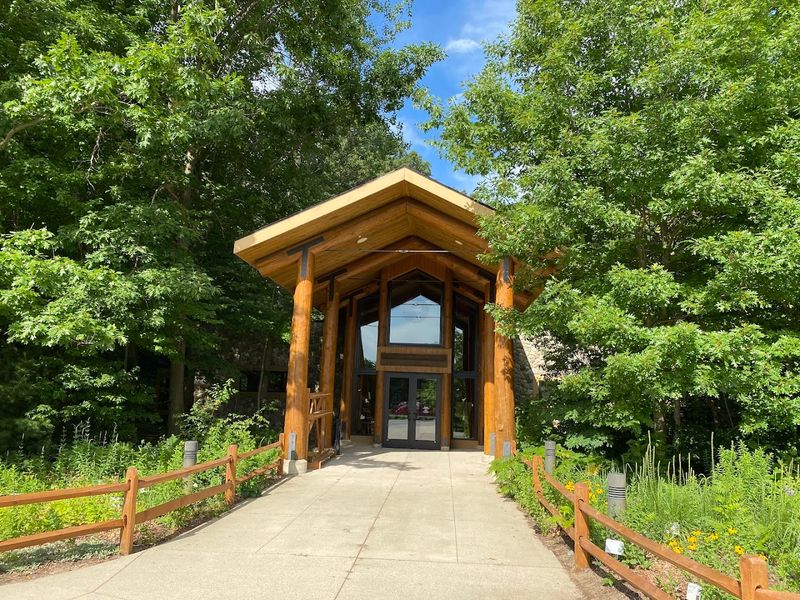
The smartest first move here is indoors. Hemlock Crossing’s Nature Education Center has a dedicated bird room with a glass window facing feeders, so you can settle down, stay quiet, and let chickadees, nuthatches, woodpeckers, and other regulars come to you.
It is a gentle reminder that wildlife spotting often improves when your own motion disappears.
The room also helps you calibrate the day. You can notice wind, light, and bird activity before committing to the trails, then head out with a better sense of where attention belongs.
If the woods seem still at first, this space keeps the visit from feeling empty, and it works especially well for kids, new birders, or anyone who wants an easy first success.
The Railroad Tracks Are Your Last Hint Before The Woods
Hemlock Crossing Park sits at 8115 West Olive Road in West Olive, Michigan, between Holland and Grand Haven. From US-31, turn west onto Croswell Street and follow it away from the highway.
Just after crossing the railroad tracks, turn south onto West Olive Road. The road quickly starts feeling quieter, with the park entrance waiting a short drive ahead.
Turn into the paved parking lot and aim for the Nature Center area if this is your first visit. From there, trails, river overlooks, the pedestrian bridge, and the Pigeon River all branch out within easy walking distance.
Use The Overlooks Like Hides
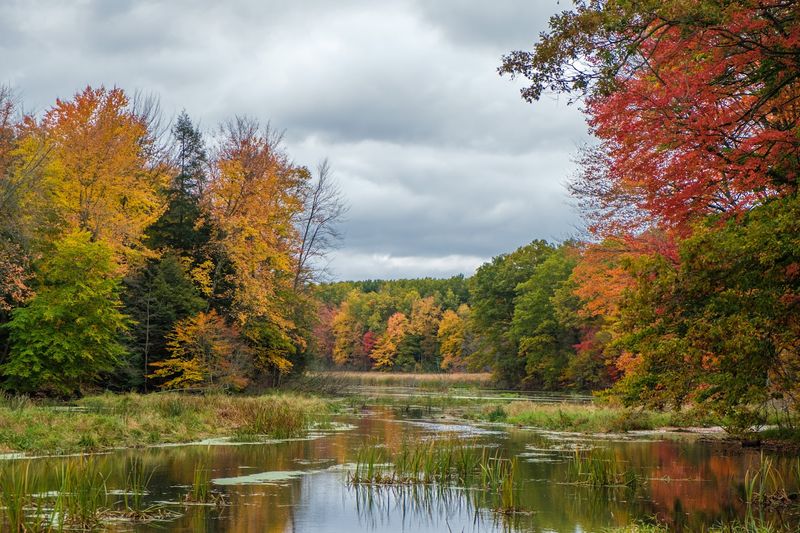
Hemlock Crossing has numerous overlooks with benches along wetlands and the Pigeon River, and they are more useful than they first appear. Instead of treating them as quick scenic pauses, use them like simple observation hides.
Sit still for ten minutes, keep your eyes on the margins, and let the place resume its own rhythm around you.
That pause is often when the park starts to reveal its more careful residents. Herons move through the shallows, hawks patrol openings, turtles surface where the water softens, and smaller birds work the brushy edges.
Because the views are open and the benches are already positioned well, the overlook strategy gives you range without much effort, especially when trails elsewhere feel visually crowded.
Follow The River Corridor
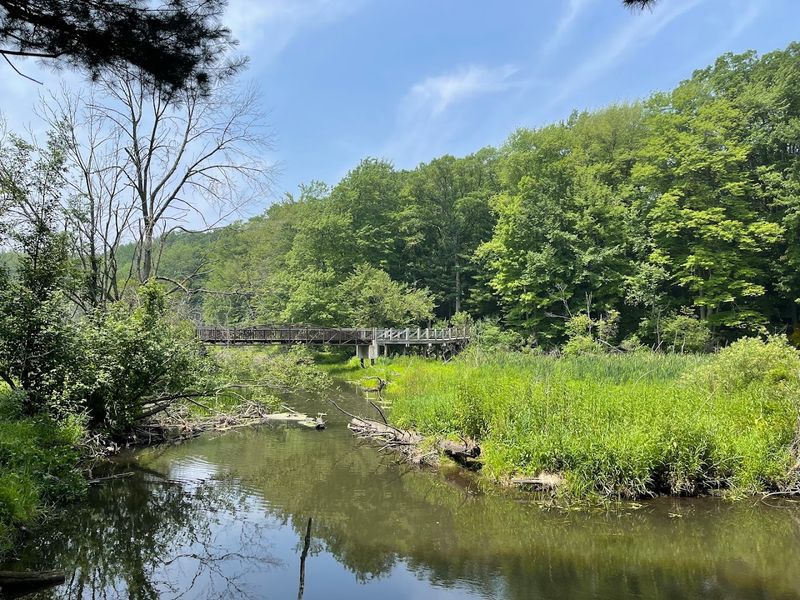
The Pigeon River is the park’s organizing feature, and wildlife follows that logic. Trails near the river corridor pass through the richest mix of cover, water, mud, and edge habitat, which means more chances to notice tracks, birds, turtles, and the occasional larger surprise.
I always slow down near bends and quieter stretches, where movement tends to read clearly against the water.
The pedestrian bridge is especially worth a deliberate stop. From there, you get a wider view of current, bank vegetation, and overhanging limbs that birds use for perches.
Otter sightings are possible in this park, though never guaranteed, and that uncertainty is part of the appeal. River watching here feels less like checking a list and more like learning the day’s mood.
Dress For Roots And Wet Ground
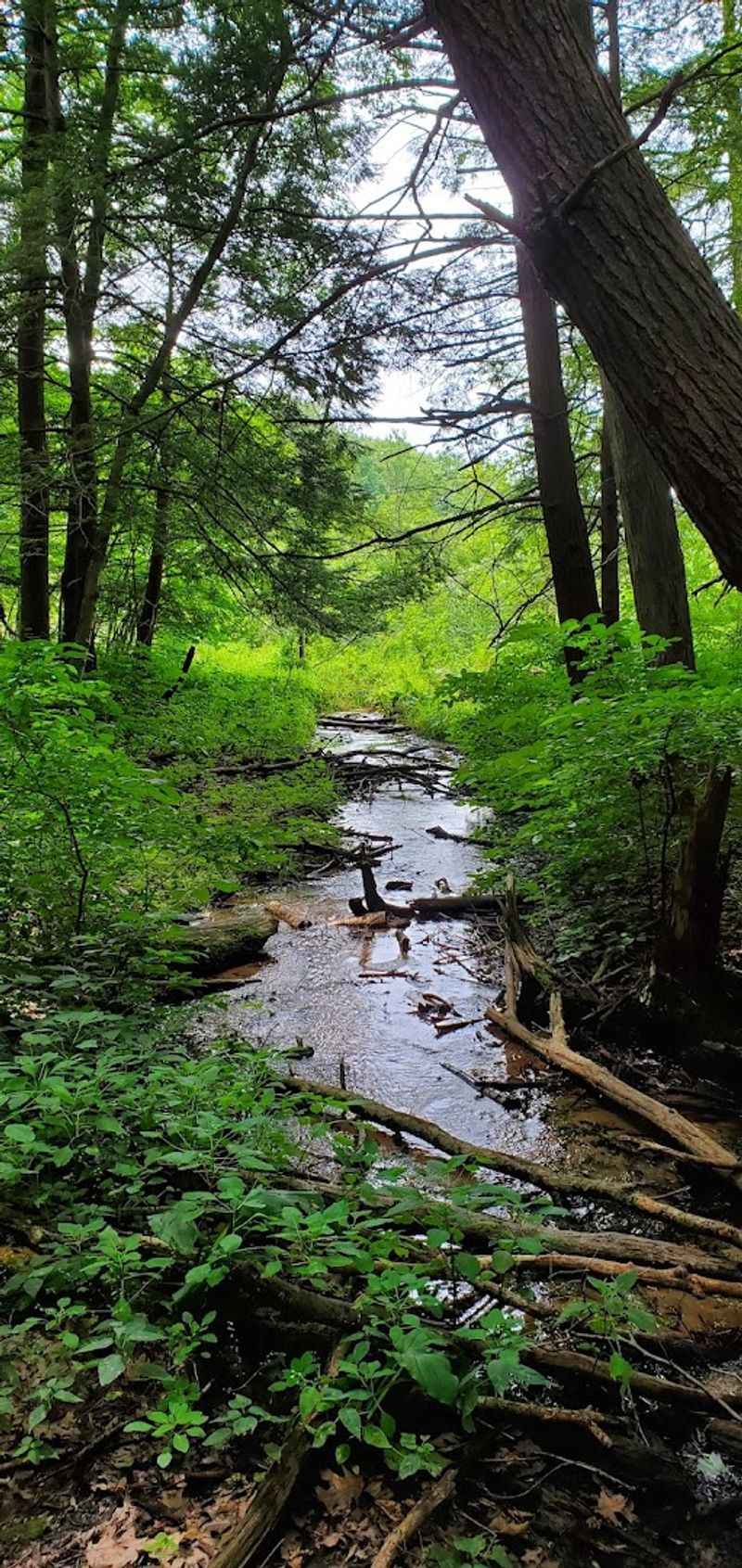
Wildlife attention is harder to sustain when you are watching your footing every second, so good shoes matter more here than people expect. Hemlock Crossing’s trails are well marked and well maintained, but they are not uniformly flat.
Roots, occasional inclines, and damp stretches near wetlands can pull your focus away from the woods at exactly the wrong moment.
Sturdy footwear, and even a walking stick if you like extra stability, makes the whole experience calmer. That calm translates directly into better spotting because you can stop suddenly, pivot quietly, and stand still without fuss.
This is also a shaded park in many sections, so bug spray belongs in the same practical category. Comfort is not glamorous, but it noticeably improves your field of vision.
Let Spring Do The Work
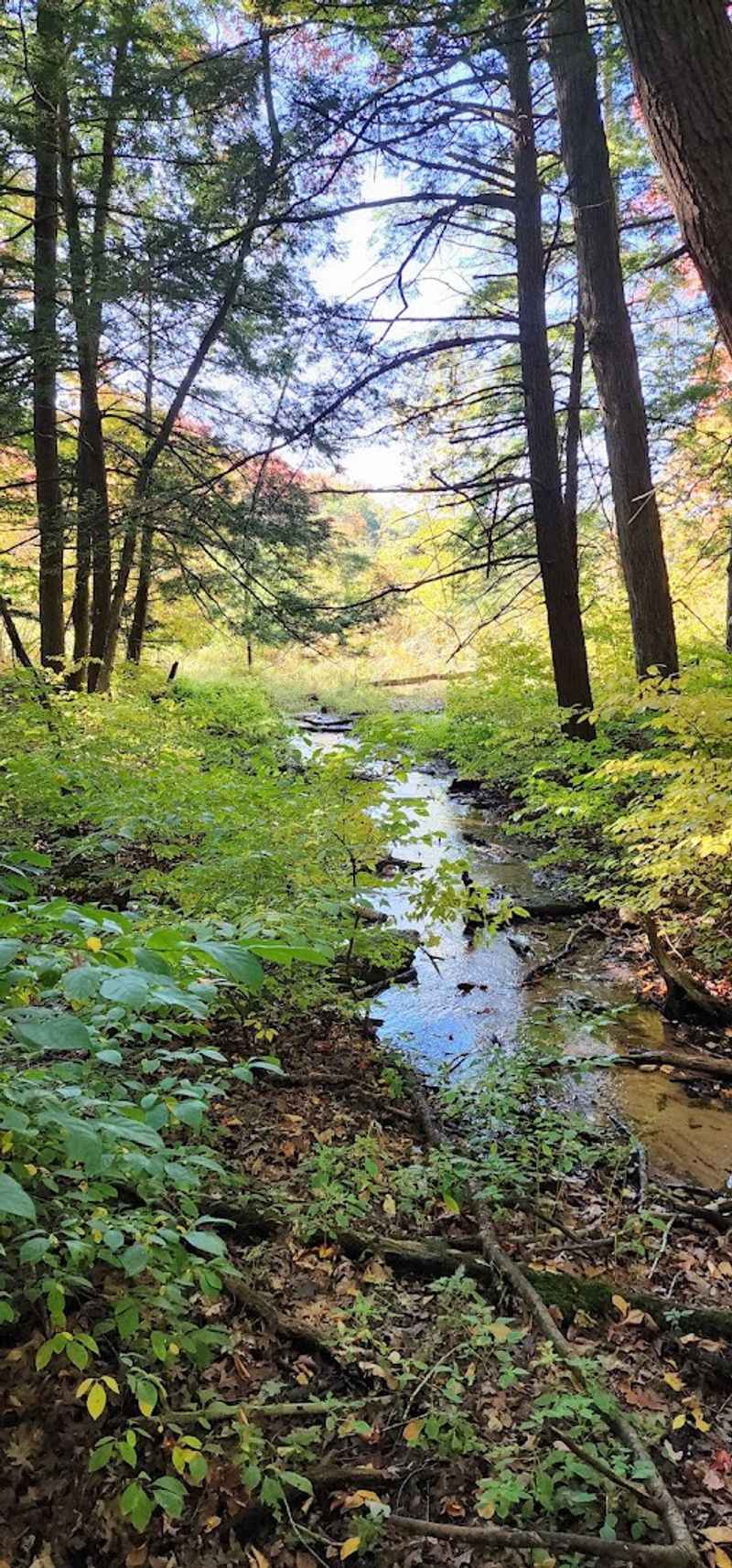
Spring is the season when Hemlock Crossing feels most talkative. Migratory birds return, wetlands wake up, and amphibians such as wood frogs become easier to notice if you move slowly near suitable habitat.
The park’s mix of woods, meadows, wetlands, springs, and river edge creates exactly the sort of layered environment that makes a spring visit feel busy in the best way.
Even if you are not identifying every call, the atmosphere changes. There is more sound overhead, more motion in shallow water, and more evidence that winter’s restraint has lifted.
Because conditions can still be muddy and cool, spring rewards a little flexibility. It is less polished than summer, but far more animated if your real goal is watching life reassemble itself.
Do Not Ignore Fall
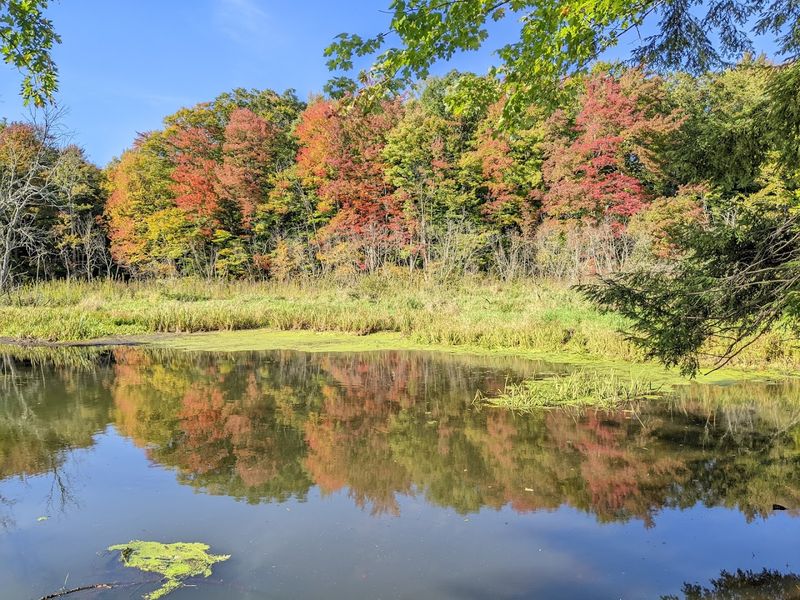
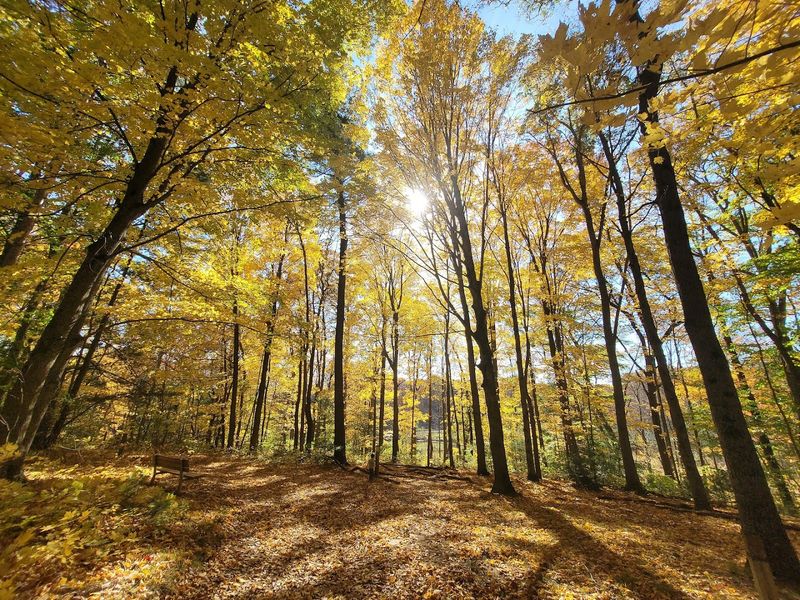
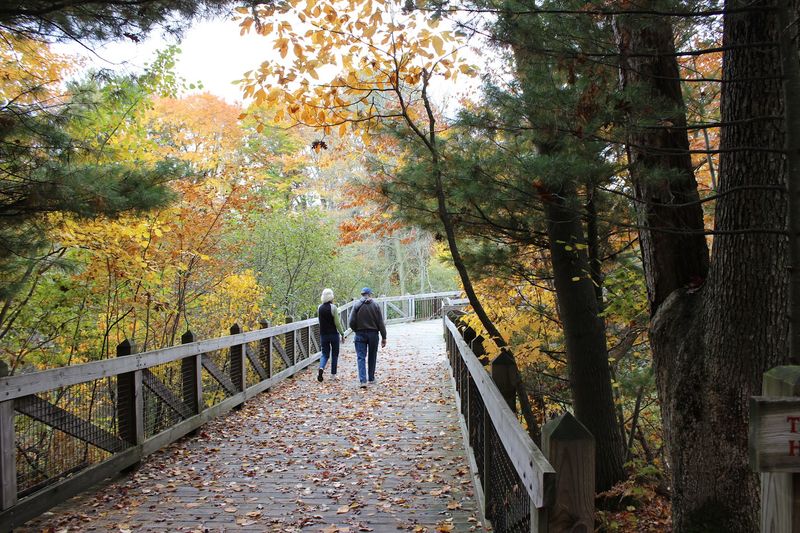
Fall gets attention for obvious reasons here, and in this case the praise is deserved. The river corridor and wooded trails pick up rich color, temperatures become easier for longer walks, and the clearer air helps distant movement stand out.
That visual sharpness makes wildlife watching feel less like luck and more like careful reading.
The park can seem almost theatrically beautiful in autumn, but the practical advantages matter just as much. Comfortable weather lets you linger at overlooks, leaves expose some lines of sight, and the whole experience becomes easier to pace.
I like fall here because it softens nothing. You still need patience, yet the scenery gives you company while you wait for a hawk, deer, or sudden ripple to announce itself.
Watch For Beaver Sign
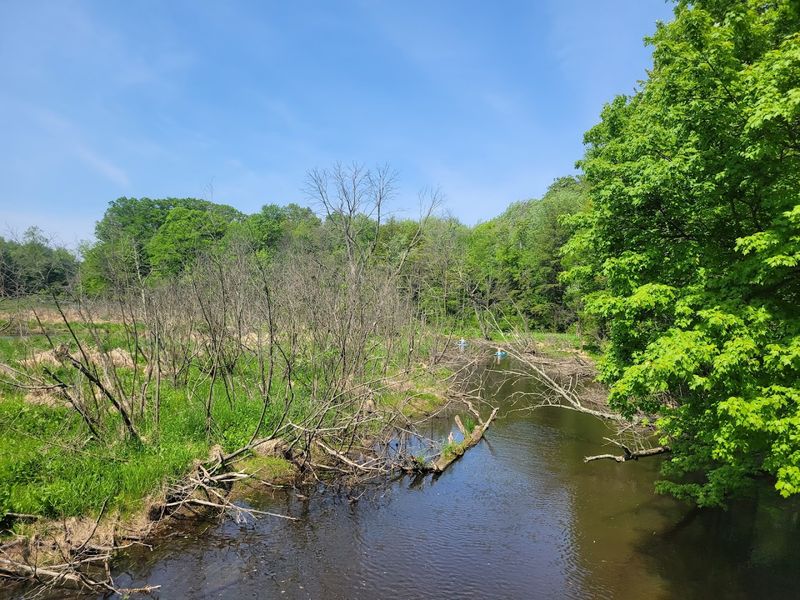
One of the park’s most intriguing facts is that a beaver colony is known to live here, which changes how you read the landscape. You are not only looking for animals themselves, but for evidence of engineering: altered banks, worked wood, and the kinds of watery edges that suggest regular activity.
That detective work makes slower sections of trail feel much more engaging.
Beavers are famously better at staying hidden than at staying unnoticed. If direct sightings do not happen, signs of their presence still tell you the habitat is active and healthy.
The same patient scanning can also turn up turtles and wading birds nearby. In a park built around wetlands and river movement, paying attention to traces is often as rewarding as spotting the creature outright.
Try The Water If Conditions Cooperate
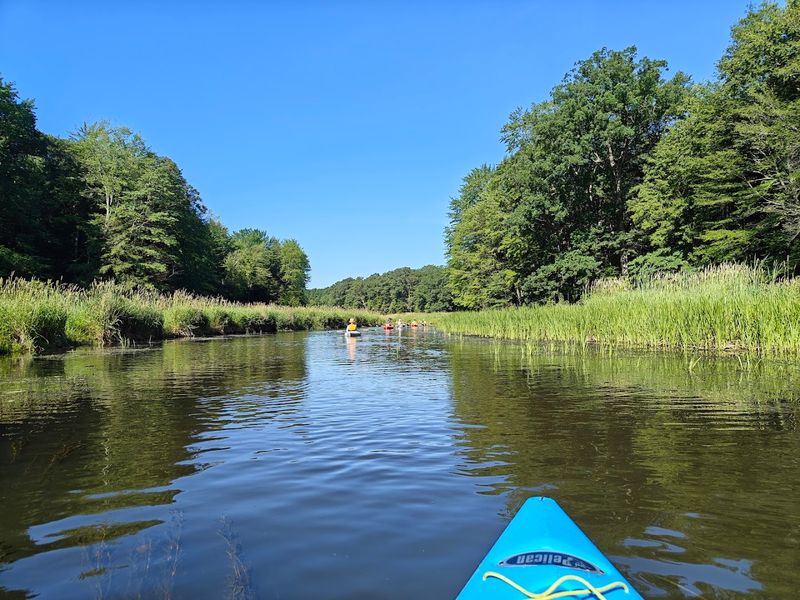
Hemlock Crossing includes a canoe and kayak launch, and the river offers a very different wildlife angle when conditions are favorable. From the water, sightlines flatten and quiet stretches feel closer, which can improve your odds of noticing herons, turtles, and other creatures using the banks.
It is one of those rare park features that genuinely changes the experience rather than simply extending it.
That said, this is not the day for improvisation. Check water levels and wind before heading out, and be realistic about your comfort on moving water.
Wildlife watching works best when paddling remains quiet and controlled. If the river is behaving, the launch gives you access to a slower, more intimate version of the park that hikers on shore do not always get.
Bring Patience And A Zoom Lens
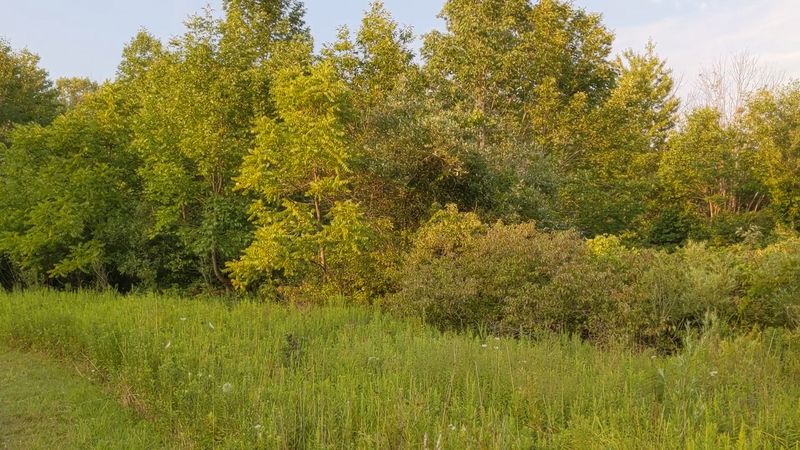
This park rewards attention more than speed, so pack accordingly. A zoom lens or binoculars helps enormously because much of the best viewing happens at a respectful distance across water, brush, or open riverbank.
I have found that once the urge to chase every sound fades, the park starts offering small, precise moments that would be easy to miss up close.
Patience matters just as much as gear. Stand quietly at an overlook, wait through the first minute of apparent nothing, and let your eyes adjust to patterns instead of expecting dramatic entrances.
That is when a perched hawk resolves from a branch, or a turtle head becomes visible among reflections. Hemlock Crossing is generous, but it prefers visitors who are willing to meet it halfway.
Check The Seasonal Programs
Ottawa County Parks & Recreation offers seasonal nature and recreation programs here, and they are worth checking before you go. Guided birding walks and Wildlife Encounters presentations can add context that changes what you notice later on your own.
A park this varied is easier to read once someone points out how the habitats fit together.
The Nature Education Center also contains exhibits and a Wildlife Den with live animals, making it more than a quick restroom stop or map pickup. If you are visiting with children, or simply want a stronger interpretive layer, this is the most efficient way to deepen the trip.
Even a short program can sharpen your eye for deer movement, feeder activity, amphibian timing, and the park’s quieter ecological details.