
This Underground Hike In Arizona Is Like Walking Through a River Frozen in Time
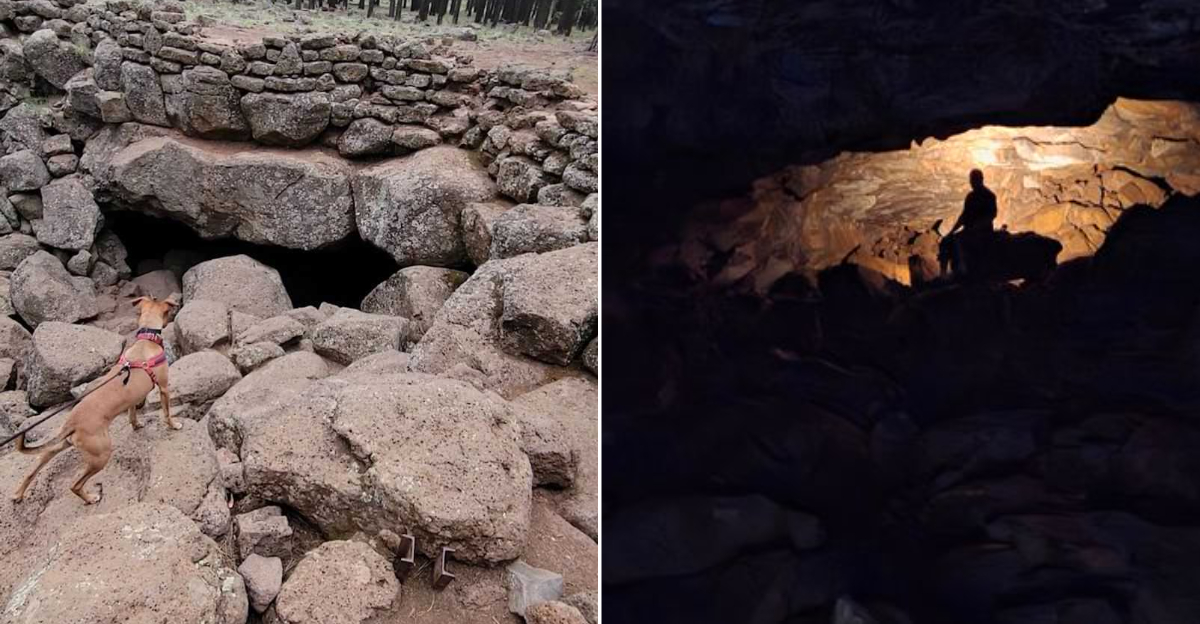
Most people hike to chase the best views from a mountain peak, but I’ve always preferred chasing the secrets hidden beneath our feet. I recently found myself navigating a massive volcanic tunnel, a place where a rushing torrent of molten lava once roared before cooling into the permanent stone cavern I stood in today.
The ceiling towers over you, and the ground under your boots is a haunting reminder of the violent, fiery history that shaped this unique landscape.
Exploring this subterranean wonder in Arizona was the ultimate test of my gear and my sense of direction, but the reward was a sense of utter isolation I haven’t found anywhere else. Strap on your sturdiest boots and a reliable light-we’re going deep underground to walk through a river frozen in time.
The Volcanic Origins Of The Cave
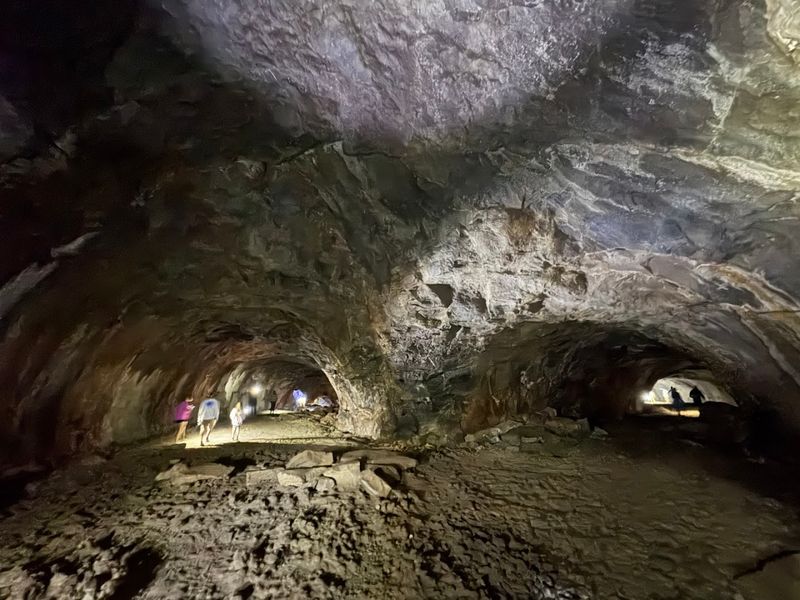
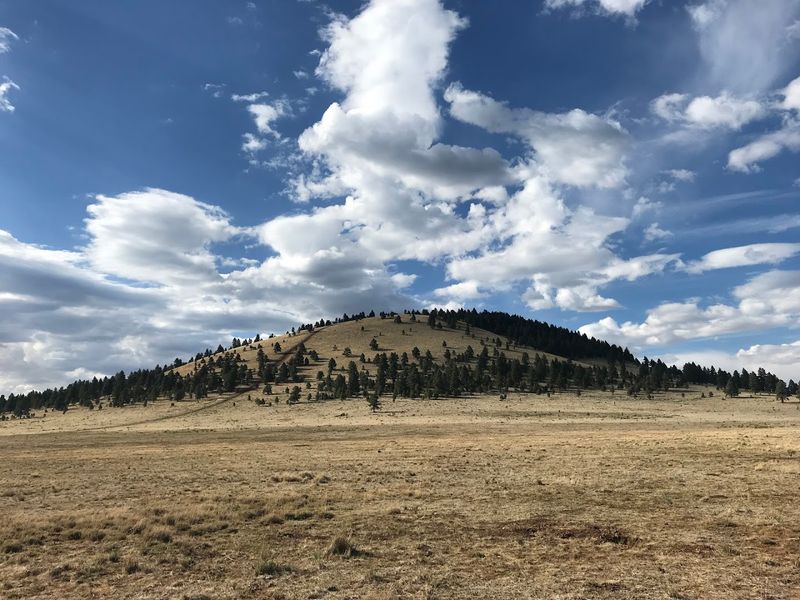
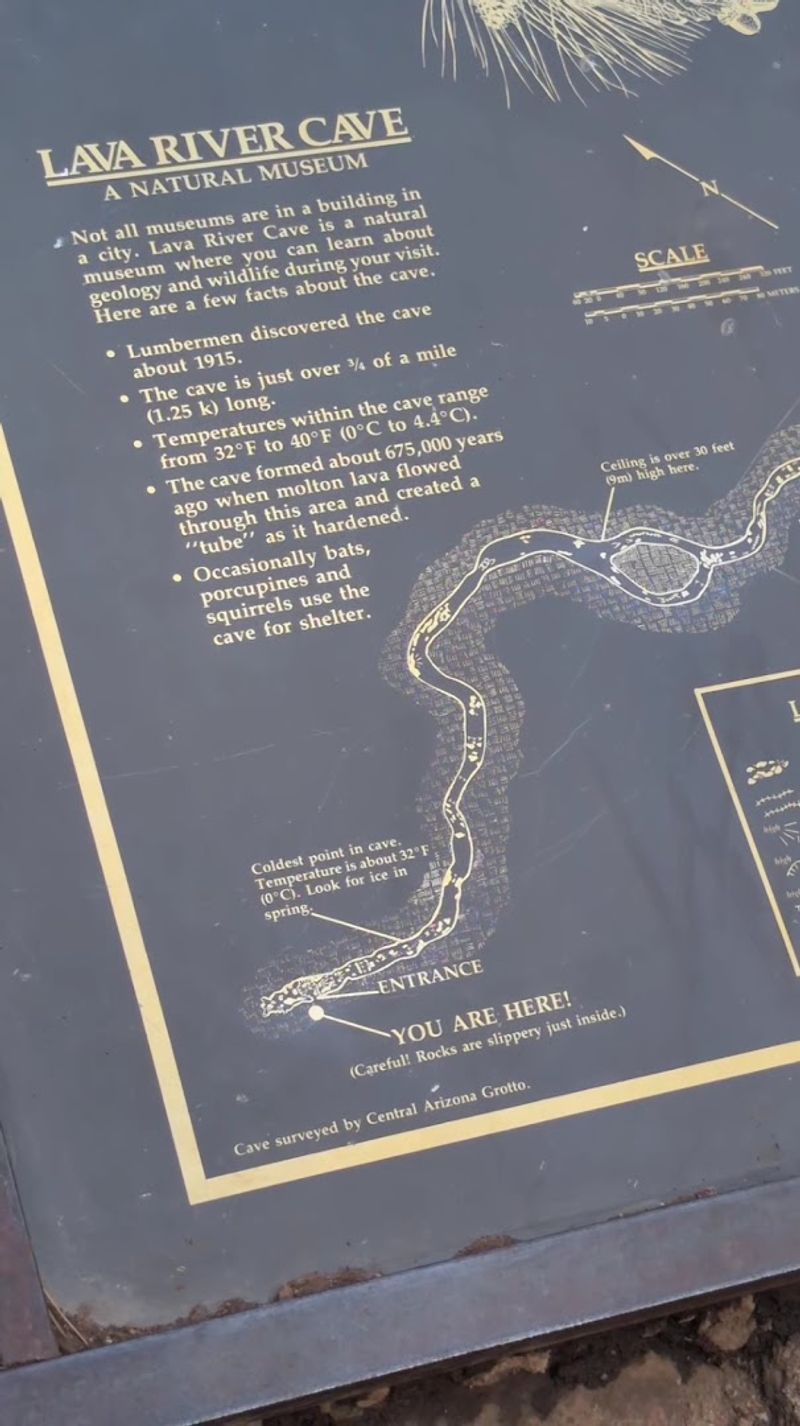
Around 650,000 to 700,000 years ago, a volcanic vent near Hart Prairie in northern Arizona unleashed a river of molten rock that would eventually create one of the most fascinating underground spaces in the American Southwest.
As the outer edges of the lava flow cooled and hardened, the superheated liquid inside kept moving forward. When that inner flow finally drained away, it left behind a hollow tube running nearly a mile through the earth.
That process is exactly why visiting this cave feels like standing inside a frozen river. The walls, ceiling, and floor all carry the physical memory of that ancient movement. You can see wave-like undulations in the rock beneath your feet, left behind by the final trickles of lava that once moved through here.
Geologists consider lava tubes like this one to be textbook examples of volcanic geology. The cave is the longest known lava tube in Arizona, making it a genuinely rare natural feature worth traveling to see.
What It Feels Like To Step Inside
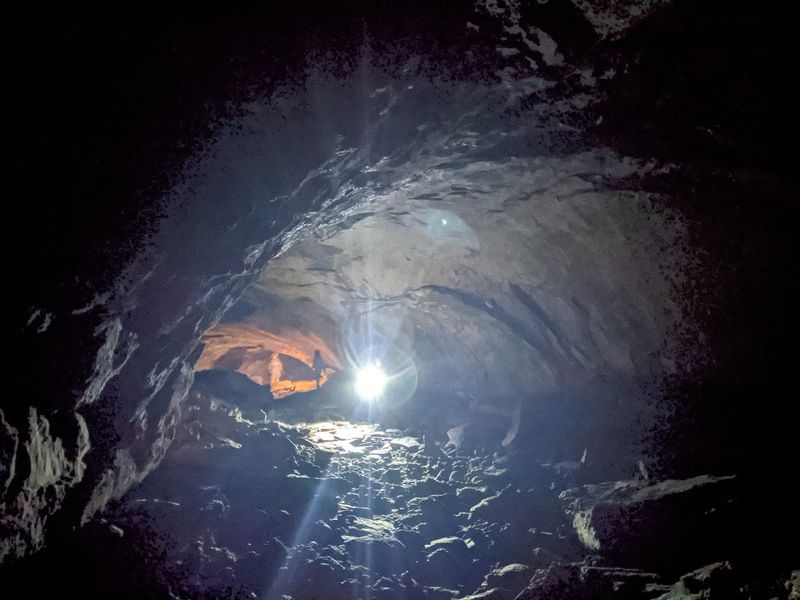
The moment you duck through the entrance and the daylight behind you starts to shrink, something shifts in your chest. The air drops noticeably, the sounds of the forest disappear, and you are suddenly surrounded by absolute silence and cold.
Temperatures inside the cave stay between 35 and 45 degrees Fahrenheit year-round, so even on a blazing Arizona summer afternoon, stepping inside feels like opening a walk-in refrigerator.
Your eyes adjust slowly, and your headlamp becomes the most important thing you own. The ceiling rises dramatically in some sections, stretching over 30 feet above your head, giving the space an almost cathedral-like feeling.
Then without warning, it drops to just 2 or 3 feet, and you are suddenly crouching or crawling over uneven volcanic rock.
That contrast between the grand and the tight is part of what makes the cave so memorable. Every turn offers something new, and the unpredictability keeps your attention sharp from start to finish.
The Gear You Absolutely Need To Bring
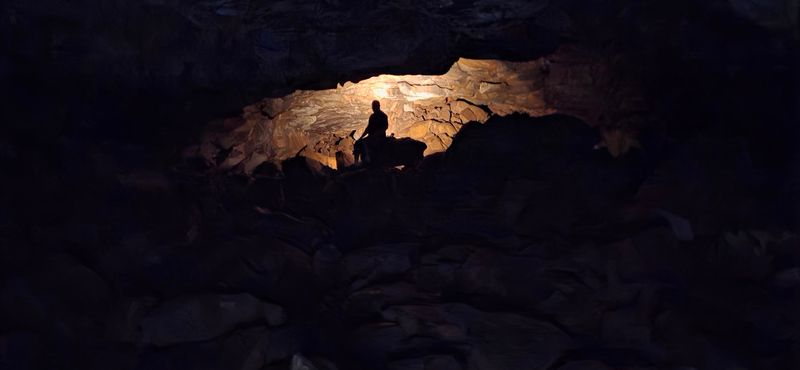
Showing up to Lava River Cave without proper gear is a mistake you will regret within the first five minutes. The cave is entirely dark, and the National Forest Service strongly recommends bringing at least two independent light sources.
A headlamp is ideal because it keeps both hands free for navigating the rocky, uneven terrain, but a solid flashlight as a backup is just as important.
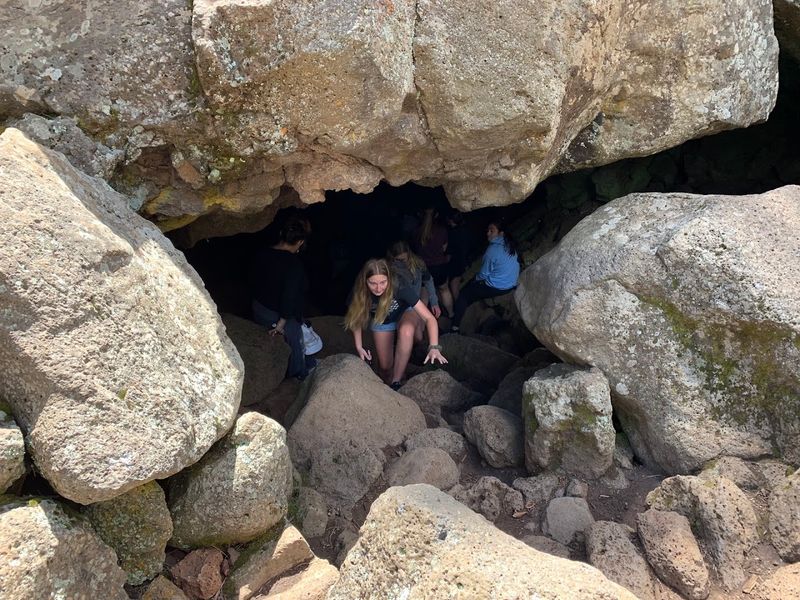
Sturdy, ankle-supporting hiking boots are non-negotiable. The floor inside is made of loose, jagged volcanic rock that shifts underfoot, and sections of the path require climbing over or around boulders.
Wearing a helmet or hard hat is also a smart call, since the ceiling height changes quickly and an unexpected low section can catch you off guard.
Warm layers are essential no matter what season you visit. A light jacket is the minimum, but many visitors prefer a heavier fleece or insulated layer. Gloves are a nice addition too, since the rock walls are cold to the touch and you will likely use your hands for balance.
Navigating The Uneven Underground Terrain
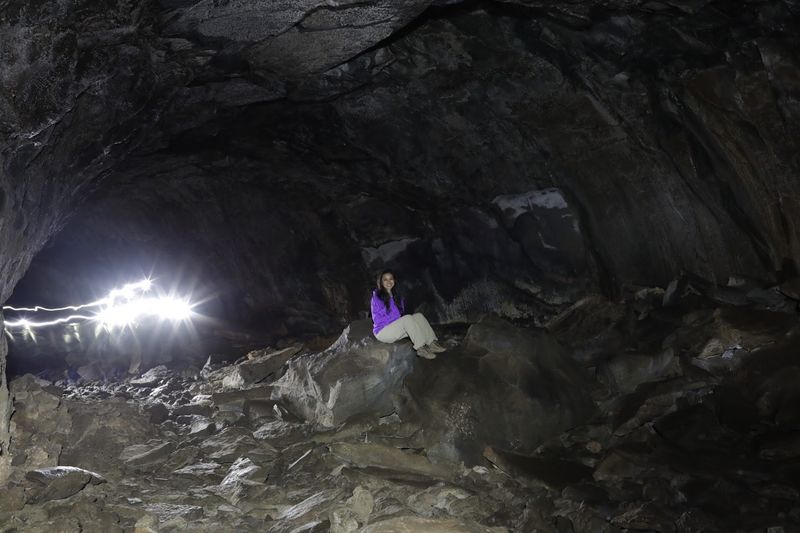
Nobody warned me just how physical this hike would be. From the outside, a cave walk sounds relaxed, maybe even leisurely. But once you are inside, the floor demands your full attention at every step.
The volcanic rock is sharp, irregular, and occasionally slick, and there are no maintained trails, handrails, or helpful arrows pointing the way.
Some sections require you to climb up and over large boulders, while others have low ceilings that force you into an awkward crouch for stretches of 20 feet or more.
The combination of cold air, darkness, and physical effort makes this feel much more like an adventure than a stroll. Kids and adults alike tend to find it genuinely challenging in the best possible way.
Taking your time is the smartest strategy here. Rushing through the cave increases the chance of a twisted ankle or a bumped head. Slow, deliberate movement lets you actually appreciate the incredible textures and formations surrounding you at every step.
The Lavacicles And Other Rock Formations
One of the most visually striking things inside this cave is looking up. Hanging from the ceiling in several sections are what geologists call lavacicles, stone formations that look almost exactly like icicles but are made entirely of re-solidified volcanic rock.
They formed when heat from the flowing lava below briefly re-melted sections of the ceiling, causing drops of molten rock to hang and then harden before falling.
The floor tells its own story too. Wave-like patterns ripple across the surface in sections, created by the very last movements of lava as it drained from the tube all those thousands of years ago.
Running your gloved hand along the wall, you can feel the texture change from smooth to rough and back again, each shift a record of a different moment in the cave’s fiery past.
These formations are fragile and irreplaceable, so the rule is simple: look, photograph, and appreciate, but never touch or collect anything. Leaving everything in place protects the cave for every visitor who comes after you.
The History Behind The Discovery
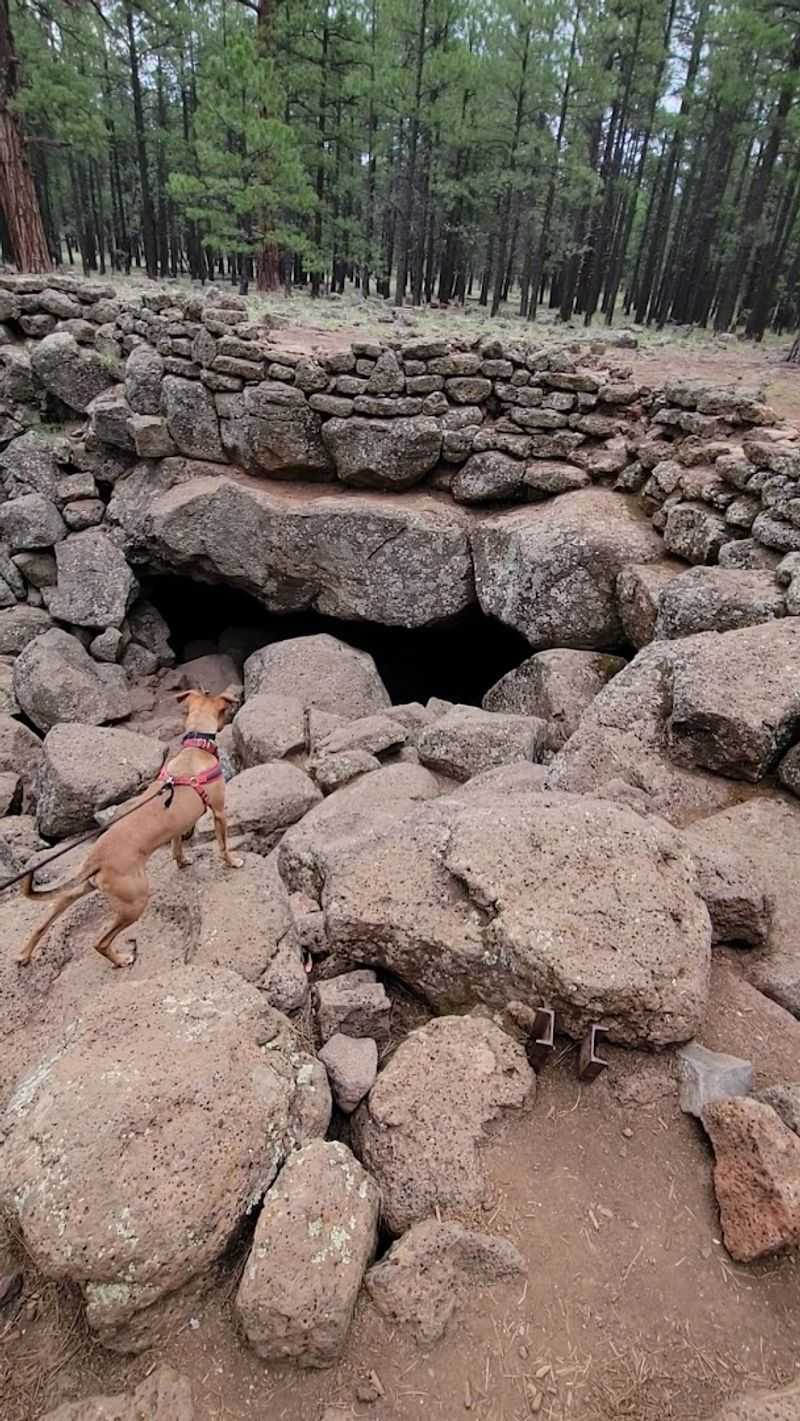
Long before it became a popular hiking destination, this underground tunnel was stumbled upon by lumbermen working the forests of northern Arizona in 1915.
For years it was simply called Government Cave, a practical name that reflected the era more than the extraordinary nature of what lay beneath the ground.
The cave sat quietly in the forest, known mainly to locals and the occasional curious visitor, until wider public interest in outdoor recreation brought more attention its way.
The name Lava River Cave came later and does a much better job of capturing what the place actually is. It sits within Coconino National Forest, a vast stretch of public land that surrounds Flagstaff and protects a remarkable variety of natural features, from volcanic fields to alpine meadows.
Knowing that lumbermen first found this place over a century ago adds an interesting layer to the experience. You walk the same dark passage they walked, seeing the same ancient rock, and for a moment the distance between 1915 and today collapses completely.
Best Times To Visit And Seasonal Considerations
Summer is hands down the most popular time to visit, and honestly, the contrast between the scorching Arizona heat above ground and the cave’s near-freezing interior makes the experience feel even more dramatic.
The cave is technically open year-round, but the unpaved forest roads that lead to the trailhead can become impassable during winter months due to snow and mud. Checking road conditions before heading out in colder months is a genuinely good idea.
Spring and fall offer a sweet middle ground. The roads are generally accessible, the surrounding forest is beautiful, and the cave is less crowded than during peak summer weekends.
Arriving early in the morning on any day of the week gives you the best chance of having the tunnel mostly to yourself, which makes the experience noticeably more atmospheric.
The cave entrance is located about 14 miles northwest of Flagstaff off Forest Road 171, and there is no entrance fee, making it one of the most accessible free outdoor adventures in all of northern Arizona.
Rules, Restrictions, And Visitor Etiquette
A few key rules apply to visiting Lava River Cave, and they exist for good reasons. Pets are not allowed inside the cave, which protects both the animals and the fragile cave environment.
Dispersed camping is not permitted within one mile of the cave entrance, so if you are planning an overnight trip to the area, you will need to set up camp farther out in the national forest.
Beyond the official rules, basic visitor etiquette goes a long way. The formations inside are irreplaceable, so touching, chipping, or removing any rock or mineral feature is strictly off limits.
Packing out everything you bring in keeps the cave clean and preserves the experience for the next group of explorers. Staying on the main path also helps prevent accidental damage to the more delicate sections of the tunnel.
Going with a group of at least two or three people is strongly encouraged for safety reasons. The cave is remote and dark, and having others nearby provides both practical help and a much more enjoyable shared experience overall.
Why This Cave Deserves A Spot On Your Arizona Bucket List
There are plenty of outdoor attractions around Flagstaff, from the San Francisco Peaks to Walnut Canyon, but Lava River Cave offers something genuinely different. It is free, it is accessible to most reasonably fit visitors, and it delivers an experience that feels far more remote and adventurous than its proximity to the city would suggest.
The combination of ancient geology, physical challenge, and pure sensory strangeness puts it in a category of its own.
First-timers often describe the cave as one of the most memorable things they did on their entire Arizona trip, and that reaction makes complete sense.
There is something deeply satisfying about walking through a space that formed before humans existed, surrounded by rock that once flowed like water and now holds its shape for all of time.
Whether you are a seasoned hiker or someone who just wants to try something completely new, this underground river of stone rewards every visitor who comes prepared, curious, and ready to be genuinely surprised by what Arizona hides beneath its surface.