
This Underrated Ancient Ruin In Arizona Feels Like It Belongs To Another World
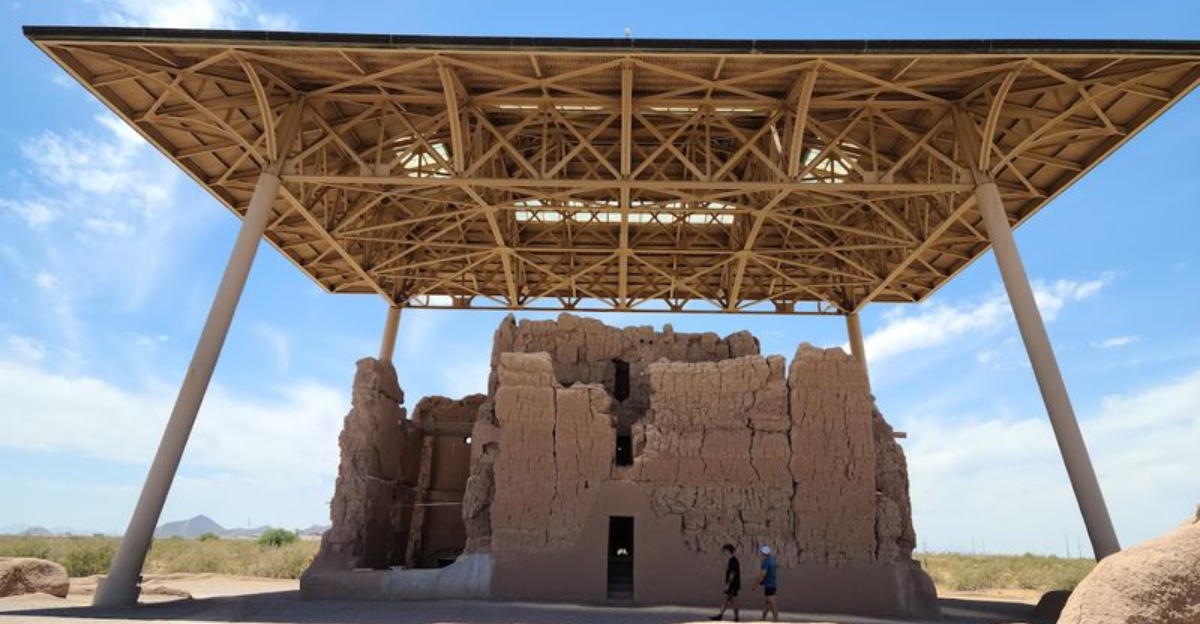
Standing in the middle of the Sonoran Desert, staring up at a four-story earthen structure built around 1350 C.E., I kept thinking the same thing: how did I not know about this place sooner?
This is one of the most fascinating prehistoric sites in the entire country, yet it rarely gets the attention it deserves. The ancestral Sonoran Desert people, known as the Hohokam, built this towering structure with mud, sand, and calcium carbonate, and somehow it has survived for centuries in the desert heat.
If you have ever wanted to stand face-to-face with a genuine ancient mystery, this monument will leave you quietly amazed and reaching for your camera.
Without the noisy crowds found at more famous landmarks, the profound stillness allows history to speak in whispers. Prepare to lose your sense of time as these towering, earthen relics pull you deep into a narrative written by hands that vanished long ago.
The Great House: A Four-Story Desert Giant
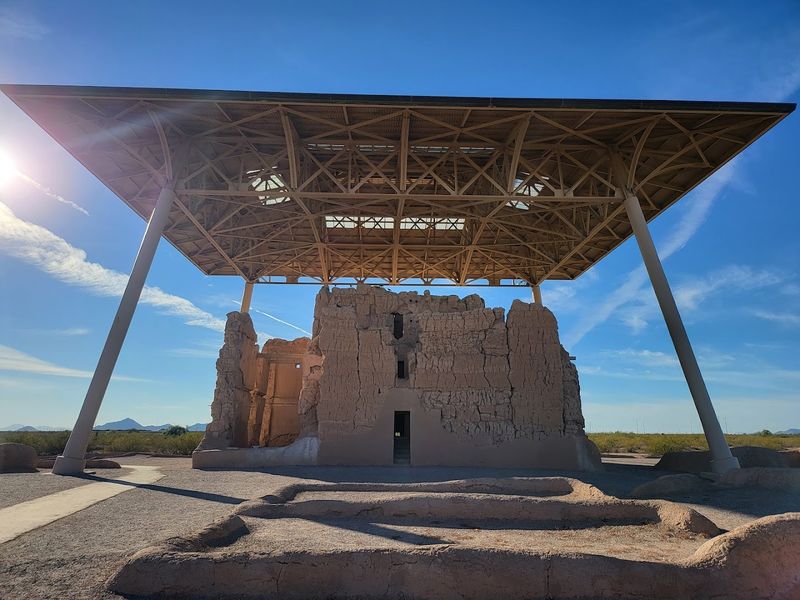
Nobody walks up to the Casa Grande and stays calm. This four-story structure rises out of the flat desert landscape like something that simply should not exist, built entirely from caliche, a natural mixture of mud, sand, and calcium carbonate that the Hohokam shaped into thick, sturdy walls around 1350 C.E.
The walls are noticeably marked with horizontal lines, showing exactly where one layer dried before the next was added. That construction method required serious patience and engineering knowledge, especially without modern tools or machinery.
What makes the Great House even more striking is how massive it feels up close. The walls are several feet thick, which helped regulate interior temperatures in the brutal desert climate.
Archaeologists still debate its exact purpose, with theories ranging from a ceremonial center to an administrative hub to an astronomical observatory. No single answer has been confirmed, and honestly, that unresolved mystery is part of what makes standing in front of it feel so electric.
Hohokam Ingenuity: Masters Of Desert Farming
Long before anyone thought farming in the desert was a reasonable idea, the Hohokam had already figured it out. They built the most extensive prehistoric irrigation-based agricultural system in North America, channeling water from the Salt and Gila Rivers through hundreds of miles of hand-dug canals to grow crops in one of the driest environments on the continent.
That kind of large-scale engineering without metal tools, wheels, or written blueprints is genuinely staggering to think about. Their canal system supported thousands of people across a wide region and kept communities thriving for roughly 1,000 years before the Casa Grande was even constructed.
Visiting the monument gives you a new appreciation for how deeply human creativity can adapt to challenging environments. The remnants of Hohokam village life visible throughout the grounds tell a story of a culture that was not just surviving but actively flourishing.
Their agricultural legacy quietly reshaped an entire desert ecosystem, and that fact alone deserves far more recognition than it typically receives.
Celestial Alignments Built Right Into The Walls
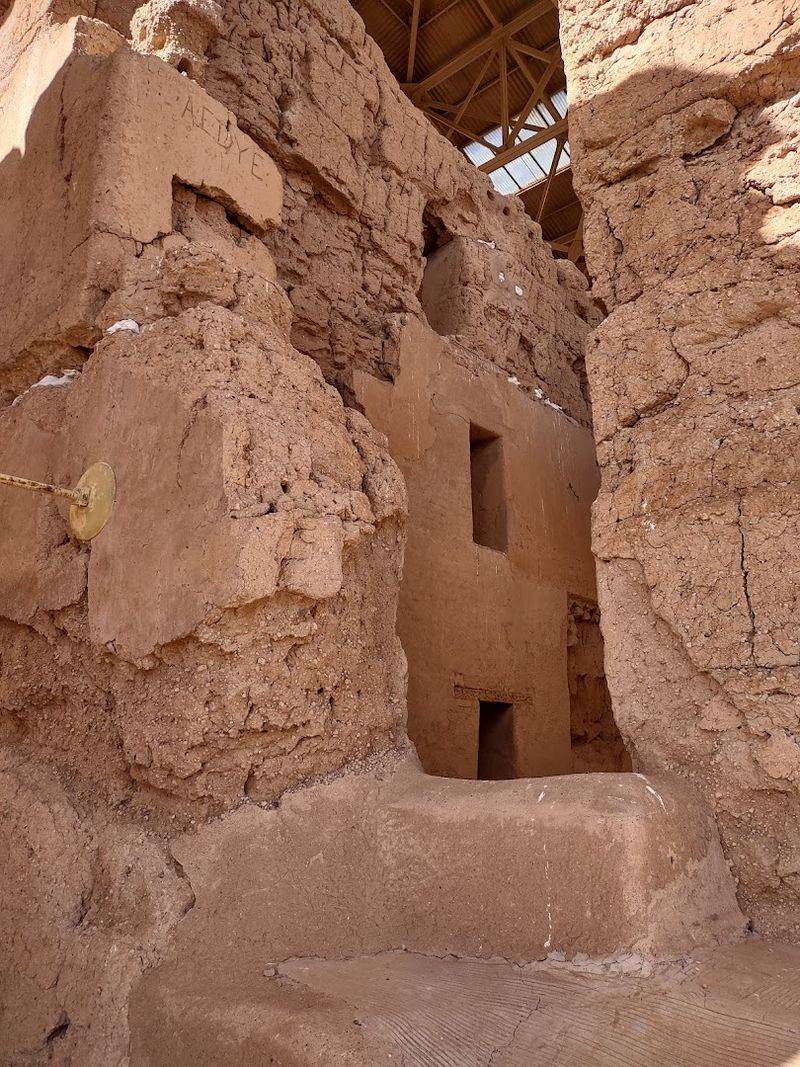
Here is a detail that stopped me in my tracks during my visit: specific openings in the Casa Grande walls align with the setting sun during the summer solstice, and other apertures track additional celestial bodies at precise times of the year.
The entire structure is oriented to the four cardinal directions, north, south, east, and west. This was not accidental architecture. Researchers believe the Hohokam used these alignments to track planting seasons, harvest timing, and ceremonial celebrations, essentially turning the building itself into a giant calendar and observatory.
The precision required to achieve these alignments through careful construction planning is remarkable. Standing inside the structure and imagining ancient people watching sunlight hit a specific wall at a specific moment to signal the start of planting season adds a deeply human dimension to the experience.
It is a reminder that the drive to understand the sky and mark time is one of the oldest and most universal human instincts, expressed here in caliche and desert earth.
A Sacred Place With Living Cultural Connections
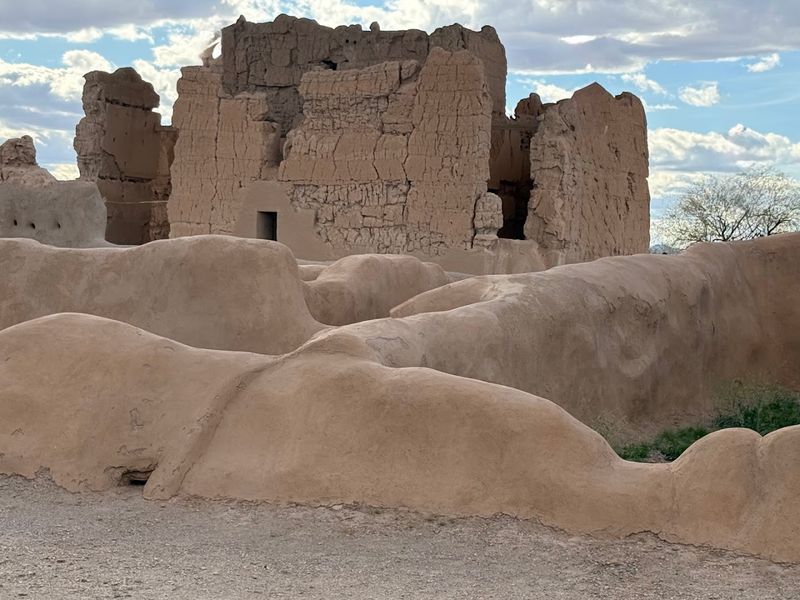
Casa Grande Ruins National Monument is not just a historical curiosity frozen in time. For multiple American Indian tribes, including the Tohono O’odham Nation, Gila River Indian Community, Ak-Chin Indian Community, Salt River Pima-Maricopa Indian Community, Hopi Tribe, and Zuni People, this site is a living sacred place directly connected to their ancestry.
These communities trace their heritage to the people who built and lived in this village, and many of their descendants continue to live on ancestral lands in the surrounding region today. That ongoing relationship with the site gives it a spiritual weight that goes well beyond what any museum exhibit could fully capture.
Walking through the monument with that context in mind completely changes the experience. You are not just looking at old walls and broken pottery.
You are standing inside a place that still holds deep meaning for real communities in the present day, and approaching it with that awareness makes the visit feel more respectful and far more meaningful.
The Protective Roof And The Story of Preservation
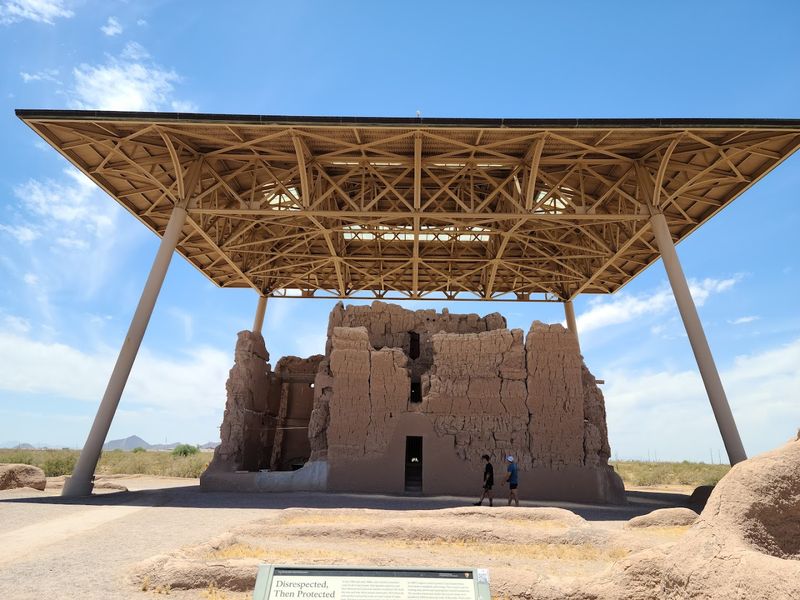
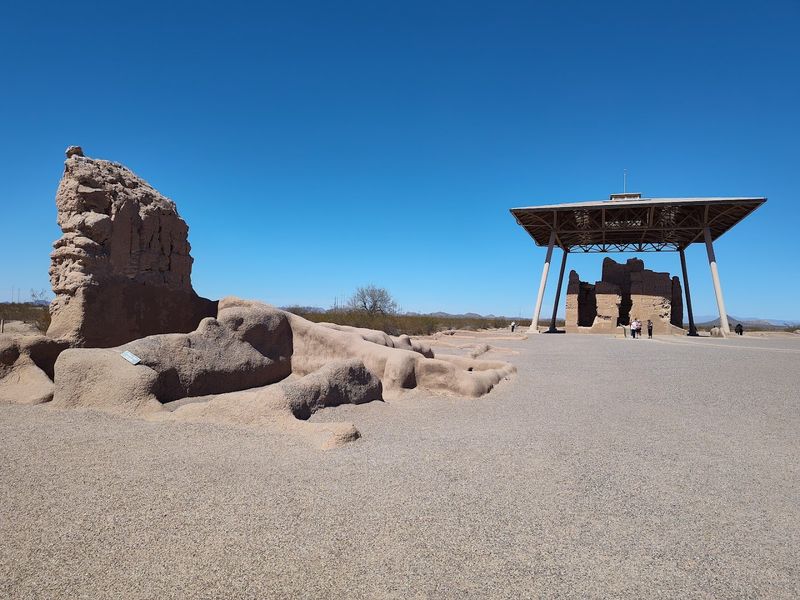
One of the first things you notice at Casa Grande is the enormous steel roof hovering over the ancient structure like a giant umbrella. Constructed in 1932, this canopy was built specifically to protect the fragile caliche walls from rain erosion, which would otherwise slowly dissolve the earthen material that has held together for centuries.
The roof is not exactly subtle, and it gives the site a slightly surreal quality, part ancient ruin, part industrial shelter, all set against a wide open desert sky. But without it, the Casa Grande might not exist in its current form at all, so the trade-off is absolutely worth it.
The preservation story stretches back even further. President Benjamin Harrison designated the site as the first prehistoric and cultural reserve in the United States in 1892, and President Woodrow Wilson officially re-designated it as a national monument on August 3, 1918. That long history of protection reflects just how seriously people have recognized its importance, even when the broader public has not always paid attention.
What to Expect When You Actually Visit
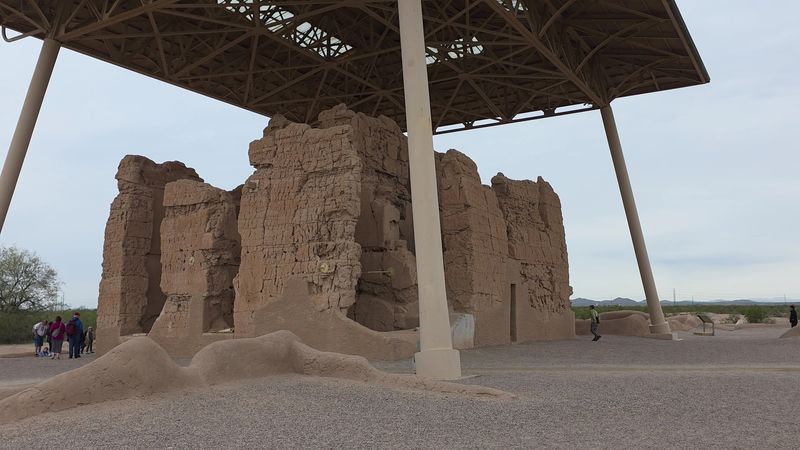
Planning a trip here is refreshingly simple. Casa Grande Ruins National Monument sits at 1100 W. Ruins Drive in Coolidge, Arizona, about an hour south of Phoenix and conveniently located between Phoenix and Tucson, making it an easy stop on a road trip through central Arizona.
The park currently charges no admission fee, which feels almost too good to be true for a site this historically significant. A visitor center on-site features exhibits and an interpretive film that provide helpful background before you step outside to explore the ruins and surrounding village remnants.
Guided tours are offered during the late fall and winter months, which are also the most comfortable times to visit given Arizona’s intense summer heat.
The ancient ball court on the grounds is another highlight worth seeking out, as it shows connections between Hohokam culture and Mesoamerican civilizations to the south. Bring water, wear sunscreen, and give yourself at least two hours to absorb everything this remarkable place has to offer.
Father Kino’s Discovery And The Name That Stuck
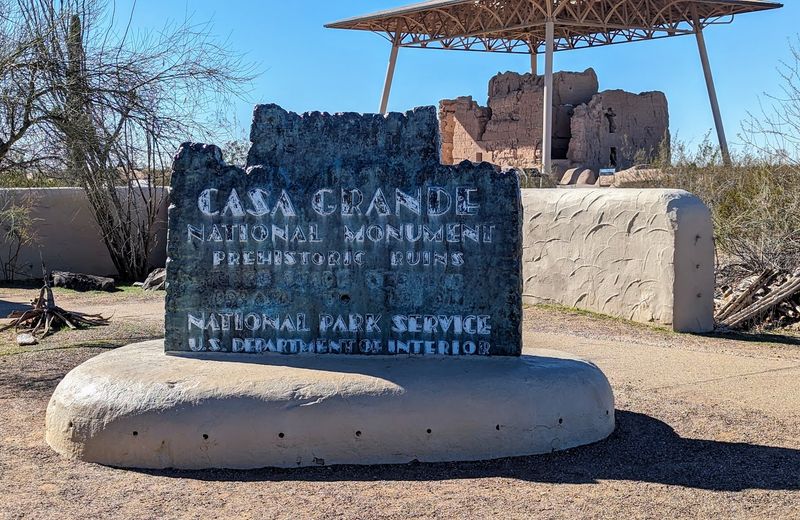
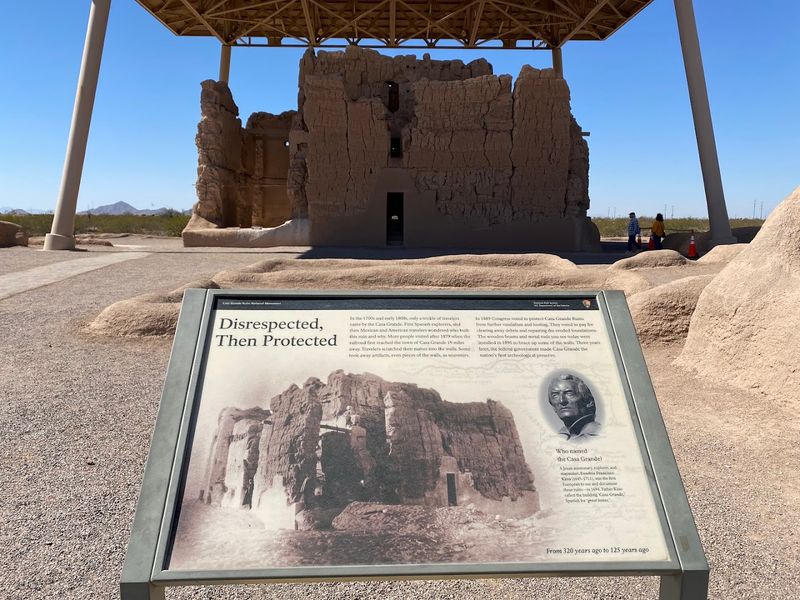
In 1694, a Jesuit missionary named Father Eusebio Francisco Kino became the first European to document these ruins during his travels through the Sonoran Desert.
He looked up at the towering earthen structure, apparently very impressed, and gave it the Spanish name Casa Grande, which simply means Great House.
That name has stuck for over three centuries, outlasting empires, borders, and entire chapters of American history. Kino’s written account helped bring the site to the attention of the wider world, eventually leading to its designation as the first prehistoric and cultural reserve in the United States nearly 200 years after his visit.
There is something quietly poetic about the fact that a structure built by the Hohokam around 1350 C.E., abandoned around 1450 C.E., and then rediscovered by a wandering missionary in 1694 is now visited by thousands of curious travelers every year.
The Casa Grande has outlasted every civilization that has encountered it, and it is still standing, still holding its secrets, still worth the drive.
Artifacts And Archaeology: Clues Left Behind In The Dirt
Every object pulled from the ground at Casa Grande tells a story that words alone cannot. Archaeologists have uncovered pottery fragments, stone tools, shell jewelry, and remnants of daily life that paint a vivid picture of a community that was organized, creative, and deeply connected to its environment.
The Hohokam traded goods across hundreds of miles, bringing shells from the Gulf of California all the way into the Arizona desert. These finds prove this was not an isolated settlement but a thriving hub of culture and commerce.
Visiting the monument today, you can see some of these artifacts up close at the visitor center, where each piece feels like a direct handshake across time.
They help turn the ruins from something impressive into something personal. A simple piece of pottery suddenly becomes evidence of a meal, a home, a trade route, or a hand that shaped it centuries ago.
That is what makes Casa Grande so powerful: it does not just show you an ancient structure. It reminds you that real people lived, worked, traveled, and built a lasting world in the heart of the desert.