
This Underrated City Park In Arizona Is Almost Too Beautiful To Feel Real (And It Has Giraffes And More)
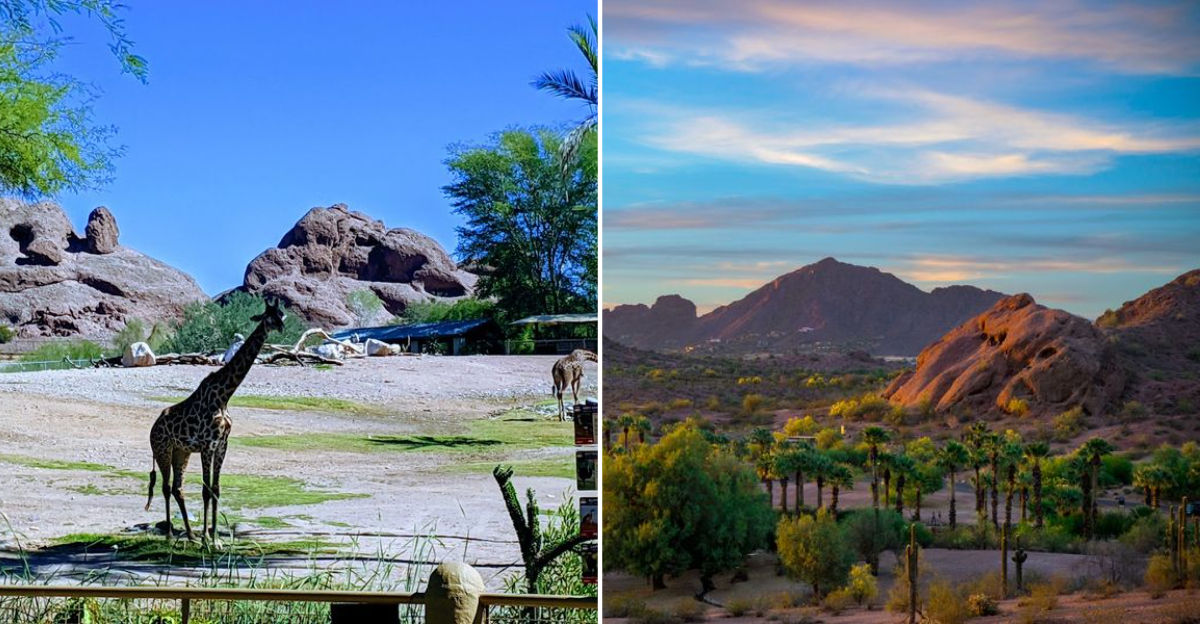
I’m starting to think we’ve all been lied to about what a quick afternoon stroll is supposed to look like. Here in Arizona, we have a spot that feels like a portal to another world, yet it’s sitting right there while we’re busy running our boring errands.
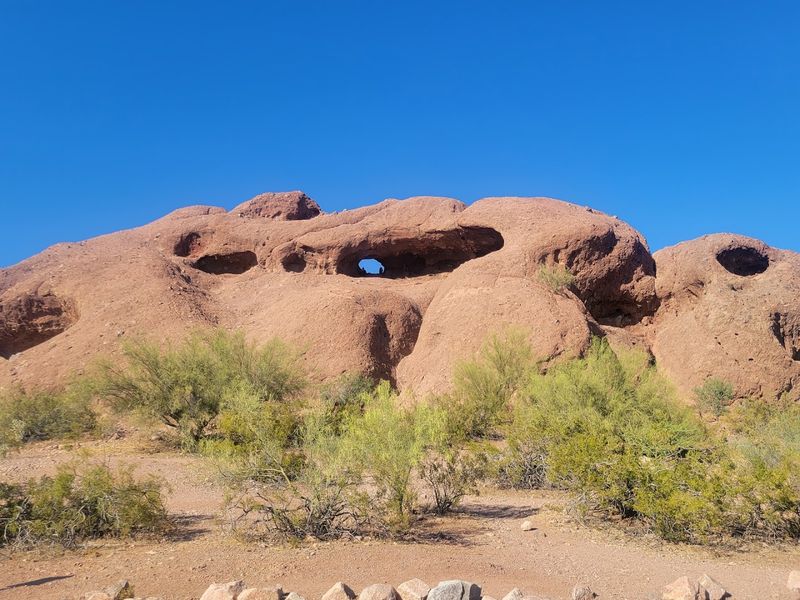
It features these incredible rock formations with holes carved by time that look like giant eyes watching over the valley. It’s dramatic, it’s a little bit wild, and honestly, the sunsets here should probably come with a formal apology for being so distracting.
It’s easily the most stunning landscape in Arizona that people often drive right past. Forget the gym: lace up your sneakers and go see these golden giants for yourself before everyone else finds out.
Covering around 1,500 acres, this park packs more personality into one visit than most destinations manage in a weekend trip.
I went expecting a quiet afternoon stroll and left genuinely amazed at how much this place had to offer, so keep reading because I am about to walk you through every reason why this park deserves a serious spot on your Arizona bucket list.
The Striking Red Sandstone Formations
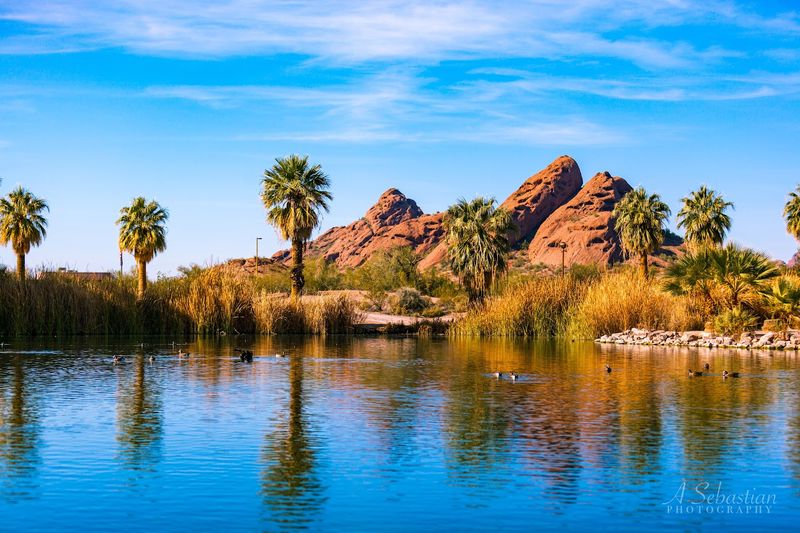
Standing at the base of Papago Park’s sandstone buttes for the first time, I genuinely had to remind myself I was still inside a major American city.
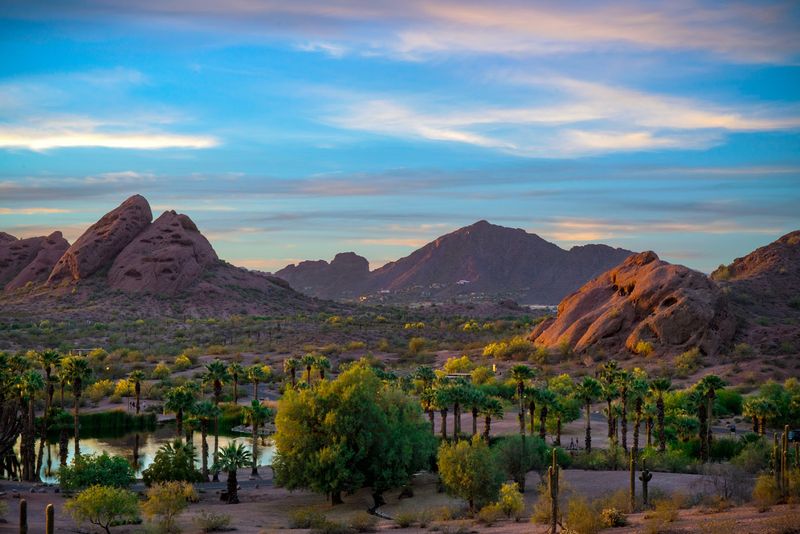
These ancient formations, sculpted by wind and water over millions of years, glow a deep rust-red in the morning light and shift to a warm amber as the afternoon sun angles across them. They feel almost theatrical, like someone arranged them on purpose just to impress visitors.
The rocks are the park’s most iconic visual feature and the first thing that grabs your attention from the road. You can walk right up to them, touch the rough surface, and peer through natural arches that frame the Phoenix skyline in the distance.
It is genuinely surreal in the best possible way.
Photographers, hikers, and casual walkers all gravitate toward these formations for good reason. No filter needed, no special equipment required, just show up and let the scenery do all the heavy lifting for you.
Hole-In-The-Rock Trail
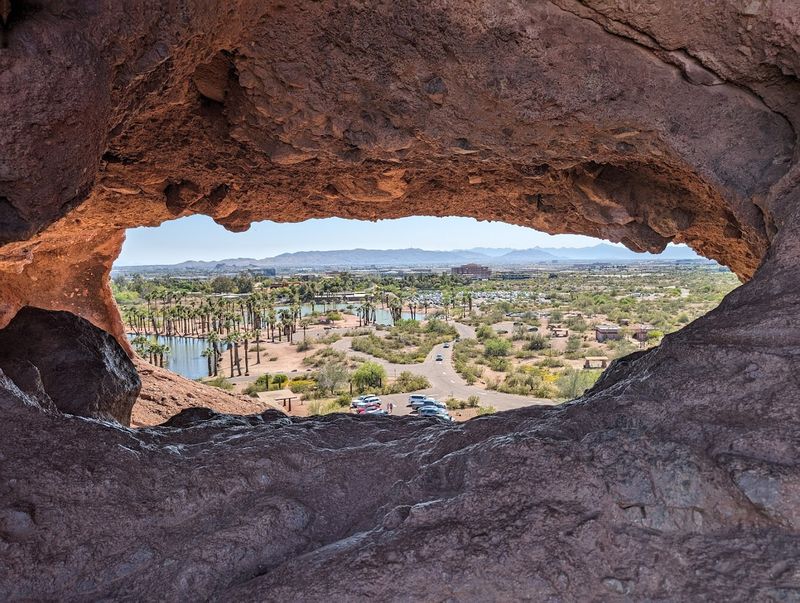
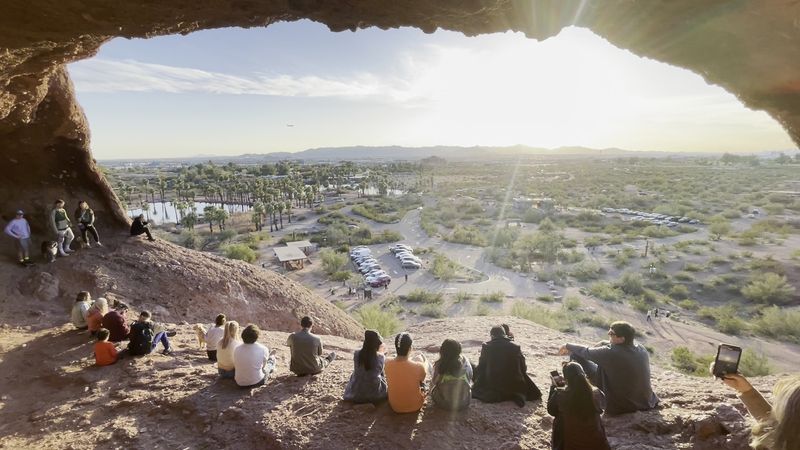
Short in distance but enormous in payoff, the Hole-in-the-Rock Trail is one of those hikes that earns its reputation every single time. At just 0.3 miles, it is more of a scramble than a trek, but the natural oval-shaped opening carved into the sandstone at the top delivers a view that genuinely earns its viral social media reputation.
Phoenix stretches out beyond the frame like a painted backdrop.
I climbed up on a crisp winter morning, and the entire city sparkled below me in a way that made the short effort feel wildly rewarding. The trail is accessible for most fitness levels, though the rocky surface near the top requires a little careful footing.
Sturdy shoes are a smart call.
Early mornings and late afternoons offer the best lighting for photos and the most comfortable temperatures. Weekends tend to get crowded, so arriving before 8 a.m. gives you a better chance of having the view mostly to yourself.
Desert Botanical Garden
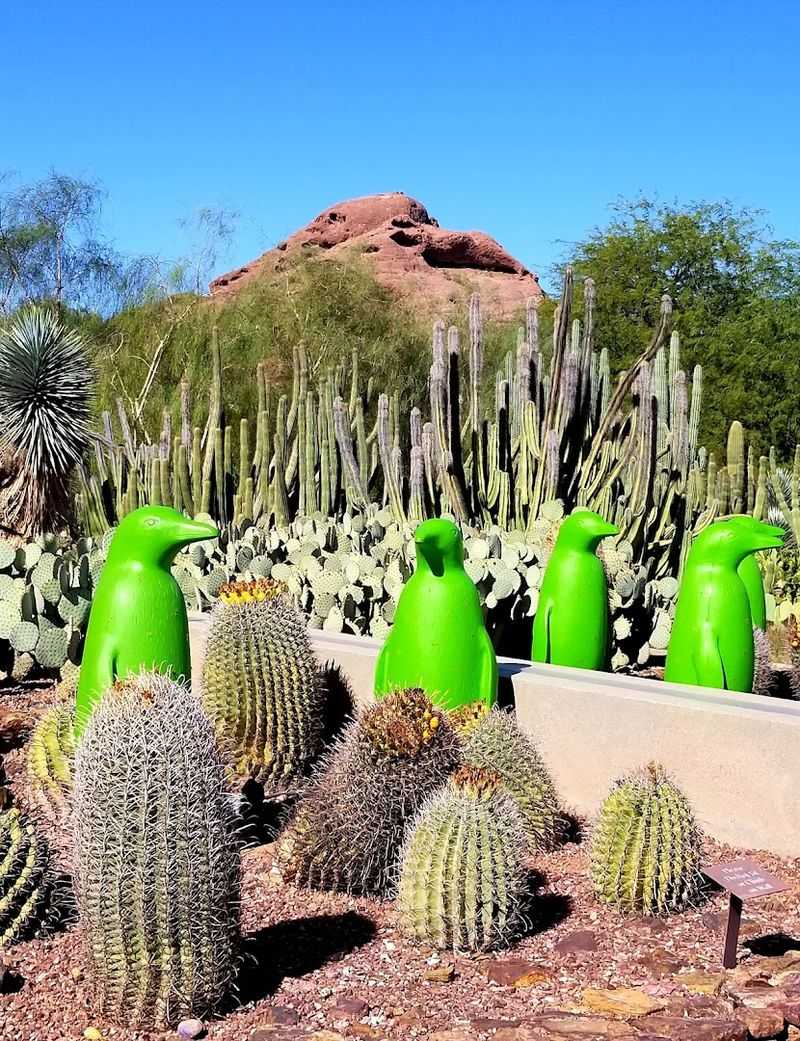
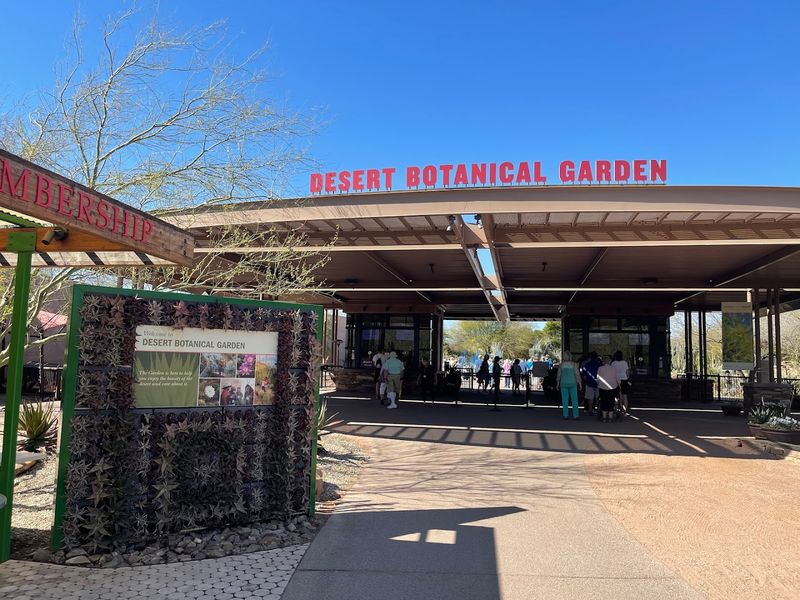
Right inside the boundaries of Papago Park sits one of the most remarkable garden experiences in the entire country. The Desert Botanical Garden covers 140 acres and showcases more than 50,000 desert plants from arid regions around the world.
Walking through it feels less like visiting a garden and more like taking a slow, beautiful tour of the planet’s most resilient ecosystems.
Towering saguaros line the main path, while smaller cacti, wildflowers, and sculptural succulents fill every corner with texture and color. The garden also hosts rotating art installations and seasonal events, including a popular holiday light show that transforms the whole space after dark.
I visited during a wildflower bloom and could not stop taking photos every few feet. Admission is separate from the park itself, but absolutely worth it. The garden is located at 1201 N.
Galvin Parkway, Phoenix, AZ 85008, and opens early enough to enjoy before the desert heat really kicks in.
Phoenix Zoo
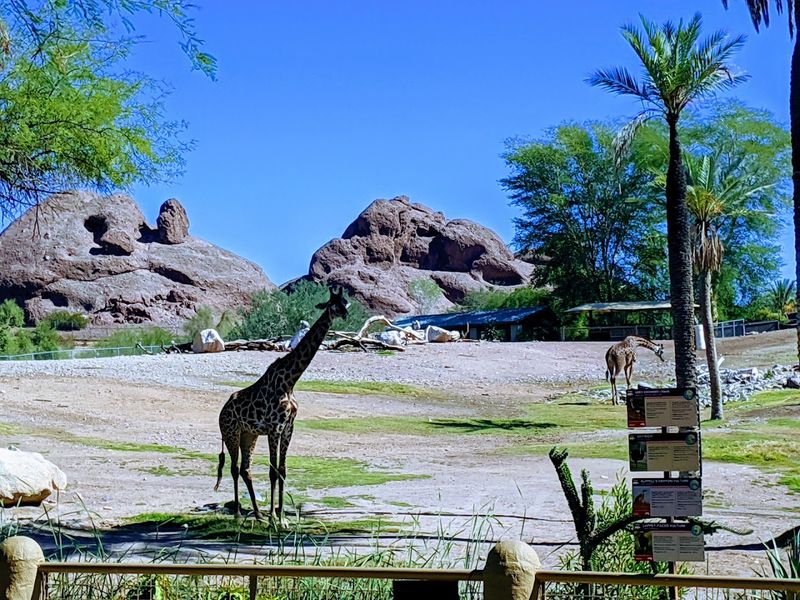
Few city parks in the country can claim a world-class zoo within their borders, but Papago Park pulls it off without breaking a sweat. The Phoenix Zoo is one of the largest privately operated zoos in the United States, home to more than 1,400 animals across a beautifully landscaped campus.
It is the kind of place where a quick two-hour visit somehow turns into a full-day adventure.
I watched a troop of playful primates, wandered through an African savanna exhibit, and stopped at a flamingo pond that looked almost impossibly pink against the desert backdrop. The zoo does an outstanding job blending conservation education with genuinely fun, immersive exhibits.
Kids absolutely love it, but honest adults will too.
The zoo sits just inside the park at 455 N. Galvin Parkway, Phoenix, AZ 85008.
Buying tickets online in advance saves time at the gate, and arriving early on warm days means cooler temperatures and more active animals during your visit.
Hunt’s Tomb
Perched on a small hill overlooking the park, Hunt’s Tomb is one of those unexpected historical curiosities that makes a visit feel richer. The pyramid-shaped white structure is the final resting place of George W.P.
Hunt, Arizona’s very first governor, along with several members of his family. It is modest in size but carries a surprising amount of historical weight for such a quiet spot.
I stumbled across it while wandering off the main trail, and the contrast between the stark white pyramid and the surrounding desert landscape was genuinely striking. There is no grand entrance, no gift shop, no fanfare.
Just a small hill, a pyramid, and a view of the city that the governor himself must have found pretty satisfying.
It is a free, accessible stop that adds a layer of storytelling to the park beyond just its natural beauty. History buffs will appreciate the context, and curious visitors will likely find themselves lingering longer than expected.
Papago Ponds And Fishing

Not many people expect to find a peaceful fishing spot inside a major metropolitan park, which is exactly what makes the Papago Ponds such a pleasant surprise. Covering about 6 acres, these calm, stocked ponds offer a genuinely serene experience that feels miles away from the city buzz surrounding them.
Bring a rod, find a shady spot along the bank, and suddenly the whole afternoon slows down in the best way.
The ponds are regularly stocked with various fish species, making them popular with both experienced anglers and families introducing kids to fishing for the first time. I sat near the water for about an hour just watching the surface ripple in the breeze, and it was honestly one of the most relaxing moments of my entire Phoenix trip.
A valid Arizona fishing license is required for anglers aged 14 and older. The ponds are easy to reach from the main park entrance and are a wonderful reason to pack a picnic along with your fishing gear.
Hiking And Biking Trails
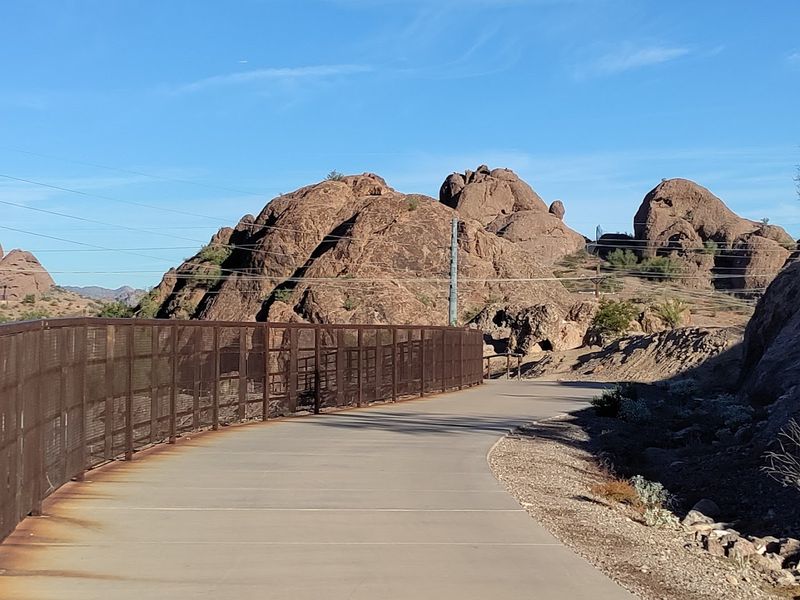
Whether you prefer to explore on two feet or two wheels, Papago Park has a trail setup that will keep you busy and happy for hours. The park features a network of paths ranging from easy, flat walks to more challenging rocky routes, suiting everyone from casual strollers to dedicated trail runners.
The Double Butte Loop and the Galvin Bikeway Trail are two standout options that give you great views without requiring expert-level fitness.
I tackled a mid-morning bike ride along the paved Galvin Bikeway and found it smooth, scenic, and genuinely enjoyable even on a warm day. The trail system connects to surrounding neighborhoods and other parks, making it a popular commuter route as well as a recreational one.
Seeing local cyclists zoom past while tourists stop for photos creates a lively, energetic atmosphere.
Trail maps are available at the park entrance and online through the City of Phoenix Parks website. Carrying water is non-negotiable, especially between April and October when temperatures climb fast.
Picnic Areas And Ramadas
There is something deeply satisfying about spreading out a blanket in the shade of a ramada while red rock formations loom dramatically in the distance. Papago Park offers multiple picnic areas equipped with tables, ramadas, and grills, making it a genuinely inviting spot for everything from casual solo lunches to large family gatherings.
The park has a laid-back, welcoming energy that makes lingering feel completely natural.
I packed sandwiches and spent a slow afternoon watching families play, dogs trot along trails, and cyclists glide past on the paved paths nearby. The combination of shade structures and desert scenery creates a setting that is both comfortable and visually stunning.
Few picnic spots in Phoenix can compete with this backdrop.
Ramadas can be reserved in advance through the City of Phoenix Parks and Recreation website, which is a smart move for weekends and holidays when the park fills up quickly. Arriving early on weekdays almost always guarantees you a peaceful, uncrowded spot.
Papago Golf Course
Golfers visiting Phoenix often focus on the resort courses that dominate the city’s reputation, but the Papago Golf Course quietly offers one of the best public golf experiences in the entire state. This 18-hole championship course sits right inside the park and delivers fairways framed by those iconic red sandstone formations, which makes even a bogey feel somewhat forgivable when the scenery is this good.
I am not a scratch golfer by any measure, but playing a round here felt special in a way that had everything to do with the setting. The course is well-maintained, challenging enough to keep experienced players engaged, and welcoming enough for recreational players who just want a beautiful afternoon outside.
Tee times are available to the public, which keeps the atmosphere relaxed and community-focused.
The course is managed by the City of Phoenix and offers competitive pricing compared to nearby resort options. Booking a tee time online in advance is recommended, particularly during the cooler winter and spring months when demand peaks sharply.
Practical Tips For Visiting Papago Park
Knowing a few practical details before you arrive makes the whole experience noticeably smoother. Papago Park is located at 625 N. Galvin Parkway, Phoenix, AZ 85008, and is open daily from 5 a.m. to 11 p.m. Admission to the park itself is free, though the Desert Botanical Garden and Phoenix Zoo charge separate entry fees.
Parking is available in multiple lots throughout the park.
The best times to visit are between October and April, when temperatures stay comfortable for outdoor activity. Summer visits are absolutely possible but require an early start, ideally before 8 a.m., and plenty of water.
Sunscreen and a hat are essentials year-round because the Arizona sun is not subtle about making its presence known.
Dogs are welcome on leash throughout most of the park, making it a favorite among local pet owners. The park is also easily accessible by bike from the surrounding Phoenix and Tempe neighborhoods, which adds a fun, car-free dimension to the visit if your accommodations allow for it.