
This Unexpected Pennsylvania Statue Is A Hidden Roadside Treasure
Some roadside stops are little more than a quick glance through the windshield. Others make you tap the brakes, do a double take, and wonder how on earth you never knew they were there.
This one falls firmly into the second category.
It is the kind of unexpected sight that turns an ordinary drive into a small adventure and gives your day an instant plot twist.
Pennsylvania has a way of rewarding curious travelers with surprises that feel both strange and delightful. A statue like this is not just a photo stop.
It is a conversation starter, a blink and you will miss it gem, and the sort of offbeat landmark that makes a road trip feel more memorable.
Part charm, part curiosity, part roadside magic, it stands out in the best possible way and proves that not every great discovery comes with flashing signs and big crowds.
I remember spotting something like this on a drive and immediately blurting out, I need to turn around. I thought I would stop for a minute, snap one photo, and move on.
Instead, I stayed there grinning like I had uncovered a secret.
A Statue Born From Community Spirit
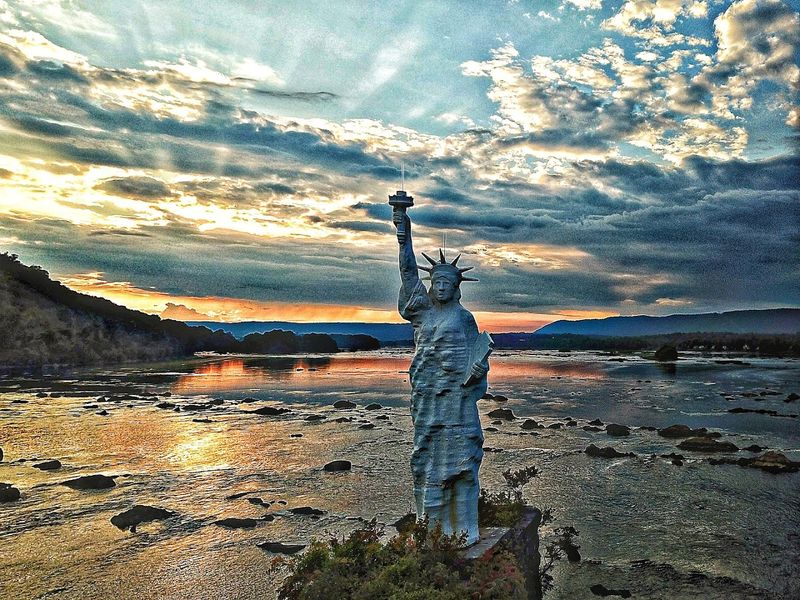
Not every landmark starts with a grand committee or a government budget. Pennsylvania Lady Liberty owes her existence to the creative drive of a local activist and artist named Gene Stilp, who led the effort to place her on the river.
Stilp and a group of community-minded volunteers wanted to bring a touch of patriotic personality to the Susquehanna River corridor.
The project was grassroots in every sense, fueled by local pride rather than corporate funding.
That community energy is part of what makes Pennsylvania Lady Liberty feel so different from officially sanctioned monuments.
She was put there because people genuinely wanted her there, and that intention comes through every time someone catches a glimpse of her from the road or the water.
Few roadside attractions carry that kind of origin story, and it gives her a warmth that no amount of polished bronze could replicate.
The Wooden Predecessor Nobody Talks About
Before the current metal figure ever raised her torch over the Susquehanna, there was a quirky wooden version standing in the same spot.
Installed in 1986, that earlier statue was built from wood and venetian blinds, which is exactly as wonderfully odd as it sounds.
She held her position for six years before a storm rolled through in 1992 and took her down. That loss left the stone pier empty for five years, and the community felt it.
The replacement effort eventually produced the metal Pennsylvania Lady Liberty that stands today, installed in 1997 with a more durable build designed to handle the river’s unpredictable moods.
The progression from venetian blinds to welded metal is a small but satisfying arc of local determination.
Ohio has its own quirky roadside history, but a Liberty made of window blinds is a story that belongs purely to Pennsylvania.
Standing on a 19th-Century Railway Relic
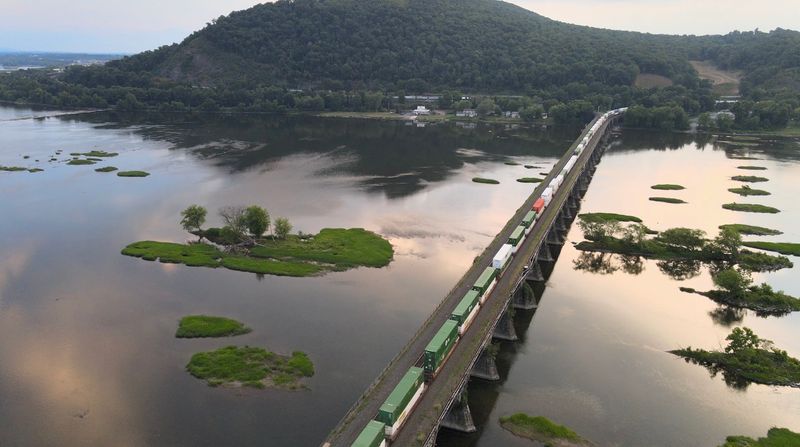
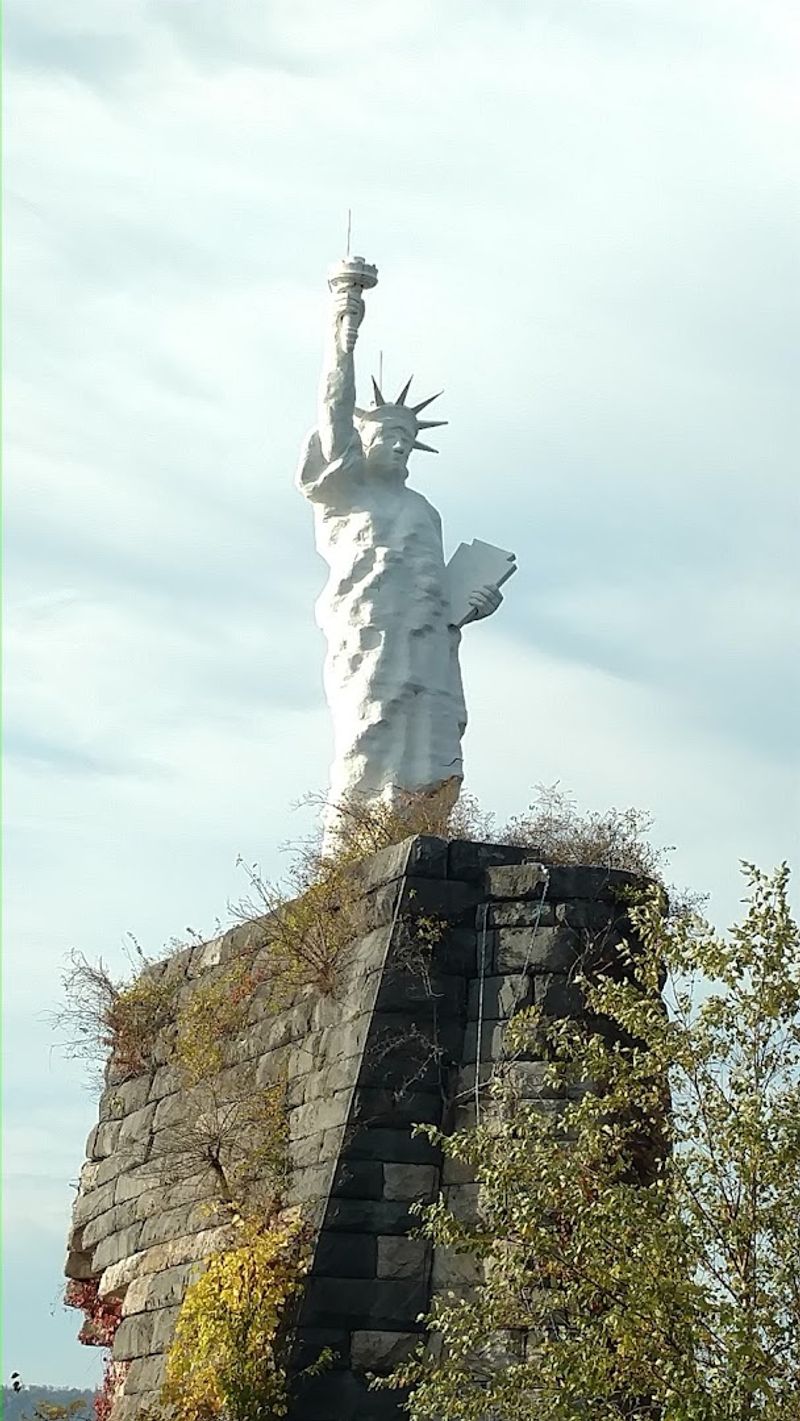
The stone pier that supports Pennsylvania Lady Liberty is not just a convenient platform. It is a piece of railroad history, originally part of the Marysville Bridge, a Northern Central Railway crossing completed in 1858.
That bridge served its purpose for decades before traffic shifted elsewhere, and it was removed in 1902 or 1903.
The stone piers remained in the river long after the tracks and spans were gone, standing like reminders of a busier era.
When the community decided to place a statue on one of those piers, they were layering two chapters of American history on top of each other in a literal way.
The result is a site where transportation heritage and patriotic expression share the same footprint.
Ohio has preserved similar industrial relics, but few states have found as playful a use for a railway remnant as Pennsylvania did here.
How Tall Is She, Really
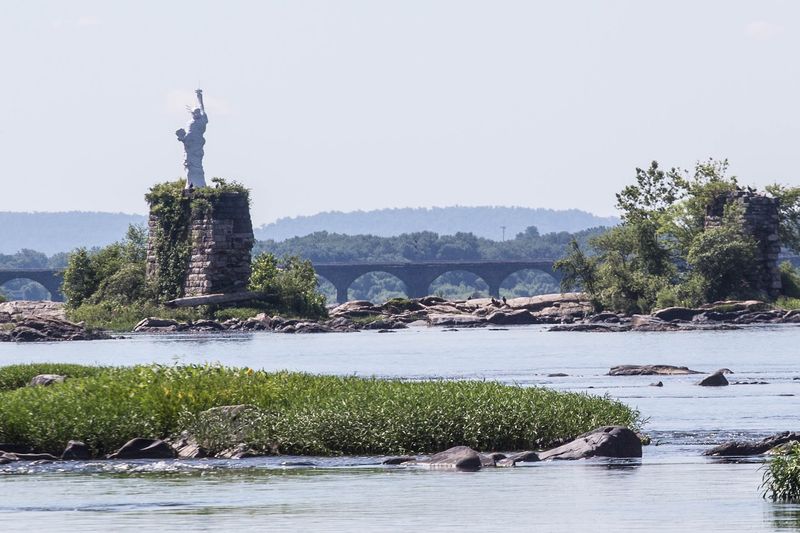
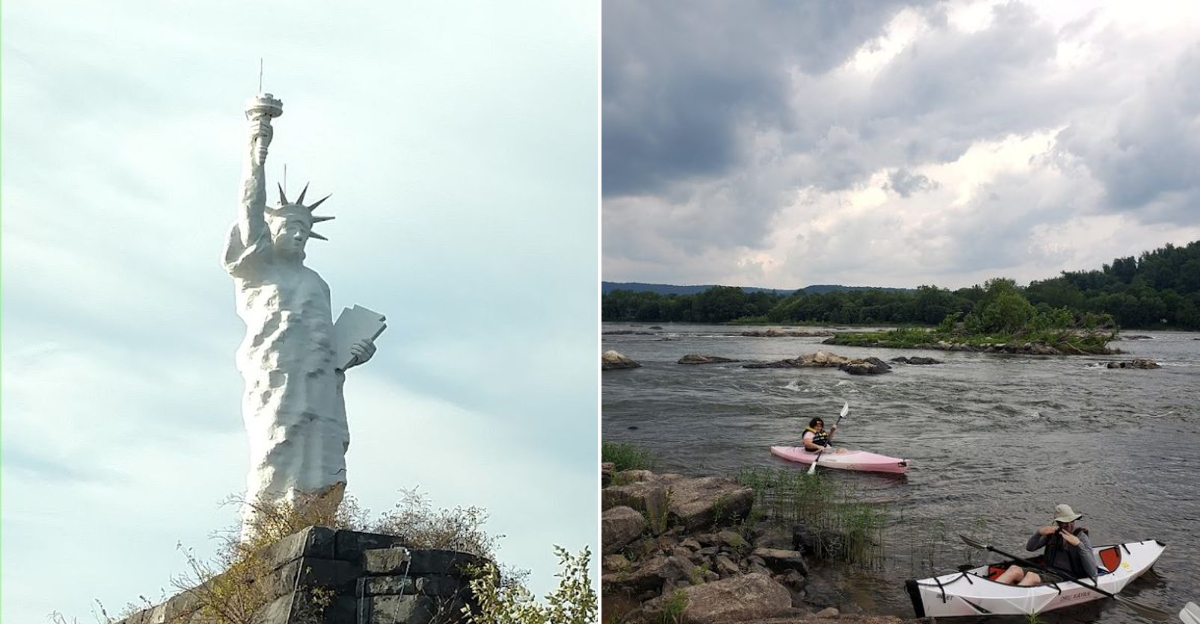
At 25 feet tall, Pennsylvania Lady Liberty is a fraction of the size of her New York counterpart, but she carries herself with the same upright confidence.
Standing on a stone pier in the middle of a moving river already gives her a presence that punches above her actual height.
From a passing car on Route 22, she appears surprisingly bold against the wide open water and the rolling hills behind her.
The scale works in her favor because there is nothing around her on that pier to shrink her down visually.
Kayakers who have paddled close to the base report that she feels much larger up close than the numbers suggest.
That is the magic of placement, perspective, and a good torch raised at just the right angle.
For a 25-foot statue, she manages to leave an impression that most full-size monuments would envy.
Only Reachable by Water
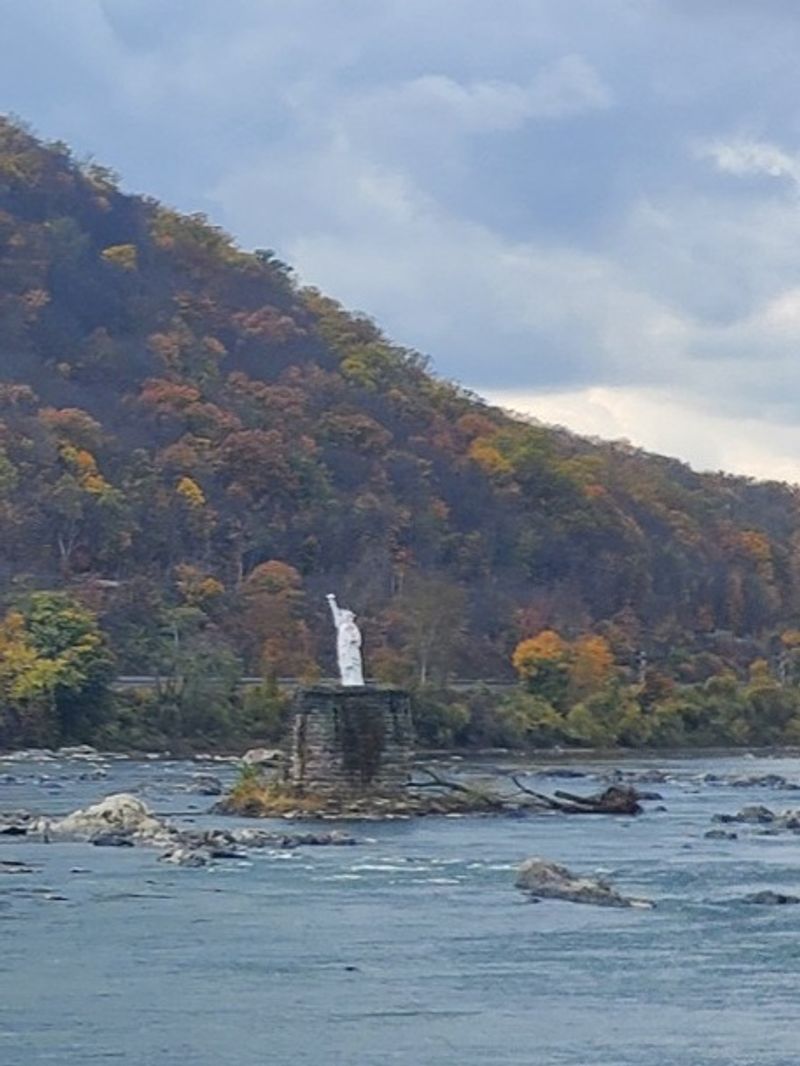
Getting close to Pennsylvania Lady Liberty is not a simple walk-up experience. She stands on an old bridge pier in the river, with no footbridge, no dock, and no path leading to her from shore.
The only way to reach her base is by boat or kayak. The water around her pier can move quickly and run shallow over rocks, which makes the approach tricky even for experienced paddlers.
The Dauphin Narrows includes class 2 rapids and requires caution for paddlers.
That inaccessibility is actually part of her appeal. She rewards the people who make an effort while remaining visible enough from the road to tease everyone else into curiosity.
Ohio has plenty of roadside attractions you can walk right up to, but Pennsylvania Lady Liberty asks a little more of her admirers, and somehow that makes the encounter feel more earned and more memorable.
The Road View Problem
Spotting Pennsylvania Lady Liberty from the road is a bit of a sport. She is best known as a sight along Route 322 near Dauphin, though drivers on routes along both sides of the river can catch glimpses.
Current travel sources emphasize that there is no formal viewing platform at the statue itself, and river access offers the closest look.
Drivers should keep their eyes open and avoid trying to stop along the roadway for a better angle, especially through the busy narrows stretch. Dauphin Indian Head also offers a known overlook.
The general advice is to have a passenger ready with a camera, because slowing down or pulling over for a long look is not practical or safe. Blink at the wrong moment and she is gone.
That fleeting quality is part of what makes Pennsylvania Lady Liberty so memorable. You almost have to earn the sighting just by paying attention.
Open Around the Clock
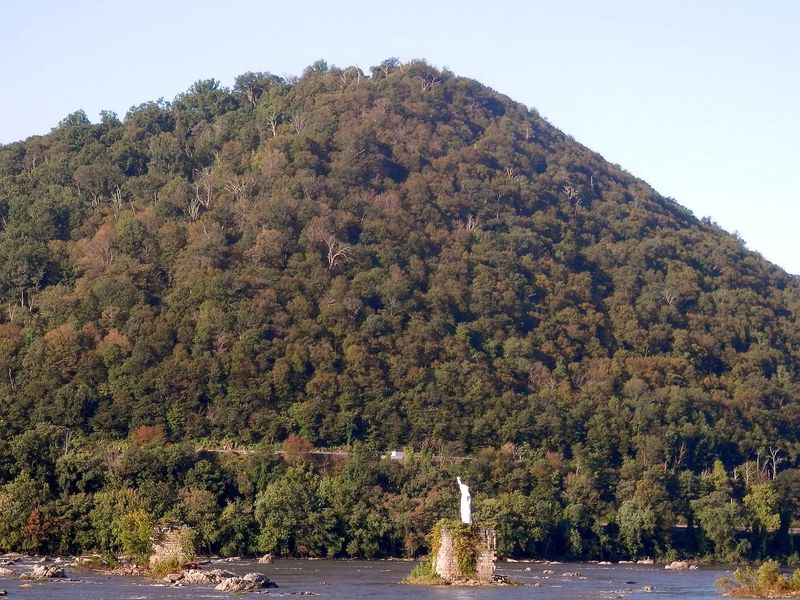
Pennsylvania Lady Liberty keeps no set hours because the river does not close.
She is visible from the road or river whenever conditions and daylight allow, which puts her in a category of roadside attractions that can surprise people at almost any time for passing travelers.
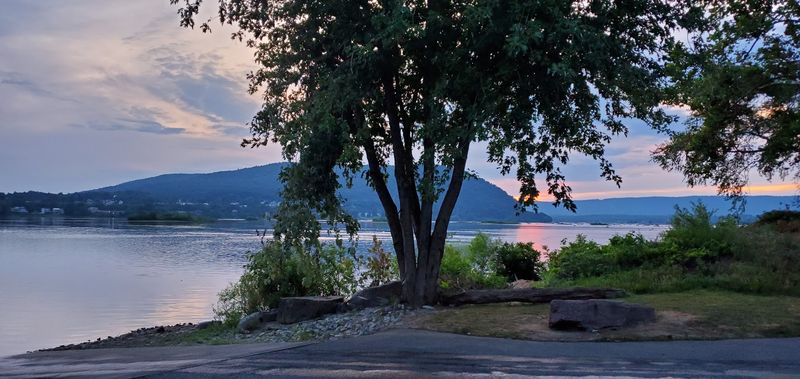
Catching her at sunset is supposed to be particularly striking.
Official tourism pages describe the river sunsets as a perfect ending after a day of exploration, and the statue silhouetted against a Pennsylvania sky is an image that sticks with people.
Night visits from the road are less rewarding since there is no dedicated lighting pointed at her, but the idea that she is out there in the dark, torch raised over the Susquehanna, has its own kind of charm.
Ohio sunsets over rivers are lovely too, but few rivers in the region offer this kind of surprise standing sentinel in the current.
A Symbol That Has Been Defaced and Repaired
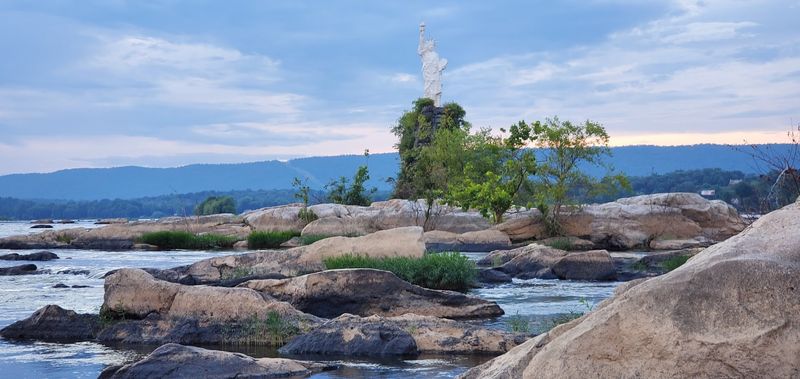
Pennsylvania Lady Liberty has not always looked exactly the same from year to year.
The best-documented recent changes include cosmetic repairs and a temporary pink repaint done in 2019 for breast cancer awareness, which made the statue look noticeably different to repeat passersby year after year.
That later color change was not random vandalism. It was a public campaign tied to donations for the Pennsylvania Breast Cancer Coalition, which makes the paint story more complicated than a simple tale of defacement and part of the landmark’s evolving public story.
Despite weather, repainting, and repairs, the statue has continued to stand, and upkeep efforts have surfaced over time.
She is not a perfect monument, but her resilience through storms and decades of river weather feels very much in the spirit of what she represents for locals who watch for her. Persistence, it turns out, suits her extremely well.
The Kayaking Scene Around Her
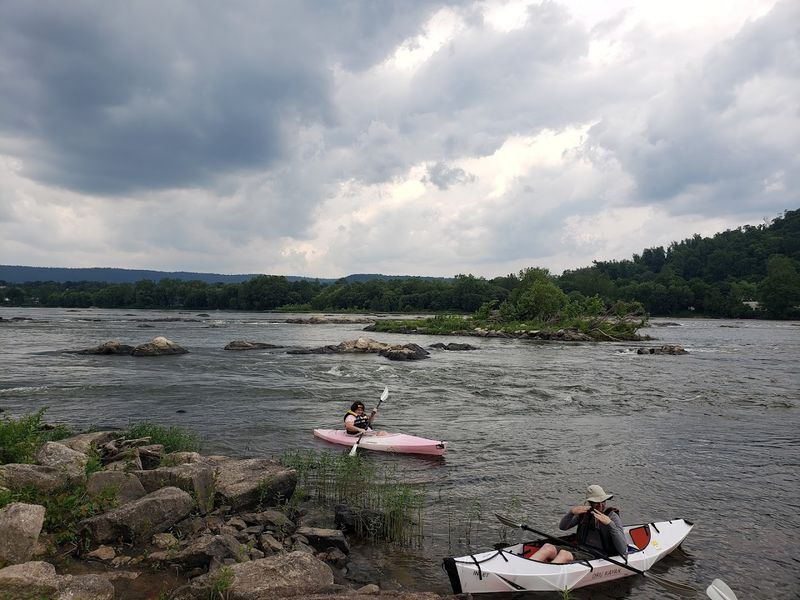
The stretch of the Susquehanna River around Pennsylvania Lady Liberty is not just scenic.
It is a real paddling destination, with the Dauphin Narrows adding moving water, rocks, and a little extra adrenaline to the trip for many.
The best-documented run is not an upstream out-and-back from Marysville.
Official tourism and greenway sources instead describe a downstream trip beginning near Duncannon at Amity Hall and ending at Marysville, with paddlers staying river-left through the class 2 rapids before crossing for a safer view of the statue.
Some adventurous groups do combine the paddle with island stops, lunch breaks, and long days on the water. That kind of trip turns a quirky landmark into the centerpiece of a full outdoor adventure.
Ohio has strong kayaking culture along its own rivers, but the combination of rapids, history, and a surprise Lady Liberty is a combination that Pennsylvania has locked down entirely on its own.
Why She Matters Beyond the Novelty
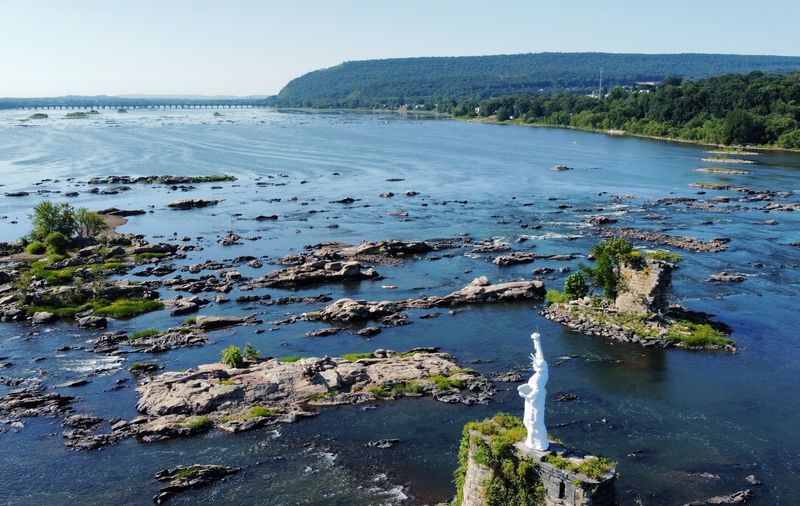
At first glance, Pennsylvania Lady Liberty reads as a fun oddity, the kind of thing you photograph and post with a clever caption.
But spending any time reading about her history reveals something with a little more weight to it. She represents community initiative, local identity, and the very human desire to mark a place with meaning.
The people who built her, replaced her after storm damage, and continue to care about her condition are not doing it for tourism metrics.
She is a landmark that exists because a community decided it should, and that is a rarer thing than it might seem.
Ohio has monuments built for similar reasons, and so do many other states, but the river setting and the improbable story behind Pennsylvania Lady Liberty give her a character that is genuinely hard to replicate.
She is small in size and enormous in staying power, and that combination is what makes her a true roadside treasure.