
This Unusual Ohio Hike Leads To Fascinating Ruins From The Great Depression
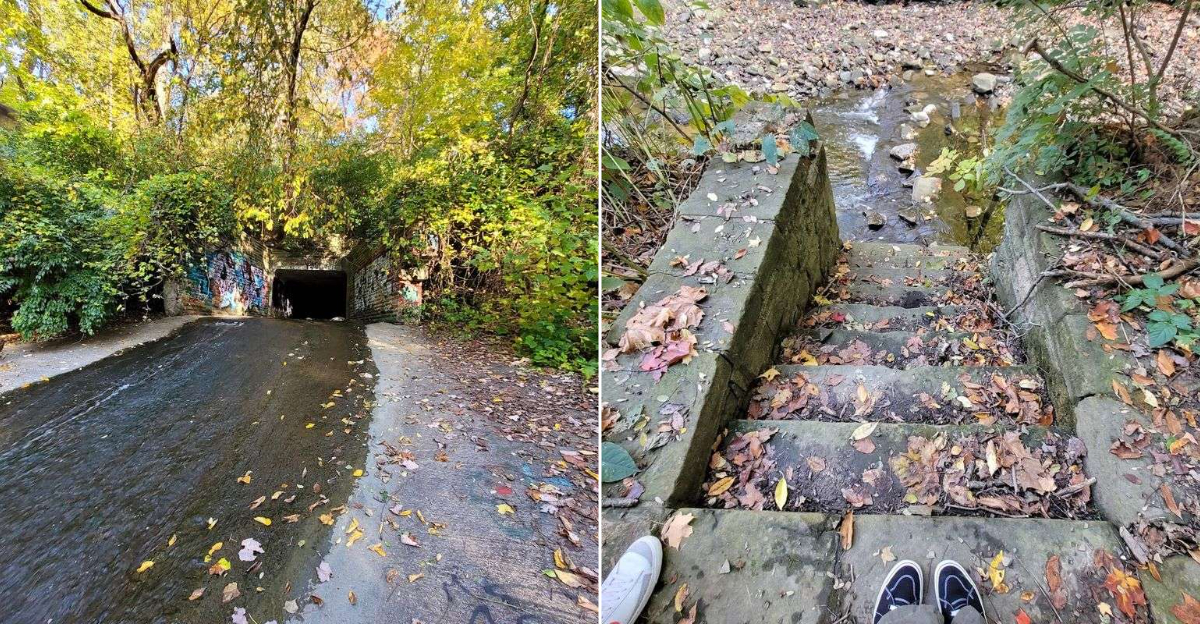
Ever stumble onto something so unexpectedly cool that you forget you were just out for a walk? That’s exactly what happens on this unusual Ohio hike. Imagine finding a hidden level in a video game.
But instead of pixelated treasure, there are crumbling WPA-era brick ruins slowly being claimed by trees and splashed with vibrant graffiti.
This isn’t your typical Sunday stroll through manicured greenery. These Great Depression-era structures, built under FDR’s Works Progress Administration, have survived decades of neglect, giving the trail a wild, cinematic energy.
History buffs, urban explorers, and casual hikers all find something to marvel at here, from moss-covered walls to the eerie charm of deserted bridges. It’s part Indiana Jones, part time capsule.
And entirely unforgettable. One minute you’re on a hike, the next you’re wandering through a real-life storybook of resilience, art, and adventure hidden in plain sight.
The WPA Ruins That Started It All
Some hikes give you pretty views. This one gives you an actual piece of American history crumbling beautifully into the earth.
The Works Progress Administration, better known as the WPA, was Roosevelt’s bold answer to the Great Depression. Millions of workers were hired to build public infrastructure, and Ambler Park in Cleveland got some of that action in the 1930s.
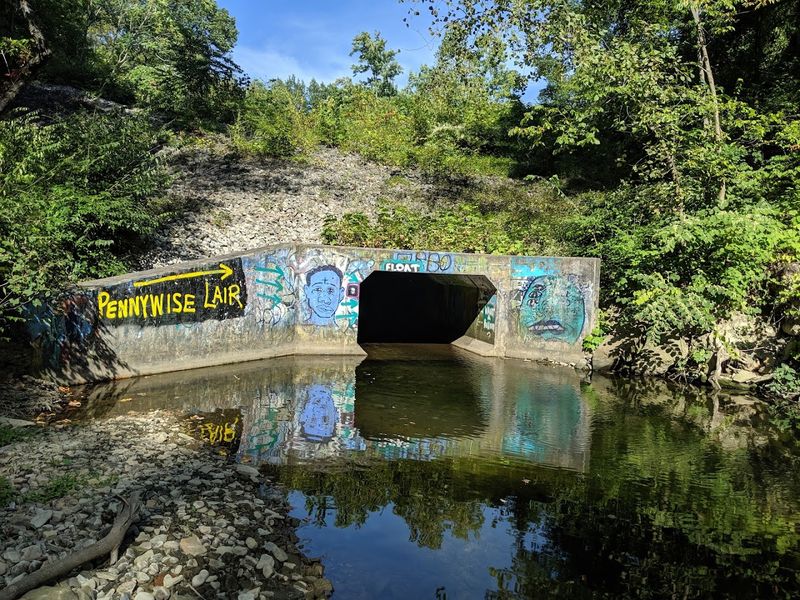
Walking up to the ruins for the first time is genuinely jaw-dropping. Massive brick and concrete structures rise from the forest floor, partially hidden by overgrown vegetation and layers of spray-painted murals.
It looks like something out of a post-apocalyptic film, but it is completely real and right here in Ohio.
The structures were originally built as part of a park development project during one of the hardest economic periods in American history.
Knowing that gives the whole experience a different kind of weight. These walls were built by people who needed work, who needed purpose, and who poured real effort into something that has outlasted generations.
Nature has done its own decorating since then. Roots crack through concrete, vines drape over doorways, and trees grow through what were once solid floors.
The graffiti adds another layer of story on top of the original one. Each visit feels like reading a book with chapters written decades apart.
Ruins like these are rare, raw, and worth every step of the trail to reach them.
Finding The Trail At MLK Jr Dr And N Park Blvd
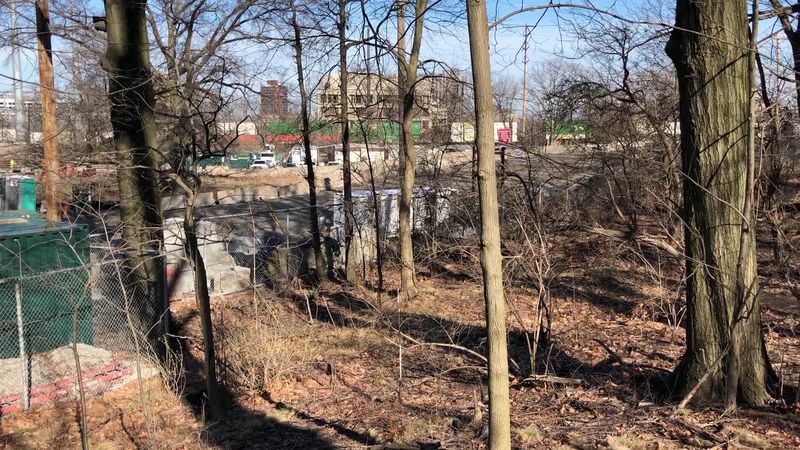
Getting to Ambler Park is surprisingly straightforward, and that is part of what makes this place such a well-kept secret. The trail access point sits near the intersection of MLK Jr Dr and N Park Blvd in Cleveland Heights, OH 44106, tucked between the busy roads and the quiet forest that opens up just beyond the tree line.
Parking near the intersection is manageable, and the trail itself begins with a gentle descent into a wooded area that feels immediately removed from city life.
Within minutes of starting the walk, the sounds of traffic fade and the rustling of leaves takes over. It is the kind of transition that makes you exhale without even realizing you were holding your breath.
The trail is not heavily marked or manicured, which honestly adds to the charm. Part of the adventure is navigating a path that feels organic and slightly wild.
Sturdy shoes are a smart call, especially after rain when the ground gets soft and slippery in spots.
Ambler Park sits within Cleveland’s broader Metroparks system, making it part of a much larger network of green spaces woven through the city.
But this particular corner of the network has a character all its own. The combination of accessible location and genuinely surprising destination makes it one of those rare spots that rewards curiosity with something truly memorable every single time you visit.
What The WPA Actually Built Here
Not every WPA project involved massive bridges or grand civic buildings. Some of the most interesting work happened quietly in public parks, and Ambler Park is a perfect example of that.
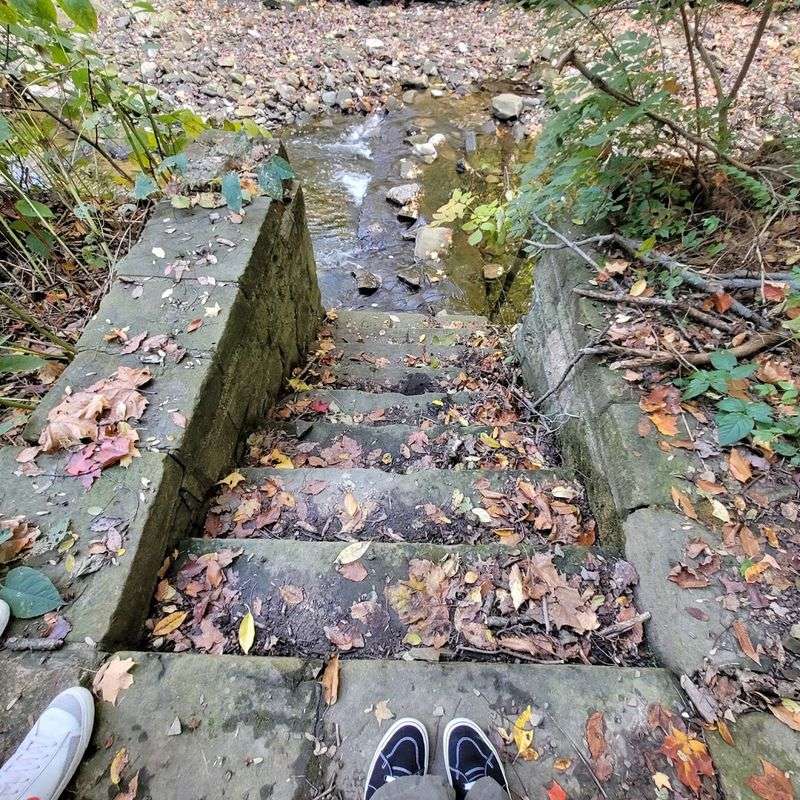
Workers constructed retaining walls, steps, pathways, and gathering spaces using materials and methods that were meant to blend with the natural landscape.
The structures here were built with a craftsmanship that is honestly hard to find today. Brick was laid carefully, stonework was fitted by hand, and the overall design had a purpose beyond just function.
These were spaces meant to bring communities together during an era when public parks were one of the few places people could gather freely and without cost.
Decades later, the original purpose has shifted entirely. The gathering spaces are overgrown.
The pathways are barely visible beneath layers of fallen leaves and new growth. But the bones of the construction are still there, holding up against time in a way that feels almost defiant.
Studying the walls up close tells you a lot about the era. The brickwork is precise, the mortar is crumbling but still present, and the scale of what was built suggests a workforce that took serious pride in the job.
Understanding the context transforms what looks like random ruins into something deeply meaningful. These are not just old walls in the woods.
They are a physical record of resilience, effort, and a country trying to rebuild itself one brick at a time.
The Graffiti That Turned Ruins Into Art
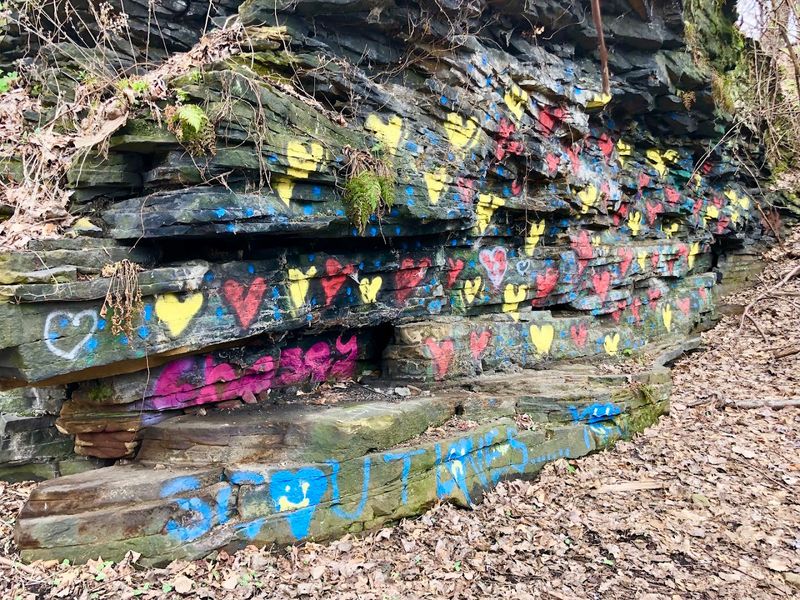
Here is where things get visually electric. The ruins at Ambler Park did not stay bare and grey for long.
Over the years, artists discovered this tucked-away canvas and transformed the crumbling walls into something genuinely striking.
Layers of graffiti cover nearly every surface, turning Depression-era concrete into an outdoor gallery that changes with every season.
The art ranges from abstract shapes and bold lettering to detailed murals that take real skill and planning to execute. Some pieces are clearly the work of experienced artists.
Others feel more spontaneous and raw, which gives the whole space an energy that shifts depending on where you are standing and what you are looking at.
There is a conversation happening between the original builders and the modern artists, even if neither group ever intended it. The WPA workers left their mark through structure and stone.
The graffiti artists left their mark through color and image. Together, the layers create something that no single era could have produced alone.
Photographing the combination of weathered brick and vivid spray paint is genuinely addictive. Every angle offers a different composition, and the changing light through the forest canopy shifts the mood dramatically throughout the day.
Morning light hits differently than late afternoon golden hour, and both are worth experiencing. This is one of those rare outdoor spaces where history and contemporary creativity collide in a way that feels completely unplanned and absolutely perfect.
Bring a camera, because your phone camera will be working overtime.
The Forest That Swallowed The Structures
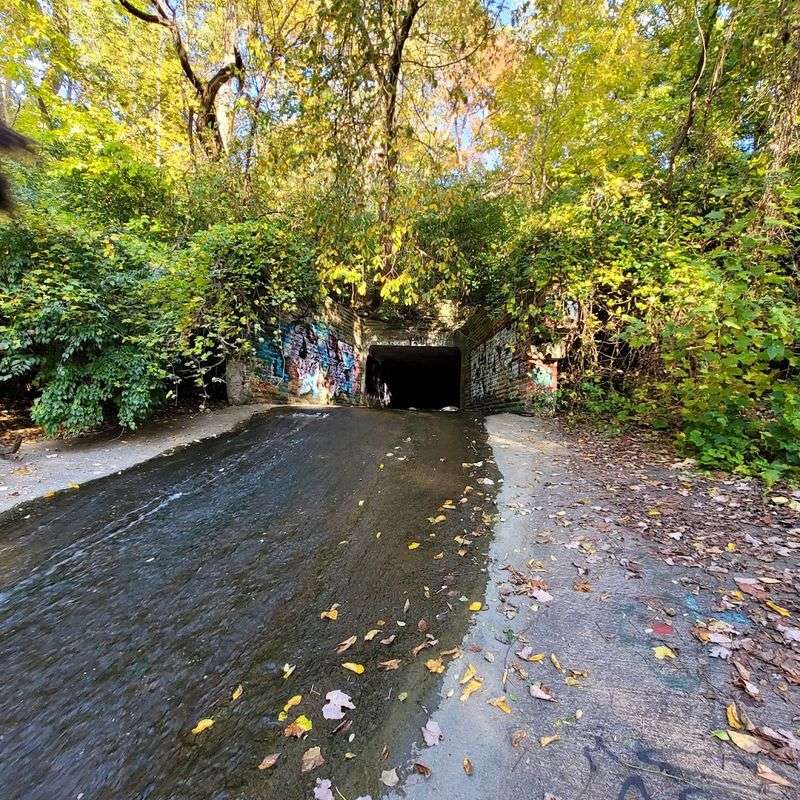
Nature does not wait for permission, and nowhere is that more obvious than at Ambler Park. The forest here has been quietly reclaiming the WPA structures for decades, and the result is one of the most visually compelling landscapes you will find on any Ohio trail.
Tree roots crack through concrete floors. Saplings push through brick walls.
Vines drape over archways like natural curtains.
Walking through this section of the trail feels like stepping into a nature documentary about what happens when humans step away and the wild moves back in. It is peaceful in a way that is hard to describe.
The usual sounds of a city park are completely absent.
What you get instead is birdsong, wind through the canopy, and the occasional creak of an old tree settling into its roots.
The forest itself is beautiful independent of the ruins. Mature hardwoods create a thick canopy that filters sunlight into scattered patches on the trail floor.
In autumn, the color contrast between orange and red leaves against grey concrete is something genuinely spectacular.
Spring brings a carpet of wildflowers pushing through the same cracks where roots have been working for years.
The relationship between the built environment and the natural one here is not adversarial. It feels more like a slow, patient collaboration unfolding across generations.
The structures give the forest something to grow around. The forest gives the structures a reason to still be interesting.
Together, they have created a place that rewards slow, attentive walking more than any rushed hike ever could.
This Hike Belongs On Your Ohio Bucket List
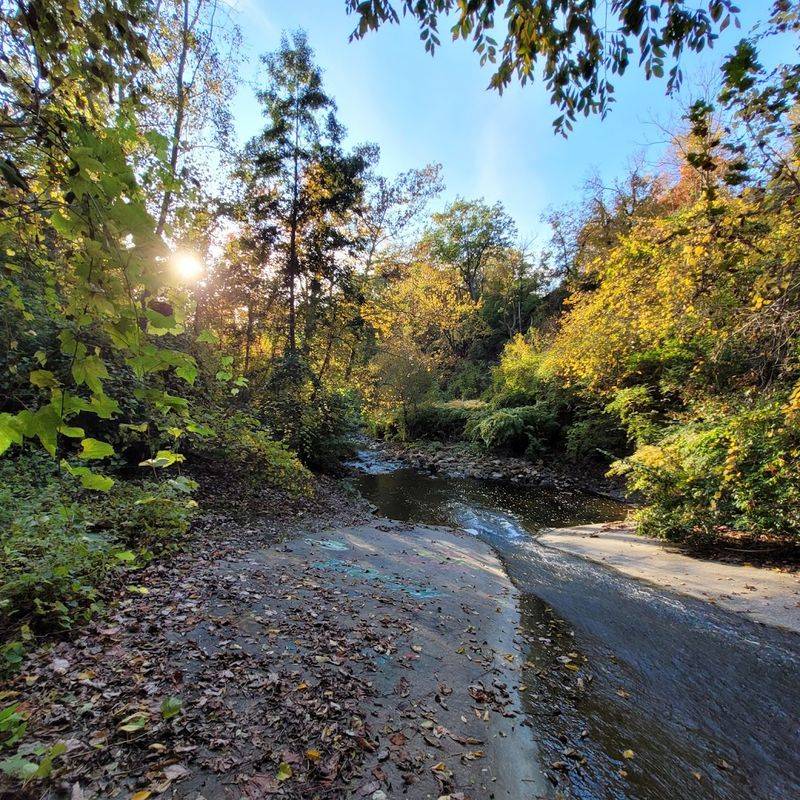
Ohio has plenty of beautiful trails. Hocking Hills gets all the glory, and rightfully so.
But Ambler Park offers something that most trails simply cannot compete with, and that is the combination of natural scenery and genuine historical weight packed into a relatively short and accessible walk.
This is not a grueling day hike. It is more like a meaningful afternoon adventure.
The trail is accessible to a wide range of fitness levels, which makes it easy to bring along anyone who enjoys a good story told through landscape.
The distance is manageable, the terrain is interesting without being punishing, and the payoff at the ruins makes the whole thing feel worthwhile from start to finish.
Urban hiking is having a major moment right now, and trails like this one represent exactly why. People are craving experiences that go beyond just exercise and scenery.
They want context. They want to feel connected to something larger than the immediate view in front of them.
Ambler Park delivers that in a way that very few trails in the state can match.
Adding this hike to an Ohio outdoor itinerary is an easy decision. It pairs well with a visit to nearby University Circle, where world-class museums and gardens sit just minutes away.
The contrast between the polished cultural institutions and the raw, overgrown ruins creates an interesting day that covers a lot of emotional and historical ground.
Ohio keeps surprising people, and Ambler Park is one of the best reasons why that reputation is completely deserved.
Practical Tips Before You Hit The Trail
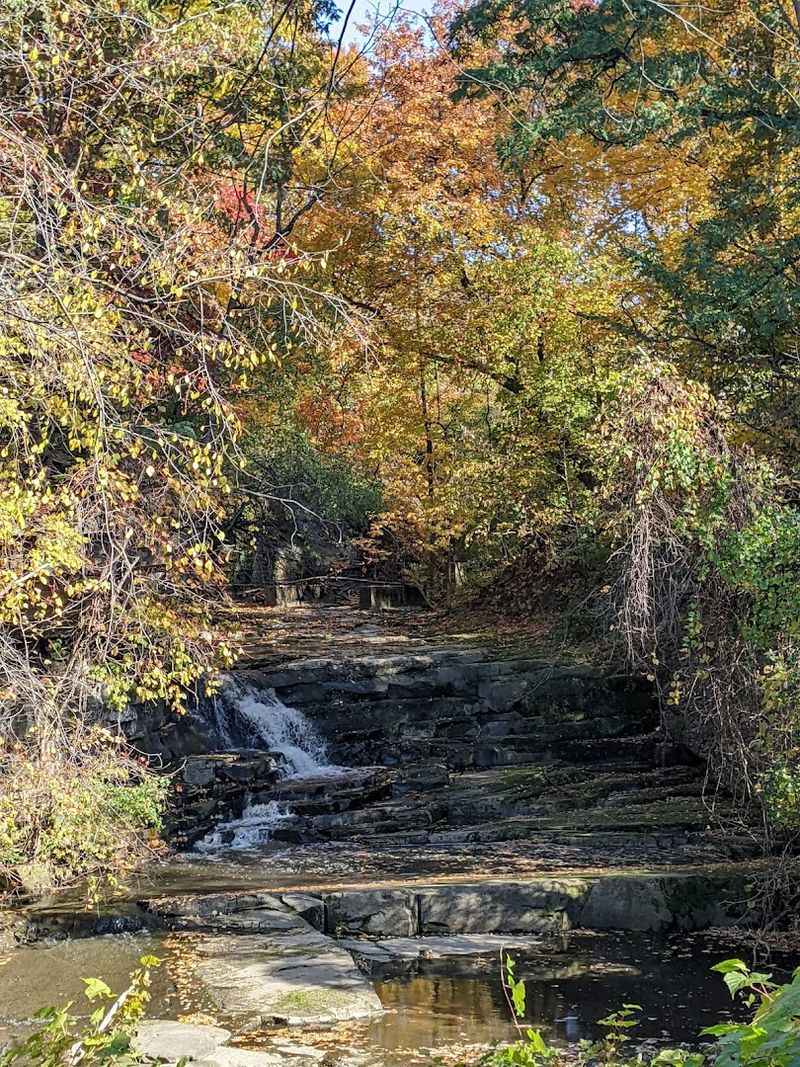
Before heading out to Ambler Park, a little preparation goes a long way toward making the experience smooth and enjoyable.
The trail is not heavily maintained, which is part of its charm, but it also means conditions can vary depending on the season and recent weather. Waterproof hiking boots are a genuinely good investment here, not just a suggestion.
The best times to visit are spring and fall. Spring brings fresh green growth bursting through the ruins, which creates an almost magical visual contrast.
Fall delivers spectacular leaf color that frames the grey concrete in warm oranges and deep reds. Summer works too, though the dense canopy can make the trail feel humid on hot days.
Bringing a fully charged phone is smart for both navigation and photography. The trail is not always clearly marked, and having a mapping app open helps avoid unnecessary backtracking.
A small backpack with water and a snack makes the outing more comfortable, especially if you plan to linger at the ruins and really take everything in.
The park is free to access, which makes it one of the best value outdoor experiences in the entire Cleveland area. No permits, no fees, no reservations needed.
Just show up, lace up, and let the trail do its thing.
Whether this is your first time or your fifth, Ambler Park has a way of revealing something new each visit.