
This Upstate New York Eatery Became A Statewide Favorite For One Timeless, Must-Try Dish
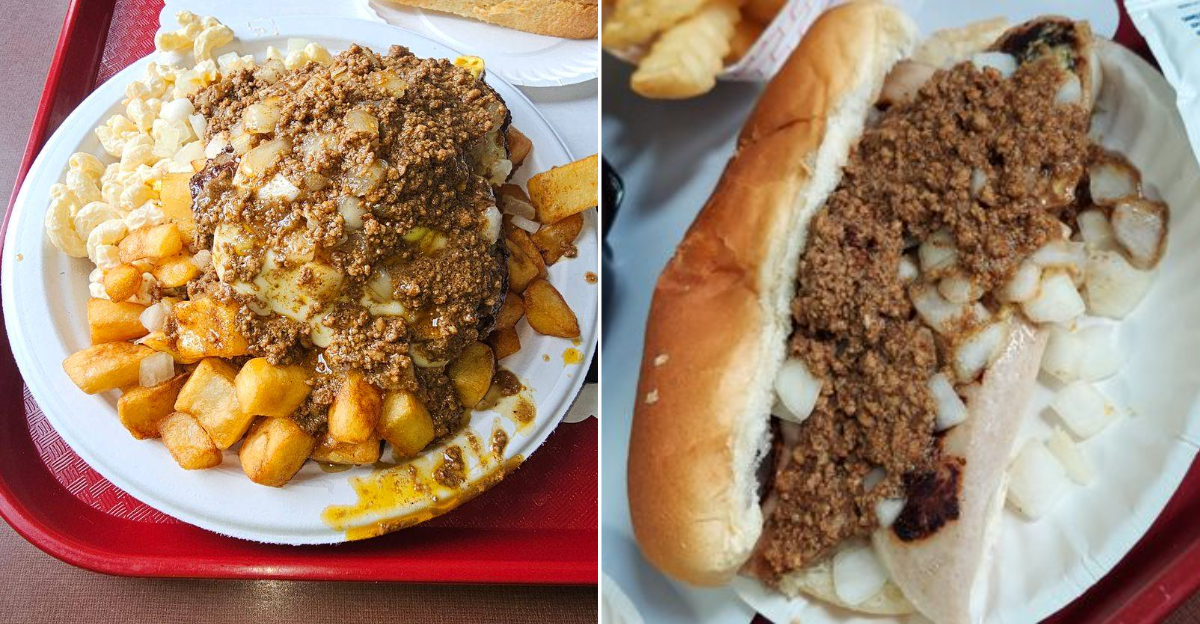
Nick Tahou Hots has a way of announcing itself long before you read the sign, sitting at 320 W Main St like a neon bookmark wedged firmly into New York food history, unapologetic and still doing the job it was meant to do.
I feel it most around lunch, when the line forms with a calm, almost institutional efficiency, trays sliding, orders called, regulars moving with the confidence of people who know exactly what comes next.
There’s nothing tentative about the room, no easing you in, just the steady understanding that you’re here for something specific and that it will arrive exactly as promised.
Watching first-timers clock the menu and regulars breeze past them is part of the experience, a quiet lesson in local fluency.
What makes Nick Tahou Hots a landmark isn’t nostalgia dressed up for visitors, but reliability, the kind that comes from repeating the same idea so many times it becomes cultural shorthand.
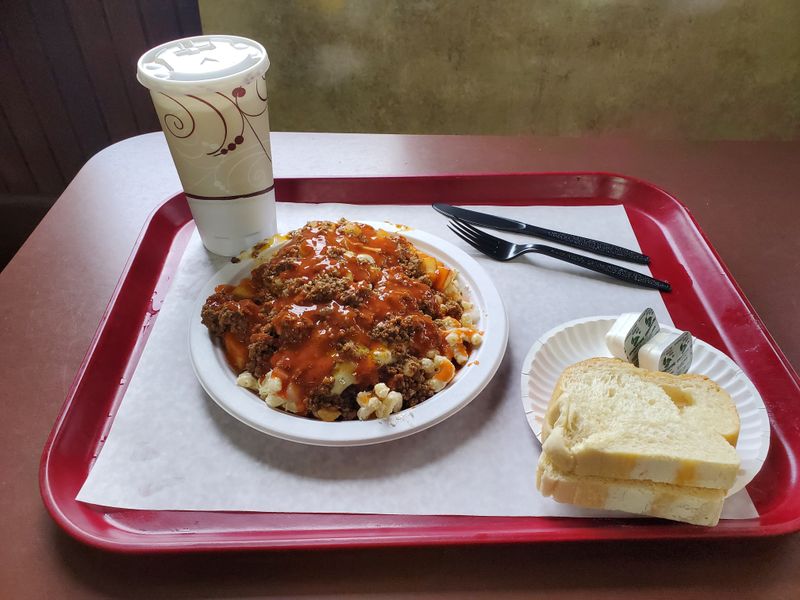
The Garbage Plate lands hot, messy, and unambiguous, a pile of potatoes, meat, and sauce that tells a Rochester story without needing narration or context.
It’s not about refinement or balance in the abstract sense, it’s about satisfaction that’s direct and earned, food that understands its role and plays it without hesitation.
Sitting there, you can feel how many lunches, late nights, and post-game stops have passed through the same motions, each one reinforcing why this place still matters.
These tips are here to help you meet the classic on its own terms, with respect for the rhythm of the room and an appetite that matches the portion.
This isn’t a dish you approach casually or ironically, it’s something you step into fully, letting the mess, the heat, and the history do what they’ve always done best.
Know The Original Garbage Plate
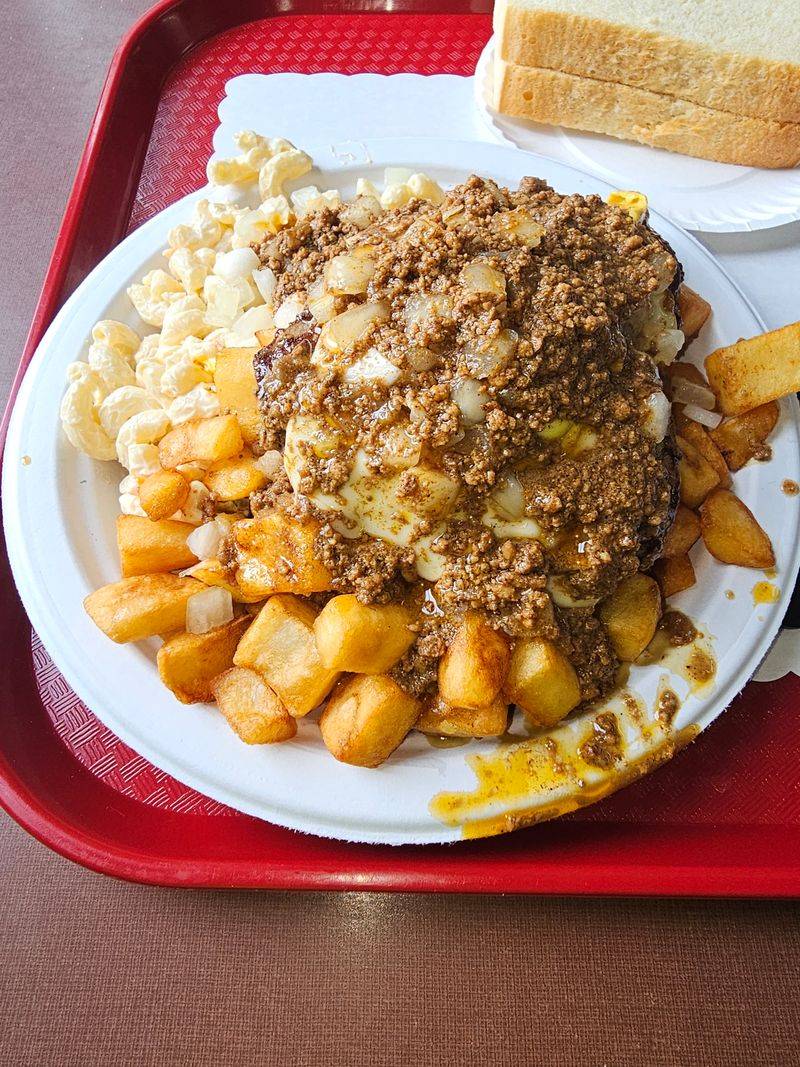
The true Garbage Plate begins as a deliberate construction rather than a pile, starting with a side-by-side base of home fries and macaroni salad that establishes the temperature, texture, and pacing of every bite that follows.
That foundation is topped with your chosen meats, cheeseburgers, hot dogs, sausage, or a mix, before being finished with chopped onions, yellow mustard, and a ladle of finely ground meat hot sauce that spreads warmth instead of brute heat.
What makes the plate work is how each element softens the next, with potatoes absorbing spice, pasta cooling the edges, and meat anchoring everything into something substantial rather than chaotic.
This exact format matters because Nick Tahou Hots is where the Garbage Plate originated, long before the name traveled and inspired countless variations elsewhere.
At 320 W Main St, Rochester, NY 14608, the counter staff moves quickly and expects you to know your order before stepping forward.
Questions come fast, not out of impatience, but because efficiency is part of the culture that keeps the line calm.
Sitting down immediately after ordering allows the steam to settle and the flavors to merge, which is when the plate becomes more than the sum of its parts.
Mind The Hours And The Line
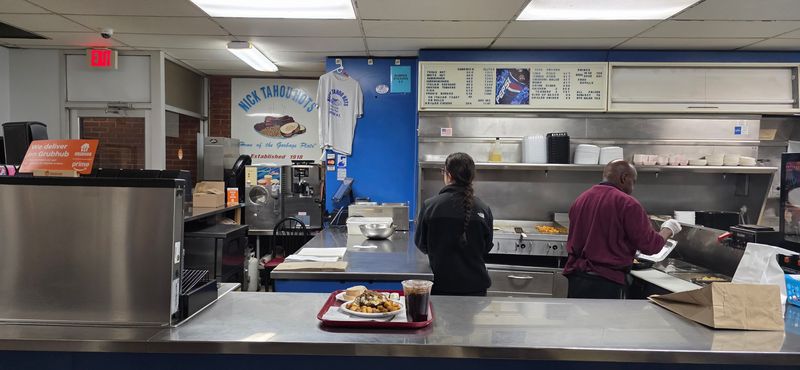
The operating window at Nick Tahou Hots is compact and predictable, running Tuesday through Saturday from late morning into early evening, which shapes both the crowd and the kitchen’s rhythm.
Lunch hours bring the most traffic, with lines forming steadily but moving smoothly thanks to a system refined by repetition rather than signage.
Midafternoon often offers the best balance, when the rush has eased but ingredients are still fresh and the staff unhurried.
Arriving close to closing risks missing both seating and the relaxed tempo that makes the experience feel complete rather than rushed.
The building itself feels utilitarian and unchanged, reinforcing that the focus has always been on output, not atmosphere.
Ordering decisively is considered a courtesy here, especially when the room is full.
Choosing a quieter window lets you linger with the plate while the steam rises, which is when its comfort-food logic becomes most apparent.
Choose Your Meat Wisely
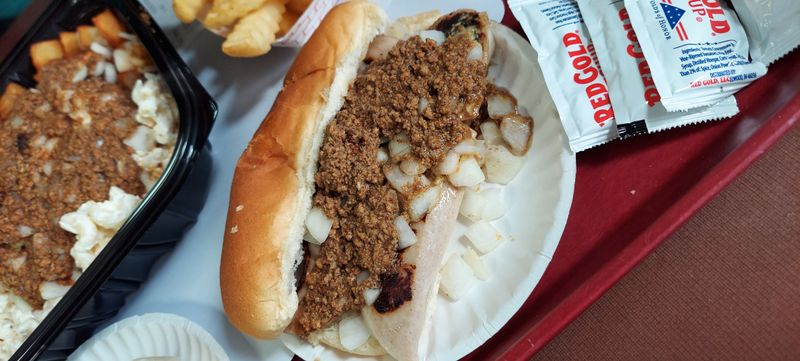
Each protein option on the Garbage Plate carries a distinct personality, and the choice determines whether the dish leans nostalgic, savory, or aggressively hearty.
Cheeseburgers offer a familiar, grounding richness, while Zweigle’s hot dogs add snap and salt that cut through the softer base.
Sausage brings density and spice, holding its own under the hot sauce without disappearing into the starch.
Mixing meats is common and encouraged, but it rewards diners who think about contrast rather than excess.
The signature hot sauce ties everything together, so the meat must stand up to vinegar and warmth rather than compete with it.
Regulars order with the confidence of habit, often pairing one reliable favorite with one element chosen for curiosity.
If you are unsure, start simple, add onions finely chopped for brightness, and consider extra mustard to lift the heavier bites.
Balance The Base: Home Fries And Mac Salad
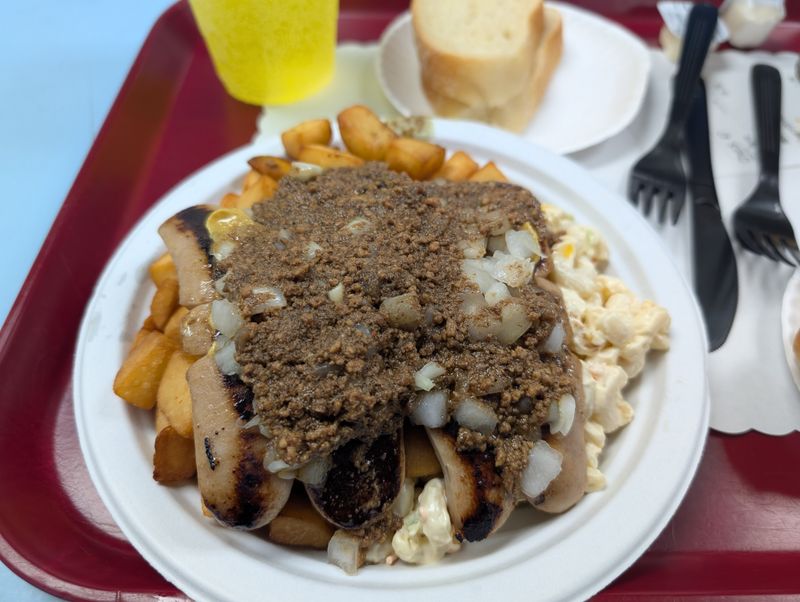
The structural heart of the Garbage Plate lies in the careful pairing of home fries and macaroni salad, arranged side by side so that heat, starch, fat, and chill are forced into constant conversation rather than collapsing into sameness.
The home fries arrive with lightly crisped edges and soft centers that readily absorb meat juices and hot sauce, maintaining their shape just long enough to carry flavor without turning to mash.
By contrast, the macaroni salad cools the plate with mayo richness and subtle sweetness, acting as a deliberate counterweight to spice and salt rather than a passive filler.
This balance is not accidental but the result of decades of repetition, where the base evolved to support heavy toppings without overwhelming the eater too quickly.
At Nick Tahou Hots, located at 320 W Main St, Rochester, NY 14608, the base is assembled with practiced consistency that regulars rely on.
When the line is light, asking for the home fries slightly crisper can add textural lift that carries through the final bites.
Understanding the base changes how you eat the plate, encouraging you to drag each forkful across both sides rather than isolating components.
Respect The Meat Hot Sauce
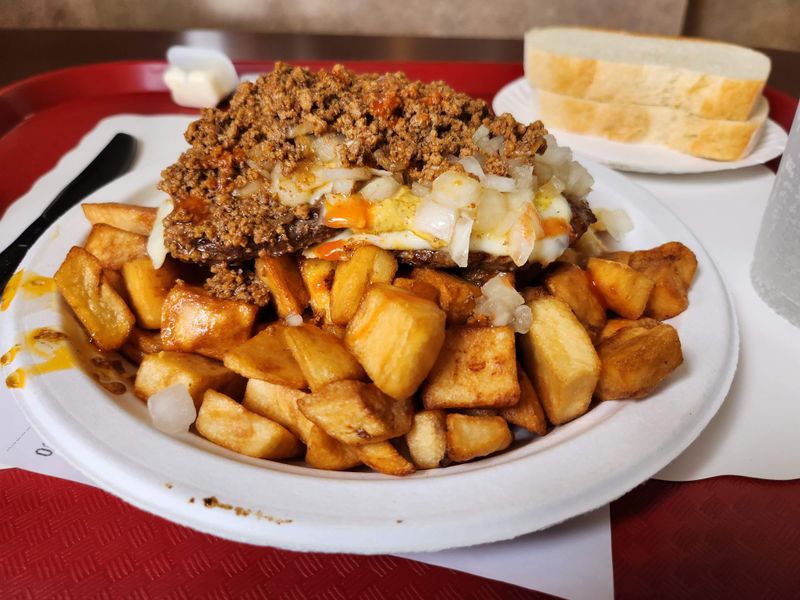
The signature meat hot sauce deserves attention because it is neither chili nor gravy nor condiment, but a finely textured, warmly spiced binding agent designed to unify everything beneath it.
Its flavor leans savory and aromatic rather than aggressively hot, spreading heat gradually through oil, vinegar, and ground meat that settles into potatoes and pasta alike.
This sauce carries decades of late-night lore and daylight lunches, anchoring the plate to Rochester’s working-class food history.
Skipping it removes the narrative thread that makes the Garbage Plate legible as a single dish rather than a pile of parts.
Many locals order the standard ladle on top and a little extra on the side, allowing them to adjust intensity as the plate cools.
The sauce is always applied last, ensuring it reaches every component without drowning them.
Treating it with respect means tasting before altering, letting its balance reveal itself over several bites instead of judging it on first contact.
Order Flow Like A Local
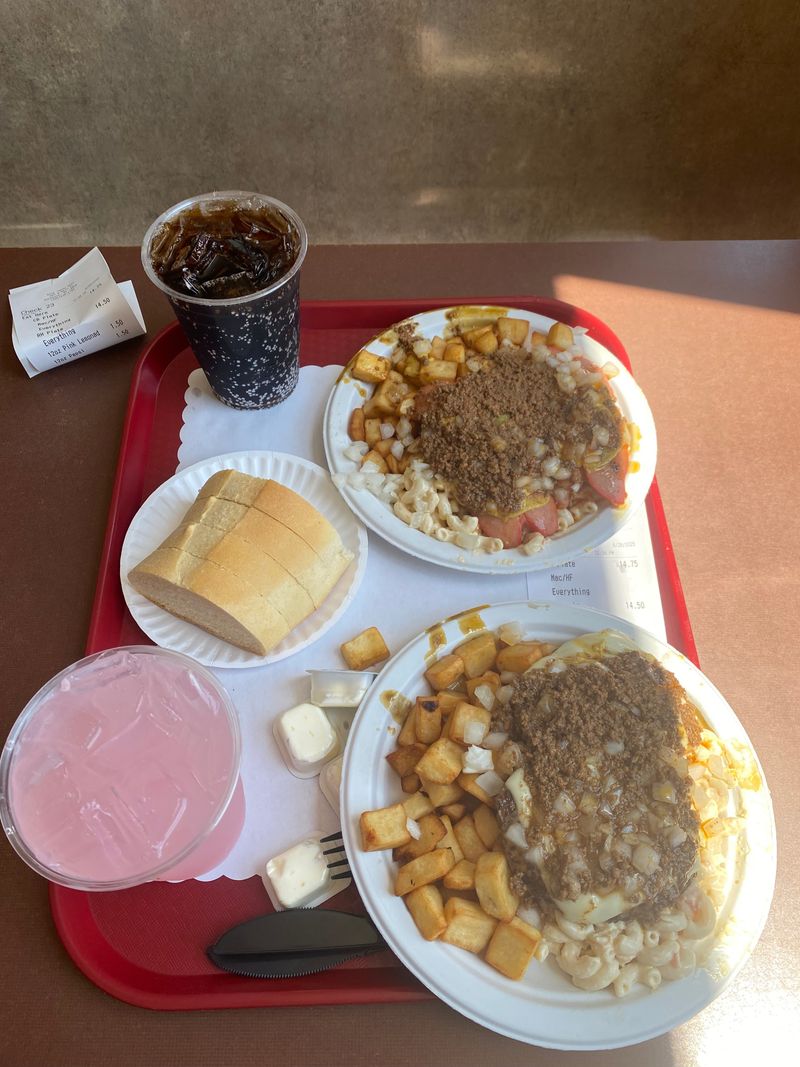
Ordering at Nick Tahou Hots follows a rhythm that rewards preparation, beginning with your base, moving quickly through meat choices, then confirming onions, mustard, and hot sauce without hesitation.
This cadence keeps the counter moving smoothly and prevents bottlenecks, especially during peak lunch hours when efficiency is shared etiquette.
Drinks and extras come after the plate is locked in, not before, allowing the kitchen to maintain momentum.
Regulars instinctively know where to stand, when to step forward, and how to clear space once their food arrives.
Following that tempo makes the room feel cooperative rather than crowded, even when every seat is taken.
At 320 W Main St, Rochester, NY 14608, this unspoken choreography has been refined over generations of repeat customers.
Once the order is placed, slowing down to watch steam rise and sauce settle becomes part of the pleasure, marking the shift from transaction to meal.
Portion Strategy And Sharing
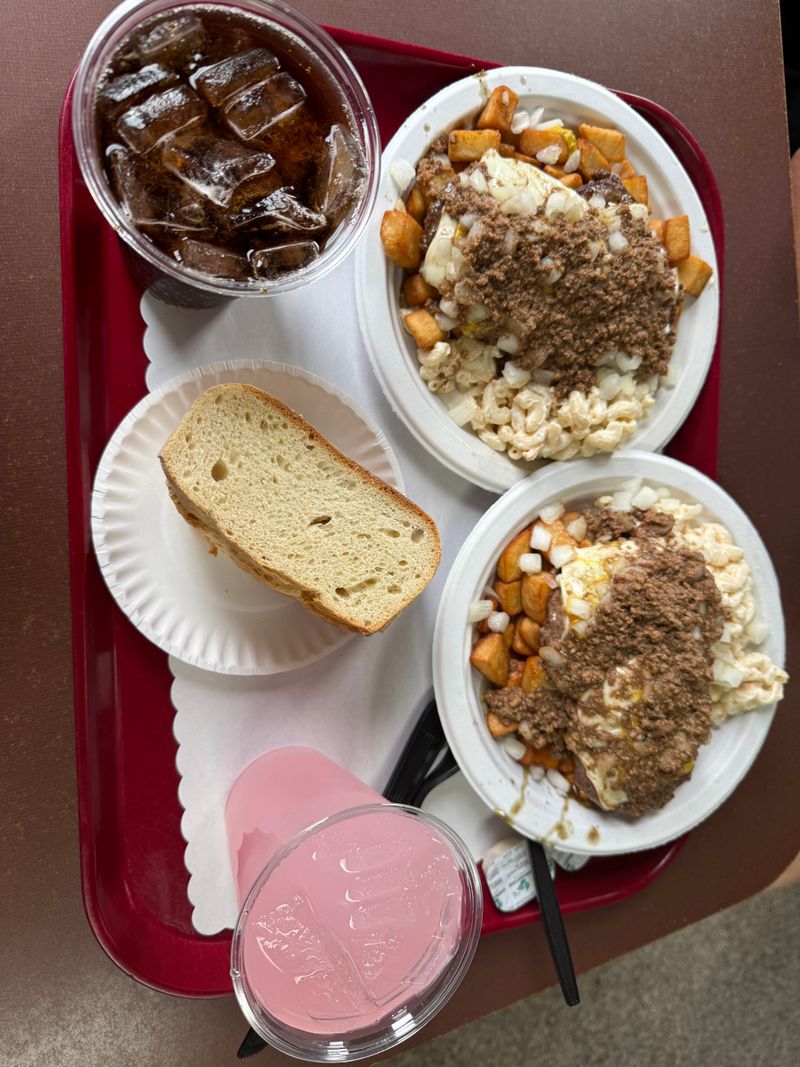
The Garbage Plate is designed to meet a serious appetite head-on, with portions calibrated for a single diner who intends to eat steadily rather than delicately, which means sharing fundamentally alters not just quantity but the entire rhythm of the meal.
When split between two people, the plate cools faster, the sauce thickens unevenly, and the intended progression from hot, sauced fries to softer, blended final bites gets interrupted by pauses and negotiations over fork territory.
That said, sharing can work if both diners commit to eating in parallel, keeping components close together so heat and moisture continue to circulate rather than separating into isolated piles.
Regulars understand that the Garbage Plate is at its best when eaten while everything is still actively mingling, which is why leftovers are tolerated but rarely celebrated.
If you do plan to share, asking for an extra fork immediately helps maintain flow and avoids unnecessary interruptions once eating begins.
Water or a simple fountain drink provides the most effective palate reset between bites, cutting grease and spice without competing for attention.
Accepting that the plate is meant to be finished in one sitting, even if that means slowing down rather than stopping early, aligns your experience with how the dish was originally intended to be eaten.
Seasonal Timing And Weather Mood

The Garbage Plate interacts noticeably with weather, taking on a near-therapeutic quality in Rochester winters when cold streets make the heat and weight of the dish feel restorative rather than excessive.
On gray afternoons with snow piled along Main Street, the plate’s warmth radiates upward, loosening shoulders and slowing breathing in a way lighter meals simply cannot.
Summer visits shift the mood entirely, with brighter light, faster turnover, and a more utilitarian approach to eating that prioritizes efficiency over lingering.
Because Nick Tahou Hots operates within a narrow daily window, timing your visit around seasonal conditions becomes part of the planning rather than an afterthought.
Rainy days tend to thin the line and deepen focus, making flavors register more sharply in the quieter room.
The restaurant absorbs the city’s weather without insulating you from it, which subtly shapes memory.
Choosing a day when the outside world feels slightly inhospitable often makes the plate feel more complete, as if its purpose has been fulfilled.
History You Can Taste
Nick Tahou Hots carries its reputation not through decoration or storytelling displays but through repetition, consistency, and a dish that has remained fundamentally unchanged while the city around it evolved.
As the birthplace of the Garbage Plate, the restaurant occupies a specific place in Rochester’s culinary identity, one reinforced every time someone orders without explanation.
The lack of embellishment in presentation reflects a deeper philosophy, that food should function first and explain itself second.
Walls, counters, and the cadence of shouted orders quietly document decades of lunch breaks, late shifts, and post-game meals without needing plaques or photos.
Eating here places you inside that continuum, whether or not you arrive with historical awareness.
Letting the first forkful linger allows you to feel how vinegar, heat, and starch lock together in a way imitation plates rarely achieve.
The history shows up most clearly in the second and third bites, when initial shock fades and balance asserts itself.
Respectful Photos And Final Clean Up
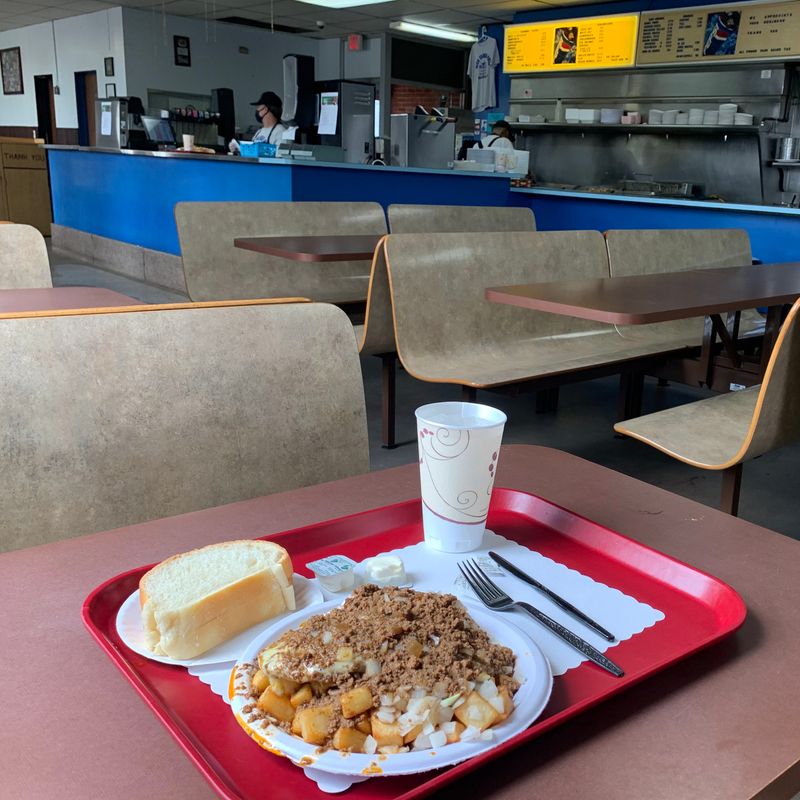
Photographing the Garbage Plate works best when done quickly and discreetly, capturing steam and texture without halting the momentum of the room or blocking the flow of the line.
Muted browns, golds, and creamy whites photograph well under the restaurant’s warm lighting, especially from a low angle that emphasizes structure rather than chaos.
Lingering too long with a camera risks missing the narrow window when heat, moisture, and sauce alignment are optimal.
Regulars understand that eating takes priority over documentation, and that courtesy keeps the room functioning smoothly.
Clearing your tray promptly once finished helps reset the space for the next diner and reflects the shared responsibility that keeps service efficient.
Staff operate with steady focus and minimal chatter, which is part of the restaurant’s character rather than a lack of warmth.
Leaving the table clean and the aisle clear is the final gesture of respect, ensuring the experience remains intact for whoever steps up next.