
This Utah Sculpture Garden Hides A Stone Sphinx With A Face You Will Not Forget
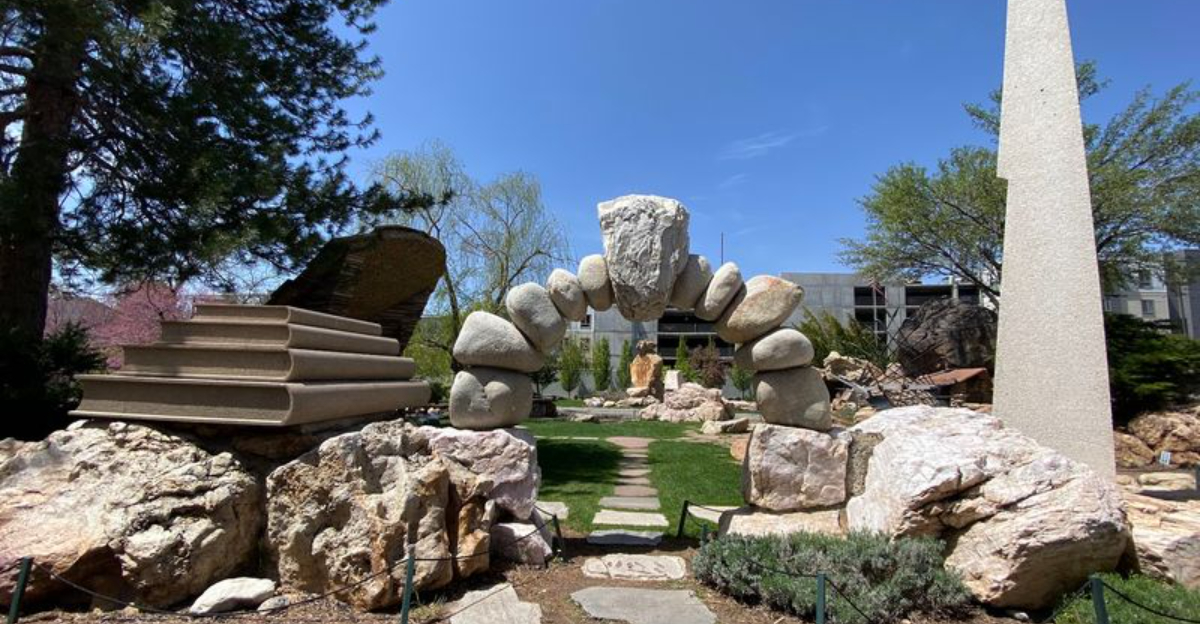
Utah is already full of landscapes that feel like they were designed by an overachieving special-effects team. But hidden inside one sculpture garden is something that makes you do a double take and question reality a little.
A stone sphinx. In Utah.
With a face you will absolutely not forget, even if you try really hard. Wait… a sphinx?
Like ancient Egypt vibes in the middle of the American West? Exactly. Because nothing says “normal afternoon stroll” like suddenly locking eyes with a monument that looks like it has seen things it refuses to explain.
So you’re walking through the garden thinking it’s all calm art and aesthetic peace, and then, boom, there it is. Carved stone.
Silent judgment. Main-character energy from a creature that has been emotionally unavailable since the first millennium BC.
Is it eerie? A little.
Is it unforgettable? Completely.
And honestly, isn’t that what good art is supposed to do, quietly ruin your sense of normal forever?
The Stone Sphinx
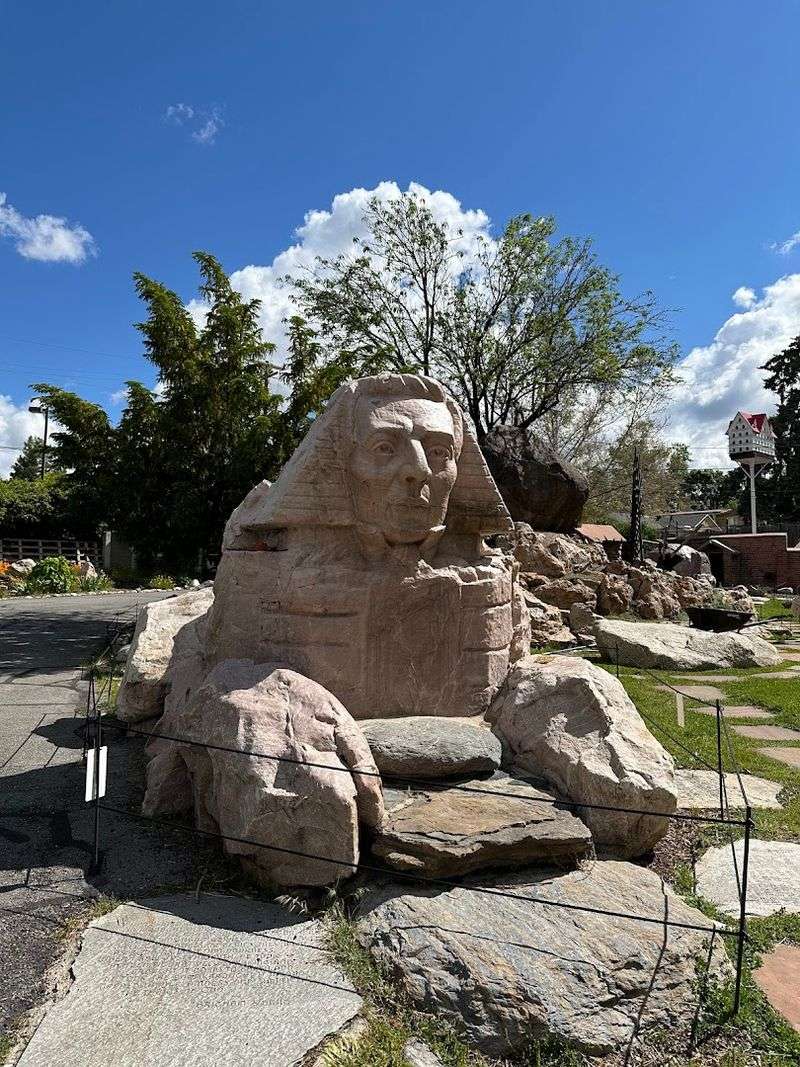
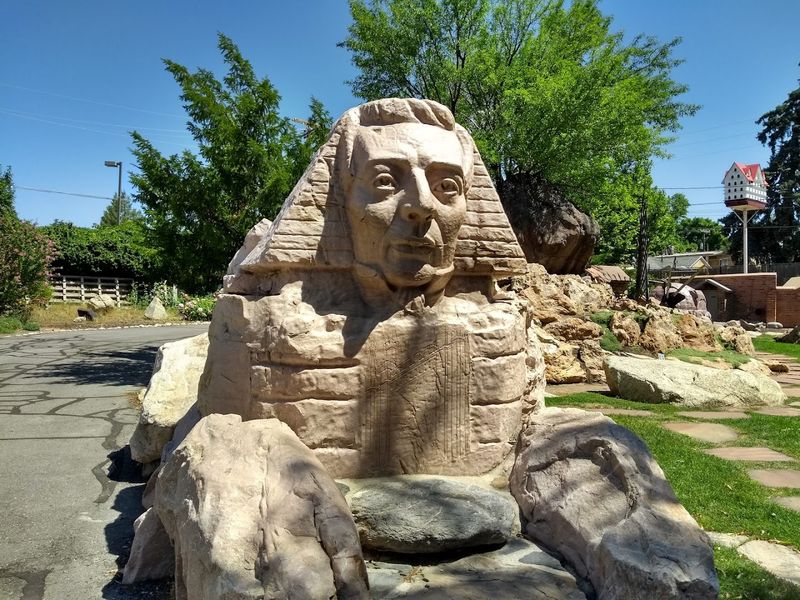
Nothing prepares you for the moment you round the corner and come face to face with a crouching sphinx that stares back at you with a very human expression.
This is the centerpiece of Gilgal Sculpture Garden, and it earns that title without any argument. The body is built from massive, unhewn quartzite stones stacked to form the classic crouching animal shape.
But the face is something else entirely.
That finely carved face belongs to Joseph Smith, founder of The Church of Jesus Christ of Latter-day Saints.
The contrast between the rough, natural body and the smooth, detailed face is striking in the best possible way. The face was sculpted using an oxyacetylene torch, which gave the artist incredible precision on such a large scale.
The sphinx was meant to symbolize the idea that faith, not intellect alone, holds the answers to life’s greatest questions.
The creator of the garden considered this piece the spiritual and artistic foundation of everything built around it. Standing in front of it, even without any religious context, you feel the weight of that intention.
This is not just a sculpture. It is a statement carved in stone.
The Backyard That Became A Public Park
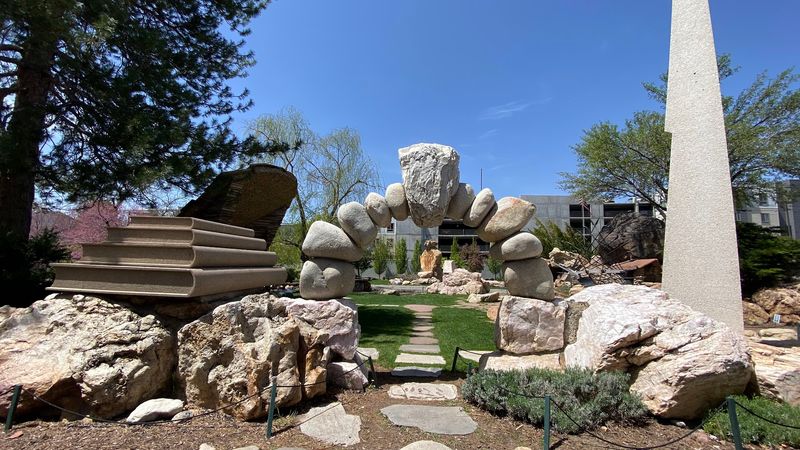
Finding Gilgal Sculpture Garden for the first time feels like discovering a secret level in a video game nobody told you about.
Located at 749 East 500 South in Salt Lake City, Utah, the garden sits quietly between residential homes, marked by a modest gate that barely hints at what waits inside. You could walk past it a hundred times without realizing it is there.
The garden was originally built in the backyard of a masonry contractor and LDS bishop named Thomas Battersby Child Jr., who began the project in 1945.
He worked on it for nearly twenty years, pouring his faith, creativity, and considerable skill into every stone. After his passing in 1963, a dedicated group called the Friends of Gilgal Garden stepped in to preserve the space.
By the year 2000, the garden officially became a public park managed by Salt Lake City. It is free to visit, open daily, and recognized as Utah’s only designated visionary art environment.
That title is not just a label. It reflects the deeply personal vision behind every carved stone and sculpted figure on the property.
Few places in Utah carry this much quiet, concentrated meaning in such a compact space.
Twelve Sculptures And Seventy Inscribed Stones
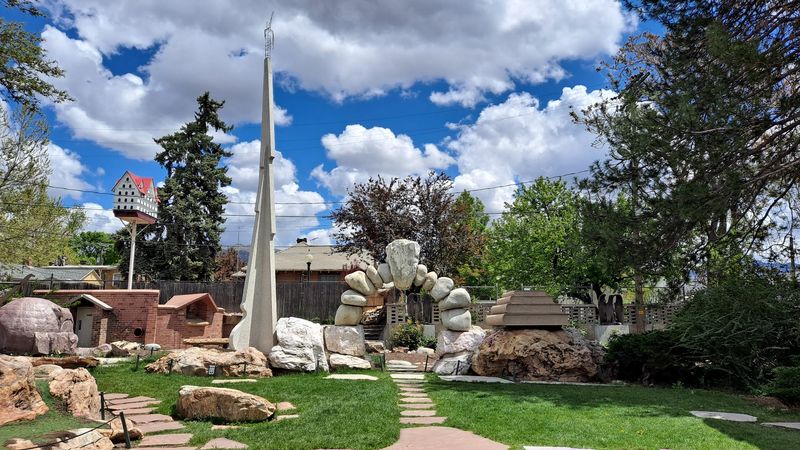
Walking through Gilgal feels like reading a book written in stone. The garden contains twelve original sculptures and more than seventy stones inscribed with scriptures, poems, and literary passages.
Each piece has something to say, and together they build a layered, thoughtful conversation between art and belief.
The inscriptions cover a wide range of texts. Some are drawn from LDS scripture, while others pull from broader literary and philosophical traditions.
Reading them as you move through the garden gives the visit a meditative quality that is hard to find in most public spaces. You slow down without even realizing it.
The sculptures themselves range from figures in biblical dress to abstract stone arrangements that invite interpretation.
No two pieces feel alike. Some are immediately striking, while others reveal their meaning slowly, the more time you spend with them.
The variety keeps the experience fresh from one corner of the garden to the next. Spending time here is less like visiting an art gallery and more like wandering through someone’s deeply held inner world.
That is a rare thing to encounter anywhere, let alone tucked between two houses on a quiet Salt Lake City street. Every visit uncovers something new worth noticing.
A Visionary Art Environment Unlike Anything In Utah
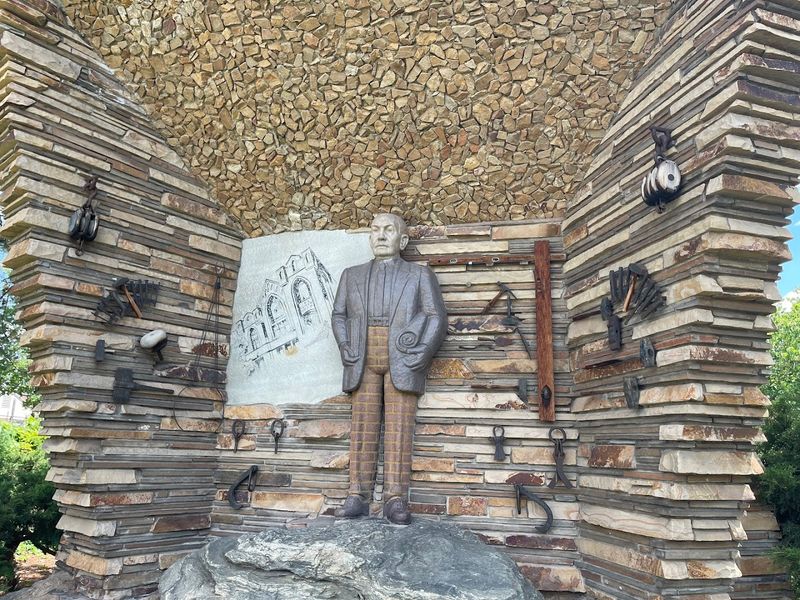
Utah has no shortage of jaw-dropping scenery, but Gilgal Sculpture Garden earns its place on a completely different kind of must-see list. It holds the official designation of Utah’s only visionary art environment, a title given to places where a single creator’s personal vision shapes every inch of the space.
That distinction matters because it means what you are seeing is not curated by a committee or designed for mass appeal.
Visionary art environments exist all over the world, and the most famous ones draw massive crowds. Gilgal is quieter, more intimate, and somehow more powerful for it.
The scale is human-sized. You are not overwhelmed.
You are drawn in.
The garden reflects one person’s sincere attempt to make something meaningful out of stone, scripture, and sheer determination. That kind of singular focus gives the place an atmosphere that is hard to manufacture.
It feels genuine because it is genuine.
Visitors who arrive expecting a polished tourist attraction often leave with something they did not expect to find, a sense of having encountered real creative conviction.
Utah has red rock canyons and ski slopes that will take your breath away. But Gilgal takes your breath away in a completely quieter, more personal way.
That contrast is exactly what makes it unforgettable.
The Masonry Contractor Who Built A Legacy In Stone
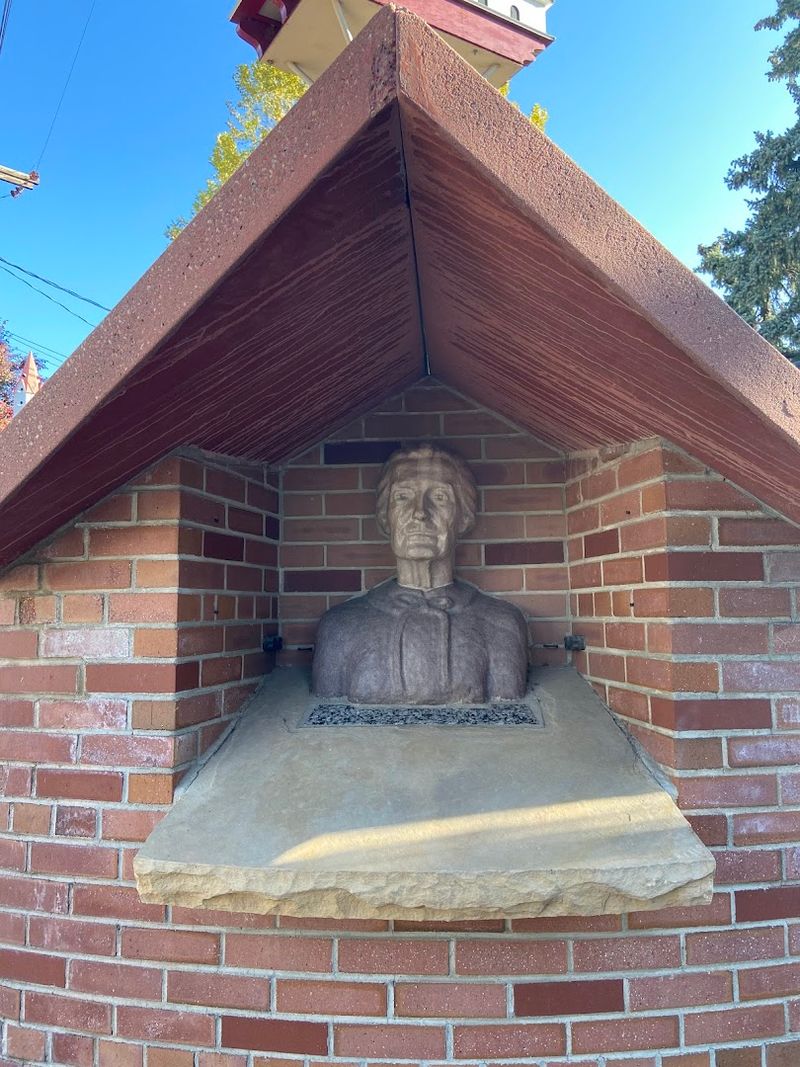
There is something profoundly compelling about a person who spends twenty years building something in their own backyard purely out of conviction.
Thomas Battersby Child Jr. was a masonry contractor by trade and an LDS bishop by calling, and he channeled both identities into Gilgal Sculpture Garden starting in 1945. He selected enormous quartzite stones with careful intention, arranging them into forms that carried spiritual weight.
Child did not just stack rocks. He thought deeply about what each piece should communicate and why.
For the sphinx, he chose the rough, natural stones for the body himself, while commissioning a skilled sculptor to carve the detailed face using an oxyacetylene torch.
That collaboration between rough and refined became a signature of the whole garden.
What makes the story even more remarkable is that Child never intended this to be a public attraction. He built it as a personal act of faith and artistic expression.
The fact that it outlasted him, found dedicated preservers, and eventually became a public park says everything about the power of genuine creative commitment.
Most people build careers. Child built a garden that outlived him and continues drawing curious visitors decades later.
That is a kind of legacy that no job title could ever match.
Free, Open Daily, And Completely Worth It
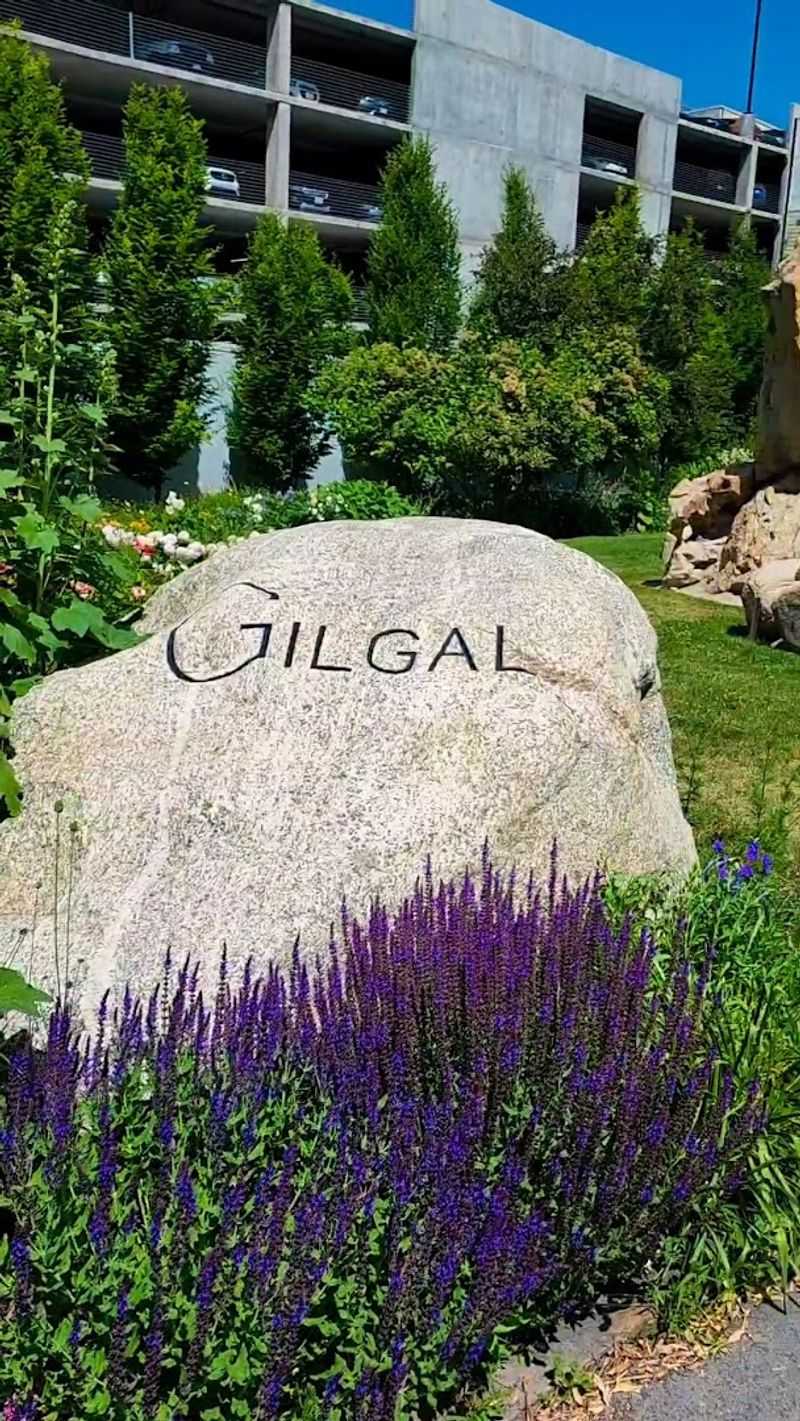
Not every great experience costs money, and Gilgal Sculpture Garden is proof of that. Admission is completely free, donations are welcome, and the garden is open every single day of the week.
During the warmer months from April through September, the gates open at 8 AM and close at 8 PM, giving you a generous window to explore at your own pace.
The garden is also handicap accessible, which means the experience is open to just about everyone. Benches are scattered throughout the space, offering spots to sit, read the stone inscriptions, or simply absorb the atmosphere.
The surrounding flower beds add color and fragrance that shift beautifully with the seasons.
Most visitors spend between twenty minutes and an hour inside, depending on how much time they take reading the inscribed stones and exploring each sculpture.
There is no pressure to rush. The garden rewards slow, attentive wandering far more than a quick lap.
For travelers passing through Salt Lake City looking for something low-key and genuinely interesting, this is the kind of stop that ends up being the most memorable part of the trip.
Free does not mean forgettable. Sometimes free means you found the best thing in the city without spending a single dollar.
The Hidden Entrance That Makes The Discovery Even Better
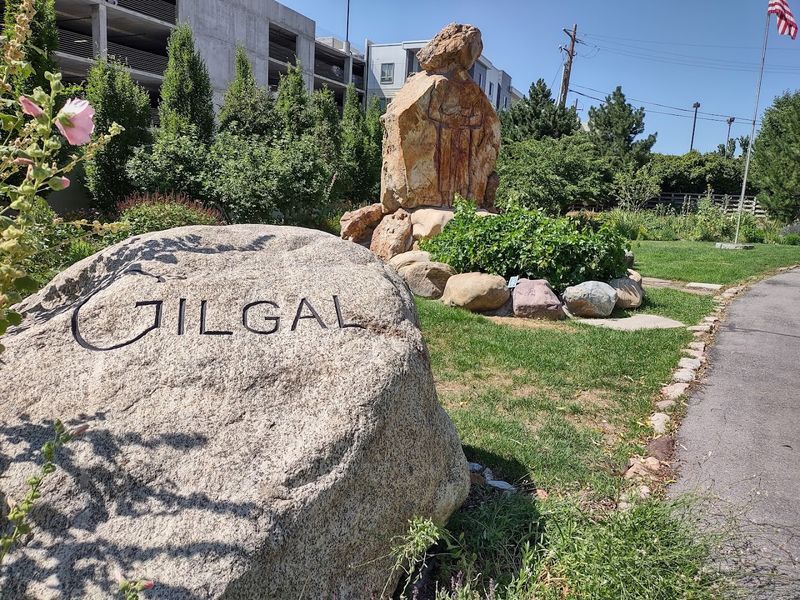
Part of what makes Gilgal Sculpture Garden so special is the way you find it. The entrance sits between two ordinary neighborhood houses, marked by a gate and a small sign that is easy to miss if you are not paying attention.
That slightly secretive approach sets the tone perfectly for what waits inside.
Walking through that gate feels like stepping into a completely different world. The noise of the street fades.
The sculptures appear one by one as the path winds through the garden. It is the kind of reveal that works precisely because nothing about the exterior prepares you for the interior.
The contrast is part of the experience.
For first-time visitors, the recommendation from those who know the garden well is to walk all the way to the back first.
There is a covered area with photos, descriptions, and a timeline of the garden’s history. Understanding the context before you explore the sculptures makes every piece land with more meaning.
Knowing what you are looking at changes how you see it.
The garden rewards curiosity and patience in equal measure. And that slightly hidden entrance?
It is not an obstacle. It is the garden’s way of telling you that something genuinely worth finding is just through the gate.
Flowers, Bees, And A Giant Birdhouse Too
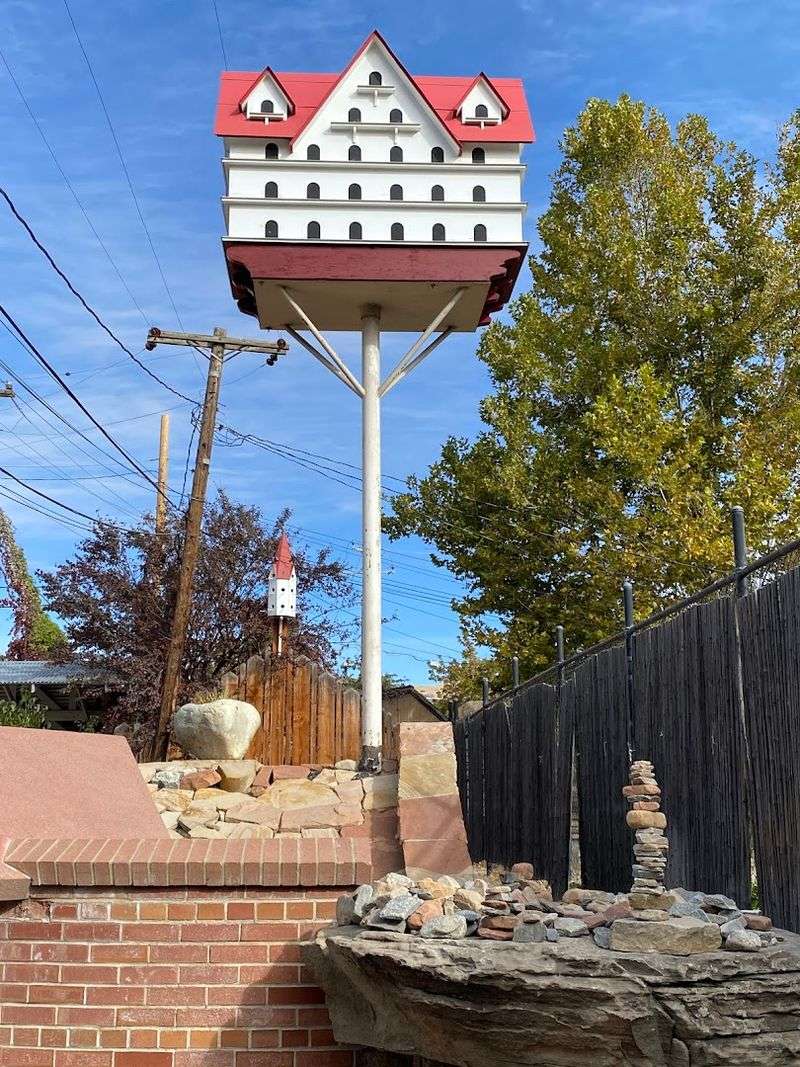
Gilgal is not just about stone. The garden is alive with plants, flowers, and the kind of natural detail that makes you want to slow down and look more carefully at everything around you.
Flower beds bloom in vivid colors throughout the warmer months, creating a striking contrast against the grey and brown tones of the carved stone sculptures.
Bees visit regularly, buzzing happily through the blossoms in a way that feels almost intentional given that the beehive is a symbol closely associated with LDS culture and Utah’s identity as the Beehive State. Whether or not that connection was planned, it adds a layer of charm that is hard to ignore.
There is even a giant birdhouse somewhere in the mix, adding a whimsical touch that catches visitors off guard in the best way.
The combination of sculptural art and living garden creates an environment that appeals to more than just art enthusiasts.
Nature lovers, photographers, and anyone who appreciates a beautifully maintained outdoor space will find plenty to enjoy here.
The garden is well cared for, and that care shows in every corner. Gilgal manages to be simultaneously an art installation, a spiritual monument, and a genuinely lovely place to spend a quiet afternoon outside.
Why This Garden Belongs On Every Salt Lake City Itinerary
Salt Lake City has plenty of well-known attractions, but Gilgal Sculpture Garden operates on a different frequency entirely. It is not loud or flashy.
It does not compete for your attention with a marketing campaign or a ticket booth. It simply exists, quietly extraordinary, waiting for the visitors curious enough to seek it out.
The garden appears on Atlas Obscura, which is essentially the gold standard for off-the-beaten-path discoveries worth making.
That listing alone tells you something about the caliber of experience waiting here. It is the kind of place that experienced travelers mention with a knowing smile, the kind of spot that earns its reputation through word of mouth rather than billboard ads.
Whether you have thirty minutes or a full afternoon, Gilgal fits into almost any Salt Lake City visit. It pairs well with a walk through the nearby streets, a stop at a local coffee shop, or simply as a standalone experience that gives you something genuinely unique to carry home.
No souvenirs needed. The image of that sphinx face, staring back at you from a crouching stone body in a quiet neighborhood garden, is the kind of thing that sticks with you long after you leave.
Have you ever found a place that surprised you more than you expected? Gilgal just might be yours.