
This Virginia Refuge Hides Wild Ponies, Marsh Trails, And One Of The Coast’s Most Magical Sights
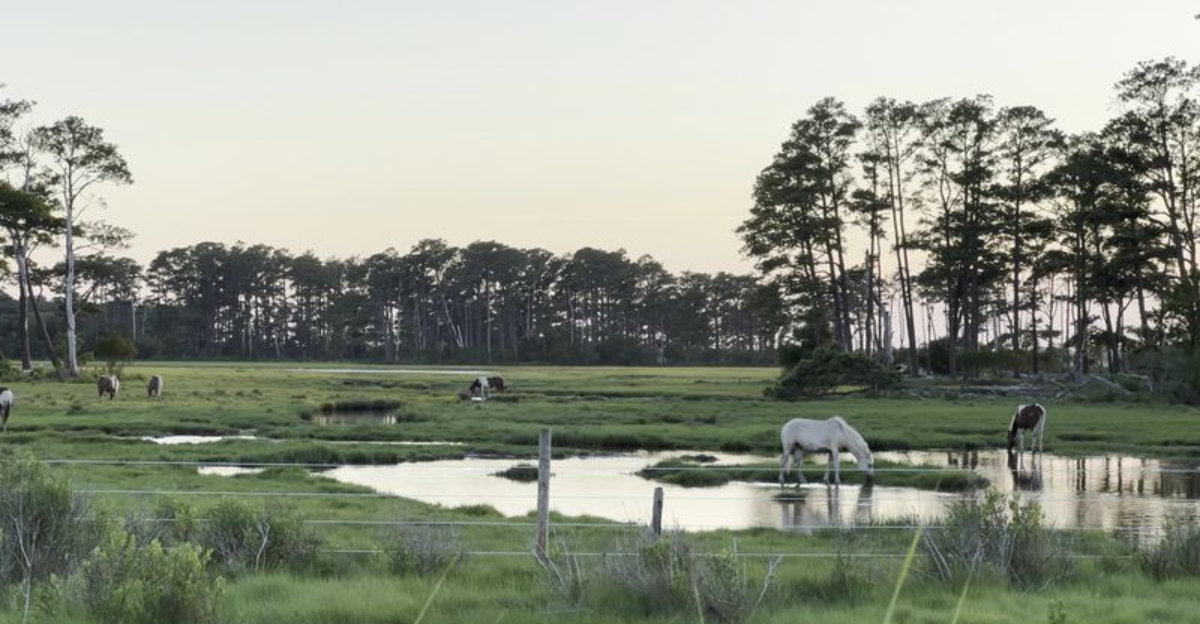
Some of the most memorable coastal destinations are not defined by crowded beaches or busy boardwalks. They are places where nature still feels untamed. Where winding marsh trails fade into the horizon.
And where unexpected encounters become part of the experience. Along a quiet stretch of the Atlantic coast, wild ponies graze across windswept dunes.
Migratory birds glide over shimmering wetlands. And sunsets turn the landscape into something almost dreamlike.
It feels like a scene from a storybook. Yet it is very real.
Hidden among Virginia’s barrier islands, this remarkable refuge offers an escape shaped by wildlife, coastal beauty, and a quiet sense of wonder that stays with you long after you leave.
The Wild Ponies Of Assateague Island
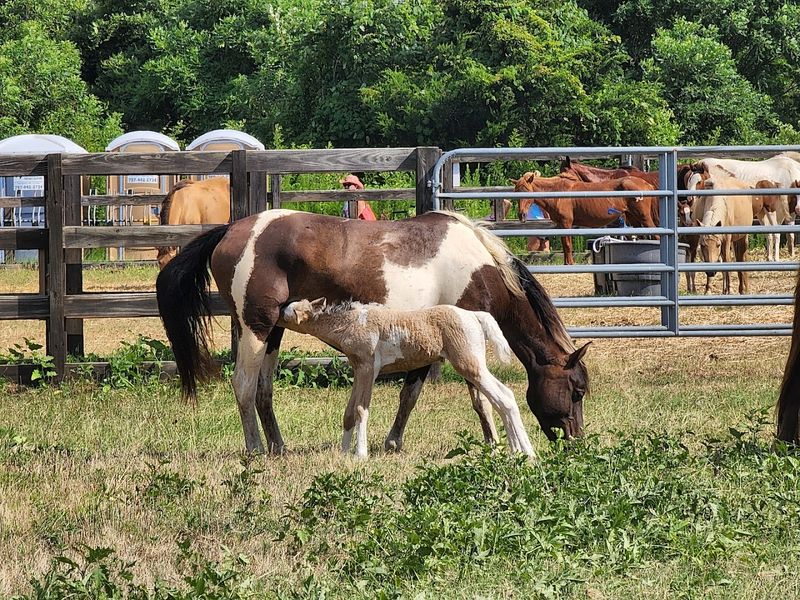
Nothing quite prepares you for the moment you spot your first wild pony at Chincoteague. One second you are scanning the marsh, and the next, a stocky little horse is casually munching saltwater cord grass like it owns the entire island, because honestly, it kind of does.
The Virginia herd consists of roughly 150 adult ponies, and they have been living on Assateague Island for centuries.
Their compact, slightly rounded shape comes from a diet heavy in saltgrass, which causes them to retain extra water. Bring binoculars, because these ponies can be spotted from the main road or from the Pony Overlook along the Woodland Trail.
The Chincoteague Volunteer Fire Company manages the Virginia herd with great care. Every July, the famous Pony Swim takes place, where the ponies cross the channel and foals are auctioned to support the herd’s welfare.
The ponies became an officially registered breed in 1994. Seeing them gallop through shallow water is the kind of sight that lodges itself permanently in your memory.
The Wildlife Loop Trail Experience
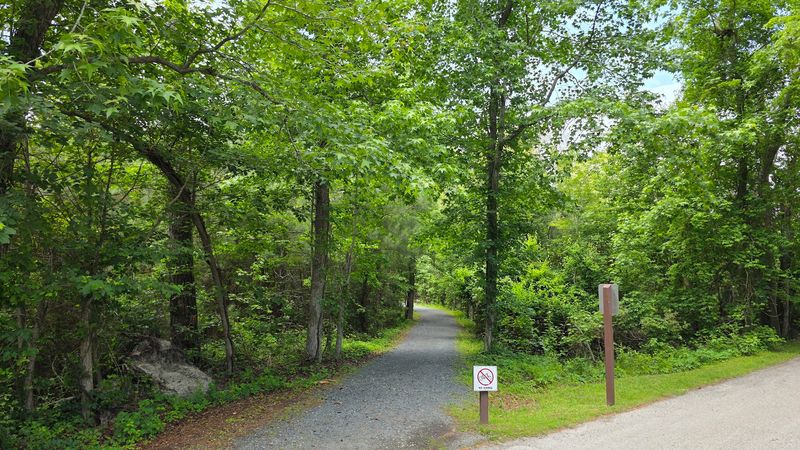
The Wildlife Loop is the trail that makes everyone feel like a nature documentary host. It is a 3.25-mile paved loop that circles a moist soil management unit, and every step feels like the world slowed down just for you.
Located at 8231 Beach Road, Chincoteague, VA 23336, the refuge opens this loop to vehicles after 3 PM on most days.
Walkers and cyclists can access it earlier in the day, making morning rides feel especially peaceful and exclusive. The loop encircles prime wetland habitat, so spotting waterfowl, shorebirds, and wading birds is practically guaranteed.
Great blue herons, egrets, and ibises are regular visitors along the water’s edge.
The flat terrain makes this trail approachable for almost everyone, including those on bikes rented from nearby outfitters in the area. Wheelchair-accessible sections make it one of the more inclusive trails in the refuge system.
Bring a camera with a decent zoom lens, because the wildlife keeps a respectful distance and you will want to close that gap photographically. The Wildlife Loop is not just a trail, it is a moving nature exhibit.
The Iconic Assateague Lighthouse
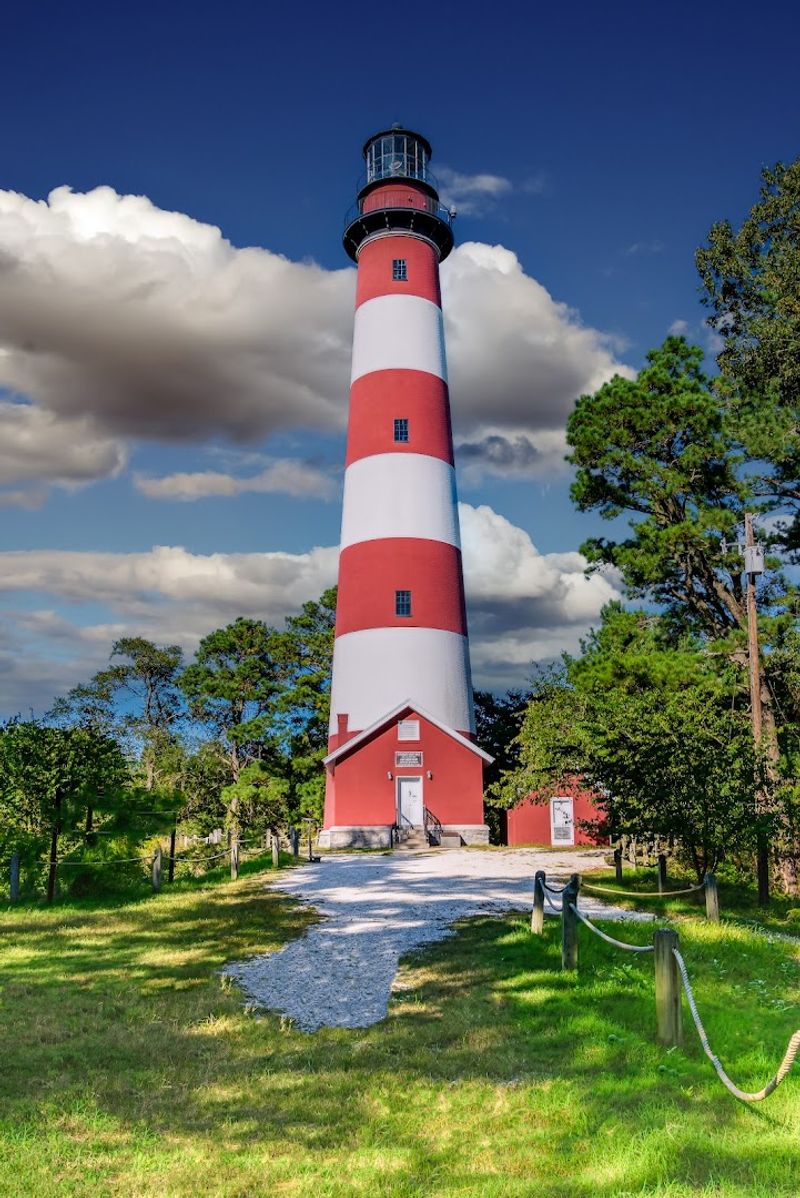
Standing tall above the treetops, the Assateague Lighthouse is one of those landmarks that makes you feel like you have stepped into a postcard.
The red and white striped tower has been guiding ships along the Virginia coast since 1867, and it remains one of the most photographed spots in the entire refuge.
Reaching the lighthouse means walking the Lighthouse Trail, a pleasant path through maritime forest that builds anticipation beautifully.
Once you arrive, the structure itself is striking up close. Climbing the 140 steps to the top rewards you with sweeping panoramic views of the island, the marshes, and the Atlantic Ocean stretching endlessly beyond.
The lighthouse is accessible during designated open-climb weekends, which are announced seasonally, so checking the refuge schedule ahead of your visit is a smart move.
Even if climbing is not your thing, the grounds around the base are gorgeous and worth exploring on their own.
The lighthouse represents more than history. It is a living piece of the island’s identity.
Standing beneath it, you get a real sense of how wild and vast this coastal landscape truly is.
Birding On The Atlantic Flyway
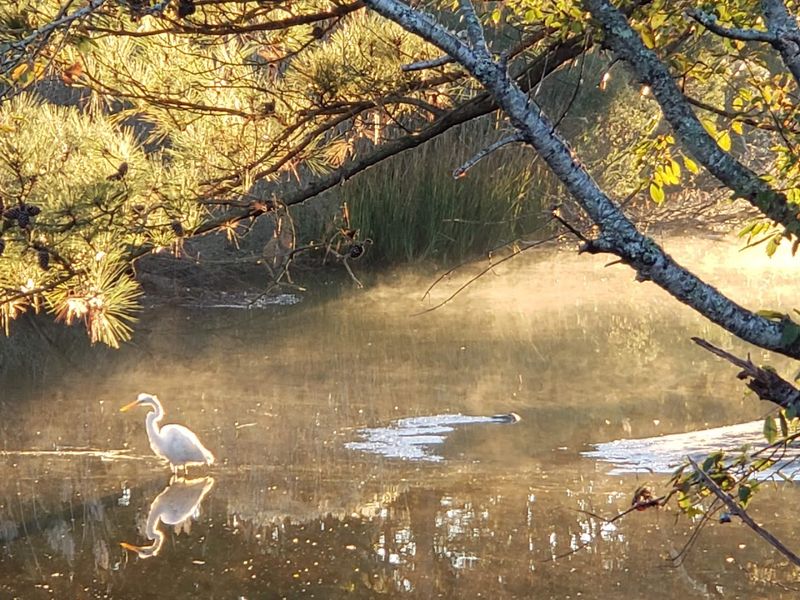
If you have ever wanted to feel like a serious birder without actually being one yet, Chincoteague is the place to start.
Over 320 bird species have been recorded here, making it one of the most important stops along the Atlantic Flyway, a major migratory route running along the East Coast.
The variety is genuinely staggering. Snow geese blanket the pools in winter, turning the marsh into a living, honking snowstorm.
Spring brings waves of colorful songbirds passing through on their way north. Bald eagles, ospreys, great blue herons, and Diamondback Terrapin turtles emerging in summer all compete for your attention.
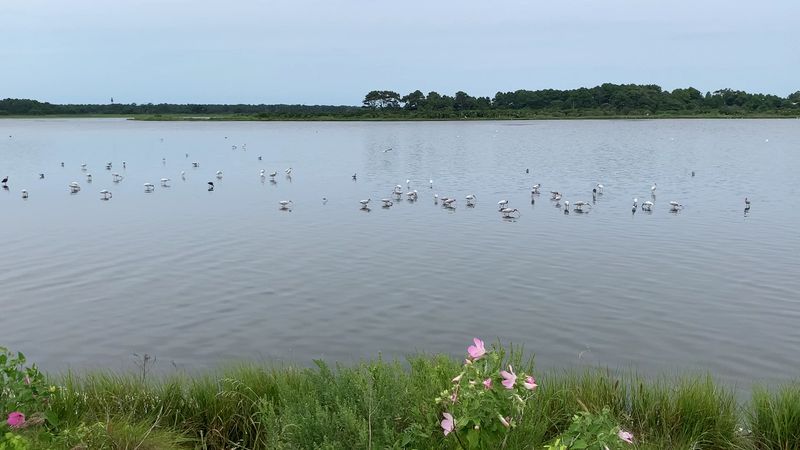
The Snow Goose Pool, accessible via the Marsh Trail observation platform, is a favorite spot for watching waterfowl gather in enormous numbers.
Peregrine falcons, black-bellied plovers, and dunlins are among the shorebirds that pass through during fall migration. A decent pair of binoculars transforms the experience completely.
Chincoteague does not just attract birds. It attracts people who had no idea they cared about birds until they stood here and watched the sky fill with wings.
The Marsh Trail And Snow Goose Pool Overlook
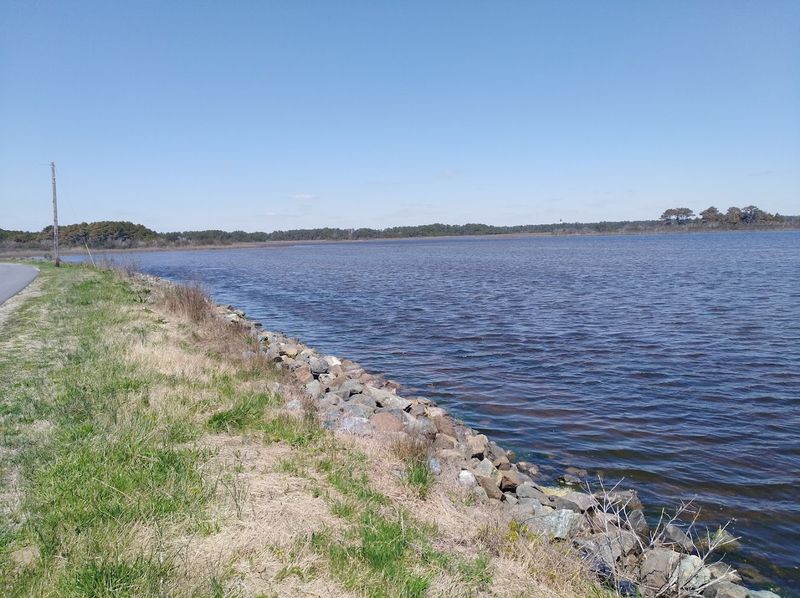
There is something almost meditative about standing on the Marsh Trail observation platform at sunrise. The air smells like salt and earth, the water is perfectly still, and the only sounds are bird calls layering over each other like a natural symphony.
This is the Snow Goose Pool overlook, and it earns every bit of its reputation.
The Marsh Trail branches off the Wildlife Loop as a scenic detour, leading through wetland habitat before arriving at the platform.
The elevated view gives you a wide, unobstructed perspective of the pool below, where thousands of birds can gather during peak migration season. It is the kind of view that makes you forget your phone exists.
The trail itself is flat and manageable, passing through classic coastal marsh scenery that changes dramatically with the seasons.
In winter, the pool hosts snow geese and tundra swans in jaw-dropping numbers.
By summer, the water edges buzz with shorebirds and herons. The observation platform is one of those spots where time genuinely slows down.
Pack a snack, find a comfortable spot on the railing, and just watch the marsh do its thing.
Pristine Beaches And Atlantic Ocean Access
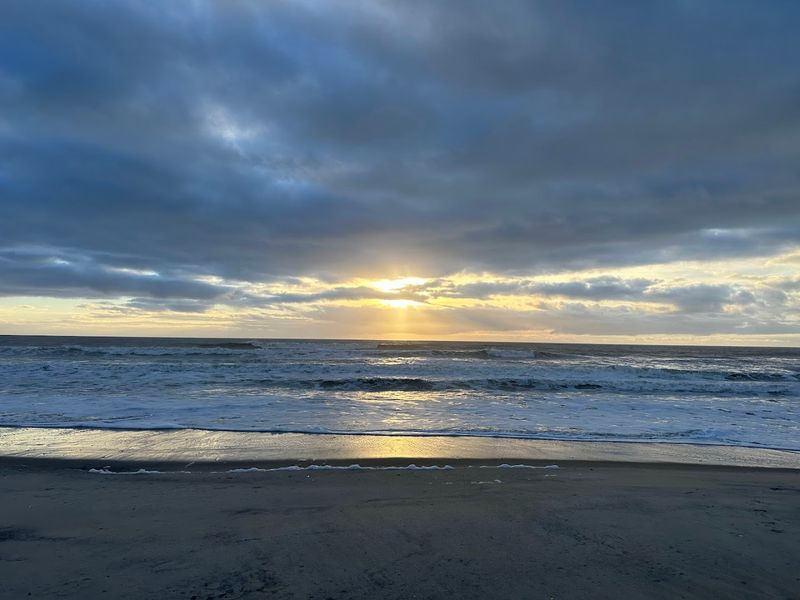
Forget everything you associate with crowded summer beaches. The shoreline at Chincoteague National Wildlife Refuge operates on a completely different frequency.
The beach here is wide, clean, and refreshingly free of the boardwalk chaos that defines so many East Coast destinations.
The refuge’s oceanfront sits along Assateague Island’s Atlantic-facing shore, where protected sand dunes back a beach that feels genuinely wild.
Swimming is popular during summer months, and the water is clear and inviting when conditions cooperate. The beach is managed carefully to protect nesting shorebirds, so certain areas may be seasonally roped off, which only adds to the sense of natural integrity.
No dogs are permitted within the refuge, which keeps the environment calm and undisturbed. Sunrise walks along this beach are quietly spectacular, especially when the light catches the dune grass and turns everything golden.
There are no food vendors, no loud speakers, and no beach toys for rent. What you get instead is pure, unfiltered Atlantic coastline.
For anyone craving a beach experience that actually feels restorative rather than exhausting, this one absolutely delivers.
Monarch Butterflies And Seasonal Wonders
Most people come to Chincoteague for the ponies and leave talking about the butterflies. Every fall, Monarch butterflies pause their epic migration journey and rest along the refuge’s coastal vegetation, creating one of the most unexpected and breathtaking natural spectacles on the East Coast.
Thousands of orange and black wings cluster on shrubs and grasses, sometimes covering entire branches in a shimmering, living mosaic.
The sight is genuinely surreal, like something from a nature film you assumed was computer-generated. Monarchs use the Atlantic coast as a navigation corridor, and Chincoteague sits right in their path.
Beyond the butterflies, the refuge offers a rotating calendar of seasonal highlights that keeps every visit feeling fresh.
Summer brings Diamondback Terrapin turtles emerging from the marsh to nest on sandy roadsides. Spring explodes with migratory songbirds that fill the trees with color and sound.
Winter transforms the landscape into a moody, atmospheric escape where snow geese rule the pools.
There is no bad season to visit Chincoteague; the refuge simply changes its costume and keeps performing. Every month offers something worth making the drive for.
Biking Through The Refuge Trails
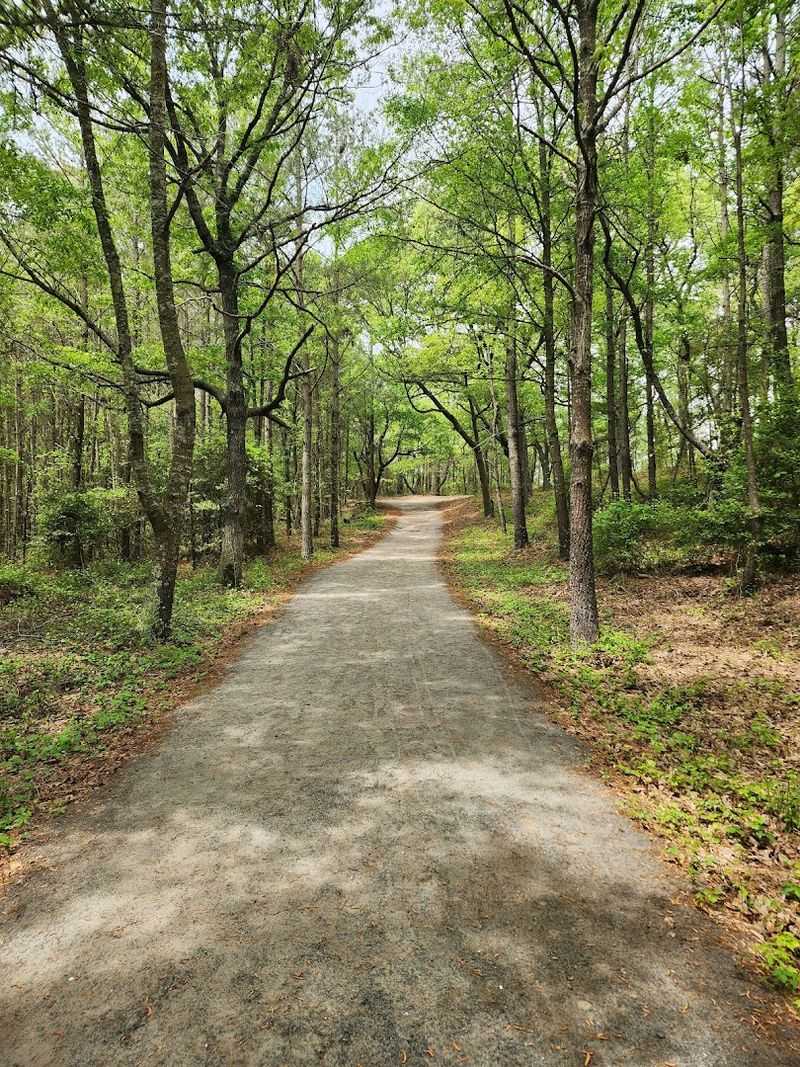
Renting a bike at Chincoteague might be the single best decision you make on your trip. The refuge’s trail network is genuinely bike-friendly, with 15 miles of interconnected paths that range from smooth paved loops to more adventurous gravel routes through shrub-thickets and forest edges.
Cycling gives you a serious advantage when it comes to wildlife spotting. Moving quietly and covering more ground means you catch things walkers often miss, like a fox darting across the path or a great horned owl perched in a pine tree overhead.
The Wildlife Loop is a natural cycling highlight, especially in the morning before vehicle traffic picks up after 3 PM.
Road bikes handle most of the paved sections beautifully, while gravel or mountain bikes unlock access to more remote trail sections.
The flat terrain makes this approachable for all fitness levels, and the scenery changes constantly as you move between marsh, forest, and beach environments. Bike rentals are available near the refuge entrance.
Pedaling through Chincoteague with the salt breeze in your face and a heron gliding alongside you is the kind of afternoon that resets your entire perspective on what a good day looks like.
Sunsets Over The Salt Marsh
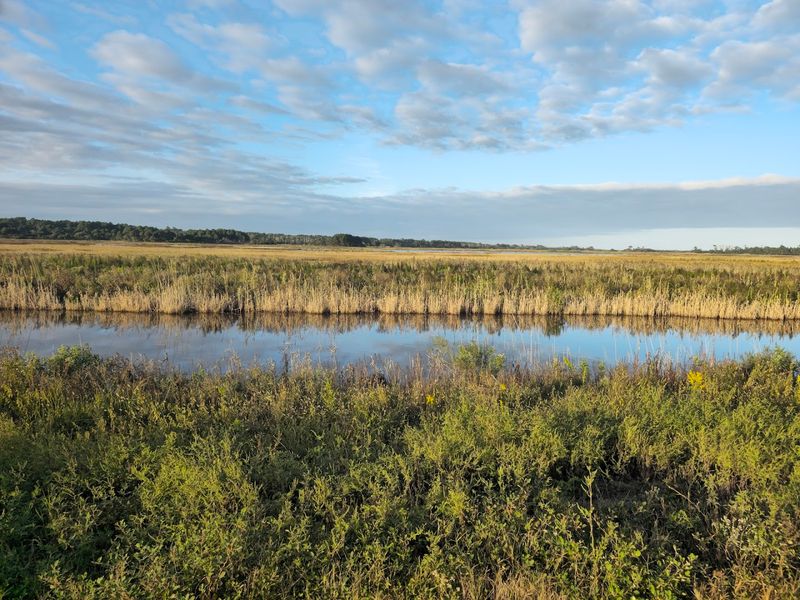
There is a moment at Chincoteague, usually around 7 PM in summer, when the sky above the salt marsh turns completely unreasonable. Shades of orange, coral, and deep rose pour across the horizon and reflect off the still water below, and you find yourself standing there with your mouth slightly open, phone forgotten in your pocket.
The marsh amplifies everything about a sunset. The flat water acts as a mirror, doubling the color show and making the whole scene feel cinematic.
Silhouettes of herons standing motionless in the shallows add a dramatic foreground that no filter could improve. This is the kind of sight that makes the drive to 8231 Beach Road feel like the most worthwhile detour of your life.
The elevated lookout towers scattered throughout the refuge offer prime sunset viewing positions, with unobstructed sightlines across the lagoons and marshlands. Timing your evening walk or bike ride to coincide with golden hour is a strategy that never disappoints.
Chincoteague sunsets are the refuge’s most underrated feature, quietly magnificent and completely free. So, what is stopping you from adding this to your next road trip itinerary?