
This Washington Art Store Turns Other People’s Craft Supplies Into A Treasure Hunt
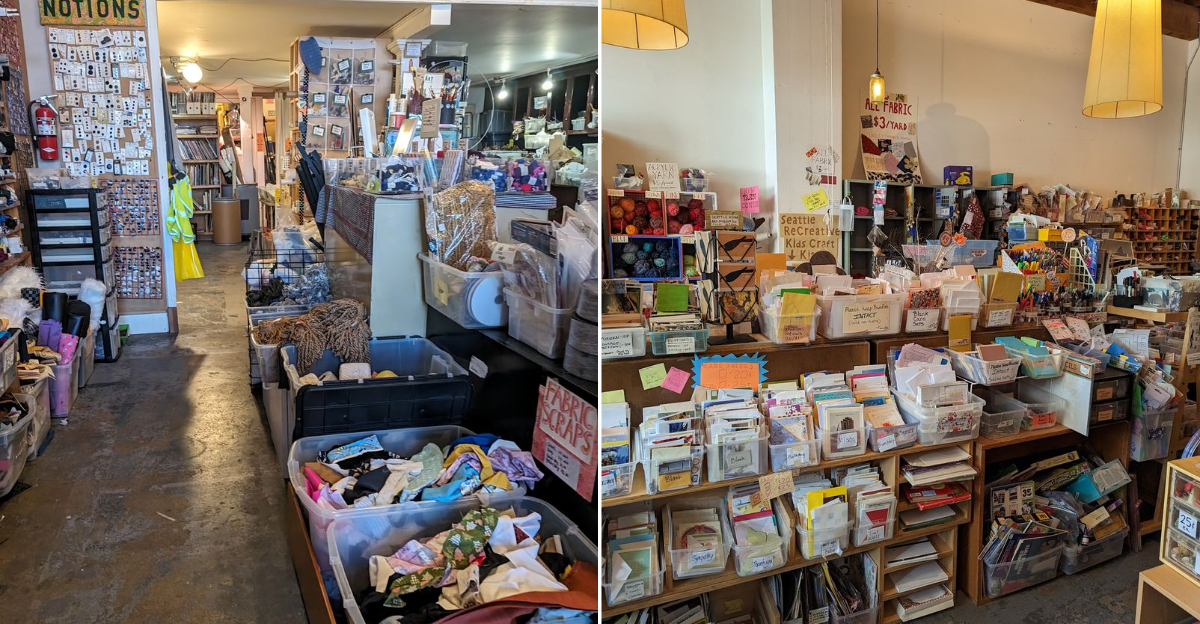
The first time I pushed open the door, I heard a thousand loose buttons shifting in a bin and immediately knew my afternoon was gone.
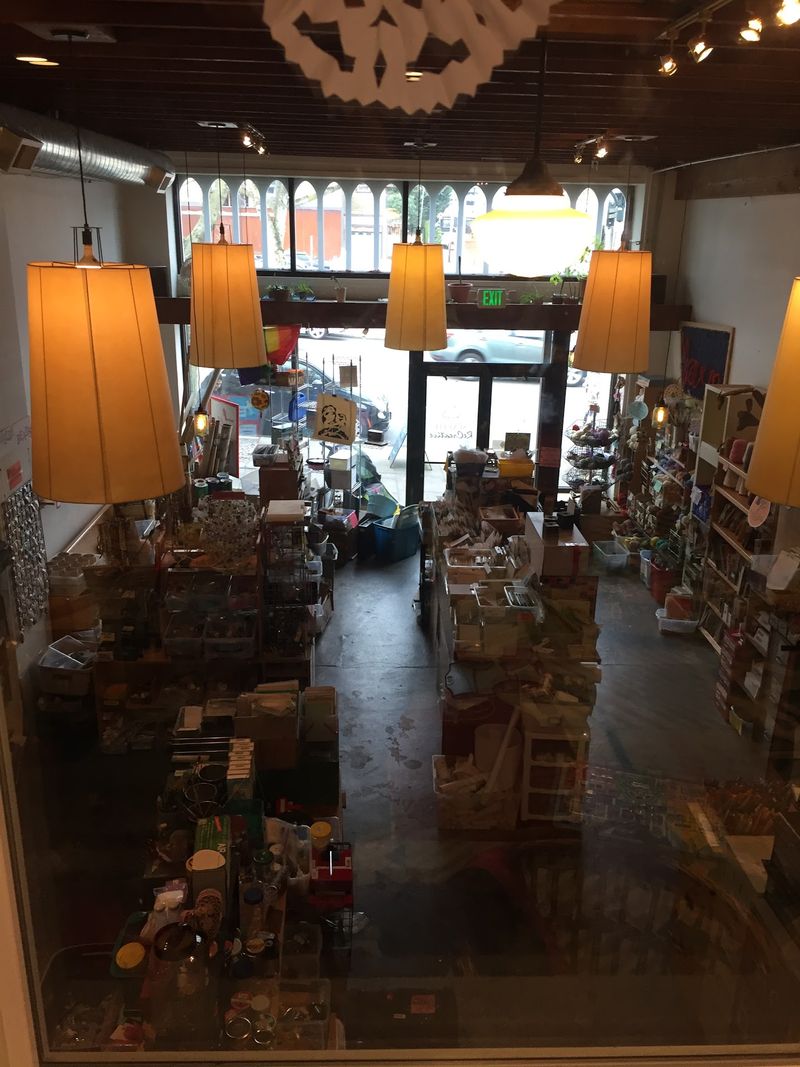
Shelves hold donated yarn, half-used paint tubes, mismatched beads, old cameras, and stacks of paper somebody once bought with very ambitious plans. Nothing looks exactly the same twice, which makes every visit feel like a new treasure hunt.
I came in looking for embroidery floss and somehow left with vintage keys and a project idea I definitely had not planned.
This nonprofit art store in Seattle, Washington has kept more than a million pounds of usable materials out of landfills while giving creative people a place to experiment. It also doubles as a community art center with classes, kid-friendly spaces, and changing exhibits.
Inside, the fun comes from digging slowly, following your curiosity, and letting the shelves decide what project happens next.
A Nonprofit Born From Two Big Ideas
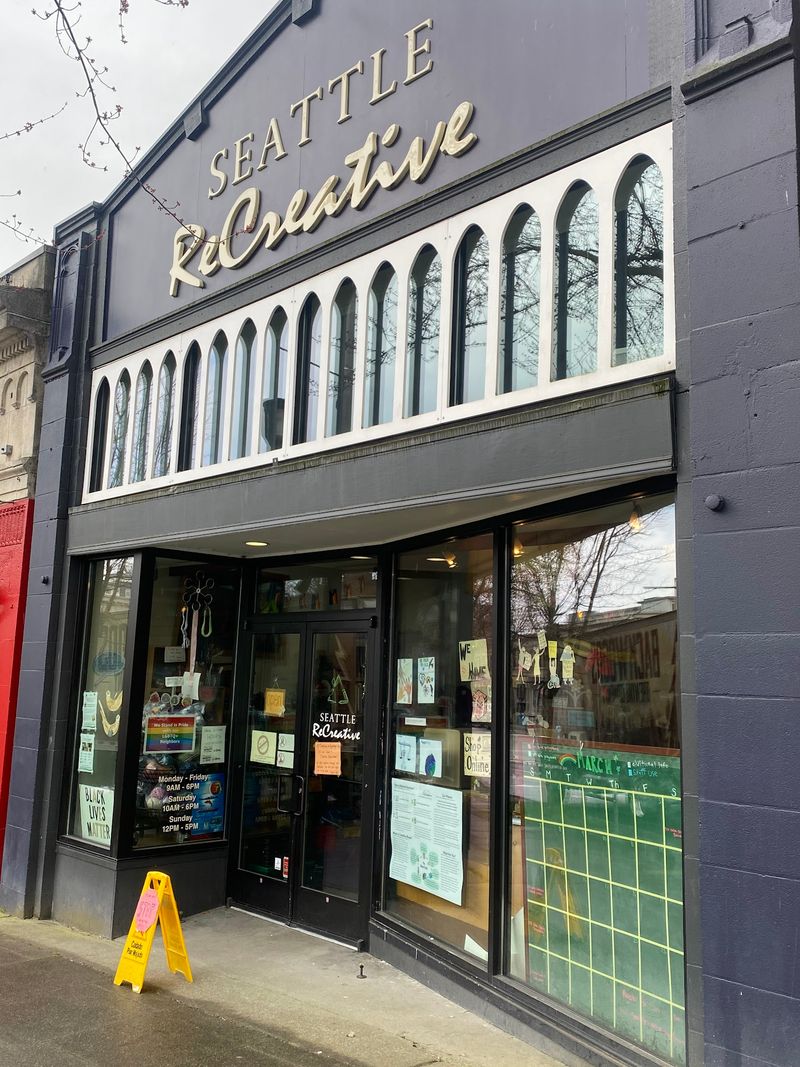
February 2014 was the month two Seattle women, decided that creativity and caring for the planet belonged under the same roof. Their idea was simple enough to fit on a sticker: support artists, build community, and keep usable materials out of the trash.
What grew from that plan is a nonprofit organization rather than a typical retail shop, which explains why the vibe feels closer to a neighborhood art center than a chain store. Staff talk to you about your project instead of upselling you on a starter kit.
The numbers back up the mission too, with more than a million pounds of art and craft materials diverted from landfills since opening. In 2025 the organization picked up a Quality Business Award recognizing Seattle ReCreative as a leading craft store in the city.
I love that every purchase here quietly funds arts education and keeps the donation cycle spinning. Shopping and doing something useful rarely overlap this neatly, and I am fully on board.
Shelves That Change Every Single Week
Because everything on the shelves arrives as a donation, the inventory shifts constantly and no shopping list survives contact with the front door. My first trip turned up a mountain of jewel-toned yarn. My second handed me a tin of vintage keys and a set of printmaking brayers.
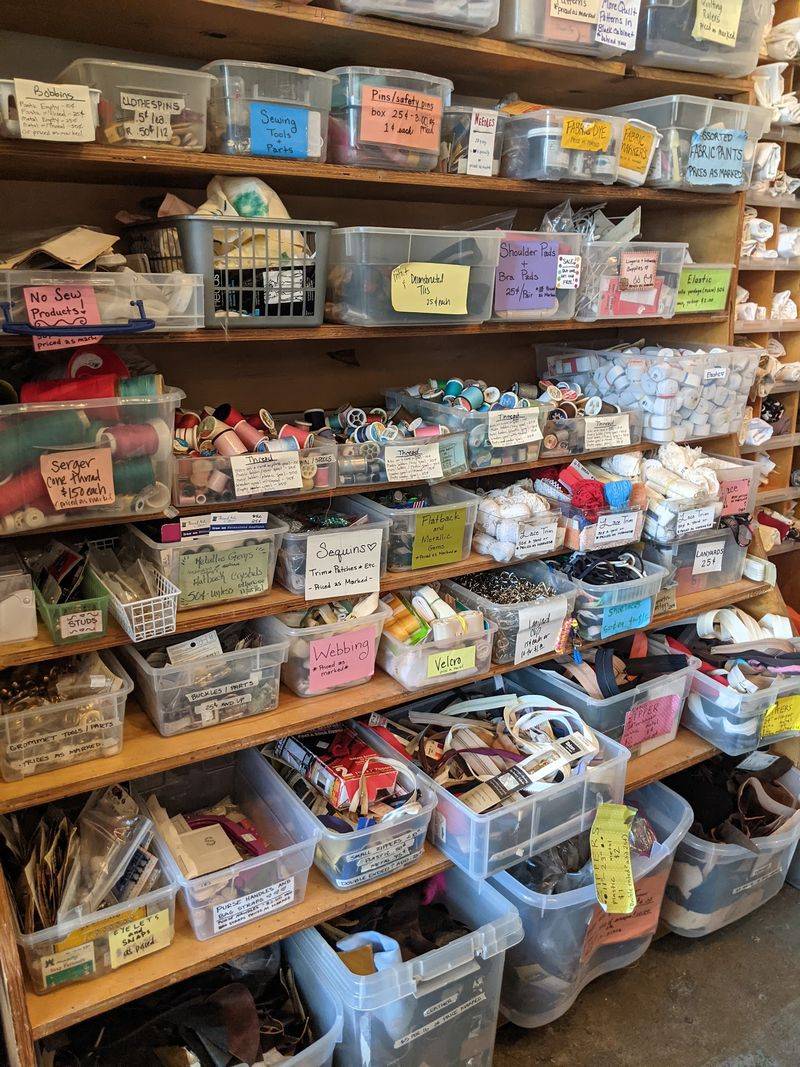
Knitting needles, embroidery floss, fine art paints, canvases, stretched frames, beads, fabric scraps, books, magazines, school supplies, and the occasional old film camera all cycle through. Some weeks there is a run of one thing, like twenty rolls of ribbon from a single donor.
Prices are the other happy surprise, with many items marked around 75 percent below original retail. That kind of math lets you experiment with a medium you have never tried without much risk.
My advice: come with a flexible plan and a rough idea of colors you like, then let the shelves make the final call. Rigid shopping lists get grumpy here, and creativity gets fed.
Organized Chaos You Can Actually Navigate
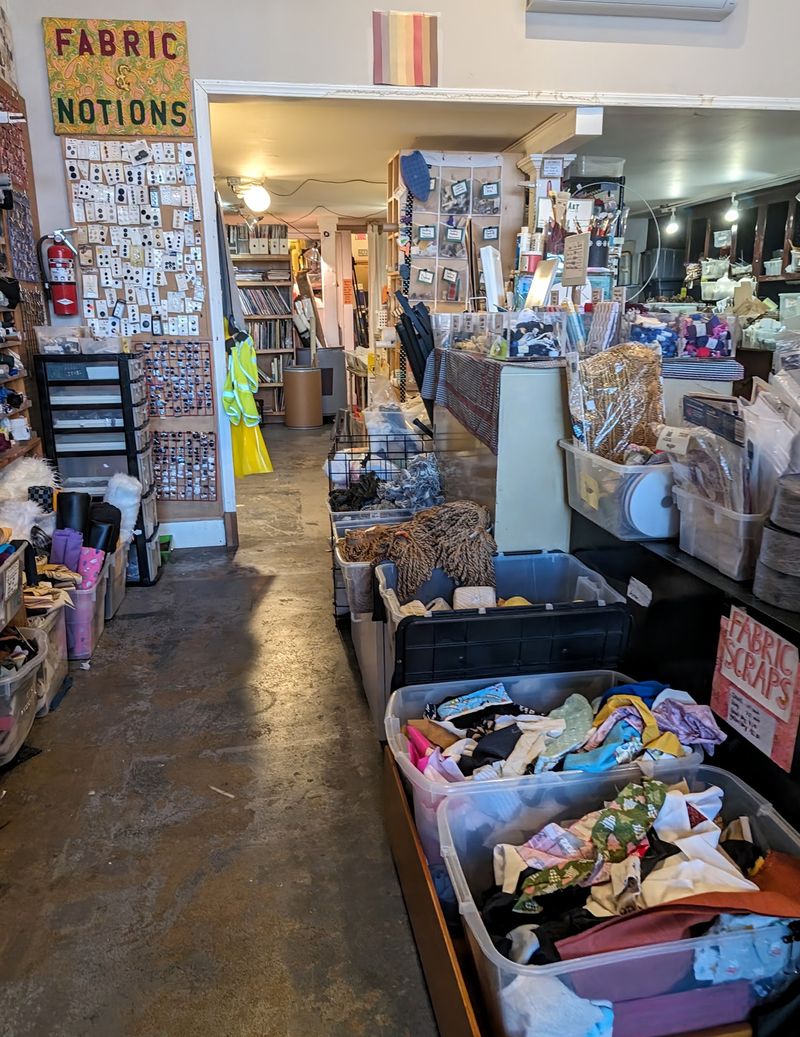
Yard sale energy, library logic. That is the best way I can describe how the space is arranged, because the items are grouped by medium instead of tossed into one giant heap.
Paints live with brushes, beads live with jewelry findings, paper lives with printmaking gear, and fabric has its own corner. So even though the stock rotates, you always know roughly where to start digging.
My routine now is a slow lap of the whole store before I pick anything up. On the second pass I commit, because I have learned the hard way that the perfect bag of felt sheets disappears while you are still deciding.
Bring a tote and give yourself at least forty-five minutes. Rushing through means you will miss the small stuff hiding behind the big stuff, and the small stuff is usually where the good ideas live.
Kids do fine here as long as you set a budget first, since the low prices make everything look temptingly reachable.
Classes And Workshops For Every Age
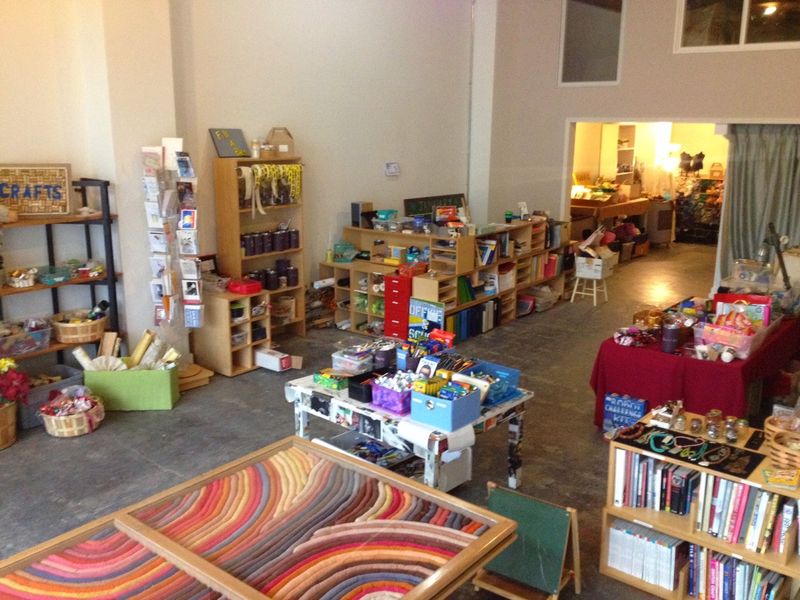
Ever taken an art class where the instructor tells you to raid a scrap bin for supplies? That is standard practice here, where artists, teachers, and environmental advocates lead workshops for adults, teens, and children throughout the year.
Many of those sessions run on a free or pay-what-you-can basis, which removes the biggest barrier for people who assume art classes are out of reach. I sat in on a mixed-media session and left with something I genuinely liked, which felt like a small miracle.
The schedule rotates, so checking the calendar before your visit is smart if a class is your main reason for coming. Popular sessions fill quickly, especially weekend ones.
What sticks with me is the tone of the room. Nobody is competing, nobody is precious about materials, and everybody seems delighted that a broken necklace can become a wall piece. That attitude is contagious and worth the trip on its own.
Kid Corners, Paint Playgrounds, And Summer Camps
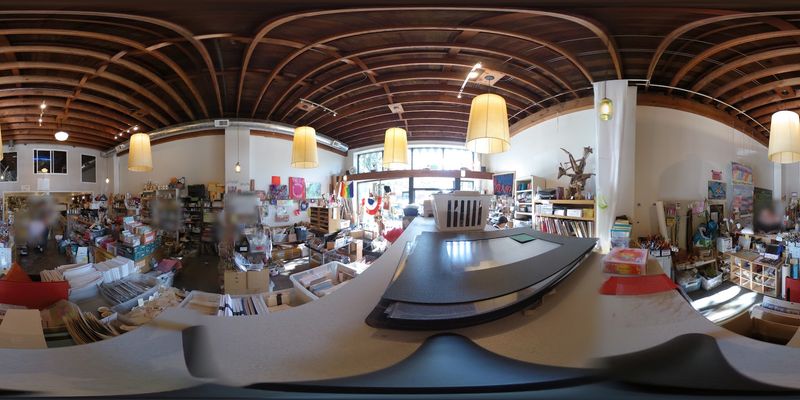
Parents, listen up, because there is a dedicated creative playspace here built for process over product. Children make things without anyone hovering to say the sky should be blue, which is the whole idea behind developmentally appropriate art time.
Toddlers get their own Paint Playground, a gloriously messy zone where the goal is smearing color and discovering what hands can do. Wear clothes you already gave up on.
Summer brings themed camps for kids roughly four to ten years old, with programs carrying names like Create Like the Greats and Fantasy Forest. Each one leans on turning everyday castoffs into something worth showing off at dinner.
I watched a boy build a robot out of bottle caps and cardboard tubes and explain its powers in serious detail. His grown-up looked half proud, half exhausted.
Camps and playspace hours change seasonally, so book early if summer is your window. Spots tend to vanish once local families catch wind of the schedule.
Rotating Exhibits Made From Salvaged Stuff
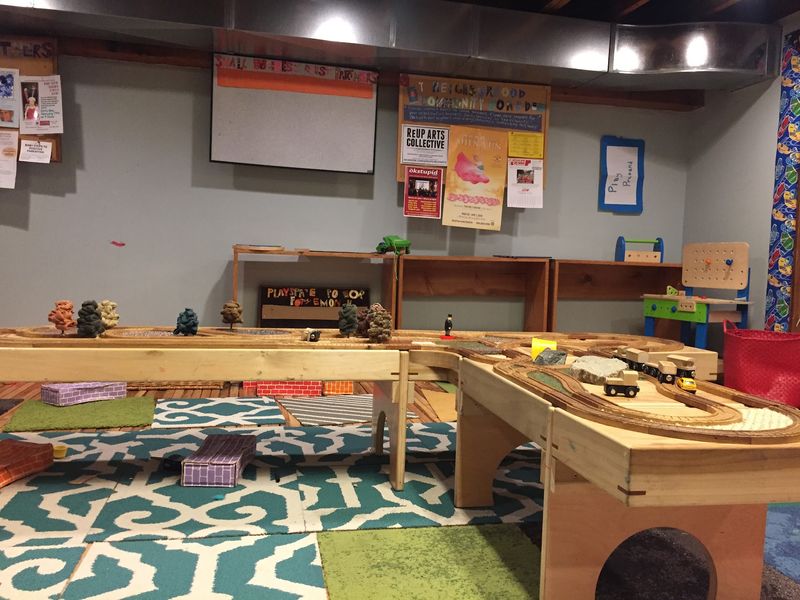
Tucked among the shelves you will find rotating exhibitions featuring work built entirely from salvaged materials, and these displays quietly rearrange how you see the store. Suddenly that bin of old zippers looks like raw potential instead of clutter.
The pieces come from artists who work in reuse, so you get bottle caps, scrap metal, textile offcuts, and paper turned into something with real presence. I spent a good ten minutes trying to identify every component in one wall piece.
Beyond the art itself, the space functions as a gathering point where people talk about technique, share sources, and swap ideas across generations. Conversations start easily when everyone is holding something odd.
My tip is to look at the exhibit first, then shop. Seeing what others made from castoffs tends to loosen up your own thinking, and you will reach for materials you would normally walk right past.
Shows change, so repeat visits reward you twice over.
Addresses, Hours, And How To Donate
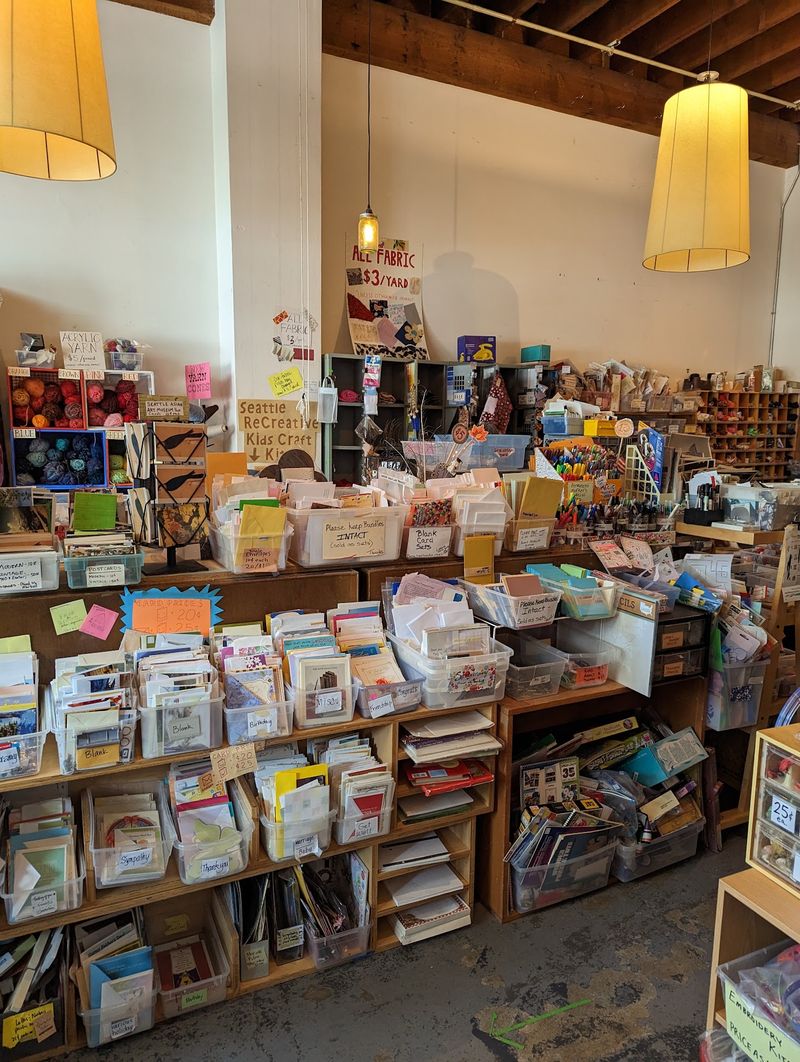
Ready to plan the trip? The Greenwood location sits at 8408 Greenwood Ave N, Seattle, WA 98103, and there is a newer Georgetown shop at 6521 5th Ave S, Seattle, WA 98108.
Greenwood hours generally run Tuesday through Saturday from 10:00 am to 6:00 pm and Sunday from 12:00 pm to 6:00 pm, with Mondays closed. Hours can shift, so a quick check before you drive over saves disappointment.
If you have supplies gathering dust at home, donations of art and craft materials are welcomed, and making an appointment to drop things off helps staff handle the volume. Even sturdy handled paper bags are useful to them.
Parking in Greenwood is street parking, so allow a few extra minutes on busy weekend afternoons. Bring cash or card, either works fine.
Seattle ReCreative left me convinced that the best souvenirs are the ones somebody else almost threw away, and I will be back the next time a project needs a spark.
Prices That Make Big Projects Possible
Ask any art teacher what kills a good lesson plan, and the answer is usually the receipt. Supplies add up fast, especially when a whole classroom needs them.
Here, most materials cost a fraction of retail, sometimes just pocket change for a handful of beads or a yard of fabric. Teachers, students, and folks on tight budgets can stock up without wincing.
Because prices stay low, people feel free to experiment, mess up, and try again. That freedom matters more than perfect supplies, and it is exactly what keeps regulars coming back week after week.
Those low prices also make it easier to pick up materials for projects you are not completely sure about yet. I have always liked that kind of freedom because creativity gets a lot more interesting when every mistake does not feel expensive.
A strange fabric scrap can become part of a costume, while a handful of odd buttons might rescue a craft project from looking too serious. Teachers can grab extras for backup without wrecking the classroom budget. Students get more room to test ideas instead of rationing every little piece.
Even adults who have not made anything in years can experiment without feeling committed to a huge purchase. That keeps the whole place feeling playful, practical, and wonderfully low-pressure.