
This Washington Ice Cave Hides Glowing Blue Walls Deep In The Mountains That Few Ever See
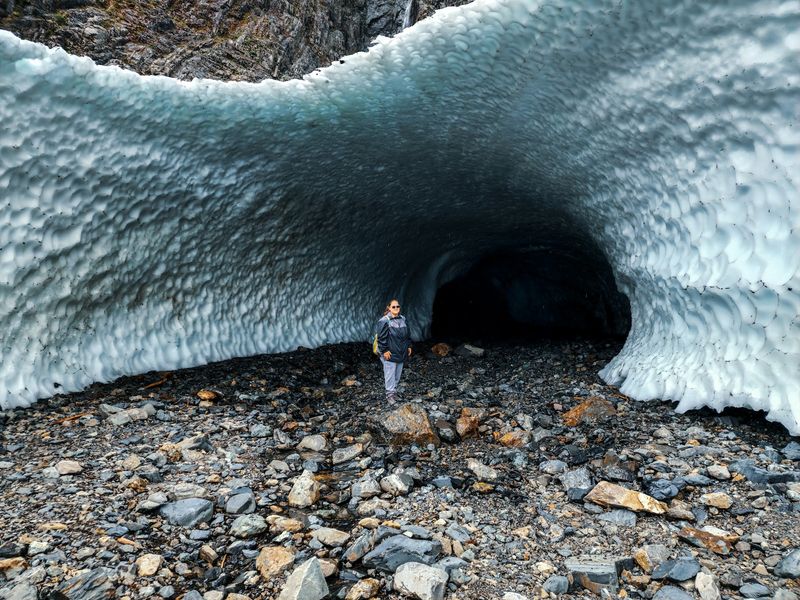
Ice in July. Real, solid ice you can reach on a flat walk of about a mile, with a stroller if you want.
That alone stopped me cold, pun fully intended. The ice forms from avalanche snow piling up at the base of a towering peak.
Meltwater and waterfall runoff then carve it into caves that can glow blue and white on sunny days.
I love that this Washington wonder asks so little of you. The path mixes pavement, gravel, and wooden boardwalks, and it crosses clear mountain water along the way.
The air near the ice can feel like someone opened a giant freezer door.
I can’t imagine a better reward for such an easy stroll. So why do so few people know this place exists?
A Frozen Wonder Waiting At The End Of A Short Forest Walk
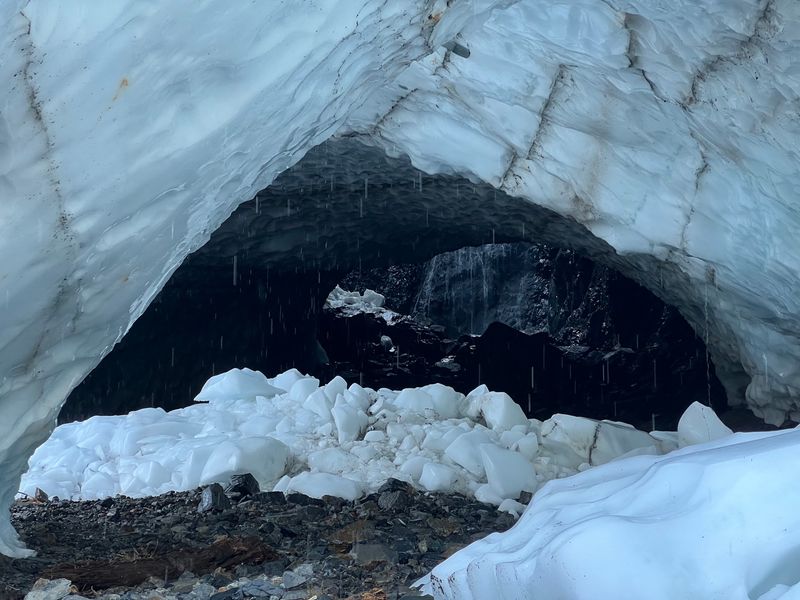
Few trails in the Cascades deliver this much drama for so little sweat. The Big Four Ice Caves sit at the base of Big Four Mountain, along the Mountain Loop Highway near Granite Falls.
The caves are made from snow and ice that avalanches dump at the foot of the mountain each year. Melting snow and waterfall runoff then hollow out tunnels and arches in the frozen mass.
What you get is a natural sculpture that changes with the seasons. Some years and some months, the openings look wide and dramatic.
Other times, they barely peek out from the snow.
That unpredictability is part of the fun. You never quite know which version of the caves will greet you at the end of the path.
The trailhead is famous across Washington as a beginner-friendly outing. The round trip runs about two miles, with only gentle elevation gain the whole way.
Families, first-time hikers, and folks who simply want a big view without a big climb all fit right in here. It feels less like a hike and more like a stroll toward a wall of ice.
How Avalanches Build A Cave You Can Visit Every Summer
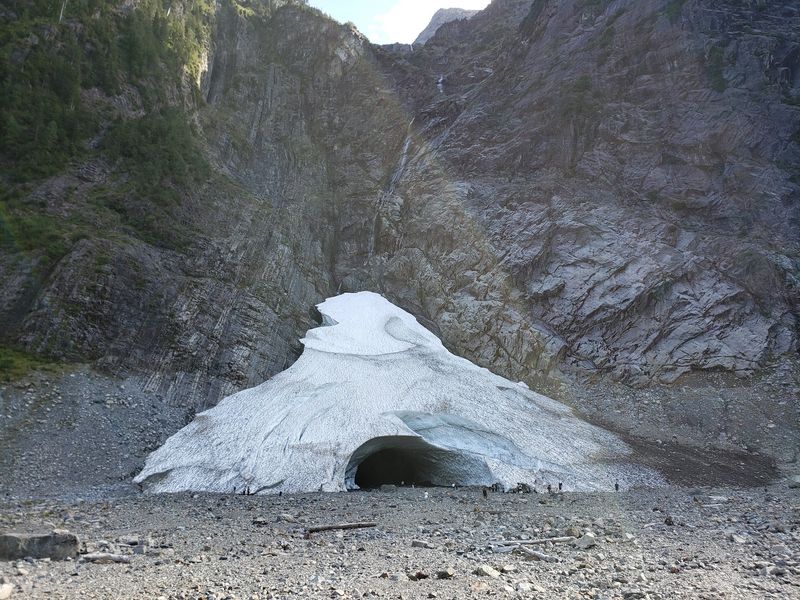
Avalanches are the real architects here, and they work for free. Every winter, snow slides off the steep north face of Big Four Mountain and piles up at its base.
That packed snow stays shaded under the towering cliffs. Because the sun struggles to reach it, the pile can last well into summer and beyond.
Then the water gets involved. Streams of meltwater and runoff from the waterfalls above carve channels underneath the ice.
Over time, those channels open into caves and arches. Air flowing through them helps shape the formations even more, polishing the frozen walls into smooth curves.
The result shifts every single year. One summer may bring huge openings, while another leaves the caves mostly buried or partly collapsed.
Late spring and summer are often when the formations look most dramatic. By midwinter, the caves can disappear under fresh snow entirely, leaving just mountain views and quiet.
I like knowing that nobody can schedule this show. Nature builds it, tweaks it, and tears it down again on its own timeline.
That makes each visit a little like catching a limited-run exhibit.
Blue Ice That Seems To Light Up From Within
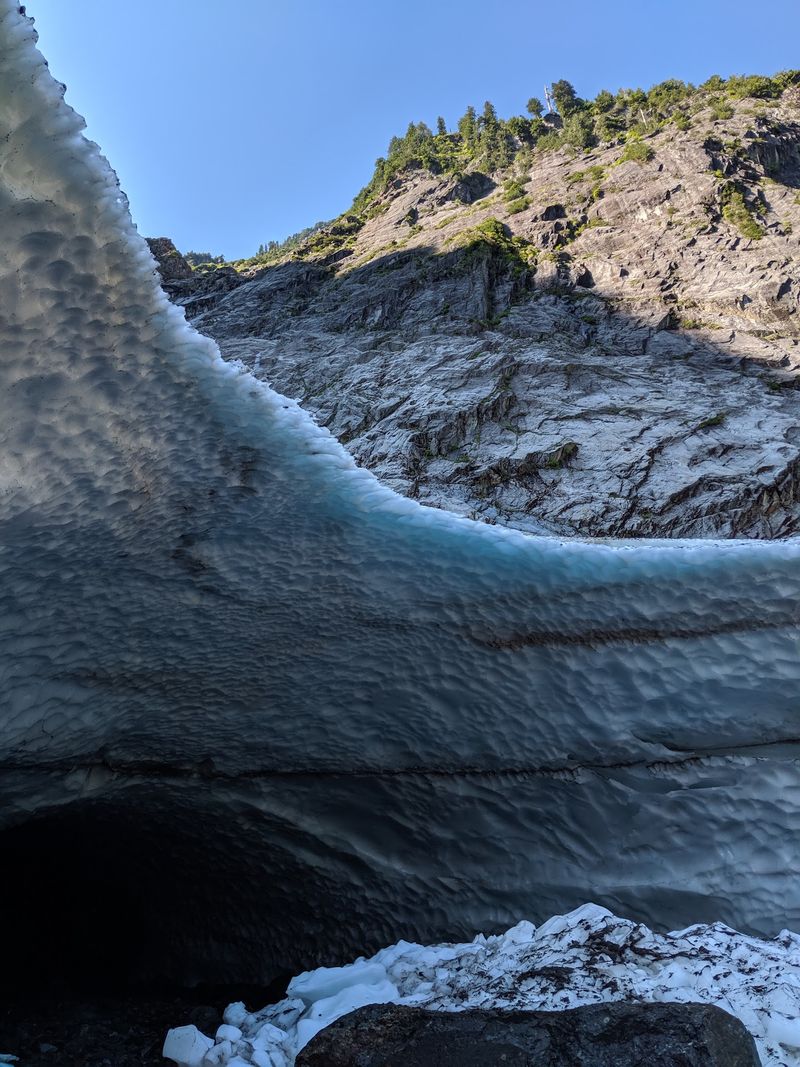
Sunshine changes everything at the end of this trail. On bright days, the ice can shimmer in shades of blue and white against the dark, rugged rock.
That glow is the headline act. Dense, compressed ice absorbs red light and lets blue tones show through, giving the walls an almost lit-from-inside look.
Photographers love this spot for good reason. Early morning light can make the formations especially striking, and the cliffs behind them add serious scale.
You’ll also spot huge ice formations hanging from the rock. Streams rush out from beneath the frozen mass, adding sound and motion to the scene.
Every so often, small chunks of ice break away and splash into the water below. Watching that happen from a safe distance is a quiet reminder that the caves are always changing.
The colors depend on weather, season, and how open the caves happen to be. A cloudy day softens the blues, while a sunny one can make them pop.
Either way, bring a camera and some patience. The light shifts quickly in the mountains, and the next minute might give you the shot.
An Easy Mile That Even Strollers Can Handle
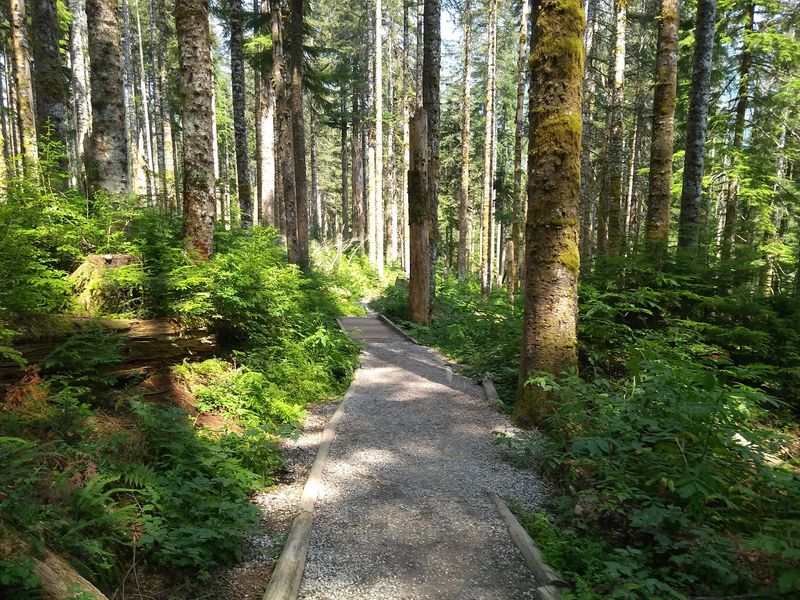
Strollers, canes, and little legs all have a shot at this one. The path to the ice is roughly a mile each way, with gentle grades and a well-maintained surface.
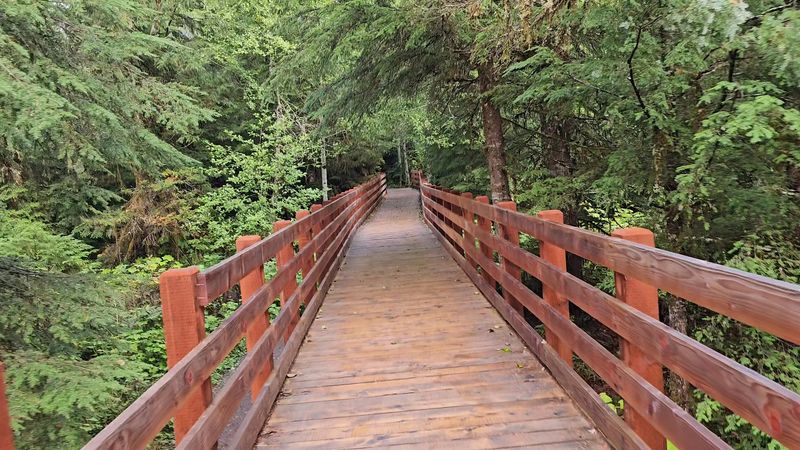
It comes in three distinct parts. You’ll start on boardwalk, move into a wooded stretch with gravel, and finish on rocky ground near the ice.
Families have pushed strollers most of the way to the viewpoint. Bigger wheels help, since small ones can catch on the rougher spots.
Benches appear along the route, which makes it easy to take breaks. Kids and grandparents can both set a comfortable pace without feeling rushed.
Some quick walkers can reach the ice in about 20 minutes from the parking lot. Others linger much longer, and honestly, that’s the better plan.
Keep an eye out for fallen trees, which sometimes cross the trail. You may need to step over or around them, so plan for that if mobility is a concern.
Still, this ranks among the friendliest trails in the Cascades. It proves you don’t need a backpacking permit or a summit push to see something unforgettable.
Wooden Boardwalks Over Soggy Mountain Marshland
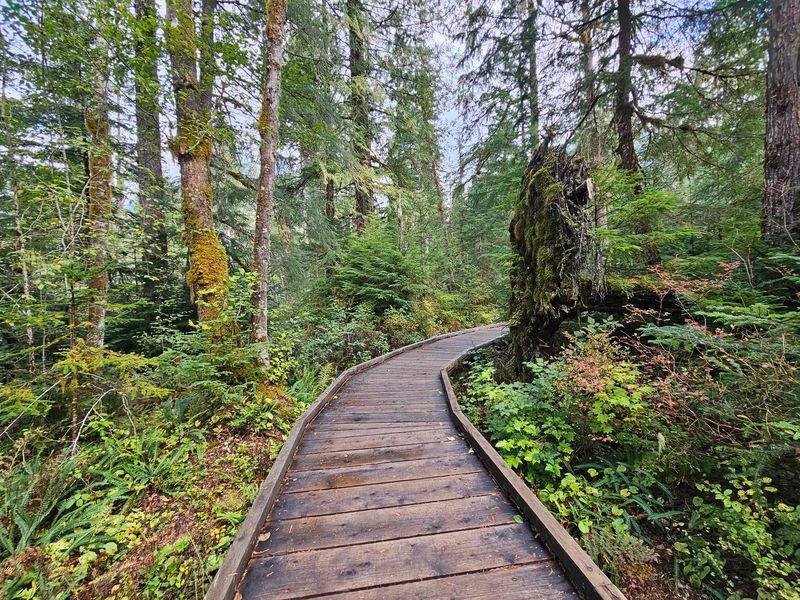
Soggy ground never stood a chance against these planks. Early on, wooden boardwalks carry the trail across marshy areas that would otherwise turn into a muddy mess.
It’s a lovely way to begin. The raised path lets you look out over wetland plants while the mountain looms ahead, a preview of what’s coming.
Boardwalks also keep things accessible. Wheels roll smoothly over them, and walkers don’t have to worry about sinking into wet soil after a rainy week.
Fall mornings can bring a surprise. Frost sometimes coats the wooden surfaces near the far end of the trail, so watch your footing when temperatures dip.
The marshy start feels completely different from the rocky finish. In about a mile, you move from soft, green wetland to bare stone and ice, which is quite a change of scenery.
I appreciate trails that show off more than one landscape. This route packs meadow, forest, river, and glacier-like ice into a single easy outing.
Take your time on the boardwalk. It’s a calm, pretty stretch, and it sets the mood before the mountain steals all the attention.
The New Bridge Everyone Seems To Talk About
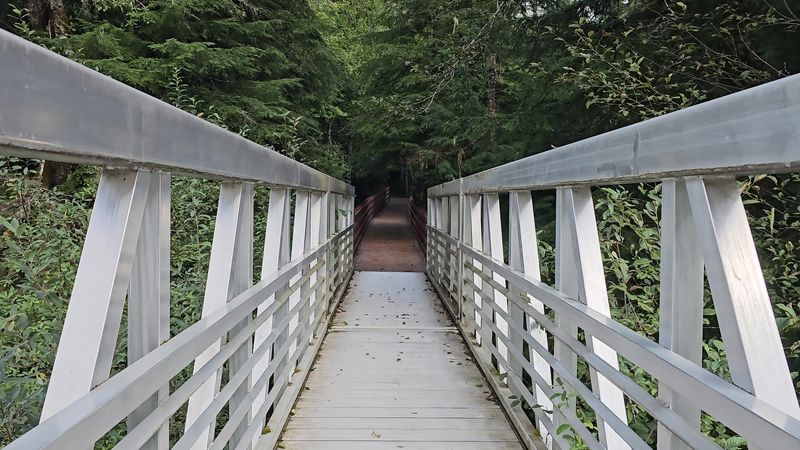
Bridges might not sound exciting until you see the water under them. The trail crosses the South Fork Stillaguamish River, and its newer bridge has become a frequent talking point.
Crystal-clear, blue-tinted water rushes beneath you. It’s hard not to pause midway and stare for a minute or two.
That crossing marks a nice transition. Behind you is the open marsh, and ahead lies the shady forest stretch leading toward the mountain.
You’ll cross a couple more bridges before reaching the ice. On chilly days in fall, those last bridges can carry a thin layer of frost, so step carefully.
Near the first bridge, a path leads down beneath it toward the river. Some hikers bring extra clothes for a summer dip in that cold, pristine water.
If wading appeals to you, be smart about it. Mountain rivers move fast and stay icy even on hot days, so stick to calm edges.
For most folks, the bridge is simply a scenic pause. Grab a photo, listen to the rushing current, and then keep heading toward that frozen finale.
Wildflowers, Mushrooms, And Towering Trees Along The Way
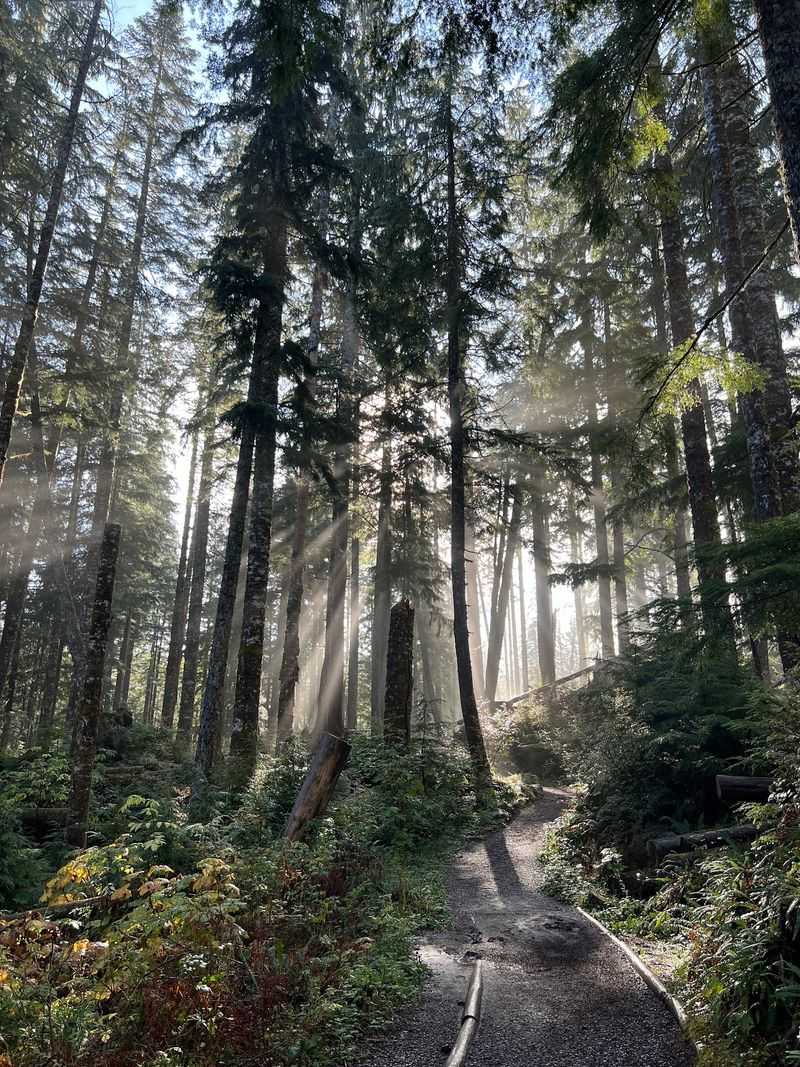
Kids have turned this trail into a mushroom-spotting game, and it’s easy to see why. The forest section is lush, shady, and full of tiny surprises.
Tall trees tower over the gravel path. In warmer months, wildflowers brighten the route, adding color before you ever reach the ice.
Slugs, mushrooms, and birds often appear on rainy days. The gravel keeps the trail from getting too muddy, though slick patches can still show up.
That woodland stretch feels like something out of a storybook. Moss, ferns, and filtered light make it a calm walk, especially early in the day.
I love how the forest builds anticipation. You can hear water and catch glimpses of the cliffs, but the full view stays hidden until the trees thin out.
Then the woods open up, and the mountain fills your whole view. That reveal is half the magic of this hike.
Families might want to slow down here. Counting mushrooms or naming flowers can keep younger hikers happily moving while adults enjoy the quiet of a classic Washington forest.
Nature’s Own Air Conditioner At The Foot Of The Cliffs
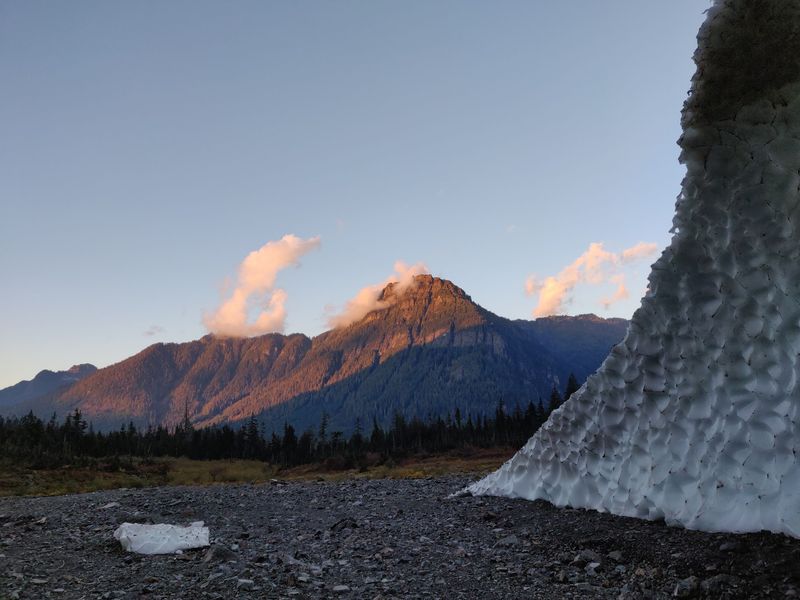
Eighty degrees at the parking lot can feel like fifty at the ice. Standing near the caves is like planting yourself in front of a giant, natural air conditioner.
That cold air drifts off the frozen mass and hits you all at once. On fall days, you may even see your breath near the end of the trail.
Layers are your friend here. A light jacket that felt silly at the car suddenly seems brilliant.
The last stretch changes underfoot, too. Around the final 1,000 feet, pavement and gravel give way to a dry riverbed full of granite rocks.
Shoes with ankle support help on that uneven ground. Steady footing matters, since the stones can shift and some spots get slippery.
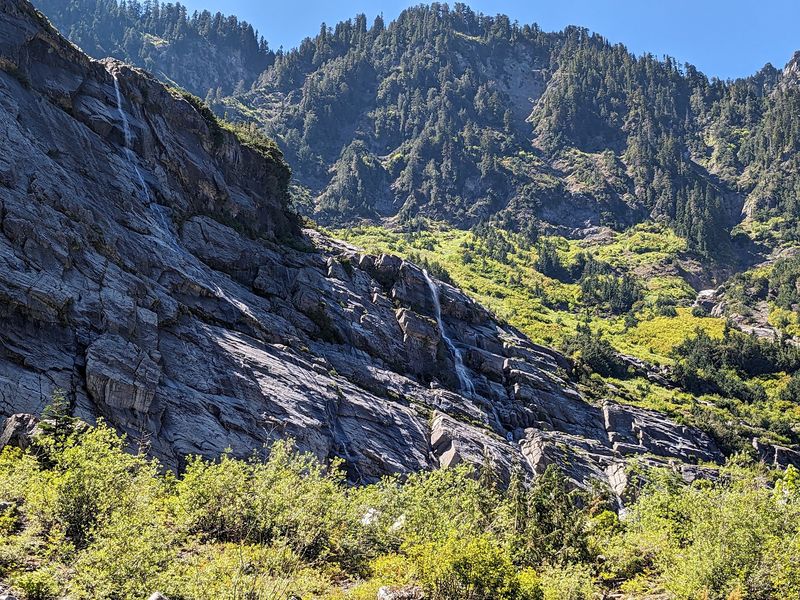
Look up while you’re there. Waterfalls stream down the cliffs above the caves, and the jagged peaks rise sharply overhead.
Then turn around. The view behind you, across the valley and surrounding mountains, is just as stunning, and plenty of hikers almost forget to look.
Admire From A Distance And Stay Off The Ice
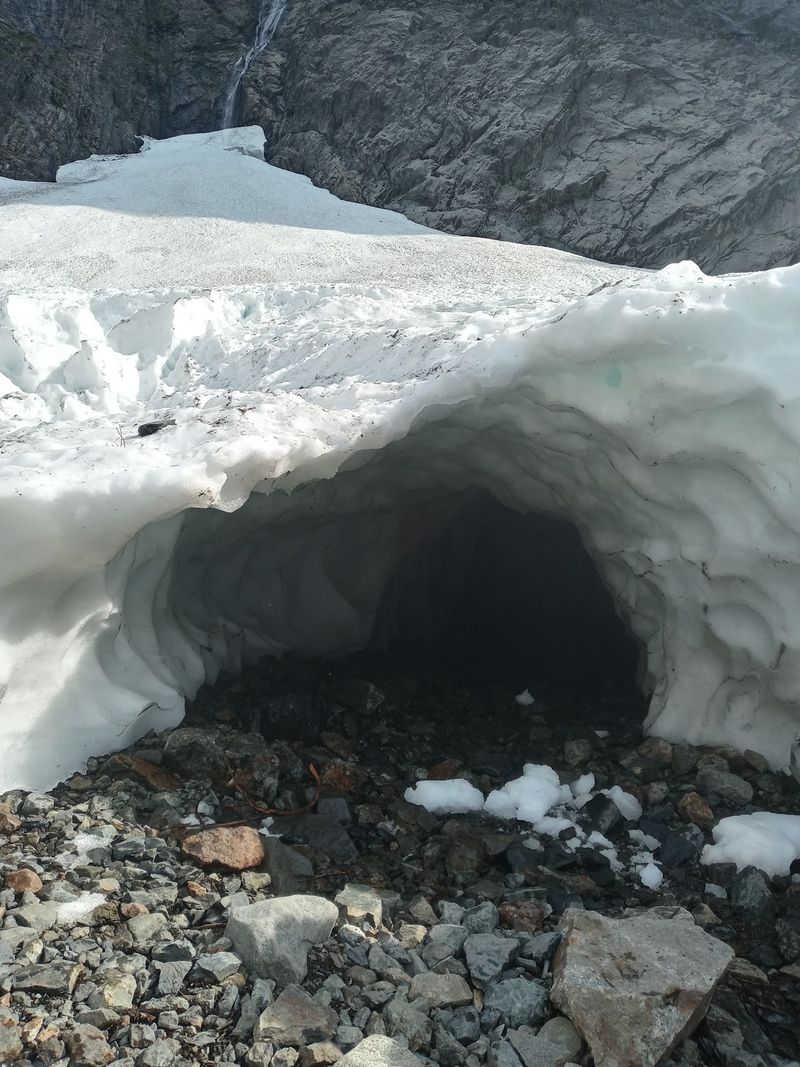
Warning signs stand near the caves for a very good reason. Visitors should never enter the caves or climb on the ice.
The formations are unstable and can collapse without warning. Chunks break off on their own, and the cave ceilings can give way suddenly.
Thankfully, the best views come from a safe distance anyway. The full shape of the caves, the waterfalls, and the cliffs are easier to appreciate from farther back.
Avalanche danger also matters in colder months. Snow can still slide down from the mountain, so pay close attention to posted signs and conditions.
Little ones need close supervision near the end. The rocky area is wide open, and curious kids may want to run straight toward the ice.
I’d treat the caves like a museum piece. Look, photograph, and enjoy, but keep your hands and feet back.
Following the rules keeps this outing what it should be: a joyful, memorable walk. Search and rescue volunteers have even been spotted at the trailhead handing out water and popsicles to kids, which feels like a sweet reminder that they’d rather see everyone stay safe.
Picnic Tables, A Stone Chimney, And A Lunch With A View
An old stone chimney marks one of the most charming lunch spots on the Mountain Loop Highway. The Big Four picnic area sits near the start of the trail.
That chimney is a remnant of the Big Four Inn, a grand mountain lodge that operated here in the early 1900s. A fire in 1949 left little behind except the stone fireplace.
Today, picnic tables under a roof offer a shaded place to rest. Mountain views make even a simple sandwich feel special.
Some visitors park here and walk the trail from this end. Others stop only for snacks and take in the scenery before heading home.
Here’s a handy tip. The picnic area doesn’t have restrooms, so drive a little farther to the main trailhead lot if you need them first.
Bring your own food and water, since there’s nothing to buy on site. A cooler packed with snacks makes the whole day easier.
I love how this spot mixes history with a family picnic. It turns a short hike into a full, relaxed afternoon.
Who Will Love This Trip The Most
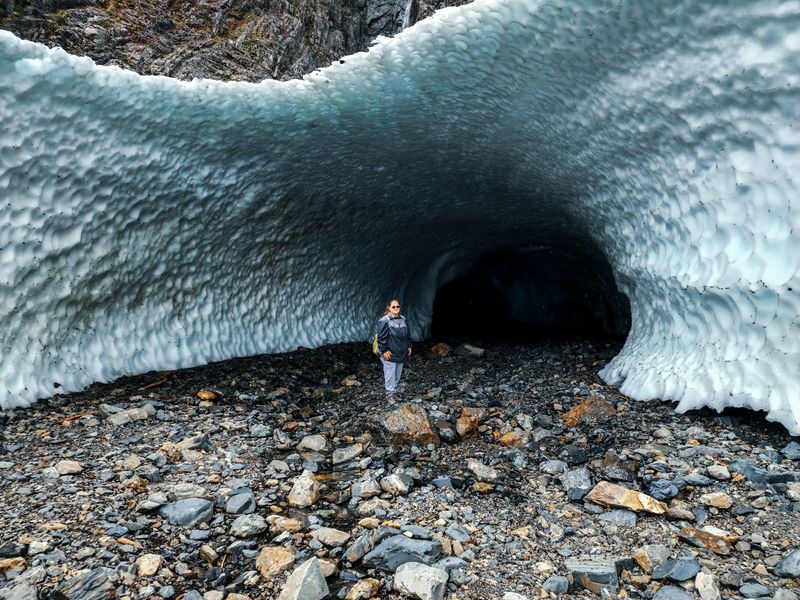
Grandparents in their sixties and kids as young as seven have made this walk together. That range says a lot about how welcoming the trail feels.
Beginners get a big payoff without a tough climb. Folks walking with a cane have managed it, too, with care on the rocky final stretch.
Dogs are welcome, and plenty of pups enjoy the outing. Bring a leash and water for your four-legged hiking buddy.
Photographers will find plenty to frame. The ice, waterfalls, wildflowers, and cliffs offer endless angles from sunrise onward.
Budget-minded families will appreciate the low cost. Aside from gas and a parking pass, this is mostly a free day of fresh air.
Crowds can build, especially on summer afternoons and weekends. Arriving early gives you calmer trails and easier parking.
If you want solitude, consider a weekday visit. If you love a cheerful buzz, a sunny Saturday works fine as well.
Honestly, it’s hard to name someone who wouldn’t enjoy this. A few adventurous hikers may want more mileage, but even they rarely leave disappointed by the view.
Getting There, Parking Passes, And Seasonal Road Closures
Mapping apps list the spot simply as Big Four Ice Caves, Granite Falls, WA 98252. The trailhead sits along the scenic Mountain Loop Highway east of town.
Plan on just under two hours from Seattle. The drive itself is gorgeous, winding through Cascade forest and river valleys.
Parking requires a Northwest Forest Pass or an America the Beautiful Pass. A daily fee option has also been available at the trailhead, so bring some cash just in case.
The lot is fairly large, with restrooms and garbage cans near the trailhead. There are no restrooms farther along the trail, so stop before you start.
Winter changes the plan. The road closes seasonally, and visitors in January have walked about two miles on snow-covered road just to reach the trailhead.
Late spring through fall is the easiest window for visiting this corner of Washington. Late summer often brings the clearest trail conditions.
Cell service is limited, so download maps ahead of time. The listing shows the area open 24 hours, but daylight visits are smartest for safety and the best views.
A Short Walk You’ll Be Telling Stories About For Years
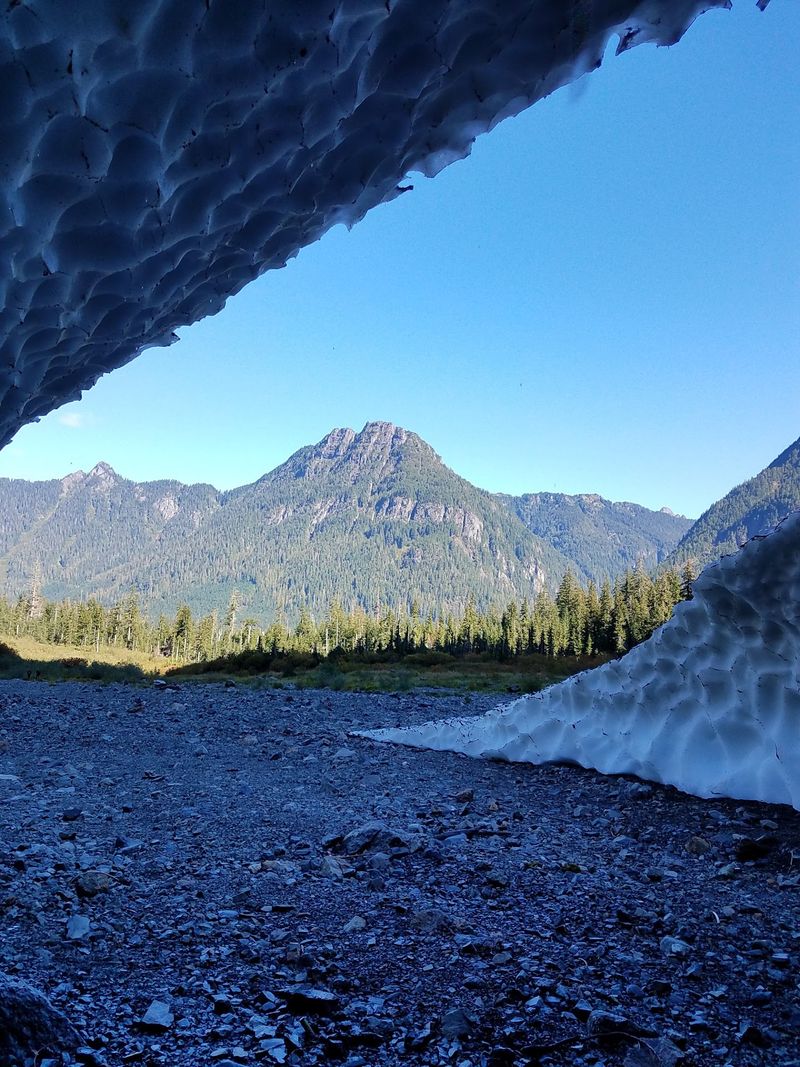
Two miles round trip rarely feels this big. The Big Four Ice Caves pack forest, river, boardwalk, waterfalls, and glowing ice into one easy afternoon.
It’s the kind of place that sneaks up on you. You expect a pleasant walk, and then the cliffs and that frozen blue cave stop you in your tracks.
I believe its magic comes from how reachable it is. No special gear, no grueling climb, and no huge expense stand between you and a genuine natural wonder.
Pack layers, water, snacks, and sturdy shoes. Download your map, grab your parking pass, and aim for an early start on a clear day.
Remember the golden rule here. Enjoy the ice from a distance, and leave the caves to do their own changing.
Each year brings a slightly different version of the formations. That means a return trip is never really a repeat.
So which season will you pick? Whichever you choose, this little corner of the Washington Cascades just might become your new favorite weekend tradition.