
This Washington Island Town Keeps Life In The Slow Lane
Washington Island waits just past the tip of Door County, and the crossing itself sets the tone. The ferry over Death’s Door isn’t just transport, it’s a pause, a breath, a gentle erasing of mainland hurry.
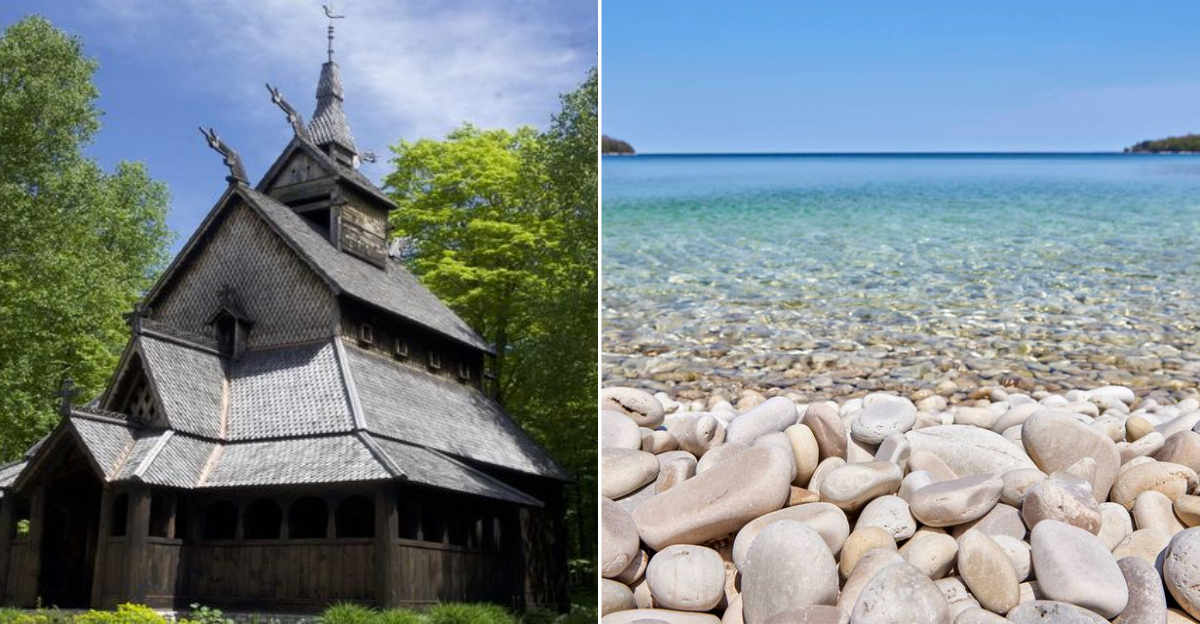
When you roll onto the dock, the scenery shifts: pebbled beaches crunch underfoot, lavender fields ripple in the wind, and hand-built churches sit quiet against the sky. Bikes replace cars, clocks lose urgency, and the days open wide.
Evenings gather around water views, steady and unhurried, reminding me that an island can feel rich simply by teaching you how to slow down.
Five Miles To Calm
There’s a hush on the water as the ferry churns away from the peninsula, gulls skating above the wake. Even before the island appears, the mood shifts.
The Washington Island Ferry crosses Death’s Door year-round, carrying cars, bikes, and bundled-up locals with practiced ease. For over a century, it’s been the island’s lifeline.
Watching the mainland shrink behind me, I realized I was already moving at a new pace. That short crossing had changed the tempo of my day.
Pebbles Underfoot
Schoolhouse Beach looks nothing like the sandy stretches most people picture when they hear “beach.” Instead, thousands of polished limestone pebbles line the shore, gleaming white under the sun.
The site is carefully protected. Signs remind you that taking even one stone is off-limits, a rule designed to keep the shoreline intact.
It’s tempting to pocket a pebble, but the beauty lies in leaving them be. The crunch underfoot and cool weight in your hand are the real souvenirs.
Lavender In The Breeze
Rows of violet catch your eye first, then the perfume drifts toward you on a lazy wind. Even the bees seem calmer here, moving slowly from bloom to bloom.
Fragrant Isle is part farm, part distillery, and part shop, transforming lavender into everything from lotions to syrup. The paths between fields invite a leisurely stroll.
I honestly lost track of time wandering here. It felt both whimsical and grounding, a little pocket of France set firmly in Wisconsin air.
A Church From Another Century
Tucked among tall pines, a steep-roofed wooden church suddenly rises, its dark beams catching filtered light. The setting feels almost secret, like a portal tucked in the woods.
This is the Stavkirke, a hand-built homage to Norway’s medieval churches, finished in the 1990s by local craftsmen honoring their heritage. The carved details reflect devotion as much as skill.
Step inside and the silence deepens. The small space holds a gravity far larger than its size, connecting faith, ancestry, and landscape.
Island Views, Even From The Climb
The path begins with a wooden stairway, zigzagging upward through maples that change outfits with every season. By mid-climb, the air cools and the canopy tightens overhead.
At the top sits Mountain Park, where an old observation tower once stretched higher, though it’s closed now for repairs. Still, breaks in the trees reveal sweeping views of fields and water.
Tip: take your time. The climb isn’t hard, but pausing lets you soak in both the shifting leaves and the quiet unfolding view.
Little Museum By Little Lake
A single log building sits quietly beside Little Lake, and you might miss it if you weren’t looking. Step closer and the smell of old timber pulls you inside.
The Jacobsen Museum dates to 1931, its walls filled with fossils, shipwreck fragments, and island artifacts. Nothing about it feels staged; it’s more like a personal collection than a formal exhibit.
I loved how unpolished it was. Standing there, surrounded by relics, I felt like I’d stumbled into someone’s attic of island history.
Bikes And Open-Air Rides
Locals will tell you the best way to see Washington Island isn’t behind a windshield. Instead, it’s out in the breeze, rolling slowly along its narrow roads.
E-bikes, scooters, and UTVs are easy to rent, giving visitors plenty of ways to meander past fields, churches, and shoreline. The island’s low-speed pace makes it friendly for first-timers.
I found biking shrank the island in the best way. Every turn revealed something unexpected, a mural, a view, even a lemonade stand tucked into a yard.
Rock Island Side Quest
At the northern tip, a passenger ferry departs for Rock Island, where cars aren’t allowed. The short hop already feels like an escape from an escape.
The island is a state park, threaded with trails that circle forests and lead to the Pottawatomie Lighthouse. Built in 1836, it’s Wisconsin’s oldest, still perched against crashing waves.
Bring sturdy shoes and snacks. With no vehicles, restaurants, or shops, the rhythm here is pure walking and wondering, a rare reset in a car-free world.
Picnic Culture
Coolers and woven baskets seem almost as common here as beach towels. Islanders and visitors alike embrace the art of stopping for food with a view.
Pull-offs along the lake, shady parks, and small fields all double as dining rooms. Tables aren’t necessary; blankets and benches do the trick.
I ended up snacking more than eating meals. Somehow a sandwich tasted better sitting beside the harbor than it ever could in a café. This island knows how to linger.
Small-Town Charm
At the marina’s edge, life feels compact, cafés, galleries, and shops fold easily into a walkable cluster. The streets don’t sprawl; they invite loops instead of long routes.
This has always been the island’s charm. Instead of growth upward or outward, it chose intimacy. A few blocks hold everything you need, and nothing feels rushed.
I circled those same streets multiple times and never got bored. Each pass revealed another small surprise, as if the town rewards curiosity with layers.
Nature At Kid Speed
Short trails wind through woods and preserves that were clearly designed with families in mind. No marathon hikes, just quick loops where little legs can keep up.
These paths keep things simple: glimpses of water, shaded benches, and plenty of open space for running ahead safely. Parents relax, kids explore.
I liked that the island doesn’t make nature an endurance test. It’s approachable, gentle, and perfect for travelers who want fresh air without turning the day into a trek.
Sunset Ferry Return
By evening, the ferry feels like a moving balcony over the water. The air sharpens, gulls ride low, and islands slide past in copper light.
This isn’t just a way back, it’s the closing chapter. Passengers lean against rails, some quiet, some trading stories of their day.
I stayed on deck the whole crossing. Watching the sun slip behind the horizon, I realized the trip itself was the last gift the island offered before letting me go.