
This Washington Museum Walks You Through The Living Story Of The Tulalip Tribes Inside A Cedar Longhouse
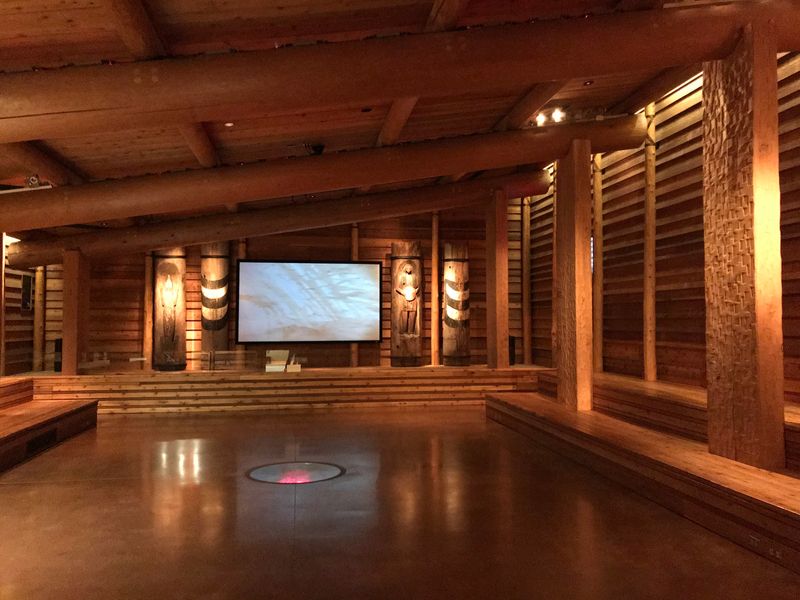
Right off a familiar Washington highway, past the outlet shops and the buzz of everyday errands, sits a place most drivers zoom past without a second glance. Step inside, though, and you find yourself sitting in a replica cedar longhouse while firelight flickers up from a pit in the floor and voices carry generations of stories.
It costs about the price of a fast-food lunch, yet the experience stays with you long after you leave. For families and curious day-trippers alike, this quiet spot delivers far more than its modest doors ever hint at.
A Cultural Center Standing Proud in Tulalip
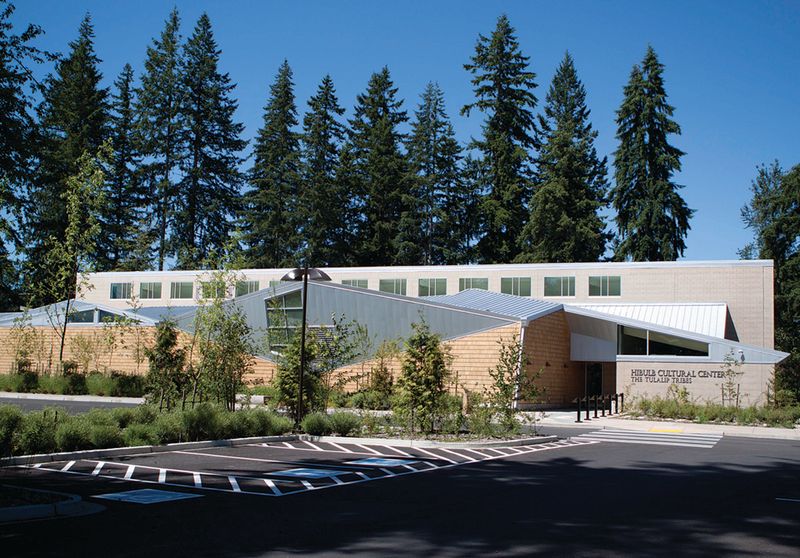
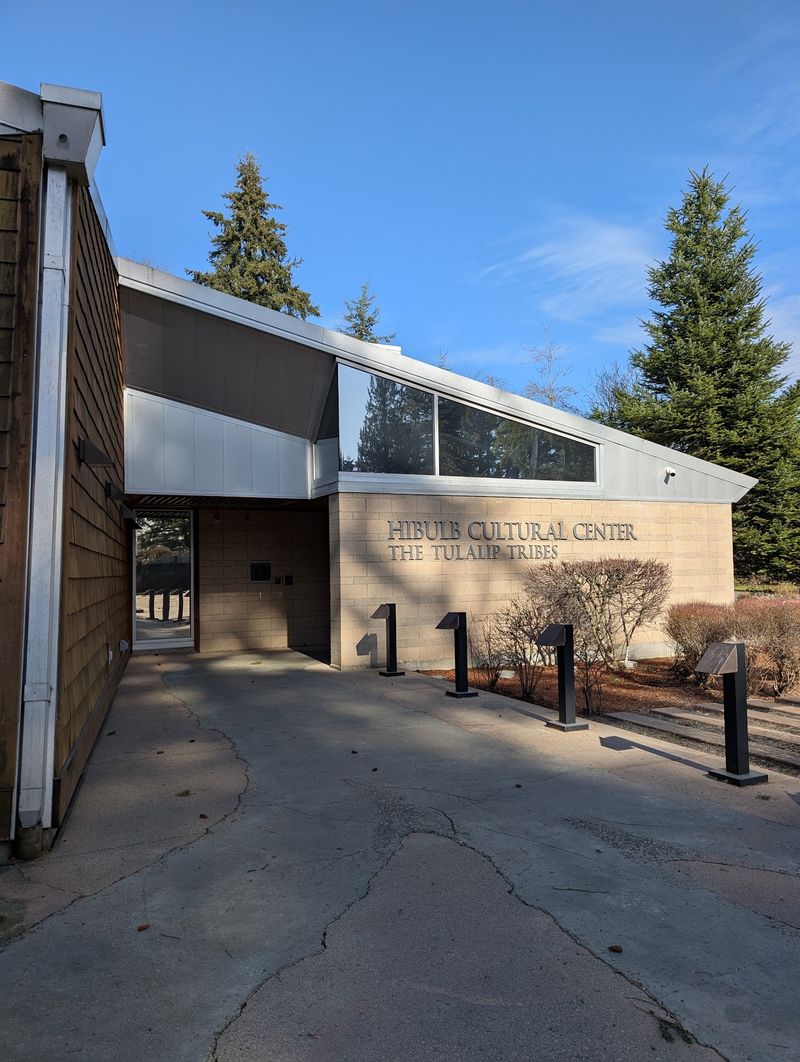
Just north of Everett, the Hibulb Cultural Center and Natural History Preserve gives the Tulalip Tribes a place to tell their own story in their own words. It sits at 6410 23rd Ave NE, an easy trip off the interstate that plenty of travelers pass on their way to the outlets or the tulip fields.
Rather than a dusty hall of glass cases, the building itself feels like a statement. The architecture nods to traditional coastal design while staying fresh and modern, a blend visitors often describe as a thoughtful update on Pacific Northwest style.
Inside, the space is generous and easy to move through. Displays are spread out enough that a school group and a solo wanderer can share the same room without bumping elbows.
What makes it special is right there in the name. This is a living center, not a frozen snapshot, honoring the past, present, and future of the Tulalip people all at once.
Regulars often call it a genuine gem, the kind of stop worth planning your whole day around.
Sitting Inside the Cedar Longhouse
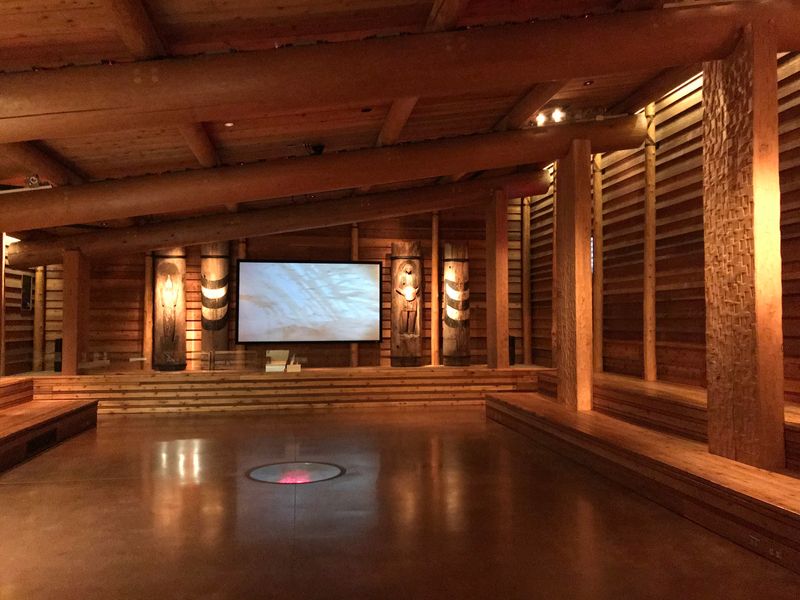
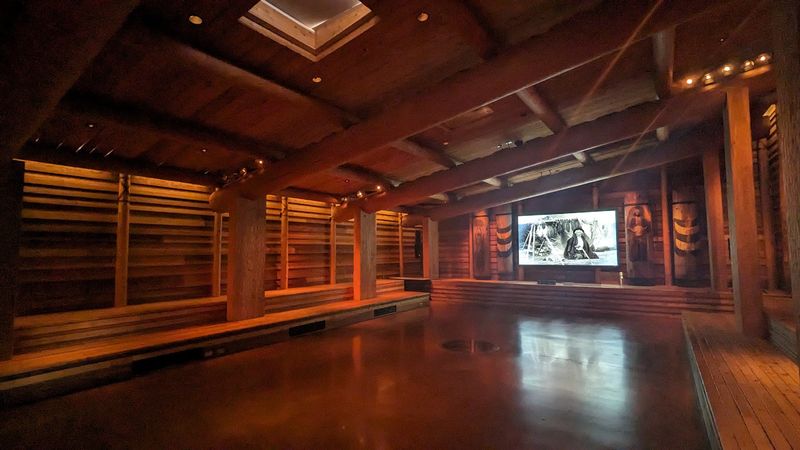
The heart of the whole visit waits in a room built to feel like a real longhouse. You settle onto a bench, the lights dim, and a short presentation begins on a screen while the space wraps around you like a warm blanket of cedar.
Then comes the moment people talk about most. A fire pit set right into the floor lights up during certain parts of the story, glowing as if the flames themselves are part of the telling.
The video runs about fifteen minutes, long enough to draw you in but short enough to keep restless kids engaged. Subtle sound and light effects help everyone connect to the history unfolding in front of them.
Families on field trips notice how even the youngest children grow quiet and curious here. For grown-ups, the room carries a certain welcoming stillness that makes the stories land harder.
Don’t rush past it. Sitting in that longhouse is the single experience visitors mention again and again as the reason to come.
Canoes That Feel Like Floating
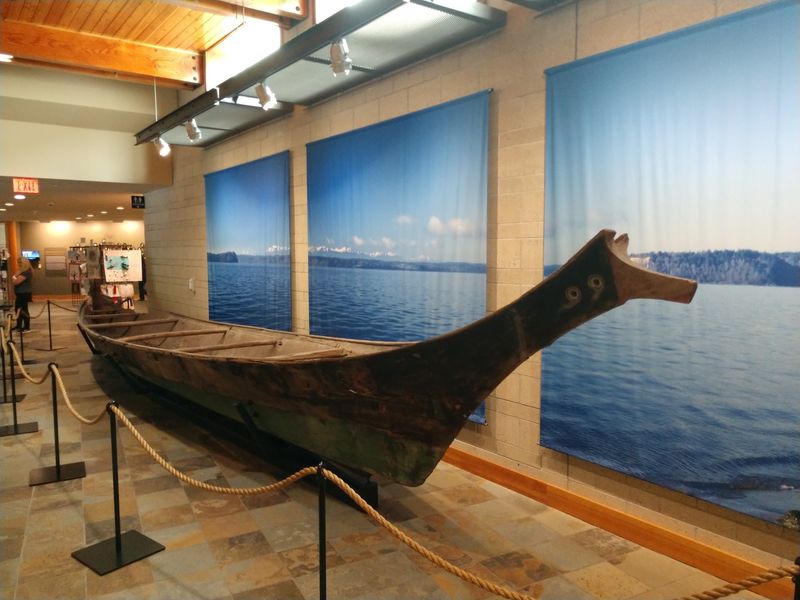
Glide into the canoe hall and something shifts. The way the boats are arranged gives the odd, wonderful sensation of drifting right alongside them, as if the museum floor has turned to water beneath your feet.
Canoes carried whole communities across Puget Sound and beyond, and the craft on display honor that deep tie to the water. Each one tells a story of skill passed down through many hands.
Visitors often single out this hall as a quiet favorite. There’s a peacefulness to standing among the vessels, imagining the paddlers who once guided them along these very shores.
The lighting and layout do a lot of the work, turning simple observation into something closer to a memory. It’s the kind of space where you slow your steps without meaning to.
For anyone who grew up near the Sound, the display strikes a personal chord. It reminds you that the water threading through this corner of Washington has always been a highway, a pantry, and a lifeline all rolled into one.
Cedar, Carvings, and the Art of Storytelling
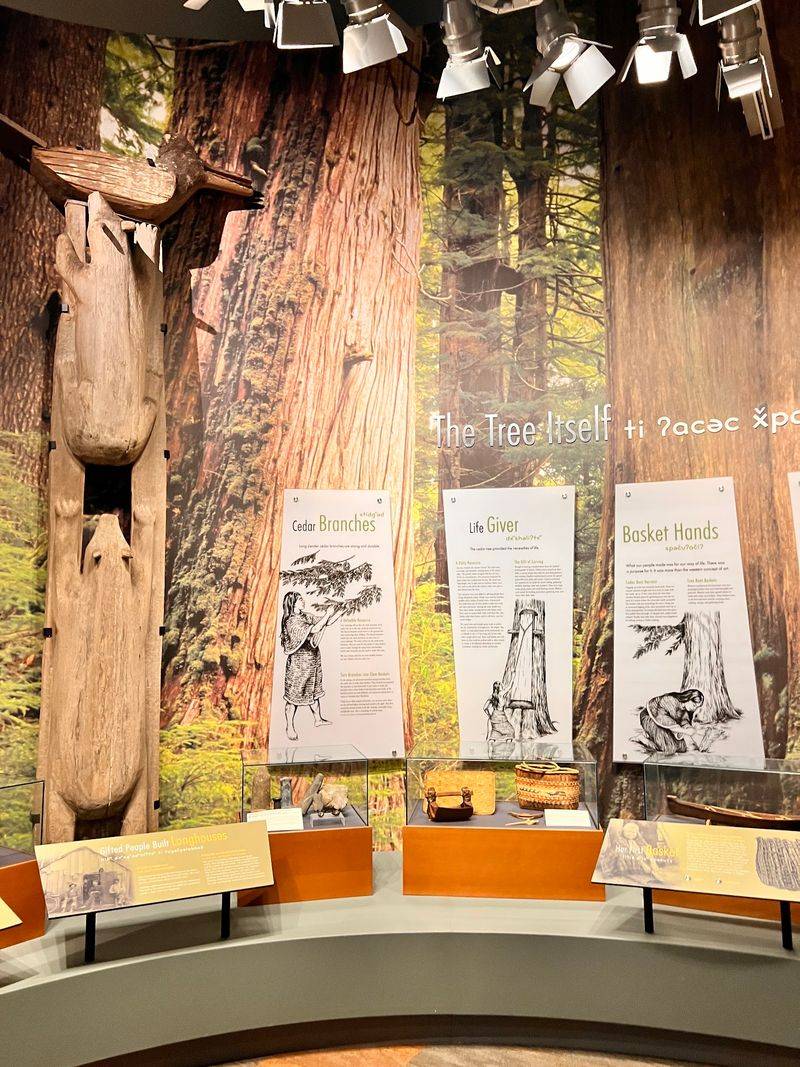
Cedar shows up everywhere here, and for good reason. One exhibit reveals how the Tulalip people used cedar trees in countless ways without ever cutting them down, a lesson in living gently with the land that feels timely today.
Carvings throughout the building practically hum with meaning. Native art of the Pacific Northwest tells stories through every line and figure, and the center pairs each piece with signs that unlock what you’re looking at.
Two welcome statues greet guests, and sharp-eyed visitors are rewarded for looking closely, right down to what’s carved below the feet of the figure named Kaya. Small details like that turn a quick glance into a treasure hunt.
Restored totem poles stand nearby, each with its own explanation of the symbols and history it carries. Reading them slowly is half the fun.
Best of all, photos show the tribe passing these skills to a new generation. The art here isn’t a relic.
It’s a craft still alive, still being taught, still growing.
Honoring Veterans and a Wall of Family Roots
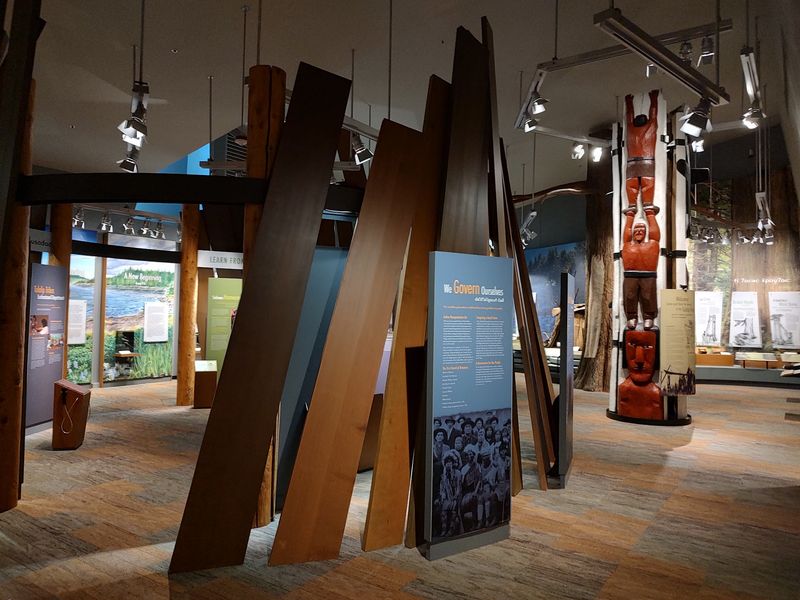
A powerful surprise waits in the section recognizing Tulalip members who served in the armed forces. Standing before those displays, many guests feel a rush of gratitude they didn’t expect walking in.
Nearby sits a favorite corner for lots of visitors: a genealogy wall tracing families across generations. For tribal members, seeing their own roots mapped out must be deeply meaningful, and even outsiders find it moving.
There’s a searchable database of the tribe, too, letting you dig into names and connections. It transforms history from something distant into something personal and traceable.
What sticks with people is the chance to learn about individuals, past and present, who shaped their community. The stories of the matriarchs in particular tend to leave a strong impression.
A wall devoted to the native language rounds out this part of the center. Seeing words that carry an entire worldview reminds you how much lives inside a single vocabulary.
Together, these displays make the point clear. This is a community that remembers its people by name.
The Harder History It Refuses to Hide
Not every corner of the center is easy, and that honesty is part of its strength. Personal accounts of the boarding school era appear in the permanent displays, and standing among those photographs can stir real emotion.
A content advisory marks one area so guests can choose how they engage. Some visitors read the entry statistics and quietly opt out, and the center gives them full room to do so.
The exhibits also lay out the Treaty of Point Elliott and the tribe’s sovereignty in plain terms. Being able to record these truths publicly is something many guests find important and overdue.
Yes, parts of the visit carry a heavy feeling, and that weight is intentional. It ensures no one can pretend these chapters never happened.
If you take time to read, come prepared for extra emotions along the way. Guests often say the seriousness deepens their respect rather than dampening the trip.
Understanding this history, families note, builds real appreciation for a culture that has endured and continues to thrive.
A Hands-On Stop That Wins Over Kids
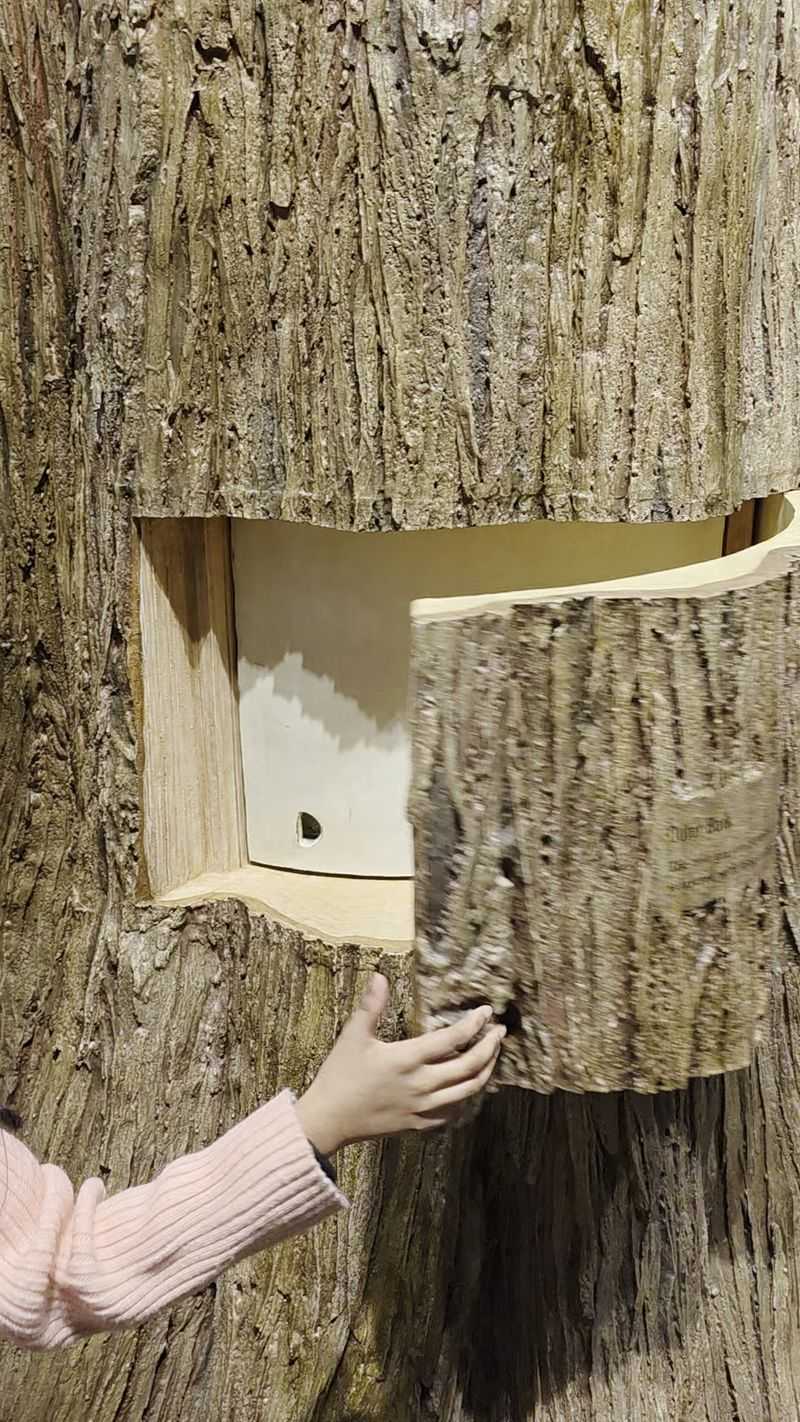
Bring the kids and watch the place come alive for them. Touch-and-feel boards scattered through the galleries invite little hands to explore instead of just look, and that small permission changes everything.
Fourth-grade field trips are a regular sight, and parents who tag along often have as much fun as the students. Hands-on artifacts let children handle history rather than admire it from behind glass.
Some exhibits add audio and visuals that pull young visitors right into the story. The subtle theatrics keep even wiggly kids focused through the whole longhouse presentation.
A scavenger hunt is offered, though it can turn energetic children into speedy racers rather than slow observers. Parents may want to nudge their crew to soak things in at a gentler pace.
Over the years, the center has hosted craft workshops like dream catcher making, where instructors share the traditions behind each design. Events like these draw all ages, from small children to grandparents.
For a family looking to learn together this weekend, it delivers curiosity in every direction.
Planning Your Visit and Why It’s Worth the Drive
Timing matters, so note the schedule before you go. The center opens Tuesday through Friday from 10 AM to 5 PM, with weekend hours running noon to 5 PM, and it stays closed on Mondays.
Admission is wallet-friendly. Adult tickets run around ten dollars, kids five and under get in free, and discounted rates are typically available for children and seniors.
Most guests spend roughly one to three hours here, depending on how much they love to read. Parking and restrooms are easy to reach for everyone, with accessible features and audio options for low-vision visitors.
The gift shop sits just inside the entrance and needs no ticket to browse. It’s stocked with native art, books, and thoughtful gifts worth a look on your way out.
Pair it with the nearby outlets, the tulip season, or a holiday drive, but let this be your first stop. As a low-cost, memory-rich outing tucked into the Puget Sound day-trip circuit, it earns every mile you drive to reach it.