
2026 Is Shaping Up To Be The Year Of This Charming Colorado Mountain Village
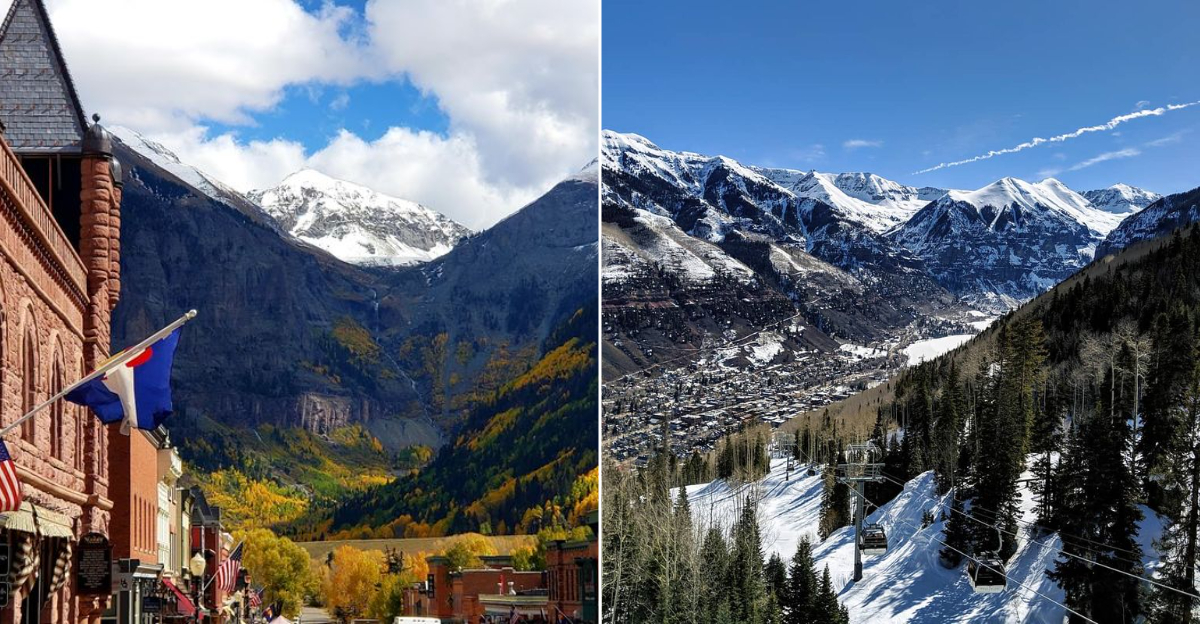
Tucked into a narrow box canyon in the San Juan Mountains, this small mountain community in Colorado is the kind of place that makes you question why you ever felt the need to travel elsewhere. Surrounded by towering peaks that glow gold at sunrise and blush pink at dusk, it feels both protected and proudly on display.
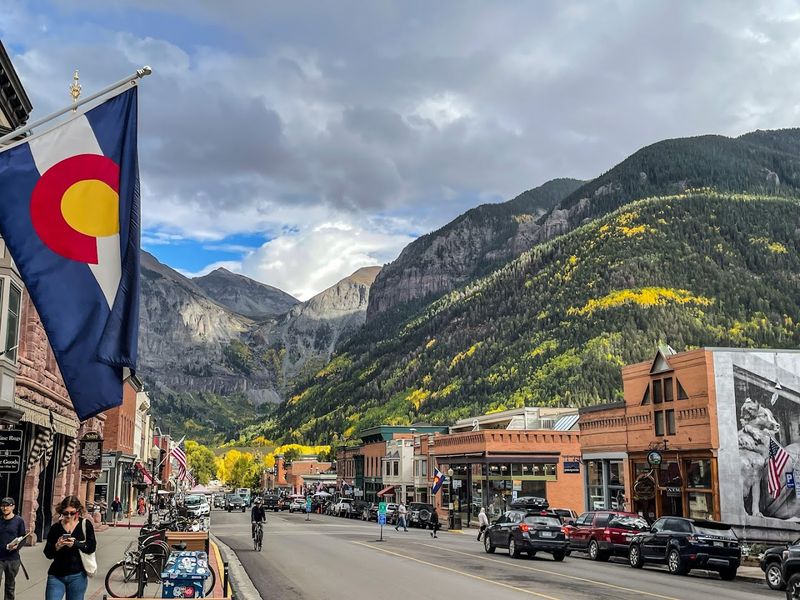
Its well preserved Victorian storefronts line the main street, echoing stories of ambition, resilience, and hard won prosperity from another era. What was once a rough mining settlement has matured into a welcoming destination where history and hospitality exist side by side.
As Colorado prepares to mark its 150th anniversary in 2026, the excitement is building across the state. Visitors sense that something special is unfolding here, a renewed appreciation for heritage, landscape, and community spirit.
Colorado’s mountain towns continue to captivate travelers, and this one stands ready to shine brighter than ever.
A Town That Was Built Different From The Start
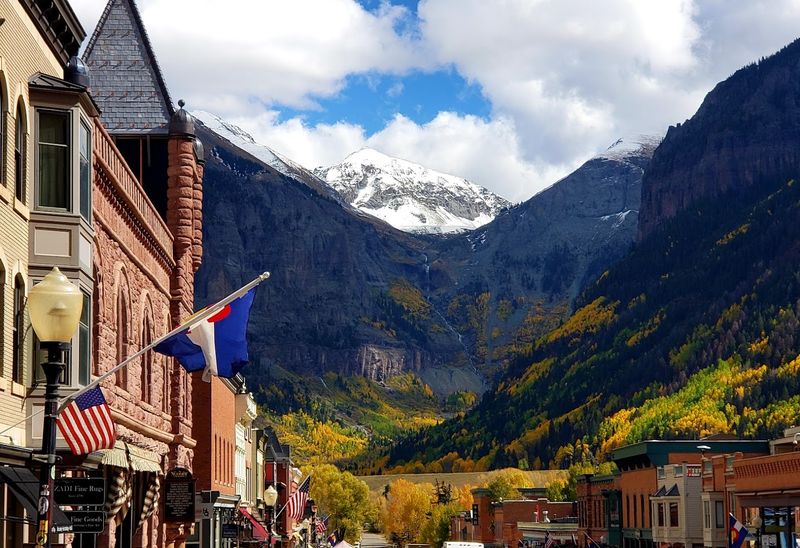
There is something almost theatrical about arriving in this little place for the first time. The canyon walls rise so sharply on three sides that you half-expect a curtain to drop and a narrator to announce that yes, this place is real.
Colorado Avenue, the main drag, runs straight and unhurried through a grid of Victorian buildings that have been standing since the silver boom of the late 1800s. The town sits at an elevation of roughly 8,750 feet, which means the air is thinner, the light is sharper, and everything feels just slightly more vivid than it does at sea level.
This town was officially incorporated in 1878, and its historic district is listed on the National Register of Historic Places. That designation is not just a bureaucratic footnote.
It means the buildings you walk past actually survived more than a century of Colorado winters, economic booms, and the quiet decades when the mines went silent. The bones of this town are the real thing.
What makes 2026 particularly meaningful is that Colorado is marking its 150th year of statehood, and it fits that anniversary with uncanny precision. The town carries visible proof of the state’s layered past in every brick facade and sloped roofline.
Visiting now feels less like tourism and more like bearing witness to something that took generations to become this good.
Quick Tip: Walk Colorado Avenue from end to end before you do anything else. It takes about ten minutes and gives you the full picture.
Best For: History lovers, architecture enthusiasts, and anyone who appreciates a place that looks exactly like its own postcard.
Skiing That Earns Every Vertical Foot
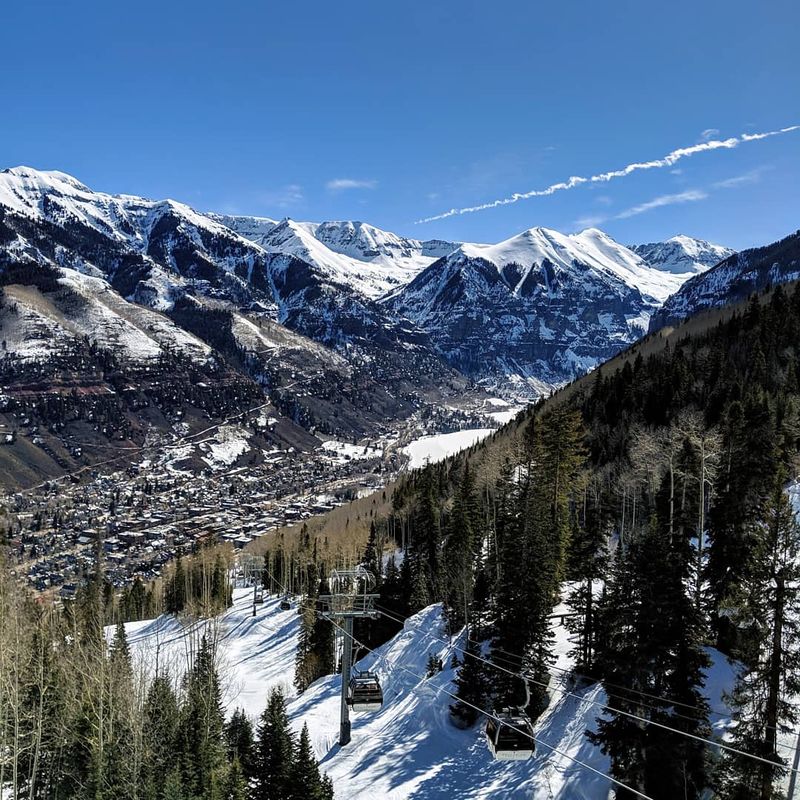
Telluride Ski Resort sits at the top of the box canyon like it was placed there by someone with very strong opinions about dramatic scenery. The resort climbs to a summit elevation of 13,150 feet and offers 2,000 acres of skiable terrain spread across 148 marked trails.
That number alone would be enough for most resorts to brag about, but what sets Telluride apart is the variety. Beginners and families will find long, forgiving runs with views that make the learning curve feel entirely worth it.
Advanced skiers, on the other hand, can access some of the steepest in-bounds terrain in North America. Runs like Plunge and The Plunge Headwall are not named with irony.
They drop hard and fast, and the mountain does not apologize for that. The free gondola connecting the ski resort to the town is a genuinely clever piece of infrastructure, whisking visitors between Mountain Village and downtown Telluride in about thirteen minutes without requiring a car.
For 2026, the resort continues to be one of the most talked-about ski destinations in the country, particularly as Colorado’s sesquicentennial draws more visitors looking for experiences that feel rooted in something real. Telluride delivers that without manufactured spectacle.
Pro Tip: Book accommodations well in advance for any winter visit. The town has limited lodging inventory relative to its popularity, and the canyon does not expand to accommodate last-minute planners.
Best For: Skiers of all levels, snowboarders, families looking for a mountain resort that rewards multiple days of exploration rather than a single rushed visit.
The Sheridan Opera House Still Commands The Room
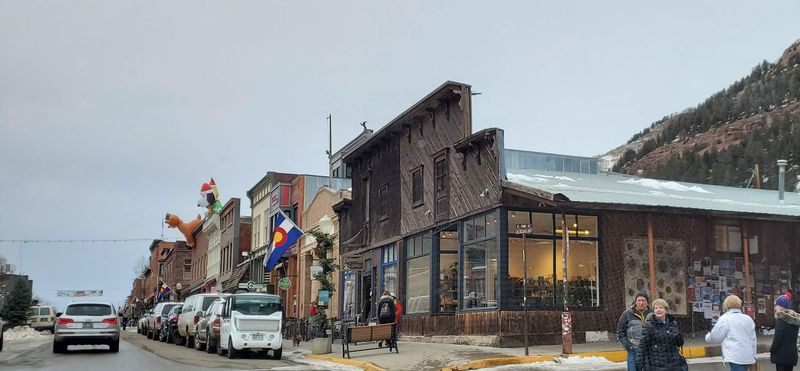
Built in 1913 and still standing with the quiet authority of a building that has outlasted every trend that tried to replace it, the Sheridan Opera House is one of Telluride’s most enduring landmarks. It seats around 230 people, which means there is no bad seat in the house and no chance of feeling like you wandered into a stadium event by mistake.
The intimacy is the point. Performers and audiences share something more like a conversation than a broadcast.
The Opera House has hosted everything from vaudeville acts in its early decades to contemporary musicians, comedians, and theatrical productions in recent years. It sits right on Colorado Avenue, so you do not need to go looking for it.
It finds you first. The building’s restored interior retains original balcony seating and decorative details that make attending any event there feel like a small occasion worth dressing up for, even if everyone around you is still in ski boots.
For visitors planning a 2026 trip around Colorado’s anniversary year, catching a performance at the Sheridan is one of those experiences that transforms a good trip into a memorable one. It is the kind of venue that makes you wish more towns had refused to tear things down.
Insider Tip: Check the Sheridan Opera House schedule before you finalize your travel dates. Programming varies seasonally, and some performances sell out weeks in advance for a venue this size.
Why It Matters: Live performance in a 110-year-old theater at 8,750 feet elevation is a genuinely rare combination. Most places offer one or the other, not both simultaneously.
Telluride Historical Museum Tells The Unfiltered Story
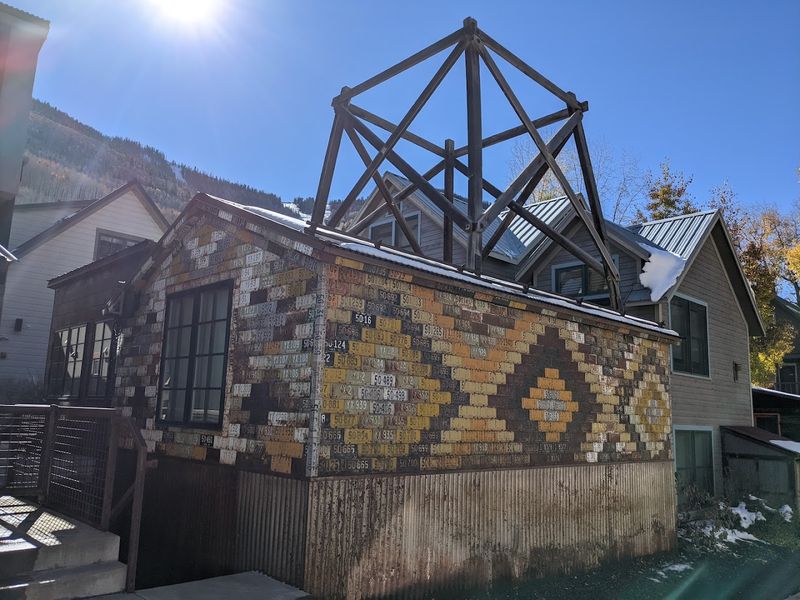
The Telluride Historical Museum occupies a building that was originally constructed in 1896 as the Telluride Hospital. That origin story alone is worth pausing on.
The same walls that once housed a frontier-era medical facility now hold the collected evidence of a town that survived silver booms, labor disputes, economic collapses, and the long quiet years before skiing turned everything around again. It is a remarkably compact museum that punches well above its square footage.
Exhibits cover the region’s Indigenous history, the mining era, the early labor movement, and the gradual transformation of Telluride from a working town into one of the most recognized mountain destinations in the American West. The museum does not shy away from complexity.
The story of Telluride includes chapters that are not uniformly triumphant, and the museum treats visitors as adults capable of handling the full account.
For families traveling with older children, or for couples who want more than scenery from a trip, the museum offers roughly two hours of genuinely engaging material. It is also one of the more affordable stops in a town where prices can climb as steeply as the terrain.
Planning Advice: Combine a museum visit with a walk along Colorado Avenue. The museum sits within easy reach of downtown, making it a natural anchor for a morning of exploration before the afternoon crowds arrive.
Who This Is For: History-minded travelers, families with curious teenagers, and anyone who wants context for what they are looking at when they walk through town. Common Mistake to Avoid: Skipping the museum because the mountains are calling.
The context it provides makes the rest of the visit richer.
Mountain Village Offers A Completely Different Angle On The Same Place
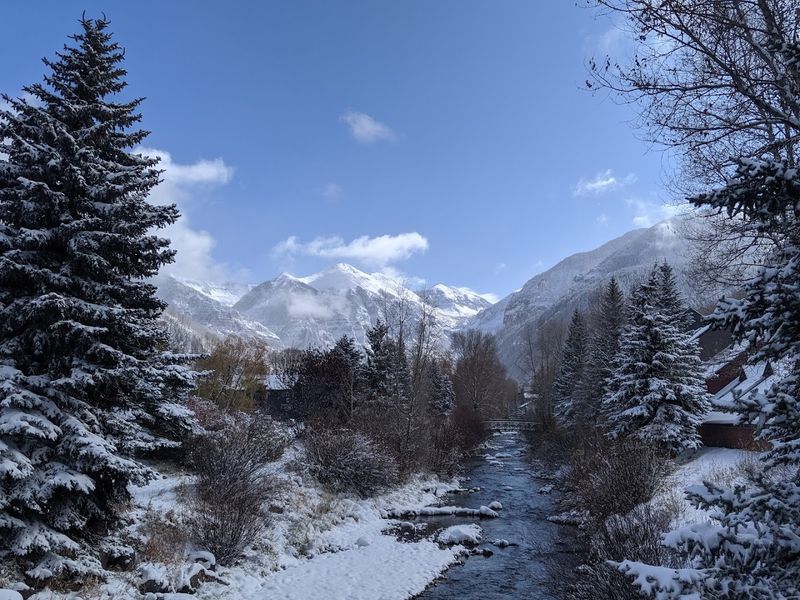
Sitting roughly 2,000 feet above the historic town via the free gondola, Mountain Village is Telluride’s second act. Where downtown Telluride is compact, weathered, and layered with history, Mountain Village is purpose-built, open, and oriented almost entirely toward the ski resort.
The two places are connected by that thirteen-minute gondola ride, which means visitors can essentially choose their atmosphere depending on the hour and their mood.
Mountain Village has its own hotels, restaurants, and retail options, and it functions as the primary base for skiers who want to roll out of bed and onto a chairlift without navigating a historic downtown. The village sits at 9,545 feet, and the views from its central plaza on a clear day are the kind that make people stop mid-sentence and forget what they were saying.
That happens more than once per visit.
The gondola runs year-round, which means the connection between the two areas is not a winter-only proposition. Summer visitors use it to access hiking trails above the town, and the ride itself, free in both directions, delivers aerial views of the canyon that no road in the area can match.
It is one of the genuinely clever solutions to a geography that could have been a logistical headache.
Best Strategy: Stay in historic downtown Telluride and use the gondola to reach Mountain Village for skiing. You get the character of the old town in the evening and direct mountain access during the day.
Quick Verdict: Two distinct experiences connected by one free ride. Most visitors who try to choose between them eventually realize they do not have to.
The Festival Calendar Turns Telluride Into Something Else Entirely
Telluride has built a festival reputation that is genuinely outsized for a town of roughly 2,500 year-round residents. The Telluride Film Festival, held annually over Labor Day weekend, draws filmmakers, actors, and cinema enthusiasts from around the world to a setting that has no business being this cinematic itself.
Films that premiere here often go on to define the awards season conversation, and the combination of serious programming with a mountain backdrop gives the event a character that no urban film festival can replicate.
The Telluride Bluegrass Festival, held each June, has been running since 1974 and regularly sells out months in advance. The box canyon acts as a natural amphitheater, and the acoustic properties of the setting are something people describe with the kind of reverence usually reserved for cathedrals.
Beyond these flagship events, the town hosts jazz festivals, yoga gatherings, and arts programming throughout the year.
For 2026, with Colorado’s 150th anniversary drawing additional attention to the state’s cultural landmarks, Telluride’s festival season is likely to see heightened interest. Booking early is not optional, it is the only sensible approach for anyone who wants to attend a specific event rather than show up and hope for the best.
Who This Is Not For: Visitors who prefer their mountain towns quiet and uncrowded during festival weekends. Telluride during a major event is lively, full, and loud in the best possible way, but it is not serene.
Insider Tip: Festival tickets and lodging packages for Labor Day weekend sell out fastest. Mark your calendar in January if you want a realistic shot at attending the Film Festival in 2026.
Final Verdict: Why Telluride Belongs On Your 2026 List
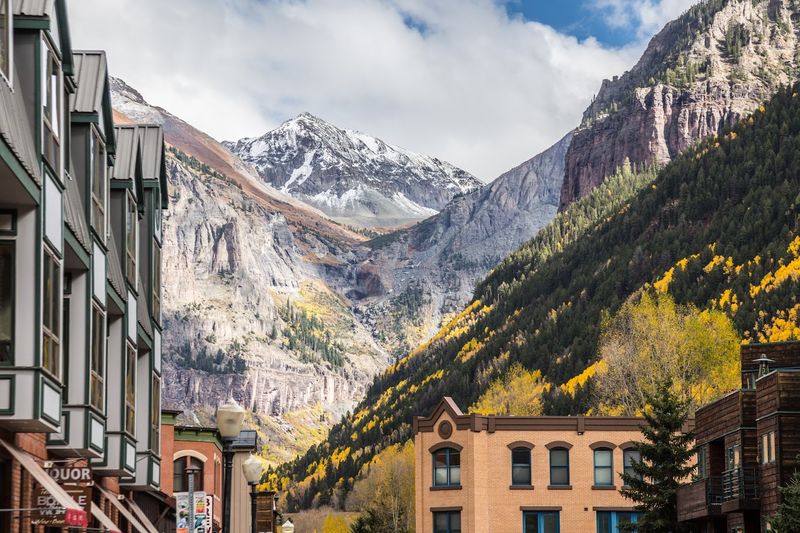
Telluride is not a place that oversells itself. The canyon keeps it contained, the elevation keeps it honest, and the combination of genuine history with world-class outdoor access keeps it interesting across every season.
Not many towns can claim a Victorian historic district, a top-tier ski resort, a free aerial gondola, a century-old opera house, and a film festival that shapes the global awards conversation, all within a few square miles of each other.
Colorado’s sesquicentennial in 2026 gives the state’s mountain communities a moment of collective reflection, and Telluride fits that moment with unusual precision. The town has been through enough cycles of boom and reinvention to understand what actually lasts.
What lasts, it turns out, is character. You cannot manufacture the Sheridan Opera House.
You cannot replicate the box canyon. You cannot fake 148 years of accumulated story.
For families, couples, and solo travelers who want a mountain destination with genuine depth rather than just altitude, Telluride in 2026 is as close to a sure thing as travel planning ever gets. Go in winter for the skiing.
Go in summer for the festivals and hiking. Go in the shoulder season if you want the town mostly to yourself and the light doing extraordinary things to the canyon walls.
Key Takeaways: Telluride sits at 8,750 feet in a box canyon in the San Juan Mountains, with a historic district on the National Register of Historic Places. The free gondola connects downtown to Mountain Village year-round in approximately thirteen minutes.
Major annual events include the Telluride Film Festival (Labor Day weekend) and the Telluride Bluegrass Festival (June).The Sheridan Opera House (built 1913) and Telluride Historical Museum (in an 1896 building) anchor the cultural landscape downtown. Book early for any 2026 visit, particularly around festival dates or peak ski season.