
Thousands Of Giant Cranes Fill The Sky Over This Quiet Florida Sanctuary At Sunset
Florida can feel surprisingly wild when the theme parks, beach condos, and palm-lined streets disappear from view.
In one remarkable corner of the state, the landscape opens into a vast prairie where wild horses roam through tall grass, bison wander in the distance, and alligators claim sunny spots beside the water. Then winter arrives, and the scene becomes even more extraordinary.
Sandhill cranes begin gathering across the preserve.
Their long legs and enormous wings make them impossible to miss, but it is their strange, rattling calls that often announce them first. As evening approaches, groups of cranes move across the prairie and settle into the wetlands, turning an already unusual Florida landscape into one of the state’s most memorable wildlife spectacles.
No safari ticket is required. Just binoculars, comfortable shoes, and a willingness to wait for nature to put on the show.
And the cranes are only part of what makes this place remarkable.
Here are ten things to know about this wild Florida preserve before planning a winter visit.
A Winter Sky Full Of Rattling Wings
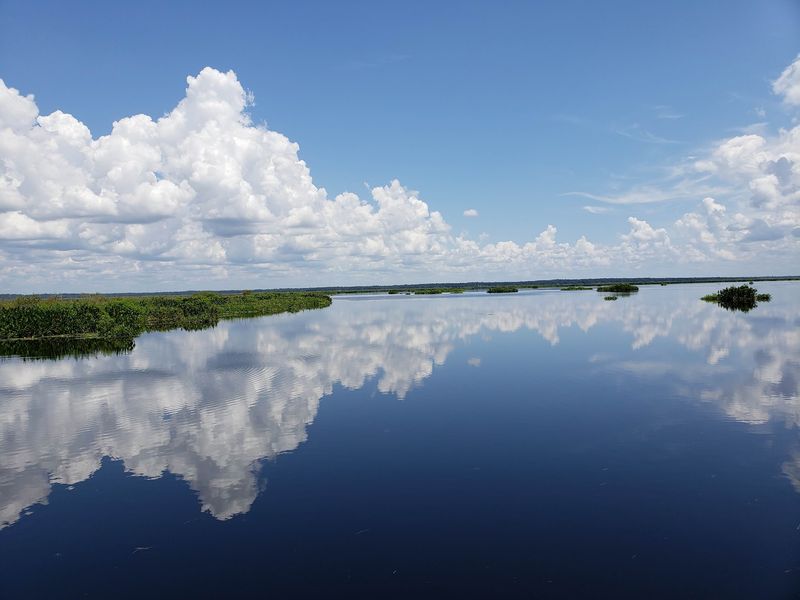
Close your eyes and listen. Long before you spot them, you hear a rolling, wooden rattle drifting across the prairie, like hundreds of old doors creaking at once.
That sound belongs to sandhill cranes, and in winter Paynes Prairie becomes one of their favorite hangouts.
Many cranes that nest farther north fly south to Florida when the weather turns cold. They join Florida’s own year-round cranes, and together the flocks can number in the thousands.
These birds stand around four feet tall, with gray feathers and a bright red patch on their heads.
The best show usually happens late in the day. As the sun sinks, groups of cranes glide in to roost in the shallow, wet parts of the prairie, where water helps keep predators away.
Watching wave after wave settle in against an orange sky is something people remember for years.
For your best chance, plan a visit between roughly late fall and early spring. Numbers change from year to year depending on weather and water levels, so nothing is guaranteed.
Bring binoculars, dress in layers for chilly evenings, and check the park closing time so you are not rushing back to your car in the dark.
Florida’s First State Preserve
Here is a fun bit of trivia to share on the drive. Paynes Prairie became Florida’s very first state preserve in 1971, and it was later named a National Natural Landmark.
That is a big deal for a patch of grass that many highway drivers zoom past without a second look.
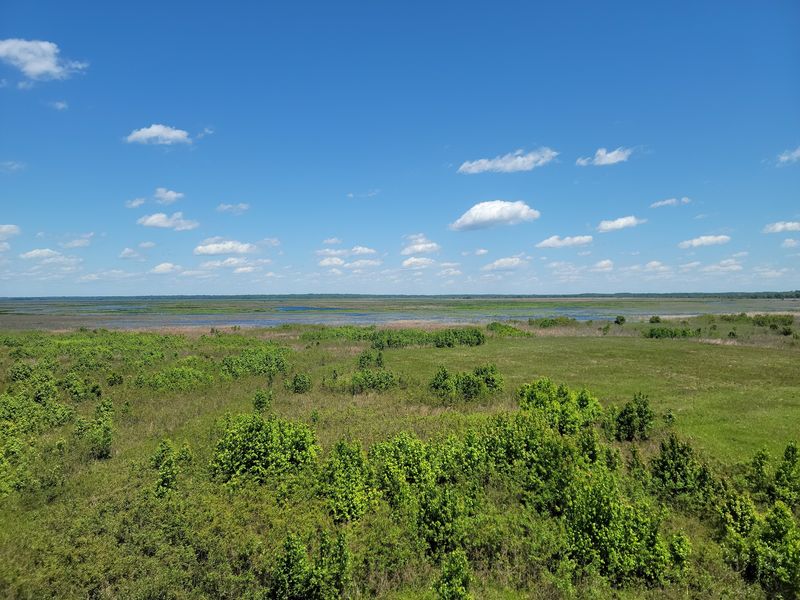
The park covers about 21,000 acres, which is bigger than many small towns. The prairie itself sits in a giant, shallow basin formed as limestone underground slowly dissolved over thousands of years.
Rain and water collect here, turning parts of the land into marsh, ponds, and soggy meadow depending on the season.
Because the land shifts between wet and dry, it supports a huge mix of life. You will find open grassland, hardwood hammocks, pine flatwoods, and swampy edges, all within one park.
Visitors often say it feels like stepping back in time, and that is pretty close to the truth. The preserve’s goal is to protect what this part of Florida looked like before modern roads and buildings arrived.
Spend a few minutes just staring across the open space, and you will understand why people fought so hard to save it.
Wild Horses Roaming The Grasslands
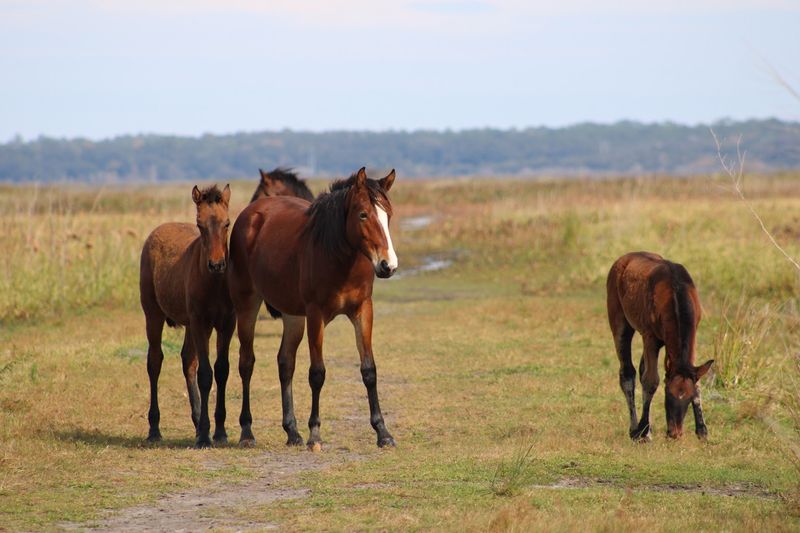
One hiker described walking right past a herd of wild horses on the Bolen Bluff Trail, colt and all. Stories like that are part of what makes Paynes Prairie feel almost unreal.
The horses here are often called Spanish horses or Florida Cracker horses. Their story goes back to the Spanish explorers and settlers who brought horses to Florida centuries ago.
The park keeps a small herd to show what animals once roamed this landscape, and they are free to wander across the prairie.
Spotting them takes a little luck. Some days they are far off in the distance, and other days they gather near a trail or close to the overlook along US Highway 441.
Several visitors have seen more than a dozen at once.
Please remember these are wild animals, not petting zoo ponies. Keep a safe distance, never feed them, and do not walk between a mother and her foal.
Horses can kick or bite if they feel nervous.
A good pair of binoculars is your best friend here. Scan the edges of the grass in the early morning or late afternoon, when the animals tend to be most active and the light is soft and golden.
Yes, Real Bison Live In Florida
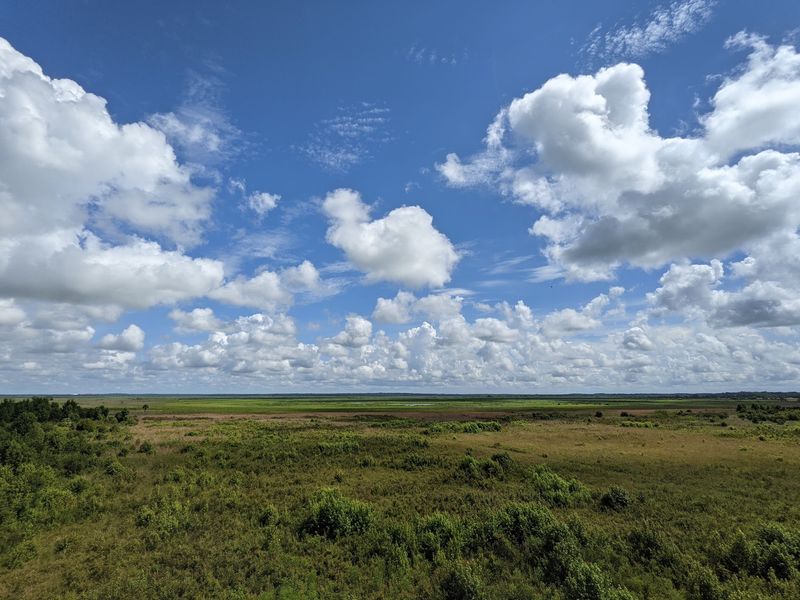
Bison in Florida? Most people laugh when they first hear it.
Then they see a shaggy brown giant standing in the grass near Gainesville, and the laughing turns into excited pointing.
Long ago, bison actually lived in Florida. Early explorers wrote about them, but by the early 1800s they had disappeared from the state.
In 1975, the park brought in a small group of bison from Oklahoma to help restore the prairie’s original wildlife.
Today the herd wanders freely across a huge area, which means they can be easy to see one day and totally hidden the next. Plenty of reviewers admit they visited several times before finally catching a glimpse.
Others spot them right away, so it is truly a game of chance.
Many visitors have had good luck at the La Chua Trail and the boardwalk off US 441. Bring binoculars or a camera with a strong zoom, since the animals are often far away.
Bison may look slow and sleepy, but they can run faster than you think and weigh as much as a small car. Stay on the trails, keep plenty of space, and enjoy one of Florida’s oddest wildlife surprises from a safe spot.
Gator Gazing On La Chua Trail
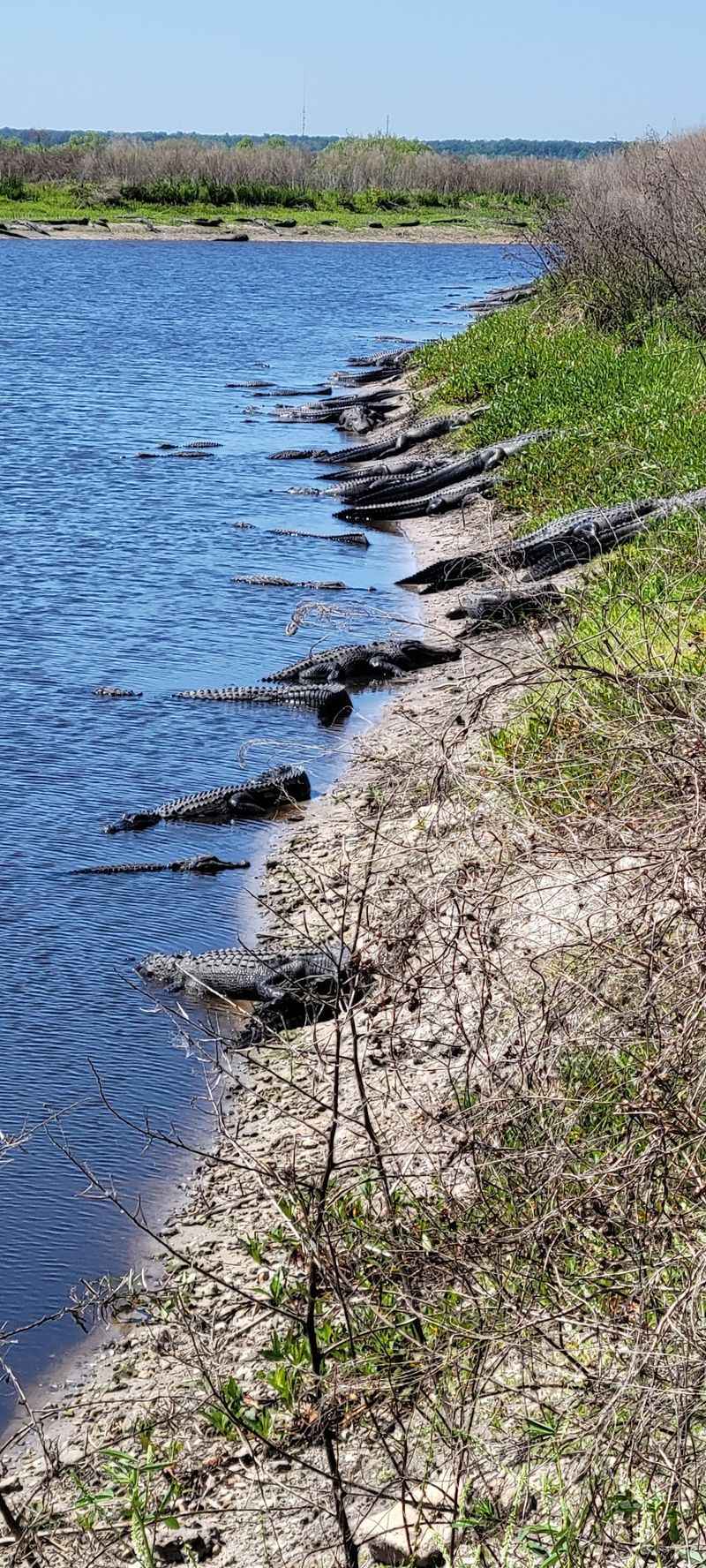
Fifty alligators in one place. That is the number one visitor counted from the La Chua Trail boardwalk, and others have reported similar crowds.
If gators are on your wish list, this is the spot.
The trail begins on the north side of the park, closer to Gainesville, and leads to Alachua Sink. This is a spot where water drains down into the ground below.
Alligators love the area, especially when water levels drop and they bunch together in the remaining pools.
An elevated boardwalk gives you a safe and clear view. You might watch gators sunbathing with their mouths open, sliding into the water, or even squabbling with each other.
One lucky visitor caught a full gator fight in action.
Keep in mind that past the boardwalk, the path can put you near animals on the ground. Stay at least 15 feet from any alligator and never get between one and the water.
Keep kids close and leave pets at home for this trail.
The University of Florida’s mascot suddenly makes a lot of sense after a visit here. Bring water and a hat, since the trail is open and sunny, and you may also see herons, egrets, and other wading birds hunting nearby.
Climbing The Observation Tower
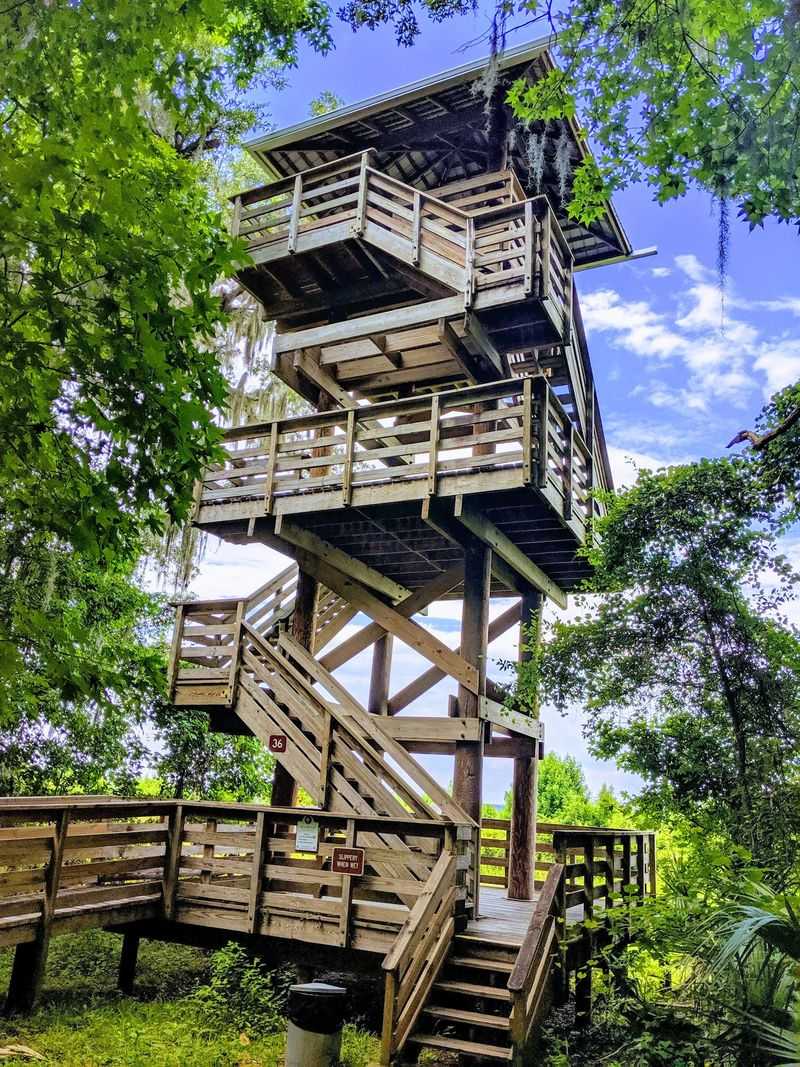
Fifty feet up, the world suddenly opens wide. The observation tower near the visitor center is one of the most loved spots in the park, and for good reason.
From the top, you look out over miles of prairie, with water shining in low spots and trees lining the far edges. Visitors often spot wild horses grazing in the distance, and some get lucky with bison or flocks of birds.
On a winter evening, this is a fantastic perch for watching cranes come in.
Getting there is half the fun. The drive into the main entrance winds under oak branches that arch over the road like a green tunnel.
A short trail from the visitor center leads you to the tower, so you do not need to hike far.
Inside the visitor center, take time to look at the exhibits and short film about the prairie’s history and wildlife. Rangers are known for being friendly and full of useful tips.
Ask them where animals have been seen lately.
The tower has many stairs, so it may be hard for some visitors. If climbing is tough, the visitor center deck still offers a nice view of the area.
A Name With A Story Behind It
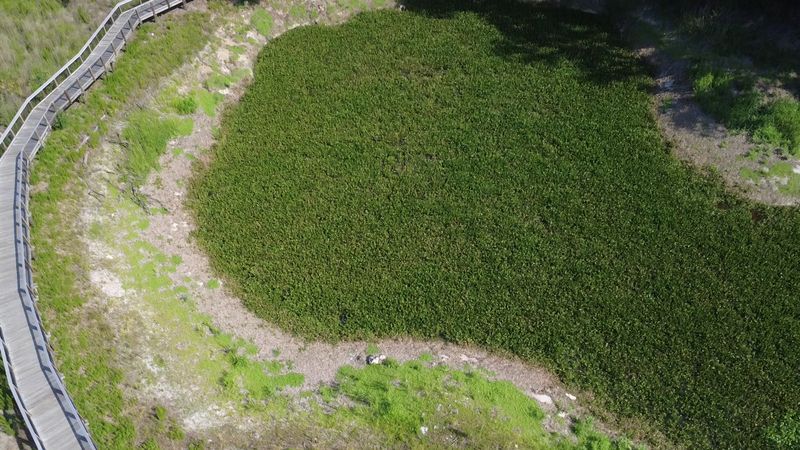
Every place has a backstory, and this one is full of twists. The prairie is believed to be named after King Payne, a Seminole leader who lived in the area in the late 1700s and early 1800s.
Long before that, people lived around the prairie for thousands of years. Later, in the 1600s, the Spanish ran a large cattle ranch here called La Chua.
It was one of the biggest ranches in Spanish Florida, and the La Chua Trail still carries its name today.
The famous naturalist William Bartram visited in the 1770s and wrote about the area’s beauty. He called it the great Alachua Savanna and described its rich wildlife.
Here is a strange twist. In the late 1800s, the sinkhole that drains the prairie got clogged, and the area flooded into a lake.
Steamboats actually traveled across it for a few years. Then the drain opened again and the lake vanished, leaving the prairie behind.
Think about all that history as you walk. You are crossing land shaped by Native people, Spanish ranchers, explorers, and even boat captains.
Few spots in Florida pack so many stories into one view.
Trails For Every Kind Of Explorer
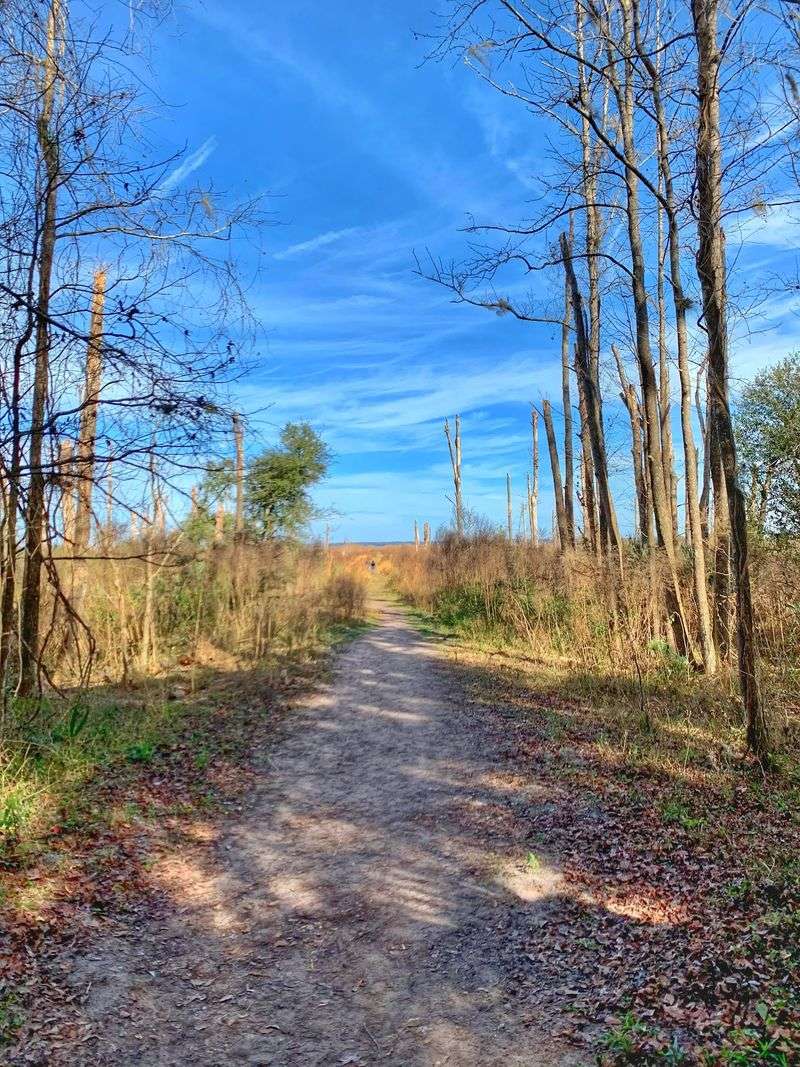
Some people want a quick leg stretch, and others want a full day of mud on their boots. Lucky for everyone, the park offers dozens of miles of trails for hiking, biking, and horseback riding.
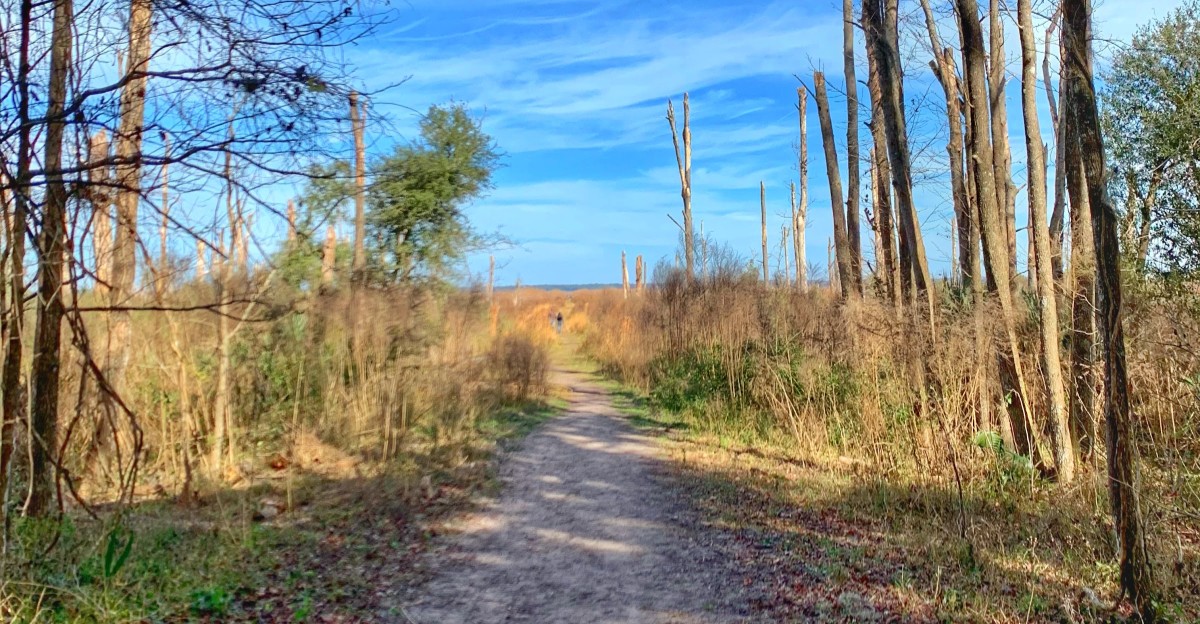
Short walks near the visitor center are perfect for families or road trippers needing a break from I-75. The Bolen Bluff Trail starts in shady woods and then heads out onto the open prairie toward an observation platform.
One visitor said it took around 40 minutes each way, so plan accordingly.
The Gainesville-Hawthorne State Trail also connects nearby, giving cyclists a long paved path to enjoy. Some trails welcome horses, so watch for riders and give them room.
Many trails are wide open to the sun. In summer, that means heat, bugs, and sweat, so go early in the morning and bring more water than you think you need.
Cooler months are much more comfortable for long hikes.
Watch your step for tree roots and animal droppings along the way. You may also see damage from wild hogs, which dig up the ground and are a real problem for the park.
Grab a map at the entrance so you know which trail matches your energy level.
Camping Under Big Florida Skies
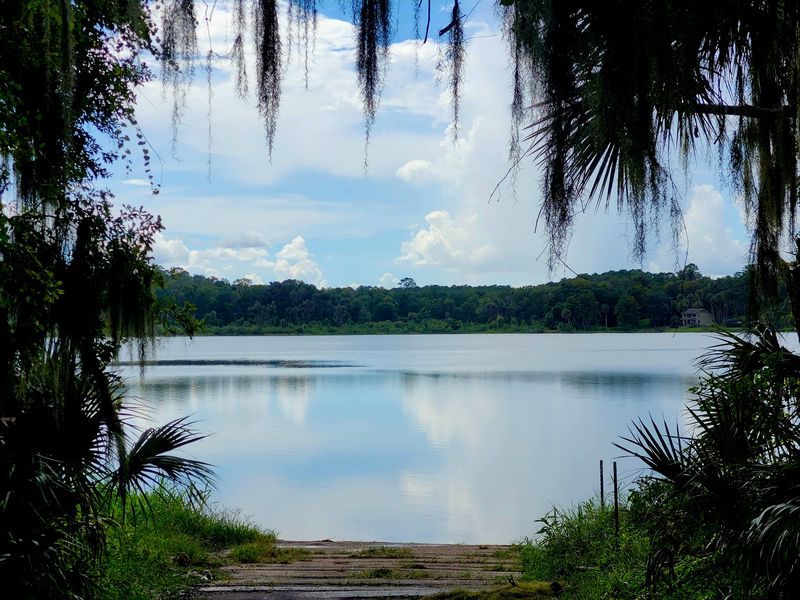
Falling asleep to frogs and waking to bird calls beats any hotel alarm clock. The campground at Paynes Prairie gets glowing reviews from visitors who love its clean, quiet setting.
Located near Lake Wauberg in the main part of the park, the campground has sites for tents and RVs with water and electric hookups. It is pet friendly, so your dog can join the adventure, though pets must stay on a leash and are not allowed in some areas.
At night, keep your ears open for heavy rustling in the leaves. It could just be an armadillo poking around for snacks.
Campers often report seeing deer, wild turkeys, and snakes during their stay. One family counted more deer than they could keep track of.
The park also offers picnic areas, a playground, and an amphitheater, which makes it great for family trips or a weekend barbecue with friends. Lake Wauberg is a pretty spot to relax and look for birds.
Campsites can fill up, especially in the cooler months when the weather is nicest. Book ahead through the Florida State Parks reservation system.
Bring bug spray, a flashlight, and a camera for those foggy sunrise views over the water.
Know Before You Go
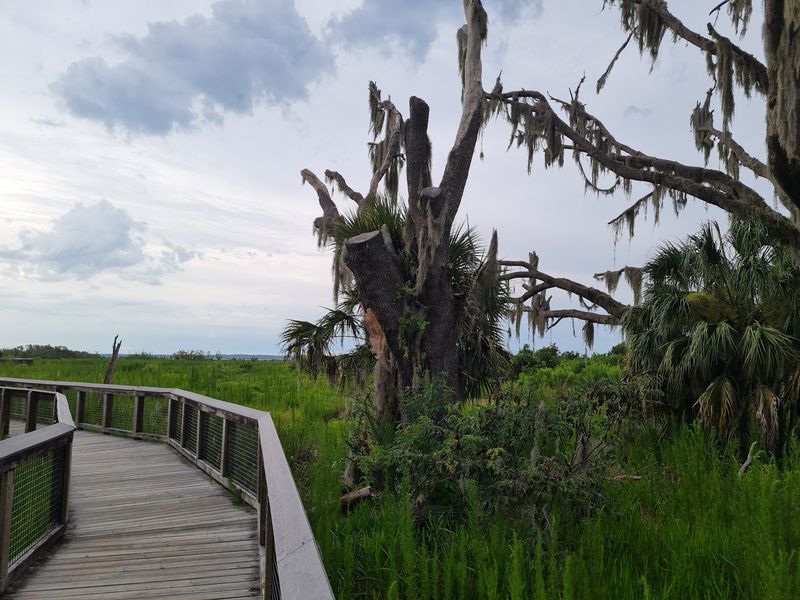
A little planning goes a long way at a park this big. Here is the friendly cheat sheet so your trip runs smoothly.
The park generally opens at 8 a.m. and closes at sundown, with recent listings showing a closing time around 8:45 p.m. Times can change with the seasons, so check the official Florida State Parks website or call 352-466-3397 before you head out, especially if you want to stay for the crane sunset.
Entry is about $6 per vehicle at the main entrance on Savannah Boulevard in Micanopy, though fees can change. Some holidays offer free admission.
Hold on to your receipt, since visitors say it can cover other park entrances the same day.
The park is spread out, with entrances like La Chua Trail and the US 441 boardwalk in different spots. Plan to drive between them, and parking at each area is usually easy.
The visitor center and some boardwalks are more accessible, while many trails are natural ground that may be tough for wheelchairs.
Pack binoculars, sunscreen, water, and bug spray. Wildlife sightings are never promised, but every visit shows you something new.
That is exactly why so many people keep coming back.